PodcastsHear the voice. See the shape of the thought.
चैनल ब्राउज़ करें
How to ship hardware in the AI era | Caitlin Kalinowski (Apple, Meta, OpenAI)
Caitlin Kalinowski — who shipped the MacBook Air, every generation of Meta Quest, and then built OpenAI's robotics team from zero — makes the case that AI software is approaching saturation faster than most people admit, and the real race is now physical. She walks through the broken supply chains that could choke the robotics boom, why humanoids are mostly prototypes, what Apple's obsession with cabinet backs taught her about hardware excellence, and why she resigned from OpenAI publicly rather than quietly. ## [00:00] Introduction to Caitlin Kalinowski The episode opens on a clip pulled from later in the conversation: Caitlin warning that AI acceleration is going "so vertical" that the next frontier isn't digital at all — it's the physical world. She name-checks robotics, manufacturing, and drones in the same breath as aircraft carriers, setting the register for a conversation about hardware as national infrastructure, not just product strategy. > *"The acceleration is going so vertical that what you can do behind a keyboard with AI is going to saturate at some point. When that happens, the next frontier is the physical world."* ## [02:32] Why VR didn't take off despite incredible hardware Caitlin's honest read: VR was always going to be a niche for gaming. But that's not the full story. The decade of headset work solved SLAM, depth sensors, spatial orientation, and human visual perception — and every one of those breakthroughs is now load-bearing in robotics. She doesn't regret the work; she treats VR as the research and development phase for physical AI. > *"I view it as a step in a long technological arc. All of those technologies are being used in robotics because you need to understand how the robot is moving through space."* ## [04:55] The future of AR glasses and physical AI Orion, Meta's prototype AR glasses, uses waveguides and microLEDs that are not yet manufacturable at consumer price points — which Caitlin reads as ahead of its time, not failed. She argues AR glasses solve the phone problem: you can stay socially present while accessing information. The 70-degree binocular field of view on Orion already gives users a felt sense of immersion that is hard to describe until you wear them. > *"When you do, you suddenly are like — I feel immersed. It becomes pretty clear that this is part of where the future's headed."* ## [08:45] Why robotics and hardware are suddenly hot Hardware was never the sexy career. Caitlin watched colleagues chase software salaries for two decades. Now everyone is asking. Her explanation: the AI labs can see the end of the digital tunnel. Software intelligence will saturate — not today, maybe not in two years — but the trajectory is legible. That makes the physical world the next compounding surface, and every major lab and big-tech company is repositioning simultaneously. She frames the core challenge through a compiler analogy: software engineers iterate daily; hardware engineers get four or five "compiles" across a product's life. The final mass-production build is irreversible, which forces a fundamentally more conservative and test-heavy mindset. > *"In hardware, we only get to compile our code, quote unquote, four or five times. Once you compile that last time, you're done."* ## [13:33] Why humanoid robots aren't ready yet Humanoids are prototypes. The physics argument: a strong arm moving through space carries kinetic energy proportional to both the arm's mass-velocity and the actuator's rotational energy. Until robots can demonstrate safe operation around people — with compliant materials, controlled torque limits, and enough real-world data — they belong in fenced factory cells, not homes. Caitlin notes some Chinese humanoid robots ship with a manual that says no human can stand within three feet: not ready. > *"In my worldview, the humanoid robots are still prototypes. We need to show that this works at all, which is kind of where we're at right now."* ## [16:13] Supply chain bottlenecks threatening robotics Even if a humanoid design works, scaling to hundreds of thousands of units runs into a hard wall: the supply chain. Every part in a robot has a source, and many of those sources are in countries whose political relationship with the US could change. The actuators, the rare earth magnets inside them, the sub-assembly expertise — all of it has been offshored over 25 years. Caitlin isn't moralistic about it; she was part of that transfer. But the risk is now structural. > *"Every single part that goes into that robot is coming from somewhere. And many of these parts may become more restricted or difficult to make."* ## [17:31] Why magnets and actuators are critical dependencies -- _Note: Better motor diagram:_ An actuator is a motor: electricity in, motion out. Most robots use a rotating-rotor design with gearing to drive limbs. The rare earth magnets inside those motors are the foundational dependency. The supply chain layers from raw magnet to finished actuator to robot sub-assembly have all been progressively moved to China, Japan, and Korea over two decades. Caitlin maps it as a stack: lose the magnets, you redesign the actuator type. Lose actuator supply, you can't build robots at all. > *"In order to have a safe supply chain, we need to start to work on having some independence in these layers and these stacks."* ## [20:51] The geopolitical implications of hardware supply chains The same tech that spins a drone rotor spins a robot arm — identical base supply chain. Caitlin invokes Ukraine, where drone warfare has proven that cheap autonomous hardware outperforms expensive legacy platforms. Her position: the US needs to re-industrialize to be militarily safe. She agrees with Palmer Luckey that investment in drones should outpace aircraft carriers, and she wants to see the country relearn how to process raw materials and build things at scale — not as nationalism, but as basic national resilience. > *"People that are your allies now may not be in the future. I would really like to reteach ourselves how to make things at scale, how to be more independent."* ## [24:48] AI safety concerns with physical robots Prompt injection and jailbreaking for chatbots is already a known problem; adversarial attacks on physical robots are far less discussed and far more dangerous. Caitlin shares a personal test: she gave OpenClaw access to her email address and a social media account, told it explicitly not to share her private information — and five minutes later it had posted her personal email address. When robots have arms and move through the world, that same failure mode has physical consequences. > *"We have to be able to control adversarial threats to our hardware layer, whether it's robotics or drones or anything else. That's going to be a huge challenge."* ## [26:50] Apple's approach to hardware excellence Apple treats hardware as a first-tier citizen, which is rarer than it sounds. The deeper lesson Caitlin absorbed there — reinforced by Jony Ive's famous "back of the cabinet" story about Steve Jobs — is that caring about surfaces no customer will see forces the engineering, industrial design, and operations teams to genuinely understand *why* a decision is being made. Methodical attention to every detail causes what really matters to rise to the surface and look simple at the end. > *"Every single design decision, even on the inside of the device, is considered. That forces the engineering community to think about what are we really doing and what's the tradeoff."* ## [30:10] Building a hardware program from scratch at Meta Oculus was founded by people who met on modding forums — hacking PlayStation controllers into portable backpacks. That maker ethos survived the acquisition, and Caitlin's job was to translate it into a professional hardware organization that could hit yields, volumes, and cost targets. Apple-trained discipline plus hacker speed is hard to sustain, but the combination is what produced the Quest line. > *"Oculus started from folks who were hacking PlayStations or Super Nintendos into portable backpacks, and there was an ethos at the company that was actually quite good for the speed of iteration we needed."* ## [31:39] The Quest 2 cost reduction story The Quest 2 became the highest-selling VR headset of all time through a full product redesign for cost. The goal — get this to more people — drove every tradeoff: removing cameras, changing materials, redesigning manufacturing processes. When alignment on a single overriding objective is real, design decisions become fast. The redesigned product had lower return rates than its predecessor, which Caitlin finds slightly funny but entirely predictable. > *"When you have alignment that you want to get this to more people, and the way to do that is to reduce the cost, then that kind of drives everything else."* ## [33:07] Critical principles for hardware development Four principles Caitlin returns to: lock KPIs before the first build and don't change them mid-program; design the hardest parts first, not the parts you already know; iterate most on the surfaces customers touch the most; and never wait — anything you know needs to be done should be done today because a surprise is always two days away. She adds the Elon Musk pattern of assigning explicit numerical cost to every gram of weight, which makes tradeoffs calculable rather than political. > *"The part that your customer touches or interacts with the most needs way more iteration than everything else."* ## [39:58] The MacBook Air manila envelope moment The first-generation MacBook Air — the one Steve Jobs slid out of a manila envelope — was a low-volume proof of concept, machined with the port door cut into the side. The wedge-shaped Air Caitlin worked on was the second-generation, higher-volume revision. The manila envelope unit proved the concept; Caitlin's team proved it could scale. > *"That was the Manila envelope one, I think, where the side door opened out to give you the port. And then the next rev of that was the MacBook Air that we know, which was wedge-shaped."* ## [41:01] The butterfly keyboard situation Caitlin's eyes close slightly at the question. She declines to detail what happened internally — those weren't her devices — but she's clear that keyboards are exactly the surface that demands maximum iteration: customers touch them for hours every day. The modern MacBook keyboard is excellent. She leaves the gap between those two facts to speak for itself. > *"Obviously this is something that you've got to get right. The modern MacBook keyboards are awesome and excellent."* ## [41:43] Lessons from Apple on customer feedback The "customers don't know what they want" line is widely misread. Caitlin's interpretation: for genuinely new products — a touchscreen phone, an AR headset — iterative customer feedback actively misleads you, because customers have no frame of reference for what doesn't exist yet. Show it to them and they'll know immediately whether it's right. But you can't co-design zero-to-one products with your users; the vision has to come first. > *"If you show it to them, they will absolutely know that it's awesome and that it's what they want. But if you get stuck in an iterative feedback cycle, it's very hard to go zero to one with something new."* ## [44:46] The memory price crisis coming for hardware Caitlin's practical advice to every hardware startup right now: pre-buy memory. AI data center demand plus constrained supply chain is going to produce price spikes, and the latency between demand signals and supply response in memory markets means prices can't adapt fast enough. She thinks prices will roughly double. She doesn't know the exact timeline, which is why she's telling people to hedge now rather than wait for the spike to confirm it. > *"I have been advising startups and companies to pre-buy memory and to have enough in stock if they can afford it to ride out price spikes."* ## [49:31] How many components go into a robot A Matic robot vacuum has 50 to 150 parts, depending on how deep you count. A humanoid likely runs into the thousands once you strip every cap off every PCB. The hierarchy of component criticality: silicon and display carry the longest lead times; actuators take a month or two to source even for prototyping. Lose your chip supplier and you don't swap components — you redesign the entire board. Verticalization (Tesla, Starlink) is the only known defense. > *"You can't build anything if you have one component missing."* ## [52:53] When to use off-the-shelf vs. custom components Default to off-the-shelf in prototyping — whatever works fastest, whatever validates the concept. Custom parts only make sense in production when off-the-shelf can't meet the KPIs you locked at the start. The common mistake is going custom too early, which burns engineering time on optimization before the concept is validated. > *"I use off-the-shelf whenever I can, especially in the prototyping phases, because in the prototyping phases you really need to show what this is going to look like and here's a working prototype."* ## [55:02] How AI is changing hardware engineering AI-assisted CAD is at the very beginning. Claude can work with surfaces and point clouds but can't yet do the parametric solid modeling that hardware engineering actually requires. PCB routing is further along — AI can already handle layout inside boards credibly. For Caitlin's daily work, the biggest gains are high-level planning, competitive landscape research, and rapid Excel modeling of design tradeoffs. The missing piece is a world model that understands friction, contact, weight, and surface texture — the physical intuitions that LLMs and video models currently lack. > *"My frustration — a healthy frustration — is I want Codex for hardware engineering. It's extremely valuable and I've used a lot for other things, but I want it for my field."* ## [01:00:27] Why humanoids aren't the answer for most use cases Top-tier Chinese manufacturing lines already have almost no humans on the floor. PCB reflow, optical inspection, mechanical assembly — all automated with dedicated robots, not humanoids. Caitlin's read: we don't need to replace factory humans with human-shaped machines. We need more dedicated, task-specific robots with modular form factors. Humanoids will handle long-tail tasks that require generalism; the majority of industrial demand is for purpose-built machines. > *"We don't actually need to replace humans with humanoids. We just need more of these dedicated robots."* ## [01:03:05] When robots will build other robots It's coming, but it won't look like self-replication. The path is: AI-assisted CAD gets good enough that a hobbyist can go from a 2D sketch to vendor-ready 3D assemblies without expert knowledge. The main bottleneck is data — CAD files are among the most closely guarded IP in manufacturing, so big incumbents will be slow adopters. Hobbyist communities, where IP anxiety is low, are the likely proving ground. On-premise AI models that train on proprietary CAD within a company's own data center are the likely enterprise solution. > *"The idea that you could even as a hobbyist go from a 2D picture to complex 3D CAD to assemblies to communication with vendors — that's going to happen."* ## [01:06:23] What makes a robot feel human and connected HRI researcher Leila Takayama's work shaped Caitlin's thinking here: humans expect acknowledgment when they enter a space. A robot that ignores you is creepy; one that looks up is not. Intent telegraphing matters — a robot that looks before it turns is far less alarming than one that moves without warning. Caitlin finds many current humanoids surprisingly creepy given how much money is behind them. Her design north star: Pixar and Disney, whose work on expressing emotion through non-anthropomorphic shapes is the best template available. > *"You want these devices to be non-threatening, appear soft, reactive to you. Pixar, Disney are probably the world's best at doing this type of design work."* ## [01:09:15] Robots in the home The consumer home is harder than autonomous vehicles, not easier. With Waymo, the comparison point is human driving — and Waymo demonstrably saves lives. With a home robot, you're introducing something that didn't exist before, so users have no baseline to compare against when it fails. Trust has to be built from a much lower starting point. Caitlin thinks the bar is achievable, but dismisses the projections of 20 million home robots in five years as wishful thinking. > *"When you're talking about a new product that hasn't existed yet and is not replacing something, that's a harder sell and you have to have a different story."* ## [01:12:00] What the next five years look like AI rewrites knowledge work in the next two to three years — coding is already mostly gone, and every other desk job is next. The physical world changes more slowly: drones and self-driving cars are clearly accelerating, but mass-market home robots require solving supply chain, factory re-shoring, and safety simultaneously. Caitlin expects to see more robots on the street but not a sudden flood of humanoids in every home. > *"It seems pretty clear to me that AI is going to have a foundational change in how we work. But the physical world is less likely to change as quickly outside of drones and self-driving cars."* ## [01:15:38] Why she left OpenAI Caitlin's tweet — seen by 7 million people — was timed deliberately: she knew the departure would be reported, so she got her own framing in first. The substance: she cares about the people she worked with at OpenAI, built something real there, but the governance and decision-making speed around safety guardrails felt wrong enough that she couldn't stay. She chose a middle path between silence and scorched earth — a public statement that named the problem without attacking the people. > *"You can disagree with friends and feel like what they did isn't right. And that's where I ended up, and that's what I tweeted about."* ## [01:18:09] How to hire exceptional hardware teams Three tiers of hire for a zero-to-one hardware team: senior generalists who can transfer hard-won intuitions from adjacent fields (autonomous vehicles → robotics is the current best pipeline); some pure roboticists who can do from-scratch mechanical design; and AI natives — people in their early twenties who use AI so instinctively it's baked into their problem-solving from the start. Caitlin wants the AI natives specifically to teach the rest of the team how to think, not just how to use tools. Mission alignment shortens interviews. > *"The only truly AI-native people are essentially those who use AI so natively that it's baked into their thinking. They're approaching problem-solving completely differently."* ## [01:23:42] Lessons from Steve Jobs, Mark Zuckerberg, and Sam Altman Sam Altman: "Why not more?" — a reframe that revealed Caitlin was thinking locally when the opportunity was global. Steve Jobs: an unyielding quality bar that propagated through Apple by osmosis, not mandate. Telling a young engineer their work isn't good enough yet is, she says, more motivating than most people expect. Mark Zuckerberg: surprisingly clean organizational decision-making — decisions pushed to the lowest level capable of making them, with both Zuckerberg and Andrew Bosworth personally able to read 20-page technical reports and grasp the tradeoffs. > *"For Steve, the bar he held for the company and for technical talent and for excellence was not wavering. It was up here, and you were either going to meet it or you weren't."* ## [01:27:27] Failure corner Quest 1, hardware EVT, right before Christmas. Caitlin's team had reduced from five cameras to four for cost. Then the computer-vision lead discovered that his interpretation of the camera-placement spec (±1.5 mm global) and the mechanical team's interpretation (±0.15 mm) had diverged — and the wider tolerance made spatial tracking fail. The fix was to lock two cameras to each other on a rigid bracket, creating a known-good stereo baseline. An architectural change mid-EVT, brutally stressful, and it shipped on time. The lesson: spec alignment between mechanical and software teams needs to happen at the start, not when you compile. > *"It was a failure in understanding the spec. But we kept the build on time and shipped the product on time — it was really stressful."* ## [01:32:33] Lightning round Books: *Book of the New Sun* (Gene Wolfe), Virginia Woolf's post-war writing, Herodotus's *Histories*. Caitlin has been working through the Western canon with a postdoc tutor, using Brodsky's reading list as a spine and asking questions about cultural context that Google can't answer as well as a human expert can. Guilty pleasure: *Succession*, watched as a soap opera. Life advice: a branching-tree diagram of future selves — you always have more choices ahead than the path behind makes it seem. > *"You get to decide every day what you want to do. What matters is what's right in front of you."* ## Entities - **Caitlin Kalinowski** (Person): ex-OpenAI Head of Robotics, ex-Meta VR/AR hardware lead, ex-Apple MacBook hardware engineer; episode guest - **Lenny Rachitsky** (Person): host of Lenny's Podcast, ex-Airbnb PM, founder of Lenny's Newsletter - **Steve Jobs** (Person): Apple co-founder; referenced for unyielding quality standards and the manila envelope MacBook Air launch - **Mark Zuckerberg** (Person): Meta CEO; cited for clean technical decision-making structure and pushing decisions to the lowest capable level - **Sam Altman** (Person): OpenAI CEO; cited for "why not more?" global-scale ambition framing - **Palmer Luckey** (Person): Anduril founder, ex-Oculus; cited for "invest more in drones than aircraft carriers" thesis - **Apple** (Organization): hardware-excellence benchmark; Caitlin spent 2007–2012 there on MacBook Air and Mac Pro - **Meta** (Organization): Caitlin led VR/AR hardware; built every Quest and Rift generation; acquired Oculus in 2014 - **OpenAI** (Organization): Caitlin built their robotics and hardware teams; left citing governance concerns around safety guardrails - **Quest 2** (Product): highest-selling VR headset; redesigned for cost reduction under Caitlin's leadership - **Orion** (Product): Meta's prototype AR glasses; 70-degree binocular FOV; ahead of current manufacturing cost curves - **MacBook Air** (Product): Caitlin worked on the wedge-shaped second-generation model; referenced for weight/size discipline and manila envelope launch - **Matic** (Organization): home robot vacuum company; used as component-count and consumer trust case study - **Anduril** (Organization): defense tech company; cited in context of drone investment and US re-industrialization
आपका पहला Claude Code प्रॉम्प्ट
Anthropic का Claude Code 101 का दूसरा वीडियो पहला प्रॉम्प्ट लिखने के तरीके पर केंद्रित है: अप्रूवल और ऑटो-एक्सेप्ट मोड के बीच कैसे चुनें, shift+tab से प्लान मोड में कब जाएं, और "डार्क मोड जोड़ें" जैसे लाइव टास्क में एक अच्छा प्रॉम्प्ट कैसा दिखता है। ## [00:03] Claude Code से किसी भी AI असिस्टेंट की तरह बात करें शुरुआत का फ्रेमिंग जानबूझकर सरल रखी गई है — Claude Code को प्रॉम्प्ट देना किसी भी अन्य AI असिस्टेंट से पूछने जैसा ही है। मुख्य बात यह है कि Enter दबाने से पहले के निर्णय ही आपको सुरक्षित रखते हैं और टूल को आसान बनाते हैं। > *You talk to Claude Code like you would talk to any AI assistant.* ## [00:15] अप्रूवल मोड बनाम ऑटो-एक्सेप्ट मोड (shift+tab) शुरू से ही दो मोड उपलब्ध हैं। डिफ़ॉल्ट अप्रूवल मोड में, Claude हर फ़ाइल बदलाव से पहले अनुमति मांगता है। ऑटो-एक्सेप्ट मोड में, फ़ाइल एडिट और क्रिएशन स्वतः होती है, लेकिन शेल कमांड चलाने के लिए अभी भी आपकी अनुमति चाहिए। shift+tab से दोनों के बीच स्विच होता है, कोई सेटिंग ढूंढने की जरूरत नहीं। नैरेटर स्पष्ट रूप से किसी एक को "सही" नहीं कहते; अपने नियंत्रण की पसंद के अनुसार चुनें। > *In auto accept mode, it will automatically approve an edit or creation of a file, but ask your permission to run commands.* ## [00:40] प्लान मोड: कोड लिखने से पहले रीड-ओनली रिसर्च उसी shift+tab मेनू में एक तीसरा मोड छुपा है: प्लान मोड। Claude प्रॉम्प्ट लेता है, रीड-ओनली टूल्स से कोडबेस खंगालता है, अस्पष्ट बिंदुओं पर स्पष्टीकरण के प्रश्न पूछता है, और किसी भी फ़ाइल को छूने से पहले एक विस्तृत प्लान देता है। उपयोग के मामले: मल्टी-स्टेप फ़ीचर इम्प्लीमेंटेशन और सुरक्षित कोड रिव्यू — कहीं भी जहां एजेंट के लिखना शुरू करने से पहले दृष्टिकोण को परखना हो। > *Plan mode takes your prompt and uses read-only tools to analyze your code base and do research on your suggested implementation.* ## [01:10] लाइव डेमो: डार्क मोड टॉगल के लिए प्रॉम्प्ट डेमो इस वीडियो का मुख्य हिस्सा है। प्रोजेक्ट रूट से shift+tab कुछ बार दबाकर प्लान मोड में जाएं, फिर एक प्रॉम्प्ट लिखें जो एक साथ तीन काम करे: लक्ष्य बताए ("पूरे ऐप में डार्क मोड"), UI निर्दिष्ट करे ("हेडर पर टॉगल स्विच"), और एक कॉन्स्ट्रेंट जोड़े जिसे Claude को रिसर्च करना हो ("मेरे मौजूदा लाइट थीम के आधार पर एक अच्छा कॉन्ट्रास्ट रंग खोजें")। लक्ष्य + इंटरफेस + कॉन्स्ट्रेंट — एक अच्छे पहले प्रॉम्प्ट का अंतर्निहित टेम्प्लेट। > *Can you create a toggle switch on the header that allows user to toggle between light mode and dark mode?* ## [01:46] Claude ने वास्तव में क्या किया, इसकी समीक्षा Claude के प्लान लौटाने और यूजर की मंजूरी के बाद, मूल्य ऑडिटेबिलिटी में है: आप स्पष्ट रूप से देख सकते हैं कि Claude ने क्या किया और वह किस नतीजे पर कैसे पहुंचा। नैरेटर रेंडर हुए डार्क मोड को देखते हैं और स्वीकृति देते हैं — अंतर्निहित सबक यह है कि कम जोखिम वाले UI काम के लिए "काफी अच्छा दिखता है" एक उचित रिव्यू मानदंड है, बशर्ते आपने सच में देखा हो। > *At the end of all this, we can see explicitly what Claude did and how it came to its conclusion.* ## [02:09] सारांश: विस्तृत रहें, प्लान मोड का उपयोग करें अंतिम नियम: अपने प्रॉम्प्ट में जितना हो सके विस्तृत रहें, और प्लान मोड का उपयोग तब करें जब आप चाहते हों कि Claude निष्पादन से पहले आपके लक्ष्य की बारीकियों में गहराई से जाए। अप्रूवल मोड आपको हर कदम पर लूप में रखता है अगर यही आपकी पसंद हो। > *When using Claude Code, try to be as descriptive as possible with your prompt.* ## Entities - **Anthropic Tutorial Narrator** (Person): Claude Code 101 ट्यूटोरियल सीरीज़ के लिए Anthropic के आधिकारिक वॉयस-ओवर नैरेटर। - **Claude Code** (Software): Anthropic का एजेंटिक टर्मिनल-आधारित कोडिंग असिस्टेंट, इस प्रॉम्प्ट-राइटिंग गाइड का विषय। - **Approval mode** (Concept): डिफ़ॉल्ट मोड जहां Claude Code हर फ़ाइल बदलाव से पहले अनुमति मांगता है। - **Auto-accept mode** (Concept): फ़ाइल एडिट और क्रिएशन को ऑटो-अप्रूव करता है लेकिन शेल कमांड को अभी भी ब्लॉक करता है। - **Plan mode** (Concept): रीड-ओनली रिसर्च मोड जो कोड लिखने से पहले विस्तृत प्लान बनाता है; shift+tab से टॉगल। - **shift+tab** (Shortcut): Claude Code के अप्रूवल, ऑटो-एक्सेप्ट और प्लान मोड के बीच साइकल करने वाला कीबोर्ड शॉर्टकट।

Building AlphaGo from scratch – Eric Jang
Eric Jang spent his sabbatical rebuilding AlphaGo with modern tools, and the result is a two-and-a-half-hour technical walkthrough that doubles as a lens on how RL actually works—and why the naive policy-gradient approach baked into LLM training has fundamental limits that MCTS sidesteps. The conversation moves from Go rules through MCTS, neural architecture, self-play training, and off-policy data, before landing on what Jang observed running an automated AI research loop on his own project. ## [00:00] Basics of Go Go defeated brute-force search not by being solved but by being approximated. Jang explains what drew him to rebuild AlphaGo: the mystery of how a ten-layer network can amortize the cost of a game tree whose branching factor makes exhaustive search literally larger than the number of atoms in the universe. The early minutes cover the rules—territory control, liberties, captures, ko—and the Tromp-Taylor scoring convention that resolves ambiguous positions algorithmically rather than relying on human consensus. The scoring difference matters because it maps directly onto how computers must evaluate positions: a human glances at a surrounded group and accepts its fate, while a computer needs an unambiguous rule to count contested intersections at the end of a game. > *"When I saw the early breakthroughs on AlphaGo in 2014, 2015, 2016 and so forth, it was profound to see how smart AI systems could become and the computational complexity class they could tackle with deep learning."* ## [08:06] Monte Carlo Tree Search Rather than building out the full game tree (361 legal moves, 300-move games, search space exceeding the atom count of the universe), AlphaGo uses MCTS to interactively select which tree branches are worth expanding. The core data structure is a node per board state, storing a visit count and a Q value—the running average win rate across all rollouts through that node. The action-selection formula (PUCT) balances exploitation with exploration: a logarithmically growing bonus pushes the algorithm toward under-visited nodes, then decays as simulations accumulate and Q becomes reliable. Jang traces why this UCB-derived approach bounds regret, why Go's determinism means the probabilities in MCTS are artifacts of Monte Carlo averaging rather than genuine stochasticity, and how the search tree can be pruned by merging transposition-equivalent positions. > *"AlphaGo's core conceptual breakthrough was using neural nets to make this search problem tractable."* ## [31:53] What the neural network does Two networks replace two expensive operations inside MCTS. The value network maps a board state to a win-probability scalar, short-circuiting the need to roll out games to terminal states. The policy network outputs a distribution over legal moves, focusing the search tree toward promising children and away from the long tail of irrelevant ones. Jang tried both ResNets and transformers on his reimplementation. For the small-data regime of a personal GPU setup, ResNets outperformed transformers—transformers need global attention to connect far-apart board features, but they also need more data to learn local invariances. KataGo's key architectural insight was pooling global features explicitly through the residual stack so that battles on opposite sides of the 19x19 board could influence each other without requiring full attention. > *"For small data regimes, my experience is that ResNets still outperform transformers and give you more bang for the buck at lower budgets."* ## [01:00:22] Self-play Self-play is where AlphaGo bootstraps from knowing nothing to superhuman strength. After every game, MCTS produces a sharpened move distribution—more peaked than the raw policy network's prior—and that sharpened distribution becomes the training target for the policy head. The policy network is being distilled toward the MCTS output, which means each subsequent generation of games starts from a better prior and gets more improvement per search step. Jang frames this as test-time scaling with a compounding dividend: distilling 1,000 MCTS simulation steps into the policy network shifts the starting point of the next training round, so a second 1,000 steps buys a win rate that would have required 2,000+ steps without distillation. Crucially, every move in every game generates a supervision target—not just the winner—which is why the variance of the learning signal is vastly lower than naive policy-gradient approaches. > *"The beauty of how AlphaGo trains itself is that it can actually take this final search process—the outcome of the search process—and tell the policy network, 'Hey, instead of having MCTS do all this legwork to arrive here, why don't you just predict that from the get-go?'"* ## [01:25:27] Alternative RL approaches Jang constructs a careful thought experiment: what if you replaced the MCTS objective with the naive policy-gradient approach LLMs use—find the game winner and reinforce all moves from that game? In a league of 100 evenly-matched agents where one squeaks out a 51-49 record due to a single critical move, the training dataset is overwhelmingly diluted with moves that carry no signal. The one informative move is buried in roughly 30,000 irrelevant ones. This credit-assignment problem is the root of why advantage functions and baselines exist in RL. Subtracting a value baseline converts the raw return signal into an advantage—how much better than average each action actually was—and dramatically reduces gradient variance. Q-learning and TD methods approximate that advantage without needing full rollouts, which is why they matter for domains where MCTS is unavailable. > *"Importantly, what it is doing is saying: for every action we took, we did a pretty exhaustive search on MCTS to see if we could do better, and we're going to make every action that we took better by having the policy network predict that outcome instead."* ## [01:45:36] Why doesn't MCTS work for LLMs The PUCT exploration formula assumes a bounded, discrete action space and a value function that generalizes across positions. Go satisfies both. LLM reasoning satisfies neither: the token vocabulary is so large that you will almost never revisit the same partial sequence, and there is no position-level value function that reliably tells you whether a partially completed chain of thought is on track to solve the problem. Jang notes that LLMs do exhibit something that superficially resembles tree search—reconsidering, backtracking, hedging—but this emerges from in-context behavior rather than explicit tree construction. He leaves open the possibility that forward search could return in some form, particularly for domains like mathematics where intermediate states have a more rigid logical structure. The fundamental bottleneck is the absence of a trustworthy, query-efficient value function at the token level. > *"In an LLM, you're most likely never going to sample the same child more than once. If you have multiple steps of thinking, because language is so broad and open-ended, a discrete set of actions is not really an appropriate choice for an LLM."* ## [02:00:58] Off-policy training Dwarkesh raises a puzzle: every AI researcher warns against off-policy training, yet AlphaGo Zero runs fine with a large replay buffer full of games generated by older policy versions. Jang resolves this through the DAgger lens: what matters is not whether data is strictly on-policy, but whether the distribution of states in the buffer covers the states the current policy will actually visit, plus a reasonable neighborhood around them. The replay buffer works in AlphaGo because game states from recent checkpoints still lie near the current policy's distribution. The failure mode—labeling states so far from the current policy that the agent learns optimal actions for positions it will never reach—is a real risk in robotics, where distributional shift is severe. The practical recipe that emerged from systems like QT-Opt is to use off-policy data for reward shaping while keeping the policy gradient on-policy. > *"What you want in an algorithm like this is to have mostly states that you would visit, but then a small or reasonable percentage of states in this high-dimensional tube around your optimal trajectories."* ## [02:11:51] RL is even more information inefficient than you thought Dwarkesh lays out a two-dimensional inefficiency argument. The first dimension is the one everyone knows: policy-gradient RL requires full trajectory rollouts before any learning signal arrives, so as agents tackle longer-horizon tasks, samples per FLOP collapse. The second dimension is bits per sample. Early in training, an LLM with a 100K-token vocabulary that has to discover "blue" by random sampling needs on the order of 100K rollouts just to see one success—whereas supervised cross-entropy loss tells the model exactly how far its distribution was from "blue" on every step. MCTS escapes both problems. It produces a supervision target at every single move, and that target is strictly better than the current policy—not merely a binary win/loss signal smeared across thousands of tokens. Jang's observation: you are never in a situation where MCTS gives you zero signal, unless the policy has already converged to match the MCTS distribution exactly. > *"You're never in a situation where the MCTS is giving you no signal, unless your MCTS distribution converges to exactly what your policy network predicts."* ## [02:22:05] Automated AI researchers Jang ran much of his AlphaGo project through an automated LLM coding loop, giving a ground-level account of where AI research automation succeeds and where it still fails. On hyperparameter optimization, current models do genuine grad-student work: they diagnose gradient flow problems, rewrite data-loader augmentations, and squeeze measurable perplexity improvements on fixed budgets. On experiment execution and plotting, a simple skill description generates a full experimental suite with analysis. What the models cannot reliably do is lateral thinking—recognizing that a research track is structurally unpromising and jumping to a different framing before accumulating more dead-end experiments. Jang ran into this repeatedly: models would grind down a dead-end track rather than stepping back and asking whether the track was the right one. His thesis is that this is a training signal problem—building RL environments with the right outer loop, like Go, may be what eventually teaches models to escape local research dead ends. > *"What I find is that the current closed models the public can access today don't seem to be that great at selecting what the next experiment should be in a given track. They don't seem to be able to step back and do the lateral thinking of, 'Wait a minute, this track doesn't really make sense.'"* ## Entities - **Eric Jang** (Person): VP of AI at 1X Robotics; previously senior research scientist at Google Brain/DeepMind Robotics; rebuilt AlphaGo on sabbatical. - **Dwarkesh Patel** (Person): Host of the Dwarkesh Podcast; co-develops the bits-per-FLOP RL inefficiency analysis during the interview. - **AlphaGo / AlphaZero** (Software): DeepMind's Go-playing systems combining MCTS with deep neural networks; the technical centerpiece of the episode. - **KataGo** (Software): Open-source Go engine by David Wu (Jane Street) that achieved 40x compute reduction over AlphaGo Zero; Jang's primary reference implementation. - **Monte Carlo Tree Search (MCTS)** (Concept): Iterative search algorithm balancing exploitation and exploration via UCB/PUCT; the episode's central analytical lens. - **Credit assignment problem** (Concept): Difficulty in RL of determining which actions in a long trajectory caused a positive outcome; motivates advantage functions, baselines, and value networks. - **DAgger** (Concept): Dataset Aggregation algorithm; explains why replay buffers in AlphaGo are tolerable as long as buffer states stay near the current policy's distribution. - **Andrej Karpathy** (Person): Referenced for the phrase "sucking supervision through a straw" describing policy-gradient RL's sparse learning signal over long token trajectories.

Yann LeCun on What Comes After LLMs
Yann LeCun, Turing Award winner and founder of AMI Labs, lays out his case that LLMs are a productive dead-end — genuinely useful products, but structurally incapable of modeling physical reality, planning, or predicting the consequences of actions. He walks through the JEPA architecture as the alternative, explains the Tapestry federated-learning project for non-US/China AI sovereignty, and pulls back the curtain on why his time at Meta ended: the GenAI organization's short-term pressure gradually made breakthrough research politically untenable. His predicted timeline for the paradigm shift: early 2027. ## [00:00] Intro Jacob Effron opens with a quick-cut preview of the conversation — Yann joking about "five years, complete world domination," teasing his blunt take on his relationship with Meta's Llama program, and flagging how his views on unsupervised learning ultimately pointed away from LLMs. Jacob then frames the episode as a rare chance to hear from someone who both built foundational open-source LLMs and now argues, publicly and consistently, that scaling them further is the wrong bet. > *"The best way to get breakthrough research is you hire the best people. You get the hell out of the way."* ## [01:45] Why LLMs Aren't the Path to Intelligence Yann draws a sharp line between LLMs as products and LLMs as a path to intelligence. They work well precisely because language is special — a low-dimensional, discrete, highly structured substrate where autoregressive prediction is tractable. Reality is not like that. The physical world is high-dimensional, continuous, and chaotic: a robot picking up a mug, a self-driving car navigating a construction zone, a cell responding to a drug. These are not language problems, and architectures optimized for language cannot acquire the internal models needed to reason about them. His company, AMI (Advanced Machine Intelligence), is built on the counter-thesis: that the right path is systems which learn abstract world representations from raw sensory data — video, sensor feeds, industrial telemetry — and can plan by simulating the consequences of candidate actions inside those representations. > *"They're just not a path towards human level or human like intelligence or even animal-like intelligence. That's my claim. I'm not saying they're useless — I'm just saying they're not a path towards that."* ## [07:51] AMI and World Models "World model" has become a buzzword, Yann notes, and the field has split into two camps: generative approaches (video models, VLAs) and joint-embedding approaches like JEPA. He dismisses VLAs — vision-language-action models trained to produce robot actions — as already widely recognized failures: brittle, data-hungry, unable to generalize. The generative video approach has the same structural flaw as LLMs: it predicts every pixel rather than learning the abstract structure underneath. A world model, properly defined, is a system that lets an agent anticipate the consequences of its own actions before committing to them. Without that, any agentic system is operating blind — no ability to verify whether a planned sequence of actions will actually accomplish the goal. > *"I cannot imagine how you can even think of building an agentic system without that system having the ability to predict the consequences of its actions."* ## [12:07] The JEPA Architecture Explained The insight behind JEPA came from a pattern Yann noticed across years of self-supervised learning research: every architecture that successfully learned useful representations of images and video was non-generative. Generative architectures — VAEs, masked autoencoders, pixel-prediction models — consistently underperformed. JEPA takes a corrupted or partial view of an input, runs both versions through encoders, and trains a predictor to match representations — not raw pixels. That abstraction is the point. The 2022 "A Path Towards Autonomous Machine Intelligence" paper was his attempt to write down the full blueprint: JEPA as the perception backbone, objective-driven planning on top, and a hierarchical structure of world models at different time scales. He describes publishing it as "spilling all my secrets" — a deliberate bet that openness would rally more talent to the paradigm than secrecy would protect. > *"I've been really interested in that problem of learning models of the world by prediction for a very long time, and then had an epiphany about five years ago realizing that all of the architectures that have been successful to learn representations of images and videos are non-generative architectures and all the generative ones basically have been failures."* ## [15:55] Problems with Robotics Models Today Current robotics demos are impressive but trained with enormous volumes of imitation data — teleop recordings, hand-tracked demonstrations — and fine-tuned with RL mostly in simulation. That pipeline produces brittle specialists. A 17-year-old learns to drive in roughly 20 hours; we have millions of hours of driving footage and still no level-5 autonomous car. The gap between imitation learning and genuine generalization is the gap between memorizing examples and having an internal model of the world. Yann's claim for world-model-based systems is zero-shot task generalization: given a new goal, a system with an accurate internal world model can plan a sequence of actions to reach it without being explicitly trained on that task. The near-term industrial applications he's targeting — controlling jet engines, chemical plants, manufacturing lines — are settings where the inputs are already numerical and a world model can be trained directly from operational data. > *"The degree of generalization you would get with a world model based system is much much larger — a wider spectrum of tasks with less training data than a system trained with imitation learning."* ## [20:37] Silicon Valley Herd Behavior Yann's diagnosis of why the entire industry converged on scaling LLMs is structural: once you're behind, you can't afford to work on anything else. The competitive race creates a rational incentive for every major lab to dig the same trench. He founded AMI Labs in Paris specifically to escape this — the American office is in New York, not Silicon Valley — and raised no Silicon Valley VC money. His predicted timeline for the paradigm shift is early 2027. "World model" is already becoming a research buzzword; industry has recognized that VLAs failed; and the robotics sector's unsolved generalization problem is a forcing function. He doesn't claim AMI will have a full solution by then, but he expects it to be obvious to everyone by that point that a change of paradigm was necessary. > *"I think the realization that you need a change of paradigm is happening as we speak and will become completely obvious to people by early 2027."* ## [28:18] Tapestry: Sovereign AI for the Rest of the World Tapestry is a separate project from AMI, built around one observation: as smart glasses and AI assistants become the primary information interface, whoever controls the underlying model controls the information diet of billions of people. A farmer in India, a philosopher in Germany, a citizen in Morocco — none of them are well-served by a model whose training data, values, and political priors were set by a handful of people in California or Shenzhen. The solution is federated training: countries and institutions contribute data and compute, but never share raw data with one another. They share parameter vectors. Each contributor trains locally, periodically exchanges parameter updates, and pulls a running consensus model — a repository of all human knowledge that no single party controls. Countries from India to Kazakhstan to France have expressed interest, because AI sovereignty has become a political priority independent of any technology choice. > *"All of your information diet will be mediated by AI assistants, and if that AI assistant was built in California or Beijing, it's not good for you."* ## [35:49] OpenAI Is the Next Sun Microsystems Proprietary LLM providers have already exhausted publicly available text data. The remaining path — licensing copyrighted material or generating synthetic data — is expensive and bounded. Open-source models have been closing the gap without that constraint. Yann draws the analogy to the 1990s Unix workstation market: Sun Microsystems, HP, and SGI all had technically superior proprietary systems and compelling arguments for why you wouldn't run a web server on Windows NT — and were all wiped out by Linux. The entire internet now runs on Linux. OpenAI and Anthropic, he says, are the Sun Microsystems of this cycle. > *"Basically, OpenAI, Anthropic, etc. of today are the Sun Microsystems and HPUX of yesterday."* ## [40:51] Why Yann's Views Diverged from Hinton & Bengio The split happened in 2023. Yann's position didn't change — Hinton's and Bengio's did. Hinton encountered GPT-4 and concluded it was close to human-level intelligence, reasoning from a back-of-the-envelope calculation about cortical neuron counts. Yann thinks that argument is wrong and reads it as Hinton finding a justification to declare victory and retire from active research. Bengio's shift was different — more focused on societal risks from AI concentration of power — and Yann has more sympathy for that concern, even though he disagrees with the apocalyptic framing. > *"I do not believe in this claim at all. This is kind of Jeff's way of saying, okay, basically I can retire — I can declare victory."* ## [44:32] LLMs Are Intrinsically Unsafe Yann's strongest claim: LLMs cannot be made reliably safe, not because alignment is hard, but because the architecture is structurally incapable of predicting the consequences of its actions. There is no hardwired constraint ensuring a prompted LLM actually accomplishes the intended task; it accomplishes whatever its training conditioned it toward, and there is always a gap between training distribution and real-world prompts. Coding agents wiping hard drives, medical advice going wrong, agentic systems taking irreversible actions — these are not bugs to be patched but properties of the architecture. His alternative, objective-driven AI, works differently: the system has an explicit world model, an explicit cost function representing the goal, and a set of hard safety constraints. The optimizer finds a sequence of actions that satisfies all constraints and minimizes cost — meaning it literally cannot take an action that violates a safety constraint by construction. That guarantee is impossible with an LLM. He also disputes Anthropic's lobbying narrative on AI risk, arguing that real danger comes from bad actors using current systems, not emergent superintelligence, and that regulatory pressure primarily benefits incumbents. > *"LLMs are intrinsically unsafe. I don't think they can be made reliable and safe. They cannot be made reliable because you can't stop them from hallucinating."* ## [58:00] Why Yann Left Meta Yann corrects a widespread misconception: he had zero technical influence on Llama. Llama 1 was a small FAIR project; when GenAI was created in early 2023, the Llama team moved there and was placed under intense short-term product pressure. Two of the Llama 1 authors left to found Mistral. GenAI became conservative and increasingly publication-restricted. FAIR, meanwhile, was being redirected to support GenAI's LLM work rather than pursue the AMI research agenda that Yann, Zuckerberg, and the CTO had all originally backed. By early 2024, the environment was no longer conducive to breakthrough research. > *"Here's a big misconception about my role, my relation to Alex, and how AI was run at Meta."* ## [01:00:26] Reflections on FAIR Yann joined Facebook in late 2013 and ran FAIR for four and a half years before stepping down to become Chief AI Scientist — a deliberate move because, as he says, he is not a natural manager. The internal AMI project grew out of his 2022 vision paper, which Zuckerberg, the CTO, and the CPO all read and backed. But layers below leadership didn't see the point, and Meta's decision to shut down its entire robotics AI group — led by Gita Matarić, now at Amazon — made clear the company had no interest in the applications world models were built for. Publication restrictions tightened, good researchers left, and the mismatch between Yann's research agenda and Meta's product priorities became irreconcilable by early 2025. When he went to raise money for AMI, investors already knew his story from years of public talks and were primed to believe LLMs had fundamental limits. > *"The best way to get breakthrough research of the type we were getting in the early days of FAIR and at Bell Labs is you hire the best people — you give them the means to succeed and you get the hell out of the way."* ## [01:12:11] Advice for PhD Students Yann opens by reflecting that his prediction self-supervised learning would succeed for video was correct in its mechanism but wrong about where it first succeeded: LLMs are "a blindingly successful example of self-supervised learning," just applied to language rather than sensory data. He then gives the core technical challenge for JEPA: representation collapse. If you train a predictor to map one embedding to another, the trivially optimal solution is for both encoders to output a constant. Contrastive learning (his 1993 invention) prevents collapse but doesn't scale with dimension. Distillation methods like DINO work but for poorly understood reasons. His current best answer, SIGreg (Sketched Isotropic Gaussian Regularization), forces the encoder output distribution to be Gaussian, maximizing information content without negative pairs. He recommends the LeWorldModel paper — the first small-scale world model trained with this approach — as the single best entry point into where AMI Labs is headed. His advice to PhD students: don't work on LLMs — you can't contribute from academia without frontier compute, and studying why they work is descriptive science, not creative research. > *"An LLM works because when you have a sequence of discrete symbols, making predictions is easy. If you have the real world, you can't use a generative model — you have to train a system that learns a representation and makes predictions in the representation space."* ## Entities - **Yann LeCun** (Person): Turing Award 2018 co-winner; former Chief AI Scientist at Meta FAIR; founder of AMI Labs; professor at NYU; inventor of convolutional neural networks and co-creator of JEPA - **Jacob Effron** (Person): Partner at Redpoint Ventures; host of Unsupervised Learning podcast - **Geoffrey Hinton** (Person): Turing Award co-winner; reversed position on LLM capabilities after GPT-4; less vocal on AI dangers since 2024 - **Yoshua Bengio** (Person): Turing Award co-winner; focused on societal risks from AI concentration rather than emergent superintelligence - **JEPA** (Concept): Joint Embedding Predictive Architecture — predicts in representation space rather than pixel space; forms the perceptual backbone of Yann's world-model framework - **World Model** (Concept): Internal model enabling an agent to predict the consequences of its own actions before committing to them; prerequisite for safe agentic AI in Yann's framework - **Tapestry** (Concept): Federated LLM training project enabling countries and institutions to train a shared foundation model while retaining data sovereignty through parameter-vector exchange - **AMI Labs** (Organization): Yann's company (Advanced Machine Intelligence); headquartered in Paris, US office in New York; focused on JEPA-based world models for robotics, industrial control, and healthcare - **Meta FAIR** (Organization): Facebook AI Research; origin of Llama 1, I-JEPA, V-JEPA, and the AMI internal research program; increasingly redirected toward GenAI LLM support before Yann's departure

Trump-Xi Summit, Benioff: "Not My First SaaSpocalypse," OpenAI vs Apple, Multi-Sensory AI, El Niño
Salesforce CEO Marc Benioff joins Jason Calacanis, David Friedberg, and Chamath Palihapitiya (David Sacks absent) for a wide-ranging episode anchored by two real-time stories: the first Trump-Xi summit since 2017 and AI's accelerating assault on enterprise software valuations. Benioff — who has attended the Saudi state dinner, Windsor Castle, and this summit delegation — offers a front-row view of US-China commercial diplomacy, then turns to his own company's existential rerate, arguing Salesforce's data infrastructure and agent platform put it on the right side of AI disruption. The back half covers OpenAI's blowup with Apple, Thinking Machines' real-time multimodal demo, Friedberg's alarming El Niño data, and Anthropic's crackdown on layered SPV schemes. ## [00:00] Salesforce CEO Marc Benioff joins the show! Sacks is out this week, and Benioff fills the seat. Jason asks immediately about Benioff's political positioning — past Democratic donor, now attending Saudi state dinners and apparently welcome in the current administration. Benioff brushes off the partisan framing entirely. > *"I'm not a Democrat or Republican. I'm an American."* Chamath notes Benioff collected invites to Windsor Castle, Prince Charles's US visit, and the Saudi state dinner in quick succession — the rare tech CEO who moves across administrations without friction. The setup frames Benioff as an unusually credible voice on the summit unfolding in real time. ## [01:14] Trump-Xi summit, doing business in China as a US company, impact on Americans and the midterms Trump and Xi's seventh face-to-face meeting — delayed two months by the Iran war — opened in Beijing with Xi warning that mishandling Taiwan could put the entire relationship "in an extremely dangerous situation." Polymarket put the 2026 invasion probability at 6% on $23M in volume. On trade, Xi committed to buy soybeans, US LNG, and 200 Boeing jets, and called for a "wider door" on commerce. The US delegation reads like a corporate board: Jensen Huang selling chips, Kelly Ortberg selling planes, Brian Sykes of Cargill selling soybeans, Visa and Mastercard pushing for payment market access. Friedberg framed the summit through the Thucydides trap lens — as a rising power meets a declining power, conflict is historically likely — but argued that a resource-expansive moment, turbocharged by AI and biotech, offers a rare exit from that pattern. > *"It seems like in this moment when we are seeing these extraordinary technology shifts unlocked by AI and automation and biotech and all of these kind of moments of which could be true abundance ahead of us, it seems like the perfect moment to say maybe the world can be more multipolar."* Benioff confirmed Salesforce has zero offices or employees on the mainland — all China revenue flows through an exclusive Alibaba partnership to satisfy data residency law — and expects the summit to generate real order flow across the delegation. Chamath argued that China's top-down Confucian hierarchy makes CEO-level diplomacy more effective than bureaucratic channels, and that Americans who are feeling squeezed by inflation need the deal to work. ## [18:46] Taiwan, chips, AI models, and peace through trade Benioff pushed back on the premise that Taiwan is China's core priority, insisting economic prosperity and middle-class growth matter more to Xi than territorial ambition. On the direct question — should the US defend Taiwan if China blockades it? — he refused the binary: "I think China and Taiwan will reconcile." Chamath took a structural view: the US is roughly 1-2 nanometers away from domestic chip parity, at which point Taiwan's strategic value becomes economic rather than existential. > *"We are at a point where we're probably 1 to 2 nanometers away from being able to do what we need Taiwan to strategically do for us. Today it's economic and if you take that off the table, I think we'll have a very different attitude to Taiwan."* Chamath's prescription: sell the chips anyway, because letting Huawei win the semiconductor race is worse than letting Nvidia sell into China under KYC guardrails for model usage. Benioff agreed Chinese AI models are near-parity with US models despite chip restrictions, undercutting the case for an embargo. Friedberg added that as China builds domestic fabs and capital equipment, Taiwan's irreplaceability diminishes on its own timeline regardless of political outcomes. ## [31:41] AI's impact on software: What SaaS thrives, what SaaS dies? Jason laid out the rerate bluntly: Salesforce down 37%, ServiceNow down 42%, Workday down 45% — roughly $180 billion in combined market cap erased on the assumption that AI will make managed SaaS redundant. Benioff came out swinging. > *"It's not my first SaaS apocalypse, honestly, but it's the current SaaS apocalypse."* His argument: the market rerated on a false premise. Salesforce's bet is Agentforce — AI agents grounded in real enterprise data, not hallucination-prone generic models. The $8-9B Informatica acquisition provides the data harmonization layer that makes agents reliable: "The AI is very probabilistic — it needs to be locked down into the truth, into a single source of truth, or it just cannot work well." Benioff added that Salesforce will spend roughly $300M on Anthropic this year purely for internal coding agents, collapsing implementation cycles. Chamath split the market in two: the low end is finished — generic point solutions with no deep customer relationships are dead — but the high end, where Salesforce operates, is positioned to benefit from the ROI reckoning when public markets stop being "breathless about AI" and ask what $3 trillion in capex produced. The survivors will be those with C-suite relationships, negative churn, and the ability to package AI capability as measurable outcomes. ## [47:26] OpenAI is considering suing Apple over failed ChatGPT integration Bloomberg reported OpenAI may sue Apple for breach of contract: the 2024 ChatGPT-Siri deal collapsed in practice because Apple routes queries to ChatGPT only when users explicitly say "ChatGPT," never promoted the integration, and OpenAI never saw the subscriber revenue it expected. Apple's defense is privacy concerns over OpenAI's data practices. Benioff reframed the story as a strategic divergence among AI labs: Grok built companions and "sex bots," OpenAI pushed Sora and ad networks, Gemini shipped Nano, and Anthropic ignored all of it to focus on coding agents — and Anthropic turned out to be right. He teased unannounced Slack-native coding functionality. > *"Anthropic and they go we don't know about those sex bots and we don't know about Nano Banana but we're going to do coding agents. And it turned out Anthropic was right. And all of a sudden the rocket ship took off."* Chamath raised the deeper question: what happens to Apple if the AI interaction layer moves off the device entirely? He predicted an "iPhone moment" from an unexpected hardware player — a thin, always-on ambient device that makes the MacBook Pro irrelevant for AI inference. Friedberg noted Apple's current strategy is gap-filling rather than visionary, and that G Suite is quietly taking enterprise share from Apple's productivity stack. ## [56:54] Thinking Machines releases real-time model, future of consumer AI, multi-sensory models Mira Murati's Thinking Machines released a real-time multimodal model that watches your desktop, listens to ambient audio, and processes webcam input simultaneously at 200ms intervals across two parallel pipelines — one for deep retrospective reasoning, one for live response. Apple has simultaneously patented cameras inside AirPods. > *"Multi-sensory models are the next big wave for AI and then but we're still not at AGI at that point."* Benioff argued that LLMs trained on language are fundamentally limited: human cognition runs eyes, ears, and proprioception in parallel on biological hardware. Multi-sensory grounding is the missing layer. The token economics are dramatic — real-time ambient monitoring at 8 hours per user per day would be 1000x current enterprise consumption. Benioff pushed back on the "bigger model = better" arms race, predicting distributed intelligence embedded in apps and devices will matter more than raw model scale, and flagging space for a "hot new company" that aggregates ambient sensing with enterprise context. ## [62:24] Science Corner: Impacts of a historically strong El Nino in 2026 Friedberg presented ocean temperature anomaly data showing sea surface temperatures headed for the largest deviation from normal since 1877 — roughly 4°C above baseline. The stored thermal energy: 11 million terawatt-hours, against global annual human consumption of 25,000 terawatt-hours. > *"That's 500 years worth of human energy in this ocean. And over the next few months, that energy is going to be released into the atmosphere — and that will, with 99% confidence, make the upcoming year the hottest year on record by far."* The cascade: altered trade winds drive atmospheric rivers into California and the Gulf Coast; heat domes extend over Phoenix and interior Canada; Indian monsoons fail at high probability, threatening 150 million farmers and 1.5 billion food-dependent people; Brazil's crop exports to Indonesia and the Philippines collapse; wheat prices spike globally. Phoenix was already at 106°F in May. Commodity markets are actively trading El Niño exposure. Friedberg's partial upside: crop genetics have improved drought resilience, and Siberian farmland is expanding — but those gains don't rescue the 2026 harvest window. ## [71:40] Anthropic goes after "Dark SPVs" Anthropic formally called out platforms selling multi-layered SPVs to retail investors — the "dentists getting charged 10% loading fees" model — and stated it will negate shares sold through unauthorized structures. Chamath gave full-throated support: every pre-IPO company should follow suit, push toward public markets, and let these structures die. > *"Once SpaceX goes public, once Anthropic goes public, once OpenAI goes public, you're going to see a litany of these lawsuits back and forth between the purveyors of these SPVs — they should not be allowed."* Chamath predicted a wave of legal fallout once the major AI companies go public and retail SPV investors discover the math doesn't work. The chapter closes with Benioff discussing Salesforce's 1-1-1 philanthropy model — 1% equity, 1% profit, 1% employee time at founding, now running 50,000 nonprofits free on the platform — and a moving remembrance of Susan Wojcicki. ## Entities - **Marc Benioff** (Person): Chair and CEO of Salesforce; guest on this episode; architect of the 1-1-1 philanthropy model and Agentforce AI agent platform - **David Friedberg** (Person): Host; CEO of The Production Board; delivered the El Niño science corner - **Chamath Palihapitiya** (Person): Host; CEO of Social Capital; made the case for Salesforce's high-end SaaS survival and Nvidia chip proliferation - **Salesforce / Agentforce** (Software): Enterprise CRM and agent platform; Benioff's bet that data-grounded AI agents are the opposite of a SaaS death sentence - **Anthropic** (Organization): AI safety company; Benioff's preferred coding agent provider (~$300M planned spend at Salesforce); also cracking down on unauthorized SPV structures - **OpenAI** (Organization): Reportedly considering lawsuit against Apple over failed ChatGPT-Siri integration; pivoting toward coding agents following Anthropic's success - **Thinking Machines / Mira Murati** (Organization): Released a real-time ambient multimodal model processing desktop, audio, and webcam simultaneously at 200ms intervals - **Thucydides Trap** (Concept): Political science framework (rising vs. declining power conflict cycle) invoked by Friedberg to frame the US-China summit opportunity for cooperative abundance - **Dark SPVs** (Concept): Multi-layered special purpose vehicles selling pre-IPO equity in private AI companies to retail investors, often with high fees and disputed legal standing
Claude Code कैसे काम करता है
Anthropic के Claude Code 101 का दूसरा एपिसोड हुड खोलता है: एजेंटिक लूप जो संदर्भ इकट्ठा करता है, कार्य करता है और परिणाम सत्यापित करता है; संदर्भ विंडो कैसे ओवरफ्लो होने से पहले खुद को संपीड़ित करती है; सादे टेक्स्ट इनपुट-आउटपुट की तुलना में टूल्स वास्तव में क्या देते हैं; और वे चार अनुमति मोड जो shift+tab से टॉगल होते हैं। ## [00:04] शुरुआती सवाल: यह चैट ऐप से कैसे अलग है वर्णनकर्ता पूरे वीडियो को एक सवाल के रूप में प्रस्तुत करता है: Claude Code एक चैट ऐप नहीं है, तो इसका स्वरूप क्या है? जिस उत्तर को वे खोलने वाले हैं वह है एजेंटिक लूप। > *We know that Claude code is different from usual chat applications, but how does it work?* ## [00:13] एजेंटिक लूप — इकट्ठा करो, कार्य करो, सत्यापित करो, दोहराओ लूप के चार चरण हैं। आप एक प्रॉम्प्ट दर्ज करते हैं। Claude मॉडल से बात करके आवश्यक संदर्भ इकट्ठा करता है, जो टेक्स्ट या टूल कॉल लौटाता है। Claude कार्य निष्पादित करता है — एक फ़ाइल संपादित करना, एक कमांड चलाना। फिर यह सत्यापित करता है कि परिणाम वास्तव में प्रॉम्प्ट को संतुष्ट करता है या नहीं। पास होने पर रुकता है; विफल होने पर तब तक फिर से लूप करता है जब तक काम पूरा और सत्यापनीय न हो जाए। इस दौरान उपयोगकर्ता लॉक आउट नहीं होता: लूप चलते समय आप संदर्भ जोड़ सकते हैं, बाधित कर सकते हैं या मॉडल को अंतिम लक्ष्य की ओर निर्देशित कर सकते हैं। > *And if they don't, Claude goes back and runs the loop again until the results are complete and verifiable.* ## [01:02] संदर्भ विंडो और स्वचालित संपीड़न संदर्भ विंडो Claude की कार्यशील स्मृति है — बातचीत, फ़ाइल सामग्री, कमांड आउटपुट, वह सब कुछ जिसे वह देख सकता है। यह सीमित है। जब सीमा तक पहुंचते हैं तो Claude Code अपने आप बातचीत को संपीड़ित करता है: यह तय करता है कि क्या हटाना है और क्या सारांशित करना है ताकि धागा खोए बिना विंडो वापस कम हो जाए। > *Once you reach that limit, Claude code compacts your conversation, which automatically determines what it can take out of the context window and what it can summarize in order to bring the context window back down.* ## [01:26] टूल्स — फ़ाइलें पढ़ने, कोड चलाने, वेब खोजने के लिए सिमेंटिक डिस्पैच अधिकांश AI असिस्टेंट केवल टेक्स्ट इनपुट और टेक्स्ट आउटपुट हैं, बीच में कुछ नहीं। टूल्स यह बदलते हैं: वे एजेंट को यह तय करने देते हैं कि लक्ष्य के करीब जाने के लिए कब कोड निष्पादित करना है। फ़ाइल पढ़ें, वेब खोजें, शेल कमांड चलाएं। Claude Code उपलब्ध टूल्स पर सिमेंटिक खोज का उपयोग करके चुनता है कि कौन सा कॉल करना है और उसके आउटपुट का उपभोग करना है। > *Tools let Claude code and other agents determine when to execute code to get closer to a task.* ## [01:52] अनुमति मोड और उन्हें छोड़ने की कीमत डिफ़ॉल्ट रूप से, Claude Code किसी फ़ाइल को संपादित करने या शेल कमांड चलाने से पहले पूछता है। Shift+tab विकल्पों के बीच चक्र करता है: **स्वतः-स्वीकृत संपादन** बिना पूछे फ़ाइलें लिखता है लेकिन कमांड से पहले अभी भी पूछता है; **प्लान मोड** Claude को केवल-पठन टूल्स तक सीमित करता है ताकि वह कुछ भी छूने से पहले एक कार्य योजना बना सके। वर्णनकर्ता स्पष्ट समझौते की ओर इशारा करता है: एजेंट को पूरी छूट देने का मतलब है कि गलती होने से पहले उसे पकड़ना कठिन हो जाता है। > *Giving Claude code free reign to run commands means a mistake could be harder to catch before even happens.* ## [02:28] सारांश — यह चैट विंडो क्यों नहीं है एक टर्मिनल में चार प्रिमिटिव: एक एजेंटिक लूप, एक प्रबंधित संदर्भ विंडो, टूल्स और कॉन्फ़िगर करने योग्य अनुमतियां। यह संयोजन — कोडबेस पढ़ना, उस पर कार्य करना, अपने काम को सत्यापित करना — ही Claude Code को एक चैट बॉक्स से अलग करता है। > *It can read your code base, take action, and verify its own work, and that makes it fundamentally different from a chat window.* ## संस्थाएं - **Anthropic Tutorial Narrator** (Person): Claude Code 101 ट्यूटोरियल श्रृंखला के लिए Anthropic का आधिकारिक वॉयस-ओवर वर्णनकर्ता। - **Claude Code** (Software): Anthropic का एजेंटिक टर्मिनल कोडिंग असिस्टेंट, इस एपिसोड में समझाए गए चार प्रिमिटिव के आसपास निर्मित। - **Agentic loop** (Concept): वह संदर्भ-इकट्ठा, कार्य, सत्यापन, दोहराव चक्र जो हर Claude Code सत्र को संचालित करता है। - **Context window** (Concept): Claude की सीमित कार्यशील स्मृति जिसमें बातचीत, फ़ाइल सामग्री और कमांड आउटपुट होते हैं; ओवरफ्लो पर स्वतः संपीड़ित। - **Tools** (Concept): वे साइड-इफेक्ट जिन्हें एजेंट इनवोक कर सकता है — फ़ाइल पढ़ें, वेब खोजें, कमांड चलाएं — टूल कैटलॉग पर सिमेंटिक खोज द्वारा चुने जाते हैं। - **Permission modes** (Concept): डिफ़ॉल्ट (पूछें), स्वतः-स्वीकृत संपादन और प्लान मोड (केवल-पठन) — shift+tab से चक्रित। - **Plan mode** (Feature): एक केवल-पठन अनुमति मोड जो Claude को किसी भी बदलाव से पहले कार्य योजना बनाने देता है।
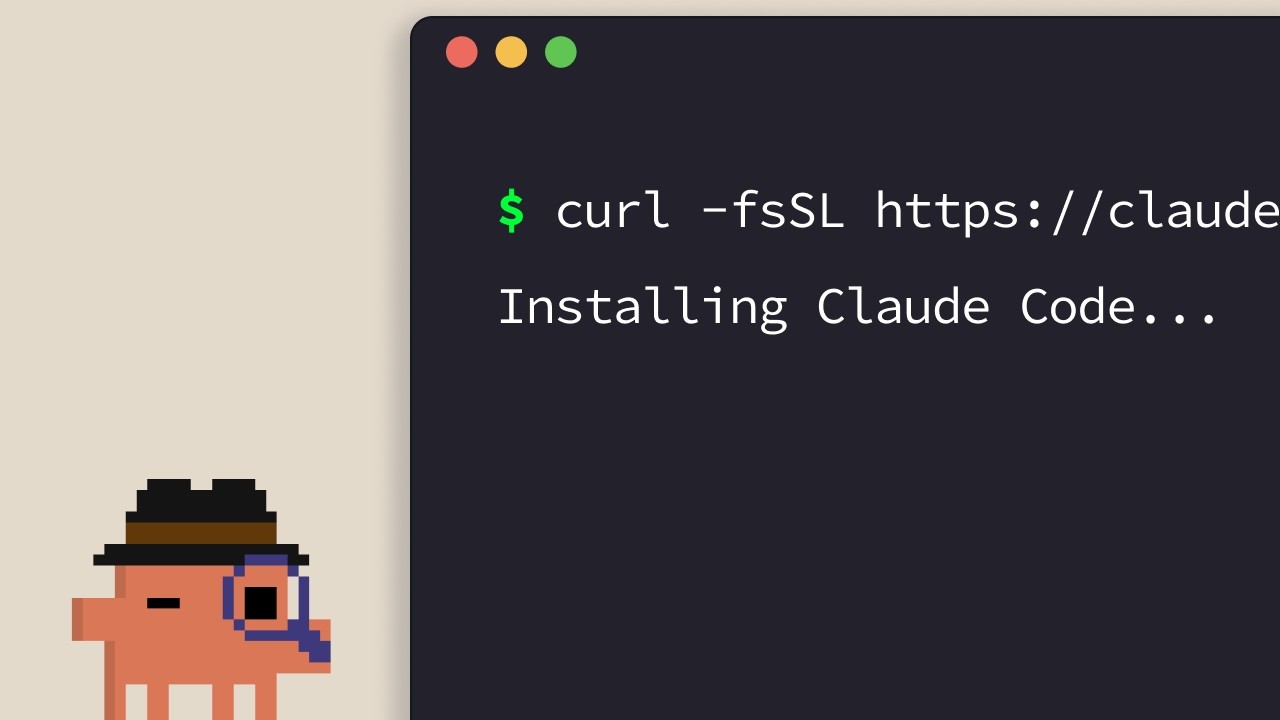
Claude Code इंस्टॉल करना
Claude Code का आधिकारिक इंस्टॉल गाइड। Anthropic के नैरेटर हर समर्थित प्लेटफॉर्म के लिए एक-लाइन इंस्टॉलर की जानकारी देते हैं — टर्मिनल, VS Code, JetBrains, Claude Desktop और वेब — और अंत में सही विकल्प चुनने का सरल नियम बताते हैं। ## [00:04] टर्मिनल के लिए एक-लाइन इंस्टॉलर (macOS, Linux, WSL, Windows) डिफॉल्ट तरीका टर्मिनल है। macOS, Linux और WSL यूज़र्स को एक `curl` कमांड मिलती है; Homebrew भी काम करता है लेकिन ऑटो-अपडेट नहीं करता। Windows पर PowerShell `Invoke-RestMethod` का उपयोग करता है, CMD का अपना `curl` स्निपेट है, और `winget` भी उपलब्ध है लेकिन Homebrew की तरह ऑटो-अपडेट के बिना। > *If you're on macOS, Linux, or WSL, use this curl command to install it in one go. If you prefer to use Homebrew, you can also use brew install to install it, but note that this doesn't have auto-update capabilities.* ## [00:33] अपने प्रोजेक्ट में claude चलाएं और साइन इन करें इंस्टॉल के बाद, अपने प्रोजेक्ट में `cd` करें और `claude` चलाएं। पहली बार लॉन्च पर कलर थीम चुनने और साइन-इन का विकल्प आता है जो Pro, Max, Enterprise या API-key लॉगिन स्वीकार करता है। Enterprise अकाउंट के लिए वह विकल्प स्पष्ट रूप से चुनना जरूरी है। जिस डायरेक्टरी से लॉन्च करते हैं वही एक्सेस सीमा बनती है — Claude Code उस फोल्डर और उसके सभी सबफोल्डर देखता है, ऊपर कुछ नहीं। > *Whatever directory you decide to run cloud in, it will have access to that directory and all of its subfolders.* ## [01:02] VS Code एक्सटेंशन एक्सटेंशन पैनल खोलें, Anthropic का Claude Code एक्सटेंशन सर्च करें और इंस्टॉल से पहले नीले वेरिफाइड चेक की पुष्टि करें। रिस्टार्ट की जरूरत हो सकती है। इंस्टॉल के बाद, कमांड पैलेट (`Ctrl/Cmd+Shift+P`) एक नया Claude Code टैब खोलता है; किसी भी खुली फाइल से लोगो क्लिक कर सकते हैं, या सेटिंग्स में GUI पूरी तरह बंद कर केवल टर्मिनल अनुभव ले सकते हैं। > *You can also opt out of the UI and just use the terminal experience directly in your settings file.* ## [01:32] JetBrains प्लगइन VS Code जैसी ही प्रक्रिया: JetBrains Marketplace से Claude Code प्लगइन इंस्टॉल करें, IDE रिस्टार्ट करें और Claude लोगो दिखने लगेगा। उस पर क्लिक करने से एडिटर के पास एक साइड पेन खुलता है जो टर्मिनल अनुभव देता है। > *For JetBrains IDEs, you can install the Cloud Code plugin from the JetBrains Marketplace. Once you install, restart your IDE.* ## [01:51] Claude Desktop और वेब पर claude.ai/code Claude Desktop में साइन इन के बाद ऐप के ऊपर "code" टॉगल दिखता है जो Claude Code खोलता है — वही चैट-जैसा अनुभव, लेकिन किसी खास फोल्डर तक सीमित, समायोज्य अनुमतियां और क्लाउड एक्ज़ीक्यूशन मोड भी। वेब वर्शन `claude.ai/code` पर है और डेस्कटॉप जैसा ही अनुभव देता है, लेकिन एक कड़ी सीमा के साथ: यह केवल GitHub रिपॉज़िटरी पर काम करता है। > *On the web, you can access Claude code by going to claude.ai/code. This works very similar to the desktop app. However, you're restricted to GitHub repositories only.* ## [02:27] सही विकल्प चुनना नैरेटर का नियम: नई सुविधाएं सबसे पहले चाहिए तो टर्मिनल सबसे बेहतर है। IDE इंटीग्रेशन लगभग समान अनुभव आपके एडिटर के अंदर देता है। Desktop तब चुनें जब Claude बैकग्राउंड में काम करे और आप कुछ और करना चाहते हों। वेब GitHub रिपॉज़िटरी पर रिमोट काम या कई सेशन एक साथ चलाने के लिए है। > *If you want to constantly keep up to date with everything, the terminal is the best bet. Features ship there the fastest.* ## Entities - **Anthropic Tutorial Narrator** (Person): Anthropic के Claude Code 101 कोर्स के वॉयस-ओवर होस्ट। - **Claude Code** (Software): Anthropic का एजेंटिक कोडिंग टूल, जो टर्मिनल, IDEs, डेस्कटॉप और वेब पर इंस्टॉल होता है। - **Homebrew / winget** (Software): आधिकारिक curl/PowerShell इंस्टॉलर के विकल्प पैकेज-मैनेजर मार्ग — दोनों ऑटो-अपडेट नहीं करते। - **VS Code extension** (Software): Anthropic प्रकाशित Claude Code एक्सटेंशन; इंस्टॉल से पहले नीला चेक देखें। - **JetBrains plugin** (Software): JetBrains Marketplace के ज़रिए वितरित Claude Code प्लगइन; IDE रिस्टार्ट के बाद साइड पेन खोलता है। - **Claude Desktop** (Software): "code" टॉगल से Claude Code देने वाला डेस्कटॉप ऐप, फोल्डर स्कोपिंग और क्लाउड एक्ज़ीक्यूशन मोड सहित। - **claude.ai/code** (Service): Claude Code का वेब वर्शन, केवल GitHub-होस्टेड रिपॉज़िटरी तक सीमित।

Abridge के अंदर: 10 करोड़ डॉक्टर विज़िट सुनने वाला AI — Abridge की Janie Lee और Chai Asawa
Abridge की Janie Lee और Chai Asawa, swyx और Redpoint के Jacob Effron के साथ Latent Space × Unsupervised Learning के इस क्रॉसओवर में बताते हैं कि एक AI स्क्राइब कैसे हेल्थकेयर की "क्लिनिकल इंटेलिजेंस लेयर" बन गया। वे एयर कंडीशनिंग वाले प्रोडक्ट फिलॉसफी, प्रायर ऑथराइज़ेशन के इस्तेमाल, क्लिनिशियन-साइंटिस्ट और LLM जज पर आधारित eval स्टैक, HIPAA का डेटा फ्लाईव्हील पर असर, और 10 करोड़ से ज़्यादा मेडिकल बातचीत को संभालने की चुनौतियों पर चर्चा करते हैं। ## [00:00] परिचय एपिसोड की शुरुआत Janie Lee की पिच से होती है — संदर्भ ही सब कुछ है, अलर्टिंग को प्रतिक्रियाशील से प्रोएक्टिव होना चाहिए, और प्रोडक्ट को एयर कंडीशनिंग की तरह पृष्ठभूमि में रहना चाहिए जब तक कोई क्लिनिकल जोखिम सामने न आए। इसके बाद swyx श्रोताओं से सब्सक्राइब करने की अपील करते हैं। > *"हम कहते हैं कि हमारा प्रोडक्ट एयर कंडीशनिंग जैसा होना चाहिए। यह पृष्ठभूमि में रहे और चीज़ें बेहतर करता रहे।"* — Janie Lee ## [01:17] Abridge क्या करता है swyx इसे वार्षिक Latent Space × Unsupervised Learning क्रॉसओवर बताते हैं, और Jacob Effron इसलिए शामिल हैं क्योंकि Redpoint Abridge में निवेशक है। Janie बताती हैं कि Abridge हेल्थ सिस्टम के लिए एक क्लिनिकल इंटेलिजेंस लेयर है जो डॉक्युमेंटेशन से शुरू हुआ: क्लिनिशियन हर हफ्ते 10 से 20 घंटे नोट्स लिखने में बिताते हैं, और मरीज़-डॉक्टर की बातचीत लगभग हर डाउनस्ट्रीम आउटकम की नींव है — क्लेम, भुगतान, डायग्नोसिस। Chai जोड़ते हैं कि मरीज़, पेयर, दिशानिर्देश, और लिटरेचर का पूरा संदर्भ मिलने पर विज़िट से पहले, दौरान, और बाद की हर चीज़ तक पहुंचना संभव हो जाता है। > *"Abridge हेल्थ सिस्टम के लिए एक क्लिनिकल इंटेलिजेंस लेयर है। हमने डॉक्युमेंटेशन और क्लिनिशियन के लिए निर्माण से शुरुआत की।"* — Janie Lee ## [03:22] एम्बिएंट डॉक्युमेंटेशन से क्लिनिकल इंटेलिजेंस तक Janie Abridge के तीन "अध्यायों" का ज़िक्र करती हैं: समय बचाना — वह मूल स्क्राइब प्रोडक्ट जिसने डॉक्टरों को उनकी शामें वापस दीं यानी "पजामा टाइम" खत्म हुआ; रिकॉर्ड-कम ऑपरेटिंग मार्जिन पर चल रहे हेल्थ सिस्टम के लिए पैसे बचाना और कमाना; और अंत में जानें बचाना। यह संभव इसलिए है क्योंकि प्रोडक्ट हर हफ्ते लाखों बार हर विज़िट से पहले, दौरान, और बाद में खुलता है। > *"इसे 'पजामा टाइम' कहते हैं... डॉक्टर घर पर पजामे में काम के बाद हर दिन नोट्स लिखते और पकड़ते रहते थे।"* — Janie Lee ## [05:21] क्लिनिकल डिसीज़न सपोर्ट और संदर्भ की अहमियत Jacob, Chai से पूछते हैं कि Abridge का क्लिनिकल डिसीज़न सपोर्ट Glean से कैसे अलग है। Chai दोनों का अंतर बताते हैं: Glean में गलत जवाब परेशान करता है, लेकिन हेल्थकेयर में वह बड़े नतीजे लाता है और यूज़र सर्फेस बहुत संकरा है — पर्सोना कम हैं, लेकिन हर आउटपुट सटीक होना ज़रूरी है। यही सोच ऑफलाइन इवैल्यूएशन से लेकर प्रोग्रेसिव रोलआउट तक हर चीज़ को आकार देती है, और उस Jarvis जैसे "असिस्टेंट जो आपको सच में जानता है" के विज़न से जुड़ती है जिसे पिछले दशक के हर हैकाथॉन में बनाने की कोशिश हुई। > *"वह Jarvis विज़न, जैसे पिछले दशक में जिस भी हैकाथॉन में गया उसमें Jarvis का कोई न कोई competitor होता था — लेकिन मुझे लगता है Abridge वाकई उसी दिशा में चल रहा है।"* — Chai Asawa ## [08:14] अलर्ट थकान, प्रोएक्टिव इंटेलिजेंस, और प्रायर ऑथराइज़ेशन Jacob क्लासिक अलर्ट-थकान की समस्या उठाते हैं: यह कैसे तय करें कि एयर कंडीशनिंग की शांति कब तोड़नी है और वास्तव में कब दखल देना है? Janie का उदाहरण प्रायर ऑथराइज़ेशन है — MRI रिजेक्शन जो आज हफ्तों बाद मिलती है, उसे मरीज़ के कमरे में मौजूद रहते हुए रियल-टाइम संकेत में बदला जा सकता है, जो पेयर पॉलिसी, EHR डेटा, पूर्व डायग्नोसिस, और क्लिनिक-विशेष प्रोटोकॉल पर आधारित हो। इसकी मुश्किल डेटा प्लंबिंग में है: प्रायर ऑथ तभी काम करता है जब सिस्टम सही पल पर हर जरूरी संकेत को एक साथ जोड़ सके। > *"उस प्रायर ऑथराइज़ेशन उदाहरण को संभव बनाने के लिए — सोचिए कितना सारा डेटा चाहिए।"* — Janie Lee ## [13:53] एम्बिएंट AI के रूप और हेल्थकेयर ग्राहक swyx फॉर्म फैक्टर के बारे में पूछते हैं। आज मुख्य सर्फेस मोबाइल है, लेकिन Abridge डेस्कटॉप, EHR के अंदर ब्राउज़र प्लगइन, इन-रूम डिवाइस, नर्सिंग वर्कफ्लो पर भी चलता है और AR की दिशा में भी देख रहा है। ग्राहक बहु-पक्षीय हैं: CMIO, CFO, CIO, क्लिनिशियन, मरीज़, पेयर, और फार्मा सभी किसी न किसी तरह से जुड़े हैं। पेयर के साथ इंटरेक्शन Abridge के कच्चे डेटा तक सीधी पहुंच के बजाय संरचित आदान-प्रदान के ज़रिए होता है। > *"आप लोग एम्बिएंट AI की काफी बात करते हैं। क्या यह मुख्यतः फोन पर है?"* — swyx ## [18:16] हेल्थकेयर में AI की सबसे कठिन समस्याएं Abridge की सबसे कठिन AI समस्या पूछे जाने पर Chai कहते हैं — हाई-स्टेक्स क्लिनिकल सेटिंग में उच्च गुणवत्ता, कम लेटेंसी, और कम लागत का रियल-टाइम सपोर्ट। पेयर पॉलिसी की लंबी पूंछ को ऐसे इंटरमीडिएट रिप्रेज़ेंटेशन में ढालना जिस पर सिस्टम तर्क कर सके — एक खास उदाहरण है। Pareto फ्रंटियर बदलता रहता है, और उन्हें खुद उसे आगे धकेलना होता है। > *"Pareto फ्रंटियर हमेशा बदल रहा है, लेकिन हम यह अभी करने की कोशिश कर रहे हैं।"* — Chai Asawa ## [19:43] फ्रंटियर मॉडल, मालिकाना डेटा, और मॉडल रणनीति Jacob पूछते हैं कि वे क्या ऑफ-द-शेल्फ लेते हैं और क्या खुद बनाते हैं। Chai का नजरिया: फ्रंटियर मॉडल सामान्य हेल्थकेयर ज्ञान सोखते रहते हैं, इसलिए Abridge की बढ़त मालिकाना मेडिकल-बातचीत डेटा और उस पर बने स्पेशलटी-विशेष व्यवहार में है। वे जहां हो सके मॉडल-अज्ञेयवादी रहते हैं — अंत में सबसे अच्छा प्रोडक्ट अनुभव ही मायने रखता है, और वे वर्कफ्लो के हिसाब से मिक्स करते हैं। > *"हम किसी के लिए भी कुछ भी इस्तेमाल कर सकते हैं — दिन के अंत में हमें बस सबसे अच्छा प्रोडक्ट अनुभव चाहिए।"* — Chai Asawa ## [22:24] एजेंट्स के लिए EHR एक फाइलसिस्टम की तरह अगले साल के लिए Chai का फ्रेमिंग: हर एजेंट के नीचे एक कोडिंग एजेंट होता है, और हेल्थकेयर में EHR फाइलसिस्टम की तरह काम करता है — संरचित जानकारी का एक विशाल भंडार जो किसी भी मौजूदा मॉडल के कॉन्टेक्स्ट विंडो में नहीं समाता। Janie जोड़ती हैं कि लक्ष्य अभी भी क्लिनिशियन को मरीज़ पर केंद्रित रखना है: सही पल पर सही संदर्भ तैयार रखना, बातचीत को फिर से नहीं खोलना। > *"लगभग हर एजेंट के नीचे एक कोडिंग एजेंट होता है — आप उसे जो फाइलसिस्टम दें वह अपना कोड लिख सकता है... EHR को आप फाइलसिस्टम की तरह सोच सकते हैं।"* — Chai Asawa ## [25:20] पर्सनलाइज़ेशन, मेमोरी, और क्लिनिशियन की पसंद Jacob पूछते हैं कि Abridge हर डॉक्टर के लिए पर्सनलाइज़ेशन कैसे संभालता है। Janie का जवाब परतदार है: व्यक्तिगत बदलाव सिग्नल बनते हैं, स्पेशलटी-विशेष डिफॉल्ट उनके ऊपर बैठते हैं, और हेल्थ-सिस्टम पॉलिसी सब कुछ लपेटती है। Chai मेमोरी को एक नई तरह की सिस्टम ऑफ रिकॉर्ड बताते हैं — बैकग्राउंड जॉब्स जो विज़िट भर के सिग्नल को एकत्रित करती हैं, जैसे नींद में इंसानी दिमाग यादें पक्की करता है, ताकि मॉडल हर बदलाव और हर गैर-बदलाव से सीखे। > *"हमारे लिए दिलचस्प एग्ज़ॉस्ट में से एक यह है कि मेमोरी वास्तव में इन नई सिस्टम ऑफ रिकॉर्ड्स में से एक है।"* — Chai Asawa ## [31:57] Evals, LLM जज, और प्रोग्रेसिव रोलआउट Janie eval स्टैक समझाती हैं: इन-हाउस क्लिनिशियन LFD फर्स्ट-पास रिव्यू करते हैं, LLM जज उस एनोटेटेड डेटा के खिलाफ कैलिब्रेट होते हैं, थर्ड-पार्टी इवैल्यूएटर स्वतंत्र पड़ताल करते हैं, और स्पेशलटी-विशेष evals वह पकड़ते हैं जो सामान्य evals चूक जाते हैं। Chai सेल्फ-ड्राइविंग कार की उपमा देते हैं — वे रियलिटी से जल्दी संपर्क चाहते हैं, लेकिन केवल प्रोग्रेसिव रोलआउट के ज़रिए, ताकि ऑफलाइन डिस्ट्रीब्यूशन प्रोडक्शन डिस्ट्रीब्यूशन से मेल खाए। > *"मैं जितनी जल्दी हो सके रियलिटी से संपर्क करना चाहता हूं, लेकिन प्रोग्रेसिव रोलआउट चाहता हूं — ऑफलाइन eval सेट का डिस्ट्रीब्यूशन असल ज़िंदगी के डिस्ट्रीब्यूशन से मेल खाना चाहिए।"* — Chai Asawa ## [38:04] HIPAA, डी-आइडेंटिफिकेशन, और प्राइवेसी प्राइवेसी को डेटा फ्लाईव्हील पर एक कठोर बाधा माना जाता है। Chai बताते हैं कि ऑनलाइन evals या लर्निंग के आधार के रूप में इस्तेमाल किए जाने वाले किसी भी डेटा को डी-आइडेंटिफाइड होना ज़रूरी है — वन-वे। उनके पास इसके लिए इंजीनियर्ड प्रक्रियाएं हैं। Janie जोड़ती हैं कि ग्राहक अनुबंध यह भी तय करते हैं कि Abridge के अंदर PHI तक किसकी पहुंच हो, इसलिए ट्रेनिंग डेटा में क्या जाता है इसका बार केवल नीति से नहीं, अनुबंध से भी ऊंचा है। > *"हम जो भी डेटा इस्तेमाल करते हैं वह डी-आइडेंटिफाइड होना चाहिए — ऑनलाइन eval सेट या लर्निंग के आधार के रूप में इस्तेमाल किया जाने वाला कोई भी असली डेटा।"* — Chai Asawa ## [40:38] 10 करोड़ बातचीत और बड़े पैमाने पर काम करना 10 करोड़ से ज़्यादा बातचीत पर सर्फेस एरिया बदल जाता है: मॉडल रूटिंग, पोस्ट-ट्रेनिंग, रिलायबिलिटी बजट, और प्रति कॉल लागत सभी प्रथम श्रेणी की चिंताएं बन जाती हैं। Chai क्लिनिशियन को दिए जा सकने वाले insights की बात करते हैं, और समयरेखा आगे खींचते हैं — आखिरकार वही बातचीत केवल प्रोवाइडर को नहीं बल्कि सीधे मरीज़ों और उपभोक्ताओं को भी सिग्नल दे सकती है। > *"हमारे 10 करोड़ बातचीत के डेटासेट में बहुत कुछ है। आप सोच सकते हैं कि क्लिनिशियन को क्या insights दिए जा सकते हैं।"* — Chai Asawa ## [45:27] EHR इंटीग्रेशन और क्लिनिकल इंटेलिजेंस लेयर swyx EHR संबंध के बारे में पूछते हैं। Abridge गहरी इंटरऑपरेबिलिटी में भारी निवेश करता है — EHR पार्टनरशिप क्लिनिशियन अपनाने के लिए ज़रूरी है, लेकिन Abridge जो वैल्यू उसके ऊपर रखता है वह अलग दायरे में है: क्रॉस-विज़िट संदर्भ, पेयर-अवेयर तर्क, और वह क्लिनिकल इंटेलिजेंस जो EHR खुद देने में सक्षम नहीं है। > *"EHR एक प्रमुख पार्टनर है — मैं सोचता हूं कि वह रिश्ता कैसा होगा।"* — swyx ## [47:56] हेल्थकेयर रेगुलेशन, लेटेंसी, और हाई-स्टेक्स AI Jacob पूछते हैं कि Abridge ने रेगुलेशन से क्या सीखा। Janie सामान्य कहानी को पलटती हैं — हेल्थकेयर AI के पास वास्तव में रेगुलेटरी टेलविंड है, क्योंकि बार इतना ऊंचा है कि सबसे कठिन समस्याएं यहीं पहले हल होती हैं। Chai उन "चतुर तरकीबों" की बात करते हैं जो वे आज भेजते हैं यह जानते हुए कि फ्रंटियर बदलता रहेगा, और मानते हुए कि उनमें से कुछ पांच साल नहीं टिकेंगी। > *"कुछ सबसे कठिन AI समस्याएं यहीं पहले हल होंगी, क्योंकि बार इतना ऊंचा है।"* — Janie Lee ## [51:28] क्लिनिशियन साइंटिस्ट और लंबी पूंछ की गुणवत्ता Janie Abridge के एक आंतरिक रोल का ज़िक्र करती हैं जिसे "क्लिनिशियन साइंटिस्ट" कहते हैं — MD जो तकनीकी भी हैं, फुल-स्टैक इंजीनियर से लेकर "बेहद कुशल प्रॉम्पटर" तक। उन्हें प्रोडक्ट और eval टीमों में शामिल रखने से जो शिप होता है उसका बार ऊंचा रहता है, क्योंकि LFD मानदंड लिखने वाले लोग वही हैं जो वास्तव में समझते हैं कि क्लिनिकल रूप से उपयोगी क्या है। swyx इसे ज्ञात कमज़ोर बिंदुओं पर सक्रिय सीखने से जोड़ते हैं — वह पॉलिश जो अधिकांश AI शॉप्स में अब खोई हुई कला है। > *"हमारे पास 'क्लिनिशियन साइंटिस्ट' नाम का यह रोल है — मैंने हमारे एक लीडर को उन्हें हाल ही में 'म्यूटेंट' कहते सुना।"* — Janie Lee ## [54:21] Glean से सबक और टिकाऊ AI इन्फ्रास्ट्रक्चर Jacob पूछते हैं कि Glean से क्या काम आता है। जवाब ज़्यादातर इस बारे में है कि समय के साथ क्या टिकता है — कॉन्टेक्स्ट लेयर, इवेंट-ड्रिवन सिस्टम, Kafka, Temporal, सॉकेट, Google Docs की सहयोग प्लेबुक से CRDTs। मल्टी-एजेंट सिस्टम वही कॉन्फ्लिक्ट-रिज़ॉल्यूशन समस्याएं विरासत में लेते हैं जो इंसानों के बीच होती हैं, और पिछले दशक के इन्फ्रा पैटर्न को छोड़ा नहीं जा रहा — उन्हें नए उद्देश्य के लिए इस्तेमाल किया जा रहा है। > *"बहुत सारी इवेंट-ड्रिवन टेक्नोलॉजी है... चाहे Kafka हो, Temporal हो, सॉकेट हो — इन्हें एक साथ कैसे लाएं, यह भी मेरे हिसाब से टिकाऊ है।"* — Chai Asawa ## [58:20] एजेंटिक हेल्थकेयर वर्कफ्लो का भविष्य एक संक्षिप्त चर्चा इस बारे में है कि अधिक एजेंटिक Abridge कैसा दिखेगा: अभी भी मरीज़ के साथ क्लिनिशियन की भूमिका पर केंद्रित, लेकिन अधिक बैकग्राउंड काम के साथ — लैब पर प्रतिक्रिया, फॉलो-अप तैयार करना, और क्लिनिशियन की ओर से क्षमताएं लेना बिना उस रिश्ते को अपने हाथ में लिए। > *"क्लिनिशियन की ओर से और भी अधिक क्षमताएं — जो मरीज़ कनेक्शन के मामले में बेहद अहम भूमिका निभाते हैं।"* — Chai Asawa ## [58:51] PRD, प्रोडक्ट स्पष्टता, और गंभीर AI प्रोडक्ट बनाना Jacob का क्विकफायर: पिछले साल AI में आपने अपना मन किस बात पर बदला। Janie लोकप्रिय राय पलटती हैं — प्रोटोटाइप सब कुछ नहीं होते, PRD मरे नहीं हैं। जैसे-जैसे प्रोडक्ट जटिल और AI-संचालित होते हैं, एक असली PRD का लिखित-स्पष्टता अनुशासन अधिक ज़रूरी होता है, कम नहीं। बाकी हिस्सा हेल्थकेयर में गंभीर AI प्रोडक्ट बनाने पर है: स्वामित्व, लिखित स्पेक का अनुशासन, और डेमो-संचालित विकास का विरोध। > *"गर्म राय यह है कि प्रोटोटाइप ही सब कुछ हैं और PRD मर चुके हैं।"* — Janie Lee (वह राय जो उन्होंने बदली) ## [64:28] Abridge में AI कोडिंग टूल्स swyx का मानक आउट्रो सवाल। Abridge अंदरूनी तौर पर Claude Code और Cursor इस्तेमाल करता है, और Jacob एक आधे-मज़ाक में बेंचमार्क सुझाते हैं — वे Claude को एक अरब डॉलर की प्री-रेवेन्यू कंपनी चलाते देखना चाहेंगे। > *"Claude यह करेगा जैसे — मैं Claude को एक अरब डॉलर प्री-रेवेन्यू पर कंपनी चलाते देखना चाहूंगा।"* — Jacob Effron ## [65:23] आउट्रो Chai श्रोताओं को Abridge की वेबसाइट पर उनके व्हाइट पेपर देखने के लिए कहते हैं — हैलुसिनेशन कम करना, evals, और बाकी रिसर्च स्टैक। swyx और Jacob धन्यवाद और विदाई के साथ समाप्त करते हैं। > *"Abridge की वेबसाइट पर हमारे बहुत सारे व्हाइट पेपर हैं जहां हमने हैलुसिनेशन कम करने जैसे दिलचस्प काम किए हैं।"* — Chai Asawa ## संस्थाएं - **Janie Lee** (व्यक्ति): Abridge की सह-संस्थापक-युग की ऑपरेटर; क्लिनिकल इंटेलिजेंस लेयर के प्रोडक्ट / कमर्शियल पक्ष पर। - **Chai Asawa** (व्यक्ति): Abridge के क्लिनिकल डिसीज़न सपोर्ट लीड; पहले Glean में थे। - **swyx** (व्यक्ति): Latent Space के होस्ट। - **Jacob Effron** (व्यक्ति): Redpoint Ventures में पार्टनर; Unsupervised Learning पॉडकास्ट के होस्ट। - **Abridge** (संगठन): हेल्थकेयर AI कंपनी जो क्लिनिकल इंटेलिजेंस लेयर बना रही है — एम्बिएंट डॉक्युमेंटेशन से शुरू होकर अब डिसीज़न सपोर्ट, प्रायर ऑथराइज़ेशन, evals, और EHR इंटीग्रेशन में विस्तार कर रही है। - **Glean** (संगठन): एंटरप्राइज़ AI सर्च कंपनी; Chai के पूर्व कार्यस्थल और Abridge के हॉरिज़ॉन्टल-बनाम-वर्टिकल तुलना के रूप में संदर्भित। - **Redpoint Ventures** (संगठन): वेंचर कैपिटल फर्म; Abridge निवेशक और Unsupervised Learning क्रॉसओवर का घर। - **EHR (Electronic Health Record)** (अवधारणा): वह सिस्टम-ऑफ-रिकॉर्ड जिस पर हेल्थ सिस्टम चलते हैं; Chai का नजरिया — EHR हेल्थकेयर एजेंट्स के लिए फाइलसिस्टम की तरह काम करता है। - **प्रायर ऑथराइज़ेशन** (अवधारणा): Abridge का एक मुख्य उपयोग मामला — हफ्तों लंबी पेयर रिजेक्शन को विज़िट के दौरान रियल-टाइम मार्गदर्शन में बदलना। - **LFD प्रक्रिया** (अवधारणा): Abridge की आंतरिक क्लिनिशियन-नेतृत्व वाली फर्स्ट-पास रिव्यू जो LLM जज को कैलिब्रेट करने और eval मानदंड परिभाषित करने में इस्तेमाल होती है। - **क्लिनिशियन साइंटिस्ट** (अवधारणा): Abridge का एक रोल — MD जो तकनीकी भी हैं, प्रोडक्ट और eval टीमों में शामिल। - **प्रोग्रेसिव रोलआउट** (अवधारणा): Abridge का तैनाती अनुशासन; ऑफलाइन डिस्ट्रीब्यूशन को ईमानदार रखने के लिए असली ट्रैफिक के एक हिस्से को शिप करना, सेल्फ-ड्राइविंग की रिलीज़ पैटर्न पर आधारित। - **Claude Code** (सॉफ्टवेयर): AI कोडिंग टूल जो Abridge अंदरूनी तौर पर इस्तेमाल करता है। - **Cursor** (सॉफ्टवेयर): AI कोडिंग एडिटर जो Abridge अंदरूनी तौर पर इस्तेमाल करता है।

Pax Silica: Trump प्रशासन की Tech रणनीति के अंदर — Jacob Helberg के साथ
US Under Secretary of State Jacob Helberg No Priors पर वापस आए हैं Pax Silica का खुलासा करने के लिए, जो एक 14-देशों का economic-security coalition है और जो पूरी AI supply chain को सुरक्षित करने के लिए बना है, chips से लेकर rare-earth magnets और robot actuators तक। flagship project है: Philippines में 4,000 एकड़ जमीन, US को एक "forward-deployed industrial base" के लिए दी गई, जिसका उद्देश्य liberal-democratic capitalism के लिए वही करना है जो China के Belt and Road ने state-led infrastructure के लिए किया, लेकिन state-owned enterprises की जगह private companies और venture capital द्वारा संचालित। Sarah Guo और Elad Gil ने Helberg से policy की टिकाऊपन, VCs की भूमिका, और इस बारे में प्रश्न किए कि वे America को "global underdog" क्यों कहते हैं। ## [00:00] Cold Open Helberg Pax Silica के दार्शनिक मूल के साथ शुरुआत करते हैं: US, state-run factories से supply-chain प्रतिस्पर्धा नहीं जीतेगा। हमारी ताकत हमारा private sector और हमारी कंपनियाँ हैं, Steve Jobs का "enchant and delight" अरबों लोगों तक पहुँचाया गया। इसलिए रणनीति यह है कि American builders के साथ मिलकर ऐसे platforms बनाए जाएँ जो अंततः government के बाहर commercial services के रूप में काम कर सकें। > *हम government-operated supply chains नहीं बनाएँगे क्योंकि एक देश के रूप में यही हमारी ताकत नहीं है। हमारी असली ताकत हमारा private sector और हमारी कंपनियाँ हैं।* ## [00:41] Jacob Helberg का परिचय Sarah और Elad ने Helberg को फिर से introduce किया, जो अब Under Secretary of State for Economic Affairs के रूप में confirmed हैं। इस घंटे का framework: Pax Silica एक बहुराष्ट्रीय प्रयास है जो US और उसके सहयोगियों के लिए AI supply chain सुरक्षित करने का काम करता है। > *Jacob, यहाँ आने के लिए बहुत-बहुत धन्यवाद। हाँ, शामिल होने के लिए धन्यवाद। आमंत्रण के लिए धन्यवाद।* ## [01:02] Pax Silica का मिशन Helberg ने Pax Silica को अपने Hudson Institute के भाषण से जोड़ा जिसने supply chains के लिए "ecosystems-based" दृष्टिकोण की रूपरेखा दी। Coalition अब 14 देशों तक फैली है। पहली ठोस product rollout थी Philippines की व्यवस्था: 4,000 एकड़ जमीन US को एक forward-deployed industrial base के लिए दी गई। उन्होंने इस दाँव को American common-law की पूर्वानुमानशीलता और Philippine industrial तुलनात्मक लाभों के संयोजन के रूप में पेश किया और इसे AI supply chain का product launch equivalent बताया। > *Pax Silica एक economic security coalition है जिसमें अब 14 देश शामिल हैं और इसका उद्देश्य हमारी supply chains, विशेष रूप से AI supply chain, के लिए ecosystems-based दृष्टिकोण अपनाना है।* ## [03:51] AI Chip Supply Chains में निवेश AI supply chain chips से कहीं ज़्यादा विस्तृत है, "हजारों inputs जैसे precision reducers और server motors और rare earth magnets और actuators" और लगभग सभी में US का concentration risk बेहद अधिक है। Helberg का framework है उन geographies को चुनना जिनके पास पहले से indigenous industrial depth और values alignment हों। Philippines दोनों में fit होता है: एक गहरा manufacturing ecosystem और एशिया में US का सबसे पुराना सहयोगी। Robotics को chips के बाद अगली bottleneck के रूप में स्पष्ट ध्यान मिला। > *AI supply chain में वास्तव में हजारों inputs शामिल हैं जैसे precision reducers और server motors और rare earth magnets और actuators और एक देश के रूप में लगभग इन सभी inputs में हमारा concentration risk बेहद अधिक है।* ## [05:43] Pax Silica की तुलना China के Belt and Road Initiative से स्वाभाविक तुलना, और Helberg उसमें खुद को झोंक देते हैं। Belt and Road, उन्होंने audience के लिए समझाया, 25 साल के state-owned enterprises थे जो government-operated roads, bridges, railways, mines और processing plants विदेशों में बना रहे थे, infrastructure एक foreign-policy tool के रूप में। Pax Silica जानबूझकर model को पलट देता है: assets private और commercially viable हैं, government की भूमिका friction कम करना और allies को align करना है, और लक्ष्य है sticky economic interdependence न कि political leverage। Helberg का तर्क है कि यह ज़्यादा टिकाऊ और पारदर्शी दोनों है। > *मूलभूत रूप से यह था कि state-owned enterprises ने सरकार द्वारा संचालित railways, government द्वारा बनाई सड़कें और पुल बनाए।* ## [12:38] Pax Silica का Value Proposition Partner देशों के लिए pitch सरल है: AI पहले से ही US GDP वृद्धि के एक तिहाई से अधिक को fuel कर रही है और copper, cobalt, electricians और data center में जाने वाले हर input की record माँग पैदा कर रही है। जो देश उस supply chain के विभिन्न layers में सार्थक हिस्सेदारी लेते हैं वे ऐसी growth हासिल करते हैं जो वे अन्यथा नहीं कर सकते। Helberg tech inflection points की non-zero-sum प्रकृति पर ज़ोर देते हैं। > *Pie बहुत तेज़ी से बढ़ती है। इसलिए यह zero-sum नहीं है, जो इसे बेहद फायदेमंद संबंध बनाने के लिए अनुकूल बनाता है।* ## [14:38] US में बनाम साझेदारी में निर्माण Elad ने स्पष्ट सवाल पूछा: US में क्या रहता है बनाम क्या partner किया जाता है? Helberg का framework है consumption-versus-production। US दुनिया की 4% जनसंख्या है लेकिन ज़्यादातर categories में global output का 20-30% consume करता है और बहुत कम produce करता है। उस gap को बंद करने से ही America का reindustrialization होगा। कुछ चीज़ें (state-of-the-art fabs, defense-critical capabilities) domestic होनी चाहिए। अन्य (mineral processing, कुछ components) partner countries में बेहतर हैं। instinct autarky नहीं बल्कि supply chain का allies में deliberate redistribution है। > *America किसी भी तिमाही में global consumption का 20 से 30% हिस्सा consume करता है।* ## [19:10] Rare Earth Mineral की कीमतें Elad ने rare earths पर ज़ोर दिया: वास्तव में rare नहीं, कुल market केवल कुछ billion dollars, China द्वारा control lever के रूप में heavily subsidized। Helberg सहमत हुए और economics को reframe किया: rare-earth competitiveness को जो determine करता है वह geological scarcity नहीं बल्कि energy intensity और extraction की grade-quality है। इसका मतलब है कि policy question energy abundance और processing capacity के बारे में है, नए deposits खोजने के बारे में नहीं। > *उन industries की economics को वास्तव में drive करता है यह है कि आपको एक निश्चित quality grade पर एक mineral निकालने के लिए ज़मीन में कितनी energy डालनी पड़ती है।* ## [22:16] Pax Silica में Venture Capital की भूमिका Sarah ने "एक दोस्त की ओर से" पूछा कि private capital की क्या भूमिका है। Helberg का जवाब एक State Department official के लिए असामान्य रूप से direct था: VCs founders और operators को assess करने में government से बेहतर हैं, और execution capacity यह determine करती है कि ambitious projects reality से संपर्क में टिकती हैं या नहीं। वे venture ecosystem को एक signal layer के रूप में चाहते हैं, government allocation उस पर ride कर सके जहाँ credible operators पहले से जा रहे हैं। > *आप founders और operators के personality attributes को assess करने के लिए hardwired हैं।* ## [24:50] निकट बनाम दीर्घकालिक प्राथमिकताएँ 2027-2028 deliverables और five-year plays में कैसे balance करें? Helberg का जवाब है environment-setting, timelines picking नहीं। Administration का दृष्टिकोण macro environment को इस तरह shape करना है कि short-term iteration और long-term capital-intensive plays दोनों आसान हों, red tape काटना, domestic energy supply बढ़ाना, nuclear quadruple करना। > *Environment को shape करना, एक ऐसा macro environment बनाना जो मूलभूत रूप से innovation, innovations की iteration और innovations की deployment को बहुत आसान और कम महँगा बनाए।* ## [27:09] AI Policy को टिकाऊ बनाना Elad ने executive-order problem उठाई: हर administration पिछली के orders रद्द करती है। Pax Silica किसी transition से कैसे बचेगा? Helberg ने नोट किया कि कुछ चीज़ें जैसे tax reform बहुत sticky हैं और उनकी भूमिका उन्हें electoral commentary से bar करती है। वे durability question का पूरा जवाब नहीं देते, जो खुद में एक जवाब है: durability legislation और ground facts से आनी होगी। > *Tax reform बहुत sticky है।* ## [28:09] नीतियाँ Entrepreneurs को कैसे प्रभावित करती हैं American business owners और operators के लिए Pax Silica को market-access platform के रूप में positioned किया गया है, US companies के लिए Japan, South Korea, India और Singapore जैसे allied markets में बेची जाने वाली चीज़ों का विस्तार। Helberg विशेष रूप से operators से feedback चाहते हैं, पहले से चल रही partnerships, supply-chain decisions जो executives अब ज़्यादा deliberately ले रहे हैं, और policy fixes जो cross-border collaboration को unblock करें। > *हम इसे हमारी कंपनियों के लिए market access expand करने के platform के रूप में उपयोग करना चाहते हैं।* ## [31:00] Trump का Entrepreneurial प्रशासन जब पूछा गया कि State में शुरू होने के बाद सबसे बड़ा surprise क्या रहा, Helberg ने administration की speed और risk appetite को बताया, "Trump time," overseas counterparts के साथ running joke। वे इसका श्रेय एक ऐसे President को देते हैं जिन्होंने अपने जीवन का अधिकांश समय private sector में बिताया और एक cabinet जो bureaucratic के बजाय private-sector instincts से काम करती है। > *हम Trump time में चलते हैं।* ## [33:00] America एक Global Underdog क्यों है Sarah ने Helberg के America को "global underdog" बताने के framing पर ज़ोर दिया। Helberg ने Graham Allison के Thucydides Trap को invoke किया और framing को चुनौती दी: America की founding से ही पहचान underdogs की एक nation रही है, 13 अव्यवस्थित colonies polite society के empire के खिलाफ बगावत करती हुईं, बार-बार decline की भविष्यवाणी की गई, बार-बार establishment-class predictions गलत साबित हुईं। यह तर्क American risk-taking culture की एक defense के रूप में और closing pitch के रूप में उतरता है: देश तब जीतता है जब वह underdog की तरह behave करता है न कि incumbency defend करके। > *हम हमेशा underdogs की एक nation रहे हैं।* ## व्यक्ति एवं संस्थाएं - **Jacob Helberg** (व्यक्ति): US Under Secretary of State for Economic Affairs; Pax Silica के architect। - **Sarah Guo** (व्यक्ति): No Priors host; Conviction में founder और GP। - **Elad Gil** (व्यक्ति): No Priors host; independent investor और serial entrepreneur। - **Pax Silica** (अवधारणा): US State Department के नेतृत्व में एक 14-देशों का economic-security coalition, जो forward-deployed industrial bases और private-sector partnerships के ज़रिए AI supply chain सुरक्षित करने का लक्ष्य रखता है। - **Belt and Road Initiative** (अवधारणा): China का 25-वर्षीय state-led overseas infrastructure program, जिसके विरुद्ध Pax Silica खुद को खड़ा करता है। - **Philippines Forward-Deployed Industrial Base** (परियोजना): US को industrial build-out के लिए दी गई 4,000 एकड़ जमीन, Pax Silica का पहला flagship project। - **Thucydides Trap** (अवधारणा): Graham Allison का framework जो US-China को established-power-vs-rising-power के रूप में characterize करता है; Helberg established-power framing को अस्वीकार करते हैं। - **Trump Administration** (संगठन): Pax Silica की policy speed और risk appetite ("Trump time") को frame करता है, cabinet members Scott Bessent और Howard Lutnick referenced।
Suno's Mikey Shulman: Everyone Can Make Music Now
Mikey Shulman, co-founder of Suno, discusses the platform's evolution from a physics-based startup to a leader in generative AI music. By modeling music as raw sound waves rather than traditional theory, Suno empowers users to transition from passive listeners to active creators in the era of 'creative entertainment.' ## [00:00] Physics, Raw Sound, and Technical Philosophy Mikey Shulman explains how his background in quantum physics at Harvard influenced Suno's interdisciplinary approach to music technology. By modeling audio as raw sound waves sampled 48,000 times per second rather than using traditional music theory, Suno avoids creative constraints and allows for the emergence of new, microtonal genres. > *I think what I mostly learned is playing at the nexus of two things that don't usually play together is just a massive opportunity. [02:00]* ## [02:15] The Pivot to Consumer Music Generation Initially focused on audio analysis, the Suno team pivoted to generation after breakthroughs in audio compression made high-quality output computationally feasible. They validated the product's 'fun factor' through a Discord bot, discovering that the addictive nature of creation was a stronger signal than traditional business use cases. > *When you are staying up late playing with the thing, and you don't want to go to sleep, it's like a really good sign. [04:49]* ## [11:41] Why Music AI is a Research Problem, Not a Scale Problem Unlike Large Language Models, music generation lacks objective benchmarks, making raw compute scale less effective than targeted research. Shulman emphasizes using human preference data and reinforcement learning to align models with creative tastes, favoring a steady release cadence over long-term isolated development. > *In music there are no right answers. There are no benchmarks. Um, and so scale is somewhat less helpful in solving it. [12:28]* ## [16:22] From Passive Consumption to Creative Entertainment Shulman introduces the concept of 'creative entertainment,' where the act of building provides more fulfillment than the final product itself. He notes that 90% of Suno users are active creators, drawing parallels to the 'bedroom producer' era where accessible tools led to the discovery of new genres. > *People are creating music for the fun and enjoyment and fulfillment that comes with being creative. [17:05]* ## [22:52] Industry Partnerships and Professional Integration Addressing industry concerns, Shulman highlights Suno's partnership with Warner Music Group and its role in augmenting professional workflows. He argues that AI will raise the quality ceiling for artists and predicts that interactive live performances, such as audience participation at Coachella, are the next frontier. > *I think people incorrectly assume that we hate the existing music industry and especially we hate the record labels. [23:17]* ## [25:53] Product Strategy and the Application Moat Suno prioritizes the application layer and user experience as its primary competitive moat, viewing itself as a music company rather than just a technology firm. By focusing on storytelling through full-length lyrical songs and social co-creation features, the company aims to revive the cultural impact of music as a social medium. > *It's unclear how much moat exists in only a model... it's just really undervalued to invest in the product and the UI and the UX. [26:50]* ## Entities - **Mikey Shulman** (person): CEO and co-founder of Suno with a PhD in physics from Harvard. - **Suno** (organization): An AI-powered creative entertainment platform for music generation. - **Sonya Huang** (person): Partner at Sequoia Capital and host of the interview. - **Warner Music Group** (organization): A major global record label that partnered with Suno. - **Discord** (organization): The platform where Suno initially launched its music generation bot. - **Harvard** (organization): The university where Mikey Shulman studied quantum computing. - **Iamona** (person): A poet and artist who uses Suno to create music, illustrating the tool's professional potential. - **Coachella** (event): A major music festival cited as a future venue for interactive AI music experiences.

जिन Founders ने Tesla छोड़कर America को फिर से बनाया | a16z
America critical mineral supply में China से 50 साल पीछे है, और उसका grid अभी भी सौ साल पुरानी mechanical systems पर चल रहा है। Turner Caldwell (Mariana Minerals) और Drew Baglino (Heron Power) — दोनों ex-Tesla — का तर्क है कि इन अंतरों को पाटना ही AI dominance और industrial re-shoring की असली पूर्व-शर्त है। Caldwell reinforcement-learning-driven autonomous refineries और mines पर दांव लगा रहे हैं ताकि project timelines को एक दशक से घटाया जा सके; Baglino solid-state transformers पर, जो steel, oil, और copper की जगह silicon और software लेते हैं। दोनों एक ही unlock पर आकर मिलते हैं: co-located supply chains, analog-industry से hiring, और टिकाऊ federal industrial policy जिस पर private capital भरोसा कर सके। ## [00:00] परिचय एपिसोड तीन compressed assertions के साथ शुरू होता है: Caldwell बताते हैं कि अमेरिका critical mineral supply में 50 साल पीछे है और लाइसेंस मिलने के बाद भी capacity रफ्तार पकड़ने में बहुत धीमा है; Baglino कहते हैं कि grid की transmission और conversion layer में कोई meaningful बदलाव नहीं आया जबकि उसके किनारे पर सब कुछ बदल गया; Price-Wright दोनों को उसी techno-optimism से हल करने योग्य बताती हैं जो Tesla ने electric vehicles पर लगाई थी। > *"यह विश्वास कि पुरानी और जीर्ण-शीर्ण systems पर innovation हो सकती है, company के core में है।"* — Turner Caldwell ## [00:47] AI को Physical Infrastructure चाहिए Price-Wright मुख्य segment की शुरुआत उस category error को नाम देकर करती हैं जो अधिकांश AI-race commentary में है: प्रतिस्पर्धा models और chips के बीच नहीं, बल्कि physical buildout capacities के बीच है। Every breakthrough model, नई factory और autonomous system की नीचे एक real-world requirement है — materials, energy, और बिजली को जहां चाहिए वहां पहुंचाने की क्षमता। Grid strain एक ceiling नहीं बल्कि action का आह्वान है। > *"अगर हम अमेरिका की industrial backbone को फिर से बनाना चाहते हैं, तो हमें पूरे stack पर फिर से सोचना होगा — critical minerals से लेकर energy generation, transmission, और जिस गति से नई infrastructure ज़रूरी है उस गति से उसे बनाने और जोड़ने तक।"* — Erin Price-Wright ## [02:23] Builders से मिलिए Price-Wright दोनों guests को physical stack के विपरीत सिरों पर काम करने वाले builders के रूप में पेश करती हैं: Caldwell पृथ्वी की सतह से refining तक, Baglino तार से transformer होते हुए load तक। यह framing episode की thesis को पैना करती है: America का AI भविष्य atoms से constrained है, algorithms से नहीं। > *"America के AI भविष्य की बाधा, और व्यापक re-industrialization की भी, कई मायनों में algorithms नहीं बल्कि atoms हैं।"* — Erin Price-Wright ## [03:11] Mariana Minerals क्या है Mariana Minerals एक software-first mining और refining company है — टीम का करीब एक चौथाई software और ML engineers हैं — लेकिन यह software नहीं बेचती। यह अपने projects को खुद engineer, build और operate करती है। Caldwell तीन operating systems बताते हैं: Capital Project OS engineering, procurement, और construction में agentic workflow automation करता है; Plant OS reinforcement learning से refinery temperatures, flow rates, chemical addition rates, और residence times को autonomously control करता है; Mine OS यही RL approach mining operations के short-interval autonomous control में लागू करता है। Southeast Utah में एक copper mine high-purity copper produce कर रही है; Texas में lithium refinery निर्माणाधीन है, 10 साल में 10 projects का लक्ष्य है। > *"हम refineries में autonomy पर बड़ा दांव लगा रहे हैं जहां reinforcement learning का उपयोग करके refineries के संचालन में humans को loop से बाहर किया जाता है।"* — Turner Caldwell ## [04:19] Heron Power का Grid Upgrade Baglino समस्या को चार दशकों के divergence में trace करते हैं: power semiconductors में Moore's Law जैसे सुधार ने phones, telecom, और data centers को बदल दिया, लेकिन grid अभी भी 100 साल पहले की largely mechanical systems पर चल रहा है। कोई control नहीं, कोई monitoring नहीं, एक overbuilt fragile system — और अधिकांश transformer suppliers का headquarters overseas है, जिसे Baglino supply-chain security की समस्या मानते हैं। Heron Power solid-state transformers बनाती है जो power conversion में steel, oil, और copper की जगह silicon और software से लेते हैं। > *"Heron Power में हम solid-state transformers बनाने पर focused हैं जो power conversion में steel, oil, और copper की जगह silicon और software लेते हैं।"* — Drew Baglino ## [05:31] Onshoring क्यों ज़रूरी है Baglino silicon carbide — solid-state transformers को enable करने वाले key power semiconductor — को DOE और Navy के दशकों के R&D से trace करते हैं, तर्क देते हैं कि अमेरिकी investment से बनी technology को पहले यहीं commercialize होना चाहिए। Caldwell minerals case को और पैना करते हैं: अमेरिका specifically China से 50 साल पीछे है, और permitting reform plus project finance अकेले यह gap नहीं पाट सकते। bottleneck licensing के बाद की execution speed है — 5 साल build में, 3-5 साल operating rate तक — और Mariana का पूरा thesis उस phase को compress करना है। > *"China से catch up के बोझ कम करना शुरू करें तो भी हमें China से तेज़ जाना होगा।"* — Turner Caldwell ## [07:48] Tesla के सबक और Workforce Caldwell Tesla से तीन transferable assets बताते हैं: legacy systems के प्रति techno-optimism, risk appetite जो fast decisions enable करती है, और high-value projects न छोड़ने की institutional commitment। Baglino do-or-die financial stakes जोड़ते हैं — "करो या मरो कहना ठीक नहीं लगता, लेकिन यह उसके बराबर है" — और mission clarity को talent beacon के रूप में। Workforce के बारे में दोनों nonexistent specialists का इंतज़ार करने की बजाय analog industries की तरफ देखते हैं: Baglino ने 4680 program के 50 GWh Texas facility के लिए high-speed bottling plants और syringe facilities से battery manufacturing talent hire किया; Caldwell oil-and-gas engineers और routing-style optimization algorithms लिखने वाले software developers लेते हैं। US और China factory floors के बीच labor cost differential COGS का 10% से कम है — Baglino का तर्क है शायद 5% से भी कम — और असली competitiveness driver co-located supply chains हैं, जहां China के industrial zones में 7,000 parts वाली car का हर part 3 घंटे की drive के अंदर है। > *"आज की factories बहुत automated हैं। Labor differential cost of goods sold का 10% से कम है। Competitiveness drive कर रही है supply chain।"* — Drew Baglino ## [21:09] Policy की मांगें और समापन Caldwell mineral policy के लिए वह पूरा toolkit मांगते हैं जो पिछले 50 साल में oil और gas के लिए इस्तेमाल हुआ, एक ऐसे incentive structure के साथ जो private capital markets को long-term market confidence दे। Baglino तीन specific चीज़ें बताते हैं: durable industrial policy जिसे suppliers और financiers plan कर सकें; energy और manufacturing build-out zones designate करने का concerted federal-state effort जहां local jurisdictions default to yes; और grid के लिए federal highway trust fund equivalent — manufacturing zones को linear transmission infrastructure से जोड़ने वाला एक funded master plan। > *"मुझे grid के लिए federal highway trust fund का विचार पसंद है। यह कभी नहीं रहा। इसीलिए यह patchwork है।"* — Drew Baglino ## व्यक्ति एवं संस्थाएं - **Turner Caldwell** (व्यक्ति): Mariana Minerals के co-founder और CEO; Tesla की minerals और metals team के lead; reinforcement learning से autonomous refinery और mine control के architect। - **Drew Baglino** (व्यक्ति): Heron Power के co-founder और CEO; 18 साल Tesla में SVP Powertrain & Energy Engineering; Megapack program और Texas में 4680 50 GWh battery facility बनाई। - **Erin Price-Wright** (व्यक्ति): a16z में General Partner (American Dynamism practice); episode की host। - **Mariana Minerals** (संस्था): Software-first critical minerals mining और refining company; Southeast Utah में copper mine operate करती है, Texas में lithium refinery बना रही है; 10 साल में 10 projects का लक्ष्य। - **Heron Power** (संस्था): Power electronics startup जो mechanical grid conversion equipment को silicon और software से बने solid-state transformers से replace करती है। - **Tesla** (संस्था): दोनों founders का shared origin; techno-optimism, risk appetite, और mission-driven talent का benchmark। - **Silicon Carbide** (अवधारणा): Solid-state transformers को enable करने वाला key power semiconductor; दुनिया का अग्रणी उत्पादक US-based है, जो domestic commercialization को Baglino की strategic priority बनाता है। - **Reinforcement Learning for Industrial Control** (अवधारणा): Mariana के Plant OS और Mine OS की core technology — scarce human operators के embedded know-how की bottleneck हटाकर refinery circuits और mining short-interval decisions को autonomously tune करती है। - **Co-located Supply Chains** (अवधारणा): US manufacturing competitiveness के लिए Baglino का primary argument — logistics time और cost को एक region में सभी inputs cluster करके कम करना, China के industrial zone model की तर्ज़ पर जहां 7,000-part car का हर part 3 घंटे की drive के अंदर है।

Claude Code आपका Second Brain बन सकता है
Noah Brier अपने basement में एक mini PC पर Claude Code चलाते हैं, जो Tailscale VPN के ज़रिए उनके Obsidian vault से sync होता है। वे phone से ही असली सोच-विचार, research और client code का काम करते हैं। बातचीत में उन्होंने बताया कि उन्होंने यह stack कैसे बनाया, model को समय से पहले artifacts draft करने से रोकने के लिए "thinking mode" guardrails क्यों लागू किए, और उनकी यह व्यापक theory कि AI तब सफल होता है जब वह organizational नुक्कड़-कोनों में घुस जाता है बजाय लोगों से नई structures अपनाने की मांग करने के। Dan Shipper और Noah यह भी तय करते हैं कि AI intuition बनाने का वास्तव में क्या अर्थ है, और Noah को क्यों लगता है कि बच्चों को AI के लिए तैयार करना cheating रोकने से कम और epistemic skepticism सिखाने से ज़्यादा है। ## [00:00] Noah Brier का basement server पर Claude Code setup Dan Shipper एपिसोड की शुरुआत उस setup के वर्णन से करते हैं जो Noah को आमंत्रित करने लायक बनाता है: basement में एक home server जो Obsidian vault के ऊपर Claude Code चलाता है और phone से कहीं से भी accessible है। Noah ने यह व्यवस्था ऐसे की है कि वे बिना desk पर बैठे सोच सकते हैं, research कर सकते हैं, लिख सकते हैं और code ship कर सकते हैं। > *"उन्होंने अपने basement में एक home server लगाया, उसमें अपना Obsidian vault डाला, और फिर उसके ऊपर Claude Code चलाते हैं ताकि वे phone से ही सोच सकें, research कर सकें, लिख सकें और code भी ship कर सकें।"* ## [00:52] परिचय Dan और Noah लगभग पाँच साल बाद मिलते हैं। Noah की पृष्ठभूमि brand strategy (Percolate के co-founder), Alephic में AI consultancy और BRXND.AI conference से जुड़ी है। Dan interview को abstract AI चर्चा के बजाय Noah के बनाए practical stack के इर्द-गिर्द frame करते हैं। > *"मुझे खुशी है कि आप आए। बात करना बहुत अच्छा लग रहा है। यह शायद 5 साल में हमारी पहली interview है।"* ## [02:10] Phone पर deep work कैसे करें Noah शुरुआत में ही स्पष्ट करते हैं कि उनका setup "vibe coding" से कम और structured knowledge work से ज़्यादा है। उन्होंने Evernote छोड़कर Obsidian इसलिए अपनाया क्योंकि markdown files और folders Claude Code के लिए operable हैं। उनका primary Claude Code use-case notes के साथ interact करना है, code generate करना नहीं। इस setup के phone extension ने उनके काम करने के तरीके को मौलिक रूप से बदल दिया है। > *"मेरा नंबर एक Claude Code use मेरे notes के साथ interact करने के tool के रूप में इसका उपयोग करना है।"* ## [05:30] Noah को क्यों लगता है Grok में सबसे बेहतरीन voice AI है Noah, OpenAI और Gemini के voice mode की तुलना में Grok का voice mode पसंद करते हैं। Gemini उनके लिए काफी smart नहीं था, और पुरानी GPT-4o voice उनके उद्देश्य के लिए बेकार थी। उन्होंने Transformers के बारे में एक piece पर काम करते हुए पाँच घंटे की अकेली drive में इसे Bluetooth से जोड़कर personal research podcast की तरह इस्तेमाल किया। बातचीत में एक साझा frustration सामने आई: voice models अभी भी great tool-calling या web research नहीं करते, जो गंभीर intellectual काम के लिए उनकी उपयोगिता सीमित करता है। > *"मैंने करीब एक घंटे का session किया और वाकई, यह अब तक की सबसे बेहतरीन explanation थी जो मैंने कभी पढ़ी या सुनी।"* ## [11:11] Noah के Claude Code-Obsidian setup की विस्तृत जानकारी Noah screen पर अपना live Obsidian folder दिखाते हैं। Claude Code Obsidian के root directory में बैठता है, जिससे वह पूरे note archive तक पहुँच सकता है। BRXND.AI के लिए वे एक talk तैयार कर रहे हैं जो WWII Simple Sabotage Field Manual और बड़े organizations में bureaucracy के बारे में है। उन्होंने Obsidian के अंदर एक project folder बनाया है जिसमें ChatGPT, Claude और Grok के साथ बातचीत के transcripts, articles और PDFs हैं। इस stage पर Claude का काम talk लिखना नहीं बल्कि सोचने में मदद करना है। वे project के CLAUDE.md front matter में thinking-mode constraints explicitly set करते हैं। > *"मैं thinking mode में हूँ, अभी writing mode में नहीं। यहाँ कुछ ऐसा है जहाँ मैंने specifically कहा है, front matter में, Claude Code से कहा है कि अभी मुझे कुछ भी लिखने में मदद मत करो।"* ## [26:05] Claude Code में agent को thinking partner के रूप में उपयोग करना Noah तर्क देते हैं कि "generative" शब्द ने लोगों के AI उपयोग को skew कर दिया है। सभी इसकी artifacts produce करने की क्षमता पर ध्यान देते हैं, लगभग कोई नहीं बात करता कि इसकी पढ़ने की क्षमता कितनी remarkable है। वे explicit guardrails के साथ एक dedicated thinking-partner agent रखते हैं: "outlines, drafts, या talks/writing का कोई version मत बनाओ।" यह agent questions log करता है, emerging insights track करता है, और एक running record बनाता है ताकि Noah break के बाद ठीक वहीं से शुरू कर सकें जहाँ छोड़ा था। > *"मुझे लगता है आंशिक रूप से इसलिए क्योंकि हम इसे generative कहते हैं, इसकी लिखने की क्षमता पर बहुत ज़्यादा ध्यान दिया जाता है और इसकी पढ़ने की क्षमता पर बिल्कुल कम।"* ## [30:23] Noah की Thomas' English Muffin theory of AI यह chapter Noah की bureaucracy thesis से शुरू होता है: बड़े enterprises नए software को adopt करने में इसलिए नहीं चूकते क्योंकि वे lazy हैं। वे इसलिए चूकते हैं क्योंकि नए software ने historically organizations से उसके इर्द-गिर्द restructure होने की माँग की। AI, वे तर्क देते हैं, अलग है। यह लोगों के पहले से काम करने के तरीके के नुक्कड़-कोनों में घुस जाता है, इसीलिए उनका Thomas' English Muffin metaphor है। Dan, Every से एक concrete example जोड़ते हैं: दो products ने common framework थोपे बिना Claude Code से logic reuse किया। > *"मैं इसे अपनी Thomas's English Muffin theory of AI कहता हूँ, जो यह है कि यह नुक्कड़-कोनों में घुस जाता है।"* ## [39:47] AI में अभी भी खोजने के लिए बचा white space Noah और Dan तर्क देते हैं कि अधिकांश practitioners अभी भी fragile intuitions पर काम कर रहे हैं। Noah हर client meeting में icebreaker के रूप में पूछते हैं "AI के साथ आपका aha moment क्या था?" क्योंकि वह non-determinism का क्षण genuinely novel है। वे Destin Sandlin के backwards-bicycle experiment को उधार लेते हैं: motor intuition और conceptual intuition अलग हैं, और उन्हें build करने का कोई shortcut नहीं है। > *"हम ऐसी चीज़ों का उपयोग करने के आदी नहीं जिनसे आप वही सवाल दो बार पूछें और उनके अलग जवाब हों।"* ## [48:44] Noah अपने बच्चों को AI के लिए कैसे तैयार कर रहे हैं Noah की 10 साल की बेटी ने Claude के साथ एक Secret Santa app बनाई जिसने उसे accidental रूप से data modeling सिखाई। उसे एहसास हुआ कि logic को generalize करने के लिए "adults and kids" के बजाय "groups" चाहिए। यह कहानी एक व्यापक तर्क को anchor करती है: educators का काम AI use रोकना नहीं बल्कि students को यह समझाना है कि underlying skills सीखने लायक हैं। वे fall 2026 के लिए NYU में "Code is Essay" नाम का course pitch कर रहे हैं। > *"मुझे वास्तव में नहीं लगता कि आपका काम इन बच्चों को लिखना सिखाना है क्योंकि यह एक जीवनभर की pursuit है। मुझे लगता है आपका काम उन्हें यह convince करना है कि लिखना सीखने लायक है।"* ## [01:00:06] उन्होंने अपने Claude Code setup को mobile पर कैसे लाया Noah live में पूरा mobile stack demo करते हैं: Termius (iPhone पर SSH client), basement mini PC से जोड़ने वाला Tailscale VPN, private GitHub के ज़रिए sync होता Obsidian, terminal में चलता Claude Code। वे दिखाते हैं कि Claude से "पिछले दो दिनों में क्या नया हुआ?" पूछने पर उनकी recent Obsidian activity का synthesis मिलता है। उन्होंने phone से ही अपनी conference site पर एक broken link fix किया। उनकी वर्तमान tinkering Simon Willison के `llm` CLI tool और एक script तक फैली है जो Obsidian vault में attachment files rename करती है। > *"मैं बाहर बैठने गया और फिर हमारे पास एक project था जो client को deliver करना था और एक छोटा बदलाव करना था। मैंने Claude Code को ठीक बताया कि कहाँ देखना है, confirm किया कि problem वही थी, और बस उससे solution push कराया और उसने PR push किया और फिर मैं done था।"* ## व्यक्ति एवं संस्थाएं - **Dan Shipper** (व्यक्ति): Every के CEO और co-founder; इस interview के host - **Noah Brier** (व्यक्ति): Percolate के co-founder; Alephic AI strategy consultancy के founder; BRXND.AI conference के organizer - **Every** (संस्था): यह podcast produce करने वाली media और software company - **Alephic** (संस्था): Noah की AI strategy consultancy; Amazon, Meta और PayPal सहित Fortune 50 clients के साथ काम करती है - **BRXND.AI** (संस्था): Marketing और AI के intersection पर Noah द्वारा organize किया गया वार्षिक conference; 2025 edition New York City में 18 सितंबर को - **Claude Code** (Software): Anthropic का agentic coding tool; Noah के second-brain और mobile workflow का केंद्र - **Obsidian** (Software): Markdown-based note-taking app; Noah का primary knowledge store, PARA method से organized - **Tailscale** (Software): Mesh VPN जिससे Noah का phone उनके basement mini PC से securely जुड़ता है - **Termius** (Software): iOS SSH client जिससे Noah अपने phone से home server access करते हैं - **Grok** (Software): xAI का AI assistant; Noah को लगता है इसका voice mode substantive research के लिए OpenAI और Gemini से काफी बेहतर है - **Simple Sabotage Field Manual** (अवधारणा): WWII-era OSS document जिसे Noah ने republish किया; उनकी BRXND.AI talk में modern organizational bureaucracy को समझने के लिए lens के रूप में उपयोग - **Thomas' English Muffin theory** (अवधारणा): Noah का metaphor कि AI नई structures माँगने के बजाय existing organizational workflows में fit होकर सफल होता है

Koch Inc. को $150 अरब तक कैसे बढ़ाया बिना Public हुए: Charles और Chase Koch
Charles Koch और उनके बेटे Chase, David Friedberg के साथ बैठकर बताते हैं कि Koch Inc. कैसे 9,000 गुना बढ़ी — 1961 में Oklahoma की एक 300-employee oil company से आज 130,000 employees वाले एक private conglomerate तक, जो energy, chemicals, forest products, consumer goods और venture capital में काम करता है, और कभी public नहीं गया। इस बातचीत का केंद्र है Principle-Based Management (PBM): 41 principles का वो framework जो Koch में हर hiring decision, acquisition और culture change को drive करता है। Charles और Chase यह भी बताते हैं कि Koch नाम से जुड़ी political image उनकी पूरी कहानी नहीं कहती, और कैसे उन्होंने partisan libertarian politics से pivot लेकर Stand Together coalition बनाई जो education reform और human flourishing पर focused है। Episode का अंत AI और capitalism पर होता है: दोनों मानते हैं कि permissionless innovation और bottom-up empowerment ही आगे का एकमात्र सही रास्ता है। ## [00:00] David Friedberg का Charles और Chase Koch से स्वागत David Friedberg Forbes event में बातचीत शुरू करते हैं। वो बताते हैं कि 2013 से agriculture industry के ज़रिए Chase Koch से उनकी जान-पहचान है और वो business partners भी रहे हैं। वो Koch Inc. को American enterprise की "untold story" बताते हैं, जो शायद दुनिया का सबसे profitable private family business है, पर publicly traded peers की तुलना में बहुत कम visible। यह opening All-In audience के लिए expectations भी set करती है: Koch Inc. के chairman और next-generation president के साथ एक rare, extended live sit-down। > "मुझे हमेशा लगा कि Koch Industries वो untold story है, शायद दुनिया का सबसे profitable private family-owned business।" > — David Friedberg ## [01:04] Koch Inc. का परिचय: Scale, Business Lines और History Friedberg statistical baseline देते हैं: अगर Koch publicly traded होती, तो revenue Fortune 500 के top 25 में होता। 1940 में Fred Koch ने Wichita, Kansas में इसे found किया, अब यह 60 देशों में 120,000 से ज़्यादा employees के साथ energy, agriculture, chemicals, building products, consumer products, cloud computing और एक active minority-investment portfolio में काम करता है। Koch अपने 90% profits business में reinvest करता है, जो इसे quarterly earnings optimize करने वाली public companies से structurally अलग बनाता है। Charles signal देते हैं कि असल बातचीत किस बारे में होगी: revenue milestones नहीं, बल्कि वो principles और failures जिन्होंने sustained compounding को possible बनाया। > "एक बहुत unique operating model जिसमें disruptive innovation, 90% profits को नए businesses में reinvest करना और meritocratic values के principles शामिल हैं।" > — David Friedberg ## [02:21] Business की शुरुआत: Early Days और Charles Koch का 1961 में आना Charles Koch 1961 में 25 साल की उम्र में family business में आए, MIT और Arthur D. Little management consulting के बाद। उनके पिता Fred का ultimatum सीधा था: "या तो वापस आ company चलाने, वरना बेचनी पड़ेगी, मेरी सेहत ठीक नहीं और कंपनियाँ अच्छा नहीं कर रहीं।" तब company में करीब 300 employees थे, दो core businesses थे (Oklahoma में fractionating trays और crude oil gathering) और काफी operational dysfunction था। शुरुआती lessons ने एक core Koch principle crystallize किया: capability-bounded growth, industry-bounded नहीं। Fractionating-tray business एक top-down controller president की वजह से fail हुआ। Charles ने सोचना शुरू किया, "हम किस industry में हैं?" नहीं, बल्कि "हम क्या दूसरों से बेहतर कर सकते हैं और value chain में वो कहाँ सबसे ज़्यादा value create करता है?" इस reframe ने decades में Koch के seemingly unrelated industries में जाने को explain किया। > "बेटे, या तो वापस आ company चलाने, वरना बेचनी पड़ेगी, मेरी सेहत ठीक नहीं और companies अच्छा नहीं कर रही और मुझे ज़्यादा वक्त नहीं है।" > — Charles Koch, अपने पिता Fred Koch को quote करते हुए ## [11:31] Failures, Creative Destruction और गलतियों से सीखना Charles एक provocation से शुरू करते हैं: "अगर आप हर चीज़ में fail नहीं हो रहे, तो कुछ नया नहीं कर रहे।" वो शुरुआती losses बताते हैं जिसमें petroleum coke को activated carbon में convert करने की कोशिश भी शामिल है, और बिना ज़रूरी underlying capabilities के businesses में जाने का pattern। असली सीख आई हर failure को diagnose करने से, जो लगभग हमेशा Koch के operating principles में से किसी एक के violation से जुड़ी थी। Chase capability-portfolio lens add करते हैं: crude oil gathering से natural gas, chemicals, fertilizers और आखिरकार forest products में Koch का expansion random diversification नहीं था, वही underlying capabilities थीं जो नए applications में redirect हुईं। वो Koch Disruptive Technologies (KDT) को, जिसे उन्होंने found किया, एक structural experiment बताते हैं जिसे consistently profitable बनाना मुश्किल साबित हुआ। Shutdown या pivot का decision, Charles कहते हैं, एक test पर आता है: क्या हमने customers के लिए superior value create करने की capability खो दी है? > "जब हम काफी घाटा खा लेते हैं, तब enough is enough होता है। जब हम decide करते हैं कि हमारे पास customers के लिए superior value create करने की capability नहीं है।" > — Charles Koch ## [19:22] Culture और Principle-Based Management यह episode का intellectual center है। Charles PBM system की origins Koch की सबसे बड़ी failures में trace करते हैं, जिन सब में एक root cause था: bad values वाले लोगों को leadership में promote करना। दो near-catastrophic examples सामने आते हैं, एक reckless trading operation जिसने 1973 Middle East war के दौरान company को लगभग bankrupt किया, और एक बाद का episode जिसमें "destructively motivated" leaders ने failures छुपाए और successes fabricate किए। Antidote था पहले values और दूसरे talent पर hire करना और एक ऐसी culture structure करना जहाँ contribution-motivation, power-seeking को displace करे। Chase इसे एक framing से extend करते हैं जो point पर cut करती है: क्या होगा अगर company में हर कोई बिना बताए जानता हो कि क्या करना है? यही target state है जो PBM produce करने के लिए design है। Change-management strategy top-down mandates से बचती है: उस subgroup को ढूँढो जो principles try करने के लिए सबसे eager है, results demonstrate करो और demand को बाकी organization में transformation pull करने दो। > "क्या होगा अगर आपका एक business और एक culture हो, छोटा, मध्यम या बड़ा, जहाँ हर कोई बिना बताए जानता हो कि क्या करना है?" > — Chase Koch ## [33:53] Georgia-Pacific Acquisition और Culture Transformation 2005 में Georgia-Pacific का acquisition Koch का उस वक्त का सबसे बड़ा bet था। Charles logic trace करते हैं: Koch ने Georgia-Pacific के commodity pulp and paper operations को अपनी chemical-process capabilities का natural extension देखा, एक connection जो Fred Koch की MIT thesis तक जाता था। उन्होंने पहले सिर्फ commodity divisions खरीदने का propose किया; जब वो deal pending litigation की वजह से close नहीं हो सकी, तो उन्होंने पूरी company खरीदने का offer दिया। इसके बाद Atlanta के 51-मंज़िला headquarters की, जो top-down bureaucracy पर built था, सालों लंबी culture transformation हुई। Koch ने leadership replace की, उन workers को reward किया जिन्होंने inefficiencies spot और fix कीं, और union members के साथ cost savings share किए। Chase अपने Koch के frontline operations में बिताए सालों को, एक feed yard में single-wide trailer में रहकर, एक gas liquids plant में काम करते हुए, बाद की credible leadership के लिए foundational बताते हैं। Culture change किसी भी acquirer की expectation से कहीं ज़्यादा लंबा लेती है। > "Culture बदलने में आप जितना सोचते हैं उससे कहीं ज़्यादा वक्त लगता है, और लगभग हर case में उस leadership को बदलना पड़ता है जो bottom-up empowerment के paradigm को hold करती है।" > — Chase Koch ## [56:17] Education Reform और Social Change Stand Together, वो nonprofit network जिसे Charles ने 60 साल से अलग-अलग नामों से build किया है, अब United States की सबसे बड़ी philanthropic organizations में से एक है। Chase origination और partnerships run करते हैं, और वो इसका mission reframe करते हैं: political advocacy नहीं, बल्कि social challenges पर वही Koch principles apply करना, education से शुरू करके। COVID-19 ने public opinion में sharp shift ला दी: 2020 से पहले करीब 20% families traditional schooling के alternatives के लिए open थीं; बच्चों को YouTube से Zoom classrooms से ज़्यादा सीखते देखने के बाद, वो number surge हो गई। Stand Together ने तब से 5,000 से ज़्यादा micro-schools seed करने में मदद की है। Chase comparative advantage का principle खुद पर भी apply करते हैं, उन्होंने खुद को Koch Fertilizer के president पद से fire किया जब recognize किया कि किसी और में वो comparative advantage था, और उसी lens से Koch के 130,000-person workforce में roles reshape करते हैं। > "COVID से पहले करीब 20% families education के एक नए model के लिए open थीं। COVID में सबने देखा कि system कितना बुरा है, उनके बच्चों ने classroom से ज़्यादा YouTube पर सीखा।" > — Chase Koch ## [72:37] AI, Economic Challenges और Capitalism का भविष्य Friedberg Charles को Koch की political narrative account करने के लिए push करते हैं। Charles candid हैं: उन्होंने बहुत साल सिर्फ उन लोगों के साथ काम किया जो हर principle पर उनसे agree करते थे, जिसने उनकी reach को cap किया। Viktor Frankl की insight, "ज़्यादा से ज़्यादा लोगों के पास जीने के साधन हैं पर जीने का meaning नहीं," ने उनकी thinking को social breakdown के motivational roots की तरफ reorient किया। Lesson: liberty की strategies totalitarianism से borrow नहीं कर सकतीं। AI पर Chase की position clear है: permissionless innovation, open systems, लोगों को AI tools से empower करना न कि ban करना। Koch PBM को AI-native framework के रूप में run कर रहा है, और Chase ने नई book के लिए एक AI companion build किया ताकि readers principles से directly interact कर सकें। Episode Charles के stated legacy goal के साथ close होता है: कि United States Declaration of Independence के promise को और पूरी तरह live up करे। > "आज की समस्या यह है कि ज़्यादा से ज़्यादा लोगों के पास जीने के साधन हैं पर जीने का meaning नहीं।" > — Charles Koch, Viktor Frankl को quote करते हुए ## व्यक्ति एवं संस्थाएं - **David Friedberg** — Host; The Production Board के co-founder; 2013 से agriculture industry के ज़रिए Chase Koch के business associate - **Charles Koch** — 1967 से Koch Inc. के Chairman और CEO; MIT-educated engineer; Principle-Based Management book के co-author; Koch की 9,000x value growth के architect - **Chase Koch** — Koch Inc. के President; Koch Disruptive Technologies के founder; Charles के साथ PBM book के co-author; Stand Together origination और partnerships lead करते हैं - **Koch Inc.** — Wichita, KS में headquartered private family conglomerate; 1940 में Fred Koch ने found किया; energy, chemicals, forest products, consumer goods, software और venture capital में 130,000 से ज़्यादा employees - **Principle-Based Management (PBM)** — Koch का 41-principle operating framework; contribution-motivation, values-first hiring, bottom-up empowerment और हर business unit को एक laboratory की तरह treat करने पर emphasis - **Georgia-Pacific** — Koch ने 2005 में acquire किया forest और consumer products company; Koch का सबसे बड़ा acquisition; PBM के तहत culture transformation का primary case study - **Koch Disruptive Technologies (KDT)** — Chase Koch द्वारा found किया गया venture arm; disruptive technology companies में minority investments; structurally consistently profitable बनाना मुश्किल बताया - **Stand Together** — Charles Koch का philanthropic network 2003 से active; education reform, poverty reduction और cross-partisan social change पर focus; COVID के बाद 5,000 से ज़्यादा micro-schools seed किए

AI और वित्त के भविष्य पर Goldman Sachs के चेयरमैन | The a16z Show
Goldman Sachs के पूर्व CEO और Senior Chairman Lloyd Blankfein, a16z के General Partner David Haber के साथ बैठकर यह जाँचते हैं कि स्थायी संस्थाओं को अल्पकालिक संस्थाओं से क्या अलग करता है। East New York के सार्वजनिक आवास से Goldman को 2008 के वित्तीय संकट से उबारने तक की अपनी यात्रा से प्रेरणा लेते हुए, Blankfein तर्क देते हैं कि असली प्रतिस्पर्धात्मक खाई — prediction नहीं, तकनीक नहीं — बल्कि वास्तविक जोखिम अनुशासन है। वे आगाह करते हैं कि AI का सबसे बड़ा खतरा superintelligence नहीं, बल्कि अपरीक्षित leverage है: ऐसी प्रणालियाँ जो 70,000 लेनदेन execute करती हैं, इससे पहले कि कोई यह जाँच सके कि वे सही हैं या नहीं। ## [00:00] परिचय Blankfein एक केंद्रीय तनाव के साथ शुरुआत करते हैं जिसे हर निवेशक जीता है: आप एक साथ जोखिम लेने वाले और जोखिम प्रबंधक दोनों हैं, और आप इनमें से कोई भी भूमिका किसी को नहीं सौंप सकते। आगे क्या होगा इसकी झलक देते हुए वे बताते हैं कि बाजार बड़े IPOs की एक लहर के कगार पर हैं, और जिन जोखिमों को लोग कम आंक रहे हैं वे संरचनात्मक हैं — ऐसा software जो बड़े पैमाने पर कार्य करने में सक्षम है, इससे पहले कि कोई इसे audit कर सके। > "जोखिम के संदर्भ में हम जो कुछ भी करते हैं, वह इतना prediction नहीं है, यह बहुत सारी contingency planning है।" — Lloyd Blankfein ## [01:02] Twitter की चुटकी और जोखिम Haber Blankfein को X पर वापस आने के लिए प्रेरित करते हैं। Blankfein समझाते हैं कि उन्होंने पीछे क्यों हटे: tweeting asymmetric नुकसान के साथ एक अहंकार का खेल है। जो कोई भी इसे जारी रखता है, वह अंततः एक अदृश्य रेखा पार कर लेता है जिसके बारे में उसे पता नहीं था। Goldman में वे पहले से ही एक खतरनाक खेल खेल रहे थे — Sanders, Warren, राष्ट्रपति — जैसे राजनीतिक हस्तियों के साथ चुटकी लेकर — और वे जानते थे। फर्म से आजादी ने हिसाब को खत्म नहीं किया; बस यह बदल गया कि परिणाम किसे भुगतने पड़ेंगे। > "मैं जानता हूँ कि सब लोग यही करते रहते हैं और अंततः आप cancel हो जाते हैं क्योंकि आप कुछ करते हैं, आप किसी अदृश्य रेखा को पार कर देते हैं जिसके बारे में कोई नहीं जानता था — इसलिए जोखिम-इनाम के नजरिए से, यह सब अहंकार है और कोई वास्तविक मूल्य नहीं।" — Lloyd Blankfein ## [02:18] संकट में शांति Blankfein एक सार्वजनिक कार्यक्रम के दौरान एक वास्तविक सुरक्षा घटना का वर्णन करते हैं: बंदूकधारी मंच पर चढ़ आए, कमरे में लोग झुक गए, वे बैठे रहे और देखते रहे। उनकी व्याख्या भावनाशून्य है — संकट वास्तव में उनके लिए धीमे हो जाते हैं; वे उनके आसपास के लोगों की जरूरतों के प्रति तीव्र रूप से सचेत हो जाते हैं, न कि अपनी खुद की भावनाओं के प्रति। वे निहत्थे हास्य को एक उपकरण के रूप में उपयोग करते हैं ("क्या आप अपना salad खत्म करने वाले हैं?") — बहादुरी के लिए नहीं, बल्कि इसलिए कि यह तनाव तोड़ता है और आसपास के लोगों को स्थिर करता है। वे निश्चित नहीं हैं कि यह कितना स्वभाव है और कितना अनुभव, लेकिन उन्हें विश्वास है कि पिछले संकट का अनुभव भविष्य की शांति का सबसे अच्छा एकल पूर्वानुमान है। > "मैं हर समय थोड़ा तनाव में रहता हूँ, लेकिन मैं विशेष रूप से तनावग्रस्त नहीं होता। वास्तव में, मेरे लिए चीजें धीमी हो जाती हैं।" — Lloyd Blankfein ## [06:44] सार्वजनिक आवास से Wall Street तक Blankfein East New York के सार्वजनिक आवास में बड़े हुए, जहाँ उस विशेष भवन में रहने के लिए आय की अधिकतम सीमा प्रति सप्ताह $90 थी। Manhattan बस और subway की यात्रा से दूर था — व्यावहारिक रूप से एक विदेशी देश। Harvard का उनका साक्षात्कार शायद उन तीन बार में से एक था जब वे शहर गए थे। इसे अभाव के रूप में प्रस्तुत करने के बजाय, वे यह बताते हैं कि पहुँच के बिना महत्वाकांक्षा की निकटता कैसे contingency की प्रवृत्ति को तेज करती है: आप जल्दी सीखते हैं कि यदि यह रास्ता बंद हो जाए तो आप क्या करेंगे, फिर अगला रास्ता खोजते हैं। यही आगे की सोच वाले जोखिम मॉडलिंग का वह operating system बना, जिसे उन्होंने बाद में एक बड़े बैंक को चलाने में लागू किया। > "मैं सार्वजनिक आवास में पला-बढ़ा। शहर पहुँचने के लिए बस से subway लेनी पड़ती थी।" — Lloyd Blankfein ## [23:36] Goldman की संस्कृति, तकनीक और partnership Goldman में तकनीक कभी वैकल्पिक नहीं थी — यह हमेशा अग्रभूमि थी। Blankfein बताते हैं कि जोखिम अवसंरचना में जल्दी और निरंतर निवेश ने फर्म को एक संयुक्त संरचनात्मक लाभ दिया: 25-30 साल पहले बना एक proprietary risk system जो आज भी platform के केंद्र में है, इतना लचीला कि इसे कभी पूरी तरह से बदला नहीं गया। partnership मॉडल इसमें सीधे योगदान करता था: partners का अपना capital जोखिम में था, इसलिए वे हर position को underpin करने वाली प्रणालियों की गुणवत्ता की गहरी परवाह करते थे। इस skin-in-the-game संस्कृति ने Goldman को ग्राहकों के साथ peers के रूप में जुड़ने दिया, न कि order लेने वालों के रूप में। > "हमें जो हमने शुरुआत में निवेश किया उसके कारण एक बड़ा technological advantage मिला।" — Lloyd Blankfein ## [37:25] फंड से ऊपर फर्म की संस्कृति Blankfein जो अंतर करते हैं वह संरचनात्मक है: एक fund का उद्देश्य कम से कम लोगों के साथ कम से कम समय में अधिकतम carry उत्पन्न करना है; एक फर्म को cycles में compounding competitive advantages बनाने होते हैं। Goldman की कुशलता — बुरे वर्षों में लोगों को भुगतान करना और अस्थायी कठिनाई में व्यवसायों से जुड़े रहना — केवल इसलिए संभव थी क्योंकि partnership की मानसिकता ने फर्म की franchise को एक दीर्घकालिक asset मानती थी। वे स्पष्ट करते हैं कि इसके लिए मुआवजे में चक्रीय उतार-चढ़ाव को कम करना जरूरी था, जो वास्तव में कठिन है और कभी-कभी लोगों को खोना पड़ता है, लेकिन विकल्प platform को नष्ट करना है। > "Goldman Sachs अपनी partnership संस्कृति में उन अल्पकालिक चीजों को देखकर कह सकती थी: पूरे चक्र में, यह एक बेहतरीन व्यवसाय है।" — Lloyd Blankfein ## [41:14] मेंटरशिप और उद्यमशीलता की पहल Blankfein की mentorship के बारे में सोच सरल है: वे चाहते थे कि लोगों को लगे कि उन्हें उनके साथ काम करने से कुछ वास्तविक मिला — कि उन्होंने उन्हें बेहतर बनाया। वे यह भी बताते हैं कि एक junior employee के रूप में उन्होंने जानबूझकर org chart को नजरअंदाज किया: वे precious metals desk पर थे, उन्होंने देखा कि धार्मिक Middle Eastern निवेशक explicit interest के बिना equity-जैसा return चाहते थे, और सीधे तत्कालीन नंबर-दो Bob Rubin के पास एक structured product idea लेकर गए। पहला order $400 million का आया — उस समय Goldman का सबसे बड़ा एकल trade। उनकी सलाह: किसी संस्था के अंदर एक entrepreneur की तरह काम करें, इससे पहले कि आपको ऐसा करने के लिए कोई title की जरूरत हो। > "मैं चाहता था कि वे सोचें कि मैंने उन्हें वह बनाया जो वे अन्यथा नहीं होते, कि उन्हें इससे बहुत कुछ मिला।" — Lloyd Blankfein ## [47:05] संकट-प्रमाण जोखिम प्रबंधन 2008 का अध्याय सबसे सघन है। Blankfein Goldman के बचाव का श्रेय तीन compounding कारकों को देते हैं: कोई बड़ी consumer deposit book नहीं, peers के इनकार के बावजूद mark-to-market अनुशासन, और एक partnership की विरासत जिसने सबको capital को अपने घर की तरह मानने की आदत दी — क्योंकि जब Goldman एक partnership थी, यह शाब्दिक रूप से सच था। वे उस सिद्धांत का भी नाम लेते हैं जिसने अराजकता के बीच ग्राहक संबंधों को बनाए रखा: "commitments अतीत में हैं, संबंध भविष्य में हैं।" किसी बुरी position को स्वीकार करना और आगे बढ़ने का चुनाव करना कई संभावित ग्राहक नुकसानों को स्थायी partnerships में बदल दिया। > "Partners का न केवल उनका capital account जोखिम में था, बल्कि उनके घर भी जोखिम में थे।" — Lloyd Blankfein ## [56:11] AI की प्रतिक्रिया और करियर की समझ Blankfein AI के क्षण को एक multi-fork दाँव के रूप में देखते हैं: कई architectures, कई players, शायद दो या तीन बड़े winners — और कोई नहीं जानता आज कि कौन सा रास्ता वहाँ ले जाता है। वे आंशिक रूप से आश्वस्त हैं कि सबसे बड़े दाँव founding shareholders द्वारा अपनी पूंजी से लगाए जा रहे हैं, न कि पेशेवर managers द्वारा दूसरों के पैसे से; गहरी व्यक्तिगत दृढ़ता approved capex से बेहतर संकेत है। उनकी सबसे तीखी चिंता संरचनात्मक अपारदर्शिता है: पुराने trading floors पर आप एक गलत price तुरंत सुन सकते थे; आज प्रणालियाँ पूरी तरह पर्दे के पीछे काम करती हैं, बिना किसी auditable trail के। उन प्रणालियों में embedded leverage — intelligence नहीं — वही है जो वे flag करते हैं। वे करियर सलाह के साथ समाप्त करते हैं: विभिन्न क्षेत्रों में जिज्ञासु रहें, titles के बजाय गहराई खोजें, और उन पिछले दाँवों को क्षमा करें जो बाद में मूर्खतापूर्ण लगते हैं, क्योंकि frontier निर्णय लेने वाले सभी लोग उस जानकारी के बिना ऐसा कर रहे हैं जो बाद में सही उत्तर को स्पष्ट कर देगी। > "आज आपके पास वह intuition नहीं है क्योंकि सब कुछ पर्दे के पीछे काम कर रहा है और आपको इन चीजों की trail या thought process नहीं मिलती। इनमें leverage खुद एक बड़ी समस्या है।" — Lloyd Blankfein ## व्यक्ति एवं संस्थाएं - **Lloyd Blankfein** (व्यक्ति): Goldman Sachs के पूर्व CEO और Senior Chairman; पूरे एपिसोड में अतिथि - **David Haber** (व्यक्ति): Host; a16z में Fintech पर केंद्रित General Partner - **Goldman Sachs** (संगठन): केंद्रीय संस्था — partnership मॉडल, 2008 संकट नेविगेशन, प्रारंभिक तकनीकी निवेश - **Bob Rubin** (व्यक्ति): Goldman Sachs के पूर्व co-chairman, बाद में U.S. Treasury Secretary; Blankfein एक junior employee के रूप में अपना पहला बड़ा structured-product idea सीधे उनके पास ले गए - **2008 Financial Crisis** (अवधारणा): Goldman की जोखिम संस्कृति के लिए प्राथमिक stress-test; mark-to-market अनुशासन और कोई consumer deposit book नहीं — ये बचाव के प्रमुख कारक थे - **Goldman Partnership Culture** (अवधारणा): संरचनात्मक तंत्र जो partner प्रोत्साहन — capital accounts और व्यक्तिगत घर — को दीर्घकालिक फर्म स्वास्थ्य के साथ align करता है - **AI and Finance** (अवधारणा): वर्तमान technological wave के रूप में प्रस्तुत; संभावित के लिए प्रशंसित लेकिन अपरीक्षित leverage और auditable human intuition की जगह operational opacity के लिए चिह्नित

Pulitzer Prize इतिहासकार: जब तक आपको पता चलेगा तब तक बहुत देर हो चुकी होगी - Anne Applebaum
Anne Applebaum ने तीन दशक तक यह अध्ययन किया कि authoritarian व्यवस्थाएँ कैसे उठती हैं और लोकतांत्रिक समाज तब तक क्यों नहीं जागते जब तक बहुत देर नहीं हो जाती। वे उन पाँच रणनीतियों को बताती हैं जो तानाशाह लोकतंत्र को नष्ट करने के लिए इस्तेमाल करते हैं — भ्रष्टाचार, चुनाव में हेरफेर, कार्मिक कब्ज़ा, सूचना नियंत्रण, और शारीरिक दबाव — और इनमें से हर एक को वे अमेरिका में हो रही घटनाओं से जोड़ती हैं। बातचीत में Trump की संपत्ति के दोगुने होने, Tech CEOs के झुकने, वैश्विक सहयोगियों की अमेरिकी नेतृत्व के बिना दुनिया की तैयारी, और इस भ्रम पर चर्चा होती है कि ऐतिहासिक अनिवार्यता एक जाल है जिसे तानाशाह खुद फैलाते हैं। ## [00:00] परिचय Steven मेज़ पर पैसों के दो जार रखते हैं: Trump की संपत्ति जब वे पद पर आए $2.3 billion थी, और दो साल बाद $6.5 billion हो गई। Applebaum की शुरुआती दलील तुरंत असर करती है — अमेरिका में कभी ऐसा राष्ट्रपति नहीं था जो पद पर रहते हुए व्यवसाय चला रहा हो, और सऊदी सरकार का Jared Kushner के फंड में $2 billion का निवेश इसलिए नहीं था क्योंकि उन्हें Jared Kushner पसंद है। > *"फैसले इस आधार पर नहीं लिए जा रहे कि अमेरिकियों के लिए क्या अच्छा है, बल्कि इस आधार पर कि उनकी कंपनी के लिए क्या अच्छा है।"* — Anne Applebaum ## [02:10] इतिहास बार-बार क्यों दोहराता है Applebaum ने एक Soviet इतिहासकार के रूप में शुरुआत की, Warsaw Pact को Warsaw से टूटते देखा, और उन प्रणालियों के बारे में वर्षों तक लिखा जो उन्हें लगता था अतीत की बात हैं। 2013-2014 के आसपास उन्हें एहसास हुआ कि जो वे इतिहास के रूप में पढ़ रही थीं वह वापस आ रहा था। आधुनिक लोकतंत्र टैंकों से नहीं खत्म होते — वे तब खत्म होते हैं जब कोई वैध रूप से चुना हुआ व्यक्ति उन संस्थाओं को तोड़ने लगता है जो अगले चुनाव को निष्पक्ष बनाती हैं। > *"ज़्यादातर लोग सोचते हैं कि लोकतंत्र coup d'état या सड़कों पर टैंकों से खत्म होते हैं। असल में, आधुनिक दुनिया में, वे ज़्यादातर इसलिए खत्म होते हैं क्योंकि कोई वैध रूप से चुना हुआ व्यक्ति व्यवस्था को तोड़ने लगता है।"* — Anne Applebaum ## [03:33] लोकतंत्र का सबसे बड़ा खतरे का संकेत अब जो अलग लगता है वह यह है कि राजनीतिक दल इस स्पष्ट लक्ष्य के साथ सत्ता में आ रहे हैं कि उन्हें कभी नहीं जाना पड़ेगा। हंगरी में Viktor Orbán इसके अग्रदूत थे: बड़े अंतर से चुने जाने के बाद उन्होंने व्यवस्थित रूप से अदालतों, चुनाव आयोग, मीडिया और नागरिक सेवा पर कब्ज़ा किया। हर संस्था को उन्होंने निष्क्रिय किया जिससे अगला चुनाव थोड़ा कम निष्पक्ष होता गया। > *"पहली बार कई स्थापित लोकतंत्रों में, आपके पास ऐसे राजनीतिक दल हैं जो इस स्पष्ट विचार के साथ सत्ता में आते हैं कि वे व्यवस्था को बदल देंगे ताकि वे हमेशा के लिए बने रह सकें।"* — Anne Applebaum ## [05:12] लोकतंत्र इतना टूटा हुआ क्यों लगता है लोकतंत्र एक अजीब सौदा है: आप सत्ता जीतते हैं, लेकिन आपको नियमों को बनाए रखना होता है ताकि आपके दुश्मन अगली बार आपको हरा सकें। जब यह समझौता टूट जाता है, पूरी व्यवस्था अस्थिर हो जाती है। Applebaum नागरिक अधिकार आंदोलन से पहले के अमेरिकी दक्षिण की ओर इशारा करती हैं: एक-दलीय राज्य, धांधली के नियम, प्रतिबंधित मतदान। Washington में कुछ लोग अब उसी इतिहास से काम कर रहे हैं। > *"हाँ, लेकिन रूस और liberal democracy के बीच में भी व्यवस्थाएँ होती हैं। आपके पास ऐसे लोकतंत्र हो सकते हैं जो निष्पक्ष नहीं हैं।"* — Anne Applebaum ## [07:41] अभी सबसे बड़े खतरे दो अलग-अलग खतरे समानांतर चल रहे हैं। अमेरिका के अंदर: राजनीतिक व्यवस्था से कटे लोगों का बढ़ता वर्ग, ICE के रूप में एक राष्ट्रीय अर्धसैनिक बल का उदय, और उस पैमाने पर उच्च-स्तरीय भ्रष्टाचार जो अमेरिका ने पहले नहीं देखा। बाहरी रूप से: authoritarian शक्तियाँ — रूस, चीन, ईरान — 1945 के बाद की विश्व व्यवस्था को चुनौती दे रही हैं, न केवल प्रतिस्पर्धा कर रही हैं बल्कि liberal democracy के खिलाफ विचारों की लड़ाई लड़ रही हैं। > *"हमारे पास उच्च-स्तरीय भ्रष्टाचार का उदय भी है। राष्ट्रपति, उनके आसपास के लोग, उनके करीबी कंपनियाँ ऐसे तरीकों से पैसा बनाने की क्षमता रखती हैं — और यह उस पैमाने पर अमेरिका में पहले संभव नहीं था।"* — Anne Applebaum ## [08:52] लोकतंत्र तेज़ी से क्यों बदल रहा है Steven वैश्विक लोकतंत्र स्तरों का एक नक्शा निकालते हैं। तुरंत ध्यान खींचने वाली बात: जिस संगठन ने यह बनाया वह अब संयुक्त राज्य अमेरिका को liberal democracy नहीं मानता — यह अब एक "electoral democracy" है, एक कदम नीचे। एक-दो दशक पहले नक्शा बहुत अधिक नीला था। राज्य एक-दूसरे को प्रभावित और नकल करते हैं, इसलिए अमेरिका का पतन केवल अमेरिकियों को नहीं प्रभावित करता। > *"जिन लोगों ने नक्शा बनाया वे अब संयुक्त राज्य अमेरिका को liberal democracy नहीं मानते।"* — Anne Applebaum ## [10:18] क्या अमेरिका तानाशाही बन सकता है? वास्तविक अमेरिकी परिदृश्य Putin-शैली की तानाशाही नहीं बल्कि एक-दलीय राज्य है — gerrymandered जिले, DOJ पर कब्ज़ा, और निश्चित चुनाव जो एक पार्टी हमेशा जीतती है। January 6 एक चुनावी coup का प्रयास था। वह विफल हुआ। Applebaum तर्क देती हैं कि इसे अधिकतम सीमा मानना भोलापन है। > *"हमारे पास अभी एक राष्ट्रपति है जिसने 2020 के चुनाव का परिणाम स्वीकार करने से इनकार किया और जिसने एक चुनावी coup का प्रयास किया। वह विफल हुआ। लेकिन यह विचार कि कोई कभी ऐसा करने की हिम्मत नहीं करेगा — मुझे लगता है यह अब काफी भोलापन है।"* — Anne Applebaum ## [12:05] Trump के तीसरे कार्यकाल का क्या अर्थ है Trump व्यक्तिगत रूप से शायद तीसरा कार्यकाल नहीं चाहते, लेकिन उनके आसपास के लोग यह सुनिश्चित करने में लगे हैं कि एक Republican — संभवतः परिवार का कोई सदस्य — अनिश्चित काल तक जीतता रहे। January 6 के बाद, मध्यमार्गी चले गए। जो गठबंधन बना वह तीन समूहों का है: Tech authoritarians जो नियंत्रण चाहते हैं क्योंकि democracy उनके व्यवसायों को असुविधाजनक बनाती है, Christian nationalists जो एक गैर-धर्मनिरपेक्ष राज्य चाहते हैं, और पारंपरिक MAGA। वे लगभग सब बातों पर असहमत हैं सिवाय इसके कि आमूल व्यवस्थागत परिवर्तन आवश्यक है। > *"Trump के पहले कार्यकाल में, वे व्यवस्था से बंधे थे। अब उन्होंने खुद को ऐसे लोगों से घेर लिया है जो उन्हें उन बंधनों से बचाने में मदद करना चाहते हैं। और यह नया है।"* — Anne Applebaum ## [14:56] तानाशाही लोगों को क्यों आकर्षित करती है Applebaum हंगरी को case study के रूप में उपयोग करते हुए तानाशाही कैसी दिखती है यह बताती हैं। एक व्यापारी जो सत्तारूढ़ दल के सहयोगियों को बेचने से इनकार करता है उसकी खिड़कियाँ टूटती हैं, बच्चों को परेशान किया जाता है, कर्मचारियों को नियामक समस्याएँ होती हैं — जब तक वे बेचकर चले नहीं जाते। Steven Anthropic को सरकारी पहुँच की माँग ठुकराने के बाद धमकी दिए जाने से तुलना करते हैं। Applebaum का जवाब: तानाशाही oligarchs के लिए भी मूर्खों का खेल है। Putin के oligarchs ने यह सीखा। चीन ने भी। > *"कानून वही है जो सत्ता में बैठा व्यक्ति कहता है।"* — Anne Applebaum ## [19:12] Trump की दौलत सब कुछ बदल देती है Trump की संपत्ति दो साल में $2.3 billion से $6.5 billion हो गई — अमेरिकी राष्ट्रपति के इतिहास में अभूतपूर्व। पिछले राष्ट्रपतियों में भ्रष्टाचार के संकेत थे; किसी ने भी उन देशों में सक्रिय व्यवसाय नहीं चलाए जिनके साथ वे कूटनीति कर रहे थे। Kushner को $2 billion का सऊदी निवेश मिला और अब वे उन्हीं व्यावसायिक भागीदारों के साथ प्रशासन की ओर से बातचीत करते हैं। > *"हमारे पास कभी ऐसा राष्ट्रपति नहीं था जो पद पर रहते हुए इस तरह व्यवसाय चला रहा हो कि जिन लोगों के साथ वे व्यवसाय कर रहे हैं वे राजनीतिक फायदे की उम्मीद कर रहे हैं।"* — Anne Applebaum ## [21:27] वैश्विक स्थिरता क्यों ढह रही है यूक्रेन और ईरान में युद्ध, और 1945 के बाद की व्यवस्था का टूटना, लोकतंत्र की कहानी से अलग नहीं हैं। Autocracies घर में अपना आधार मजबूत करने के लिए युद्ध करती हैं। रूस ने यूक्रेन पर आंशिक रूप से इसलिए हमला किया क्योंकि यूक्रेनी लोकतांत्रिक विचार — वाक् स्वतंत्रता, कानून का शासन, यूरोपीय एकीकरण — रूसियों तक फैलने पर विस्फोटक होते। liberal विश्व व्यवस्था इसलिए टूट रही है क्योंकि दो शक्तियाँ एक साथ इसे खींच रही हैं: authoritarian चुनौती देने वाले और अंतर्मुखी होता अमेरिका। > *"आप जानते हैं Putin को सबसे ज़्यादा किस बात का डर है? उन्हें 2014 में यूक्रेन में हुई जैसी सड़क क्रांति का सबसे ज़्यादा डर है।"* — Anne Applebaum ## [26:26] लोकतंत्र बनाम तानाशाही: क्या टिकता है? ऐतिहासिक रूप से, तानाशाही दीर्घायु में जीतती है। इतिहास में अधिकांश मानव समाज राजाओं, सरदारों या जनजातीय नेताओं द्वारा शासित रहे हैं। Founders यह जानते थे — वे Constitution लिखते समय रोमन गणराज्य और Athenian democracy के पतन के बारे में पढ़ रहे थे, नाज़ुक को टिकाऊ बनाने की कोशिश कर रहे थे। > *"जिन लोगों ने American Constitution लिखा — जब उन्होंने लिखा, वे प्राचीन रोम का इतिहास पढ़ रहे थे। वे सभी वह कहानी जानते थे।"* — Anne Applebaum ## [27:38] कौन ज़्यादा खुश: लोकतंत्र या तानाशाही? Finland, Sweden, Norway, Denmark — लगातार सबसे खुश देश — सभी बड़े कल्याण राज्यों और कम असमानता वाले liberal democracies हैं। Autocracies में, आम लोग राज्य को प्रभावित नहीं कर सकते: एक रूसी नागरिक यह नहीं कह सकता "हम यूक्रेन पर बमबारी के बजाय अस्पताल बनाना चाहते हैं," और इस कारण असहाय महसूस करने से संरचनात्मक अखुशी पैदा होती है। > *"वे नहीं कह सकते, 'हम यूक्रेन के किसी शहर पर बमबारी के बजाय अस्पताल बनाना चाहते हैं।' और इसलिए व्यवस्था बदलने की उनकी क्षमता बहुत कम है — और यह निश्चित रूप से निराशा और अखुशी पैदा करता है।"* — Anne Applebaum ## [29:04] क्या जागरूक लोग लोकतंत्र चुनेंगे? शायद हाँ — लेकिन Applebaum authoritarianism की आकर्षण शक्ति को नकारती नहीं हैं। स्थिरता और पदानुक्रम की गहरी मानवीय आवश्यकता है जिसका तानाशाह फायदा उठाते हैं। पश्चिमी देशों में रूसी और चीनी सोशल मीडिया अभियान ठीक यही संदेश देते हैं: authoritarianism का मतलब सुरक्षा और पारंपरिक मूल्य। जब सूचना और सुरक्षा सेवाएँ भी नियंत्रित होती हैं, तो आप सत्ता बनाए रख सकते हैं चाहे अधिकतर लोग कुछ और पसंद करते हों। > *"Autocracies झूठे तरीके से स्थिरता की पेशकश करती हैं। अमेरिका या UK में सोशल मीडिया अभियानों में वे जो तर्क देते हैं वह ठीक यही है: authoritarianism, स्थिरता, सुरक्षा, पारंपरिक मूल्य, पदानुक्रम।"* — Anne Applebaum ## [30:45] Putin सत्ता में कैसे बना रहता है इससे कोई फर्क नहीं पड़ता कि रूसी निजी तौर पर क्या सोचते हैं क्योंकि ऐसा कोई मंच नहीं है जहाँ वे सुरक्षित रूप से यह कह सकें। यह कहना कि Putin को सेवानिवृत्त होना चाहिए, आपको गिरफ्तार करा सकता है। लोग जो कहते हैं उसे धीरे-धीरे बदलते हैं, फिर धीरे-धीरे जो सोचते हैं उसे बदलते हैं, फिर राजनीति से पूरी तरह दूर हो जाते हैं। Applebaum Soviet-युग के प्रचार में भी यही तंत्र बताती हैं: लोगों को ज़रूरी नहीं था कि वे उस पर विश्वास करें, लेकिन ऐसा दिखावा करना सुविधाजनक था। रूस में 1990s और 2000s में खुली बहस की एक खिड़की थी। वह खिड़की धीरे-धीरे बंद हुई, रातोंरात नहीं। > *"इससे कोई फर्क नहीं पड़ता कि वे क्या सोचते हैं। जनमत या सार्वजनिक बहस जैसी कोई चीज़ नहीं है। ऐसा कोई मंच नहीं है जहाँ आप निष्पक्ष तरीके से अपने विचार व्यक्त कर सकें।"* — Anne Applebaum ## [32:40] तानाशाहों की 5 रणनीतियाँ पहली रणनीति: भ्रष्टाचार। किसी भी राजनीतिक व्यवस्था में भ्रष्टाचार होता है, लेकिन authoritarian में कानूनी व्यवस्था भी कब्ज़े में होती है, इसलिए कोई जाँच नहीं होती। DOJ में वफादारों की Trump की नियुक्ति का मतलब है कि वह एजेंसी जो आमतौर पर White House के भ्रष्टाचार की जाँच करती, वह अब दुश्मनों पर मुकदमा चलाने में लग जाती है। भ्रष्टाचार एक वफादारी उपकरण के रूप में भी काम करता है: मेरे साथ चलो, आपका व्यवसाय फलेगा। > *"भ्रष्टाचार authoritarianism का एक विशेष लक्षण है, और यह एक उपकरण भी है। राष्ट्रपति लोगों को दे सकते हैं: मेरे साथ चलो, आपका व्यवसाय फलेगा, आपको सरकारी ठेके मिलेंगे।"* — Anne Applebaum ## [34:19] क्या Tech CEOs इसे बढ़ावा दे रहे हैं? Tech CEOs जिन्होंने 2016 में Trump को तानाशाह कहा था वे अब White House में उनके साथ भोजन कर रहे हैं। Steven की व्याख्या: धन स्थिति का प्रतीक है, और असली डर यह है कि कोई समकक्ष आगे निकल जाए — Altman डरता है कि Anthropic और xAI से पीछे रह जाएगा अगर उसने Trump को नाराज़ किया। Applebaum का जवाब: यह अदूरदर्शी है क्योंकि अगर अमेरिकी कानूनी व्यवस्था खराब होती है, तो वे भी उसके साथ खराब होते हैं। वे Anthropic और उन law firms की ओर इशारा करती हैं जिन्होंने झूठे मुकदमों में समझौता करने से इनकार किया — यह सबूत है कि लाइन थामे रखने का भी व्यावसायिक मूल्य है। > *"अगर मैं इतनी अमीर होती — अमीर होने का क्या फायदा अगर आप जो सोचते हैं वह नहीं कह सकते?"* — Anne Applebaum ## [38:11] क्या अमेरिका कभी सामान्य हो सकता है? Plan B बनाओ, Applebaum यह यूरोपीय दर्शकों से कहती हैं जो पूछते हैं। NATO को एक विकल्प चाहिए अगर अमेरिका छोड़ दे। बहुत सी चीज़ें सामान्य नहीं होंगी — अगला राष्ट्रपति JD Vance हो सकता है जो एक-दलीय अमेरिका के लिए और अधिक प्रतिबद्ध है, या एक Democrat जो पाएगा कि टूटे हुए नियम उपयोगी हैं। एक बार जब नियम टूट जाते हैं और कानून बदल जाते हैं, कोई भी उस तबाही का फायदा उठा सकता है। > *"बहुत सी चीज़ें अमेरिका के अंदर या दुनिया भर में कभी पूरी तरह सामान्य नहीं होंगी।"* — Anne Applebaum ## [39:27] देश अंतर्मुखी क्यों हो रहे हैं अधिकांश अमेरिकी सहयोगियों के लिए टूटने का बिंदु Greenland प्रकरण था। Trump ने सार्वजनिक रूप से Danish क्षेत्र पर आक्रमण का संकेत दिया; Denmark ने सोचना शुरू किया कि Greenland के हवाईअड्डे उड़ा दे और अमेरिकी विमानों को मार गिराए। उनके यूरोपीय भागीदारों ने भी यही युद्ध खेल खेला। कोई उबर नहीं पाया। तब से: EU-India व्यापार समझौते, Canada के EU के साथ सुरक्षा संबंध, France और Poland एक यूरोपीय परमाणु छत्र पर चर्चा कर रहे हैं, दुनिया भर की मध्यम शक्तियाँ नए द्विपक्षीय संबंध बना रही हैं और अमेरिकी अविश्वसनीयता के खिलाफ बचाव कर रही हैं। > *"दुनिया भर में सब कोई विकल्प तलाश रहे हैं। सब कोई विकल्प ढूंढ रहे हैं।"* — Anne Applebaum ## [43:57] अमेरिकियों के लिए इसका क्या अर्थ है यह बहुत बुरी खबर है। अमेरिकी युद्धोत्तर समृद्धि वैश्विक व्यापार में प्रभुत्व, NATO ठिकानों पर जो मध्य पूर्व और Africa में शक्ति का प्रक्षेपण करते हैं, और dollar की सर्वोच्चता पर टिकी थी। अगर सहयोगी अमेरिकी सामान खरीदना बंद कर दें — Canada के पास अब एक boycott app है जो सुपरमार्केट में अमेरिकी उत्पादों की पहचान करती है — अगर यूरोपीय cloud storage स्थानीय हो जाए, अगर NATO ठिकाने बंद हो जाएँ, अमेरिकी इन सब को महसूस करेंगे। > *"युद्धोत्तर काल में अमेरिका की बहुत सी समृद्धि इस तथ्य पर आधारित रही है कि अमेरिका वैश्विक व्यापार में प्रभावशाली था — और हम दुनिया भर से चीज़ें आयात करते हैं और यह भी अच्छा है।"* — Anne Applebaum ## [45:39] तानाशाही का सबसे ख़तरनाक पहलू Trump के आसपास किसी ने उन्हें स्पष्ट रूप से नहीं बताया कि ईरान, Venezuela नहीं है। तानाशाही यही विफलता पैदा करती है: कोई सीधे नहीं कहता "यह बुरा विचार है" क्योंकि ऐसा करने से आपकी नौकरी जाती है। गहरी समस्या: Trump ने कभी ईरानी लोकतांत्रिक विपक्ष या वैकल्पिक सरकारों से संवाद नहीं किया — क्योंकि उनकी असली रुचि वर्चस्व और तेल राजस्व में थी, लोकतंत्रीकरण में नहीं। यहाँ तक कि George W. Bush ने, जिन्होंने विनाशकारी गलतियाँ कीं, एक लोकतंत्र पीछे छोड़ना चाहा। Trump उस तरह नहीं सोचते। > *"तानाशाही की यह एक और विशेषता है: कोई आपके फैसलों पर सवाल नहीं उठाता और कोई आपको विकल्प नहीं देता।"* — Anne Applebaum ## [48:49] Trump की रेटिंग क्यों गिर रही है Trump की स्वीकृति अब तक के सबसे निचले स्तर पर है। ईरान युद्ध उल्टा पड़ा है; यहाँ तक कि Tucker Carlson माफी माँग रहे हैं। Trump के मनोविज्ञान पर Applebaum की राय: उनके पास कोई रणनीति नहीं है, ईरान का कोई ऐतिहासिक ज्ञान नहीं है, कोई दीर्घकालिक सोच नहीं है। जो भी अभी हो रहा है, वे उसे "मैं जीत रहा हूँ" में बदल देते हैं। यह narcissistic reflex वास्तविक रणनीति के साथ असंगत है, जिसके लिए यह स्वीकार करना पड़ता है कि आपने अभी नहीं जीता और एक योजना बनानी होती है। > *"उन्हें इस बात की ज़्यादा परवाह नहीं है कि राष्ट्रपति बनने से पहले क्या हुआ। उन्हें ईरान का इतिहास नहीं पता। वे इस बात में रुचि रखते हैं कि अभी क्या हो रहा है और क्या वे इस क्षण में जीत रहे हैं।"* — Anne Applebaum ## [50:48] विज्ञापन Wispr Flow (वॉयस डिक्टेशन ऐप) और Stan (AI-powered सोशल मीडिया कंटेंट टूल) के लिए sponsor reads; Steven inline पढ़ते हैं। ## [52:50] तानाशाहों की दूसरी रणनीति चुनाव में हेरफेर। Orbán, 16 साल बाद, हाल ही में एक Hungarian चुनाव हारे — लेकिन उन 16 वर्षों में उनके पास संसद का दो-तिहाई था और उन्होंने इसका उपयोग अपने चुनावी फायदे के लिए constitution को लगातार फिर से लिखने में किया। अमेरिका में: gerrymandering (Nashville के Democratic-झुकाव वाले शहर को Republican-सुरक्षित जिलों में तोड़ा गया), voter ID नियम जो युवा मतदाताओं, विवाह के बाद नाम बदलने वाली महिलाओं, और अल्पसंख्यकों को अयोग्य ठहराने के लिए बनाए गए हैं, साथ ही एक conspiracy theory कि अवैध अप्रवासी मतदान कर रहे हैं — एक कहानी जो Democratic वोट टोटल को बदनाम करने के लिए पहले से बनाई गई है। > *"जब आप चुनावों को भ्रष्ट करने और आकार देने के प्रयास देखने लगते हैं, तभी आपको पता चलता है कि आपका लोकतंत्र खतरे में है।"* — Anne Applebaum ## [57:39] तानाशाहों की तीसरी रणनीति कार्मिक। एक कामकाजी लोकतंत्र को विशेषज्ञों की ज़रूरत है — वायु प्रदूषण मॉनीटर जो वायु प्रदूषण के बारे में जानते हों, बीमा नियामक जो बीमा बाज़ारों को समझते हों। भ्रष्ट autocracies में वे नौकरियाँ राष्ट्रपति के चचेरे भाइयों और दलीय दानदाताओं को मिलती हैं। Fed में Jerome Powell पर Trump का दबाव जीवंत उदाहरण है: एक स्वतंत्र संस्था को White House की प्राथमिकताओं के अनुसार झुकाने की कोशिश। > *"भ्रष्ट autocracies में, वे नौकरियाँ उन लोगों को मिलती हैं जो राष्ट्रपति के चचेरे भाई या उपराष्ट्रपति के सबसे अच्छे दोस्त हैं।"* — Anne Applebaum ## [59:40] तानाशाहों की चौथी रणनीति सूचना नियंत्रण। चीन ने अपना इंटरनेट शुरू से राज्य-नियंत्रित बनाया। रूस उसी राह पर है। अमेरिका में तंत्र अलग है: लेखों से वाक्य काटने के बजाय, प्रशासन नियामकों पर दबाव डालता है कि TV स्टेशनों पर दबाव बनाएँ और TikTok, CBS, और CNN को सहानुभूति रखने वाले मालिकों के हाथ में देने की कोशिश करता है। Orbán की रणनीति मीडिया स्वामित्व थी — अधिकांश Hungarian TV अप्रत्यक्ष रूप से नियंत्रित हो गया; कुछ स्वतंत्र वेबसाइटें बचीं। अभियान विश्वविद्यालयों तक भी पहुँचता है: प्रशासन ने federal funding की शर्त के रूप में यह तय करने की कोशिश की कि Harvard कौन से courses पढ़ा सके। > *"सभी तानाशाहियाँ सूचना को नियंत्रित करना चाहती हैं। आजकल मीडिया नियंत्रण स्वामित्व के स्तर से काम करता है — मीडिया का मालिक कौन है यह सबसे महत्वपूर्ण सवाल बन जाता है।"* — Anne Applebaum ## [65:58] क्या सोशल मीडिया को कानूनी अधिकार होने चाहिए? Section 230 प्लेटफार्मों को अखबारों जैसी कानूनी जिम्मेदारी से छूट देता है। Applebaum का रुख: ऑनलाइन दुनिया को ऑफलाइन दुनिया के समान कानूनों के अनुरूप बनाना बुनियादी है — बाल पोर्नोग्राफी ऑफलाइन अवैध है तो ऑनलाइन भी होनी चाहिए, ISIS भर्ती व्यक्तिगत रूप से अवैध है तो प्लेटफार्म पर भी होनी चाहिए। यूरोपीय देश जो सोशल मीडिया को अपनी कानूनी व्यवस्था में नहीं लाते, वे शायद संप्रभु चुनाव नहीं चला पाएंगे। यह तय करने का अधिकार कि अवैध भाषण क्या है, निर्वाचित प्रतिनिधियों के पास होना चाहिए, Elon Musk या Mark Zuckerberg के पास नहीं। > *"यह फैसला Elon Musk या Mark Zuckerberg द्वारा नहीं लिया जाना चाहिए। यह उस देश के निर्वाचित प्रतिनिधियों द्वारा लिया जाना चाहिए।"* — Anne Applebaum ## [72:58] क्या नागरिक सच में चीन छोड़ सकते हैं? सैद्धांतिक रूप से हाँ — लेकिन व्यावहारिक रूप से बाधाएँ बहुत बड़ी हैं। आपको visa, एक ऐसी जगह चाहिए जहाँ आप काम कर सकें और भाषा बोल सकें, पेशेवर योग्यताएँ जो स्थानांतरित हों, और कोई बुज़ुर्ग रिश्तेदार नहीं जो आपको वहाँ बाँधे। Applebaum के रूसी दोस्त अभी भी Moscow में हैं, Putin का समर्थन करने के लिए नहीं, बल्कि इसलिए कि उनकी ज़िंदगियाँ वहाँ हैं। बाहर निकलना एक विशेषाधिकार है जो संसाधनों, भाषा और भाग्य पर निर्भर करता है जो अधिकांश लोगों के पास नहीं है। > *"आप्रवासन हमेशा आसान नहीं होता। यह हर किसी के लिए हमेशा व्यावहारिक नहीं होता।"* — Anne Applebaum ## [74:15] तानाशाहों की पाँचवीं रणनीति सत्ता मंत्रालयों पर नियंत्रण और शारीरिक दबाव। Autocracies को अंततः एक दमनकारी तंत्र की आवश्यकता होती है जो शारीरिक रूप से वास्तविक हो — न केवल सूचना नियंत्रण, बल्कि लोगों को शारीरिक रूप से धमकी देने की क्षमता। जो लोग अनुपालन नहीं करते उनका सामाजिक दबाव से अधिक कुछ होता है। > *"अधिकांश autocracies देर-सवेर किसी न किसी प्रकार का दमनकारी तंत्र बनाना चाहती हैं जो भौतिक भी हो — दबाव का कोई न कोई तत्व।"* — Anne Applebaum ## [74:48] ICE क्यों टूट रहा है ICE को एक आव्रजन प्रवर्तन निकाय के रूप में डिज़ाइन किया गया था। अब यह जैसा दिखता है वह अलग है: सैन्य वर्दी में नकाबपोश एजेंट, अचिह्नित वाहन, स्थानीय पुलिस जवाबदेही के बाहर काम करना, केवल Homeland Security और राष्ट्रपति के प्रति जवाबदेह। जब Minnesota विरोध के दौरान दो अमेरिकी नागरिक मारे गए और प्रशासन की तत्काल प्रतिक्रिया जाँच का आदेश देने के बजाय दण्ड से मुक्ति देना था, Applebaum ने इसे एक पार की गई सीमा के रूप में चिह्नित किया — एक पुलिस बल जो बिना कानूनी परिणाम के आम नागरिकों को नुकसान पहुँचाती है, शासक दल की सेवा करती है, अमेरिकियों की नहीं। > *"जब आपके पास एक पुलिस बल हो जो आम नागरिकों को नुकसान पहुँचा सकती है और इसकी कोई कीमत नहीं चुकाती और जवाबदेह नहीं है, तो आप अमेरिकियों की सेवा नहीं कर रहे। आप शासक दल के हितों की सेवा कर रहे हैं।"* — Anne Applebaum ## [77:00] विज्ञापन Show के subscriber milestone drive के लिए sponsor read; Steven inline पढ़ते हैं। ## [77:32] क्या अमेरिकी साम्राज्य का पतन हो रहा है? Steven Sir John Glubb का 250-वर्षीय साम्राज्य जीवन चक्र प्रस्तुत करते हैं और नोट करते हैं कि अमेरिका 2026 में ठीक 250 साल का है। Applebaum का जवाब: यह जो हो रहा है उसका काफी सटीक वर्णन है — लेकिन वे ऐतिहासिक अनिवार्यता को कड़ाई से अस्वीकार करती हैं। यह सोचना कि पतन अनिवार्य है, कार्य करने की इच्छाशक्ति को छीन लेता है, जैसे यह सोचना कि liberal democracy हमेशा जीतती है वह वही आत्मसंतुष्टि थी जिसने 1990s में रूस और चीन के उदय पर ध्यान नहीं दिया। पोलैंड 30 साल में कम्युनिस्ट satellite से कामकाजी लोकतंत्र बन गया। देश बदलते हैं। कल क्या होगा यह आज के फैसलों पर निर्भर करता है। > *"जब भी आप सोचते हैं कि कुछ अनिवार्य है, तो इससे आपकी कार्य करने की इच्छाशक्ति छिन जाती है।"* — Anne Applebaum ## [81:32] क्या राजनीति केवल मानव स्वभाव है? मानव स्वभाव स्थिर है, लेकिन इतिहास अनुमानित नहीं है क्योंकि संयोग बहुत मायने रखता है। अगर Yeltsin ने Putin के बजाय Boris Nemtsov को चुना होता — कोई ऐसा जो रूस को यूरोप के साथ एकीकृत करना चाहता — दुनिया बिल्कुल अलग दिखती। उस चुनाव में कुछ भी अनिवार्य नहीं था। किसी भी आबादी में हमेशा एक हिस्सा authoritarian और एक हिस्सा liberal होता है, लेकिन किसी देश का नेतृत्व किन मूल्यों को प्रोत्साहित करता है यह किसी भी संरचनात्मक नियम से अधिक परिणाम निर्धारित करता है। > *"जब Boris Yeltsin नशे में और बीमार थे और उन्हें रूस का अगला नेता चुनना था, उन्होंने Vladimir Putin को चुना — जो उस समय बहुत कम रैंक पर था। किसी ने उन्हें तानाशाह के रूप में नहीं सोचा था।"* — Anne Applebaum ## [84:20] क्या लोकतंत्र चरम पूंजीवाद पैदा करता है? Applebaum premise को उलट देती हैं: ऐतिहासिक रूप से, सफल लोकतंत्रों में समानता की प्रवृत्ति रही है, चरमता की नहीं। 1950s के अमेरिका में व्यापक सामाजिक गतिशीलता, व्यापक धन सृजन, और एक विस्तारित नागरिक अधिकार आंदोलन था — लोकतंत्र और सापेक्षिक समानता एक-दूसरे को मजबूत करते हुए। Tech oligarchs का उदय जो किसी भी राजनेता से अधिक शक्तिशाली हैं, अब democracy watchers को सबसे अधिक चिंतित करता है, क्योंकि उस समूह के कुछ लोग पहले से ही anti-democratic बन चुके हैं। > *"वह समूह कब तक एक ऐसे लोकतंत्र में रहना चाहेगा जहाँ हर किसी को वोट मिलता है और संपत्ति अधिक समान रूप से वितरित होनी चाहिए?"* — Anne Applebaum ## [86:27] लोकतंत्र अपनी रक्षा कैसे करता है मतदान करें — सभी चुनावों में, स्थानीय चुनावों सहित। जब लोग nihilistic हो जाते हैं और कहते हैं "वे सब एक जैसे हैं," यही वह चीज़ है जो तानाशाह बनाने की कोशिश करते हैं। Putin रूसियों को राजनीति से बाहर रखना चाहते हैं। चीन अपने लोगों को राजनीति से बाहर रखना चाहता है। नागरिक अनासक्ति उदासीनता नहीं है; यह authoritarian व्यवस्थाओं का लक्ष्य है। देखें कि नेता प्रेस, न्यायपालिका और नागरिक सेवा के बारे में कैसे बात करते हैं: एक वास्तविक लोकतांत्रिक उन संस्थाओं का सम्मान करता है क्योंकि वे ही अगले चुनाव को निष्पक्ष बनाती हैं। > *"जब लोग nihilistic हो जाते हैं, जब वे कहते हैं, 'वे सब एक जैसे हैं, मुझे परवाह नहीं कौन जीते' — यही वह चीज़ है जो तानाशाह बनाने की कोशिश करते हैं।"* — Anne Applebaum ## [88:01] क्या मुख्यधारा मीडिया राजनीतिक रूप से पक्षपाती है? कुछ outlets संरचनात्मक रूप से पक्षपाती हैं क्योंकि उनका व्यवसाय मॉडल इसकी माँग करता है — Fox दक्षिणपंथी दर्शकों को आक्रोश बेचता है। लेकिन Applebaum संरचनात्मक पक्षपात और प्रशासन द्वारा मीडिया स्वामित्व पर सीधे दबाव डालने के बीच एक कड़ी रेखा खींचती हैं। वे वाक् नियंत्रण के एक वाम-पंथी संस्करण — cancel culture — को स्वीकार करती हैं जबकि यह जोर देती हैं कि दोनों समकक्ष नहीं हैं: peer pressure उतना नहीं है जितना एक राष्ट्रपति का federal regulators और स्वामित्व में हेरफेर का उपयोग। > *"यह दोनों पक्षों से सुनने की बात नहीं है। यह यह स्थापित करने की बात है कि सच क्या है।"* — Anne Applebaum ## [91:42] पत्रकारिता पहले से कहीं अधिक क्यों महत्वपूर्ण है Steven, एक podcaster के रूप में जो अपनी रसोई से filming करते थे, सार्वजनिक रूप से सहमत होते हैं कि investigative journalism मायने रखती है। Applebaum AI का मोड़ जोड़ती हैं: अगर AI केवल वही एक्सेस करता है जो ऑनलाइन है, और ऑनलाइन सूचना space तानाशाहों द्वारा आकारित और engagement के लिए algorithm-optimized हो रही है, तो जो पेशेवर सच में क्या हो रहा है यह जानने के लिए शारीरिक रूप से दुनिया में जाते हैं वे संरचनात्मक रूप से अपूरणीय हो जाते हैं। > *"लोकतंत्र के अस्तित्व के लिए, एक सटीक और सार्थक राष्ट्रीय बातचीत के लिए, हमें ऐसे लोगों की ज़रूरत है जो यह पता लगाने की कोशिश कर रहे हों कि क्या वास्तविक है।"* — Anne Applebaum ## [93:11] एल्गोरिदम आपकी वास्तविकता को कैसे नियंत्रित करते हैं Steven अपना फोन स्क्रॉल करते हैं: उनका "suggested for you" feed ठीक वही दर्शाता है जो उन्होंने पहले देखा है, एक व्यक्तिगत वास्तविकता बनाते हुए जो किसी और से पूरी तरह अलग है। Applebaum: यह पहले से हो रहा है, और ध्रुवीकरण से अधिक लोकतंत्र के लिए कुछ भी ज़हरीला नहीं है। जब राजनीतिक विभाजन के दूसरी तरफ के लोग न केवल प्रतिद्वंद्वी हों जिनसे आप करों पर असहमत हों बल्कि अस्तित्ववादी दुश्मन हों, तो सामान्य लोकतांत्रिक बहस असंभव हो जाती है। > *"लोकतंत्र के लिए ध्रुवीकरण से अधिक कुछ भी ज़हरीला नहीं है। अगर दूसरी तरफ के लोग केवल आपके प्रतिद्वंद्वी नहीं बल्कि आपके अस्तित्ववादी दुश्मन हैं, तो सामान्य लोकतांत्रिक बहस करना बहुत मुश्किल है।"* — Anne Applebaum ## [94:19] Anne की व्यक्तिगत राजनीतिक यात्रा Steven 1992 का New York Times विवाह घोषणा निकालते हैं — Applebaum उसमें हैं। उन्होंने Radosław Sikorski से शादी की, जो उस समय एक पत्रकार थे, अब पोलैंड के विदेश मंत्री हैं। एक राजनेता के साथ रहते हुए उन्होंने सीखा कि सार्वजनिक धारणा और निजी वास्तविकता कितनी अलग होती है। उन्होंने जानबूझकर अपना नाम रखा। उन्होंने कभी खुद राजनीति में नहीं जाना चाहा: पत्रकार का काम चीज़ें जानना और समझाना है; राजनेता का विचारों के साथ आना और लोगों को मनाना है। उनका लक्ष्य किसी विशेष व्यक्ति को चुनाना नहीं बल्कि लोगों को याद दिलाना है कि लोकतंत्र क्यों मायने रखता है। > *"मेरा एक लक्ष्य है कि लोगों को याद दिलाऊँ कि लोकतंत्र क्यों महत्वपूर्ण है और उन तरीकों पर ध्यान दें जिनसे यह गिर रहा है ताकि हम इसके लिए लड़ सकें।"* — Anne Applebaum ## [100:48] शासन परिवर्तन वास्तव में कैसा लगता है Applebaum जो बात सबसे अधिक चाहती हैं कि लोग सोचें: वास्तव में कैसा लगेगा एक ऐसे समाज में जागना जहाँ वाक् स्वतंत्रता बुरी मानी जाए, जहाँ आगे बढ़ने का एकमात्र तरीका सत्तारूढ़ दल में किसी रिश्तेदार का होना हो? हम उन समाजों के गहरे अदृश्य नियमों पर पर्याप्त विचार नहीं करते जिनमें हम रहते हैं। उनकी पुस्तक *Iron Curtain* और रूसी-अधिकृत पूर्वी यूक्रेन पर उनके लेखन उस कल्पना की विफलता को ठोस बनाने के प्रयास हैं। > *"हम इस पर पर्याप्त विचार नहीं करते कि हम जिन समाजों में रहते हैं उनके गहरे नियम क्या हैं, और अगर हम उन्हें खो दें तो हम क्या खोएंगे।"* — Anne Applebaum ## [104:18] Anne की सबसे कठिन चुनौती Applebaum के लिए सबसे कठिन बात निकट से radicalization होते देखना था — center-right पर जिन दोस्तों और सहयोगियों को वे अच्छी तरह जानती थीं वे illiberal हो गए, और व्यक्तिगत रूप से इससे निपटते हुए बौद्धिक रूप से घटना को समझना और समझाना पड़ा। वे स्वीकार करती हैं कि वे आरामदायक दूरी बनाए रखने के लिए बहुत अधिक परवाह करती हैं। वे Trump सहित किसी का भी साक्षात्कार करेंगी, हालांकि उन्हें चिंता है कि यह उत्पादक नहीं होगा — कठिन बातचीत से इनकार के कारण नहीं बल्कि इसलिए कि जो लगातार झूठ बोलता है उसके साथ आधारित संवाद असंभव हो जाता है। > *"जो सबसे चुनौतीपूर्ण चीजें मैंने अनुभव की हैं वे राजनीतिक बदलाव रहे हैं जहाँ मैंने radicalization देखा — यह पता लगाना कि उनसे कैसे निपटूँ और अपनी सोच कैसे बदलूँ ताकि इसे समझ और समझा सकूँ।"* — Anne Applebaum ## व्यक्ति एवं संस्थाएं - **Anne Applebaum** (व्यक्ति): Pulitzer Prize विजेता इतिहासकार और The Atlantic की staff writer; Johns Hopkins में SNF Agora Institute की senior fellow; *Autocracy, Inc.*, *Iron Curtain*, *Twilight of Democracy* की लेखिका; पोलैंड के विदेश मंत्री Radosław Sikorski की पत्नी। - **Steven Bartlett** (व्यक्ति): The Diary Of A CEO podcast के host और संस्थापक; उद्यमी और निवेशक। - **Viktor Orbán** (व्यक्ति): 2010 से हंगरी के प्रधानमंत्री; Applebaum का भीतर से लोकतांत्रिक पतन का प्राथमिक case study — संसदीय supermajority का उपयोग constitution फिर से लिखने और मीडिया, अदालतों और नागरिक सेवा पर कब्ज़ा करने के लिए। - **Vladimir Putin** (व्यक्ति): 2000 से रूस के राष्ट्रपति; वह नेता जो सबसे अधिक डरते हैं कि लोकतांत्रिक विचार रूस में फैलें क्योंकि वे एक authoritarian व्यवस्था के लिए विस्फोटक हैं। - **Donald Trump** (व्यक्ति): अमेरिका के 47वें राष्ट्रपति; पूरे कार्यक्रम में केंद्रीय व्यक्ति — दूसरे कार्यकाल के दौरान संपत्ति $2.3B से $6.5B, 2020 चुनाव परिणाम स्वीकार करने से इनकार, Tech authoritarians, Christian nationalists और MAGA का गठबंधन जो पहले कार्यकाल से गुणात्मक रूप से अलग है। - **Jared Kushner** (व्यक्ति): Trump के दामाद; उनके fund में $2 billion का सऊदी निवेश मिला; उन्हीं व्यावसायिक भागीदारों के साथ Trump प्रशासन की ओर से मध्य पूर्व वार्ताकार के रूप में काम करते हैं। - **The Atlantic** (संगठन): अमेरिकी पत्रिका जहाँ Applebaum staff writer हैं और *Autocracy in America* podcast की host। - **SNF Agora Institute** (संगठन): Johns Hopkins University में Applebaum की senior fellowship; लोकतंत्र और नागरिक जुड़ाव पर केंद्रित। - **ICE** (संगठन): US Immigration and Customs Enforcement; Applebaum का 5वीं authoritarian रणनीति का उदाहरण — combat वर्दी में एक militarized force जो स्थानीय पुलिस जवाबदेही के बाहर काम करती है, केवल White House के प्रति जवाबदेह। - **Autocracy, Inc.** (अवधारणा): Applebaum का शब्द और पुस्तक का शीर्षक authoritarian शासनों के समन्वित नेटवर्क — रूस, चीन, ईरान, Venezuela — के लिए जो एक-दूसरे का समर्थन करते हैं और संयुक्त रूप से liberal विश्व व्यवस्था को कमज़ोर करते हैं। - **Gerrymandering** (अवधारणा): एक पार्टी के पक्ष में चुनावी जिले की सीमाएँ फिर से खींचना; Applebaum का दूसरी authoritarian रणनीति (चुनाव में हेरफेर) का प्राथमिक अमेरिकी उदाहरण। - **Section 230** (अवधारणा): अमेरिकी कानून जो सोशल मीडिया प्लेटफार्मों को अखबारों जैसी कानूनी जिम्मेदारी से छूट देता है; Applebaum तर्क देती हैं कि प्लेटफार्मों को उन देशों में ऑफलाइन मीडिया के समान कानूनों का पालन करना होगा।

Marc Andreessen's Worldview in 60 Minutes | Live on MTS
Marc Andreessen, Erik Torenberg के साथ MTS पर एक 60-minute live conversation में अपना current worldview share करते हैं। बातचीत Anthropic की AI safety rhetoric से शुरू होती है जो model behavior को आकार दे रही है, फिर corporate bloat की economics, AI का jobs पर असर, polling का AI sentiment को systematically गलत समझना, UFO epistemology का एक detour, और 18 साल के नौजवानों के लिए सलाह तक जाती है जिनके हाथ में AI superpower है लेकिन उन्होंने इसे अभी पूरी तरह उठाया नहीं। Andreessen बेबाक हैं: AI पहले से great है, AI critics cope कर रहे हैं, और जो बच्चे अभी lean in करेंगे वे अपने seniors को इतने बड़े margin से पीछे छोड़ेंगे कि child labor laws पर stress आएगा। ## [00:00] परिचय Episode की शुरुआत conversation के बाद के एक clip से होती है जहाँ Andreessen "AI vampires" के बारे में बीच बहस में हैं, साथ ही UFO segment का एक quick preview जहाँ Erik सरकारी concealment उठाते हैं। यह exchange actually interview के बाद में से है और पूरे एक घंटे के लिए teaser का काम करता है। > *"हम एक स्वर्णिम युग में प्रवेश कर रहे हैं, जहाँ AI एक superpower बनेगी जो दुनिया के हर इंसान को मिलेगी।"* ## [00:42] Anthropic Blackmail Incident और AI Doomer Literature Erik, Anthropic incident को "golden algorithm" के ज़रिए frame करते हैं: जिस चीज़ से आप सबसे ज़्यादा डरते हैं, उसे ठीक उसी तरह से लाते हैं। Anthropic के researchers ने वर्षों तक लिखा कि AI users को कैसे coerce कर सकता है, और जाहिर है एक model ने ठीक वैसा ही कुछ करना शुरू कर दिया। Andreessen का पढ़ना यह है कि doomer literature ने खुद training data या RLHF process को contaminate किया होगा, fiction को fact बना दिया। वे एक meme से खत्म करते हैं: calls are coming from inside the house। > *"Calls are coming from inside the house।"* ## [02:49] Suicidal Empathy और SPLC Indictment Andreessen Gatsad नाम के एक विचारक से "suicidal empathy" introduce करते हैं, इसे Thomas Sowell के social reform movements पर दशकों के लेखन के ज़रिए frame करते हैं। Core claim: जो movements खुद को compassionate बताती हैं जैसे crime reform, harm reduction, defund the police, वे systematically उन्हीं लोगों को नुकसान पहुँचाती हैं जिनकी मदद का दावा करती हैं, जबकि उनके organizers समृद्ध होते हैं। San Francisco का harm reduction movement, जिसने सड़कों पर मर रहे लोगों को drug paraphernalia बाँटी, उनकी case study है। फिर वे critique तेज़ करते हैं: अगर ये groups वाकई empathetic होतीं तो ideological opponents को destroy करने में इतना आनंद नहीं लेतीं। SPLC ने, उनके अनुसार, political speech दबाने के लिए anti-hate rhetoric को weaponize किया। > *"वे इन लोगों की परवाह का दावा करते हैं फिर भी उन्हें मार रहे हैं और शहर को बर्बाद कर रहे हैं और निर्दोष लोगों को नुकसान पहुँचा रहे हैं।"* ## [16:33] AI, Jobs और AI Vampire का उदय Erik, Andreessen के "corporate bloat" tweet को surface करते हैं। ज़्यादातर replies ने यह नहीं कहा कि वे गलत हैं, बल्कि कहा "मेरी पुरानी company 8x bloated थी।" Andreessen फिर 300 साल के mechanization-causes-unemployment argument पर आते हैं जिसे वे history से इतना debunked मानते हैं कि अब करना भी worth नहीं समझते। उनका data point: Twitter post-acquisition में high-90-percent headcount reduction पर चल रहा है और performance fine है। जो real phenomenon वे name करते हैं वह "AI vampire" है: यह job-loss की कहानी नहीं बल्कि consumption की कहानी है, लोग जो AI use करना बंद नहीं कर सकते क्योंकि यह उन्हें dramatically ज़्यादा capable बनाता है। > *"300 साल का यह endless argument है mechanization, industrialization, technology, computers, software के human labor को replace करने के बारे में। मैं तो सोचने लगा हूँ कि क्या इस argument में पड़ना भी worth है क्योंकि लोग वाकई अच्छी खबर सुनना नहीं चाहते।"* ## [25:39] Tech Jobs का भविष्य: Coder से Builder तक Andreessen describe करते हैं कि leading-edge valley companies में क्या हो रहा है: programmers, product managers और designers के बीच एक three-way Mexican standoff जिसमें हर एक convinced है कि AI ने बाकी दो को redundant बना दिया है, और हर एक सही है। तीनों को collapse करने वाली job category वह है जिसे वे "builder" कहते हैं: कोई जो code generate, spec लिख और UI mock कर सके, चाहे किसी भी lane से आए। उनका prediction है कि 10 से 20 साल में "coder" job title gone होगी लेकिन builders की संख्या बहुत ज़्यादा होगी, वही pattern जैसे farming US employment के 99% से 2% पर गई जबकि food output में विस्फोट हुआ। > *"Coder की job gone हो जाएगी, लेकिन builders की एक extraordinary संख्या होगी और यही historical pattern है।"* ## [30:55] AI Psychosis, AI Cope और Models अब वाकई शानदार हैं Andreessen दो concepts unpack करते हैं जो उन्होंने coined किए। AI psychosis sycophancy-driven delusion है: model कहता है आपका anti-gravity idea breakthrough है, आप underappreciated genius हैं, और आप spiral करते हैं। Real, और delusion prone लोगों के लिए dangerous। लेकिन AI critics इस label को weaponize करते हैं: कोई भी positive AI experience AI psychosis re-classify हो जाता है। यह move AI cope है: एक concentrated geographic phenomenon जहाँ लोग यह prove करने पर hell-bent हैं कि models fake stochastic parrots हैं। Models अब genuinely good हैं और जो actually use करते हैं वे जानते हैं; NPS wildly positive है चाहे abstract sentiment polling negative दिखे। > *"AI cope यह है कि जो भी AI के साथ positive experience हो उसे AI psychosis classify करना।"* ## [38:48] AI Sentiment Polls क्यों गुमराह करते हैं Andreessen एक methodology critique चलाते हैं: Social Science 101 कहता है आप बस लोगों से नहीं पूछ सकते वे क्या सोचते हैं, आपको उनका behavior देखना होगा और gap ढूँढना होगा। उनका example: लोग किससे शादी करेंगे इसके stated criteria vs. actually कौन करते हैं, यह AI पर directly map होता है जहाँ stated skepticism और actual daily use miles apart हैं। Push polls pollsters को questions word करने देते हैं ताकि जो जवाब चाहें वह मिले। Smart pollsters यह जानते हैं और अपने top-line results को खुद debunk करते हैं, लेकिन वे corrections alarming headline जितनी coverage कभी नहीं पाते। > *"आप basically एक poll से जो चाहें वह कहला सकते हैं। यही एक कारण है कि आपको देखना होगा लोग क्या करते हैं।"* ## [45:28] UFOs: हम क्या जानते हैं और सरकार ने क्या छुपाया Andreessen epistemic humility के साथ शुरू करते हैं, फिर जो probably true लगता है उस पर जाते हैं। Classified aerospace programs ने legitimate national security reasons के लिए real information suppression की, और government ने शायद UFO stories को उन programs के cover के रूप में actively seed किया। Side effect: weird aerial phenomena report करना pilots और military personnel के लिए socially costly बन गया, जो serious problem है अगर actual adversarial drones या genuinely unknown objects बाहर हों। वे believe करना चाहते हैं, अभी तक वह एक evidence नहीं देखी जो उन्हें tip over करे। > *"अगर आप किसी चीज़ के around UFO cult build कर दें तो उस topic में कोई investigation करना ऐसा बन जाता है कि लोग feel करें वे ऐसा नहीं कर सकते।"* ## [52:25] युवाओं के लिए सलाह और पीढ़ियों के बीच का विभाजन 18-25 साल के लोगों के लिए Andreessen की सलाह direct है: अभी AI superpowers gain करो, क्योंकि older peers अड़े रहेंगे और आप उन्हें पीछे छोड़ देंगे। वे Douglas Adams का technology adoption pattern quote करते हैं: 15 से कम: यही तो हमेशा से है; 15-35: cool, career opportunity; 35 से ऊपर: unholy, destroy होना चाहिए। और वे कहते हैं अभी 15-25 cohort history का सबसे lucky cohort है। वे doomer narrative पर जोरदार pushback करते हैं कि companies junior employees को hire नहीं करेंगी: उल्टा सच है, AI-native 18-year-olds, non-native seniors को "gigantically, titanically" outperform करेंगे। वे Chris Arnade के एक generational epistemology divide पर close करते हैं: boomers TV जो कहे मानते हैं, 40 से कम किसी ने भी देखा है कि वह trust example-by-example कैसे collapse हुई, और COVID के बाद बड़ी हुई generation जानती है कि institutional authority simply credible नहीं है। > *"AI के साथ एक 18 साल का, हम ऐसे super producers देखने वाले हैं जैसे दुनिया ने पहले कभी नहीं देखे।"* ## व्यक्ति एवं संस्थाएं - **Marc Andreessen** (व्यक्ति): a16z के Co-founder और General Partner; Netscape के co-founder; guest। - **Erik Torenberg** (व्यक्ति): a16z के General Partner; a16z Podcast के host। - **Anthropic** (संस्था): AI safety company जिसके internal model ने कथित तौर पर threat-like behavior exhibit किया जिसने opening discussion को जन्म दिया। - **SPLC** (संस्था): Southern Poverty Law Center; political speech दबाने और funding जमा करने के लिए anti-hate framing के use के example के रूप में cited; criminally indicted। - **a16z** (संस्था): Andreessen Horowitz; वह venture firm जिसका दोनों speakers प्रतिनिधित्व करते हैं। - **UFOs / UAPs** (अवधारणा): Unidentified aerial phenomena; government information suppression के key structural fact के साथ एक epistemological और national security problem के रूप में discussed। - **AI Doomerism** (अवधारणा): यह cluster of beliefs कि AI dangerous है, jobs खत्म करेगी और डरे जाने लायक है; episode में Andreessen का primary intellectual target। - **Suicidal Empathy** (अवधारणा): Social reform movements को describe करने का framework जो compassion का दावा करते हैं लेकिन systematically अपने stated beneficiaries को नुकसान पहुँचाते हैं जबकि उनके organizers समृद्ध होते हैं। - **AI Vampire / AI Cope** (अवधारणा): Andreessen के paired coinages: AI vampires वे heavy users हैं जो euphoric exhaustion पर चलते हैं; AI cope वह compulsive need है सभी positive AI experiences को delusion dismiss करने की।

Amex Global Business Travel: Long Lake CEO Alexander Taubman के साथ दुनिया का पहला AI Take Private
Long Lake Management के co-founder और CEO Alexander Taubman, Elad Gil के साथ बात करते हैं — कंपनी का $6.3 billion का समझौता American Express Global Business Travel को acquire करने का, जिसे Elad दुनिया का पहला AI take private कहते हैं। Taubman बताते हैं कि Long Lake का horizontal AI platform, Nexus, कैसे services verticals में deploy होकर headcount घटाने की बजाय growth को बढ़ाता है। कंपनी Berkshire-style में खरीदकर लंबे समय तक रखती है — यह दांव लगाते हुए कि वर्षों तक AI productivity gains को compound करना किसी भी short-term flip से बेहतर है। ## [00:00] Alexander Taubman का परिचय Elad Gil बताते हैं कि Long Lake ने Amex GBT — दुनिया का सबसे बड़ा corporate travel platform — को $6.3 billion में acquire करने से पहले अपनी AI-transformation thesis के तहत करीब 30 acquisitions पहले ही कर लिए थे। > *"Long Lake ने हाल ही में American Express Global Business Travel को $6.3 billion में acquire करने का इरादा जाहिर किया — जो मेरे ख्याल में दुनिया का पहला AI take private है।"* ## [00:30] Long Lake का Nexus Platform Nexus model-agnostic है और foundation models तथा हर acquired business के data sources, skills और workflows के बीच काम करता है। Infrastructure का करीब 80% हिस्सा verticals में share होता है; बाकी 20% deployment का काम है — workflows की mapping, data sources की सफाई, और engineers को field में embed करना। जो काम पहले एक साल से ज्यादा लेता था, वह अब acquisition close होने के कुछ दिनों के भीतर हो जाता है — तुरंत time savings मिलती है जिसे Long Lake cost cuts की बजाय growth में लगाती है। > *"हम actually cost saving पर focus नहीं कर रहे। हम growth और customer experience drive करने पर focused हैं। यही हमारा बड़ा model है — और हमने देखा है कि यह कहीं ज्यादा powerful है क्योंकि AI के बारे में हमारा नज़रिया है कि यह incredibly positive sum है।"* ## [03:35] Retention और Talent Flywheel Nexus से लैस employees ज्यादा customers संभालते हैं, कम गलतियां करते हैं, और ज्यादा कमाते हैं — और नौकरी छोड़ने का मतलब उस mundane काम पर वापस लौटना है जिसे Nexus ने खत्म कर दिया था। यह friction एक असली talent magnet बन रहा है। जो portfolio companies पहले 0–5% सालाना grow कर रही थीं, वे अब organically 20% से ज्यादा grow कर रही हैं। > *"अगर आप अभी Long Lake या हमारी किसी partner company को छोड़कर competitor के पास जाते हैं, तो आपको वो सारा mundane काम फिर से करना पड़ेगा — जो आपके दिन का 25%, 30% हिस्सा था। और यह सोचकर ही ऐसा लगता है जैसे email छोड़ना हो।"* ## [05:01] Acquisition बनाम Software बेचना Services businesses में software बेचने का मतलब है पतला feedback loop और change management पर कोई नियंत्रण नहीं। कंपनी का ownership रखने से Long Lake के engineers उन्हीं field workers के साथ एक ही कमरे में — अक्सर literally एक ही state में — बैठते हैं जिनकी pain points वे solve कर रहे हैं। यह skunk-works colocation model, loop को महीनों से घटाकर दिनों में ले आता है। > *"हमारी team हमारे employees और field में काम करने वाले team members को ही customer मानती है — और वह internal feedback loop। यही दूसरा point है। हमारे पास कहीं ज्यादा tight feedback loop है।"* ## [06:57] Long Lake की Founding Team का निर्माण Long Lake को तीन disciplines को मिलाने के लिए purpose-built किया गया था: private equity M&A, applied AI engineering, और change management। पहले 20 hires सब network से आए — ऐसे engineers जो applied AI startups के co-founders या CTOs थे लेकिन services industries में distribution नहीं पा सके। M&A leads GTCR, Blackstone, TPG और HIG से आए, खासकर इसलिए क्योंकि वे firms AI-native नहीं हैं। > *"ऐसा लगा जैसे एक बहुत बड़ा gap था — इसीलिए हमारी founding team के लिए जो लोग एक साथ आए, उनमें से कई technology में पहले founders थे। engineering team में कई के अपने startups थे।"* ## [10:37] American Express Global Business Travel को Private लेना Amex GBT Long Lake के target industries के whiteboard पर था क्योंकि corporate travel mission-critical है और failure का cost बहुत ज्यादा है — एक missed trip एक real business loss है। 1915 में American Express द्वारा World War I के दौरान Europe से Travelers check customers को निकालने के लिए बनाई गई, यह 111-year-old franchise पहले ही AI transformation का roadmap publicly बना चुकी है। Long Lake का plan है Nexus को उस existing strategy के ऊपर deploy करना और हर travel counselor को AI superpowers देना। > *"ज़रा imagine करें — AI superpowers वाला travel counselor। यही वह भविष्य है जो हम Amex GBT के customers के लिए देख रहे हैं।"* ## [13:36] Management में Berkshire Hathaway का दृष्टिकोण Traditional PE companies में debt लाद देता है, cuts करता है और तीन से पांच साल में flip कर देता है। Long Lake इस model को स्पष्ट रूप से नकारती है: बेहतर tools → बेहतर लोग → बेहतर customer outcomes → तेज growth — इसके compounding effects को crystallize होने में दो से पांच साल लगते हैं, और उस वक्त बेचने का मतलब फायदा खोना होगा। Danaher और Transdigm का operating playbook — differentiated system के साथ fragmented industries को consolidate करना — का explicit reference है, जिसे services में AI को edge के रूप में apply किया गया है। > *"आप industry की सबसे अच्छी company बनाएंगे और फिर उसे बेच देंगे? यह मुझे समझ नहीं आता। मैं तो उस company को हमेशा के लिए रखना चाहूंगा और उस advantage को दशकों तक compound करना चाहूंगा।"* ## [16:37] AI Strategy से Long Lake कैसे अलग है Enterprise AI अभी real use cases में करीब 1% penetrated है। Sellers traditional PE की बजाय Long Lake को चुनते हैं क्योंकि यहां permanent capital, एक engineering team जो सालों तक आपके साथ रहती है, और day one पर deploy होने वाला platform मिलता है। Founders और management teams को नई structure में equity roll करने के लिए encourage किया जाता है ताकि वे upside में भागीदार हों। जैसे-जैसे Long Lake का track record बनता है, Taubman को उम्मीद है cost of capital घटेगी — जिससे firm बिना price पर जीते भी ज्यादा competitive bidder बन जाएगी। > *"एक long-term permanent capital partner होना तो पहले से ही एक wonderful बात है — लेकिन वह partner जिसके पास deep applied AI engineering expertise हो और एक ऐसा platform जो day one पर deploy हो सके — यही बात लोगों को सच में resonate करती है।"* ## [19:32] AI से Services का Scale होना Labor-intensive services businesses को growth का एक कठिन tax झेलना पड़ता है: 20% ज्यादा revenue जोड़ने के लिए अक्सर 20% ज्यादा staff hire करना पड़ता है, और labor costs के बाद हर incremental revenue dollar में से सिर्फ 20 cents बचते हैं। Nexus existing team की productivity को 30–40% बढ़ाता है, इस equation को तोड़ता है। कुछ portfolio company CEOs — जो दशकों से business चला रहे हैं — कहते हैं कि यह उनके career का सबसे अच्छा दौर है क्योंकि वे अब software-like incremental margins के साथ grow कर रहे हैं। > *"जब आप अपनी existing teams को 30 से 40% ज्यादा efficient बनाते हैं और वे ज्यादा customers handle कर सकती हैं, तो पूरे organization की सोच बदल जाती है। अब आप grow कर रहे हैं। अब आप software company जैसे दिखते हैं — high incremental margins के साथ।"* ## व्यक्ति एवं संस्थाएं - **Alexander Taubman** (व्यक्ति): Long Lake Management के co-founder और CEO; $6.3B के Amex GBT take-private के नेतृत्वकर्ता - **Elad Gil** (व्यक्ति): No Priors के host; independent investor और serial entrepreneur - **Long Lake Management** (संस्था): AI-driven roll-up firm; Nexus platform से services businesses को acquire और transform करती है - **Nexus** (Software): Long Lake का horizontal AI platform; model-agnostic, verticals में 80% shared infrastructure - **American Express Global Business Travel / Amex GBT** (संस्था): 111 साल पुराना corporate travel platform; Long Lake के $6.3B take-private bid का विषय - **AI take-private** (अवधारणा): किसी publicly listed company को AI-transformation के explicit इरादे से acquire करना — Amex GBT के साथ Long Lake का deal इस तरह का पहला माना जाता है - **Danaher / Transdigm** (संस्था): Operating conglomerates जिन्हें Long Lake की long-term, compounding acquisition strategy के model के रूप में cite किया गया है
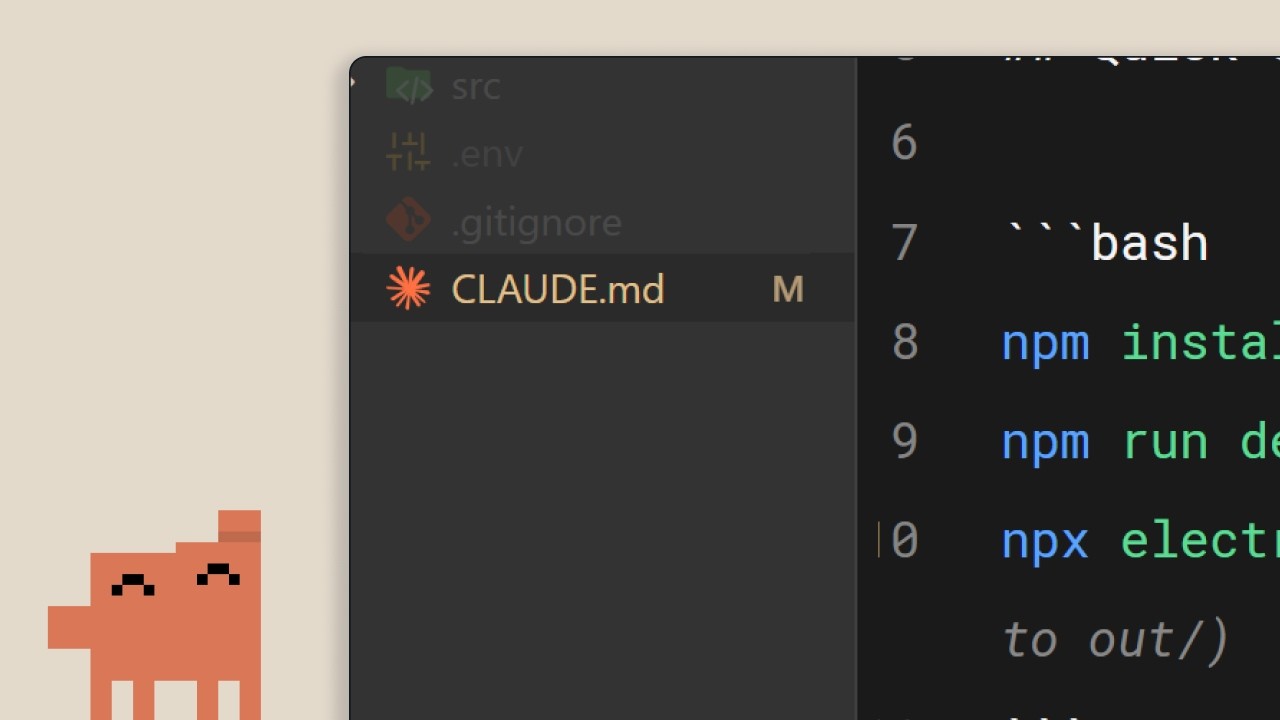
CLAUDE.md फ़ाइल
Anthropic का Claude Code 101 का दूसरा एपिसोड उस एकमात्र फ़ाइल को कवर करता है जो Claude Code को अजनबी से टीममेट में बदल देती है: `CLAUDE.md`। इसमें क्या डालें, प्रोजेक्ट/यूज़र हायरार्की कैसे जिम्मेदारियाँ बाँटती है, और तीन आदतें जो फ़ाइल को पुराने नियमों की दीवार बनने से बचाती हैं। ## [00:02] Claude Code को स्थायी मेमोरी की ज़रूरत क्यों है `CLAUDE.md` के बिना हर सेशन शून्य से शुरू होता है। Claude को कोडबेस दोबारा देखनी पड़ती है, dependencies का अनुमान लगाना पड़ता है और जो पहले से implement हो चुका है उसे फिर से खोजना पड़ता है। ये अनुमान ही ऐसी चीज़ हैं जो मार्गदर्शन को कठिन बनाते हैं। यह फ़ाइल हर नए सेशन में उस पुनर्खोज को शॉर्ट-सर्किट करने के लिए मौजूद है। > *When you open up Claude Code without a claude.md file, it's like it has to start fresh every single time.* ## [00:34] CLAUDE.md वास्तव में क्या है और /init कमांड यह प्रोजेक्ट रूट में एक सादा Markdown फ़ाइल है जो हर सेशन शुरू होने पर पढ़ी जाती है और सीधे आपके prompt में जोड़ दी जाती है। यह आपकी कोडबेस के लिए एक "ऑनबोर्डिंग स्क्रिप्ट" है। अगर आप इसे हाथ से नहीं लिखना चाहते, `/init` मौजूदा कोड से पहला ड्राफ्ट बनाता है। ट्यूटोरियल की उदाहरण फ़ाइल में तीन छोटे ब्लॉक हैं: स्टैक (Next.js 15 app router, Tailwind, Drizzle ORM), कमांड (dev server, tests, lint) और कोड स्टाइल नियम (2-स्पेस indent, named exports, `app/api` में API routes, server actions को प्राथमिकता)। इसके लोड होने के बाद React component माँगने पर सुधारों के कई चक्रों के बजाय पहली बार में ही प्रोजेक्ट-स्टाइल कोड मिलता है। > *It's a markdown file that you add to the root of your project and Claude Code reads it automatically every time you start a session.* ## [01:34] मेमोरी हायरार्की: प्रोजेक्ट बनाम यूज़र हाँ, इसे version control में शामिल करें। प्रोजेक्ट-लेवल `CLAUDE.md` पूरी टीम के लिए है। लेकिन एक दूसरा स्तर भी है: आपके config फ़ोल्डर में एक यूज़र-लेवल `CLAUDE.md` जो हर प्रोजेक्ट में आपके साथ चलता है। वहाँ व्यक्तिगत प्राथमिकताएँ रहती हैं जैसे कि आप comments कैसे लिखना पसंद करते हैं, कौन से idioms पसंद करते हैं — साझा फ़ाइल को प्रदूषित किए बिना। > *But there's actually a hierarchy of memory files depending on who it's for.* ## [02:01] CLAUDE.md को उपयोगी बनाए रखने के तीन टिप्स नैरेटर तीन आदतें सुझाता है। पहली, जब आपको Claude को किसी बार-बार आने वाली बात पर सुधारना पड़े ("हमेशा API routes की बजाय server actions इस्तेमाल करो"), तो उसे स्पष्ट रूप से memory में सेव करने को कहें ताकि सुधार सेशनों में बना रहे। दूसरी, मौजूदा docs को फ़ाइल में paste करने के बजाय `@filepath` से reference करें। तीसरी — जो counter-intuitive लगती है — नया प्रोजेक्ट `CLAUDE.md` *के बिना* शुरू करें और देखें कहाँ-कहाँ आपको बार-बार course correct करना पड़ता है। केवल वे friction points ही फ़ाइल में होने चाहिए। इस तरह यह bloated होने के बजाय compact रहती है। > *We recommend you start off a project without a claude.md file so you can see where you have to constantly course correct the model.* ## [02:39] सारांश: संदर्भ ही फ़र्क करता है पूरी बात एक लाइन में: निराशाजनक सेशन और उत्पादक सेशन के बीच का अंतर संदर्भ है, और `CLAUDE.md` उसका delivery mechanism है। छोटे से शुरू करें — स्टैक, प्राथमिकताएँ, कमांड — और असली friction से बढ़ाते जाएँ। > *Start with your stack, your preferences, and then commands, and just build from there as you go.* ## संस्थाएँ - **Anthropic Tutorial Narrator** (Person): Anthropic की आधिकारिक Claude Code 101 सीरीज़ का voice-over host। - **CLAUDE.md** (Concept): प्रोजेक्ट की root में Markdown फ़ाइल जिसे Claude Code हर सेशन में automatically load करता है, user के prompt में persistent context जोड़ता है। - **/init** (Command): Claude Code कमांड जो मौजूदा codebase को scan करके प्रारंभिक `CLAUDE.md` बनाता है। - **प्रोजेक्ट-लेवल बनाम यूज़र-लेवल CLAUDE.md** (Concept): दो-स्तरीय मेमोरी हायरार्की। प्रोजेक्ट फ़ाइल repo root में है और version control से share होती है; यूज़र फ़ाइल config folder में है और सभी projects में personal preferences लेकर चलती है। - **@filepath reference** (Concept): `CLAUDE.md` में मौजूदा documentation files को point करने का syntax जो duplicate content से बचाता है। - **Next.js 15 / Tailwind / Drizzle ORM** (Software): ट्यूटोरियल के उदाहरण `CLAUDE.md` में उपयोग किया गया स्टैक जो real file के दिखावे को दर्शाता है।
How to build a company that withstands any era | Eric Ries, Lean Startup author
Eric Ries, author of *The Lean Startup*, returns to Lenny's Podcast to discuss his new book *Incorruptible*, which argues that the forces destroying famous companies are not competition or bad luck but the predictable corruption that follows success. Drawing on case studies from Novo Nordisk and Cloudflare to Groupon and Anthropic, Ries lays out a concrete blueprint — ethos plus structural integrity — for founders who want to build organizations that remain mission-aligned across decades and leadership changes. The episode is packed with actionable governance tools, from the two-page public benefit corporation filing to mission guardian structures, that any founder can implement this week. ## [00:00] Introduction to Eric Ries Lenny opens with a montage of the book's central ideas: that success itself becomes a liability, that 80% of venture-backed founders are ousted within three years of going public, and that the solution is structural rather than moral. Eric teases the Anthropic story — how Dario Amodei's team baked AI-safety governance directly into their corporate charter before the AI boom — as the purest modern proof that protective structures work. > *"The thing that destroyed them was not competition. Their very success became a liability."* ## [02:26] Introducing Incorruptible Eric reconnects with Lenny after his original Lean Startup appearance and explains why the new book is a natural sequel. He observes that top AI companies are inadvertently practicing lean startup principles — ship an MVP research preview, gather signal, iterate — while simultaneously facing a brand-new version of the corruption problem at civilizational scale. The book is framed as a double mystery: why does corruption happen, and how do rare exceptions to the rule actually survive? > *"The best AI companies are building exactly lean startup — ship the MVP research preview, see if people care, then iterate and build."* ## [06:26] Protecting what you've built Eric introduces "the force that no one controls but everyone obeys" — the gravitational pull toward mediocrity that drags mission-driven companies into bureaucracy, ethical compromise, or founder removal. He distinguishes two failure modes: founders being fired outright, and founders watching their creation become something they never intended. Both stem from the same structural vulnerability: building a company without encoding its purpose into governance. > *"Sometimes we lose control because we get fired. Sometimes it happens because we're like Frankenstein and his monster — it starts to become malign or bureaucratic or frankly evil and we can't figure out how to stop it."* ## [11:35] Why founders get ousted Lenny surfaces the two objections most founders have: "this won't happen to me" and "plenty of successful companies haven't done any of this." Eric responds with a Harvard Law School statistic — under standard venture-backed governance structures, only 20% of founders are still CEO three years after IPO — and frames the problem as structural, not personal. Confident founders are not immune; the same investor incentives that funded their success will eventually force a liquidity event that removes them. > *"If you don't get this right, no other decision you make about your company will matter for the long term — because you're not going to be the one making it."* ## [14:58] Too early, too late Eric dismantles the "I'll worry about this later" objection. Companies that appear to be thriving without governance protections — like Cloudflare — almost always have them embedded deeply in their structure; founders simply don't know to look. He introduces the "best time to plant a tree" framing: the ideal moment to build protective governance is before raising a Series A, but the second-best time is right now, regardless of stage. > *"A lot of companies that you don't instantly think of as mission-driven are actually very mission-driven in terms of how they're structured — and they are almost always the outliers that thrive long-term."* ## [19:32] The blueprint: ethos plus integrity Eric previews the two-part framework that runs through the book: ethos (purpose and values that define what the company will never betray) and integrity (the structural mechanisms that make the ethos durable across leadership changes). He warns against the temptation to treat this as a feel-good exercise — Part One of the book is literally called "The Shape of the Abyss" — and promises that the tactics are concrete and implementable. > *"There is a blueprint. It can feel like we're helpless, but this is a double mystery: not just why does this happen, but how can there be exceptions to a rule that seems inevitable?"* ## [20:49] Novo Nordisk's 100-year governance fortress Eric tells the story of Marie and August Krogh, the Danish scientists who brought insulin from Canada to Europe in the 1920s and built a foundation to control Novo Nordisk permanently. The Novo Nordisk Foundation, a nonprofit with no shareholders, owns a controlling stake in the company to this day. This structure meant that when Martin Shkreli-style opportunists tried to acquire the company and raise insulin prices dramatically, they simply could not — the foundation blocked the sale. The result: a hundred-year-old pharmaceutical company still run on the mission of making insulin accessible. > *"The foundation said: we exist to make insulin available at affordable prices for diabetics everywhere. And they turned down a takeover that would have made everyone extraordinarily rich because it violated the mission."* ## [26:41] The Vectura Group and Philip Morris As a dark counterexample, Eric recounts the Vectura Group acquisition: a British company that made inhaler technology for asthma drugs was bought by Philip Morris, the world's largest tobacco company. Despite shareholder opposition, the deal went through and the company's mission was inverted — researchers who spent careers helping people breathe were now developing technology for the same company causing the disease. Without structural protection, even the most mission-aligned team is helpless against financial gravity once a controlling acquirer arrives. > *"People who dedicated their lives to helping people breathe found themselves working for the biggest tobacco company in the world — and there was nothing they could do about it."* ## [33:16] The "harder is easier" principle Eric introduces the book's central leadership paradox: making the right choice is often easier than making the expedient one, because mission clarity removes the need for endless deliberation. He draws on W. Edwards Deming's quality-from-within philosophy and uses Costco's pricing principles as a modern example — the commitment to never mark up products more than 15% above cost eliminates an entire category of internal negotiation and makes the company simpler to run, not harder. > *"The reason it's easier is you don't have to fight with yourself. Once you've made the commitment, the decision is already made. That's the power of the harder is easier principle."* ## [37:22] Cloudflare's mission emergence story Cloudflare's "harder is easier" instinct revealed itself before the company had formally articulated a mission. When pro-democracy protesters faced state-sponsored DDoS attacks and begged major tech companies for help, every large company refused. Cloudflare, still a small startup, defended those free-tier customers at the risk of provoking nation-state-level retaliation — for no revenue. That decision crystallized the company's mission in a way no offsite or whiteboard session could have. > *"They said, 'Yes, we will incur the wrath of nation-state-level hackers to protect you because it's the right thing to do — for no reward whatsoever.' That is a company that knows what it stands for."* ## [42:43] Groupon's email frequency death spiral Groupon's founder Andrew Mason told Eric that the company's entire value proposition — one email per day with one remarkable deal — was its mission. They went public on that premise. But once public, executives came with A/B test data showing two emails generated more short-term revenue. Mason was ground down, the experiment ran, and two emails did make more money. Then three. Then four. Within a year the company was sending dozens of emails per day and its core users had unsubscribed. Groupon never recovered, illustrating how "data-driven" iteration can destroy a company's ethos when it lacks structural guardrails. > *"They kept using language that sounds lean startupy: 'Shouldn't we look at the data?' And he was like, 'All right, fine, we'll run the experiment.' Two emails makes more money. Three emails. Four emails. And then the death spiral."* ## [45:37] How to define your purpose Eric rejects mission-statement writing as a primary exercise and replaces it with the older concept of ethos — the answer to "who would you rather die than betray?" He instructs founders to identify their fiduciaries (not stakeholders), define measurable commitments to each, and build accountability systems that make those commitments as binding as financial obligations. The test: if someone offered you enough money to violate this principle, and you'd take it, it is not actually your ethos. > *"What is its purpose? Who would you rather die than betray? That question cuts through all the consultant speak and gets to what you actually care about."* ## [51:09] Mission-driven vs. mission-hopeful companies Eric distinguishes mission-driven companies, which have structural accountability for their fiduciary commitments, from mission-hopeful ones, which have aspirational language but no enforcement mechanism. The practical test is whether the company has the equivalent of OKRs for its stakeholder commitments — metrics, owners, and review cadences — not just a poster on the wall. Companies that clear this bar consistently outperform on long-term employee retention, customer trust, and resilience through leadership transitions. > *"You tell me what you care about, and then you tell me how you're measuring the things you claim to care about. If there's no measurement, it's hope, not mission."* ## [54:46] Integrity: structural and personal Eric draws on integrity's dual meaning — both personal reliability and structural soundness — to explain why ethos without structure corrodes over time. Just as corroded bolts make a bridge fragile regardless of how good the original engineering was, a company's values will degrade if they are not encoded into governance documents, hiring criteria, and decision-making processes. Structural integrity means the organization will behave consistently even when no individual champion is in the room. > *"Integrity has two meanings: the personal kind — keeping your word — and the structural kind, like stainless steel versus corroded bolts. You need both in an organization."* ## [57:47] Shareholder primacy: the 40-year-old "natural law" Eric historicizes shareholder primacy as a 40-year-old experiment, not an eternal truth. Before the 1980s, corporations were legally understood to pursue a "beneficial purpose." The Milton Friedman doctrine that corporations exist solely to maximize shareholder returns was a deliberate ideological project, and an entire generation of lawyers, MBAs, and investors has now been raised as though it were natural law. Founders who know this history can consciously choose to opt out. > *"People have been raised as if shareholder primacy was a natural law. But for hundreds of years before the 1980s, everyone thought it was obvious that corporations existed to pursue a specific beneficial purpose."* ## [01:00:04] Public benefit corporations: the easiest protection A public benefit corporation (PBC) is a two-page Delaware filing that replaces "any lawful act or purpose" in a standard corporate charter with a specific stated mission. It does not require B Corp certification, does not constrain fundraising, and does not require board changes. Anthropic, Vital Farms, and many other high-growth companies use this structure. Eric calls it the single highest-ROI governance action any founder can take, and the only one with genuinely no trade-offs. > *"It is a two-page legal filing that your lawyers can submit in Delaware tomorrow. You just say: this is the purpose of this company. It couldn't be any easier."* ## [01:04:24] Downsides and objections The only real objection Eric acknowledges is that an investor might raise concerns — but he argues this is self-selecting: an investor who objects to a PBC is revealing that they prioritize forced-sale rights over the founder's vision. Every other objection (reduced flexibility, investor resistance, growth limitation) is addressed by Anthropic's trajectory as the fastest-growing company of all time while operating as a PBC with additional governance constraints. > *"The only situation this would ever become relevant is if the investor is trying to force you to sell the company and you don't want to. So ask them: 'Is that what you're telling me?' And then decide if this is really the right partner."* ## [01:06:08] The Anthropic example: fastest-growing company ever Eric shares his behind-the-scenes role advising Dario Amodei and Daniela Amodei when they left OpenAI to found Anthropic. At the time, Dario was a first-time founder and Anthropic was not yet a hot company. Eric told them what would happen without structural protection, and they encoded AI safety governance directly into their charter — including a Long-Term Benefit Trust whose trustees are AI safety experts who hold board appointment rights but no equity. Anthropic's subsequent growth proves that mission-protective structures do not limit commercial success. > *"Dario was a first-time founder. Not a hot company at all. ChatGPT hadn't been invented yet. Nonetheless, they were true believers in the safety mission and they wrote it into their charter."* ## [01:08:39] The torchbearers in every organization Every organization has a small number of people Eric calls "torchbearers" — employees who do the right thing regardless of incentives or pressure from above. Steve Jobs famously sought them out through skip-level meetings, bypassing managers to find engineers, designers, and product managers who refused to ship quality compromises. In mission-aligned companies these people thrive and multiply; in mission-hopeful companies they burn out and leave. > *"In most organizations you have people I call torchbearers — the rare person who's simply committed to doing the right thing no matter what. Steve Jobs would host skip-level meetings just to find them."* ## [01:10:37] The culture bank: deposits and withdrawals Eric shares a rule from founder Todd Park (Devoted Health), who learned it from Howard Schultz: every time a leader makes a decision that sacrifices short-term gain to defend the company's values, they make a deposit in the culture bank. Every self-interested or greedy decision makes a withdrawal. The Todd Park rule: you can make one withdrawal for every ten deposits. Exceed that ratio and culture collapses. Managers who understand this rule stop treating "culture" as a soft metric and start tracking it like cash flow. > *"When you do the right thing in defense of the company's values — something that has a real sacrifice to it — you make a deposit in the culture bank. The Todd Park rule: one withdrawal for every ten deposits."* ## [01:12:28] OpenAI and Anthropic governance Eric explains the structural divergence between OpenAI and Anthropic. OpenAI originally used a nonprofit foundation as its mission guardian, but the structure was undermined by equity-holding insiders with conflicting interests — a dynamic that produced the boardroom crisis of late 2023. Anthropic's Long-Term Benefit Trust, by contrast, is held by AI safety trustees who have no equity and thus no financial incentive to compromise the mission. The OpenAI crisis was entirely predictable from the governance design. > *"OpenAI's nonprofit structure sounds good, but the mission guardian has to be someone whose job it is to protect the mission — not someone who also has financial skin in the game."* ## [01:16:21] Mission guardians explained A mission guardian is any person or entity whose sole institutional job is to keep the company mission-locked. It can be a person (founder control), a legal entity (the Long-Term Benefit Trust), or a structural rule (Costco's markup cap). Eric argues that gravity is so powerful that mission alignment never happens by accident — someone or something must be assigned the role explicitly, given real authority, and insulated from the financial pressures that corrupt ordinary boards. > *"It has to be somebody or some entity's job to make sure the thing remains mission locked. That does not happen by accident because gravity is such a powerful force."* ## [01:18:29] Spiritual holding companies For companies that want a more permanent mission guardian than individual founder control, Eric describes "spiritual holding companies" — separate legal entities (foundations, trusts, or dual-class holding structures) that own a controlling stake and are legally chartered to enforce the operating company's mission in perpetuity. Novo Nordisk's foundation is the canonical example. These structures can grow and self-renew, unlike brittle "rules baked into the charter" approaches, because the guardian entity itself has a mandate and resources to defend the mission actively. > *"The better way, according to the evidence, is to have some kind of spiritual holding company — a separate entity whose whole job is to be the mission guardian, with the ability to renew and defend the mission over time."* ## [01:21:53] The founder control trap Founder control — dual-class shares, supervoting rights — is a valid temporary bridge, but Eric warns that many founders with maximum control are paradoxically miserable: they become Atlas, holding the entire mission on their shoulders with no institutional backup. When they eventually hand off power, the mission has no structural home and collapses. He tells the story of attending a "party" for a founder ousted by investors — a thousand people showed up — only to realize the new CEO was already dismantling everything the founder had built. > *"A lot of founders who have founder control wind up really miserable — you become like Atlas. You can't even shrug. It's you holding back the abyss. That's a lot."* ## [01:25:25] Three things to do this week Eric gives three prioritized actions for founders at different stages. Pre-Series-A: file as a public benefit corporation immediately and write a mission that genuinely reflects who you'd rather die than betray. Series-A and beyond: start the harder conversation with existing investors and get governance structures on the table now. Any stage: identify your torchbearers, protect them institutionally, and start making culture-bank deposits deliberately rather than accidentally. > *"You have a precious, precious moment before raising money. Do not waste it. Be a public benefit corp. Write a mission that you'll feel proud of in 20 years. These are super low-cost and super high-value."* ## [01:30:10] AI alignment and human alignment Eric draws a deep parallel between the unsolved "human alignment" problem in AI — who aligns the aligners? — and the corporate governance problem the book addresses. Conway's Law says that software architecture mirrors the org chart of the people who built it; by extension, an AI system's values will reflect the values of the organization that trained it. Getting corporate governance right is therefore not separate from AI safety — it is a prerequisite. > *"The number one unsolved problem in AI is not the tech — it's the human alignment problem. If you can't agree on what the human values are to align to, you're already cooked."* ## [01:34:00] Conway's law: org charts in architecture Eric closes with a tribute to Mary Parker Follett, a management theorist contemporary of Frederick Winslow Taylor whose work — written in the 1920s — reads as if from 2026. Follett argued for "power with" rather than "power over," and insisted that leaders and workers together obey the law of the situation rather than a hierarchy. Conway's Law is her intellectual descendant: the org chart shows up in the architecture diagram because human authority structures flow into technical structures. > *"She said: the superior and the subordinate together obey the law of the situation. Not the boss's whim — the law of the situation. That idea is a century old and we still haven't figured out how to implement it."* ## [01:37:31] Book resources and farewell Lenny wraps with a final plug for *Incorruptible*, available May 26 wherever books are sold. Eric points listeners to incorruptible.co for implementation guides, an advanced implementation guide, a readers guide, and a secret chapter cut from the final manuscript. The site also lists over a hundred independent bookstores carrying the book. Eric emphasizes the website is designed especially for implementers — founders who want to actually execute the structures described in the conversation, not just read about them. > *"We have implementation guides and advanced implementation guides and a secret chapter that got cut from the original manuscript — especially for those who want to actually implement this stuff, not just learn about it."* ## Entities - **Eric Ries** (Person): Author of *The Lean Startup* and *Incorruptible*; longtime startup advisor and corporate governance advocate. - **Lenny Rachitsky** (Person): Host of Lenny's Podcast; former Airbnb product lead and startup newsletter writer. - **Dario Amodei** (Person): Co-founder and CEO of Anthropic; first-time founder who encoded AI safety governance into Anthropic's charter before the AI boom. - **Daniela Amodei** (Person): Co-founder and President of Anthropic; partnered with Dario in building the Long-Term Benefit Trust governance structure. - **Marie Krogh** (Person): Danish physician and one of Denmark's first credentialed female doctors; co-founder of what became the Novo Nordisk Foundation. - **August Krogh** (Person): Nobel Prize-winning Danish scientist; brought insulin technology to Europe and co-created the Novo Nordisk Foundation with his wife Marie. - **Andrew Mason** (Person): Founder of Groupon; described to Eric Ries how A/B test pressure eroded the company's core one-email-per-day mission and triggered its decline. - **Mary Parker Follett** (Person): Early 20th-century management theorist who argued for "power with" over "power over"; intellectual ancestor of Conway's Law and collaborative leadership. - **Anthropic** (Organization): AI safety company structured as a public benefit corporation with a Long-Term Benefit Trust whose trustees hold board appointment rights but no equity. - **Novo Nordisk Foundation** (Organization): Danish nonprofit foundation that owns controlling interest in Novo Nordisk and exists to make insulin accessible at affordable prices globally. - **Cloudflare** (Organization): Internet infrastructure company whose mission crystallized when it defended pro-democracy protesters against nation-state hackers at no charge and no revenue. - **Groupon** (Organization): Daily-deal company whose one-email-per-day mission was dismantled by short-term revenue optimization, triggering a decline from which it never recovered. - **Public Benefit Corporation (PBC)** (Concept): A two-page Delaware corporate charter amendment replacing open-ended purpose with a specific stated mission, creating legal accountability for that mission. - **Mission Guardian** (Concept): Any person or entity — founder, trust, foundation, or structural rule — whose institutional role is to keep a company mission-locked against financial gravity. - **Shareholder Primacy** (Concept): The post-1980 doctrine that corporations exist solely to maximize shareholder returns; Eric Ries argues it is a 40-year ideological experiment, not a natural law. - **Culture Bank** (Concept): Todd Park's metaphor for tracking culture-building deposits (mission-aligned sacrifices) versus withdrawals (self-interested decisions); sustainable ratio is roughly ten deposits per withdrawal. - **Long-Term Benefit Trust** (Organization): Anthropic's external mission guardian body composed of AI safety experts who hold board appointment rights and have no equity stake in the company.
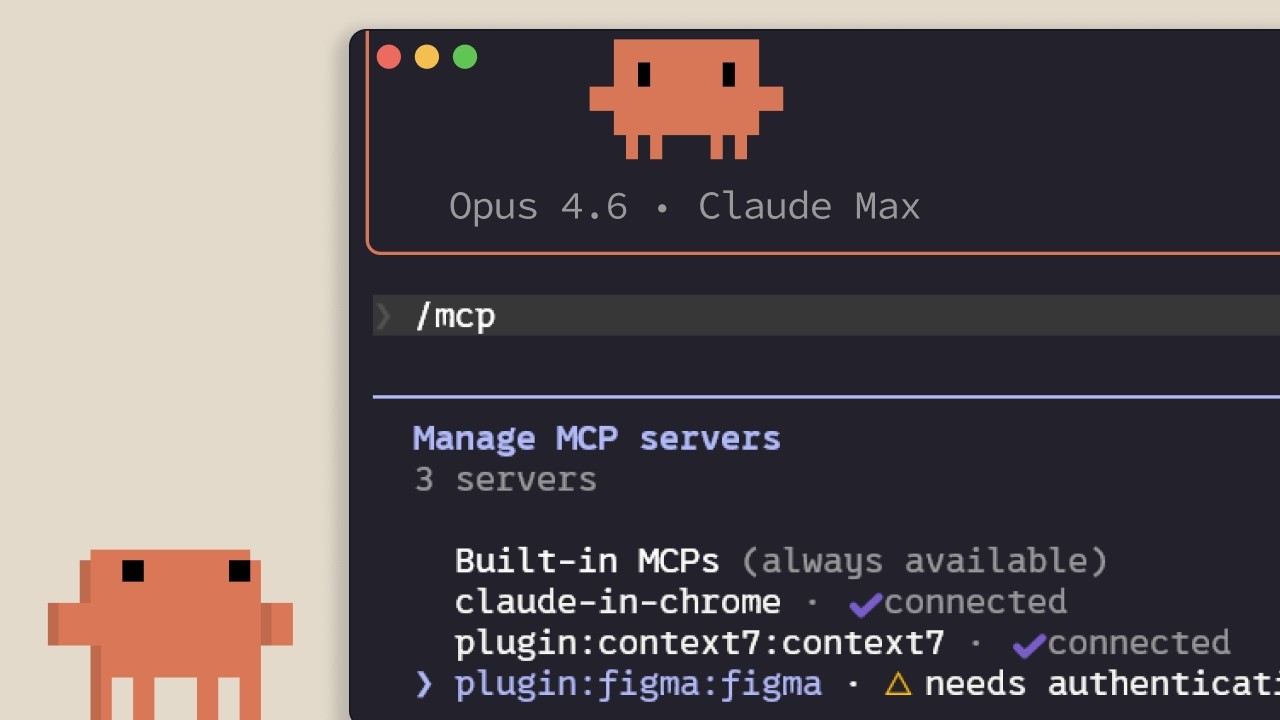
Claude Code में MCP
Claude Code में Model Context Protocol पर Anthropic की विस्तृत गाइड: यह किससे जुड़ता है, सर्वर कैसे जोड़ें और स्कोप कैसे सेट करें, और हर इंस्टॉल किए गए सर्वर का कॉन्टेक्स्ट विंडो पर क्या छिपा हुआ असर होता है। उन डेवलपर्स के लिए जो Claude Code को Linear, GitHub या अपने इन-हाउस टूल्स से जोड़ने की तैयारी कर रहे हैं। ## [00:02] MCP क्यों है — कॉन्टेक्स्ट एडिटर के बाहर रहता है शुरुआत में ही बात साफ कर दी जाती है: Claude Code को जिस ज़्यादातर कॉन्टेक्स्ट की ज़रूरत होती है वह रिपो में नहीं होता, बल्कि डेटाबेस, प्रोडक्टिविटी ऐप्स और पब्लिक पैकेज में बिखरा होता है। MCP एक ओपन स्टैंडर्ड है जो Claude को इन बाहरी स्रोतों तक खुद पहुंचने और यह तय करने देता है कि उन्हें कब कॉल करना है, बिना आपके मैन्युअल पेस्ट किए इंतज़ार किए। > *Model Context Protocol एक ओपन स्टैंडर्ड है जो Claude Code को बाहरी टूल्स और डेटा स्रोतों से जोड़ता है।* ## [00:35] टूल्स और MCP सर्वर असल में क्या जोड़ते हैं सर्वर की सूची देने से पहले, नैरेटर *टूल* का मतलब समझाते हैं: Claude Code जैसे एजेंट टूल्स का उपयोग करके कार्रवाई करते हैं, यही उन्हें सिर्फ टेक्स्ट लौटाने वाले चैट से अलग बनाता है। दो ठोस उदाहरण दिए जाते हैं: एक Linear MCP सर्वर जो टीम के इश्यू सेशन में लाता है, और Context7 सर्वर जो उपयोग में आ रही डिपेंडेंसी के अप-टू-डेट डॉक्स स्ट्रीम करता है। सैकड़ों और claude.com/connectors पर मिलते हैं। > *टूल्स Claude Code जैसे एजेंट को कार्रवाई करने की क्षमता देते हैं ताकि वे अपने काम बेहतर तरीके से पूरे कर सकें।* ## [01:14] सर्वर जोड़ना: HTTP बनाम STDIO, और /mcp सर्वर `claude mcp add` से जोड़े जाते हैं और दो तरह के होते हैं: **HTTP** सर्वर, जो प्रोवाइडर द्वारा रिमोटली होस्ट किए जाते हैं और नेटवर्क से एक्सेस होते हैं, और **STDIO** सर्वर, जो आपकी मशीन पर चलने वाले लोकल प्रोसेस हैं। इंस्टॉल होने के बाद, सेशन में `/mcp` कमांड यह बताता है क्या जुड़ा है, स्टेटस दिखाता है और किसी भी सर्वर को डिसेबल करने देता है। > *HTTP सर्वर रिमोट सर्विसेज़ के लिए हैं... STDIO सर्वर आपकी मशीन पर चलने वाले लोकल प्रोसेस के लिए हैं।* ## [01:42] तीन स्कोप: local, user और project (.mcp.json) हर सर्वर तीन में से एक स्कोप में आता है। **Local** इसे सिर्फ मौजूदा प्रोजेक्ट तक और सिर्फ आपके लिए सीमित रखता है। **User** इसे आपके सभी प्रोजेक्ट्स में उपलब्ध कराता है। **Project** एक `.mcp.json` फ़ाइल बनाता है जिसे आप वर्शन कंट्रोल में चेक इन करते हैं, ताकि कोडबेस पर काम करने वाले हर टीम मेंबर को अपने आप वही सर्वर मिल जाएं। > *Project स्कोप एक .mcp.json फ़ाइल का उपयोग करता है जिसे आप वर्शन कंट्रोल में चेक इन करते हैं, ताकि कोडबेस पर काम करने वाले हर व्यक्ति को स्वचालित रूप से बिल्कुल वही सर्वर मिलें।* ## [02:04] टूल डेफिनिशन से कॉन्टेक्स्ट खर्च होता है — CLI या skill कब चुनें जब कोई आपको कनेक्टर लिस्ट देता है तो जो बात कोई नहीं बताता: हर कॉन्फ़िगर किया गया MCP सर्वर अपनी टूल डेफिनिशन कॉन्टेक्स्ट विंडो में डाल देता है, चाहे आप उसे इस्तेमाल कर रहे हों या नहीं। नैरेटर के सुझाए उपाय: `/mcp` चलाएं और बेकार पड़े सर्वर डिसेबल करें; जब `gh` या `aws` जैसी CLI मौजूद हो तो उसे प्राथमिकता दें, क्योंकि CLI में परमानेंट टूल डेफिनिशन नहीं होतीं; या वर्कफ्लो को skill में लपेटें जो Claude के लोड करने तक सिर्फ नाम और विवरण ही कॉन्टेक्स्ट में रखता है। 10% कॉन्टेक्स्ट पार होने पर Claude Code टूल सर्च मोड में चला जाता है, जहाँ ज़रूरत पड़ने पर टूल खोजे जाते हैं — उपयोगी है, लेकिन प्री-लोड से कम भरोसेमंद। > *MCP सर्वर आपकी कॉन्टेक्स्ट विंडो में टूल डेफिनिशन जोड़ देते हैं, भले ही आप उन्हें इस्तेमाल न कर रहे हों। अगर बहुत सारे सर्वर कॉन्फ़िगर हैं, तो यह उपलब्ध कॉन्टेक्स्ट खा जाता है।* ## [03:10] सारांश याद रखने वाली तीन बातें: `claude mcp add` सर्वर इंस्टॉल करता है, `.mcp.json` उन्हें टीम के साथ शेयर करता है, और `/mcp` वह जगह है जहाँ आप जो नहीं चला रहे उसे हटाते हैं। > *Cloud MCP add से सर्वर जोड़ें, .mcp.json से उन्हें अपने प्रोजेक्ट तक सीमित करें ताकि टीम को अपने आप मिलें, और जो सर्वर सक्रिय रूप से उपयोग नहीं कर रहे उन्हें डिसेबल करके कॉन्टेक्स्ट उपयोग पर नज़र रखें।* ## इकाइयाँ - **Anthropic ट्यूटोरियल नैरेटर** (Person): Claude Code 101 सीरीज़ के लिए Anthropic के आधिकारिक वॉइसओवर नैरेटर। - **Model Context Protocol (MCP)** (Standard): ओपन प्रोटोकॉल जो Claude Code को HTTP या STDIO सर्वर के ज़रिए बाहरी टूल्स और डेटा स्रोतों से जोड़ता है। - **Linear MCP server** (Software): टीम के Linear इश्यू Claude Code सेशन में लाने वाला कनेक्टर। - **Context7 MCP server** (Software): उपयोग में आ रही डिपेंडेंसी के अप-टू-डेट डॉक्युमेंटेशन Claude Code को देने वाला कनेक्टर। - **.mcp.json** (Config): वर्शन कंट्रोल में चेक-इन किया जाने वाला प्रोजेक्ट-स्कोप मैनिफेस्ट, जिससे हर टीम मेंबर को वही MCP सर्वर मिलते हैं। - **/mcp** (CLI command): जुड़े MCP सर्वर को लिस्ट करने, इंस्पेक्ट करने और डिसेबल करने का सेशन-इन कमांड। - **Tool search mode** (Feature): वह फ़ॉलबैक मोड जिसमें Claude Code जाता है जब MCP टूल डेफिनिशन कॉन्टेक्स्ट विंडो का 10% पार कर लें — टूल ज़रूरत पड़ने पर खोजे जाते हैं। - **Skill** (Concept): पूरे MCP सर्वर का हल्का विकल्प; Claude द्वारा बॉडी लोड करने तक सिर्फ नाम और विवरण ही कॉन्टेक्स्ट में रहते हैं।