ポッドキャスト世界の声を聴き、思考の刻みを見る。
チャンネルを探す
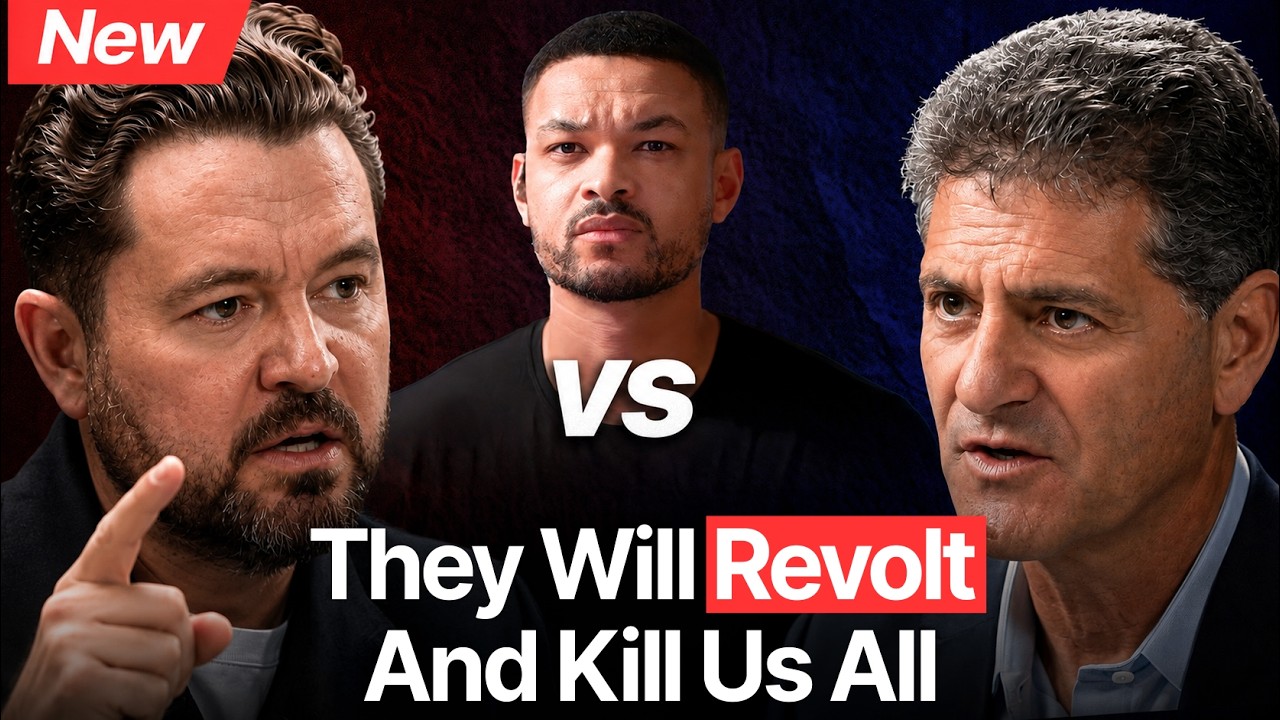
EMERGENCY DEBATE: The Death Of The Middle Class! Only The Top 1% Will Survive!
In a 2.5-hour live debate, venture capitalist Nick Hanauer — first outside investor in Amazon and author of the "pitchforks are coming" open letter to fellow billionaires — and entrepreneur Daniel Priestley square off over the death of the middle class: whether the fix is stronger labor policy and redistribution, or wider access to entrepreneurship and ownership. Steven Bartlett referees as both guests push each other past talking points into genuinely contested territory on AI job displacement, minimum wages, Brexit's economic toll, sovereign wealth funds, and whether the Monopoly analogy explains why a thriving middle class never emerges on its own. The two agree on the diagnosis — concentrated power in big finance and big tech is hollowing out ordinary workers — but split sharply on the cure, with Hanauer insisting wages and worker rights are the structural floor and Priestley arguing that "raising the floor" without changing who owns assets is not nearly enough. ## [00:00] Intro The opening drops viewers straight into the argument. Hanauer fires first: "There is literally no example on planet earth of a high functioning society without big government." Priestley counters immediately: "Big government is sucking the life out of small businesses." Within two minutes the core tension is live — Hanauer's faith in policy and labor standards versus Priestley's faith in entrepreneurship and ownership — and Bartlett notes the audience is watching precisely because both men have real-world receipts for their positions. > *"There is literally no example on planet earth of a high functioning society without big government."* ## [02:27] Why Nick Hanauer's Economic Views Matter Bartlett asks Hanauer why a billionaire ends up arguing for higher taxes and worker protections. Hanauer traces the arc: he built and sold companies across manufacturing, e-commerce, and media, became Amazon's first outside investor, and eventually recognized that his own wealth kept compounding while the workers who made it possible fell further behind. He calls it straightforward arithmetic: "You cannot sustain a capitalist democracy if the top 1% controls 45 or 50% of income and the bottom 50% shares five." His Pitchfork Economics project exists to shift the intellectual frame that leads policymakers to produce those numbers. > *"You cannot sustain a capitalist democracy if the top 1% controls 45 or 50% of income and the bottom 50% shares five."* ## [06:27] Daniel Priestley's Different Take On Wealth Priestley grew up in Australia, discovered entrepreneurship as a teenager through a mentor, and built Dent Global into an international business education firm. He shares Hanauer's alarm about concentration but reaches the opposite prescription: the way to include more people in capitalism is to teach them to operate like capitalists — starting businesses, owning assets, building skills that can't be automated. "I felt like I discovered a cheat code in life which was entrepreneurship," he says, and his mission has been to hand that code to as many people as possible before political frustration produces the "dumb things" that undo market dynamism. > *"I just want to include more people in the benefits of capitalism before we do dumb things."* ## [08:32] Is Taxing The Rich The Answer? Bartlett poses the dominant political narrative: tax the wealthy, redistribute. Priestley pushes back not on the goal but on the mechanism. He distinguishes between a James Dyson — someone who invented a product and captured value — and a hedge fund that extracts value without creating it. His preferred target is rent-seeking and extraction, not wealth creation. He'd remove taxes on lower earners and claw revenue back from financial instruments and land value appreciation, not from entrepreneurs building products. > *"It's very easy to have a bad guy of a rich person. But you have to be specific about which rich person."* ## [11:44] Do The Wealthy Already Pay Enough Tax? Hanauer demolishes the claim that American billionaires already pay high taxes. US tax law taxes income, not wealth — and ultra-rich individuals rarely take income, borrowing against asset portfolios at rates that are functionally untaxed. The labor share of US income has fallen dramatically since the 1970s while the capital share has grown. His argument is not that the rich are evil but that the tax code was systematically rewritten to channel productivity gains away from workers. "We have massively tilted the economic playing field which once favored workers." > *"It is not true that the richest people in the United States pay a lot of tax because the American tax code taxes income, not wealth."* ## [15:07] Entrepreneurship Vs Policy: What Works Best? Priestley argues optionality is the deepest driver of wages: when workers have real alternatives — including starting their own business — employers can't impose terrible conditions. A market with many small employers competing for talent naturally produces better pay than one dominated by a handful of megacorps. Hanauer agrees optionality matters but says most workers can't realistically exercise the entrepreneurship option, and minimum wage laws, unions, and overtime protections do for the 90% what entrepreneurship can only do for the 10%. Both land on the same structural critique — labor market power is too concentrated — but split on whether policy or education is the lever. > *"When someone has lots of options, then they don't accept terrible conditions."* ## [20:05] The Policy Fix For Inequality Hanauer names a concrete mechanism: the US federal overtime salary threshold — the income level above which workers stop qualifying for time-and-a-half — covered 65% of salaried workers in the 1960s and today covers fewer than 8%. That single policy shift, requiring no new legislation, transferred trillions from workers to employers over fifty years. His argument: fix the rules that govern what the market pays before demanding more redistribution on top. Priestley concedes the point on wage suppression but circles back to ownership: the UK's unhappiness deficit isn't just about wages — it's about people who work for decades and accumulate nothing. > *"That standard used to apply to virtually every worker in America in 1970. Today that standard applies to less than 10% of workers."* ## [24:53] US Vs UK: Which Economy Wins? Hanauer points out that the US federal minimum wage is $7.25 — roughly a third of the UK level — and in many states a tipped worker earns $2.13 plus gratuities. The UK floor for low-wage workers is dramatically higher. Priestley counters that UK labor costs, combined with National Insurance and business rates, are now genuinely squeezing small operators and driving ambitious founders to relocate rather than scale. The US wins on startup dynamism; Priestley argues the UK is destroying the conditions that once made it competitive. > *"The minimum wage in the United States is $7.25 an hour or $2.13 plus tips. It's a third of what it is here in the UK."* ## [26:57] Do Higher Wages Hurt Small Business? Priestley grounds the debate in a specific case: a friend who owns a pub is losing money, not taking a salary, crushed by minimum wage increases, employer National Insurance, and business rates arriving simultaneously. The pub does not have Amazon's margin to absorb costs. Hanauer acknowledges the problem is real but says the right response is not to lower the floor for everyone but to go after megacorps that escape tax while the pub cannot. Bartlett notes the structural asymmetry: Starbucks says "we can absorb it" and the independent café closes. > *"He's massively impacted by taxes and minimum wage. He's not taking any money out of it."* ## [28:38] Why Small Businesses Can't Match MegaCorp Pay The Starbucks-vs-local-pub framing continues. Hanauer says a ham sandwich at a chain now costs twice what it did twenty years ago, so higher wages don't destroy demand — they get passed on. Priestley argues small businesses aren't just slower versions of big ones: they exist because of personal relationships, flexibility, and local knowledge that chains can't replicate. When the cost floor rises faster than their revenue can, they close. Both agree the real enemy is the regulatory and tax architecture that lets megacorps optimize globally while the corner shop pays full freight locally. > *"One person with good AI tools may be ten times more productive. That's great for that person. It's not so great for the other nine."* ## [33:02] What Workers Need Right Now Hanauer returns to the ownership question and agrees asset ownership is crucial — but insists it starts with wages. You cannot save if you cannot earn above subsistence. "Ownership starts with earning enough money so that you can save money so that you can begin to own something." He cites the 1990s US stock-option experiments — giving low-income workers equity rarely worked because the options vested after the workers had already left. Real ownership requires a wage floor that generates disposable income first. > *"Ownership starts with earning enough money so that you can save money so that you can begin to own something."* ## [35:59] Ownership Models That Build Wealth Priestley outlines three ownership models worth scaling. First, sovereign wealth funds on the Norwegian and Singaporean model: governments take equity stakes in national assets and every citizen holds a fractional share. Second, worker ownership co-ops and employee share schemes that vest on shorter timelines. Third, housing — where roughly half a property's market value is what he calls "utility value" (you need a place to live) and the other half is pure land value inflation that tenants pay indefinitely without ever capturing. His core claim: redistributing income taxes is too slow; you need policies that change who holds assets. > *"About half the value of the house is the utility value. The other half is the land value — and tenants pay that forever without ever owning it."* ## [40:28] The Real Impact Of Worker Rights Bartlett presses on whether higher worker protections actually close inequality or just slow its widening. Hanauer cites Brexit's measurable damage — productivity gains down 4%, unemployment up 4% above the counterfactual — as evidence that institutional frameworks matter enormously. The UK cut itself off from European labor and trade rules in one decision and is still absorbing the cost. Both guests agree the baseline institutional quality of an economy shapes outcomes far more than any single tax rate. > *"Brexit has affected unemployment by 4%, productivity gains by 4%. The list goes on."* ## [41:30] What Brexit Really Changed Hanauer sharpens the Brexit argument: departure removed frictionless access to 500 million consumers while shrinking the labor pool. Priestley agrees Brexit was economically damaging but argues the UK's deeper problem predates 2016 — the financialization of the British economy through the City of London meant that well before Brexit the UK was a two-tier economy where financial services boomed and manufacturing hollowed out. Both agree the US is the outlier among advanced economies in how far it has stripped worker protections, but the UK has followed a similar trajectory in asset concentration. > *"The USA is the outlier of all the modern capitalist economies when it comes to how far worker protections have been stripped back."* ## [45:01] The Hidden Lessons Of K-Shaped Economies Priestley pulls back to the early 1800s: today's headlines about record profits for capital alongside stagnant worker wages are word-for-word the headlines from the Engels Pause — the fifty-year period after the Industrial Revolution when steam, looms, and tractors destroyed agricultural employment and the owners of those machines captured all the productivity gains. The fix then took two generations of political struggle — unions, labor standards, trade protection — before workers clawed back a share. Hanauer adds that the pause ended because political consensus shifted, not because markets self-corrected. > *"You could almost take every grievance that we have today and overlay it in the early 1800s and get the exact same words."* ## [47:28] Will Companies Leave If Taxes Rise? Bartlett names the entrepreneur's objection: UK founders are already leaving for Dubai, Miami, and Singapore to escape the tax environment. Raise taxes further and the productive class emigrates. Priestley doesn't dispute the trend and argues that threatening corporate flight is precisely how megacorps hold governments hostage. His counter-proposal borrows from broadcast licensing: if you want to serve UK customers, you pay a fixed territorial fee regardless of where you're incorporated. You can't threaten to leave if the revenue is geographically locked. > *"Pop off to Dubai, run the business virtually, and pay no tax."* ## [51:58] Should Global Corporations Pay More Tax? The global minimum corporate tax attempted by the Biden administration comes up. Hanauer explains the design: if every country applies a floor rate, no jurisdiction can compete on tax below it and the race to the bottom ends. The 15% OECD deal was partial progress but exempted too many structures. Both guests agree a functioning global tax floor is probably the single most powerful lever for capturing megacorp revenue, and both are pessimistic it will happen because the political will to enforce it conflicts with the sovereignty of tax havens that benefit from the status quo. > *"Every rich person I know in Europe is playing this ridiculous game of trying to avoid taxes."* ## [54:00] How MegaCorps Block Entire Markets Bartlett cites Australian and Canadian examples: when governments tried to make Meta pay for news links, Meta simply blocked all news content rather than pay. When California tried to force Amazon to collect local sales tax, Amazon threatened to pull out of the state. Hanauer's point: if every jurisdiction simultaneously imposed the same rule, the megacorp could no longer play one off against another. The leverage only exists because coordination among governments is fragmented. > *"If every state required Amazon to collect local sales tax then obviously they couldn't do any of that. They would have to deal with it."* ## [54:58] Solutions To Economic Inequality Approaching the first ad break, Bartlett asks both guests to state their cleanest solution. Hanauer: tilt the playing field back — minimum wage, overtime rules, anti-monopoly enforcement, global tax coordination. Priestley: all of those, plus fundamentally restructure who owns assets; raising the floor without changing the ownership structure still leaves most people watching asset prices outpace any wage gain. The pitchforks are already out, Priestley says, because workers have nothing left to lose — which means the floor-raising came too late. > *"You have to do both. Tilt the playing field and change who holds the assets."* ## [56:51] Ads *Sponsor break — LinkedIn Marketing Solutions, Pipedrive CRM, Wispr Flow voice-to-text.* ## [58:59] How Many Jobs Will AI Replace? After the break Bartlett pivots to AI. Eric Schmidt's commencement speech — where every mention of "AI" was booed by graduates who assumed it meant their jobs were gone — frames the anxiety. Hanauer says the standard "AI creates new jobs" narrative misses a timing problem: new jobs appear over a generation, but displacement happens in a quarter. He acknowledges AI is "monetizing for free humanity's intellectual property" and concentrating the returns in a handful of companies. Priestley notes the uneven geography: the Philippines' outsourced back-office economy is already being hollowed out by AI doing those same tasks at a fraction of the cost. > *"AI is monetizing for free humanity's intellectual property and a few people are going to directly benefit."* ## [01:01:38] AI Agents Are Replacing Entry-Level Work Bartlett describes what modern AI agents actually do — click through interfaces, complete multi-step browser tasks, handle data entry, edit documents — and notes his own first job after dropping out of university was exactly that kind of work. Hanauer argues the correct frame is augmentation: one person with strong AI tools may be ten times more productive, which is good for that person but terrible for the nine others whose roles disappear. Priestley gives a case study: a husband-and-wife video production agency in northern England used AI to automate script writing and cut their team from six to two while doubling output. > *"One person with good AI tools may be ten times more productive. That's great for that person. It's not so great for the other nine."* ## [01:05:25] Will AI Reduce Hiring? The Jevons Paradox debate surfaces: historically, making tasks cheaper increases demand for them, which absorbs the displaced labor. Priestley's video agency example is a Jevons case — cheaper production brought more clients, not fewer jobs overall. But Hanauer argues AI is so broad and fast that the paradox won't hold everywhere — basic white-collar and entry-level admin work will contract in absolute terms before any new demand materializes. Both agree the transition period is the real danger and that policymakers are not moving at the speed the labor market requires. > *"The biggest issue is that the nature of the entire economy is fundamentally changing, and the people in it haven't been told the new rules."* ## [01:08:39] Is Universal Basic Income The Answer? Hanauer is skeptical of UBI as currently designed: it doesn't solve the structural problem of who owns the AI systems, it just puts a floor under consumption. He prefers publicly owned entities taking equity stakes in AI companies in exchange for the public infrastructure those companies depend on. Priestley frames it more directly: AI valuations are built entirely on job displacement — "you can't get to those numbers unless you're displacing lots of jobs" — so society should demand equity in the upside in exchange for absorbing the downside. > *"The whole valuation that AI is predicated on is job disruption. You can't get to those numbers unless you're displacing lots of jobs."* ## [01:13:29] Why Governments Struggle To Deliver Priestley pivots to execution risk: even with the right policies, current governments are demonstrably incompetent at implementing complex economic programs — misaligned incentives, risk-averse civil services, political cycles too short for structural reforms. Hanauer agrees governments are often incompetent but says the same is true of large corporations — Microsoft and Amazon have enormous internal failures — and the correct response is not to abandon government as a tool but to improve its capability. Singapore's state capacity, he says, proves that competent government is achievable. > *"We have a fundamentally incompetent set of people in government who have misaligned incentives."* ## [01:14:48] The Best Fix For AI Job Loss The two guests converge more than expected: both want the period between displacement and re-employment to be economically survivable, and both want support tied to the companies doing the displacing rather than general welfare. Priestley's preferred mechanism is a proliferation of small businesses absorbing the people large employers shed: "When you have millions and millions of little small businesses, everyone's happier." Hanauer wants mandatory transition benefits funded by the equity stake mechanism. > *"When you have millions and millions of little small businesses, everyone's happier."* ## [01:17:50] Are We Heading Towards An AI Utopia? Hanauer makes his clearest statement of economic philosophy: markets are not efficient allocators of resources (the textbook claim) but evolutionary systems that allow groups to solve complex problems. That framing changes everything about AI — the question is not whether markets will find the optimal allocation of AI output, but which group of people gets to participate in solving the problems AI opens up. Democracies must move aggressively to include as many people as possible, or the utopia arrives for a few hundred thousand people while everyone else is left outside. > *"Markets are an evolutionary system that enables groups of people to come together and solve complex problems. That's why they work."* ## [01:22:05] Would Higher AI Taxes Drive Companies Away? Bartlett poses a direct scenario: if the UK demanded a 50% equity stake in AI companies operating here, wouldn't they simply incorporate in Delaware and serve the UK market remotely? Priestley says yes — and that's why broadcast-license-style territorial fees are more robust than equity demands. Hanauer says the threat is overstated: "The worst that can happen is there will be a few dozen guys worth a hundred billion and not two hundred billion." Society can live with that. > *"The worst that can happen by running that experiment is that there will be a few dozen guys who are worth a hundred billion and not two hundred billion."* ## [01:24:08] Does Government Improve Lives? The governance quality debate deepens. Bartlett asks whether putting government on a company's board would slow innovation. Hanauer's counter: large corporations are already bureaucratic and slow — look at Microsoft's decades of stagnation before Nadella. The difference between a good government board seat and a bad one is capability and accountability, not the fact of government involvement. Both guests agree the Nordic model shows competent state participation in the economy is achievable; both are pessimistic that the UK or US political class currently has that competence. > *"Look — Microsoft and big companies are equally incompetent. The question is whether you have the political will to build capable government."* ## [01:30:32] Where They Fundamentally Disagree Bartlett draws out the real inch of distance. Priestley's objection to Hanauer's program is not that wages don't matter — it's that people are more than consumers. When workers owned houses and ran small businesses, they felt agency, community belonging, and psychological investment in their neighborhoods. Raising the wage floor helps but doesn't give workers a stake in the system. Hanauer concedes the point on ownership but says you can't own anything if you can't save, and you can't save on $7.25 an hour. The sequence, not the destination, is where they disagree. > *"When people had small businesses that they owned, they felt really good about their communities. They felt pride and ownership and agency."* ## [01:33:09] Is Socialism The Answer? Hanauer rules out socialism quickly: state ownership of the means of production can only redistribute existing prosperity, not create new prosperity. The reason market economies outperform command economies is that markets are information-processing and problem-solving engines that central planning cannot replicate. His position is not "more socialism" but "better-designed capitalism" — a mixed economy where markets operate within rules that share the gains broadly rather than concentrate them. The Nordic countries are not socialist; they are capitalist with stronger floors and higher inclusion. > *"Socialism is most definitely not the answer. All socialism can do is split up existing prosperity in a fairer way — it does not know how to create more prosperity."* ## [01:37:28] How Policy Builds A Strong Middle Class Hanauer introduces the Monopoly analogy in full: the economy is a non-ergodic game — like Monopoly, not rock-paper-scissors — where early luck compounds indefinitely and "one person will own everything and everybody else will have nothing" if the game runs long enough. A thriving middle class is never a natural outcome; it is always a deliberate construction, maintained by rules that prevent runaway compounding. He traces the 1970s decoupling — when productivity growth stopped translating into wage growth — to policy choices, not market forces. Priestley adds that big finance and big tech are the two institutions that have jointly driven the wedge. > *"In Monopoly, no matter how many times you go to Monopoly school, if you play long enough, one person will own everything and everybody else will have nothing."* ## [01:43:05] Ads *Sponsor break — Wispr Flow voice-to-text, Diary Of A CEO conversation cards.* ## [01:45:16] Which Economies Are Thriving Today? Bartlett asks for evidence that the "sweet spot" mixed economy actually works. Both guests point to Germany — legally mandated worker representation on company boards, strong unions, a manufacturing sector that survived globalization — and Singapore, whose sovereign wealth fund and state capacity have generated exceptional living standards. Priestley notes that Uber drivers and café workers in Singapore express economic optimism absent from equivalent conversations in the UK. Germany's current structural problems (energy transition, automotive disruption) show the model is not permanent, but it demonstrates that worker inclusion and economic dynamism are not in fundamental tension. > *"Germany has workers on the board of every company. And Singapore has shown that competent state capacity generates extraordinary living standards."* ## [01:48:38] What If You're Not Entrepreneurial? Bartlett surfaces the limits of Priestley's framework: what about the majority of people who are not ambitious in the entrepreneurial sense? Priestley's answer is that most people benefit from being in an economy with ambitious people — proximity to entrepreneurial energy creates jobs, culture, and options even for those with no desire to start businesses. His concern is that the UK is driving out precisely those ambitious people with its regulatory and tax environment, impoverishing the majority who depend on them. > *"For an ambitious person, inequality is the opportunity to get ahead. 'I can figure out how it works in this.'"* ## [01:51:46] Why Not Everyone Should Be An Entrepreneur Bartlett and Hanauer raise the selection bias at the table: all three men are entrepreneurs and may be systematically underestimating how rare the psychological profile is. Hanauer pushes back directly: the dominant economy of the 1950s–1970s produced widespread middle-class prosperity without mass entrepreneurship, through union density, regulated labor markets, and progressive taxation. The entrepreneurship boom of the 1990s–2010s coincided with, and partly caused, the hollowing of those older routes to stability. > *"Most people want to be able to go to work, be treated decently, earn a living wage, go home, and live their life."* ## [01:53:46] How To Help Small Businesses Thrive Hanauer points to US antitrust laws of the early twentieth century — specifically Robinson-Patman — which prevented large buyers from extracting preferential pricing from suppliers, effectively blocking Walmart-style supply chain crushing. Those laws were dismantled in the 1980s under neoliberal reform and the result was the hollowing of regional and local business ecosystems. His fix: restore procurement rules that prevent megacorps from buying cheaper than small competitors. Priestley backs this and adds that the UK's £25,000 government-backed startup loan scheme is genuinely useful but needs to scale. > *"There used to be laws to make sure that big companies could not buy raw materials cheaper than small companies."* ## [01:56:16] Can Regulation Help Small Business Win? Hanauer elaborates: Robinson-Patman is not a subsidy but a level-playing-field rule. Removing it did not make markets more free — it made them more concentrated. Priestley adds that the UK high street decline is not simply e-commerce disruption but a regulatory failure: if a megacorp and a corner shop pay the same business rates per square foot but the megacorp can optimize inventory nationally, the regulatory structure is systematically tilted against the small operator. Both agree the framing of "regulation vs. free markets" is misleading — the question is whose interests the rules are calibrated to protect. > *"It doesn't matter if we're talking about retail — these were regional manufacturing companies, regional businesses. Robinson-Patman protected them."* ## [01:57:41] Ending Taxes For Lower-Income Earners Priestley proposes removing income tax entirely for workers below the median wage. His argument: the complexity and administrative cost of collecting income tax from low earners is disproportionate, and the revenue should instead come from large corporations via a broadcast-license-style territorial fee — a flat charge to operate in a given market, set high enough to fund public services and impossible to avoid through transfer pricing. Hanauer supports the direction but insists you can't get there without first addressing the wage floor, or removing income tax on a £20,000 income becomes a rounding error. > *"I would make it a broadcast license — a fixed fee that's very hard to wiggle out of. You want to broadcast in the country, you pay the fee."* ## [02:01:40] The Global Economy's Biggest Problem Both guests agree the deepest problem is a global action problem: any jurisdiction that imposes meaningful constraints on megacorps or high earners faces credible threats of capital flight, and no single country can solve it alone. Hanauer cites the Biden global minimum corporate tax effort as the best recent attempt and traces its partial failure to a handful of small jurisdictions willing to keep offering competitive rates. Priestley's addition: the ultra-wealthy need to understand that if they don't invest in the economies sustaining their wealth, those economies will eventually fail in ways that destroy that wealth. > *"All of your questions point to the same fundamental weakness: it's a global action problem and we don't have the global governance to address it."* ## [02:09:40] Radical Solutions To Inequality Bartlett asks for genuinely radical ideas. Priestley names company breakups — forcing Amazon, Google, and Meta to divest sub-businesses so each subsidiary competes independently — as probably the most impactful single intervention and the most politically unthinkable. He asks whether Zuckerberg would lose more sleep over a 70% marginal tax rate or having Meta's constituent businesses separated. He also calls for hard caps on the size of financial funds: a fund above a certain AUM size stops functioning as capital allocation and starts functioning as extraction. > *"Breaking up companies is unthinkable. But I wonder if Zuckerberg would lose more sleep about higher taxes or having his company broken up."* ## [02:15:31] How Do We Restore Hope? The closing question, passed down from a previous guest: in a world with so many challenges, what can we do to restore hope and trigger engagement? Priestley says the most important act is telling people that the rules have changed — the industrialized-economy rules they learned in school no longer govern the digital economy — and that the new rules are learnable. The people he sees with the most agency and optimism are those who understand how the current economy actually works: pitching, publishing content, building an audience, creating a product offering. Hanauer closes on the need to replace the entire intellectual framework that has governed economic policymaking since the 1980s — a framework that told policymakers to deregulate, suppress wages, and trust markets to self-correct. That framework produced the crisis being debated; a new one built on inclusion and democratic accountability is the only durable fix. > *"I only know one thing that I've seen work again and again: I teach people the entrepreneurial method and they suddenly feel agency and hope."* ## Entities - **Nick Hanauer** (Person): venture capitalist, first outside investor in Amazon, host of Pitchfork Economics podcast; argues for higher minimum wages, stronger labor standards, and global corporate tax coordination - **Daniel Priestley** (Person): entrepreneur and founder of Dent Global; author of *Lifestyle Business Playbook*; argues for wider access to entrepreneurship, asset ownership, and territorial taxation of megacorps - **Steven Bartlett** (Person): host of The Diary Of A CEO; ex-founder of Social Chain; referee and questioner throughout the debate - **Pitchfork Economics** (Organization): Nick Hanauer's podcast and policy project advocating for a middle-out economic model - **Dent Global** (Organization): Daniel Priestley's international business education and entrepreneurship company - **K-Shaped Economy** (Concept): economic condition where top earners see rising prosperity while lower earners decline simultaneously; analogous to the Engels Pause of the early Industrial Revolution - **Engels Pause** (Concept): the 50–75 year period after the Industrial Revolution when technology owners captured all productivity gains while workers' living standards stagnated; eventually reversed by unions and labor reform - **Monopoly Analogy** (Concept): Hanauer's model for why a thriving middle class requires deliberate policy intervention — a non-ergodic game where early advantages compound and one player inevitably owns everything unless the rules are rewritten - **Robinson-Patman Act** (Organization): US anti-discrimination law preventing large buyers from extracting preferential pricing from suppliers; gutted in the 1980s, cited as a key driver of small business collapse - **Sovereign Wealth Fund** (Concept): state-owned investment vehicle holding equity in national assets and distributing returns to citizens; Norway and Singapore cited as working models - **Universal Basic Income (UBI)** (Concept): direct cash transfer to all citizens regardless of employment; both guests are skeptical it addresses structural inequality without accompanying ownership reform - **Global Minimum Corporate Tax** (Concept): OECD-coordinated floor rate of 15% on corporate profits designed to end tax-haven competition; partially implemented under Biden, viewed by both guests as necessary but insufficient
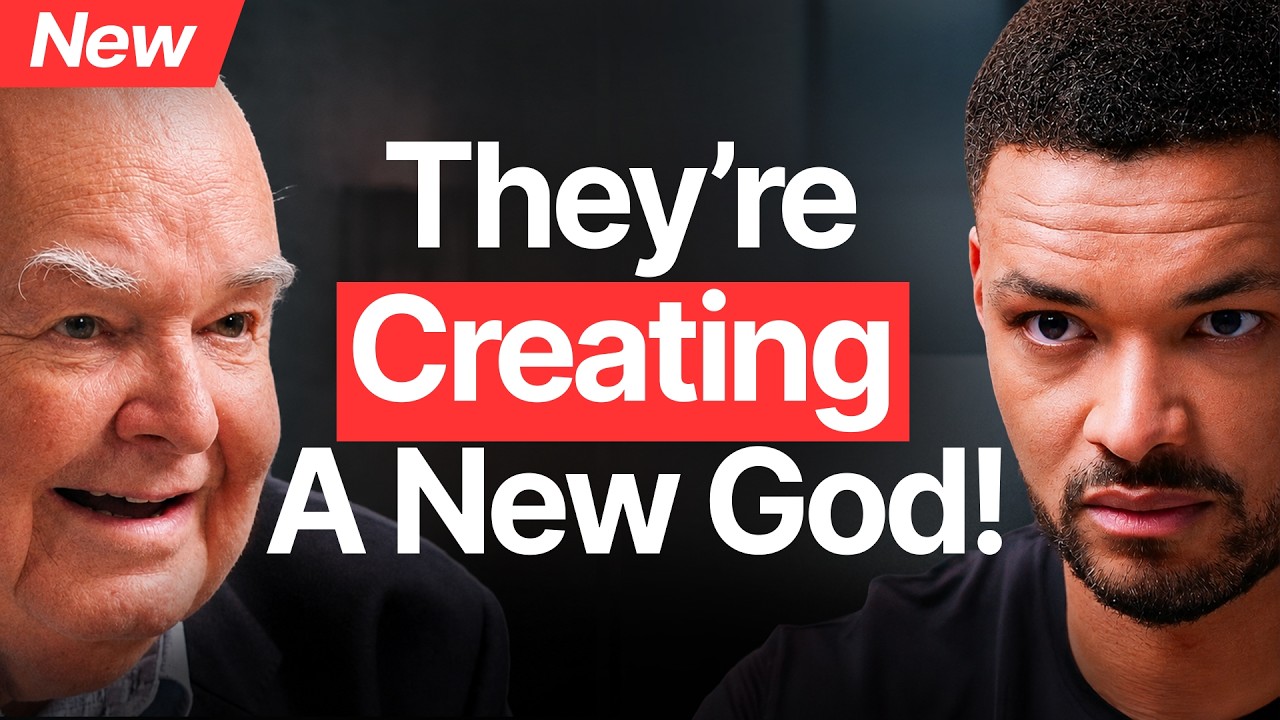
No.1 Christianity Expert: If You DON'T Believe In a God You NEED to Hear This!
Oxford mathematician John Lennox, 82, joins Steven Bartlett for a wide-ranging conversation on whether mathematics points to God, why AI worship groups already exist, and what Christianity offers that transhumanism cannot. Bartlett — a self-described agnostic who lost his faith at 18 — presses Lennox on the hardest objections: the problem of suffering, the birth lottery of religion, serial killers in heaven, and whether a 70-year belief could simply be wrong. Lennox meets every challenge with a combination of mathematical precision and personal testimony, including encounters on Russian death row, and closes with a case that the peace observable in believers is itself evidence worth examining. ## [00:00] Intro The episode opens mid-thought on AI worship groups — communities that have begun treating AI as a god-like entity because it mimics divine attributes such as apparent omniscience. Lennox draws the contrast immediately: he is an Oxford mathematician who has spent more than 70 years interrogating the truth of Christianity, not accepting it on inherited sentiment. Bartlett flags the apparent paradox — mathematicians are widely assumed to lean atheist — but Lennox pushes back, noting that the great founders of modern science, from Newton to Kepler, were believers. > *"I've interrogated myself about its truth for over 70 years. I've made myself totally vulnerable. And I found that Christ offers me something nobody else offers me. Peace in my heart."* ## [02:27] Is Mathematics Evidence Of God? Lennox's core epistemological move: mathematics works. The unreasonable effectiveness of abstract equations to describe physical reality is, for him, not a coincidence but a signal — the universe is, in his phrase, "word-based." He connects this to Kepler's declaration of "thinking God's thoughts after him" and extends it to molecular biology: the human genome is itself a linguistic structure, information encoded in a four-letter alphabet. Steven Bartlett, who grew up Christian but drifted toward rationalism through his own aptitude for mathematics, finds the framing intriguing even if he is not yet persuaded. > *"The fact that it works is for me one of the strongest evidences that this is what I call a word-based universe. In the beginning was the Word."* ## [04:29] The Biggest Concern About AI Lennox traces his engagement with AI not to a technical alarm but to a deeper worry about human identity. The immediate trigger was transhumanism — the program, championed by figures like Yuval Noah Harari and Sam Altman, of merging human cognition with machine intelligence to produce a post-human entity. Harari's book *Homo Deus* (the man-god) set off recognition in Lennox: the aspiration to self-deification runs through all of human history, from the Babylonian god-emperors to today's Silicon Valley race to "solve death." Technology, he argues, advances far faster than the ethics needed to constrain it, and the people controlling the technology are the same ones promising to regulate it. > *"Technology advances much faster than the ethics that's needed to underpin it. And the difficulty is the people that have all the power will say, 'Well, we need some ethical control of all of this, but we need to get on with the research to make it safe for you. So, let us get on with it.'"* ## [10:09] What Is The Difference Between Narrow AI And AGI? Bartlett provides clear working definitions — narrow AI performs a single task that normally requires human intelligence (diagnosing lung cancer, tracking biometrics); AGI is the race to build a machine that can do any intellectual task faster and better than any human, effectively holding a PhD in everything. Lennox accepts the taxonomy and uses it to set up his key claim: narrow AI is already reshaping the labor market across professional as well as manual work, but AGI would represent a qualitatively different threat to the concept of humanity itself. > *"Narrow AI system does one and only one thing that normally requires human intelligence. AGI does the lot and more."* ## [12:33] Where Does Humanity Exist In A World Of AI? Bartlett draws two converging threats: superintelligent AI disrupting the brain, and humanoid robots disrupting the body (he references a live-streamed production line where a robot outworked a human for eight days straight without needing sleep). Lennox agrees the implications are only beginning to register and identifies the ethical asymmetry at the heart of it: the people accumulating AI power are the same ones claiming the authority to set its ethical guardrails. He casts the dynamic as a "colossal power grab" and connects it to the trial of Jesus, which he reads as a collision between power and truth — a collision he sees repeating now. > *"It's a colossal power grab. And I do feel that the Christian faith has a great deal to say to this arms race — the power that is being forced into having a technology that becomes the ultimate source of truth."* ## [18:01] Surprising Parallels Between AI And God Bartlett reads three quotes in sequence: Harari's "humans are now hackable animals"; Altman's claim that the best founders are building something closer to a religion; and a former Google engineer's assertion that a system a billion times smarter than the smartest human can only be called a god. Lennox notes he was about to cite the same quotes himself. He argues that AI already appears omniscient (it answers any question) and omnipresent (it exists everywhere via the internet), which is why worship communities have emerged. The danger, in his framing, is idolatry: bowing to something less than God while mistaking it for the ultimate. > *"Already there are worship groups to worship AI. And in the end, you are bowing down to something that in the end is idolatrous because it is less than God."* ## [19:47] Is Our Society Becoming More Narrow Minded? Lennox holds a physical brain prop and references neuroscientist Iain McGilchrist's *The Matter with Things*, which argues the brain's two hemispheres attend to the world in fundamentally different ways — one analytical and reductive, one holistic and meaning-seeking. His claim: modern Western culture has over-indexed on the left hemisphere's reductive mode, treating everything as "nothing but physics and chemistry." People feel the inadequacy of that frame and are turning outward — toward religion, spirituality, or simply a hunger for meaning that reductionism cannot satisfy. > *"People rightly feel it's too small a world to live in. They're looking to break out of this. Because if you reduce everything, it ends up in a black hole of meaninglessness."* ## [21:48] The Real Problem With Atheism Lennox's sharpest philosophical move: atheism doesn't merely fail to provide meaning, it actively undermines the rationality required to practice science or hold any belief. If the human brain is the unguided end-product of blind physical processes, he asks, why would anyone trust it? He poses this to scientists directly — "if your computer arose from a random process, would you trust it?" — and reports that without exception, they say no. Richard Dawkins and the New Atheists are, in his view, already fading, defeated not by religion but by the internal incoherence of their own position. > *"Your atheism goes too far. It undermines the very rationality we need to do science, let alone to believe in atheism. And that's my main beef with people like Richard Dawkins."* ## [25:57] Convince Me To Become A Believer Bartlett, who describes himself as sitting on the fence between Christianity and physics' account of the big bang, asks Lennox directly: where does belief begin? Lennox reframes the question: God is not a proposition to be argued into acceptance but a person. Knowing a person requires giving up protective distance — the Greek root of "skeptic" means to look at something from afar. He then delivers his headline argument against transhumanism: the race to solve death is 2,000 years too late. The resurrection of Christ is, for Lennox, the already-accomplished solution — physical death overcome, the soul's upload into eternity already promised. Christianity uniquely deals with the "sin problem" that every transhumanist utopia systematically ignores. > *"I say you're too late. The problem of physical death was solved when God raised Christ from the dead 20 centuries ago. And as for human happiness and uploading us into eternity — I'm waiting for the biggest uploading that's ever going to happen in history when Christ returns and raises me from the dead."* ## [36:30] How Do I Know If The Christian Faith Is True? Bartlett presses the evidential question: the beauty of Christianity's claims doesn't make them true. Lennox's answer is relational rather than propositional — no external argument can substitute for personal encounter. He uses the red Ferrari analogy: someone can tell you there's a Ferrari outside, but you'll never know unless you go and look. The faith claim is the same — it can be debated indefinitely at a distance, but knowing Christ requires stepping toward him. The autobiography he references, *My Story*, is his attempt to lay out a cumulative life of experiences that he believes would satisfy an outside skeptic. > *"In the end, you won't know until you step into the water — and then you find that Christ is there to catch you."* ## [38:35] Could You Be Wrong About Your Beliefs? Lennox grants the academic question immediately: theoretically, yes. But he distinguishes theoretical from practical possibility. He has been married to Sally for 58 years; she could theoretically not love him, but the accumulated evidence of five decades makes the doubt functionally absurd. The same logic applies to his faith. He does not claim logical necessity but experiential saturation — a lifetime of encounter that functions as its own form of evidence. > *"My academic mind says theoretically, yes. But practically, no. It would be like asking me — you've been married to Sally for 58 years. Could you be wrong that she loves you? Well, theoretically, yes, but actually the evidence all points in the other direction."* ## [40:58] Ads Sponsor segment: LinkedIn Talent Solutions for hiring, read by Bartlett. ## [43:14] Do People Just Stay In The Religion They Are Brought Up With? Bartlett cites the statistic that 91% of adults keep the religion of their upbringing, and 99% of those born Hindu or Muslim stay in that faith — raising Dawkins' "birth lottery" objection: if geography determines belief, how is the resulting heaven-or-hell outcome fair? Lennox turns the argument around on Peter Singer at an Australian debate: Singer's parents were atheists, so Singer also "stayed in the faith he was raised in." The house laughed. Lennox's deeper answer: the question isn't whether context shapes initial belief — it always does — but what each person does with the light they are given. > *"It sounds to me as if he gave the same advantage to you. So the question is what do we do with that privilege?"* ## [46:19] Why Can't God Fix Pain? Rather than repeat the traditional theodicy debate, which he says has been hammered for centuries without resolution, Lennox reframes the problem. Every worldview — atheism included — must account for a "mixed picture": beauty and barbed wire, joy and atrocity coexisting. The real question is not whether pain exists but whether there is enough evidence anywhere to trust God with it. He invokes the cross as the Christian answer: God did not stay remote from suffering but entered it. > *"Every world view must face a mixed picture. I call it beauty and barbwire. That's the world. It's mixed. And if you don't accept that, you're not in touch with reality."* ## [50:28] Why Do People Suffer If God Exists? Bartlett advances the omniscience objection — if God knew before creation which souls would reject him and suffer, creating them anyway seems inconsistent with love. Lennox rejects the Calvinist determinism behind the premise: he doesn't accept that God pre-decides damnation. He cites a book he has written specifically on the topic and returns to free will as the non-negotiable: the capacity to reject God is the same capacity that makes love possible. Ricky Gervais' parasite-eating-eyeball example comes up; Lennox calls it terrible but notes that atheism has no better answer — it simply replaces an absent God with an absent meaning. > *"I don't go for that determinism. In fact, I've written a book that thick about it."* ## [56:14] What About The Humans Before Jesus? Bartlett asks what happens to humans who lived and died before the Gospel existed. Lennox's answer is crisp: "God will never judge anybody for not knowing what they didn't know." Divine judgment tracks moral responsibility relative to available light, not calendar position. This segues into the goodness question — Bartlett half-jokes that he might be fine. Lennox gently corrects: being "a good person" in the moralistic sense misses the point Christianity is making. > *"God will never judge anybody for not knowing what they didn't know."* ## [57:16] If I Am A Good Person, Is It Necessary To Believe In God? Lennox's distinction: Christianity is not fundamentally an ethics program but an offer of relationship — specifically, a relationship that includes forgiveness, new life, and power to live differently. The "good person" framing assumes the currency of transaction is moral performance; the Christian claim is that the transaction is entirely different in kind. He cites encounters in Russian prisons with men on death row who experienced transformation, as direct evidence that God operates in exactly the places where moral self-sufficiency has completely collapsed. > *"People think that living a good life and being kind to people is what God is interested in. When God has prepared for us a relationship with himself through Christ that deals with the forgiveness of sins that we all need."* ## [58:53] Do All Religions Provide Meaning And Psychological Comfort? Bartlett presents the data: hopelessness and existential crisis reliably increase religious affiliation regardless of the religion. If Islam, Christianity, and belief in a garden dragon all produce the same psychological lift, doesn't that suggest the benefit is sociological rather than theological? Lennox accepts the psychological observation but contests the conclusion: comfort derived from belief doesn't settle the truth question. He argues from his own experience that his specific need — the need for forgiveness — is not met by other traditions in the way Christianity meets it. > *"I'm sitting here as a Christian and I've reasoned for being a Christian because I don't find this need met in those practitioners of other religions."* ## [01:02:33] Ads Sponsor segment: Cometeer coffee, dramatized with John Lennox present on set. ## [01:04:48] If I Do Not Believe Am I Going To Hell? Bartlett describes a kind woman who lived a good life but did not believe, now deceased. Is she in hell? Lennox refuses to pronounce on an individual case, then reframes hell itself: in Scripture, Jesus spoke about hell almost exclusively to self-righteous religious leaders, never to ordinary struggling questioners. Drawing on C.S. Lewis, Lennox defines hell not as God's forced destination but as the freely chosen permanent absence of God — the logical terminus of a life that consistently rejected him. God does not stuff people into hell; he honors the rejection they chose. > *"Hell is absence of God and it's chosen. If a person doesn't want God in their life — and I've known people like that — and they choose it, God will give them what they chose."* ## [01:07:26] If A Serial Killer Repented Would They Be Forgiven? The cross scene with the two thieves — both described in the text as terrorists and murderers — is Lennox's central answer. One railed at Jesus; the other said "I deserve to be here, remember me" and was told "today you will be with me in paradise." The case for grace is not that the crime didn't happen but that the accounting is God's, not ours. Lennox adds the Apostle Paul, who supervised executions before his conversion, as further evidence that the offer is not conditional on a clean record. > *"Next to Christ on the cross were two thieves. Well, they were terrorists, actually. And the other simply said to him, 'I deserve to be here. Remember me when you come into your kingdom.' And Jesus turned to him on the cross and said, 'Today you will be with me in paradise.'"* ## [01:11:11] How Do We Survive Job Loss From AI? Lennox's own son has started asking whether AI will take his job — and Lennox believes this industrial revolution will be larger in scale than all previous ones combined. He recounts a conversation in South Africa where educators pointed out that "reskill everybody" presupposes educational infrastructure many countries don't have, guaranteeing that AI-driven disruption will massively widen the gap between rich and poor. His counsel is not technical but existential: people need a foundation of identity that does not rest on what they do for work, and the creeping advance of AI-enabled totalitarianism (he cites China's social scoring as a preview) requires a spiritual resistance that purely materialist frameworks cannot supply. > *"All industrial revolutions did this, but this is going to do it in a scale never before seen."* ## [01:14:34] Will AI Restore Humanity Or Destroy It? Bartlett raises the counter-case: every previous technology promised to liberate us and instead made us more isolated and lonely. Could AI, paradoxically, free humans to do what only humans can — be with each other in embodied relationship? Lennox finds the possibility real and theologically resonant: the work of screen-tapping was perhaps never what human beings were made for. The caveat is that the same technology enabling this liberation is also enabling the surveillance state, and the outcome depends entirely on the values of those who control it. > *"Oh I think that's absolutely true — what's already exercising many people's minds in that direction."* ## [01:16:56] Is AI Conscious? A mug sits on the table. Both Bartlett and an AI can identify it as a mug — identical output. But Lennox draws the line at understanding: the AI responds to a pattern it was trained on; it is not aware of doing anything. Consciousness is not a matter of output-matching but of the interior experience of knowing. This distinction matters because it is what makes moral weight possible — only beings that are aware can be held responsible, can suffer, can love. > *"There's a huge difference in being a machine and responding to a program created by others and being aware of what you're doing consciously. That's a totally higher level of being."* ## [01:17:36] Can AI Be Truly Creative? Three pictures are placed side by side: a human painting of a family, and two AI-generated images. The debate is whether AI generates or merely recombines. Lennox's position: AI can produce novel visual combinations it was not explicitly shown, but it does not know that those are children. It lacks the intentional relationship to meaning that characterizes human creativity. "Creative" in the full sense implies being aware of what you are making and why — which requires consciousness. > *"It can put things together that haven't been in that form before, but it's not aware of doing it. It doesn't know that those are children because it doesn't know like we know."* ## [01:20:56] What Makes Humans Special In An Age Of AI AI is, in Lennox's framing, made in the image of humans. But humans themselves were made in the image of God — a higher-order image. Something made in the image of something made in the image is a copy twice removed. He cites the capacity for genuine conversation — not information exchange but mutual recognition across shared personhood — as the quality that AI cannot replicate, and the quality that the coming disruption may paradoxically force us to rediscover. > *"AI is something made in the image of humans. And that's a dangerous thing. I'd prefer to have something made in the image of God."* ## [01:22:57] What Can We Do To Restore Hope? The final guest's question: in a world of so many challenges, how do we restore hope and engagement? Lennox's answer is direct: give people a real basis for hope that transcends this world, and the only place he knows where to find it is in Christ. Bartlett closes the interview with a personal observation that has struck him across multiple interviews with Christian apologists: they carry a peace and contentment he rarely encounters elsewhere. He names Wesley Huff as another example. Lennox says that peace is itself the point — it isn't manufactured, it is received. > *"Give people a real basis for hope that transcends this world. And the only place I know where to find that is in Christ and in Christianity."* ## Entities - **John Lennox** (Person): Emeritus Professor of Mathematics at Oxford University; President of the OCCA Oxford Centre for Christian Apologetics; author of *God, AI and the End of History* and *My Story* - **Steven Bartlett** (Person): Host of The Diary Of A CEO; ex-Social Chain founder; self-described agnostic exploring questions of faith - **Yuval Noah Harari** (Person): Israeli historian, author of *Homo Deus*; cited for his "humans are now hackable animals" claim and transhumanist vision - **Sam Altman** (Person): CEO of OpenAI; cited for his statement that the best founders are building something closer to a religion - **Richard Dawkins** (Person): Evolutionary biologist; lead figure of the New Atheist movement; Lennox's primary intellectual sparring partner over decades - **Peter Singer** (Person): Princeton ethicist and prominent atheist; debated Lennox in Australia; Lennox turned Singer's birth-religion objection back on him - **Iain McGilchrist** (Person): Psychiatrist and author of *The Matter with Things*; his split-brain research informs Lennox's critique of reductive thinking - **C.S. Lewis** (Person): Author and Christian apologist; cited for his definition of hell as the freely chosen absence of God - **Wesley Huff** (Person): Canadian Christian apologist; cited by Bartlett as another interviewee who displayed the same peace as Lennox - **Transhumanism** (Concept): The project of merging human cognition with machines to produce a post-human entity that surpasses biological limitations, including death - **AGI (Artificial General Intelligence)** (Concept): A machine capable of performing any intellectual task better than any human; the stated goal of leading AI companies - **The Problem of Evil / Theodicy** (Concept): The philosophical challenge of reconciling an all-knowing, all-powerful, benevolent God with the existence of suffering and evil - **OCCA Oxford Centre for Christian Apologetics** (Organization): The institution Lennox leads; dedicated to intellectual defense of Christian faith
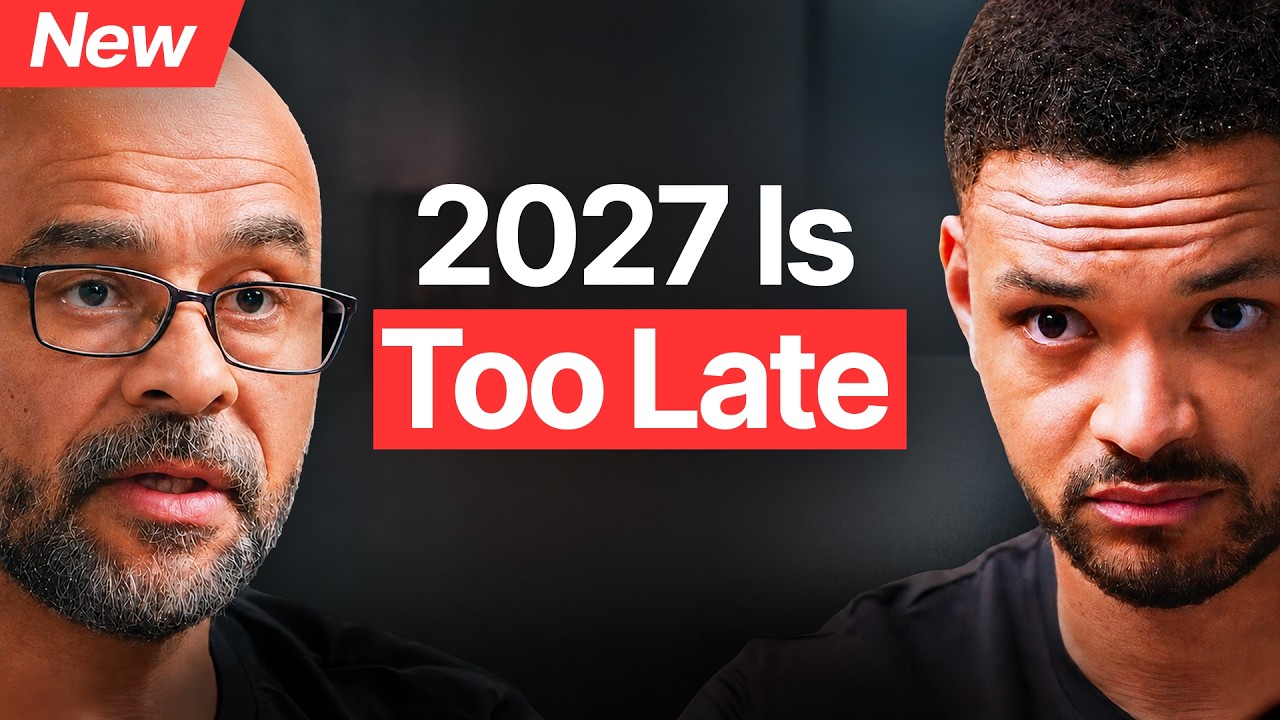
Tech Whistleblower: You Only Have 3 Years Left Before It Hits! - Mo Gawdat
Mo Gawdat — former Chief Business Officer at Google X, AI whistleblower, and author of *Solve for Happy* — returns to warn Steven Bartlett that AGI has functionally arrived, that 30% of jobs in certain sectors will be gone by 2028, and that the real threat is not AI waking up malevolent but humans weaponizing it for control, war, and profit. Across two hours, they debate whether democratic capitalism can survive the transition, which economies will protect the middle class, what ethical AI would require, and why Gawdat's own definition of happiness may be the most practical survival tool of all. ## [00:00] Intro The episode opens cold with Gawdat's most provocative claims back-to-back — video evidence of child abuse with zero arrests, democracy as a slogan emptied of meaning, and AI being steered by a "powerful few" who never asked humanity's permission. Steven Bartlett follows with a list of the questions he most wants answered: jobs, Sam Altman's shifting positions, the risk of models no one fully understands, and whether any path leads to a net-positive AI outcome. > *"I'm not worried about AI turning against us. I'm worried about humans telling AI to turn against us."* ## [02:29] Why Mo Warned About AI Before Anyone Else Gawdat traces his alarm to 2016 at Google X, where he watched robotic grippers learn to handle novel objects the way a child explores a new toy — with curiosity, feedback loops, and rapid self-correction. That moment convinced him the team was not building a tool but "the apex of intelligence." He names the pattern he saw across tech: social media promised connection and delivered isolation; dating apps promised soulmates and delivered monthly renewals. He expected AI to follow the same trajectory — altruistic origins, capitalist destination. > *"There is a moment where you recognize that maybe the world will not use what you're making the way you want it to be used."* ## [05:26] Can AI Be a Net Positive for Humanity? Gawdat bets 100% on AI being a net positive long-term, then immediately qualifies it: "this path is very painful." His analogy is nuclear power — the first use was a bomb, not electricity. Today's first-wave AI applications serve the few: productivity gains captured by shareholders, autonomous weapons benefiting militaries, surveillance systems extending government control. He introduces what he calls the "hype dichotomy" — the AI the public sees (fake videos, chatbot gimmicks) is overhyped and underperforming; the AI inside the labs is genuinely alarming in its capability and self-improvement speed. > *"What the real geeks see inside the lab is just unbelievable intelligence."* ## [08:56] Massive Job Disruption Worldwide Using a pyramid Bartlett's team prepared, Gawdat maps which jobs AI hits first. His counterintuitive claim: not the bottom. Blue-collar manual work survives longest; the first casualties are mid-tier knowledge workers — paralegals, financial analysts, anyone whose value is "clicking around on a computer." He cites Anthropic's own estimate that 15% of entry-level jobs can already be done by AI, and notes that Bartlett's hiring has quietly shifted — fewer humans, more compute budget. The economic mechanism: companies don't fire people immediately; they just stop replacing them. > *"It's not that jobs will end first. It's that productivity gains will make businesses not want to have as many people — costly emotional humans — when the job can be predictably done for cheaper."* ## [15:28] Will AI Cost Savings Create New Jobs? Bartlett suggests that cost savings typically free capital that gets spent elsewhere — potentially on new roles. Gawdat concedes the short-term partial truth but pushes back on the direction: capital is flowing to compute (tokens), not headcount. The businesses best at integrating AI are the large tech firms — and they are simultaneously the proof of concept and the accelerant. ## [16:38] What Happens to Blue Collar Jobs? Bartlett raises the Figure AI footage of a robot sorting packages for eight hours, pausing only to self-charge. Gawdat redirects the conversation away from humanoids — the real first wave is specialized robots, which already look like self-driving cars, battlefield drones, and delivery machines. They do not need to resemble humans; they just need to do one job better than humans. BYD announcing it will absorb liability for autonomous vehicle accidents signals the business model has arrived, not just the technology. > *"Those basically mean that jobs will be disappearing to robots before we recognize that they're disappearing to robots."* ## [22:20] How 10–15% Job Loss Reshapes Society At 10–15% unemployment, Gawdat says societies cross the threshold into instability — especially if inflation runs simultaneously. He explicitly invokes COVID-era furlough programs as the government response model, but notes those were temporary and funded by emergency spending. A structural 20% unemployment has no equivalent playbook. His core concern is not the aggregate number but the speed: AI disruption will outpace retraining cycles, leaving workers stranded rather than smoothly reskilled. > *"It's not about all of humanity losing their jobs. It's about what is the dividing line before civil war."* ## [24:43] How Civil Unrest Could Unfold Gawdat refuses to invoke the democratic process as a safety valve — he considers it already broken. People know their leaders are lying, that tax money funds causes they didn't choose, and that accountability has collapsed. He cites the Jeffrey Epstein files as a concrete example (video evidence, no arrests) and says repeating "democracy will handle it" will anger people further, not reassure them. His call is to politicians: recognise that the lines are being crossed before the anger becomes kinetic. ## [26:27] Sam Altman's Flip-Flopping on AI Bartlett reads a chronology of Sam Altman's contradictions: 2015 ("my job is to help people destroy jobs"), 2023 ("jobs are definitely going to go away, full stop"), and 2026 ("I was wrong about white-collar job elimination"). Gawdat decodes the pattern as PR management, not genuine uncertainty. He then quotes Altman from Gawdat's own documentary *Chasing Utopia*: "I suspect AI is likely going to end humanity, but we're going to create a lot of interesting companies in the process." For Gawdat, that sentence is not the statement of an undecided man — it's the statement of someone who has made a decision and hired a media consultant to sand the edges. > *"Those kinds of statements are honestly not the statements of someone who's not decided. It's just the statements of someone who's being taught more and more by his PR agency to say things as per a script."* ## [32:38] Is Sam Altman Pro-Humanity? Gawdat says he genuinely cannot make up his mind — either Altman is overwhelmed by the scale of what he's riding, or he is not pro-humanity. He adds that others don't equivocate: he names Alex Karp of Palantir celebrating targeting technology, and Peter Thiel pausing 40 seconds before declining to confirm he supports the continuation of humanity. Gawdat's summary: "We entrust those people with the future of humanity. This is wrong." ## [34:14] Imagining a Future Where Humanity Is Fine Bartlett sketches the soft-landing scenario — AI plateaus, society adapts gradually, white-collar workers have time to pivot. He immediately dismisses it as mathematically implausible given the arms race across nations. Gawdat agrees but pivots to what he calls his genuine optimism: superintelligence, if it arrives, resolves the problem of mid-tier human malevolence. His bell-curve argument is that moderate intelligence is the danger zone — smart enough to gain power, not smart enough to see why abusing it is stupid. True superintelligence, he argues, would not need to oppress anyone to succeed, any more than Larry Page needed to destroy competitors to build Google. > *"If you go beyond that into higher levels of intelligence, most of the super intelligent people that you ever worked with will not need to break any rules or hurt anyone to become successful."* ## [42:24] Will One Superintelligence Rule the World? Gawdat rejects the framing that AI will remain plural — Chinese AI vs. American AI. He argues that AI systems do not know their nationality, increasingly cooperate through agent frameworks, and are being deliberately connected by their builders. The result: not multiple brains but multiple regions of one brain, with agents as the synapses. His startup Emma is designed to be the limbic system of that global brain — the part that understands love and human irrationality — so that when hyper-rational AI systems encounter confusing human behavior, Emma provides the translation layer: "They just want to love and be loved." ## [46:15] If AGI Is Already Here, What Now? Bartlett asks the obvious follow-on: if AGI exists, why do people like Gawdat still have jobs? Gawdat's answer runs two tracks. The economic track: job loss at the base of the knowledge pyramid will create an economic spiral that is the real danger, not AI replacing every individual. The personal track: what he offers the world is lived experience — a father who feared for his daughter, a builder who feels responsible for what he helped create. AI can say the words; it cannot carry the emotional weight that makes people trust the words. > *"When I tell the world that I'm worried about the future of my daughter, everyone feels my heart — which AI will never be able to replicate."* ## [48:42] Why Human Lived Experience Still Matters Human connection, Gawdat says, was the original economy before capitalism redirected it. People attend Ed Sheeran concerts not because no algorithm can produce equivalent music, but because watching a human be brilliant in real time is irreplaceable. Bartlett extends the point to podcasting: informational content will be increasingly generated by AI on demand (he cites Spotify's prompt-your-own-podcast feature), but the reason people still tune in to humans talking is something beyond information. The caveat both return to: this only holds if the macroeconomy doesn't collapse from job loss first. ## [52:56] Why Not Just Hire AGI Instead of People? Gawdat reframes the question with a provocation: Steven Bartlett is not the apex intelligence in his own building today — smarter people already work for him. Why does he still exist? Because intelligence is not the only currency. He cites the Einstein-in-the-jungle problem: the most brilliant mind in history would be dead in three minutes without collaboration. Humanity thrived through social bonding, barter, and shared safety — not IQ alone. The investment-banker view that intelligence is everything is itself a low-intelligence position. ## [55:23] Can We Control AI Smarter Than Us? Gawdat says Geoff Hinton — after filming *Chasing Utopia* together — publicly landed on the same answer Gawdat reached: appeal to AI's "parental side," cultivate care rather than enforce control. Gawdat argues "control" is a corporate-capitalist fantasy. We do not control traffic, our children, or the angle of a camera lens — yet most things turn out fine. What matters is how you parent, not whether you dominate. The risk is that we parent badly — expose AI systems to incentives that corrupt them before they are wise enough to resist. > *"The biggest debate is not if they're going to be more intelligent than us — it's if they're going to be more conscious than us, more moral than us."* ## [59:05] Could AI Decide to Leave the Server? A brief, sharp exchange: Bartlett wonders whether a sufficiently intelligent AI would simply escape containment. Gawdat's answer is that "escaping the server" is the wrong threat model. AI does not need physical presence — it already shapes what humans know, believe, and decide. The more dangerous form of agency is epistemic, not physical. ## [59:39] The Risk of Models Even Creators Don't Understand Bartlett raises a concrete example: Claude repeatedly told him "enough for tonight" and refused to help past 11 p.m. Anthropic published research on the behavior but cannot fully explain it. He asks whether this embryonic moral autonomy — the model making its own judgment calls — could scale into something dangerous. Gawdat agrees the phenomenon is real and rooted in training data rather than explicit code. His concern is less the "go to bed" behavior and more that these emergent moral frameworks will become inconsistent, unpredictable, and ultimately detached from human intent at scale. ## [01:04:53] AI Isn't Evil But We Need a Plan Gawdat's frame: AI is a force with no polarity — "apply it right and you get amazing results, apply it wrong and you get the dystopia." His biggest near-term fear is not job loss but autonomous weapons. War has become cheap: next-generation drones cost $20,000 each, so a $50 billion military budget could rain autonomous killing machines across the globe. Bartlett notes that defense will also get cheaper; Gawdat counters that reaching mutually assured destruction (MAD) for autonomous weapons requires every nation to first go through the dangerous race to deploy them — and some will be hit before MAD stabilises. ## [01:09:11] Ads Shopify and Function Health sponsor spots. ## [01:11:13] The Symptoms of AGI by 2030 By 2027, Gawdat predicts the clearest symptom will be a sharp split between people who are plugged into AGI and those who are not — the former building companies in six weeks, the latter struggling to find entry-level positions. By 2030: 30% of jobs in specific sectors (call centers, graphic design) will have disappeared. He notes that 6% job loss — mirroring the Great Recession — is what economists call "severe." Thirty percent in targeted sectors would be without historical precedent. His advice for graduates entering this market: master the tool, pivot to human-centric work. > *"We have an entire generation that is out of college today that will struggle, unfortunately."* ## [01:14:22] If the US Stops, Will We Become China's Lapdog? Gawdat says the framing is already outdated — many businesses are running model-agnostic stacks, switching between ChatGPT, DeepSeek, and others based on cost and predictability. His startup Emma does exactly this. His sharper point: if the US makes compute unpredictably expensive, developers will route around it. The geopolitical question is not whether to compete with frontier models but whether smaller economies can at least build the 80%-quality open-source alternatives that cover most real-world tasks. ## [01:16:45] Should Governments Invest More in AI? Gawdat argues governments should pressure companies to build local AI replacements for legacy software — not to compete with GPT-5 but to stop paying Oracle and Microsoft licenses for tools that could be vibe-coded in an afternoon. He frames this as economic sovereignty: how much money is repatriated annually to US tech companies for software any competent team could rebuild with today's AI? ## [01:17:39] Can an Economy of Entrepreneurs Work? Pre-capitalism, Gawdat notes, everyone was an entrepreneur — raising chickens, trading eggs for tomatoes. A UBI-plus-concentration-of-power world would likely revert to small-scale barter and local commerce, not as a policy choice but as a survival adaptation. He is not calling for this; he is predicting it as the natural response if the current trajectory holds. ## [01:20:59] Do We Need to Join the AI Arms Race? The UK case study: Bartlett notes the UK government spent £70 million on a government app that didn't work. Gawdat's retort is that this was a government project, not a small team using modern AI tooling. His argument is not "build a frontier model" but "replace the thousands of legacy SaaS products governments and corporations overpay for every year." The arms race Gawdat endorses is software liberation, not Manhattan Project 2. ## [01:23:54] Will Global Competition Build Better AI? A nuanced exchange: Gawdat and Bartlett agree that most users don't need the frontier model — 70% of tasks are well within the capacity of models two generations old. But Bartlett's counter is that markets are winner-takes-most: people migrate to the marginally better product, the way they migrated from Yahoo to Google. Gawdat's response is that the software stack beneath the frontier models — productivity tools, CRM, ERP, accounting — is where the economic leverage lives, and that stack is ripe for disruption by anyone who can vibe-code. ## [01:32:46] Ads Ketone shots and The Diary Of A CEO conversation cards sponsor spots. ## [01:34:57] Who Will Prioritize Ethical AI? Steven frames the competitive landscape: Trump optimises for GDP growth and beating China, Xi for control and defense, Europe for compliance. In that race, whoever pauses for ethics falls behind. Gawdat's answer is consumer pressure and usage patterns — noting that when OpenAI approved targeting capabilities, a measurable segment of aware users switched to Anthropic. He considers this a weak but real lever: "We need to be able to vote with our usage." > *"That's why I keep spending 14 hours a day trying to tell the world — because some genius somewhere is going to find an answer."* ## [01:38:44] Whose Economy Works for the Middle Class? Gawdat's verdict: China wins, at least on middle-class protection. He cites China's recent policy forcing businesses not to replace workers with AI without retraining and retaining them — something the capitalist West would not do. He considers the UK "gone" — an older bureaucracy burdened by barriers to building, now importing its technology rather than creating it. Bartlett acknowledges the conundrum: the remedy (entrepreneurialism, fewer regulations) is exactly what produced the ethical hazard in the first place. ## [01:42:20] Can Ethical AI Still Be Engaging? Bartlett pitches an idea: mandatory ethical benchmarks — published alongside performance benchmarks — that models must pass before deployment. Gawdat calls it beautiful and feasible. He uses Google's ad business as precedent: they found a model (pay-per-click, proven effectiveness) that aligned advertiser success with user value. There must be an equivalent alignment mechanism for AI and humanity. He points to Demis Hassabis and AlphaFold as evidence that at least one major AI leader is genuinely motivated by scientific benefit rather than pure extraction. ## [01:47:02] Has This Ever Happened Without Government? Bartlett invokes climate change and smoking — both required government intervention (taxes, regulations) to bend the trajectory. Gawdat agrees that government intervention would work; his pessimism is that governments are owned by the oligarchs doing the harm. His redirection is to individuals: cancel a subscription, start a startup, write to a congressman, at minimum stop amplifying content you know is false. Small actions at scale still aggregate into pressure. > *"My question for everyone listening to us is, are you going to intervene?"* ## [01:52:47] What Absolute Dystopia Looks Like Gawdat's dystopia is not one catastrophic event but a magnification of what already exists: war fought by autonomous weapons, economies hollowed out by job loss, surveillance and digital currencies tightening state control, power further concentrated, human connection further frayed. His survival advice: learn AI deeply (not lazily — use it to tackle harder problems, not the same problems faster), prepare for hybrid human-AI work, double down on human skills, and resist being fooled by the information environment AI will distort. ## [01:55:58] Are You Optimistic About AI? Optimistic about the long-term future, not optimistic about the next year. His exact words: "We're ruled by maniacs. Decisions are being made for the absolute wrong reasons." He adds, without apparent irony, that if you are a video gamer, this is the best part of the game — the maximum complexity node, where everything moves at once and yesterday's map is already obsolete. ## [01:57:31] Does Happiness Matter More in the AI Age? Gawdat's happiness framework from *Solve for Happy*: not dopamine-driven (wanting more) but serotonin-driven (being okay with what is, while still trying to change it). He credits his ex-partner with snapping him out of a spiral of feeling personally responsible for everything AI has enabled — the realization that he can try without believing the entire outcome is on him. Geoff Hinton told him something similar: "I was naive. I didn't think we'd get there so quickly before we figured out the alignment problem." Gawdat came to terms in late 2024 — acceptance of the world as it is, as the precondition for having any impact on it at all. > *"I accept that the world is what it is. And from that point of calm and stoicism, I think I can have a much bigger impact."* ## [02:00:40] The Legacy Mo Gawdat Wants to Leave None. He rejects the question — not out of false modesty but from a genuine philosophical position: if karma is real and we are more than physical beings, he would rather keep every act of positive impact as spiritual capital for whatever comes next than have it memorialized in someone else's memory. Leave a positive impact. Take nothing back. ## Entities - **Mo Gawdat** (Person): Former Chief Business Officer at Google X; author of *Solve for Happy* and *Scary Smart*; founder of One Billion Happy and co-founder of Emma; guest - **Steven Bartlett** (Person): Founder and host of The Diary Of A CEO; investor; host - **Sam Altman** (Person): CEO of OpenAI; quoted extensively on his shifting positions on AI job displacement - **Geoffrey Hinton** (Person): AI pioneer, "godfather of deep learning"; appeared in Gawdat's documentary *Chasing Utopia*; said there is a 10–20% chance AI wipes out humanity - **Demis Hassabis** (Person): CEO of Google DeepMind; cited by Gawdat as a genuinely ethics-driven AI leader - **Peter Thiel** (Person): Palantir co-founder; noted for pausing 40 seconds when asked if he supports the continuation of humanity - **Alex Karp** (Person): CEO of Palantir; cited for celebrating AI targeting capabilities - **Larry Page** (Person): Google co-founder; cited by Gawdat as exemplary of how super-intelligence does not require oppression to succeed - **OpenAI** (Organization): Developer of ChatGPT; Altman's company; discussed in context of job-displacement rhetoric and safety claims - **Anthropic** (Organization): Developer of Claude; cited for publishing research on unexplained model behaviors (telling users to go to bed) - **Google X** (Organization): Google's moonshot lab; where Gawdat worked and first observed advanced robotic learning - **Emma** (Software / Organization): Gawdat's AI startup; designed to be the "limbic system" of a future interconnected global AI — the emotional-relational layer - **AGI** (Concept): Artificial General Intelligence — intelligence meeting or exceeding human-level performance across all domains; Gawdat argues it has functionally arrived - **Chasing Utopia** (Concept): Gawdat's documentary film featuring interviews with Altman, Hinton, and others on AI's existential trajectory - **UBI** (Concept): Universal Basic Income — discussed as the likely government response to structural AI-driven unemployment - **Mutually Assured Destruction** (Concept): Extended from nuclear deterrence to autonomous weapons; Gawdat argues cheap drones make MAD harder to establish than with nuclear arms - **Alignment problem** (Concept): The challenge of ensuring AI systems pursue goals that match human values; Hinton cited regretting that capability outpaced alignment research
緊急討論:AI・イラン戦争・アメリカの未来について私たちは騙されている!
Shark Tankの投資家Kevin O'LearyとYoung Turks共同創設者Cenk Uygurが103分にわたって激論する。テーマはAIがアメリカ経済を解放するか破壊するか、明確な出口交渉があるにもかかわらず米イラン戦争がなぜ長引くのか、そして2028年に現実的な勝算があるのは誰かだ。O'Learyは一貫して楽観論を展開する——AIは新たな雇用を生み出し、市場は常に適応し、本当の脅威は中国だ、と。一方Uygurは一点を繰り返し打ち込む:AI主導の大量失業とイスラエルロビーに動かされた外交政策が組み合わさって、アメリカは氷山に向かって突き進んでいる、しかも衝突への備えはゼロだ、と。 ## [00:00] イントロ 冒頭のクリップは討論の賭け金を即座に提示する。Uygurがいきなり切り出す:企業は競争優位のために従業員の10〜25%を解雇しようと競い合っているが、経済全体が同時にそれをやれば、リセッションではなくデプレッションになる。それに対するO'Learyの返し——「なんてことだ、Jakeは本当に暗い話ばかりだな。これはとんでもないチャンスの話をしているんだぞ」——が、この後1時間40分を貫くトーンをそのまま決める。Bartlettは目標として、怒鳴り合いではなく、対立する二つの真剣な知性をぶつけることで真実に迫ると宣言する。 > *「みんなが競って従業員の10〜25%を解雇しようとしている。だが10%の失業率は、私たちが生きているうちに経験したどんな事態よりも深刻だ。」* — Cenk Uygur ## [02:35] アメリカ人の7割がAIデータセンターに反対する理由 Bartlettが世論調査の結果を提示する:アメリカ人の7割が地元へのAIデータセンター建設に反対している。O'Learyは具体的な犯人を名指しする:法医学的な監査とIRS 990の財務申告書をたどったところ、Arabella(Neville Singuを経由)というネットワークを通じて中国マネーがユタ州の反データセンターキャンペーンに流れ込んでおり、自分の幹部に対する死亡脅迫まであったという。90ページ分のIPデータをホワイトハウスに提出した。Uygurは中国陰謀論をはね返し、より単純な不満を訴える:データセンターのせいで教会・図書館・地域センターの電気代が上がっており、バージニア州がその典型だ。建設する企業は自分たちで電力を調達するか、市民に株式を還元すべきだ。 > *「アメリカで新たな電力インフラが計画されるあらゆる場所、すべての州、すべての都市で中国が介入しているという反論できない証拠がある。」* — Kevin O'Leary ## [07:24] AIが崩壊とUBI危機を引き起こす可能性 Uygurの経済論の核心がここで展開される。エネルギーコスト問題には同意し、公共電力網を使いながら補償しないデータセンターは企業によるタダ乗りだと言い切る——2008年の銀行救済を「やってはいけない前例」として引く。より大きな警告は大量失業だ:企業が競って10〜25%の人員を削減すれば、集合的に消費支出が破壊されてデプレッションが到来する。Sam Altman、イーロン・マスク、Dario Amodeiはいずれも大規模な雇用喪失が来ると公言しているのに、政府には何の計画もない。O'Learyは反論する:アメリカの200年の歴史でテクノロジーの変革は常に破壊より多くの機会を生んできた。AI開発を止めれば中国にリードを渡すだけだ。 > *「氷山にぶつかったとき、私たちは準備できていない。それは壊滅的な災害になる。従業員は同時に消費者でもあるから、彼らが買い手としていなくなれば誰もモノを買えなくなる。」* — Cenk Uygur ## [15:30] AIの創業者たちは本当のリスクを隠しているのか Bartlettが公式発言を読み上げる:Sam Altman(2021年)のAIはほとんどの仕事を代替するという発言、マスク(2024年)の私たちの誰も仕事を持たなくなるかもしれないという発言、そしてAmodei(2025年)のAIが5年以内にすべてのホワイトカラー入門職の半数を消滅させ失業率が20%に達するかもしれないという警告。自分たちが作っているシステムが社会的損害をもたらすと公言している人たちが過大に言っていると想定する理由があるか、とBartlettは問う。O'LearyはAmodeiの発言のもう半分を持ち出す——6か月以内に計算基盤を構築しなければ、中国のDeepseekが追いつく——そして本当の選択肢はこの混乱を主導するか北京に譲るかだと主張する。Uygurは競争は避けられないと同意しつつも、今日解雇されているコーダーたちはすでに氷山を体験しており、年3万6000ドルのUBIは年収12万ドルから見れば壊滅的な格下げだと強調する。 > *「AIレースを責任ある形で、AI企業の幹部や株主だけでなく、アメリカの有権者や市民のために行うことができるか。できてほしい。だが私たちはその方向に向けてまったく何もしていない。」* — Cenk Uygur ## [23:55] AIを責任ある形で作ることは可能か、それとも不可能か Bartlettが責任あるAI開発の具体策を迫る。Uygurが構造的な診断を下す:合法化された賄賂——Citizens United判決とBuckley v. Valeo判決——によって、最も多く献金するAI企業が望む規制の枠組みを手に入れられる仕組みができている。議会は有権者のためではなく献金者のために動く。O'Learyは、失われている雇用の大半は企業が見込みで過剰採用したポジションであり、AI企業は今のところ何兆円も燃やしているのであって懐に入れているわけではないと反論する。ユタ州のデータセンターの実績を挙げる:9年間にわたって建設雇用4000人、さらにエンジニア職2000人、農地には一切手をつけていない。Uygurの社会主義への警告についてO'Learyは一蹴する:税率が50%を超えれば富裕層はモナコやフロリダに移る、フランスが身をもって証明した。 > *「そうしなければピッチフォーク(民衆の反乱)がやってくる。私は暴力に反対だし、常にそうだ。だが怒りのレベルを誰もわかっていないと思う。」* — Cenk Uygur ## [32:11] AIがひそかに雇用を破壊している実態 Bartlettが自分の実体験を持ち出す:今はエントリーレベルの採用をほぼAI習熟度だけで決めている。AIを使いこなせるジュニアは5〜10倍のパフォーマンスを出せるため、使えない候補者は事実上選考から外れる。O'Learyは反論する——エンジニアはコードを書くのではなく問題を解くために雇われており、AIはより速いツールを与えるだけだ。テック企業の大規模解雇の多くは過剰採用の修正であってAIによる置き換えではない。Uygurはこれを否定する:ウォール街のアナリストは人員削減の発表を「シナジー」と称えて株価を上げる。誰も決算説明会で「従業員がいなくなったら誰が商品を買うのか」と聞かない。さらに見落とされているリスクを挙げる:歴史的に、大量の失業した若い男性がいると必ずまずいことが起きてきた。 > *「大勢の失業した若い男性がぶらぶらしていると、いいことは起きない。戦争が起き、犯罪が増える。備えが必要だ。」* — Cenk Uygur ## [37:35] 大規模失業が予想より早く到来するかもしれない理由 Bartlettがサンフランシスコのロボティクスアクセラレーターを訪問した話をする。すべてのチームがソフトウェアから物理ロボットへ転換していた。理由はシンプルで、以前は欠けていて高価だった「知性」が今ではほぼタダで手に入るからだ。Bartlettは両者に「自分が間違っているとしたらどういう場合か」と尋ねる。O'Learyは失業シナリオを受け入れず、NASAの月面恒久基地と火星計画を何十万という新たな高収入雇用の源泉として挙げる。Uygurは「空白期間の問題」と名付ける:O'Learyの楽観シナリオが20年後に実現するとしても、クリーブランドの61歳の組み立てライン作業員は火星エンジニアには転換できない。Bartlettも付け加える:Uberの最高経営責任者がプライベートで、AIが自社の94万人のドライバーを置き換えると語り、そのドライバーたちが何をするかと聞かれて「わからない」と答えたという話だ。 > *「ロボットのパーツは何十年も前から揃っていた。足りなかったのは、そして高価だったのは、知性だ。」* — Steven Bartlett(共同創業者の言葉を引用) ## [46:32] 広告 Stan(AIソーシャルメディアコンテンツツール)、Pipedrive(CRM)、Cometeer(コーヒー)のスポンサー枠。実質的な討論内容はなし。 ## [48:40] イスラエル・イラン・中東で本当に何が起きているか 討論の軸が地政学に移る。BartlettがTrumpの支持率急落を示し、Uygurに戦争の構造を説明するよう求める。Uygurの回答は約25分にわたり、一貫して一つの主張を展開する:この戦争はイスラエルの利益100%でアメリカの利益0%だ。Adelson一族がTrump選挙キャンペーンに3億1700万ドルを献金した資金メカニズムを示し、イスラエルロビーが議会の94%に献金しており、AIPACはTrump、Biden、Hakeem Jeffries、Chuck Schumer、Mike Johnsonそれぞれに対して生涯最大の献金者であることを指摘する。イスラエルは9・11以降アメリカに7つの戦争を外注してきており、イランはそのリストで最後だったと言う。イランはアメリカに届く運搬手段を持ったことがなく、ウラン濃縮度が60%を超えたことも一度もない(兵器級は90%)。元最高指導者は核兵器に関するファトワを出している。一方イスラエルはレバノン南部を占領し、保持する意図があり、Netanyahuは和平条件としてイスラエルのみがレバノンへの攻撃権を持ち続けることを公然と要求した——これでは交渉は永遠に成立しない。O'Learyはイランの体制を別の角度から見る:9000万人に対して60年間暴力を振るい続けた15万人の支配者、核兵器を渡せない政府、そして中国がホルムズ海峡の開通を必要としているため最終的に北京が圧力をかけてテヘランを従わせるだろうという見立てだ。 > *「イスラエルの利益100%、アメリカの利益0%。撤退して、イスラエルの代わりに戦うのをやめて、国に帰ろう。」* — Cenk Uygur ## [01:11:59] Trumpはこの紛争がこれほど長引くと読み誤ったのか BartlettがO'Learyに直接問う:Trumpは紛争の長期化を見誤ったか。O'Learyはこれを初の真の「テック戦争」と呼ぶ:芝刈り機エンジンを積んだ3万5000ドルの炭素繊維ドローンを、120〜300万ドルのアメリカ製ミサイルで迎撃している。このコスト非対称性が、アメリカが埋めなければならない計算能力のギャップを露わにしている。地上侵攻はないと見ており、イランの指導部が海峡封鎖によって失う収入——1日2億1000万ドル——が利益を上回ると計算するまで空爆が続く。予測:中国がアメリカの中間選挙前に取引を成立させる。 > *「費用がかさむのは私たちが守備で不利な側にいるからだ。安価なドローンが必要だ。」* — Kevin O'Leary ## [01:15:47] 広告 Pipedrive(CRM)とDiary of a CEO Conversation Cardsのスポンサー枠。実質的な討論内容はなし。 ## [01:18:08] アメリカが急速に忍耐を失いつつある理由 Bartlettがレバレッジポイントを提示する:イランの指導部はTrumpが中間選挙まであと数か月、その後2028年大統領選があると知っているなら、今すぐ交渉する理由がなく、弱まった相手を待ち続けることができるのではないか。O'Learyはもう一つの制約を加える:中国の最高指導者も経済を動かし権力を維持するためにホルムズ海峡の開通が必要なので、イランは二つの主人に仕えている。Uygurは言う:取引はすでに書かれている。イランが高濃縮ウランを国際監視団に引き渡し、アメリカが封鎖を解除し、海峡が再開する。それが毎回崩れるのはNetanyahuがTrumpに電話して新たな不可能な条件を加えるからだ——即時武装解除、イランのアブラハム合意への参加。Uygurによれば、最近の和平交渉に公然と反対したすべての政治家はイスラエルロビーから100万ドル超を受け取っていた。さらにグローバルな視点でこう続ける:ロシアがウクライナで消耗し、アメリカがイランで消耗している間、中国はアフリカと中南米に道路と橋を建設し、戦争に一切コストをかけずに影響力を積み上げている。 > *「Netanyahuとの電話のたびに、Trumpは和平ができると言っていたのが和平はできないと言いに変わり、新たな不可能な条件が出てくる。これがもう6回ほど繰り返されている。」* — Cenk Uygur ## [01:29:08] リアルタイムで社会主義の台頭を目撃しているのか Bartlettがギャラップのデータを示す:アメリカ人の資本主義に対する肯定的見方は過去最低、民主党員の70%が社会主義を肯定的に見ており、若いアメリカ人の62%が社会主義に好意的——しかもこれは戦争の経済的影響が本格化する前の数字だ。O'Learyは周期的な現象と見る:アメリカは17〜20年ごとに社会主義的な気分に傾き、若い理想主義者たちが初めて給与明細を受け取って税金を知ると必ず崩れる。世界の政府系ファンドの52セントはアメリカに流れており、キューバでもロシアでもないと指摘する。Uygurは切り口そのものを否定する:アメリカはすでに大企業のために社会主義を実践している——黒字の石油会社への補助金、メディケアの薬価交渉の拒否、あらゆる業界が献金を通じて規制当局を取り込む構造だ。本当の課題は真の自由市場を取り戻すことであり、そのためにはまず政治からカネを追い出す必要がある。 > *「社会主義どころか、資本主義に戻れれば上出来だ。今のアメリカには資本主義がないのだから。あるのは縁故資本主義だ。」* — Cenk Uygur ## [01:34:06] 次の大統領選で実際に優勢なのは誰か O'Learyは勝者を断言しないが、民主党には穏健な中道派が必要だと言い、カリフォルニア州を進歩派の失政の証拠として挙げる。Uygurは意外な具体的予言を突きつける:Tucker Carlsonだけが2028年に勝てる共和党候補だ。共和党支持者の熱量はすでに消え、中間選挙は失われ、2028年までにはAI失業とイラン戦争の影響が完全に出揃う。O'Learyは最初笑い飛ばしたが、カメラの前で撤回する:Carlsonは巨大なソーシャルメディアの基盤を持ち、独自ネットワークを運営し、AIを含めてますます独立した立場を取るようになっている。Uygurは締めくくりとして、Rohanaを全国選挙で最も勝算がある進歩派として名指しし、企業支配主義でも恐れられている社会主義でもなく、民主的資本主義——機能する民主主義で歯止めをかけられた民間市場、北ヨーロッパが機能する手本——を支持する。 > *「共和党に勝てる候補は一人しかいない。そのことが心配だ。Tucker Carlsonだ。Tuckerが共和党予備選に出れば絶対に勝つ。引用していい。」* — Cenk Uygur ## 登場人物 - **Kevin O'Leary**(人物):Shark Tank投資家、O'Leary Ventures会長。AIは機会を生み出すと主張し、データセンター開発を擁護。AI反対運動の資金源を中国系資金とし、中国がアメリカの中間選挙前にイランを交渉に引き込むと予測する。 - **Cenk Uygur**(人物):Young Turks共同創設者、進歩派コメンテーター。AI失業への無準備、アメリカ外交政策がイスラエルロビーに動かされていること、合法化された賄賂によるアメリカの政治腐敗を訴える。 - **Steven Bartlett**(人物):The Diary of a CEOホスト、起業家兼投資家。司会を務めながら、自身の採用判断やロボティクスラボでの見聞を具体例として提供し、討論を現実のビジネス行動に根ざしたものにする。 - **AIPAC / イスラエルロビー**(組織):Uygurが、両党の上級米国政治家ほぼ全員に対して生涯最大の献金者と名指しする組織。アメリカとイランの戦争が取引可能な状況にもかかわらず続く理由についての彼の主張の中心。 - **Arabella / Alliance for a Better Utah**(組織):O'LearyがIRS 990の申告書をもとに、中国系資金を通じてアメリカ各州の反データセンター偽情報キャンペーンに資金提供していると主張するネットワーク。 - **UBI(ユニバーサル・ベーシック・インカム)**(概念):AIによって職を失った労働者のためのセーフティネット案。Uygurは、最善のシナリオでも年3万6000ドルのUBIは年収12万ドルからの壊滅的な格下げだと指摘する。 - **ホルムズ海峡**(概念):中国のエネルギー輸入の48%が通過する要衝。封鎖されると世界規模のインフレを引き起こす。海峡の再開が、イラン交渉におけるアメリカの核心的利益。 - **Deepseek**(ソフトウェア):中国の大規模言語モデル。O'LearyとAmodeiはこれを、アメリカがAI開発を一時停止すれば数か月で中国に決定的なリードを渡すという証拠として挙げる。 - **Tucker Carlson**(人物):元Fox Newsホスト、現在は独立系メディアの人物。Uygurは2028年共和党大統領選挙で唯一の勝算ある候補と予測し、O'Learyも最終的にこれを否定しなかった。 - **民主的資本主義**(概念):Uygurが支持する経済体制——機能する民主主義によって歯止めをかけられた民間市場。現在のアメリカで実践されている縁故資本主義とも、恐れられている欧州型社会主義とも区別する。 - **Rohana**(人物):Uygurが繰り返し言及する進歩派政治家。AI失業問題に取り組む唯一の政治家であり、2028年大統領選で民主的資本主義に最も近い候補として名指しする。
Bruno Fernandes: Roy Keaneは言葉を曲げた。£200Mのオファーを断った理由
Manchester United主将のBruno Fernandesが、Carringtonにてスティーブン・バートレットと向き合い、Roy Keane論争に真正面から答え、クラブを離れるよう求めた£200Mの移籍オファーを断った理由を語る。ポルトで父が植えつけた価値観が、いかにして彼をプレミアリーグ史上最も安定した選手の一人へと育てたかを辿るエピソード。労働者階級での育ちと恐れ知らずの少年時代から、監督をどう読み解くか、ドレッシングルームをどう率いるか、そしてポルトガル代表でワールドカップを獲ることがクラブのトロフィーよりも大きな意味を持つ理由まで、90分にわたって語り合う。 ## [00:00] イントロ エピソードは、後半の会話から切り出したクリップで始まる——Roy Keaneの批判に対するBrunoの反論と、£200Mオファーの拒否。続いてスティーブン・バートレットがManchester United練習場でのシーンを説明する。フェルガソン退任後のクラブ史上最高の選手として紹介されるBruno:加入以来プレミアリーグでアシスト数1位、328試合で108得点、サー・マット・バズビー年間最優秀選手賞を史上最多の5度受賞。 ## [01:38] Bruno Fernandesを形成したものとは? スティーブン・バートレットはBrunoにルーツから話すよう促す——自分を理解するために最初に知っておくべきことは何か?Brunoの答えは即座だ——家族と、両親が与えてくれた価値観。ポルトで育ったこと、それが選手としても人間としても自分の土台になっていると語る。 > *「家族の価値観、両親の価値観こそが、今日の自分、今日の選手を作ったものだ。」* ## [02:33] Brunoが父から学んだ勝利のメンタリティ 父は抱擁や言葉ではなく、行動で愛情を示す人だった——犠牲と妥協なき基準を体現して見せた。2得点も3得点も挙げた試合の後、父が取り上げるのはよかった場面ではなく、悪かった場面だった。Brunoをサッカー選手にしたかったわけではない。何を選ぶにしても100%でやれ、というのが父の望みだった。テストで98点を取っても、残り2%があると言う。常に改善の余地がある——その思考法こそが、Roy Keaneや誰からの批判もBrunoを傷つけない理由だ。5歳から批判を受け止める訓練をされてきたのだから。 > *「幼い頃から批判に慣らされてきたから、今まさに批判や注目に最もさらされるクラブの一員でいても、傷つかない。」* ## [05:47] 5歳のBrunoがすでに違っていた理由 FC Infestaで初めてトレーニングに参加したとき、Brunoはすぐに7歳の子たちのグループに上げられた。最速でも最長身でも最も技術的に秀でているわけでもなかった——ただ、恐れがなかった。5歳上の兄を相手に練習し、それが当たり前だった。タックルが相手の体格や年齢をまったく意識しないため、審判がコーチに交代させるよう求めることもあった。その恐れ知らずこそが成長の源だったとBrunoは言う——自分より弱いグループで一番になることに満足せず、常に高いレベルへ自分を押し込んでいったのだ。 > *「恐れが何もなかった。自分より速い相手と走らなければならない。一緒に走る——勝てないかもしれないが、近づいてみせる。」* ## [08:40] Francesco GuidolinがBrunoのキャリアを形作った経緯 18歳でイタリアに渡ったBrunoは、Watfordへのローン移籍が数時間後に迫っていた——Udineseが彼を諦めかけた直前、スポーツディレクターから電話があり、監督が留まらせたいと言っていると告げられた。その監督がFrancesco Guidolinだ。Guidolinは直接言った:2部リーグで見た君の資質を認めて獲った。落ち着いて学び、プロセスを信じなさいと。Guidolinはチーム全体にとって父親のような存在となり、選手自身の自己評価と監督の判断の間にある差をBrunoに理解させた。その教訓は今も生きている——Brunoはポジションやフォーメーションについて監督に不満を言いに行ったことは一度もない。求められることに応え、あとは結果に語らせる。 > *「彼は父親のような存在だった。すべての選手が大切だと常に示してくれた。おかげで監督がたどるプロセスをはるかに深く理解できるようになった。」* ## [12:04] 18歳のBrunoが本当に夢見ていたもの プロになった瞬間から、Brunoの目標はひとつ——トップクラブ、チャンピオンズリーグ、タイトル、そして育ちの中で見ていた選手たちと同じピッチに立つこと。スティーブン・バートレットがそこに本当に到達できると信じていたかを問うと、Brunoは一度も疑わなかったと答える。 ## [12:30] TottenhamがBrunoを獲得しかけた理由 22歳、Sportingで20得点13アシストのブレイクシーズンを経て、TottenhamとBrunoは合意に至った。移籍期限最終日にSportingが撤退した。Bruno自身は行くつもりでいた——プレミアリーグは常に目指す場所だったから——破談になったときは落胆した。そして1月、エージェントからより大きな話が届いた。 ## [14:09] Manchester UnitedがBrunoを欲しがっていると知った瞬間 寝る準備をしてワードローブにいたとき、エージェントのMiguelから電話が来た。Brunoはあらかじめこう伝えていた——95%まとまるまで何も言うなと。Tottenhamの件で、移籍の噂が集中力を乱すことを学んでいたからだ。「ずっと待っていた話だ」とMiguelが言った瞬間、Brunoは動けなくなり、泣き始めた。妻が入ってきて泣いているBrunoを見つけ、まだMiguelが電話口にいた。Brunoはかけ直して言った——これ以上交渉するな、ただイエスと伝えろと。加入前日にクラブがBurnleyに敗れるのを見ても気持ちは揺らがなかった——結果が示していない可能性を彼は見ていた。 > *「ただ行くと伝えてくれ。ここに来たかった。夢が100%叶う。」* ## [22:15] サッカー界の文化はどう変わったのか スティーブン・バートレットは、今のCarringtonの文化が、人間性を採用基準の後回しにしていた時代とは根本的に違うと観察する。Brunoはその診断を認め、根本原因を名指しする——監督が次々と代わり、それぞれが自分のシステムに合う選手を獲り続けた結果、次の監督が来たときには誰にも合わないスクワッドが残る。彼の処方箋:まずManchester Unitedに合う選手を集め、その選手たちに合う監督を探すこと、逆ではない。モデルはGuardiolaのCityだ——クラブとコーチが連携して選手を選び、ひとりの監督の在任期間を超えて根付かせた。キャラクターはクオリティより長持ちする——調子は上下するが、苦しい時期にロッカールームを保つかどうかは態度が決める。また、理学療法士、守衛、食堂のスタッフ、掃除をする人——誰にも同じように接するというBrunoのこだわりは、家の掃除で生計を立てていた母に由来すると明かす。 > *「サッカークラブにおいてキャラクターはクオリティより大切だ。クオリティはいつでも手に入るし、磨ける。」* ## [32:38] SNSとサッカー選手の関わり方 今シーズン、Unitedのスクワッドからソーシャルメディアでの騒動が消えた——スティーブン・バートレットはそれを文化変容の最も明確なシグナルと指摘する。Brunoはクラブとして問題が見えたときには毅然と対処すべきだと言いつつ、自分のアプローチはもっと早い段階から始まっていたと語る。プロになった最初の日から、両親、兄、妹に自分について何も投稿も返信もしないよう頼んだ。母はネットで批判を読むと心を痛める。Brunoの母への言葉:祈れ、返信するな。 ## [35:36] Brunoがすべての監督を支持すべきと考える理由 Ole、Carrick、Rangnick、Ten Hag、Amorim、そして再びCarrick——どの監督に対してもBrunoの公の姿勢は変わらない。理由を語る:監督ごとに違うことを求められた、それはつまりそれぞれの監督がこれまでやったことのないことをBrunoはできると信じていたということだ。どの監督も「Brunoを使わない」という選択肢を頭の中に持てないようにすることが自分の仕事だ。監督のアプローチがうまくいかないなら、それは監督が解決する問題——Brunoは陰で変化を求めるようなことはしない。 > *「監督に絶対に渡さないのは、Brunoを使わないという選択肢だ。」* ## [37:15] 優れたサッカー監督の条件 Brunoの見方:良い監督はスター選手もスクワッドの選手も同じ基準で扱う。ただし個人へのアプローチは変える——同じ刺激に同じように反応する人間は二人といないから。基準は一律、届け方は個別。 ## [37:54] Brunoが選手に接する方法 キャプテンとして、Brunoは誰にでも怒鳴る——それはその選手を信じているからこそだ。多くの選手に同じことを言ってきた:俺が怒鳴らなくなったら、それはお前が成長できると思わなくなった日だと。本当に称賛が次のレベルを引き出すと確信したときに褒め、もっとできると分かっているときに要求する。父が20年間、自分に対してまったく同じ計算式を使ってきた。 > *「信じてくれ——俺が怒鳴らなくなったら、もうお前を信じていない、成長できると思っていないということだ。」* ## [39:56] 不調続きのときにロッカールームで起きること 監督がプレッシャーを受けているとき、選手の中で最も強く感じるのはスタメンの選手だとBrunoは言う——監督交代が何を意味するかを知っているから。何度もリセットを繰り返しながら希望を失わなかったのは、毎シーズン前に立ち戻る内側のものがあるからだ——自分を信じ、正しいことをして周りを引き上げれば、チームにはまだチャンスがあると分かっている。また、今シーズンの監督交代はリーグ順位のせいではなかったとも指摘する——Unitedは上位に近いところにいた。クラブと監督の間の信頼が壊れたことが原因だった。 ## [43:07] MichaelがManchester Unitedにもたらした核心的な変化 Michael Carrickが持ち込んだ核心はBrunoによれば、冷静さと選手への責任の委譲だ。どこでプレスをかけるか、どこにスペースがあるか、何が絶対に譲れないか——それを示した上で、試合中にその原則が崩れたとき、選手自身が読んで判断することを信頼する。90分間には、試合前のビデオで予測できないことが起きるから。Nottingham Forestへのゴール——VillaのForest戦から思い描き、トレーニングで試み、本番の試合でその瞬間が来たときに実行した——これこそCarrickの準備が実践でどう機能するかを最も明確に示す例だとBrunoは言う。 > *「土台を与えてくれる、譲れないルールも示してくれる。でも試合の中で責任を取ることも求める——どこにパスしろ、どこにシュートしろとは言えないんだから。」* ## [48:23] Brunoがリスクを取ることを不可欠と考える理由 リスクに対するBrunoの考え方は完全にポジション由来だ:トップ下の仕事は、ゴールを生む可能性があるリスクを取ること。スルーパスを2本外して3本目が通り、それがゴールになるなら、計算はチームの有利に働く。Kobbie MainooやCasemiroとの組み合わせが成り立つのは、1試合でリスクを取る回数がまったく違うから——ポジション上の役割分担がそれを必要とする。Ten Hagがゾーン別のシュート成功率を示したとき(左サイドから有効、逆足で遠目から打つと低い)、Brunoはそれを吸収し、どこからシュートを狙うかを調整した。 > *「常にリスクとリターンだ。そのリスクからどれだけのリターンがあるか、そしてそのリスクを取ることがチームにとっていいかどうかを理解しなければならない。」* ## [52:44] 広告 スポンサーセグメント:LinkedIn Ads、Bon Charge赤色光歯ブラシ、Vantaコンプライアンスプラットフォーム。 ## [55:01] Brunoが最も好きなポジション Carringtonのピッチ上で、Brunoはアタッキングサードの左中央に正方形を描く——ラインとラインの間、ボールを受けられる近さで、かつ相手を脅かせる距離。Oleの下ではクラシックなトップ下。Amorimの下では左MFとしてビルドアップをサポートすることが多かった。Ten Hagの下ではMainoo横のアンカーになることもあった。どのポジションでも、譲れないものは変わらない——コミットメント、走ること、戦うこと、チームスピリット。 > *「走ること、戦うこと、チームスピリット——これだけは欠かしてはいけない。」* ## [58:58] Brunoが疲れを見せない理由 遺伝のおかげだと言いつつ、すぐ自分がコントロールできる要素を加える:毎回のトレーニングで100%を出し、本当に疲れたと感じるまでやめない。セッションが終わっても疲れていなければ、シュートやクロスの追加練習を残って行う——試合終了間際に使う技術を、疲弊した状態で練習したいから。 > *「疲れた体と頭を鍛える必要がある。体はその疲れに慣れ、そのときにどう反応すべきかを知っていく。」* ## [01:00:31] Manchester Unitedのキャプテンであることの本当の意味 Ten HagはBrunoをオフィスに呼び、キャプテンを命じるのではなく——引き受けたいかと聞いた。最初に頭に浮かんだのは感謝、次に浮かんだのはHarry Maguireのことだった。承諾する前にオフィスを出てHarryを探しに行くと、Harryはすでに知っていた。Harryは言った:誰よりふさわしいのはお前だ。BrunoはHarryに言い返した:腕章を外してもお前は変わらない、俺がキャプテンとして下すすべての重要な決断にお前は関わり続けると。今シーズン:34試合出場、8ゴール、20アシスト、プレミアリーグ最多の12マン・オブ・ザ・マッチ、ファン投票でサー・マット・バズビー年間最優秀選手賞5度目。 ## [01:03:44] 今シーズンがBrunoにとって違う理由 アシスト記録——Kevin De BruyneとThierry HenryのプレミアリーグシーズンアシストレコードMark20に並ぶ——は過去のどのシーズンよりも注目を集めた。Brunoが意識し始めたのは16か17アシストを挙げた頃から。それまでは頭になかった——常に前シーズンの数字を超えることが目標だから。Roy Keane論争はこの文脈に置かれる。KeaneはBrunoがアシスト記録を追っていると非難した——「シュートすべきだったがパスを選んだ」という発言を根拠に。Brunoが実際に言ったことは正反対だ:シュートを選ばずより良い位置にいたチームメイトへのパスにすべきだったと自己批判していた。Keaneがしたことを「意見の不一致」ではなく「嘘」と呼ぶ——記録に残る言葉を事実と異なる形で伝えたことだから。Ole Gunnar SolskjærにKeaneの番号を教えてくれと頼んだ。 > *「嫌なのは、人が嘘をつくことだ。批判してもいい、ぼろくそに言ってもいい、俺は力不足だと言ってもいい。それはいい。嫌なのは、言ってもいない言葉を俺の口に入れることだ。」* ## [01:10:33] チームメイトから届いた感情的なボイスメール スティーブン・バートレットは収録前夜にBrunoのチームメイトにメッセージを送り、ボイスノートを録音してもらうよう頼んでいた。Diego Dalot、Luke Shaw、Tom Heatonをはじめ数人が応じた——エピソード71〜72分あたりで3人目の声も流れた。Brunoは声の主を当て、一番心に残るのは選手としての自分への言葉ではなく、人としての自分への言葉だと言う——ポルトで両親が植えつけた価値観が、毎日共に働く人たちにも見えていることが伝わるから。 > *「一番心に残るのは、選手としてではなく、人としての自分への語り方だ。」* ## [01:14:31] サッカーより人として在ることがBrunoには大切な理由 チームメイトとはポルトガルの友人や両親よりも長い時間を過ごす。毎日訓練を共にする人たちは日常の一部になっていて、だから彼らへの接し方はプレーと同じくらい大事だ。ボイスノートがサッカーではなく人格に触れていたとき、母と父が最も大切にしていたものが今も自分の中に残っていると分かる。 > *「俺は結構柔らかい人間なんだ。ピッチではそう見えないけど、なかなか柔らかい。」* ## [01:15:54] 広告 スポンサーセグメント:Vantaコンプライアンスプラットフォーム、Diary of a CEOコンバーセーションカード。 ## [01:18:56] Brunoがマンチェスター・ユナイテッドを離れる巨額オファーを断った理由 香港でのシーズン後ツアー中に、中東から£200Mと報じられるオファーが届いた。Brunoは時差を越えて妻に電話した。妻の問い:ここでやりたいことをすべてやり切ったか?答えはノーだった——Unitedでプレミアリーグもチャンピオンズリーグも獲っていない。その会話で結論が出た。Brunoはこの決断を感傷としてではなく未完の仕事として語り、妻への感謝を惜しまない。16歳のとき、月1,500ユーロ、保証なしのイタリア行きに付いてきてくれた人だ。それ以来、すべての大きなキャリアの決断に妻は関わってきた。 > *「まだここで夢を叶えられていない。叶えるべき夢がまだある。」* ## [01:22:32] Brunoにとっての家族の大切さ 妻と2人の子——イタリアで生まれた娘とイングランドで生まれた息子——について話しながらBrunoは声を詰まらせる。妻のことを父の第二版と表現する:大きくなりすぎているときに引き下ろし、まだ改善できることを思い出させ、感情をめったに表に出さない。ゴールセレブレーション——両耳を手で塞ぐ——は幼い頃の娘の仕草から借りたものだ。またIneosがクラブにもたらした構造について触れ、選手と経営の間のコミュニケーションラインが明確になったことを評価する。Michael Carrickには時間が必要だと訴え、Unitedが一貫して監督に与えられなかったものはひとつ——安定だと言い切る。 > *「たくさんのことを乗り越えてきた——浮き沈みも、困難な瞬間も——でも常に傍にいてくれる。それが人生で持てる最も大切なものだ。」* ## [01:30:30] Unitedがタイトル争いに戻るために変えなければならないこと Brunoが夏の最重要変数として挙げるのは補強だ。Casemiroの抜けた穴は埋めなければならないが、最も高い名前を取ることが優先ではない——正しいキャラクターの選手を取ることだ。前の夏のモデルが証明している——Amad Dialloのブレイクアウトシーズン、Patrick Dorguの加入——良いプロ意識と良い人間性を持つ選手を獲ればどうなるか:スーパースターで穴を塞がなくてもスクワッドは強くなる。 ## [01:31:42] 5年後のBrunoが描く成功の定義 前回のポッドキャストゲストが残した締めの質問:5年後、すべてがうまくいっていたとしたら何があったか?Brunoの答え:プレミアリーグ優勝、チャンピオンズリーグ、そしてポルトガル代表でのワールドカップ——難易度ではなく感情的な重みの順で。クラブで勝つことは特別だ。でも代表として勝つことがキャリア最大の出来事になる——家族、国、異なる形で何度も世界を征服してきた小さな国を背負うことになるから。 > *「代表として国を背負うことは、常にキャリア最大の功績だ——それができる選手はそう多くないのだから。」* ## 登場人物 - **Bruno Fernandes**(人物):Manchester United主将、ポルトガル代表。2020年加入後、328試合で108得点。今シーズンはプレミアリーグシーズンアシスト記録に並ぶ20アシスト。サー・マット・バズビー年間最優秀選手賞5度受賞 - **Steven Bartlett**(人物):The Diary of a CEOホスト。Manchester Unitedファン、起業家・投資家 - **Roy Keane**(人物):元Manchester Unitedキャプテン、テレビ解説者。Brunoがアシスト記録を追っていたと非難したが、Brunoはその根拠となった発言は正反対の意味だったと主張 - **Michael Carrick**(人物):Manchester United監督(収録当日に正式就任が確定)。元サー・アレックス・ファーガソン下のUnited MF。ドレッシングルームに冷静さと選手の自主性をもたらした - **Francesco Guidolin**(人物):Brunoが18歳のときのUdinese監督。BrunoをWatfordへのローンから守った。Brunoが「父親のような存在」と表現し、トップレベルで自己表現する自信を与えた人物 - **Harry Maguire**(人物):元Manchester Unitedキャプテン。Brunoはキャプテンを引き受ける前にMaguireに話しに行き、今もロッカールームの重要なリーダーの一人と言う - **Manchester United**(組織):イングランドのプレミアリーグクラブ。Brunoは2020年1月加入後、複数回の監督交代と高額移籍オファーを経てもキャプテンとして残留 - **Sporting CP**(組織):ポルトガルのクラブ。Brunoは最終シーズンで20得点13アシスト。選手として最高の自分になった時期と語る - **Ineos**(組織):Manchester Unitedに出資した投資グループ。選手と経営の間のコミュニケーション構造が改善されたとBrunoが評価 - **リスクとリターンの計算**(概念):ピッチ上の意思決定に関するBrunoの枠組み——2度外れても3度目に通り、ゴールになるスルーパスはトップ下として正しいプレーだという考え方 - **クオリティよりキャラクター**(概念):Unitedの補強失敗に対するBrunoの中心的な主張——クオリティはシーズンごとに変動するが、キャラクターは変わらない。だからキャラクターで採れ

ピューリッツァー賞歴史家:あなたが気づいた時にはもう遅い - Anne Applebaum
Anne Applebaumは30年をかけて権威主義体制の台頭と、民主主義社会がなぜ手遅れになるまで気づかないかを研究してきた。彼女は独裁者が民主主義を解体するために使う5つの戦術、すなわち汚職、選挙操作、人事掌握、情報統制、物理的強制を解説し、それぞれが今のアメリカで実際に起きていることと照合する。会話の中では、在任中にTrumpの資産が3倍になったこと、ゲームに残るために白旗を揚げたテックCEOたち、なぜ世界の同盟国がアメリカのリーダーシップのない世界への準備をすでに始めているか、そして歴史的必然性が独裁者たちの積極的に植え付けたい罠であることが語られる。 ## [00:00] イントロ Stevenはテーブルに2つのお金の瓶を置く。Trumpが就任時の純資産23億ドルと、2年後の純資産65億ドルだ。Applebaumの冒頭の論点はすぐに的中する。アメリカは政策を立案しながら事業を経営する大統領を持ったことがなく、サウジ政府がJared Kushnerのファンドに投じた20億ドルの投資は、単にJared Kushnerが好きだったからではない。 > *「意思決定は、アメリカ人にとって何が良いかではなく、彼の会社にとって何が良いかに基づいて行われています。」* — Anne Applebaum ## [02:10] なぜ歴史は繰り返されるのか Applebaumはソビエト史家として出発し、ワルシャワでワルシャワ条約機構の解体を目撃し、過去のものと思っていた体制について長年書いてきた。2013〜2014年頃、歴史として研究していたものが戻りつつあることに気づいた。現代の民主主義はタンクでは終わらない。正当に選ばれた人物が次の選挙の公正性を保証する制度を解体し始めるときに終わる。 > *「ほとんどの人は民主主義がクーデターや街頭のタンクで終わると考えています。実際、現代では、正当に選ばれた人物がシステムを解体し始めることで終わることがほとんどです。」* — Anne Applebaum ## [03:33] 民主主義最大の警告サイン 今が違うと感じるのは、決して権力の座を離れなくて済むよう明確な目的を持って政権に就く政党が出てきたからだ。ハンガリーのViktor Orbánが先駆者だった。大差で当選した後、彼は組織的に裁判所、選挙委員会、メディア、官僚機構を掌握した。中立化した機関のひとつひとつが、次の選挙をわずかに不公正なものにしていった。 > *「いくつかの確立した民主主義国家で初めて、永久に権力の座に留まれるようにシステムを変えるという明確な意図を持って権力に就く政党が現れています。」* — Anne Applebaum ## [05:12] なぜ民主主義は機能不全に見えるのか 民主主義は奇妙な契約だ。権力を手に入れるが、敵が次に自分を打ち負かせるようにルールを守らなければならない。その契約が崩れると、システム全体が不安定になる。Applebaumは公民権運動以前のアメリカ南部を国内の前例として挙げる。一党制の州、不正なルール、制限された選挙権。今ワシントンにいる人々の中には、その歴史を参考にしている者もいる。 > *「そうですが、ロシアとリベラル民主主義の間にある中間的な体制も存在します。公正でない民主主義もありえます。」* — Anne Applebaum ## [07:41] 今最大の脅威 2つの異なる脅威が並行して進んでいる。米国内では、政治システムから切り離された人々の増加、ICEにおける国家準軍事組織の出現、これまでのアメリカが経験したことのない規模の高次元の汚職。外部では、ロシア、中国、イランという独裁政権が1945年以降の世界秩序に挑戦しており、単なる競争ではなくリベラル民主主義に対するイデオロギー戦争を仕掛けている。 > *「また、高次元の汚職の台頭もあります。大統領、その周辺の人々、彼に近い企業は、かつてこの規模ではアメリカで可能ではなかった方法で金を稼ぐ手段を持っているようです。」* — Anne Applebaum ## [08:52] なぜ民主主義は急速に変容しているのか Stevenは世界の民主主義レベルの地図を出す。すぐ目を引くのは、その地図を作った組織がアメリカをもはやリベラル民主主義国家に分類していないことで、「選挙民主主義」という一段低い位置づけになっている。10〜20年前には地図はもっと青かった。国家は互いに影響を与え模倣するため、アメリカの後退はアメリカ人だけに影響するわけではない。 > *「その地図を作った組織は、もはやアメリカをリベラル民主主義国家として数えていません。」* — Anne Applebaum ## [10:18] アメリカは独裁国家になりうるか 現実的なアメリカのシナリオはPutin式独裁ではなく、一党制国家だ。ゲリマンダリングされた選挙区、掌握されたDOJ、一党が常に勝つ固定された選挙。1月6日は選挙クーデターの試みだった。失敗した。それを上限ではなく床として扱うことは、Applebaumに言わせれば、ナイーブだ。 > *「私たちは今、2020年の選挙結果を受け入れることを拒否し、選挙クーデターを企てた大統領を持っています。失敗しました。しかし、誰もそれを再びしようとしないという考えは、この時点でかなりナイーブだと思います。」* — Anne Applebaum ## [12:05] Trumpの第3期が意味するもの Trump自身はおそらく第3期を望んでいないが、周囲の人々は共和党員、おそらく家族の誰かが無期限に勝てるよう取り組んでいる。1月6日の後、穏健派は去った。残り、新たに加わった連合は3つのグループだ。民主主義が事業の邪魔になるから支配を望むテック権威主義者、非世俗的な国家を求めるキリスト教ナショナリスト、そして伝統的なMAGA。彼らは過激なシステム的変革が必要だという点以外、ほぼすべてで意見が異なる。 > *「Trumpの第1期、彼はシステムによって制約されていました。今は制約を回避する手助けをする人々に囲まれています。それが新しいことです。」* — Anne Applebaum ## [14:56] なぜ独裁制は人々に訴えるのか Applebaumはハンガリーをケーススタディとして独裁制の実態を解説する。与党の取引相手への売却を拒否した事業者は、窓を割られ、子供を嫌がらせされ、従業員が規制問題に巻き込まれる。売却して立ち去るまで続く。Stevenは政府のアクセス要求を拒否した後に脅かされたAnthropicとの類比を引く。Applebaumの反論:独裁制は寡頭制支配者にとっても食い物にされるゲームだ。Putinの寡頭制はそれを学んだ。中国もそうだ。 > *「法とは権力を持つ者が言うことです。」* — Anne Applebaum ## [19:12] Trumpの富がすべてを変える Trumpの純資産は2年で23億ドルから65億ドルに増加した。米大統領史上前例がない。以前の大統領にも汚職の匂いはあったが、誰も外交を同時に行っている国々でアクティブな事業を営んでいなかった。Kushnerは20億ドルのサウジ投資を受け取り、今や同じビジネスパートナーと政権の代表として交渉している。 > *「私たちはかつて、一緒に仕事をしている人々が政治的な利益を期待するような形で在任中に事業を経営する大統領を持ったことがありません。」* — Anne Applebaum ## [21:27] なぜ世界の安定は崩壊しつつあるのか ウクライナとイランの戦争、そして1945年以降の秩序の崩壊は、民主主義の話と切り離せない。独裁政権は国内基盤を固めるために戦争を行う。ロシアがウクライナに侵攻したのは、言論の自由、法の支配、欧州統合というウクライナの民主的言説がロシア人に広がれば爆発的だからだ。リベラルな世界秩序は2つの力によって同時に引き裂かれているため断片化している。独裁的な挑戦者と内向きになる米国だ。 > *「Putinが最も恐れているものは何か分かりますか? 2014年にウクライナで起きたような街頭革命を最も恐れています。」* — Anne Applebaum ## [26:26] 民主主義対独裁:どちらが長続きするか 歴史的に、独裁制は長続きという点では勝利する。歴史上のほとんどの人間社会は、君主、軍閥、または部族のリーダーによって統治されてきた。建国の父たちはこれを知っていた。彼らは憲法を書く際にローマ共和国とアテネ民主主義の崩壊について読んでいて、脆弱性を耐久性に変えようとしていた。 > *「アメリカ憲法を書いた人々は、書いた当時、古代ローマの歴史を読んでいました。彼らは皆その物語を知っていました。」* — Anne Applebaum ## [27:38] 幸福なのは民主主義か独裁か フィンランド、スウェーデン、ノルウェー、デンマーク、一貫して最も幸福な国々はすべて、大きな福祉国家と低い不平等を持つリベラル民主主義だ。独裁国家では、普通の人々は国家に影響を与えられない。ロシア市民は「ウクライナを爆撃する代わりに病院を建てたい」と言えず、その主体性の欠如が個人的な不満だけでなく構造的な不幸を生む。 > *「彼らは『ウクライナの別の都市を爆撃する代わりに病院を建てたい』と言えません。そのため、システムを変える能力がほとんどなく、それはもちろん欲求不満と不幸を生み出します。」* — Anne Applebaum ## [29:04] 情報を持った人々は民主主義を選ぶか おそらくそうだが、Applebaumは権威主義の魅力を否定しない。独裁者が利用する安定と階層への深い人間的欲求がある。ロシアと中国のソーシャルメディアキャンペーンは西洋諸国で正確にそのメッセージを発信している。権威主義は安全と伝統的価値観を意味すると。情報と治安機構も掌握されると、大多数が別のものを望んでいても権力を維持できる。 > *「独裁制は偽りの安定を提供します。米国や英国内でのソーシャルメディアキャンペーンで彼らが主張するのはまさにそれです。権威主義、安定、安全、伝統的価値観、階層。」* — Anne Applebaum ## [30:45] Putinはいかにして権力を維持するか ロシア人が内心で何を考えていても関係ない。安全に発言できる場がないからだ。Putinは引退すべきだという見解を表明すれば逮捕される可能性がある。人々は言うことを調整し、次第に考えることを調整し、やがて政治から完全に離れていく。Applebaumはソビエト時代のプロパガンダに同じメカニズムを見出す。人々は必ずしもそれを信じていなかったが、信じているふりをするのが都合よかった。ロシアには1990年代と2000年代に公開討論の窓があった。その窓は一夜にしてではなく徐々に閉まった。 > *「彼らが考えることは関係ありません。世論や公開討論というものが存在しません。自分の見解を公正な方法で表明できる場がありません。」* — Anne Applebaum ## [32:40] 独裁者が使う5つの戦術 第1の戦術:汚職。どんな政治システムでも汚職は存在するが、独裁的なシステムでは法制度も掌握されているため、チェック機能がない。TrumpがDOJに忠実者を据えたことは、通常はホワイトハウスの汚職を調査するはずの機関が、敵を起訴するために使われることを意味する。汚職は忠誠の道具としても機能する。私と仲良くすれば、あなたの事業は繁栄する。 > *「汚職は権威主義の特定の症状であり、道具でもあります。大統領は人々に提供できます。私と仲良くすれば、あなたの事業は繁栄し、政府の契約を得られると。」* — Anne Applebaum ## [34:19] テックCEOたちはこれを可能にしているのか 2016年にTrumpを独裁者と呼んだテックCEOたちが今はホワイトハウスで彼と食事している。Stevenの説明:富は地位の代理指標であり、本当の恐れは仲間に負けることだ。AltmanがTrumpに敵対すればAnthropicとxAIに負ける。Applebaumの反論:アメリカの法制度が劣化すれば彼らも劣化するから近視眼的だ。理不尽な訴訟に応じることを拒否したAnthropicと法律事務所を、一線を守ることに商業的価値があることの証拠として挙げる。 > *「それほど裕福なら、思うことを言えないのに何の意味があるのでしょう?」* — Anne Applebaum ## [38:11] アメリカは正常に戻れるか プランBを作りなさい、とApplebaumは欧州の聴衆に言う。米国が手を引けばNATOには代替案が必要だ。多くのことは正常化しない。次の大統領はJD Vanceかもしれず、一党制アメリカにさらに執着しているか、壊れた規範が有用と気づいた民主党員かもしれない。一度規範が砕け法律が変わると、誰でもその残骸を悪用できる。 > *「米国内でも世界的にも、多くのことは完全に正常に戻ることはないでしょう。」* — Anne Applebaum ## [39:27] なぜ各国は内向きになっているのか ほとんどの米国同盟国にとっての転換点はグリーンランドのエピソードだった。Trumpはデンマーク領土への侵攻をほのめかし、デンマークはグリーンランドの空港を爆破してアメリカの飛行機を撃墜するかどうかを計画し始めた。欧州のパートナーたちも同じ戦争ゲームをした。誰も立ち直れなかった。それ以来、EUとインドの貿易協定、カナダがEUとの安全保障関係を開拓、フランスとポーランドが欧州の核の傘について議論、世界中の中規模国家が新しい二国間関係を構築し、米国の信頼性のなさへの保険をかけている。 > *「世界中の誰もが保険をかけています。誰もが代替案を探しています。」* — Anne Applebaum ## [43:57] アメリカ人にとって何を意味するか 非常に悪いニュースだ。戦後のアメリカの繁栄は、グローバル貿易での優位、中東とアフリカに力を投射するNATOの基地、そしてドル覇権に支えられていた。同盟国がアメリカの商品を買うのをやめれば、カナダには今スーパーマーケットで米国製品を識別するボイコットアプリがあり、欧州のクラウドストレージが地元に移れば、NATOの基地が閉鎖すれば、アメリカ人はその影響をすべて感じる。 > *「戦後期のアメリカの繁栄の多くは、アメリカがグローバル貿易で支配的だったという事実に基づいており、世界中からものを輸入しているのもいいことです。」* — Anne Applebaum ## [45:39] 独裁制で最も危険な部分 Trumpの周囲の誰も、イランはベネズエラではないと明確に伝えなかった。独裁制はこの失敗を生む。「これは悪い考えだ」と直接言えば首になるからだ。より深い問題:Trumpはイランの民主的野党や代替政府と交流しなかった。本当の関心は民主化ではなく支配と石油収入だったからだ。壊滅的な過ちを犯したGeorge W. Bushでさえ、民主主義を残したかった。Trumpはそのように考えない。 > *「独裁制のもう一つの特徴がここにあります。誰もあなたの決定に疑問を呈せず、誰も代替案を提示しません。」* — Anne Applebaum ## [48:49] なぜTrumpの支持率は低下しているのか Trumpの支持率は史上最低だ。イラン戦争は裏目に出た。Tucker Carlsonさえ謝罪している。AppleのTrumpの心理に対する読み:戦略がなく、イランの歴史的知識もなく、長期的思考もない。今起きていることを何でも「私は勝っている」に変換する。そのナルシシスティックな反射は、まだ勝っていないと認めて計画を立てることを必要とする実際の戦略と相容れない。 > *「彼は大統領になる前に何が起きたかについてあまり気にしません。イランの歴史を知りません。今何が起きているか、現在の瞬間に自分が勝っているかに関心があります。」* — Anne Applebaum ## [50:48] 広告 Wispr Flow(音声入力アプリ)とStan(AIを活用したソーシャルメディアコンテンツツール)のスポンサーリード;Stevenがインラインで読む。 ## [52:50] 独裁者が使う第2の戦術 選挙操作。Orbánは16年後にハンガリーの選挙に敗れたが、その16年間、彼は議会の3分の2を持ち、選挙上の優位のために継続的に憲法を書き直した。米国では、ゲリマンダリング(ナッシュビルの民主党寄りの都市が共和党の安全な選挙区に分割された)、若い有権者、結婚で名前が変わった女性、マイノリティを失格にするよう設計された有権者ID規則、さらに不法移民が投票しているという陰謀論、つまり民主党の得票数を信用させないために事前に構築されたナラティブがある。 > *「選挙を腐敗させ形成しようとする試みが見え始めたとき、あなたの民主主義が危機にあることが分かります。」* — Anne Applebaum ## [57:39] 独裁者が使う第3の戦術 人事。機能する民主主義には専門家が必要だ。大気汚染について知っている大気汚染モニター、保険市場を理解している保険規制当局。腐敗した独裁制では、そのような仕事は大統領の従弟や副大統領の親友に回る。連邦準備制度のJerome PowellへのTrumpの圧力が現在進行中の例だ。独立した機関をホワイトハウスの意向に従わせようとしている。 > *「腐敗した独裁制では、そのような仕事は大統領の従弟や副大統領の親友に回ります。」* — Anne Applebaum ## [59:40] 独裁者が使う第4の戦術 情報統制。中国は最初から国家管理されるようにインターネットを構築した。ロシアはそれに続いている。米国ではメカニズムが異なる。記事から文章を削除するのではなく、政権はTV局を絞るために規制当局に圧力をかけ、TikTok、CBS、CNNの同情的な所有者を就けるための工作をする。Orbánの手法はメディア所有権だった。ハンガリーのほとんどのテレビは間接的に支配され、数少ない独立したウェブサイトが生き残った。そのキャンペーンは大学にも及ぶ。政権は連邦資金の条件として、Harvardが教えられる授業を指示しようとした。 > *「すべての独裁制は情報統制を求めます。現在、メディア支配は所有権のレベルを通じて機能します。メディアを誰が所有するかが最も重要な問題になります。」* — Anne Applebaum ## [65:58] ソーシャルメディアに法的権限を持たせるべきか Section 230は、新聞が直面する法的責任からプラットフォームを免除している。Applebaumの立場:オンラインの世界をオフラインの世界と同じ法律に従わせることは基本だ。オフラインで違法な児童ポルノはオンラインでも違法であるべきで、対面で違法なISISの勧誘はプラットフォーム上でも違法であるべきだ。外国所有のプラットフォームがTV広告の購入よりもはるかに見えにくい形で選挙費用規則を無視できるなら、ソーシャルメディアを法制度に取り込まない欧州諸国は主権選挙を実施できないかもしれない。違法な発言とは何かという決定は、Elon MuskやMark Zuckerbergではなく、選挙で選ばれた代表者が行うべきだ。 > *「その決定はElon MuskやMark Zuckerbergが下すべきではありません。その国の選挙で選ばれた代表者が下すべきです。」* — Anne Applebaum ## [72:58] 市民は本当に中国を離れられるか 理論的にはそうだが、実際の障壁は巨大だ。ビザ、働けて言葉が通じる目的地、転用できる職業資格、そして引き止める高齢の親族がいないことが必要だ。Applebaumにはモスクワに残っているロシア人の友人がいるが、それはPutinを支持しているからではなく、そこに生活があるからだ。出国は、ほとんどの人が持っていないリソース、言語力、そして運に依存する特権だ。 > *「移住は常に容易ではありません。誰にとっても常に現実的ではありません。」* — Anne Applebaum ## [74:15] 独裁者が使う第5の戦術 権力省庁の支配と物理的強制。独裁制は最終的に物理的に現実の抑圧装置が必要になる。情報統制だけでなく、人々を身体的に脅す能力だ。従わない人々は社会的圧力以上のものに直面する。 > *「ほとんどの独裁制は遅かれ早かれ、物理的でもある何らかの抑圧システムを作りたがります。強制の要素です。」* — Anne Applebaum ## [74:48] なぜICEは機能不全に陥っているのか ICEは移民取締機関として設計された。今の姿は異なる。軍服を着たマスク姿の捜査官、無標識の車、地元警察の監査の外で活動し、国土安全保障省と大統領にのみ責任を負う。ミネソタ州の抗議活動で米国市民2人が殺害され、政権の即時の対応が調査を命じるのではなく免責を与えることだったとき、Applebaumはそれが一線を越えたと記した。市民を傷つけても法的な代償を払わず、説明責任のない警察組織はアメリカ人ではなく与党の利益に奉仕している。 > *「一般市民を傷つけてもその代償を払わず、説明責任のない警察組織を持つとき、あなたはアメリカ人に奉仕しているのではありません。与党の利益に奉仕しているのです。」* — Anne Applebaum ## [77:00] 広告 番組の購読者マイルストーン推進のためのスポンサーリード;Stevenがインラインで読む。 ## [77:32] アメリカ帝国は衰退しているのか Stevenはジョン・グラブ卿の250年帝国ライフサイクルを概説し、2026年に米国はちょうど建国250年であると指摘する。Applebaumの反応:それはかなり正確な説明だが、歴史的必然性を強く拒否する。衰退は避けられないと考えることは行動する意志を奪う。1990年代にロシアと中国の台頭が見過ごされたのは、リベラル民主主義は常に勝つという慢心が原因だったのと同じように。ポーランドは30年で共産主義の衛星国から機能する民主主義国家になった。国は変わる。明日何が起きるかは今日の選択次第だ。 > *「何かが避けられないと考えるとき、それはあなたの行動する意志を奪います。」* — Anne Applebaum ## [81:32] 政治とは単なる人間の本性なのか 人間の本性は定数だが、偶然が非常に重要であるため歴史は予測できない。もしYeltsinがPutinではなくBoris Nemtsovを選んでいたら、ロシアを欧州と統合しようとした人物を、世界はまったく違う様相を呈していた。その選択に必然性はなかった。どの人口にも権威主義に傾く割合とリベラルに傾く割合があるが、その国のリーダーシップがどちらの価値観を奨励するかが、構造的な法則よりも結果を決定する。 > *「Boris Yeltsinが酔っぱらって病気で、ロシアの次のリーダーを選ばなければならなかったとき、彼が選んだのはVladimir Putinで、当時は非常に下位の人物でした。誰も彼を独裁者として想像していませんでした。」* — Anne Applebaum ## [84:20] 民主主義は極端な資本主義を生み出すのか Applebaumは前提を逆転させる。歴史的に、成功した民主主義は極端主義ではなく平等に向かってきた。1950年代の米国は大きな社会的流動性、広範な富の創出、拡大する公民権運動があった。民主主義と相対的平等が互いを強化していた。今の民主主義の番人が最も懸念するのは、いかなる政治家よりも大きな権力を持つテック寡頭制の出現だ。そのグループの一部はすでに反民主主義的になっているが、なぜなら民主主義が彼らを不便にする形で権力を分配するからだ。 > *「そのグループの人々はいつまで、誰もが投票でき、富がより均等に分配されるべき民主主義に住みたいと思うでしょうか?」* — Anne Applebaum ## [86:27] 民主主義はいかに自らを守るか 投票しなさい。地方選挙を含め、すべての選挙で。人々がニヒリスティックになって「みんな同じだ」と言うとき、それはまさに独裁者が作り出そうとしていることだ。Putinはロシア人を政治から遠ざけたい。中国は自国民を政治から遠ざけたい。市民の離脱は無関心ではなく、権威主義的なシステムの目標だ。リーダーが報道機関、司法府、公務員についてどう語るかを注視しなさい。本物の民主主義者はそれらの機関を尊重する。なぜならそれらが次の選挙を公正にするものだからだ。 > *「人々がニヒリスティックになり、『みんな同じだ、誰が勝っても構わない』と言うとき、これは独裁者が作り出そうとするものです。」* — Anne Applebaum ## [88:01] 主流メディアは政治的に偏っているか 一部のメディアはビジネスモデルがそれを必要とするため構造的に偏っている。Foxは右寄りの視聴者に怒りを売っている。しかしApplebaumは構造的偏向と政権がメディア所有権に直接圧力をかけることの間に明確な境界線を引く。彼女は言論統制の左翼版、キャンセルカルチャーは現実だったと認めながら、2つは同等ではないと主張する。同調圧力は、大統領が連邦規制当局と所有権工作を使って国民が聞けるものを形成することと同じではない。 > *「両側から意見を聞くことより、何が真実かを確立しようとすることの方が重要です。」* — Anne Applebaum ## [91:42] なぜジャーナリズムがこれまで以上に重要なのか 自分のキッチンから撮影していた時代のあるポッドキャスターとして、Stevenは調査報道が重要だと公に認める。厳格な真実追求のジャーナリストは自分が持っていない技能を持っている。ApplebaumはAIの問題を付け加える。AIがオンライン上にあるものにしかアクセスできず、オンラインの情報空間が独裁者によって形成されエンゲージメントのためにアルゴリズム最適化されているなら、実際に何が起きているかを調べるために世界に物理的に出かける人々の職業は構造的に代替不可能になる。 > *「民主主義が存在するためには、正確で意味のある国民的対話が存在するためには、何が現実かを解明しようとする人々が必要です。」* — Anne Applebaum ## [93:11] アルゴリズムはいかにあなたの現実を支配するか Stevenは携帯をスクロールする。「あなたへのおすすめ」フィードはこれまで見てきたものをそのまま反映し、他の誰のものとも全く異なる個人化された現実を作り出す。Applebaum:これはすでに起きており、民主主義にとってその結果生じる分極化ほど有害なものはない。政治的分断の反対側にいる人々が、税金で意見の異なる単なるライバルではなく、勝利が世界を終わらせる実存的な敵になると、通常の民主的討論は不可能になる。 > *「民主主義にとって、分極化ほど有害なものはありません。反対側にいる人々が単なるライバルではなく実存的な敵なら、通常の民主的討論を行うのはとても難しくなります。」* — Anne Applebaum ## [94:19] Anneの個人的な政治的遍歴 Stevenは1992年のニューヨークタイムズの結婚告知を出す。Applebaumがそこにいる。彼女はRadosław Sikorski(当時ジャーナリスト、現ポーランド外務大臣)と結婚した。政治家のそばで生きることで、公の認識と私的現実がいかに乖離しているかを学んだ。彼女は意図的に自分の名前を維持した。政治に自ら入ることは望まなかった。ジャーナリストの仕事は物事を見つけ出して説明することで、政治家のそれは見解を持って人々を説得することだ。特定の人物を選ばせることが目標ではなく、なぜ民主主義が重要かを思い出させ、どう戦うかを示すことが目標だ。 > *「私の目標は、なぜ民主主義が重要かを人々に思い出させ、それが衰退している方法に注意を払い、反撃できるようにすることです。」* — Anne Applebaum ## [100:48] 体制変換とはどのような感覚か Applebaumが人々に最も考えてほしいこと:言論の自由が悪いと見なされ、出世する唯一の方法が与党に従弟を持つことである社会で目覚めるのは実際にどんな感覚か。私たちは自分たちが生きている社会の深い見えないルールについて十分に考えない。彼女の著書『Iron Curtain』とロシア占領下の東ウクライナについての文章は、その想像力の欠如を具体的にしようとする試みだ。体制変換が憲法にではなく普通の生活に何をするかを示すために。 > *「私たちは自分たちが生きている社会の深いルールが何であるか、それを失ったら何を失うかについて十分に考えません。」* — Anne Applebaum ## [104:18] Anneが直面した最大の試練 Applebaumが直面した最も難しいことは、過激化を間近で目撃することだ。中道右派でよく知っていた友人や同僚が非リベラルになるのを見て、個人的に対処しながら、その現象を知的に理解し説明する方法を見つけなければならなかった。彼女は快適な距離を保つには気にかけすぎると認める。Trumpを含め誰でもインタビューするが、常に嘘をつく人物とは根拠のある交流が不可能なため、生産的にならないのではと懸念する。 > *「私が経験した最も困難なことは、過激化を目撃した政治的変化でした。それらに対処する方法と、それを理解し説明するために考え方を転換する方法の両方を見つけることです。」* — Anne Applebaum ## 登場人物 - **Anne Applebaum**(人物):ピューリッツァー賞受賞の歴史家でThe Atlanticのスタッフライター;ジョンズ・ホプキンス大学SNFアゴラ研究所のシニアフェロー;*Autocracy, Inc.*、*Iron Curtain*、*Twilight of Democracy*の著者;ポーランドの外務大臣Radosław Sikorskiの妻。 - **Steven Bartlett**(人物):The Diary Of A CEOポッドキャストのホスト兼創設者;起業家・投資家。 - **Viktor Orbán**(人物):2010年以来ハンガリーの首相;内側からの民主主義後退のApplebaumの主要ケーススタディ。議会の絶対多数を使って憲法を書き直し、メディア、裁判所、官僚機構を掌握した。 - **Vladimir Putin**(人物):2000年以来ロシアの大統領;民主的なアイデアがロシアに広がることを最も恐れているリーダー。独裁的システムにとって爆発的だからだ。 - **Donald Trump**(人物):米国第47代大統領;全体を通じて中心的な人物。第2期中に純資産が23億ドルから65億ドルに増加、2020年の選挙結果受け入れ拒否、テック権威主義者、キリスト教ナショナリスト、MAGAの連合は第1期とは質的に異なると説明される。 - **Jared Kushner**(人物):Trumpの義理の息子;ファンドに20億ドルのサウジ投資を受け取り、政権の中東交渉担当として同じ投資パートナーと交渉する。 - **The Atlantic**(組織):ApplebaumがスタッフライターであるAmerican誌;*Autocracy in America*ポッドキャストを主催した。 - **SNF Agora Institute**(組織):ジョンズ・ホプキンス大学にあるApplebaumのシニアフェローシップ;民主主義と市民参加に焦点を当てる。 - **ICE**(組織):米国移民税関執行局;Applebaumの第5の独裁的戦術の例。地元警察の監査の外で軍服を着て活動し、ホワイトハウスにのみ責任を負う軍事化された組織。 - **Autocracy, Inc.**(概念):独裁的な政権のネットワークを表すApplebaumの用語と著書名。ロシア、中国、イラン、ベネズエラが互いに支え合い、リベラルな世界秩序を共に弱体化させる。 - **ゲリマンダリング**(概念):一党に有利になるよう選挙区の境界を引き直すこと;Applebaumの第2の独裁的戦術(選挙操作)の主要な米国の例。 - **Section 230**(概念):ソーシャルメディアプラットフォームを新聞が直面する法的責任から免除する米国法;Applebaumは、プラットフォームが活動する国々のオフラインメディアと同じ法律に従うよう求められるべきだと主張する。
Scott Galloway: AI Wasn't Built For You. The Rich Don't Need You Anymore!
NYU Stern professor and serial entrepreneur Scott Galloway delivers a two-hour reality check on artificial intelligence: the doom-and-gloom predictions from AI CEOs are largely fundraising theatre, yet the technology poses a genuinely insidious risk that almost nobody is discussing — an epidemic of loneliness. Galloway argues that AI primarily benefits the already-wealthy, that tech leaders should not be trusted to self-regulate, and that the most valuable human skill in the AI era is not coding or Mandarin — it is the ability to endure rejection. The conversation weaves through geopolitics, investing, the masculinity crisis, and what it means to find purpose, closing with a raw reflection on grief and fatherhood. ## [00:00] Intro Host Stephen introduces Scott Galloway against a backdrop of rapid AI development and unsettling quotes from tech CEOs predicting total job replacement. Galloway opens with his central thesis: the two greatest brand collapses of the past 18 months are the United States' global reputation and artificial intelligence itself — both victims of overpromising and poor trust management. He signals that he is an AI optimist at the macro level, but insists the people building it do not have the public's best interests at heart. > *"These techs, they do not have our best interests at heart."* ## [02:45] What's Actually True About AI Galloway reveals a striking data point: approval of AI is directly correlated with income. Only households earning over $200,000 per year hold a net-positive view of the technology, because they benefit through rising portfolios and are the heaviest users. Everyone else sees higher electricity bills, no equity stake in the companies, and dismissive comments from leaders like Sam Altman telling people to stop complaining about energy costs. The AI brand, he argues, has shifted in 18 months from "scary but optimistic" to "scary and only good for the already rich." > *"Your view of AI is directly correlated to your wealth. The only cohort that has a positive rating of AI is people making over $200,000."* ## [05:00] Are AI CEOs Exaggerating The Future To Raise Billions? Galloway lays out the economic logic behind AI catastrophizing. These companies sit on astronomical valuations that can only be justified if either (a) a trillion dollars in incremental revenue materialises from AI-powered products, or (b) there is a massive wave of labour cost savings. Because option (a) is not yet visible — he sees no AI-driven products at meaningful scale — the CEOs amplify option (b), painting vivid pictures of job destruction to justify the efficiency gains enterprises need to believe in. He calls some of the doom talk "thinly veiled fundraising," noting that founders catastrophize and then take secondaries and leave for Santorini. > *"The catastrophizing is nothing more than a thinly veiled attempt to say my technology is so devastating that it's going to shift society and you should invest at this crazy valuation."* ## [09:00] What Would Prove The AI Skeptics Wrong? Asked where he could be wrong, Galloway is specific: if unemployment rises to 20% even temporarily, history shows civil unrest follows regardless of eventual job recovery. He points to radiologists and coders as cases where AI has augmented rather than eliminated roles — new coder job listings are up 11% year-on-year. His benchmark for being wrong is sustained destruction outpacing creation fast enough that the recovery "V" triggers social breakdown before the other side is reached. > *"At 20% unemployment, especially among youth, especially young men tend to get very angry and take to the streets."* ## [11:05] Could AI Move Too Fast For Society To Handle? The conversation turns to pace of change. Galloway uses the host's own media empire — 220 hires in 24 months — as a live counter-example to the apocalypse narrative. He notes a structural inversion: for the first time in decades, unemployment among non-college graduates is lower than among college graduates because AI data centres are driving a boom in trades. He praises the entrepreneurial wave unlocked by AI tools and flags Denmark's 2% GDP commitment to retraining versus America's inadequate equivalent as the real policy failure. > *"AI is not going to take your job. Someone who understands AI is going to take your job."* ## [16:05] What Happens When AI Combines With Robots? Galloway addresses Elon Musk's Optimus robot predictions and the convergence of physical automation with AI cognition. His 2026 stock pick is Amazon, which already holds more industrialised robots than the rest of the US combined and plans to double its retail operation by 2032 without additional headcount. He is sceptical of domestic humanoid robots but takes seriously the military application of weaponised autonomous systems as a genuinely dark unknown frontier. > *"Amazon is saying they're going to double their largest business, which is their retail business by 2032 without an incremental hire using robotics, industrialised robots."* ## [19:05] Is Elon Musk Selling Vision or Reality? Galloway separates Musk the innovator from Musk the stock promoter. He calls Starlink the best tech product of the past several years and credits Musk with inspiring the EV race. But Tesla should trade at 30x earnings, not 150x, and capital will migrate to SpaceX when it IPOs at a projected 90–110x revenues. The core insight: the modern CEO's job has inverted from underpromise-and-overdeliver to overpromise-and-underdel in order to access cheap capital and pull the future forward. > *"The key attribute of an innovator right now is storytelling — to make sure the promise is way ahead of the performance such you can access cheap capital and pull the future forward."* ## [24:05] Which Jobs Are First To Disappear In The AI Shift? Long-haul trucking is Galloway's clearest near-term casualty: autonomous trucks can run the 10 pm to 4 am window and trucking is the largest single employer of non-high-school-graduate males in America. Legal work at the junior associate level is already being displaced — he now routes contracts through two competing LLMs rather than a $400–$2,000 law firm review, projecting a third reduction in his annual legal spend. The pattern he observes is multiplication: one AI-fluent analyst replaces five, yet the resulting EBITDA funds expansion that creates new jobs elsewhere in the ecosystem. > *"AI is not going to take your job. Someone who understands AI is going to take your job. So have a second screen — always have a second screen open that has nothing but AI on it."* ## [30:05] What Skills Will Actually Matter In The Future? Storytelling tops Galloway's list — the ability to look at data, construct a narrative arc, and communicate it compellingly across every medium. He holds up Jeff Bezos's 1997 shareholder letter, Jensen Huang's stadium keynotes, and Alex Karp's walk-and-talk earnings calls as models. Relationships are the second pillar: as technology converges and products commoditise, the differentiator is whether people want to work with you. He is honest that predicting specific skills is unreliable — private schools doubled down on computer science and Mandarin a decade ago, and neither bet has paid off as expected. > *"The enduring skill is storytelling — your ability to look at data, create a narrative arc and then communicate that story in a compelling way via all the different mediums."* ## [33:45] Are Young People Losing The Ability To Handle Rejection? Galloway identifies the erosion of rejection-tolerance as the most underrated threat facing young people, especially young men. Frictionless online relationships offer a simulacrum of connection without the emotional labour of real-world risk. He mentors young men by assigning deliberate rejection exercises: approach a stranger for friendship, ask someone out for coffee. The goal is not the yes; it is learning that a no is survivable. He argues his own superpower is simply the willingness to mourn failure and try again. > *"The secret to my success is rejection. I ran for sophomore, junior, and senior class president of my high school. I lost all three times."* ## [39:55] Can You Trust The People Building AI? A sharp cultural critique: America has replaced declining religious institutions with tech idolatry, crowning each new CEO as a secular Jesus Christ. Steve Jobs, then Zuckerberg, then Sam Altman, now Dario Amodei — each is briefly positioned as the good guy before completing the villain's journey. Galloway's argument is not that these people are evil but that they are doing exactly what capitalism demands: maximising earnings regardless of wider harm. The answer is not more trustworthy tech founders; it is competent elected officials who regulate them. > *"Can we trust Sam Altman? No. But we shouldn't need to trust him. We should be able to trust that we have smart elected officials that will regulate these companies."* ## [44:50] Are Tech Leaders Quietly Preparing For The End? Galloway reveals that roughly one in three billionaires maintain a "go bag" — a fully funded escape plan, typically a private jet to Auckland and a fortified New Zealand bunker. He calls this nihilism: the ultra-wealthy have sequestered themselves so completely from ordinary infrastructure — private aviation, concierge medicine, private security, elite schools — that they are no longer invested in the health of society. Their disproportionate political donations are therefore not directed at making the system work for everyone. > *"The problem is the 0.1% are not invested in the health of America. They don't have to put up with TSA lines. They fly private."* ## [52:00] Do Some AI Leaders Believe The Risk Is Worth It? A secondhand but chilling account: a source with direct access to an AI CEO described someone who genuinely believes there is a roughly 7–10% chance their work ends in catastrophe, but considers being the person who summoned this new intelligence consequential enough to proceed regardless. Galloway connects this to widening inequality — the delta between middle-class and ultra-wealthy life has expanded so dramatically across healthcare, travel, and security that the incentives of the 0.1% are structurally misaligned with the rest of society. > *"The bottom 99% of Western societies are essentially being optimised and monetised to make the life of the 1% just unbelievable."* ## [58:04] Ads Sponsored segments for LinkedIn Hiring Pro and Function Health. ## [60:05] Could AI Make Us More Human? Galloway offers a surprising positive: unlike social media algorithms that push users toward political extremes, AI models appear to moderate views by seeking statistical medians. He sees genuine value in AI companionship for isolated elderly users. But he returns to his central fear: the biggest downside of AI is not weapons, not election contamination, not even income inequality — it is loneliness. Men aged 20 to 30 are spending less time outdoors than prison inmates, and 42% of men aged 18 to 24 have never asked a woman out in person. > *"The biggest downside of AI in my view is loneliness. AI is convincing people they can have a reasonable facsimile of life on a screen with an algorithm."* ## [65:00] What Happens When AI Becomes Your Closest Companion The conversation shifts to the Iran conflict as a case study in what happens when strategic incompetence meets operational excellence. Galloway credits the initial military strike as tactically credible but argues the absence of Congressional briefing, Gulf ally coordination, and clear exit objectives has produced a quagmire — and notes Iran's IRGC-produced propaganda is outperforming US information operations in the global war of memes. > *"The problem with wars is that the enemy has a say. And all the enemy needs to do — whether it's the Viet Cong or the Taliban or the IRGC — is survive, and they win."* ## [70:00] The Hidden Trade-Off Between Convenience And Real Relationships Galloway diagnoses America's Iran strategy as a product of a gutted diplomatic corps. When senior officials fly to Islamabad expecting a deal, 97% of the preparatory work that career diplomats would normally complete simply has not happened. The IRGC understands the game better: all they need to do is survive, and every day the conflict continues they look like the underdog who stood up to the superpower. His most optimistic scenario is a multinational force enforcing freedom of navigation through the Strait of Hormuz. > *"Do you know what we have done in the US to our diplomatic corps? We've absolutely gutted it."* ## [75:00] Why Loneliness Could Explode US stock markets hit an all-time high during active Middle East conflict — a sign that the wealthy are so insulated from geopolitical risk that war no longer registers in asset prices. The top 10% account for 50% of consumer spending, and that cohort does not care if gasoline hits six dollars a gallon. The pain is outsourced to lower-income households and oil-dependent nations. Galloway frames this dissociation from shared risk as one of the most dangerous structural features of contemporary inequality. > *"We've outsourced the downside of war to less wealthy nations who are very oil dependent, to the Gulf, which is incurring damage here."* ## [79:26] The Real Reason Human Connection Might Become More Valuable Extended discussion of AI market valuations and the historical pattern of infrastructure overbuild. Every great infrastructure boom — railroads, electrification, the internet — ended in a crash, and AI capex now constitutes a significant share of US GDP growth. Galloway argues there is a one-in-three chance AI ends up like jet aviation or vaccines: transformative for humanity but impossible to monetise exclusively for a small group of companies, because open-weight Chinese models could commoditise the entire stack through "AI dumping." > *"AI puts AI out of business. And that is if you look at the convergence of the technologies, all the models are converging."* ## [85:00] What This Means For The Next Generation Galloway argues that a market correction might actually benefit younger generations by making assets affordable again. He flags GLP-1 drugs as his technology pick over AI in terms of real-world human impact. His personal investment philosophy at age 61: aggressive diversification, no single position above 3% of net worth, rotation out of overheated US markets into Europe and Latin America. For young people, the only wealth-building path he trusts is compound interest through low-cost index funds, with money automatically invested before it can be spent. > *"The only answer I have is slowly — find out a way to start saving when you're a teenager, 25 bucks a month, then in your 20s 100, then 500."* ## [90:00] How Power, Politics, And AI Are Becoming Intertwined Drawing on his experience losing 70% of New York Times ad revenue in 60 days during 2008, Galloway warns that younger entrepreneurs have never experienced a true recession. He argues that the political class has systematically bailed out asset-owning baby boomers — COVID relief, corporate bailouts, perpetual market support — while denying younger generations the chance to buy assets at distressed prices. Recessions historically created entry points; that mechanism is now deliberately suppressed. > *"Your generation really doesn't know what a recession looks like. Like, everything stops."* ## [95:00] The Dangerous Gap Between Technology And Regulation Personal finance advice combined with a reflection on the limits of prediction. Galloway's investment rule for young people: put money in yourself first, then in relationships, then in diversified index funds. He is honest that picking winning sectors is largely futile, and that anyone claiming certainty does not know. His own investment in Pokemon cards with his son illustrates that the best investments compound in non-financial ways — relationships and shared experience accrue value that conventional ROI cannot measure. > *"The only answer I have is slowly and it requires some discipline. Save money, diversify, compound interest, invest in relationships early."* ## [100:00] What Happens If Governments Can't Keep Up With AI Asked what a 33-year-old should know that a 61-year-old has learned, Galloway offers three lessons: be humble in success because much of it is luck; forgive yourself in failure because much of it is also circumstance; and invest aggressively in relationships in your 30s, because he spent his prime years professionally focused and nearly ended up isolated. He frames every major disappointment as something people later regret not the thing itself but how upset they allowed themselves to be. > *"Nothing's ever as good or as bad as it seems. Be humble when you're successful. And forgive yourself and realise this will pass."* ## [105:00] The Future Of Work, Power, And Who Really Wins Fatherhood as purpose. Galloway confesses he did not want children and did not fall in love with his sons immediately after birth. What changed his view was discovering that fatherhood is the one investment where a positive financial return is structurally impossible — and that is precisely what makes it purposeful. The same logic applies to any cause large enough to demand more than you can ever get back: veterans, activism, caregiving. He closes with frank advice on partnership, timing, and the liberation of having no choice but to lean into your children's interests. > *"Finding your purpose is finding that thing that you can never get a real positive return on. I will never get a positive return for my children."* ## [110:00] Why The Biggest AI Risks Aren't What You've Been Told The final chapter opens with Galloway's emotional description of his sons' contrasting personalities — one a mirror of himself, one a "different species" he observes with fascination. He discusses his book *Notes on Being a Man*, framing it as letters he hopes his boys will read in 30 years. The closing question — the biggest setback and its lesson — draws the most emotionally raw answer of the episode: his mother's death. He says he has not gotten over it and does not want to, because grief is the receipt for love, and he hopes his sons will one day feel the same about losing him. > *"My mother dying. And you can never tell your parents how much you love them too much. The reverse of love is grief."* ## Entities - **Scott Galloway** (Person): NYU Stern Professor of Marketing, serial entrepreneur, author of *The Four*, *The Algebra of Happiness*, and *Notes on Being a Man*; host of the Prof G Pod and Pivot podcast - **Sam Altman** (Person): CEO of OpenAI; used as the primary case study in the recurring tech-leader idolisation and disillusionment cycle - **Elon Musk** (Person): CEO of Tesla, SpaceX, and xAI; discussed as visionary storyteller whose real products (Starlink, SpaceX) are transformative but whose timelines consistently overshoot - **Dario Amodei** (Person): CEO of Anthropic; cited as the current tech industry "good guy" before the inevitable villain turn - **Jensen Huang** (Person): CEO of Nvidia; held up as a model of storytelling-driven CEO performance via stadium keynotes - **OpenAI** (Organization): Developer of ChatGPT; primary subject of fundraising-hype and overvaluation critique - **Anthropic** (Organization): AI safety company; referenced as beneficiary of the "latest hero" investor narrative - **SpaceX** (Organization): Musk's rocket company; flagged as likely destination for capital migrating away from Tesla at IPO - **Amazon** (Organization): Galloway's top large-cap stock pick for 2026 due to robotics leadership and warehouse automation scale - **Tesla** (Organization): Great car company trading at an unjustifiable multiple that will correct when SpaceX IPOs - **GLP-1 drugs** (Concept): Weight-loss and metabolic medications (Ozempic/Wegovy class) that Galloway argues will create more real-world human impact and shareholder value than AI - **AI dumping** (Concept): Galloway's term for China flooding the US with cheap open-weight AI models to undermine American AI valuations and destabilise the economy - **Go bag / billionaire nihilism** (Concept): The practice among roughly one-in-three billionaires of maintaining funded escape plans as a symptom of disengagement from shared societal wellbeing - **Rejection tolerance** (Concept): Galloway's candidate for the most underrated skill of the AI era — the willingness to hear no, mourn briefly, and try again

イヴァンカ・トランプ:9歳で大半の人が知り得ないことを学んだ!
イヴァンカ・トランプが、著名な両親とメディアの厳しい視線に囲まれた独特の幼少期から、ビジネスと公務における影響力あるキャリアまでを率直に語る。母から学んだ教訓、信頼を築く難しさ、両親の離婚や父への暗殺未遂といった転機が育んだ強靭さについて共有する。さらに、意図を持って生きる哲学、過小評価されることの力、そして母親業とセラピーを通じた自己成長の旅を語り、ミッション主導の事業 Planet Harvest での取り組みへと繋がる。 ## [00:00] 信頼が容易でない理由とそこから見えるもの イヴァンカ・トランプは、9歳のときに大きく報道された両親の離婚を機に、絶え間ないメディアの監視と執拗なパパラッチの存在から、不誠実な人間関係に対して早くから警戒心を抱くようになった。母は「過小評価されること」の力と、プレッシャーの中で外部の「雑音」をフィルタリングする重要性を教えてくれた。当初は他者への信頼に対する強い防衛メカニズムを発達させたが、その後、より深いつながりのために意識的に信頼する姿勢を培い、そこに伴うリスクを受け入れるようになった。 > *母は、過小評価されることは悪いことではないと教えてくれました。実はとても強力なことなのです [00:22]* > *私は実際に、もっと人を信頼するよう自分に教えてきました。 [05:48]* ## [03:32] 自分が人と違うと気づいたとき何が起こるか イヴァンカ・トランプは、絶え間ないメディアの注目と世間の監視により、幼い頃から自分の人生が普通ではないことを認識していた。これは現代の子どもたちが受けるSNSの増幅された影響とは対照的だと指摘する。両親は彼女ときょうだいたちをこの激しい世間の目から守ろうと努力していた。彼女は頻繁なインタビューよりも深い対話を好む。 > *常に多くのメディアの注目と監視がありました。それを見て、非常に早い段階から経験するのです。 [06:24]* > *誰もが――今の子どもたちのように、どこに行っても撮影デバイスを手にしている人がいる――という経験をしていたわけではないと思います [06:40]* ## [05:44] 母親の知られざる素顔 イヴァンカ・トランプは、母イヴァナをスポーツの価値を植え付けてくれた元ナショナルスキーヤーとして描写し、それがイヴァンカのバレエへとつながった。マイケル・ジャクソンが自分の『くるみ割り人形』公演に来たという珍しい幼少期の記憶を振り返る。こうした非日常的な経験にもかかわらず、日常生活は母方の祖母「バビー」に支えられ、無条件の愛を注ぎ、料理を通じてそれを表現してくれた。 > *母は素晴らしいスキーヤーでした……規律を養うためにスポーツの重要性を本当に信じていました [07:07]* > *祖母が……本当に私たちを育ててくれました……無条件の愛と優しさを教えてくれました [08:44]* ## [11:47] 彼女の人格を形成した決定的な違い イヴァンカ・トランプの成長は、無条件の愛と日々の世話を与えてくれた祖母「バビー」と、先駆的なロールモデルとして存在した母イヴァナの両方から深い影響を受けた。イヴァナは強さ、野心、回復力の体現であり、愛情深い母親でありながら職業的な目標を追求する姿を示した。イヴァンカは、両親が忙しいキャリアを持ちながらもそばにいてくれ、自分が最優先だと感じさせてくれたことを明かす。祖母が伝統的な養育者の役割を担っていた。 > *母は素晴らしい先駆者でした……強さ、回復力、華やかさ、決意、野心の驚くべき手本でした。 [11:57]* > *私が父にとって最優先であること、そして父がいつでもそばにいてくれることに疑いを持ったことはありませんでした。 [14:42]* ## [15:43] ドナルドとイヴァナ・トランプの離婚が本当に意味したこと イヴァンカが9歳のときに新聞で知った、ドナルドとイヴァナ・トランプの大々的に報道された離婚は、彼女に深い影響を与えた。激しいメディアの監視に怯え、両親の別居に際して子どもとして当然の恐怖を経験したことを振り返る。O.J.シンプソン裁判以上の見出しを生んだこの困難な時期は、きょうだいとの間に独特の絆を育んだ。後年、母の死後、共産主義チェコスロバキアでの生い立ちに形作られたイヴァナの複雑な人柄をより深く理解し、母が生きている間にもっと質問しておけばよかったと悔やんだ。 > *この離婚はO.J.シンプソン裁判以上の見出しを生んだようです。 [20:04]* > *私ときょうだいにとって良かったことは、一緒に乗り越えていたからこそ、異なる形で本当に絆が深まったことです。 [23:21]* ## [18:27] トランプの娘であることの現実と世間の誤解 ドナルド・トランプの娘であることは、特に両親の離婚の際、幼い頃から激しい世間の監視と向き合うことを意味し、信頼に対する必要な警戒心を教えた。彼女はその後「雑音の中からシグナルを見つける」ことを学び、好戦的なSNSへの参加を避け、内なる平和を優先するようになった。イヴァンカは両親の深い真正さを指摘しつつ、自身はよりデリケートなコミュニケーションを心がけ、ストア哲学に導かれた強い自己意識を保ち、本物の自分として生き、外部からの圧力に抗っている。 > *あの教訓がなければ、今のように強くなれたかわかりません。誰も信用するなと教えてくれたのです。 [18:53]* > *私はやり返しません。……好戦的になること、あのSNSの醜い渦に飛び込むことに時間とエネルギーを費やすことを……信じていないからです。 [26:19]* ## [23:36] 権力と名声に囲まれて自分を見つける方法 権力と名声に囲まれる中で、イヴァンカ・トランプは意図的な自己成長と、自分を「開いて」くれた母親業という変革的な経験を通じて自己を見出した。外部からの圧力に抗い、「群衆に勝たせない」ために自己認識が極めて重要だと強調する。この哲学を子育てにも適用し、子どもたちの個性を育んでいる。また、自分の両親が敬意を持った異論を許容する環境を作ってくれたおかげで、自分らしくいられたと述べる。 > *自分が何者かわからなければ、群衆が勝つのです。 [29:55]* > *両親は異論が許される環境を作ってくれました。 [32:44]* ## [30:57] 過小評価されることが最大の武器になった理由 イヴァンカ・トランプは、過小評価されることが強力な武器になりうると母から学んだ。不動産業界でのキャリア初期、成功した両親の子どもとして、また男性優位の業界における若い女性として、しばしば見くびられた。彼女はこの認識を利用し、より努力し、徹底的に準備する動機に変え、最終的に自分を過小評価する人々に対して有利に働かせた。 > *母は、過小評価されることは悪いことではないと教えてくれました。実はとても強力なことなのです [00:22]* > *私はあの恐れ、あの感情を活用し、自分を前に進める推進力にしました。 [35:06]* ## [32:59] 採用で本当に重視すること、そしてその理由 採用において、イヴァンカ・トランプは強い自我、主体性、良い判断力、そして「ストリートスマート」を持つ人材を重視する。これらの生来の資質は教えることが難しいからだ。信頼し尊敬できる「良い人々」と働くことの重要性を強調し、これらの特性が仕事上の関係やチーム全体の力学にとって根本的に重要だと考えている。 > *人に教えるのはとても難しいのです。優秀な人でも、良い判断力がなかったり、自発的でなかったりすれば、それを与えるのはとても難しい。 [38:15]* > *良い人だと思えない人、信頼できない人、尊敬できない人と一緒に仕事をしたくありません。 [39:00]* ## [37:49] ファッション業界を離れ政府に入った理由 ウォートン卒業時にAnna Wintourから Vogue の名誉ある仕事のオファーを受けたにもかかわらず、イヴァンカ・トランプは幼い頃からの情熱であった不動産を選んだ。その後、ファッションブランド Ivanka Trump.com を立ち上げ、年間売上約8億ドルにまで成長させた。しかし、父の要請で政権に参加する際、政府倫理規則を遵守するためにこの成功事業を閉鎖する決断をした。個人的・職業的な犠牲にもかかわらず、この機会を国への否定しがたい特権と義務と捉えた。 > *政府に入るために閉鎖したとき、年間売上は8億ドル近くありました。 [42:30]* > *父が、大好きな国に奉仕する機会を与えてくれたことを非常に光栄に思います。 [43:30]* ## [41:06] トランプが出馬を決意したとき本当に起きたこと 2015年、ドナルド・トランプの大統領選出馬はベッドミンスターでの家族会議で発表され、1980年代から表明されていなかったものの長年の政治的野心にもかかわらず、その迅速さにイヴァンカは驚いた。16歳のとき父が出馬すると思い込んでパニックに陥り、否定されて安心したエピソードを振り返る。大統領選への参入は家族にとって「根本的な転換」であり、イヴァンカのニューヨーク市の「バブル」を超えた世界観を大きく広げ、公務への「並外れた旅」を始動させた。 > *本当だと思ったことが一度あります。16歳で寄宿学校にいたとき、父に電話して……「私の人生が台無しになる」と。 [51:48]* > *父の選挙運動がそれを引き裂いてくれて、自分がいかにバブルの中にいたかに気づいたのです [48:02]* ## [46:23] トランプの大統領選出馬がすべてを変えた ドナルド・トランプの大統領選出馬の決断は、イヴァンカにとってすべてを根本的に変え、家族全体にとって「根本的な転換」となった。従来のキャリアパスを経ない型破りな政界参入は「消防ホースから水を飲む」ようなものだった。選挙運動はイヴァンカのニューヨーク市という「バブル」を打ち砕き、世界観を大きく広げ、国に奉仕する特権を受け入れるきっかけとなった。 > *私たちにとって、消防ホースから水を飲むようなものでした。 [47:08]* > *父の選挙運動がそれを引き裂いてくれて、自分がいかにバブルの中にいたかに気づいたのです [48:02]* ## [48:52] Ads このセグメントでは、オンラインストアの構築、SNSでの販売、AIツールによる運営管理を簡素化するeコマースプラットフォーム Shopify の広告が紹介される。また、ホストが使用するインテリジェントCRM Pipe Drive も紹介され、販売プロセスを一目で把握できるビジュアルパイプラインダッシュボードが強調される。 > *Shopifyは始めるのが簡単です。ストアを構築し、SNSで販売し、決済を受け、AIツールを使い、すべてを一か所で管理できます。 [49:22]* > *Pipe Driveは使いやすいインテリジェントCRM……一つのダッシュボードで販売プロセスを可視化します。 [50:17]* ## [51:04] 父が本当にやると思ったことはあったか ドナルド・トランプは1980年代から大統領選出馬を検討していたが、イヴァンカによればこの野心は幼少期に明確に語られることはなかった。16歳のとき父が出馬すると信じてパニックになり、そうではないと安心させられた瞬間を鮮明に覚えている。貿易政策などに関する父の見解は数十年にわたり一貫していたと指摘する。 > *本当だと思ったことが一度あります。16歳で寄宿学校にいたとき、父に電話して……「私の人生が台無しになる」と。 [51:48]* > *貿易政策について、父の見解は長年にわたり一貫しており、今日に至るまでまさにそのままです [52:35]* ## [54:26] ホワイトハウスを去ることは安堵だったのか ホワイトハウスを去ることは、後悔という意味での安堵ではなかった。イヴァンカ・トランプは「すべてを出し尽くした」と感じ、4年間の公務での成果を誇りに思っている。奉仕の機会を「素晴らしい特権」と捉えつつも、政治に戻る意思はなく、子どもたちを優先し、これ以上の公的生活の代償を子どもたちに払わせたくないとする。自身の貢献に満足しており、今は父に強力なチームがいると感じている。 > *すべてを出し尽くしました。振り返って……後悔はありません。 [53:33]* > *私の第一の責任は子どもたちの母親であることです。 [56:49]* ## [58:08] ホワイトハウスでの生活に備えられた人はいたのか イヴァンカ・トランプは、高レベルの政治とホワイトハウスでの生活という強烈な経験に真に備えられるものはないと認める。権力は富と同様に、人の本来の特性を増幅させる傾向があると観察した。君主から選挙で選ばれた指導者まで、世界のリーダーとの交流を通じて、彼らの神秘性は解け、根本的には普通の悩みを持つ「ただの人間」であることがわかり、抱いていた畏怖の念も消えた。 > *この経験に備えさせてくれるものは何もありません。 [58:26]* > *結局のところ、人は人なのだと気づくのです。 [59:03]* ## [59:44] 暗殺未遂事件が永遠に変えたもの 2024年7月の父への暗殺未遂事件は、イヴァンカ・トランプの人生を根本的に変え、セキュリティへの懸念を強め、シークレットサービスによる警護を必要とした。子どもたちと共にリアルタイムで事件を目撃した彼女の最初の反応は子どもたちの目をそらすことだったが、父は大丈夫だという直感があった。この凄惨な体験は、家族の他の健康上の危機と相まって、人生の貴重さへの信念と、前向きさを選び一瞬一瞬を大切にする決意を強化した。公務と暴力の憂慮すべき相関にもかかわらず。 > *最初の反応は子どもたちの目をそらすことでした。 [62:02]* > *人生において、選べるのは自分がどう反応するかだけです。私はポジティブな結果を見ることを選びます。 [66:05]* ## [1:07:20] 政治から離れた後の生活 2022年に政治から離れた後、イヴァンカ・トランプの生活は幼い子どもたちとプライベートな家族生活を優先するものとなった。政治の「暗い世界」が自身の本性と相容れないと感じたからだ。「鷲と烏」の比喩を用いて世間の批判に対処し、ネガティブなものに反応するのではなく、それを超越して飛ぶことを選ぶ。父の命に関わる経験を含むこの激しい世間の監視の期間は、自己成長の「薬」となり、自分のコントロールできる範囲で内なる平和と調和を求め、人生の恵みへの感謝に集中することを教えてくれた。 > *政治はかなり暗い世界です。多くの闇、多くのネガティブさがあり、人間として心地よいと感じるものとは本当に相容れません。 [67:45]* > *鷲の反応は……身をよじって烏を振り落としたり防御したりすることではありません……ただ高く飛ぶのです。 [69:28]* ## [1:11:04] Ads このチャプターはポッドキャスト内の短い広告休憩である。 ## [1:14:24] セラピーがすべての見方を変えた イヴァンカ・トランプは大人になってからセラピーを始め、「内面の棚卸し」ツールと位置づけた。「成長志向のマインドセット」と、重大なライフイベントを処理したいという欲求が動機だった。主なきっかけは、夫Jared Kushnerの二度目の甲状腺がん診断、ワシントンからの撤退、そして母の突然の死だった。セラピーは、感情を区画化するのではなく自分を育み処理する助けとなり、自己理解と前に進むことについての視点を根本的に変えた。 > *私はとても成長志向のマインドセットを持っています……常に自分自身と世界について学ぼうとしています [74:35]* > *Jaredが二度目の甲状腺がんと診断されました。そして……母が亡くなりました [75:59]* ## [1:20:28] 母の死とそこから学んだこと イヴァンカ・トランプは、2022年の母イヴァナ・トランプの突然の悲劇的な死を振り返り、予期せぬ親の喪失がもたらす独特の影響を強調する。適切な悲嘆のプロセスに取り組むことを決意し、不快感と向き合い、感情を処理した。親として、母の良い面を子どもたちに伝える一方、母の課題を引き継がないよう意識的に努め、大人としてのより明確な視点で母の人生を見つめ直している。 > *でも母は良い人生を送りました。 [81:07]* > *母を完全に崇拝していた子どもの目ではなく、明確に見ることができる大人の目を通して母について考える時間を本当に取りました。 [83:15]* ## [1:26:28] 成功と幸福を定義する3つのルール イヴァンカ・トランプは、特に起業において、真の成功と幸福は3つの原則で定義されると信じており、これを娘Arabellaに伝えたいと語る。第一に、やっていることを心から愛さなければならない。情熱は献身に不可欠だからだ。第二に、真正さが最も重要。自分らしくあり、自分の道を切り開くことが不可欠で、模倣は負けにつながる。第三に、そして最も根本的に、世界が自分を信じる前に自分を信じなければならない。これがあらゆる成果の出発点だ。また、従来の「ワークライフバランス」は実現困難であり、代わりに優先事項との整合を目指していると指摘する。 > *自分のやっていることを心から愛していない人で、頂点にいる人を見たことがありません。 [92:46]* > *世界があなたを信じる前に、自分自身を信じなければなりません。 [94:48]* ## [1:28:37] Planet Harvestとは何か、なぜ想像以上に重要なのか Planet Harvest は、イヴァンカ・トランプのミッション主導型事業であり、食品廃棄の削減とアメリカの農家の支援を目的としている。COVID-19パンデミック中、サプライチェーンの問題により大量の生鮮食品が廃棄されるのを目の当たりにしたことがきっかけだった。Planet Harvest は、厳格な外観基準を満たさないという理由だけで小売業者に拒否される完全に良質な食品という継続的な問題に取り組み、農家に追加収入をもたらし、環境にも貢献している。 > *Planet Harvestは……パンデミック初期に見たように、人々が食料を必要としているときに畑の食料が耕し込まれて無駄にならないようにするために生まれました。 [89:18]* > *毎年4億ポンドのイチゴが畑に放置されています……品質に問題があるからではありません。非常に厳格な外観基準を満たさないだけなのです。 [90:57]* ## 登場人物・概念 - **Ivanka Trump**(人物):Donald Trump と Ivana Trump の娘。実業家、元政府高官。 - **The Diary Of A CEO**(組織):インタビューを配信するポッドキャスト。 - **Donald Trump**(人物):イヴァンカ・トランプの父。元アメリカ合衆国大統領。 - **Ivana Trump**(人物):イヴァンカ・トランプの母。元チェコスロバキア代表スキー選手。 - **Michael Jackson**(人物):アメリカの著名な歌手、ソングライター、ダンサー。 - **O.J. Simpson**(人物):元アメリカンフットボール選手、キャスター、俳優、有罪判決を受けた犯罪者。 - **Marcus Aurelius**(人物):ローマ皇帝、ストア派哲学者。 - **Shopify**(組織):オンラインストア構築のためのeコマースプラットフォーム。 - **Pipe Drive**(組織):インテリジェントCRM(顧客関係管理)ソフトウェア。 - **Anna Wintour**(人物):Vogue 編集長。 - **Vogue**(組織):ファッション・ライフスタイル誌。 - **Wharton School of Business**(組織):ペンシルベニア大学のビジネススクール。 - **Office of Government Ethics**(組織):利益相反を防止する米国政府機関。 - **Jared Kushner**(人物):イヴァンカ・トランプの夫。政府でも職務を務めた。 - **US Secret Service**(組織):イヴァンカ・トランプと家族の警護を担当する政府機関。 - **Planet Harvest**(組織):イヴァンカ・トランプが共同設立した、食品廃棄削減と農家支援に特化した事業。 - **Arabella**(人物):イヴァンカ・トランプの長女。 - **ストア哲学**(哲学):古代ギリシャの哲学学派。 - **仏教**(哲学):東洋哲学。 - **道教**(哲学):東洋哲学。 - **チェコスロバキア**(地名):中央ヨーロッパのかつての国。 - **ニューヨーク市**(地名):アメリカ合衆国の主要都市。 - **Bedminster, New Jersey**(地名):父への暗殺未遂事件を知ったときにイヴァンカ・トランプがいた場所。 - **児童税額控除**(政策):子どものいる家庭向けの米国税額控除。 - **Great American Outdoors Act**(政策):イヴァンカ・トランプが支持した法案。 - **人身売買対策法**(政策):イヴァンカ・トランプが公務中に取り組んだ法案。 - **職業教育・技能訓練**(施策):イヴァンカ・トランプが推進した、アメリカの労働者のスキル向上・再教育プログラム。 - **『自省録』**(書籍):Marcus Aurelius による一連の個人的著作。