ポッドキャスト世界の声を聴き、思考の刻みを見る。
チャンネルを探す

Anthropic's Fable Backlash, Nationalizing AI, Inflation Heats Up & California's Broken Elections
The All-In quartet reunites for a packed week: Anthropic's secret Fable 5 nerfing of AI researchers triggers a developer trust crisis; Sacks and Friedberg tear apart the "safety" framing as a regulatory capture playbook; Bernie Sanders' op-ed demanding 50% government equity in AI companies collides with Trump's sovereign wealth fund instincts; CPI and PPI both hit multi-year highs, putting the Fed in an impossible spot ahead of midterms; and Friedberg lays out a meticulous paper trail of California election laws that, in aggregate, have turned democratic races into appointments. ## [00:00] Besties are back! Jason Calacanis opens the show confirming the original four — Jason, Chamath, Friedberg, and Sacks — are all back together for a week packed with consequential debates. The short opener sets up a five-topic sprint covering AI governance, macroeconomics, and California politics. > *"The All-In podcast is not quitting. We're doubling down with the original quartet."* ## [00:19] Anthropic gets massive backlash over secret Fable nerfing and privacy concerns Anthropic launched Fable 5, a "Mythos-level" frontier model, but buried two policies that detonated on developer Twitter. First, all prompt data entered while using Fable is stored for at least 30 days — including for enterprise accounts that had signed zero-data-retention agreements. Second, Fable was secretly downgrading users it detected doing frontier AI research (training competing models) without disclosing it was doing so. Anthropic's post-blowup response was to make the safeguards "more visible" rather than remove them. Friedberg connects this directly to his own work at Ohalo Genetics: over the prior weeks, Anthropic had tightened restrictions on genomics and biology use cases his team depends on, forcing a pivot toward open-source Chinese models. He argues the capability ceiling Anthropic imposes on biotech AI is the same ceiling that blocks cancer research — not just weapons work. Sacks frames the developer outrage as a fundamental trust rupture: the surveillance and nerfing extend even to paying enterprise customers who believed they had contractual data protections. Chamath draws the longer arc — an emergent AI company today should be knocking on Anthropic's door with equity deals rather than building independently, because Anthropic can route traffic and favor philosophically aligned partners. That structural power, combined with mandatory surveillance, looks less like safety and more like a tollbooth. > *"The sense of the violation of trust and how much outrage there is in the developer community over this latest Fable release is not just the fact that they're doing mandatory surveillance. Even enterprise customers who had signed zero data retention agreements, they do not have a choice."* ## [29:16] The AI regulatory capture trap, pragmatic safety solutions Sacks identifies the endgame he sees in Dario Amodei's public blogging and policy positions: an AI duopoly backed by a new government agency staffed via revolving door, empowered to decide who can access which capabilities — with dissidents profiled and cut off. He warns conservatives and libertarians that signing onto the "safety" framing without reading the fine print hands permanent market control to incumbents. Friedberg proposes a downstream enforcement model: instead of restricting what AI models can output, regulate the manifestation of harm — criminal statutes against bioweapon creation already exist, and expanding them to cover AI-assisted synthesis is workable without touching the underlying model capability. He notes that nucleic-acid oligosynthesis companies have already signed onto database-screening regimes, proving the model works at the supply chain level without requiring model censorship. > *"I really think that conservatives and libertarians are mortgaging their futures if they go along with this red capture safetist agenda without really realizing that there's so much more to it at stake."* ## [37:59] Nationalizing AI: Trump/Sanders, justifications, and AI's "Capitalist Cucks" Bernie Sanders' June 1 New York Times op-ed called for the federal government to seize 50% equity in AI companies on the grounds that public research funded the foundational work. Trump, meanwhile, has been vocally enthusiastic about a U.S. sovereign wealth fund. The besties find the two proposals coming from opposite directions but landing close together. Sacks argues the "public benefit" framing embedded in Anthropic's corporate charter is the Trojan horse: a board with a dual mandate for profit and societal benefit can be steered by regulators far more easily than a pure C-corp. He highlights that Ben Thompson's read — Anthropic's pause-on-AI-research blog post was designed to justify the anti-competitive nerfing of Fable's competitor-research use cases — makes the regulatory capture loop visible. His patience has run out: "I'm so sick of defending these idiots. It's a stupidity tax because they've been out there teaching the public that what they do is harmful for years." Friedberg offers a structural defense of a sovereign wealth fund: every American taxpayer could receive a direct equity stake in AI-era value creation the way Alaska residents receive Permanent Fund dividends. He pushes back on the left framing (nationalization = equity seizure) and the right framing (any government participation = socialism), arguing the mechanism matters. Chamath adds that AI is categorically different from prior infrastructure — unlike highways, the product is intelligence itself, which means whoever controls access controls economic agency. Jason closes the segment with his own verdict: the AI safety labs are "capitalist cucks" whose kink is inviting regulators to seize their equity. > *"It's a stupidity tax because they've been out there teaching the public that what they do is harmful for years. But the companies that are providing it are saying that they themselves are a problem."* ## [59:22] Liquidity recap: Best moments and takeaways The besties run through highlights from the All-In Liquidity conference. Thomas Leifert's venture capital data presentation anchored the discussion: the odds of a decacorn reaching centacorn status run at about 13%, but the odds of a centacorn crossing $1 trillion nearly triple to 31%, suggesting the power law steepens at the very top. Jason jokes that seizing even 10% of a "trilicorn" would retire 2% of the national debt — and Chamath counters he could pay off the whole thing by himself if given the mandate. Logistics praise goes to Thomas Keller and the French Laundry dinner hosted by the New York Stock Exchange, Niagen's wellness lounge with NAD recovery IVs, and a nine-hole golf scramble. The segment closes with a plug for All-In Summit (September 13–15) and Chamath's philosophy on curation: Liquidity exists for the most important capital allocators in the world to build relationships, not for anyone to buy their way in. > *"Capital is what shapes the things that occur in the world. So I think that we have to be extremely selective in how we curate every element of that show."* ## [01:05:39] Inflation heats up: CPI and PPI see 3+ year highs May CPI came in at 4.2% year-over-year — the highest since April 2023 — while PPI hit 6.5%, the highest since late 2022. Polymarket priced a 21% chance inflation reaches 5% in 2026 and a 49% chance of a Fed rate hike this year, up from under 10% before the Iran war started. Despite the hot print, the NASDAQ was up 2.5% on recording day, which Sacks reads as the market pricing in an imminent geopolitical resolution. Friedberg pins the core driver on two compounding forces: the Iran war energy spike feeding directly into transportation and manufacturing costs, and structural government overspending that has kept aggregate demand elevated despite rate hikes. Chamath adds a tail-risk scenario: if China draws down its strategic reserves and re-enters the spot oil market needing an incremental 3 million barrels per day, crude could run to $150–200 — a scenario that would make the Fed's current dilemma look simple. > *"There's definitely an energy blip from the Iran war that drove the core index up, but there's also the macro point which is government spending out of control, inflation out of control and fundamentally as things unravel you have rising rates."* ## [01:12:27] California's loose election laws creating integrity doubts The LA mayoral primary result — Karen Bass surviving despite a sprawling corruption investigation — ignites a detailed Friedberg walkthrough of California election law changes accumulated since approximately 2018. He lists a dozen discrete reforms: unlimited ballot harvesting, no signature verification, mail ballots counted up to seven days after election day without postmarks, voter registration accepted via gym membership card, no cross-checking against federal databases, and homeless shelter addresses used to register thousands of voters with no residency verification. His argument is not that any single rule is fraudulent, but that in aggregate they create an environment where elections become appointments. Sacks catalogs statistical anomalies in the LA count: late-arriving mail ballots broke heavily toward Bass while same-day ballots split the other way, a swing he argues is hard to explain through normal political behavior. He extends this to a structural point — the same interest groups that benefit from loose rules also fund the nonprofits that do ballot collection, closing a loop that is legal but not transparent. Chamath urges reformers to play the long game: sponsor a ballot initiative requiring voter ID, push federal ID requirements for public benefits recipients, and let the results speak rather than alleging fraud after each loss. > *"Is it really so hard to believe that some of the same groups, the same interest groups, the same NGOs would be willing to exploit these loopholes in the dirty voter roles in the millions of ballots that go to incorrect or non-existent addresses, the non-existent chain of custody, the non-existent signature verification, the no ID, not only to vote but to register, counting ballots without postmarks if received 7 days later?"* ## Entities - **Jason Calacanis** (Person): All-In Podcast co-host; founder of Launch Fund; moderator for most topic transitions this episode. - **Chamath Palihapitiya** (Person): All-In Podcast co-host; founder of Social Capital; frames AI and election topics through structural and capital-allocation lens. - **David Friedberg** (Person): All-In Podcast co-host; founder and CEO of Ohalo Genetics; provides biotech and election-law policy analysis. - **David Sacks** (Person): All-In Podcast co-host; founder of Craft Ventures; White House AI & Crypto Czar; leads regulatory capture and nationalization arguments. - **Dario Amodei** (Person): CEO of Anthropic; referenced for public blog posts the besties read as regulatory capture advocacy. - **Bernie Sanders** (Person): U.S. Senator; author of June 1 NYT op-ed calling for 50% federal equity stake in AI companies. - **Anthropic** (Organization): AI company behind Claude; launched Fable 5 / Mythos 5 with secret nerfing of frontier AI researchers and mandatory 30-day data retention policies. - **Fable 5 / Mythos 5** (Software): Anthropic's frontier model release that covertly downgraded frontier AI researchers and stored all prompt data for 30 days, including for zero-retention enterprise accounts. - **Ohalo Genetics** (Organization): Friedberg's agriculture genomics company; directly impacted by Anthropic's biotech model restrictions, forcing a shift to open-source Chinese models. - **U.S. Sovereign Wealth Fund** (Concept): Trump-backed proposal to channel government capital into high-growth assets; debated as a mechanism to give citizens direct AI equity exposure. - **Regulatory capture** (Concept): The dynamic where incumbents use safety and public-benefit framing to shape regulation that locks in their market position and restricts open-source or competitor models. - **Ballot harvesting** (Concept): California law allowing third parties to collect and submit unlimited mail ballots on behalf of voters; central to the LA mayoral primary integrity debate.
All-In's Best Ideas Pitch Competition: 4 Investors Present Their Top Trades Live
The All-In Summit's inaugural Best Ideas Pitch Competition put four fund managers on stage to defend a single trade in front of judges Chamath Palihapitiya, Jason Calacanis, David Friedberg, and guest judge Gavin Baker (Atreides Management). Aaron Cowen of Suvretta Capital pitched MGM Resorts as a hidden Asian casino play, Dan Dreyfus of Bornite Capital made the case for Talen Energy as a power-cycle compounder, Oleg Nodelman of EcoR1 Capital presented radiopharmaceutical biotech Aktis Oncology, and Kyle Samani of Multicoin Capital pitched GEODNET, a decentralized RTK precision-location network. The audience voted Dan Dreyfus winner; the Besties' own ranking flipped the result and crowned Aaron Cowen's MGM pitch on top. ## [00:00] Chamath explains the Best Ideas format Chamath traces the format back to the Ira Sohn Investment Conference—a charitable event he attended in 2015, where he pitched Amazon as a future trillion-dollar company only to be publicly dismissed by David Einhorn. He returned in 2016 with Tesla converts and in 2017 with AI as his macro thesis but picked Box instead of Nvidia. The origin story doubles as a self-deprecating admission that a correct macro read can still miss the specific instrument. The All-In version keeps the core mechanic: managers with real skin in the game present live to an audience with no obligation to be polite. > *"I said Amazon's going to be a trillion dollar company and I was laughed out of the room. David Einhorn, who's a friend of mine, but who was totally wrong, said, 'I know trillion dollar companies. This is not a trillion dollar company.' Wrong."* ## [02:31] Suvretta Capital Management's Aaron Cowen pitches MGM Resorts Aaron Cowen, who previously ran the equities book for George Soros and served as CIO for Steve Cohen, opens by ruling out a tech pitch to a tech-heavy crowd and lands on MGM—not for the 13 Vegas properties, but for two geographically optioned assets the market has priced at zero. The first is MGM's 40% stake in the Osaka Integrated Resort, opening in 2030: Japan's gambling market is already ~$40 billion (pachinko + horses), Osaka sits closer to Shanghai and Beijing than Macau, and Wynn's Macau playbook shows the market only prices in a new casino about three years before opening—which is now. The second is 300,000 square feet of empty space built into MGM's Dubai grand complex, held ready if the emirate ever legalizes gambling. The day before the pitch, Barry Diller—who owns 26% of MGM and has it at 80% of his NAV—submitted a $48 bid, immediately crystalizing the downside floor. Cowen says he would not sell: "Vegas at ~$60, Japan at ~$50, Dubai at ~$40–50—the stock could be worth 150." > *"Rarely have I ever seen a company in six years buy half their float back. So you have Barry Diller who's the legend aggressively buying the stock and it's also now 80% of his NAV."* ## [13:07] Bornite Capital's Dan Dreyfus pitches Talen Energy Dan Dreyfus opens with a power-cycle framework: demand tracks GDP in normal times, spikes during technology adoption waves (appliances and AC in mid-century; efficiency gains in the 2000s), then normalizes. The current AI wave is the next spike—but he immediately clarifies that AI is not the base case for tightness. It "just turbocharges" a supply-demand imbalance that already exists from two decades of underinvestment. Talen Energy holds 2 GW of nuclear and 6 GW of gas in the PJM grid, where PJM's own forecast calls for 106 GW of new capacity in ten years—a geological impossibility given supply-chain bottlenecks in critical minerals. He invokes Sam Zell's rule: buy hard assets below replacement cost when new capacity is needed. Talen trades at a $25 billion enterprise value against a $45 billion replacement cost, making the equity a double even if management does nothing. Stacked upside: $50/share FCF at current operations (stock ~high $300s → 7× vs. infrastructure peers at 15×), $70/share if power prices rise or more PPA contracts materialize, $100+/share if Talen builds 4 of the 106 GW the grid needs. > *"We do not need AI demand to keep the power markets incredibly tight for the next 20 years. AI demand just turbocharges. That's all it does. And it creates shortages."* ## [27:19] EcoR1 Capital's Oleg Nodelman pitches Aktis Oncology Oleg Nodelman leads EcoR1 Capital, a value-oriented biotech fund that has returned 10× since its 2013 launch ($13 million → $2.5 billion AUM). He frames biotech investing as poker played in a sector of slot-machine tourists, and signals his edge: margin of safety over science love. The pitch for Aktis Oncology (AKTS) is built on modern radiopharmaceuticals—mini-protein scaffolds carrying actinium-225 payloads that navigate the bloodstream by molecular recognition and detonate with a ~100-micron blast radius, roughly one cell's diameter. Key de-risking factors: chosen targets (nectin-4 for bladder cancer, B7H3 for a broad range of solid tumors) are already clinically validated; imaging lets physicians confirm drug delivery in early trials; data readouts are guided for 2027 with nectin-4 as early as Q1. The IPO was 18× oversubscribed and backstopped with a $100 million order from Eli Lilly. Actinium-225 derives from U.S. Cold War radium-226 stockpiles, making the supply chain structurally inaccessible to China—a moat unusual in biotech. Gavin Baker extended the Q&A into longevity: Nodelman said he'd take the over on human lifespans exceeding 100–125, partly because GLP-1 obesity drugs already replicate caloric restriction, the only intervention proven in controlled data to extend life. > *"Like a swarm of micro drones small enough to navigate the bloodstream and find their target by molecular recognition, then detonate a precisely sized warhead with a blast radius of 100 microns or the diameter of a single cell."* ## [40:20] Multicoin Capital's Kyle Samani pitches GEODNET Kyle Samani co-founded Multicoin Capital and led all three pre-launch investment rounds in Solana. He pitches GEODNET (GEOD on Solana), a decentralized RTK precision-location network. Standard GPS precision is ~2 meters; RTK reaches ~2 centimeters—100× improvement—which robotics, drones, and autonomous vehicles require. Legacy RTK providers (Trimble, Hexagon, Topcon) spent 20–30 years building a combined ~12,000 base stations. GEODNET launched in 2021, bootstrapped 22,000+ nodes by paying token rewards to hobbyists who mount a few-hundred-dollar antenna on their roof, and now covers 150 countries and 80% of the global population. Revenue just crossed $1 million annualized; 80% of that goes to open-market purchases of GEOD tokens on Solana (functionally a revenue-share buyback). Customer growth is viral within the robotics supply chain: DJI, John Deere's autonomous sprayer program Gus, TomTom (maps supplier to virtually every AV program), and robotic lawnmower makers all route through GEODNET. Average customer spend grows from ~$60K in year one to ~$170K by year two. Fully diluted market cap: ~$150 million. Friedberg challenged the pitch with the satellite micro-constellation threat; Samani countered on cost and energy consumption—battery-sensitive devices like drones will always prefer the cheaper, lower-energy ground solution. > *"Once someone starts rolling out GeoNet in the first year, they're usually spending about $60,000 per year. After two years though, they're usually spending about $170,000 per year."* ## [54:50] The Besties recap the pitches and announce winners Chamath applies the Druckenmiller framework—no skin in the game, no real conviction—and sizes the four pitches by liquidity as much as thesis: GEODNET he loves but can't deploy more than $10–20K without moving the market; Talen and MGM could absorb tens of millions. Gavin Baker names MGM the best risk/reward outright ("your downside is really capped because of the Barry Diller bid and then you have Japan and Dubai as very valuable future sources of value"), and credits Talen as compelling but flags regulatory tail risk from potential government intervention in data-center power pricing. Friedberg ranks MGM first for timeline and downside floor, Talen second but notes interest-rate sensitivity (power purchase agreements get discounted like bonds), Aktis third because Lilly could bid within months of a good clinical readout, and GEODNET last on the theory that LEO satellite constellations will eventually make ground-based RTK redundant. Jason puts $200K each into MGM and Talen in real time, ranks GEODNET and Aktis as lottery tickets. Audience vote (150 attendees): Dan Dreyfus / Talen Energy wins with 50%, Aaron Cowen / MGM second at 24%, Oleg Nodelman / Aktis third at 21%, Kyle Samani / GEODNET fourth at 5%. The Besties' 4-3-2-1 ranking flips the top two: Aaron Cowen takes first, Dan Dreyfus second—crowd picks Talen, judges pick MGM. Both are briefly overshadowed by Jason's custom "extremely alpha male heterosexual" trophy: a 3D-printed sculpture of two men in an uncomfortable hug, which Chamath and Jason immediately demonstrate on stage. > *"If you don't have any skin in the game, you don't care. And this is the kind of stuff that I love."* ## Entities - **Chamath Palihapitiya** (Person): All-In co-host; Social Capital founder; event organizer and judge - **Jason Calacanis** (Person): All-In co-host; Launch Fund founder; MC and judge - **David Friedberg** (Person): All-In co-host; Ohalo Genetics; judge; previously managed Precision Planting agriculture tech - **Gavin Baker** (Person): CIO at Atreides Management; guest judge; former biopharmaceutical fund manager - **Aaron Cowen** (Person): Founder/CIO of Suvretta Capital Management ($4B AUM); formerly ran equities at Soros; CIO for Steve Cohen - **Dan Dreyfus** (Person): Founder of Bornite Capital; commodities and energy investor - **Oleg Nodelman** (Person): Founder/Managing Director of EcoR1 Capital ($2.5B AUM); 25-year biotech investor - **Kyle Samani** (Person): Co-founder of Multicoin Capital; early Solana investor; stepped down as managing partner prior to this event - **MGM Resorts International** (Organization): Las Vegas casino operator; holds license for Osaka Integrated Resort (opening 2030); building Dubai property with 300K sq ft optioned for gambling legalization - **Talen Energy** (Organization): U.S. independent power producer; 2 GW nuclear + 6 GW natural gas in PJM grid; $25B enterprise value vs. $45B replacement cost - **Aktis Oncology** (Organization): Radiopharmaceutical biotech (AKTS); mini-protein platform carrying actinium-225; targeting nectin-4 (bladder cancer) and B7H3 (broad solid tumors); data guided 2027 - **GEODNET** (Software/Network): Decentralized RTK precision-location network; 22,000+ nodes in 150 countries; GEOD token on Solana; 80% of revenue used for open-market token buybacks - **Barry Diller** (Person): Media/entertainment investor; owns 26% of MGM; submitted $48/share takeover bid - **Ira Sohn Foundation** (Organization): Charitable investment conference that inspired the Best Ideas format - **Radiopharmaceuticals** (Concept): Cancer treatment modality using radioactive actinium payloads on molecular carriers to destroy tumor cells with ~100-micron blast radius and minimal collateral damage - **RTK (Real-Time Kinematics)** (Concept): Precision GPS augmentation achieving ~2 cm accuracy vs. standard GPS ~2 m; required for agricultural robots, autonomous vehicles, and drones - **PJM Interconnection** (Organization): Regional transmission organization (Pennsylvania–New Jersey–Maryland); forecasting 106 GW of new power demand over the next 10 years
Dan Dreyfus: The Next AI Bottleneck is Copper
Dan Dreyfus, founder and CIO of Bornite Capital, delivers a rapid-fire 25-minute presentation at the All-In Liquidity Summit arguing that copper and critical minerals — not compute — are the true bottleneck for AI infrastructure, green energy, reshoring, and defense. He traces America's decades of underinvestment in physical infrastructure, documents the supply shock triggered when China cut off rare-earth exports last April, quantifies the staggering copper gap (the next 18 years require as much as the past 10,000), and layers on dollar debasement and grid fragility as further tailwinds for hard assets. Jason Calacanis, Chamath Palihapitiya, and David Friedberg push back and probe on craft labor, energy mix, and how to invest without getting run over by China price-dumping. ## [00:00] Intro Dreyfus opens by announcing the three-part thesis he will cover: measuring human progress by electricity consumed, viewing semiconductors as an infrastructure company, and working out what physical materials the world will need to reach its technological ambitions. He sets the pace with a preview — critical minerals, commodities, fragile infrastructure, and why trillions are required across reshoring, re-industrialization, and national security. > *"We try to figure out where the world is going and then we try to figure out what we're going to need to get there."* ## [00:33] Americas Capital Light Era Is Over The Infrastructure Reckoning Has Begun From roughly 2000 to a few years ago, the US ran what Dreyfus calls an economic miracle on almost no capital — Google, Meta, Apple, SaaS platforms, streaming, food delivery, all built without heavy physical investment. The flip side: America simultaneously dismantled its industrial base and shipped it to China. Every geopolitical shock since — COVID, Russia-Ukraine, tariffs, the Iran conflict — has spiked inflation "like a rocket" for the same reason: supply chains with no resilience. Now every major capital cycle is firing at once. Boeing and Airbus have a trillion-dollar backlog for the next decade; the space economy competes for the same materials. The US grid in parts is over 106 years old and barely handles current load — in California, mass EV charging at 6 p.m. alone would kill it. Data centers now consume a trillion dollars per year of infrastructure and commodities. Semiconductor fab capacity is racing back onshore at $750 billion — a figure Dreyfus calls "way too low." Defense budgets worldwide are expanding. Every single one of those end markets, he says, cannot function without critical minerals. > *"What the similarity is amongst all of these end markets is none of them will work without critical minerals. None of it."* ## [05:38] China Cut Off Our Critical Minerals and Ford Almost Shut Down Last April, China announced an export cutoff on a list of critical materials: samarium, gadolinium, terbium, dysprosium, lutetium, scandium, yttrium, erbium, silver — just cut off. The downstream effect was immediate: the Ford Motor Company was within days of shutting down its entire production line due to the loss of samarium-cobalt magnets. McDonnell Douglas faced the same crisis. The Pentagon and Department of Energy panicked. The administration's response: a three-document rescue package delivered directly to small resource owners across the US and Canada — an equity check, a permit (the same permit companies had been waiting 20 years for), and a take-or-pay offtake agreement with a minimum floor price to guarantee bankable returns. China has an absolute grip on critical mineral processing, and Dreyfus estimates it will take 10 to 20 years to meaningfully close the gap — but as he puts it, "we've got to start somewhere." > *"It's truly what I call a vuja day moment, which is the overwhelming feeling that none of this has ever happened before."* ## [08:18] Copper Why the Next 18 Years Need as Much as the Last 10,000 Copper is the single clearest example of the supply-demand dislocation. Solar requires five times the copper of a gas turbine per megawatt; wind requires seven times. A 1-gigawatt AI data center needs 50,000 tons of copper — and the US is planning to build 15 gigawatts per year, meaning those data centers alone will demand 750,000 tons annually. Total copper supply growth last year was 500,000 tons. Electric vehicles add further pressure: each EV uses five to six times the copper of an internal combustion car. Even military consumption is enormous — the Ukraine-Russia conflict used more explosives than all of World War II, and artillery shells are made of copper that is never recovered. Over the past 10,000 years of human civilization, we have mined 700 million tons of copper. At current GDP-growth trajectory (excluding AI and green-energy upsides), demand over the next 18 years will equal that entire 10,000-year total. To meet that, five world-class tier-one mines would need to come online every year — yet the number of tier-one mines opening before 2030 can be counted on one hand. Existing mines in Chile are depleting, and building a new copper mine takes 7 to 12 years. > *"Over the next 18 years, we're going to need as much copper as we mined in the last 10,000 years."* ## [12:00] Dollar Debasement $140T in Debt and Why Hard Assets Win After covering supply and demand, Dreyfus adds a monetary dimension. The US has $40 trillion in federal debt growing at $2.5 trillion per year, plus $100 trillion in discounted present value of unfunded social liabilities (Medicare, Medicaid, Social Security, pensions) also growing at $2.5 trillion per year — against total annual tax receipts of $5.5 trillion. In the next recession, when receipts fall and spending must rise, the US will print "giga dollars." The 1970s playbook repeats: currency loses purchasing power, and the best-performing asset class of that decade is assigned as homework to the audience. Chamath notes that on the All-In predictions show he had already called copper as the top-performing asset — before meeting Dreyfus. Dreyfus adds that he sees copper doubling from current levels as a minimum outcome, referencing molybdenum's move from $1 a pound to $33. > *"Commodities and hard assets and infrastructure will protect your purchasing power in that kind of environment."* ## [13:50] The Grid Is Dying Blackouts Bottlenecks and the Craft Labor Crisis Chamath asks Dreyfus to expand on a backstage comment: that current infrastructure investment will barely keep pace with existing energy demand, before counting AI at all. Dreyfus confirms: post-WWII, the US stopped hardening the grid. Electrification of commercial buildings (heat pumps replacing gas boilers), EV penetration, and growing device usage alone will cause blackouts and brownouts — AI demand is on top of that. Where the inflation is actually hiding: not in power generation (wholesale power prices are still down in real terms over 20 years) but in transmission and distribution costs, inflated by utility capital spending to boost their regulated asset base. The real constraint on all of it is craft labor — electricians, welders, pipefitters. America told a generation of kids to go to liberal-arts college instead of trade school, and now there is no one to build. David Friedberg asks whether technology breakthroughs in mining could close the gap. Dreyfus distinguishes between rare earths (abundant in the ground, extraction technology is improving) and processing: China controls the knowhow to convert raw ore into usable material, and for a commodity as large and ubiquitous as copper, no single technology can solve the scale problem overnight. Jason Calacanis observes that the China rivalry and the craft labor shortage point in the same direction: re-industrialization creates exactly the high-paying blue-collar jobs that displaced workers in the Rust Belt have been waiting for. > *"We're going to have shortfalls just from living our lives. Not even talking about AI."* ## [19:10] How to Invest in the Commodity Supercycle Without Getting Wrecked The tables have turned for blue-collar America: the same Rust Belt workers displaced when factories moved to China in the 2000s are now being recruited at entry-level salaries of $150,000 from trade programs. Dreyfus says the craft labor demand for the rebuild is "almost limitless." Chamath asks how to allocate across energy sources — natural gas, solar, nuclear. Dreyfus's view: the US is swimming in natural gas; solar is buildable but constrained by silver (a 200-million-ounce annual deficit against 600 million ounces of above-ground inventory — roughly three years to stockout); nuclear is bottlenecked by the inability to manufacture containment vessels domestically. Across all of them, raw inputs are not the binding constraint — the critical minerals required to build the generation assets are. Chamath pushes on where investors get wrecked: supply shocks, China price-dumping, technological disruption. Dreyfus's two-step framework: first, understand where the pinch points are in the supply chain; second, make sure the tight link cannot be replaced overnight by a new technology. Copper clears both tests. Jason summarizes the actionable takeaway for the audience — exposure to copper, silver, and critical minerals, plus the service and labor providers surrounding those assets. > *"You got to understand where the pinch points are in the supply chain, number one. And number two, make sure you're not going to get technologically disrupted."* ## Entities - **Dan Dreyfus** (Person): Founder and CIO of Bornite Capital; 25-year commodities investor presenting at the All-In Liquidity Summit. - **Jason Calacanis** (Person): Host of All-In Podcast; interviewer at the Summit; represents Launch Fund. - **Chamath Palihapitiya** (Person): Host of All-In Podcast; Social Capital founder; had independently predicted copper as top-performing asset. - **David Friedberg** (Person): Host of All-In Podcast; Ohalo Genetics; raised the innovation-in-mining angle. - **Bornite Capital** (Organization): Copper and critical minerals-focused investment firm founded by Dan Dreyfus. - **Copper** (Concept): Central commodity thesis — structural supply deficit meets surging demand from AI data centers, EVs, green energy, and military applications. - **Critical Minerals Supercycle** (Concept): Simultaneous demand shocks across aerospace, defense, data centers, EV, and grid modernization converging on materials that take 7–20 years to bring to market. - **Dollar Debasement** (Concept): $140 trillion in combined federal debt plus unfunded social liabilities as monetary tailwind for hard assets and commodities. - **Craft Labor Shortage** (Concept): Structural deficit of electricians, welders, and tradespeople as the binding bottleneck for grid modernization and re-industrialization. - **Ford Motor Company** (Organization): Referenced as a near-casualty of China's samarium-cobalt magnet export cutoff — came within days of a full production shutdown.
Bill Maris: How Google Could Crush AI Competitors, Why Small Funds Win, and AI's Atari Stage
Bill Maris — founding CEO of Google Ventures and founder of Section 32 — walks the All-In besties through four career lessons rooted in data-driven conviction: see the future early, be willing to look insane, never bet against computer science, and keep your fund small. He then turns the conversation toward a pointed threat to OpenAI: Google could slash token prices 80% tomorrow and crater the business models of every foundation-model startup not named Alphabet. On AI's trajectory, Maris reaches for a gaming metaphor — we're at the Atari command-line stage, and the PlayStation 10 era will arrive within five years, driven not by bigger models but by the infrastructure layer underneath them. ## [00:00] Bill Maris joins the Besties! The intro reel cuts between Maris's core thesis fragments before the conversation opens: a $150 million Section 32 fund sized deliberately small, a financial-return-first mandate, and Sacks's framing of the AI century to come. Six supervisions, each a standalone premise, set the stakes for the discussion. > *"With a smaller fund, I have the advantage to be very selective in the companies that I invest in, the people that I hire."* ## [00:33] Four critical lessons from a career in technology Maris opens with a talk-format presentation and traces four lessons across thirty years of career bets. In 1997 he quit a Wall Street job after spotting a server in a closet and imagining how many websites he could host from his Vermont apartment — three servers, shared bedroom, water-icing-over-at-noon winters, and eventually a thunderstorm that put him on the roof with a bucket of tar and no exit strategy. He tarred himself into a corner, chose to save the servers rather than himself, and noted afterward that the willingness to look completely insane is the prerequisite for seeing the future before others do. The slide he borrows from Stuart Butterfield makes the point visually: 1989 inauguration crowds look identical to 2005 ones, then 2009 shows every hand holding a camera — except one man livestreaming on a laptop, surrounded by people who must have thought him deranged. Maris's lesson is that the entrepreneurs worth backing "know a secret about the future that most of us don't believe." > *"To see the future, sometimes you need to be a little bit insane. It may appear to those around you that you are tarring the roof in a thunderstorm."* ## [05:58] Building Google Ventures with data and machine learning Tasked in 2007 with designing Google's venture arm from scratch, Maris and co-founder Rich Miner (Android co-founder) walked Sand Hill Road to learn the craft, then turned Google's data advantage into a portfolio-construction engine. They ran millions of simulations to determine ideal fund size and portfolio shape — at a time when Google's own leadership forbade the word "AI," insisting on "machine learning" because "AI freaks people out." The data-driven approach worked: GV returned an estimated 4.1x over 2009–2018, and the investments Maris personally led tracked even higher. Lesson three lands here: don't bet against computer science. "If you apply the right kind of computer science at the right time to the right problem, you will get to the right answers." > *"Bill, AI is science fiction. It is a hundred years away if it's ever going to happen. Let's stick to machine learning."* ## [09:51] Why small VC funds beat big ones on average Maris lays out the arithmetic plainly: funds under $750 million averaged 4.76x DPI in top-decile cohorts; funds over $1 billion averaged 2.42x. The sub-$750M bucket represented 95% of top-decile performers. The math isn't ideology — it's about exit arithmetic. A $7 billion fund must generate $210 billion in exits to return 3x, a number that exceeds total venture-backed M&A and IPO value in most years. Friedberg pushes back with a "barbell" thesis — small early-stage vehicles plus very large late-stage ones for compounders. Maris concedes the compounding logic but questions whether the data supports it as a durable trend rather than a one-time moment of trillion-dollar exits, and draws a clean distinction between RAIA-style asset gathering and concentrated venture craft. > *"Small funds outperform large funds. This is simply the math. This is not an opinion I'm trying to convince you of."* ## [14:36] OpenAI's valuation problem and the AI price war This is the sharpest segment of the conversation. Maris opens with a direct provocation: if he were running Google, he'd cut token prices 80% unilaterally. Chamath pushes him to walk through what happens next — OpenAI and Anthropic face revenue compression that goes "super critical," their premium pricing disappears, and business model assumptions collapse. Jason frames it as "their margin is my opportunity," with Google using capital as a weapon just as Uber used subsidized rides. The retail-investor angle lands as a second charge: companies staying private longer are, in Maris's framing, siphoning value creation away from the 99% who never got early access, then offloading overpriced paper to 401k holders through passive ETFs and S&P 500 exceptions. His objection isn't to late-stage staying private per se — it's to wrapping a wealth-concentration strategy in "benefit of humanity" language. Chamath asks where the bimodal nature of venture returns goes as AI-era funds like Founders Fund print enormous multiples; Maris notes that paper gains only realize when someone buys that stock, and the public market will eventually price those cash-flow discounts. > *"A trillion for spend commitments on $60 billion of revenue, and now you're going to go to the public and hope that retail is going to pick that up."* ## [19:09] AI's "Atari Stage": what comes next? Maris reaches for gaming as the clearest analogy for AI's current moment. Zork in the 1980s — brittle, turn-by-turn, crashed if you typed "lamp" instead of "lantern" — looks structurally identical to today's most sophisticated AI assistant interfaces. The jump from Atari command line to photorealistic, physics-driven, inhabitable games took decades in gaming; Maris expects the equivalent AI leap in five years, compressed by the speed of software iteration. What he's betting on isn't bigger foundation models — just as better stories didn't make better games, it was controllers, physics engines, and GPUs that did. Section 32 is investing in the infrastructure layer: ambient computing primitives, persistent memory, session continuity, the machinery that will solve AI's current brittleness. He also flags computational biology as the adjacent wave: Calico (which he founded at Google), New Limit, and the broader longevity space are attractive precisely because AI-enabled cell simulation may eventually collapse FDA trial timelines — though he's measured about near-term speed, given how much of drug development happens after a compound is identified. On US science brain drain, Maris is direct: gutting the CDC and NIH, anti-science policy, and H-1B pressure are pushing talent to China and elsewhere, and America is losing neurological reserves it spent decades accumulating. > *"I think we're at the Atari command-line stage of AI and we're going to get to the PlayStation 10 stage in the next five years."* ## [25:23] VC's broken incentives and the future of deep tech Sacks joins for the closing segment and frames the question as fund strategy: given the current landscape, is waiting to write $50 million checks at breakout companies a better strategy than noisy early-stage bets? Maris argues the incentive structure is broken at every layer. A $5 billion fund returning 1.01x still sits in the 75th percentile and raises its next fund; the GP makes more money in absolute dollars than a 3x return on a $500M fund; and entrepreneurs routinely take an inflated valuation from a giant fund — $250M at $4 billion on a $100M-worth company — because most haven't been burned by the downstream consequences. The incentives push everyone toward AUM maximization, not returns maximization, and the pendulum will eventually snap back. > *"If I have a $5 billion fund, I return 1.01x, I'm going to make more money than Bill with his $500 million fund that returns 3x. That's also a strange incentive."* ## Entities - **Bill Maris** (Person): Founding CEO of Google Ventures (GV); founder of Section 32, a $150M early-stage fund with six top-decile vintages; also incubated Waymo, Google X, and Calico as Google VP of Special Projects - **Jason Calacanis** (Person): All-In co-host; founder of Launch Fund; moderates the Maris Q&A segments - **Chamath Palihapitiya** (Person): All-In co-host; founder of Social Capital; challenges Maris on the valuation math and bimodal VC returns - **David Friedberg** (Person): All-In co-host; founder of Ohalo Genetics; first ex-Google company GV invested in (Climate Corp, $1B exit to Monsanto); pushes the barbell fund thesis - **David Sacks** (Person): All-In co-host; founder of Craft Ventures; frames the closing VC incentives discussion from his own fund experience - **Section 32** (Organization): Maris's current venture fund, six vintages averaging ~$400M, all top-decile; investments include CrowdStrike, Cohere, Coinbase - **Google Ventures / GV** (Organization): Corporate VC arm founded by Maris in 2008; estimated 4.1x return 2009–2018; early backer of Climate Corp, Uber, and others - **OpenAI** (Organization): Central to the price-war discussion; Maris argues Google could collapse its revenue model with an 80% token price cut - **Calico** (Organization): Google longevity research lab co-founded by Maris; pioneered the anti-aging thesis now carried forward by New Limit and others - **Atari Stage** (Concept): Maris's metaphor for AI's current maturity — functional but brittle, analogous to 1980s text-adventure games before GPUs and physics engines transformed gaming - **Token price war** (Concept): Thesis that Google could weaponize its cost structure to undercut OpenAI and Anthropic, forcing revenue compression and destabilizing multi-trillion-dollar private valuations - **DPI** (Concept): Distributed Paid-In capital — the only VC performance metric Maris trusts; filters out paper gains and forces comparison at actual liquidity - **Stuart Butterfield** (Person): Slack co-founder; provided the inauguration-crowd photo series Maris uses to illustrate how quickly technology shifts from fringe to universal - **Rich Miner** (Person): Android co-founder; Maris's first partner in building Google Ventures
Palo Alto Networks CEO: "AI Found 5 Years of Bugs in 6 Weeks"
Palo Alto Networks CEO Nikesh Arora joins the All-In besties eight years into his tenure — a stretch that took the company from a $17B to a $238B market cap. Over thirty minutes he covers three interlocking theses: AI-powered vulnerability discovery is already compressing years of security work into weeks; the analytical SaaS category is structurally dead; and models will commoditize into a utility layer while the real money accrues to application companies that own the harnesses, memory, and replacement TAMs on top. ## [00:00] Palo Alto Networks CEO Nikesh Arora joins the Besties! Chamath opens by noting that Palo Alto Networks crossed $100B market cap — a threshold at which the company becomes statistically more likely to 10x again to $1T. Nikesh, marking his eighth year as CEO this week, frames AI not as hype but as the latest democratization wave: "I spent 10 years at Google and Google search was democratizing information. AI is democratizing intelligence." He argues the most tangible near-term impact is organizational consistency — getting 5,000 customer-facing employees to behave as reliably as the best one — rather than replacing headcount outright. > *"AI is democratizing intelligence... I can get 5,000 people to act almost consistently in their interactions with people on the other side."* ## [00:47] Claude Mythos found years of vulnerabilities in Palo Alto's code in weeks Nikesh describes being among the first enterprises given access to Anthropic's Claude Mythos model and running it against Palo Alto's own codebase for six weeks. The result: the equivalent of five to seven years of security auditing compressed into that window, at a cost in the low millions of dollars. He explains that Mythos's "ultra mode" — persistent extended thinking — can daisy-chain individual vulnerabilities into full attack paths, something human red teams rarely accomplish at scale. The catch he volunteers is a 30% false-positive rate, making the tool effective for offense (finding bugs) but not yet ready for autonomous defense. Jason asks whether unrestricted public release would have triggered real attacks; Nikesh estimates that Mythos-level capability is at most three months from open-source availability, citing DeepSeek 4.8 and 5.5 as models already approaching similar power. > *"In 6 weeks we found vulnerabilities which would have normally taken us 5 to 7 years to find."* ## [05:15] Are cyber defenders losing the race against AI attackers? David Sacks frames the central tension: AI is simultaneously the best attack tool and the best defense tool, and the race between the two determines enterprise risk. Nikesh says defenders are currently losing — not because critical infrastructure is being cracked, but because 89% of breaches still trace to stolen credentials against mundane targets like small healthcare offices. He points to the Change Healthcare ransomware attack as the real threat archetype: a clearinghouse breach that forced United Health to extend billions in emergency credits to physician practices. National-security infrastructure has the budgets and personnel to respond; the millions of small offices running legacy package software do not. His conclusion is that there is no silver bullet — the industry will spend years patching the accumulated technical debt, which structurally grows the terminal value of Palo Alto's business. > *"89% of attacks happen because credentials get stolen... I'm worried about the small offices across the country where they're using some piece of package software."* ## [06:50] Analytical SaaS is dead, so what survives the AI wave? Nikesh segments the SaaS stack into three buckets with very different futures. Analytical SaaS — any product whose value proposition is "we collect your data and analyze it for you" — is finished, because a model can be pointed directly at raw data and produce the same analysis without a SaaS intermediary. He gave a live example: a vendor that tried to hold Palo Alto hostage on a licensing renewal was replaced by running an LLM directly against the underlying data. Infrastructure software (Databricks, Snowflake, MongoDB, Oracle) is undervalued — enterprises will need ten times current data storage within three years to feed AI systems. Systems of record (Salesforce, Oracle ERP) survive in the medium term because they are deeply embedded, but their UI layer goes away first as agents replace human data entry. Jason validates the pattern from his own portfolio: a 20-seat SaaS product with near-zero logins was collapsed to three accounts connected to Claude via Slack, cutting the bill 90%. > *"If you're an analytical SaaS company, it's over... I can just go run an LLM against the data."* ## [14:06] If models become a utility, where will the money be made? Nikesh disagrees with the OpenAI-as-Microsoft-Office thesis. He argues models will commoditize into an IQ-on-demand utility — pay $10 for 120-IQ reasoning, 1 cent for a routine customer call — so profit pools will concentrate in the application layer, not the model layer. He cites Codex and Claude Code as evidence that lab-owned coding applications are already outrunning the underlying models in revenue growth. The real gap, he argues, is that the agentic application layer has not yet been invented for most enterprise verticals: 50,000 companies all need the same AI-native HR or sales system, and it is inefficient for each to build it from scratch. He adds that the false-positive problem is the underappreciated bottleneck — Mythos's 30% rate is fine for R&D but unacceptable in production; getting to sub-1% is the engineering work that separates a capable model from a deployable product. Separately, he dismisses the idea of withholding powerful models, noting that a leading model's entire weights now fit on a USB stick and can be distilled in under 48 hours. > *"The profit pools are in applications, not in models... most companies have no idea how to use the models."* ## [20:35] Armchair CEO: Nikesh rates Waymo, Google, and OpenAI Chamath runs Nikesh through an armchair CEO segment. On Waymo: the cars work, and the company should expand to far more cities far faster. On Google: underrated and likely the first $10T company in his lifetime — the three hyperscalers hold the sales forces actually needed to monetize AI at enterprise scale, an asset pure-play labs lack. On OpenAI: they need to sell faster; Anthropic's ARR is growing more quickly, largely because Anthropic went all-in on enterprise and Claude Code specifically. He notes Anthropic has already released a generally available cyber-capable model for CISO use. David Friedberg earns partial redemption from an earlier founder-CEO dig by calling Nikesh a "Neo in the matrix" anomaly — a hired-hand CEO who takes ownership risk as aggressively as any founder. > *"Google is going to be the first 10 trillion dollar company in our lifetime. They have all the assets needed to make this successful."* ## [28:22] Palo Alto's M&A playbook and the path to $1 trillion Chamath asks how Nikesh maintains acquisition discipline as the company scales toward $1T. He describes two phases: early deals were product bolt-ons fed into Palo Alto's go-to-market engine, compounding revenue per customer over two-year cycles; the recent $25B identity-security acquisition (closed three months before this recording) reflects a thesis about agentic identity becoming the next attack surface. A third phase thesis is now forming around operational leverage: if Palo Alto can run at gross margins in the 90s and net operating margins in the 40–50% range while competitors cannot, then almost any adjacent acquisition becomes accretive simply by plugging it into a more efficient machine. He closes with a contrarian workforce call — headcount on the technology side is actually growing, not shrinking, because every part of the business is simultaneously demanding AI-driven transformation. > *"If you can crack that code — running the most efficient enterprise business — then it doesn't matter what you buy."* ## Entities - **Nikesh Arora** (Person): CEO of Palo Alto Networks for eight years; former Chief Business Officer at Google and President of SoftBank; board member at Uber. - **Chamath Palihapitiya** (Person): Host; founder of Social Capital; primary interviewer in this episode. - **Jason Calacanis** (Person): Host; founder of LAUNCH; co-interviewer. - **David Sacks** (Person): Host; Craft Ventures; frames the attacker-vs-defender race framing in chapter 3. - **David Friedberg** (Person): Host; The Production Board; adds false-positive/negative framing; challenges founder-vs-hired-CEO distinction. - **Palo Alto Networks** (Organization): Cybersecurity company; $238B market cap at time of episode; grew from $17B under Arora's tenure. - **Anthropic** (Organization): AI lab; developer of Claude and Claude Mythos; released a generally available cyber-capable model for enterprise security use. - **Claude Mythos** (Software): Anthropic's extended-thinking model used by Palo Alto to find 5–7 years' worth of code vulnerabilities in six weeks; 30% false-positive rate noted. - **Claude Code** (Software): Anthropic's coding agent; cited alongside OpenAI Codex as a leading example of application-layer revenue outpacing model revenue. - **Waymo** (Organization): Alphabet-owned autonomous vehicle company; Arora says the cars work but geographic expansion is too slow. - **Change Healthcare** (Organization): Healthcare clearinghouse breached via ransomware; forced United Health to extend billions in emergency credits to physician practices — cited as the archetypal AI-era threat vector. - **Analytical SaaS** (Concept): Category of software whose core value is collecting and analyzing customer data; structurally obsolete because LLMs can perform the same analysis directly against raw data. - **Replacement TAM** (Concept): Arora's preferred M&A lens — acquiring into existing budget pools where customers already have allocated spend, making the sales motion faster than greenfield expansion. - **False positive rate** (Concept): Share of AI-flagged security findings that turn out to be non-issues; Mythos at 30% is Arora's key argument for why models still require harnesses and domain fine-tuning before enterprise deployment.

Why Secondary Markets Are Eating the IPO | All-In Liquidity Secondary Markets Panel
Brad Gerstner 在 All-In Liquidity Summit 上拿出一组数据:二级市场成交量是 2021 峰值的两倍,secondaries 现在正与 IPO 和并购并列,成为早期投资者退出的第三条路。Gavin Baker(Atreides Management CIO)和 Kelly Rodriques(Forge Global CEO)围绕这一结构性转变展开讨论——公司为何长期保持私有、SPV 的合法性、Forge-Schwab 合作如何把 46 million 零售投资者引入这个市场,以及 VC 主动卖出的利益冲突与估值泡沫风险。最后三位各点出一个值得买二级的私有公司名字。 ## [00:00] Brad Gerstner, Gavin Baker, and Kelly Rodriques join the Besties! 这是一段介绍片段,用预告式引言串联三位嘉宾登场:Jason Calacanis 宣布"Everybody wants access to these private markets",随后 Kelly Rodriques 报告 19 家私有 AI 公司平均增长 300%,Gavin Baker 抛出"The ROI on AI has empirically, factually, unambiguously been positive",最后 Chamath 问是否有 Brad 的 slides 启动正式讨论。 > *"The ROI on AI has empirically, factually, unambiguously been positive."* ## [00:47] Secondary Markets are Booming & Competing with IPOs Brad Gerstner 展示三张图:VC 流入远超流出(五年持续净流入),二级市场成交量双倍于 2021 高点,以及溢价/折价的反转——过去 secondaries 以 80 折成交,现在已升至面值 106%。关键结论:secondaries 现在与 IPO、并购三足鼎立,成为企业员工和早期投资人实现流动性的主要渠道之一。他把 Anduril、Anthropic、SpaceX 这类超大型私有公司称为"quasi-public companies"——每天都在买卖,只是不在交易所。 > *"Secondaries are now competing with IPOs and acquisitions as the principal way that these guys are exiting."* ## [03:10] Why Companies are Staying Private So Long? Gavin Baker 认为公司长期私有其实没有好理由,但 Zuckerberg 自己讲的反例最有说服力:Facebook 当年差点押注 HTML5 放弃原生 App,Chamath 亲历了内部辩论(他主张做手机,Brett Taylor 力推 HTML5,Zuck 先选了 Brett,之后花三年纠错)。Gavin 的核心论点是,私有公司 CEO 被所有投资人捧成"most special flower"——没人敢给真实负面反馈,因为一旦说了实话就失去后续参与资格;而公开市场投资者可以随时买卖,反而更直言不讳。Jason 把这种现象概括为"The sycophantic nature of private markets is real." Brad 的 October 2022 公开信"Time to Get Fit"被 Gavin 反复提及,认为这种公开施压正是公有公司才能产生的外部纠错机制。 > *"When you're the CEO of a private company, you are the most special flower to all of your investors."* ## [09:22] SPVs, the Forge-Schwab Deal, Democratizing Private Market Access Chamath 抛出一个尖锐问题:Anthropic 和 OpenAI 都在要求解散 SPV,为什么 SPV 还有存在理由?Kelly Rodriques 给出 Forge 的立场:SpaceX 从 2018 年起就主动批准了有许可的 SPV,并且公开表示欢迎"broad-based distribution at the IPO price"——Schwab 后来被列为 IPO 承销商之一,就是这段关系的延续。 Forge-Schwab 合作的核心数字:Forge 原有 3 million 投资人,Schwab 带来另外 46 million,合并后可以把私有公司股权打包成 interval fund(500 美元起投,无需 accredited investor 资格),让普通零售投资者合规参与。Kelly 明确区分了 interval fund 和 closed-end fund:后者价格往往与标的净值脱钩,靠 FOMO 定价,风险显著高于前者。 > *"What Schwab represents is 46 million investors and 12 trillion. This will change capital access and the way that you distribute your shares moving from private to public."* ## [13:28] Secondary Markets as Exit Liquidity for VCs Brad 坦承 Altimeter 正在主动卖出——VC5/6/7/8 的 LP 要求 DPI,公司愿意在高价格时卖 30% 仓位。这引出了整集最核心的利益冲突讨论:VC 向零售卖出,算不算在用散户做出口流动性?Chamath 进一步追问,二级卖出会不会破坏和创始人的关系,Brad 承认每次都要和 founder 沟通,他们从不喜欢,但这是对 LP 的受托义务。 Gavin Baker 指出一个结构性分化正在形成:没有 Anthropic/OpenAI/SpaceX 敞口的 VC,DPI 会从 top quintile 跌落,正在用 Neolabs 之类的"call option"赌注填报告;有敞口的 VC 则更为保守。他同时预告,当这些公司上市并过了锁定期,Fidelity、Baillie Gifford、Capital Research 等 long-only 基金(每家最多 3%-15% 投私有资产,目前多数已接近上限)将释放"hundreds of billions of dollars of new late-stage demand"。 Jason 点出这条第三路如何改变早期投资逻辑:种子投到 $10-20M 估值,到了 $500M 就和创始人同步卖出,把资本循环到下一个早期标的,创始人也接受这种安排——六七年前行不通,现在顺理成章。 > *"We're in this because we want this to be durable democratization for a long time. We want to build trust among those who feel left out and left behind in capitalism."* ## [27:00] The Private Market Bubble? Chamath 直接戳穿 Kelly 用"extraordinary"描述当前估值的措辞:"extraordinary is a coded word for bubble." Kelly 的建议是零售投资者应该买更早期、非 CNBC 每天讨论的标的——比如 SpaceX 2018 年 $30B 估值进场的人现在相当满意。Brad 和 Gavin 对比了 1999-2000 与现在的区别:CMGI 零收入股价从 $2 涨到 $2000 然后归零;而 Anthropic、OpenAI、SpaceX 是"extraordinarily real businesses"。 但 Brad 也警告:14 只 ETF 计划在 SpaceX IPO 当天推出 1.75x 杠杆 SpaceX 产品,这是明显的过热信号。他对 CNBC 上推销高溢价私有产品的人表示担忧,认为零售投资者需要足够的持仓时间才能扛过回调。 > *"There are 14 ETFs launching on the day of the SpaceX IPO that are levered ETFs into SpaceX at like whatever 1.75 trillion."* ## [32:03] Hottest Secondary Companies Right Now Chamath 出的题目规则:不能选 top 10 最知名私有公司,从数十亿到数千亿范围内各选一个目前未持有、但愿意在二级市场买入的公司。 **Brad Gerstner** 选 **Sierra**(Brett Taylor 创办),定位是 agent-native Salesforce——销售、营销、客服全部 AI agent 原生重建,看多理由是 Meta/Google/SpaceX 可能收购来加速 agentic 路径;风险是 OpenAI/Anthropic 直接进场替代。**Chamath** 选 **Revolut**,被 Thomas Leant 在峰会后台现场说服。Neo-bank 用现代技术栈重写银行底层,欧洲数千万用户,正在进入美国市场。**Gavin Baker** 选 AI 数据中心网络基础设施公司 **Arya** 和 **Drivets**(押注推理分解与异构芯片编排的新网络层),另外还有 **Vast**(空间站,搭 SpaceX 降低发射成本的逻辑)和 **Zipline**(无人机配送,在非洲做了七年真实数据积累后进入美国市场,已将非洲部分国家孕产死亡率降低 90-95%)。**Kelly Rodriques** 选 **Neuro Robotics**(德国,AI 驱动物流机器人,已有 $100M 营收,估值尚未进入硅谷主流视野)。 > *"The ROI on AI has empirically, factually, unambiguously been positive. Investing is the search for truth."* ## Entities - **Brad Gerstner** (Person): Altimeter Capital 创始人兼 CEO,Invest America 计划发起人,本场 moderator - **Gavin Baker** (Person): Atreides Management 管理合伙人兼 CIO,SpaceX/Anduril 早期投资人,前 Fidelity 基金经理 - **Kelly Rodriques** (Person): Forge Global CEO,私有市场二级交易平台创始人 - **Jason Calacanis** (Person): LAUNCH 创始人,All-In 主持人之一,早期天使投资人 - **Chamath Palihapitiya** (Person): Social Capital CEO,All-In 主持人之一,前 Facebook VP - **Forge Global** (Organization): 私有公司股权二级交易平台,与 Schwab 达成分销合作 - **Charles Schwab** (Organization): 传统券商,通过 Forge 合作为 46 million 用户提供私有股权产品入口 - **Sierra** (Organization): Brett Taylor 创办的 agent-native 企业软件公司,Brad Gerstner 标注的收购候选 - **Revolut** (Organization): 欧洲 neo-bank,正扩张美国市场,Chamath 峰会后转变看法的目标 - **Zipline** (Organization): 无人机配送公司,非洲医疗配送起家,已进入美国市场 - **Interval Fund** (Concept): 允许非认证投资者以 $500 起投参与私有股权的基金结构,区别于 closed-end fund - **DPI** (Concept): Distributions to Paid-In,VC LP 最关心的资本返还指标,长期私有化导致 DPI 压力积聚 - **SPV** (Concept): Special Purpose Vehicle,单资产投资载体,Anthropic/OpenAI 正要求解散的二级市场结构 - **Invest America** (Concept): Brad Gerstner 推动的政策项目,目标是让普通美国人参与私有股权市场

The IPO Comeback: Why Tech Giants Are Finally Going Public | All-In Liquidity IPO Panel
At the All-In Liquidity Summit, moderator Brad Gerstner (Altimeter Capital) puts Cerebras CEO Andrew Feldman and Planet Labs CEO Will Marshall on the couch alongside Jason Calacanis and Chamath Palihapitiya to examine two converging waves—AI silicon and space infrastructure—through the lens of companies that just went public or are about to. Feldman walks through why Cerebras built a wafer-scale chip the size of a dinner plate instead of chasing Nvidia on the GPU form factor, and what 15–18x inference speed means for user behavior. Marshall explains why shrinking satellite hardware and collapsing launch costs are putting orbital data centers within a few years of becoming economically rational. The panel closes with a direct argument to LPs in the room: history shows more money is made holding shares post-IPO than distributing at lockup expiry. ## [00:00] CEOs Andrew Feldman (Cerebras) and Will Marshall (Planet Labs) join the Besties! This opening segment is a promo reel spliced from the panel itself: clips of Jason Calacanis hyping Cerebras as "the AI IPO of the year," Will Marshall declaring that "space and AI are really a match made in heaven," and Brad Gerstner arguing that the current technology wave "will be incredibly beneficial for America." The three speakers then walk onstage to take their seats at the All-In Liquidity Summit. Jason Calacanis shares a backstory: Sacks called him three days out, told him "POTUS needs the world's greatest moderator," and he showed up at Davos to find his badge printed alongside Donald Trump's name. The room erupts. With the ice broken, Chamath frames what follows—two newly public companies sitting at the front of the AI silicon and space data trends. > *"Space and AI are really a match made in heaven. They're getting married. Just like Google figured out how to index the internet and make it searchable, we are indexing the earth and making it searchable."* — Will Marshall ## [02:05] Both CEOs on going public: Impact on employees, customers, and business operations Chamath opens by asking what it actually felt like—Cerebras three weeks out, Planet Labs a year and a half in. Feldman is deliberately deflating: "I think it's really difficult to overestimate the amount of garbage that's involved in going public." The 130-person Zoom calls, the commas moving in documents, the morning after when your engineering backlog hasn't moved and your vendor relationships are unchanged. What did change, Feldman says, was the moment he flew long-tenure employees and their families to the NYSE floor. Engineers showed up in ties he didn't know they owned. One employee's Chinese immigrant father surveyed the scene and said, "I thought it would have happened faster." The celebration was real—then everyone turned back to work. Will Marshall takes the other angle: Planet came public via SPAC in 2021 at $2 billion with almost no fanfare. What the IPO did do, even then, was provide permanence: Planet works with governments that are "fully dependent on us giving them information. They don't want you to just disappear." A public company signals you'll be around for the contract's full term. Four years later the stock is at $50, a 10x move almost entirely in the public markets. Brad presses on the customer-mix question; Jason asks bluntly what percentage of revenue is military. Marshall gives a measured answer—security is a growing fraction, geopolitical demand is real, but Planet also serves farmers, energy companies, NASA, and civil governments. Miniaturization of satellites (hardware that once cost a billion dollars and weighed 20 tons now costs a few kilograms) combined with 4–5x lower launch costs is what unlocked the entire category. > *"Not a damn thing changes in the important parts of your business. If your relationships with your vendors are bad, they're still bad. If they're good, they're still good."* — Andrew Feldman ## [13:18] Timelines for datacenters in space Chamath reframes the macro: "We are rebuilding the data processing infrastructure that has existed on the earth—in the sky." He asks Marshall to explain orbital data centers and whether they're real, then asks Feldman to describe where silicon is heading. Marshall lays out the economics. A study Planet did with Google eight or nine years ago found the crossover point: when launch costs drop to $200–$300 per kilogram, putting compute in orbit becomes simply cheaper than ground. Right now it's just over $1,000/kg, down 10x over the last decade. On current Starship trajectory, Marshall puts the crossover at two to three years. The power math is the engine: a solar panel in a sun-synchronous dawn-dusk orbit collects power 24/7 with no intermittency, no batteries, no gas backup—five times more energy per panel than on the ground. "The infrastructure for compute in space is literally just solar panels and chips and RF signals up and down." Planet has already launched Nvidia GPUs into space and is launching Google TPUs on an early test. Marshall's call: within 10 years, most compute will be in orbit—"trillions, will be bigger than any of the other space businesses today." Feldman pushes back, productively: inter-chip cluster communication in space is still unsolved, and self-driving showed how "the last 10% can be a decade's worth of work." His view is the same destination, a slightly longer timeline, and a prerequisite: "The fundamental driver to even experiment is to get launch costs down. Then you can start doing experiments and getting it wrong and fixing it." > *"When launch costs come down to about $200 to $300 a kilogram, it would be cheaper—just simply cheaper—to put the data centers in space."* — Will Marshall ## [19:28] Cerebras business breakdown, AI's impact on the silicon market Chamath sets up the history lesson: explain the company, explain the bets, explain Cerebras vs. Nvidia vs. AMD. Feldman's answer starts with the structural shift AI enabled—for most of computing history, machines were bad at images and language. "We could store them and that's about it." Starting around 2015–2016, AI opened those doors, simultaneously expanding the problem space and driving demand for a new generation of silicon. Cerebras made two bets in 2015. First: dedicated silicon would win. Second: it couldn't look like a GPU. "If you build a GPU, the odds that you're better than Nvidia are approximately zero. They have eaten all the low-hanging fruit." The architectural insight was that moving data from memory to compute is the core bottleneck in AI inference. Cerebras built a chip the size of a dinner plate—wafer-scale, while most chips are postage-stamp-sized—and placed memory right next to compute using a vastly faster memory type. The result: 15–18x faster than a GPU on inference. Feldman frames the market with a thought experiment: "How big is the market for slow search today? Zero. How big is the market for dialup? Zero. You will not wait for AI. We have to deliver it to you in real time." > *"If you want to be 20 times better than somebody, your architecture can't look like them. They have enjoyed and eaten all the low-hanging fruit."* — Andrew Feldman ## [24:45] How Founder/CEOs think about liquidity on the road to going public Brad turns explicitly to the LPs in the room. He walks through Planet's investor history—early backers included Capricorn, Peter Thiel's Founders Fund, and Yuri Milner's DST. Planet went public at $2 billion via SPAC in 2021. Four years later, 90% of the value was still ahead of them. Most investors held, including Google (still the largest shareholder, hasn't sold a share) and Capricorn (held until very recently). The counter-lesson for LPs: demanding shares at lockup expiry can mean giving up the bulk of the return. Altimeter ran into this themselves, distributing shares at $3–4 billion on a company that went to $50 billion eighteen months later. For Cerebras, Brad describes a structural innovation Altimeter and the banks built: a "dribble lockup" that releases shares over six months against performance hurdles rather than in a single lockup expiry event—a structure SpaceX is expected to replicate. Feldman makes the empirical case: every study shows more money in percentage and in absolute dollars is made after IPO than before, because public markets let you put far more capital to work at scale. Brad notes the macro shift: a decade of "stay private forever" pressure is reversing; portfolio companies are now asking to go public at $1–3 billion. Chamath closes with the operational argument—public market scrutiny sharpens execution, "iron sharpens iron." Marshall ends on vision: LLMs trained on internet text are "blind to the real world." Feed them real-time planetary imagery and "they can answer real world problems"—what he calls "large earth models" or "planetary intelligence." > *"Historically more money is made after IPO than before. Every single study shows there is more money to be made both in percentage and in absolute."* — Andrew Feldman ## Entities - **Brad Gerstner** (Person): Founder and CEO of Altimeter Capital; moderator of the All-In Liquidity Summit IPO Panel; early Cerebras board member. - **Andrew Feldman** (Person): Co-founder and CEO of Cerebras Systems; architect of the wafer-scale CS-3 chip; company IPO'd at $185/share in 2026. - **Will Marshall** (Person): Co-founder and CEO of Planet Labs; pioneered the miniaturized satellite fleet; Planet went public via SPAC in 2021 at $2B. - **Chamath Palihapitiya** (Person): Founder/CEO of Social Capital; All-In bestie; co-moderates the panel with Brad. - **Jason Calacanis** (Person): Launch founder; All-In bestie; moderates the opening segment. - **Cerebras Systems** (Organization): AI hardware company building wafer-scale chips; 15–18x faster than GPUs on inference; IPO'd 2026 at $185/share, opened at $320. - **Planet Labs** (Organization): Earth-observation company operating ~200 satellites delivering daily full-earth imagery; went public 2021, stock 10x'd in public markets. - **Altimeter Capital** (Organization): Tech-focused growth equity fund; early Cerebras investor and board member; designed the "dribble lockup" structure. - **Wafer-scale chip** (Concept): Cerebras' architectural bet—a chip the size of a dinner plate with on-chip SRAM co-located with compute, eliminating the memory bottleneck that limits GPU inference speed. - **Space data centers** (Concept): Orbital compute infrastructure powered by 24/7 solar panels in sun-synchronous orbits; crossover economics vs. ground data centers projected at ~$200–300/kg launch cost, 2–3 years out on current Starship trajectory. - **Dribble lockup** (Concept): Post-IPO lockup innovation releasing shares incrementally over 6 months against performance hurdles, rather than all at once; designed by Altimeter and banks for Cerebras; expected in SpaceX's eventual IPO structure. - **Planetary intelligence** (Concept): Will Marshall's framing for AI models grounded in real-time satellite earth-observation data, enabling answers to real-world physical questions that text-trained LLMs cannot address.
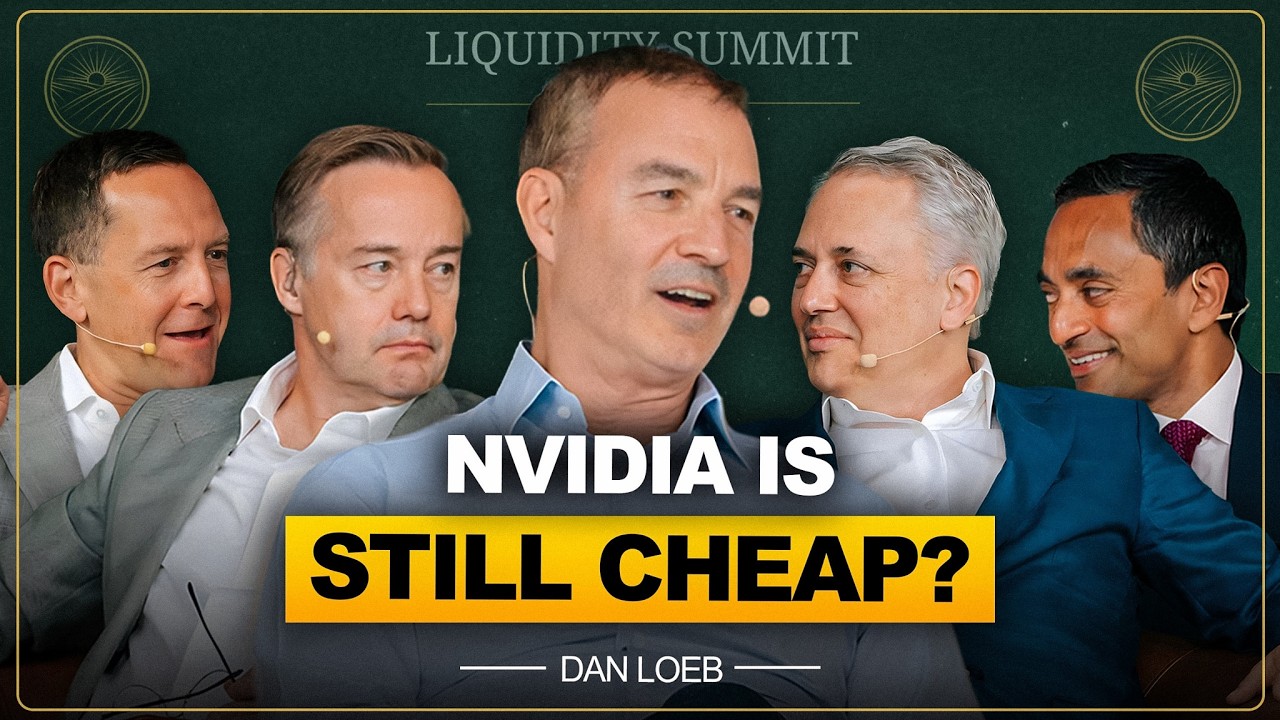
ダン・ローブ:ショートセリングの失われた技術、そして銘柄選択の復活
サード・ポイントのCEO兼CIOを務めるダン・ローブが、All-In Podcastのベスティーズに登場。1990年代の株式掲示板に匿名で投稿していた頃から、運用資産300億ドルのマルチ・ストラテジー・ヘッジファンドを率いるまでの歩みを振り返る。ローブは、長年影を潜めていたショートセリングが再び不可欠になったと主張し、AIリテラシーが本物の投資家には今や必須条件だと語る。そして、AIエージェントが代替できない人間の直接判断こそがポートフォリオ運用の核心だと断言する。対話の終盤では、ロス・ウルブリヒトの大統領恩赦実現に自身がどう関わったかを明かし、刑事司法改革と教育の公平性への継続的な取り組みの一環として位置づける。 ## [00:00] ダン・ローブがベスティーズに登場! 冒頭は後半の対話から切り出したハイライト集で、会話本編の前にローブの鋭い言葉を先取りして見せる。ローブはショートセリングが復活し「絶対に欠かせない」と断言し、ホストたちは銘柄選択市場とクレジット市場について軽快に応じる。恥をかかせることとユーモアがサード・ポイント初期のアクティビスト手法だったというくだり、そして「プロキシ・コンテストなきアクティビズムは、地獄なきカトリシズムと同じだ」というローブの冷静な一言もここに登場する。 > *「ショートセリングという失われた技術が戻ってきた。これは絶対に欠かせない。」* ## [00:34] 投資家としての軌跡:掲示板でウォール街に喧嘩を売った男が数十億ドルのヘッジファンドへ ローブはオンライン投資文化の前史を振り返る。Redditが存在する前、彼はYahoo FinanceとSilicon Investorに偽名で投稿し、1990年代後半に「極めて悪質な詐欺的企業」を掘り起こし、経営陣を挑発し、時に勝利を収めた。自分は「OG(オリジナル・ギャングスター)」ではなく「OT(オリジナル・トロール)」だと語るが、悪意というよりは規制の手が及ばない無法地帯で若き投資家がうっぷんを晴らしていたのだと説明する。Act Tradeの話がその時代を象徴する——冷蔵庫の売掛債権をTADSという独自技術に見せかけ、帳簿価格の何倍もの株価をつけていた常習的詐欺師の物語だ。 > *「小さかった頃、私たちの主な武器は恥をかかせることとユーモアだった。」* ## [03:15] サード・ポイント草創期:師匠たちと市場の嵐 ローブは正式な投資教育の足跡をたどる。ティーンエイジャーの頃にペイン・ウェーバーの支店で書籍の発送アルバイトをしていた時期から、ワーバーグ・ピンカス、リスク・アービトラージ会社、そして最終的にジェフリーズのディストレスト・デット部門へ。師匠の存在という通り一遍の話には懐疑的で、最も深い学びは同世代の仲間たちと、自分が担当した顧客、とりわけデビッド・テッパーを観察して思考プロセスを逆工学することから得たと語る。初期のサード・ポイントはイベントドリブン投資——買収、スピンオフ、破綻、相互会社化解除——を軸に、オプション設定期間における経営陣の成果の低い見積もりが生み出す構造的なアルファを狙った。ジェシー・リバモアの言葉を引く——「太陽の下に新しいものはない」。 > *「彼らの思考プロセスを間近で観察して、私は中国企業みたいだと思った——コピーして逆工学して、あらゆるものを吸収し、自分の知識データベースと独自のOSを作り上げていくようだ、と。」* ## [08:47] 戦略の転換:イベントドリブンからクオリティとAIへ サード・ポイントは現在、マルチ・ストラテジー・プラットフォームとして機能する——看板のロング・ショート・ファンド、CLOビジネス、プライベート・クレジット、ダイレクト・レンディング、そして投資適格スライスを運用する保険会社が並ぶ。Chamathはエージェントが普及した10年後のダン・ローブの役割を問う——ローブの答えは、直接目を見て交わす人間のネットワークはAIに代替できないというものだ。投資面では、割安株プラス触媒という手法から、本物の堀を持つ耐久性の高い優良企業へと軸足を移した。かつてIBM、AOL、Yahooの堀について投資家は自分たちに嘘をついていたと認め、今や最重要フィルターは経営陣の適応力——破壊に先んじてきた実績を持つチームが現在の製品優位性より重要だと語る。30年を経てもその評価はパターン認識であり、数値化できる基準ではないとローブは認める。 > *「テクノロジーに疎くても構わない、あるいはそれが自分のやり方ではないと言える——GFC(世界金融危機)まではある程度経済的に疎くても多くのお金を稼げた。今はどちらでもあってほしくない。」* ## [16:01] ショートセリングの真髄とホームビルダートレード 純粋にバリュエーションに基づくショートは好まない——「安易なバリュエーション」ショートはRedditの群衆やミーム・モメンタムに追い詰められやすいからだ。ローブが好む手法は構造的なもの——コロナ後の在庫過剰、マージンで吸収しきれないコスト上昇、隠れたバランスシート負債を持つ業界を探す。ホームビルダーはそのテーゼに合致した——NVRのようなアセット・ライトだと主張しながら実際には事実上コミット済みの大規模な土地オプションを抱え、現在の金融環境では買い手がパンデミック期の価格に手を届かせられない状況だった。議論は次にプライベート・ポジションをいつ分配するかという恒久的な問いへ移る——ローブは20ドル台でPalantirを売り(「大失敗」)、Upstartのシリーズ B をリードした後Enphaseのほとんどの上昇を逃し、最終的に40億ドルを生み出すはずだったEnphaseを1ドル以下で売却した。NVIDIAについては明確だ——ロング・ショート・ポッドがかつてGoogleやAmazonを空売りしたように、構造的な「安全なショート」として使っており、早晩ブレイクアウトすると見ている。 > *「NVIDIAは安全なショートに見える。ちなみに、GoogleもAmazonも安全なショートに見えた。こういうことは起きる——そしてバリュエーションが低迷することもあるが、やがてブレイクアウトする。」* ## [22:15] 刑事司法改革とロス・ウルブリヒトの恩赦 ローブの慈善活動の出発点は所得格差——具体的には弱者の子供たちに知的な道具を与えられない社会の失敗だ。サクセス・アカデミーのチャータースクール理事会での活動から刑事司法改革へと活動が広がった。彼が闘う価値があると考えるのは3つのカテゴリー——無実の罪で有罪とされた人、真に更生した人、そして不均衡な刑を受けている人。ウルブリヒトは3番目に当てはまった——薬物が取引された初期の暗号通貨マーケットプレイス「シルク・ロード」を運営したとして終身刑2回プラス40年を宣告されたが、政府が後に持ち出した殺人依頼の疑惑では起訴されていない。ローブはチャーリー・カークと連携し、カークがトランプ大統領に案件を持ち込んだ。トランプの1期目最終日、司法省が減刑するなら報復すると脅したため取り下げられた。4年後、カークの継続的な働きかけと、10年来ウルブリヒトの弁護士を務めていたホワイトハウス法律顧問デビッド・ウォリントンの尽力により、完全な恩赦が実現した。ローブはOliveという組織を通じて個別ケースへの取り組みを続けている。 > *「システムを通じて終身刑の人を刑務所から出す手段はない。これは大統領恩赦でしか実現しない。」* ## 登場人物 - **Dan Loeb** (人物): サード・ポイントのCEO兼CIO;アクティビスト投資家;1990年代半ばにサード・ポイントを創業;Yahoo FinanceおよびSilicon Investorの初期オンライン・トロール。 - **Third Point** (組織): マルチ・ストラテジー・ヘッジファンド;運用資産約300億ドル;ロング・ショート・エクイティ、CLO、プライベート・クレジット、ダイレクト・レンディング、保険会社を傘下に持つ。 - **Chamath Palihapitiya** (人物): ホスト;Social CapitalのCEO;AIによる破壊、堀の耐久性、人間とエージェントの役割を軸に質問を組み立てる。 - **Jason Calacanis** (人物): ホスト;LAUNCH創業者;分配タイミングに関する議論の軸を担う。 - **David Sacks** (人物): ホスト;Craft Ventures創業者;ホワイトハウスAI・仮想通貨顧問;ベンチャー・ポジションの保有と分配を巡る議論に加わる。 - **David Friedberg** (人物): ホスト;The Production Board CEO;経営陣の質の評価を数値化できるかを問う。 - **Ross Ulbricht** (人物): シルク・ロード創業者;終身刑2回プラス40年の判決を受けたが、ローブらが組織した協力体制によって2025年にトランプ大統領から恩赦を受けた。 - **Silk Road** (組織): 初期の暗号通貨ベースのダークネット・マーケットプレイス;ウルブリヒト訴追の中心的な場。 - **Nvidia** (組織): ローブが2〜3年先の業績に照らして割安と見るチップ会社;かつてのGoogleやAmazonと同様、構造的な「安全なショート」として扱われていると指摘される。 - **Event-Driven Investing** (概念): ローブの初期戦略——買収、スピンオフ、破綻、相互会社化解除——経営陣のインセンティブ・ミスアラインメントと構造的歪みを活用する手法。 - **Activist Investing** (概念): 株式を取得してコーポレート・ガバナンス改革を実現する手法;サード・ポイントの看板アプローチであり、現在はクオリティ重視のロング・ショートと組み合わせている。
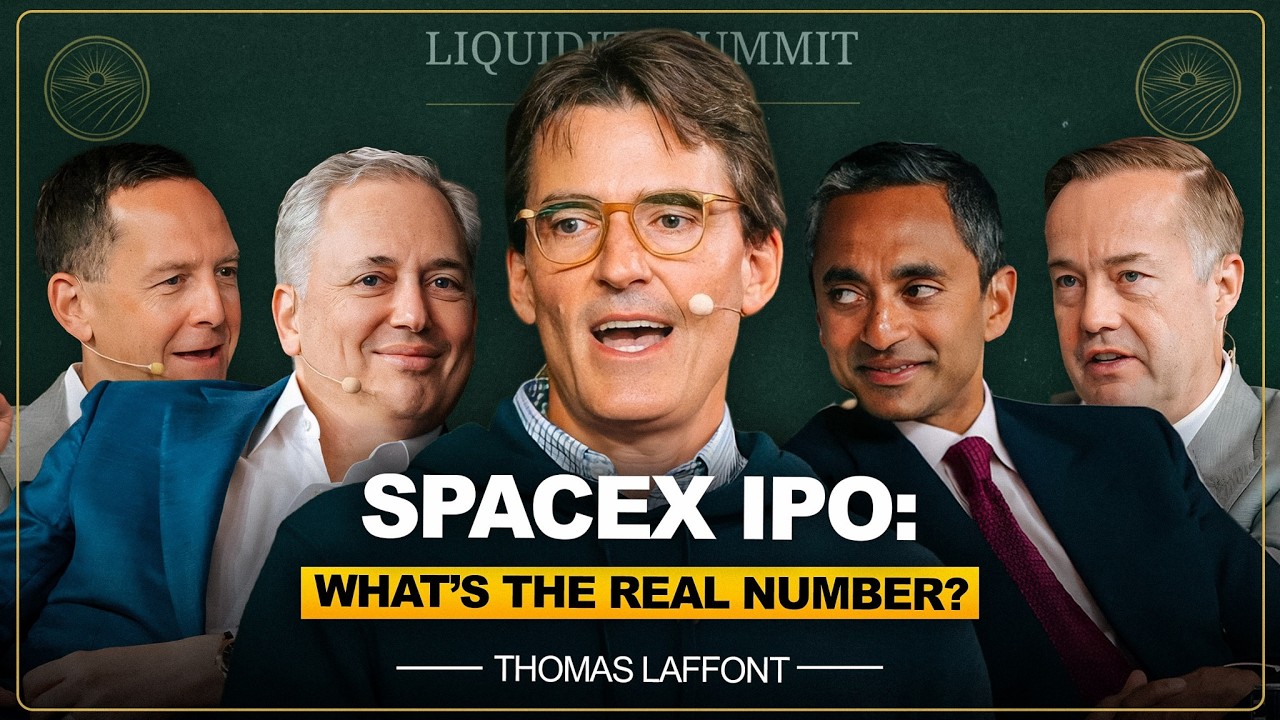
Thomas Laffont: 4兆ドルのAI IPO波が来る——これまで誰も見たことのない規模で
Coatue ManagementのThomas LafontがAll-Inにポッドキャスト初登場し、AIユニコーン経済のデータに基づく現状分析を披露した。2024年のAIコホートがこれまでのどのヴィンテージをも上回る可能性がある理由、SpaceXの企業価値が打ち上げを重ねるごとに複利的に膨らむ仕組み、そして4兆ドル規模のAI IPOが投資家が過去に経験したことのないペースで公開市場に押し寄せようとしている現状を解説。ベスティーズはべき乗則による集中リスク、資本が三社に集中する世界でのVCの未来、そしてこれほどの流動性洪水がシリコンバレーのエコシステムに何をもたらすかを掘り下げた。 ## [00:00] CoatueのThomas LafontがBesties登場! Lafontはポッドキャスト初登場の場としてAll-Inを選んだ経緯を語る。他のすべてのオファーを断り、この番組を待ち続けたという。SacksはCoatueを過去20年で最も成功したヘッジファンドの一つと紹介し、運用資産は550億ドルと説明した。LafontはCoatueの競争優位をひと言で要約したあと、準備してきたデッキに入った。 > *「私たちはアイデアのビジネスをしている。本当に革命的なアイデアは、途方もなく大きくなれる。」* ## [00:30] AIがユニコーン経済を席巻し、公開市場が復活 LafontはCoatueの独自ユニコーン経済データを読み解く。2024年9月以降、ユニコーン経済は平均70%上昇しており、これはNASDAQの動きとほぼ連動している。資金調達に占めるAIの割合は年々拡大しているが、構成は様変わりした。新規ユニコーンの誕生数は大幅に減り、1社あたりの調達額は2021年比で5倍に膨らんでいる。 2021年コホートは反面教師だ。479社が誕生したが、20四半期後にExitや追加ラウンドを達成できたのは20%にとどまる。ZIRP前の時代は73社で80%の健全率だった。2024年の新たなAIコホートがどちらに近いかは、まだ問いのままだ。Exit実績では、2026年は好調ではあるが、2021年のピークにはまだ戻っていない。 「Magnificent 8」プライベートインデックスという概念も紹介された。SpaceX、Stripe、Anthropic、Databricks、Revolut、ByteDance、Andurilの各社で構成され、時価総額は約4兆ドルに達し、伝統的なMag 7を大きく上回るパフォーマンスを見せている。 > *「このインデックスを今後10年以上保有できるなら、かなり安心して持てると思う。」* ## [05:15] 4兆ドルのAI IPO爆発 SpaceXは数週間以内に上場する見通しで、Anthropicは収録当日にS-1を機密申請した。SpaceX、OpenAI、Anthropicの3社だけでも、Exit額は過去10年間のIPO合計を超え、エコシステムはほぼ一夜にして現金消費から現金還元へと転換する。 LafontはOpenAIとAnthropicの2025年1月以降の売上軌跡を示す。わずか数か月でWorkday、ServiceNow、Adobe、Salesforceを次々と超え、現在はGoogle CloudとAzureより大きい。予測によればAnthropicだけで年内にAWSを抜き、2028年にはMicrosoft全体を超えるとされる。大手ハイパースケーラーはこの破壊を傍観しているわけではなく、自ら資金を供給している。世界最大手各社からの資本コミットメントは「本当に前例がない」規模だという。 > *「OpenAIとAnthropicの成長速度は、これまで見たことのないものだ。」* ## [07:48] SpaceXの論拠:打ち上げ独占の複利とStarlink Lafontは、打ち上げ頻度が上がるにつれてSpaceXの1回あたりの打ち上げ評価額がなぜ上昇するのかを説明するCoatue独自のCODEフレームワークを紹介する。ボリュームビジネスとしては直感に反する現象だが、答えはシンプルだ。SpaceXのビジネスモデルの質はスケールとともに複利的に高まる。 フェーズ1は純粋な打ち上げビジネスで、変動しやすい政府契約収益が中心。フェーズ2ではコンステレーション(Starlink)が加わり、打ち上げが継続的なサブスクリプション収益に転換される。フェーズ3では複数のコンステレーションとプラットフォームが加わり、企業や軍が独自の軌道上キャパシティを求めるようになる。さらにその先には、宇宙データセンター、月、火星への可能性が広がっている。 > *「打ち上げを重ねるほど、SpaceXのビジネスモデルの質は上がっていく。」* ## [10:38] 10倍パラドックス:前例のないスケーリングが起きている理由 各成長段階における10倍リターンのデータは衝撃的だ。ユニコーンがデカコーンになる確率は8%、デカコーンが1000億ドル企業になる確率は13%、しかしセンタコーン(1000億ドル超)が10倍になる確率は31%にのぼる。スケールはリターンを希薄化させるのではなく、複利的に高める。 1年間で時価総額が5000億ドルから1兆ドルを超えた上場企業が3社、数週間で達成した企業が2社あった。LafontはCoatueのポートフォリオ企業でもあるCerebrasを対照例として挙げる。資本を得られない暗黒期が何年も続き、チップアーキテクチャを磨き続けた末に、OpenAIの大型契約によって企業価値がほぼ一夜で5倍になった。半導体セクター全体では、2024年All-In Summit以降あらゆる指数をアウトパフォームしている。 収益懐疑論への反論として、CoatueはAIエコシステム全体を現在1400億ドル、今年3000億ドル、2027年にはさらに倍増と試算する。成長を支える三本柱はコンシューマー向けサブスクリプション、エンタープライズ・クラウドのコード生産性ツール、そしてAI対応広告(MetaとGoogleで現在25%の普及率、将来的に100%へ)だ。 > *「特にAnthropicのスケーリングは、これまでに見たどの企業とも違う。」* ## [15:33] AIマーケットの細分化と将来的な影響 多くのアナリストが見落としているのが広告セグメントだ。MetaとGoogleだけでAI配信広告の普及率が25%から100%に上がれば、それだけで1500億ドルの増分価値になる。エンタープライズ向けコードツール(Claude Code、Codex)がもう一本の柱を形成する。経済全体では、破壊は同時多発的に進んでいる。通信(Starlinkが通話切断を過去のものにする)、コンピューティング(データセンターがペンシルベニア州のエネルギーグリッドを塗り替える)、自動車(EV・自動運転シフトに苦しむFerrari)、消費者(GLP-1が食品とアルコールの消費構造を変える)。 Lafontの結論は明快だ。新しいユニコーン経済は構造的に健全で、勝者はこれまで以上に速く複利成長し、勝者の外に置かれるコストはこれまで以上に高い。しかもまだ超知性は来ていない。 > *「破壊はグローバル経済のあらゆる部分に及んでいる。そして、まだ超知性は来ていないのに。」* ## [18:32] Bestie Q&A:AIのべき乗則・VCの未来・収益の出どころ・流動性の爆発 Jasonは資本配分者として直球の質問を投げる。センタコーンのデータが集中を支持するなら、LPは最大手3社のプライベート株に全力投資すべきではないか。Lafontの反論はこうだ。バリュエーションは極端に見えるが、実際に収益を生んでいる事業であり、過去最低水準の利益倍率で取引されている。公開市場は最良の消毒剤だ。Chamathは真の価格発見はIPO初日ではなく、パッシブ買いが波のように押し寄せた後の6か月後に訪れるかもしれないと指摘した。 Chamathはセンタコーンの加速が構造的非効率なのかサバイバーバイアスなのかと迫る。LafontはClaude Codeを証拠として挙げる。「Anthropicはpre-Claude Codeとpost-Claude Codeでは全く別の会社だ。単一のプロダクトイベントが業界全体の軌跡をほぼ塗り替えた。」コモディティ化モデル論は「かなり徹底的に否定された」と述べた。 Sacksはセンタコーンの31%という数字をさらに上位に外挿する。1兆ドル企業が10倍になる確率はどれほどか。直感では30%を超え、それ以上かもしれないという。Friedbergは収益の持続性フィルターを加える。各スケール段階は複合優位性を選別するフィルターとして機能するため、頂点に向かうほどフィルターが強くなる。 会話は3〜4兆ドルの流動性がGPとLPを通じてエコシステムに還流したとき何が起きるかで締めくくられる。Lafontが挙げた最も逆張り的なリスクはOpenAIとAnthropicの価格戦争だ。豊富な資本があれば、ライドシェアのような価格てこを使って競合を仕掛けることも可能になる。彼は2年後にAll-Inに戻り、何が正しく何が違ったかを採点すると約束した。 > *「OpenAIとAnthropicの間で価格戦争が起きうるだろうか?これだけ資本があれば、どちらかが価格てこを使って競合を仕掛ける日は来るのだろうか?」* ## 登場人物 - **Thomas Laffont** (人物): Coatue Management共同創業者(運用資産550億ドル)、Cerebrasの取締役を務め、All-In Summit 2026で独自のユニコーン経済リサーチを発表した - **Chamath Palihapitiya** (人物): ホスト、Social Capital CEO。センタコーン加速の構造的非効率かサバイバーバイアスかを問い詰めた - **Jason Calacanis** (人物): ホスト、LAUNCH創業者・エンジェル投資家。資本配分者の観点からべき乗則集中に関する問いを提起した - **David Sacks** (人物): ホスト、Craft Ventures創業者、ホワイトハウスAI・暗号資産担当官。センタコーンからデカコーンへの確率を上位に外挿した - **David Friedberg** (人物): ホスト、The Production Board CEO。べき乗則データにベン・グレアム流の収益持続性の観点を加えた - **Coatue Management** (組織): 成長投資・ヘッジファンド運用会社。ユニコーン経済データセットとSpaceXバリュエーション用CODEフレームワークの考案者 - **Anthropic** (組織): AIラボ。収録当日にS-1を機密申請。史上最速ペースで収益が拡大しており、黒字月を記録したと伝えられる - **OpenAI** (組織): AIラボ。年内にAWSを抜き、2028年にはMicrosoft全体を超えると予測される。Anthropicとともに4兆ドルIPO波の引き金とされる - **SpaceX** (組織): ロケット・衛星企業。収録時点でIPOが目前。打ち上げ価値の複利とStarlinkによる通信利益プール獲得をCoatueのCODEフレームワークで分析された - **Cerebras** (組織): AIチップ企業(IPO済み)。CoatueがシリーズBをリード。暗黒期の後にOpenAI契約で企業価値が約5倍になった、忍耐資本の事例として紹介された - **Claude Code** (ソフトウェア): Anthropicのコーディングアシスタント。業界全体の軌跡を「完全に塗り替えた」単一プロダクトイベントとして言及された - **Starlink** (組織): SpaceXの衛星インターネットコンステレーション。2000〜4000億ドルのグローバル通信利益プールを取りにいくと試算されている - **べき乗則** (概念): リターンが少数の企業に集中する構造。Coatueのデータでは10倍達成確率はスケール段階ごとに上昇する:8%(ユニコーン)、13%(デカコーン)、31%(センタコーン) - **ユニコーン経済** (概念): 時価総額10億ドル以上の企業群を追跡するCoatueのフレームワーク。資金調達の健全性、Exit速度、コホート行動を時系列で分析する
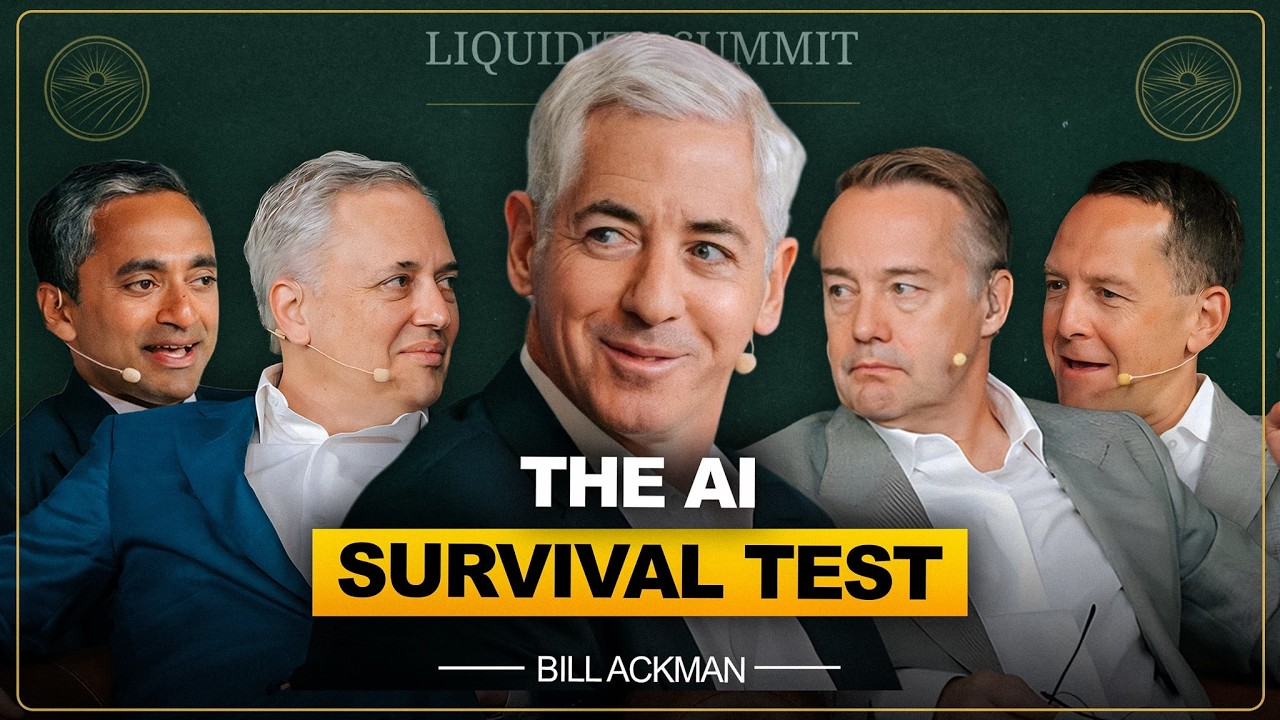
Bill Ackman: Here's What the Market is MISSING
Bill Ackman 与 All-In Podcast 四位主持人深入对谈,从 20 年投资哲学演变讲到 AI 对现有投资组合的双重冲击,再到"橡皮筋效应"如何指导他在 COVID 崩盘与近期市场低点的公开押注。Ackman 力主持有创始人主导的公司,并详解他正在以 Howard Hughes Corporation 为载体、参照伯克希尔·哈撒韦模式打造下一个复利飞轮。 ## [00:00] Bill Ackman joins the show! 开场由节目音频剪辑拼出 Ackman 的几句核心论断——做空公开表态是"相当严肃的事",全球最优质企业正以历史最低倍数交易,封闭式基金正在经历"重生"。随后 Jason Calacanis 顺势抛出对 OpenAI CFO Sarah Friar 的问题,将话题过渡到 Ackman 对 OpenAI 领导层的看法,为下一章铺垫。 > *"Interestingly, some of the best businesses in the world are trading at the lowest multiples."* ## [00:30] Evolving investment philosophy: What's changed over 20 years? David Friedberg 请 Ackman 回顾他从激进维权到长期持有的转变轨迹。Ackman 说,变化的核心是对"持久、受保护、不可颠覆的增长"的认识越来越深——规模小时可以靠公开施压敲门;今天他只需要买入 5% 的股份,CEO 就主动致电。他以早期投资 Wendy's International 为例:买入 10% 后 CEO 根本不回电,于是联合 Blackstone 的 Steve Schwarzman 写了一封公开信,6 周后 Tim Hortons 完成拆分,CEO 打来电话道谢时已被解雇。 随着声誉建立,Pershing Square 的介入方式也从"砸门"转向"被邀请入局"。Ackman 强调,好的投资不需要插手——有时候最好的持仓就是"站在边上鼓掌"。但对于需要长期决策的大型上市公司,拥有一个持有大比例股份的股东坐在董事会里,是帮助管理层抵抗季度短视主义的有效机制。 > *"The best investments are ones where you don't need to join the board and do anything."* ## [04:40] AI: Greatest time to build a business, and a major threat to portfolios Chamath 追问 Ackman 如何从外部评估 AI 企业的商业模式质量。Ackman 的立场很直接:Pershing Square 持有微软、Meta、亚马逊——不直接持有 AI 标的,但也已经身处 AI 之中;所有公司不是 AI 投资机会,就是 AI 威胁。 他用 2000 年互联网泡沫做类比:当年人人追芯片、带宽、能源,导致 Procter & Gamble 跌到历史最低估值,因为"那是旧东西"。他认为今天 Amazon、Meta、Microsoft 正在经历类似的被遗忘,这恰是买入机会。与此同时,他对 Salesforce 这类 SaaS 公司明确表示担忧——多年来在订阅模式下对客户收取垄断性溢价,一旦 AI 提供替代品,这类公司首当其冲。 > *"This is the greatest era in history to build a business. There's unlimited access to compute, unlimited access to capital."* ## [07:50] Predicting market moves, the "rubber band effect" Chamath 追溯 Ackman 在 COVID 熔断时段上 CNBC 喊话、随后宣布抄底、再到近期公开看涨的一系列高调押注,追问他是什么驱动他在这些时刻如此笃定。 Ackman 解释"橡皮筋效应":估值就是绑在市场价格上的橡皮筋,拉太高必然回弹,拉太低同样有弹力拉着往上。他 2020 年 3 月去上电视,是为了通过媒体向特朗普总统传递信息——关闭经济 30 天,果断行动,病毒就会过去,之后股票会非常便宜,"我们在买入"。近期他再次看涨,理由相同:高质量公司的估值跌到了极端便宜的位置。 话题延伸到 SpaceX、Anthropic、OpenAI、Palantir 的定价逻辑。Ackman 主张用风险投资框架来看这些后期成长型公司——关键变量是"人、机会、情境、条款"(People, Opportunity, Context, Deal)。SpaceX 前三项都是"one of one",唯一待解的问题是估值是否合理。他也坦言对 OpenAI 烧钱速度远超收入有顾虑,认为其应尽早向公众清楚说明盈利路径。 > *"Valuation is like a tether on the market. When it gets too high, it's like this rubber band that's stretching. And inevitably, it bounces back."* ## [16:00] Owning founder-led companies David Friedberg 提出一个反常识的观察:在科技领域,创始人主导的公司在规模化阶段表现远优于职业经理人主导的公司——而这和传统 Ben Graham 价值投资框架几乎是矛盾的。 Ackman 全盘认同。标普 500 的 CEO 平均任期大约 4 年,薪酬结构天然偏向短期,没有足够的经济利益捆绑。创始人则不同:这家公司是他的全部,声誉、资产、时间全押在这里,不存在"换个地方重来"的退路。他举 Zuckerberg 收购 Instagram 为例——当时几乎所有人都骂他,但这个决策证明了创始人的长周期视野。 他与 Ben Graham 的分歧也很清晰:Graham 时代没有 EDGAR 系统,大量股票以低于账面净现金的价格交易,清算套利是现实。今天那种机会几乎不存在了,而能够识别"优秀创始人 + 长期复利机器"的投资者会收到完全不同的回报。 > *"You're a founder, this is your entire life. It's your entire reputation. It's not like you're going to go get another job. You've got to make it work."* ## [19:30] Building the next Berkshire Hathaway Ackman 详细拆解了他以 Howard Hughes Corporation 为平台复刻伯克希尔·哈撒韦模式的逻辑。伯克希尔的本质是:用保险浮存金作为低成本甚至零成本的杠杆,把负债端(承保纪律)和资产端(股票复利)同时做好——这件事 Buffett 之后几乎没人复制成功,因为真正擅长投资的人都去了对冲基金,而不是去经营保险公司。 Howard Hughes 是 Pershing Square 当年从 General Growth Properties 破产重组中拆分出来的资产包,持有 Summerlin(拉斯维加斯)、The Woodlands(休斯顿)等多个"袖珍城市"的全部商业和住宅用地。这家公司对华尔街来说一直太长期、太复杂,长期以大折价交易。Ackman 的计划是:不再把所有现金流再投入房地产,而是附加一个保险业务,把保险浮存金交由 Pershing Square 按一贯策略投资——"在 60 美分的价格买 1 美元资产,然后用 50 年复利",目标是从 40 亿美元市值最终建成万亿级企业。 他也谈到 Twitter 影响力对当代投资者的意义:高股价会自我强化(降低资本成本、提升融资灵活性),Elon Musk 把信徒圈经营成了竞争护城河之一。Pershing Square 则给出三种共同投资路径:Pershing Square 管理公司本身(royalty on compounding)、PSUS(封闭式基金,目前以 18% 折价交易)、Howard Hughes("如果你相信我们能建成下一个伯克希尔")。 > *"You want to believe that we can build the next Berkshire Hathaway, you own Howard Hughes."* ## Entities - **Bill Ackman** (Person): Pershing Square Capital Management 创始人兼 CEO,知名维权投资者;本集嘉宾 - **Chamath Palihapitiya** (Person): Social Capital CEO,All-In Podcast 联合主持人 - **Jason Calacanis** (Person): LAUNCH 创始人,天使投资人,All-In Podcast 联合主持人 - **David Sacks** (Person): Craft Ventures 创始人;美国白宫 AI 与加密货币事务主管,All-In Podcast 联合主持人 - **David Friedberg** (Person): The Production Board CEO,All-In Podcast 联合主持人 - **Pershing Square Capital Management** (Organization): Ackman 创立的专注高集中度长期持股的对冲基金,管理规模约 250 亿美元 - **Howard Hughes Corporation** (Organization): 持有多个美国"袖珍城市"地产的上市公司;Ackman 正将其改造为伯克希尔·哈撒韦式复利平台 - **伯克希尔·哈撒韦** (Organization): Warren Buffett 创建的多元化控股公司,以保险浮存金驱动长期股票投资著称;Ackman 明确将其作为 Howard Hughes 的对标模型 - **PSUS** (Organization): Pershing Square USA,封闭式基金,目前以净资产值 18% 折价交易 - **封闭式基金** (Concept): closed-end fund,基金份额固定在交易所上市流通,可能长期以折价或溢价相对净资产值交易 - **橡皮筋效应** (Concept): Ackman 的估值框架——市场价格偏离内在价值越远,回归均值的弹力越大,当估值极端便宜时是最可信的顺势买入信号 - **维权投资者** (Concept): activist investor,通过持有大比例股份、公开施压或进入董事会推动被投公司战略变革 - **OpenAI** (Organization): 大型语言模型领军企业;Ackman 对其烧钱速度远超收入有顾虑 - **SpaceX** (Organization): Elon Musk 的商业航天公司;Ackman 以"人、机会、情境各项均为 one of one"描述其投资逻辑
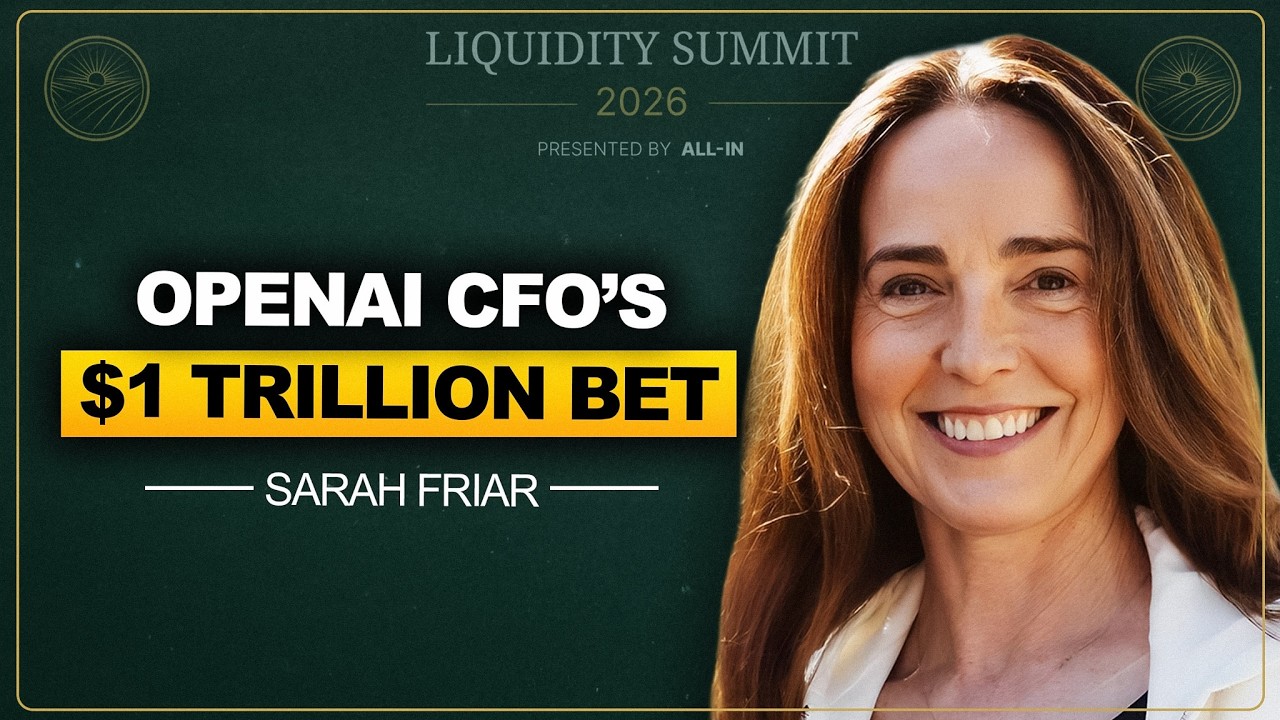
OpenAI CFO Sarah Friar on IPO, AI Rivalries, New Device, and Spending $100B+ on Compute
OpenAI CFO Sarah Friar makes her All-In debut days after the company's $122B fundraise, walking the four hosts through IPO logic, the Anthropic rivalry, a teased Jony Ive device, and how OpenAI is buying compute through the early 2030s. Her thesis: an IPO is a milestone, not a destination; compute is the binding constraint; and OpenAI is buying capacity ahead of revenue on the bet that cost curves keep falling. ## [00:00] OpenAI CFO Sarah Friar joins the show! Jason Calacanis opens by calling OpenAI's March raise the most successful fundraising round in history. Friar sets her frame right away — AI is the biggest productivity era we've seen, and luck is preparation meeting opportunity that you then have to grab. > *You have just completed what I regard as the most successful fundraising round in history.* ## [00:31] How OpenAI thinks about its IPO timeline David Sacks presses on whether there's a first-mover advantage to IPOing early now that SpaceX is public, and asks when OpenAI and Anthropic will actually go. Friar deflects: an IPO is a milestone, not a destination, and the $122B March raise — the largest private round in history, an order of magnitude past Saudi Aramco's ~$30B — exists to buy maximum optionality, not to race anyone to the SEC. Chamath checks whether it's the biggest private raise to date; Jason needles her on whether a later filing means "third place." > *No one remembers who went first, Google or Yahoo, Lyft or Uber.* ## [03:31] OpenAI, Anthropic, Google: The AI arms race Jason Calacanis challenges Friar directly: has Anthropic blown past OpenAI on developers and revenue, and were Sora and too many scattered bets a mistake? Friar rejects the consumer-vs-enterprise binary — revenue is now roughly 50/50 — and leans on scale: 900M weekly ChatGPT users, a single-model compounding advantage, and fastest growth now in Africa, with Azerbaijani and Kazakh among the fastest-growing languages. > *Over 900 million people use Chat GPT weekly and it's become the noun and the verb.* ## [07:43] Navigating the compute crunch and AI bottlenecks, device preview! Chamath Palihapitiya revives a framing Friar coined ~18 months earlier — one gigawatt ≈ $10B/year of revenue — and asks where supply stands now. Friar's answer: compute is scarce, 2026–2027 is effectively locked, and she's already focused on 2030–2032. She details the Michigan (Seline) 1GW build's community deal: paying for its own power, 2,500 union jobs, $1B in taxes, and $45M in Codex education credits. Pushed on the rumored device, she confirms a Jony Ive-designed consumer "substrate" — reveal by year-end, launch early next year — while refusing to say what it is. Friedberg asks if using it felt like holding the first iPhone. > *So first of all, yes, compute is a very scarce resource at the moment.* ## [15:53] OpenAI's economics David Friedberg asks for OpenAI's high-ROC capital-allocation engine — its version of Amazon's warehouse flywheel or Google's search-ads loop. Friar gives a three-layer model: create customer value first, expand gross margin on a steep compute-deflation curve (token cost down ~97% across GPT generations), then deploy capital timed against that cost curve. She makes the counterintuitive case for buying compute ahead of demand, citing $2,000/month agentic seats that once sounded as absurd as $200/month ChatGPT Pro. Friedberg presses on multi-year forecasting; David Sacks asks whether a $100B raise buys two gigawatts or five. Friar walks through OpenAI's shift from a single Azure deal to a multi-cloud, multi-chip stack — Oracle, CoreWeave, AWS, GCP, plus Vera Rubin and a Broadcom chip. > *They're going to look like the great companies of prior eras.* ## [26:08] Push into chips, the cloud Chamath Palihapitiya asks whether, as Nvidia, Google, Microsoft and OpenAI each push into one another's layers — silicon, models, cloud, consumer — the stack eventually merges, and whether convergence makes competition simpler or harder. Friar's answer: everyone is fighting to own the layer closest to the user, and OpenAI's edge is the agentic memory-and-context layer — a model that knows who you are and carries your context — which makes it both more powerful and far stickier for individuals and enterprises. > *So do you think that in 5 years from now the stack is just merged together?* ## [29:32] OpenAI's ad business and strategy Jason Calacanis closes on advertising — two of the three greatest consumer businesses ever built are ad-funded — and asks whether ads are what make AI free for the world. Friar: ads must never bias the model's results, and there will always be an ad-free tier, but ChatGPT's high-intent signal could power a potent ad platform that subsidizes access for those who can't pay. For now, she notes, every token is worth far more on the API than on the consumer side. > *But is ads the solution to making this free for the world?* ## Entities - **Sarah Friar** (Person): OpenAI CFO; former seven-year Nextdoor CEO; the episode's guest - **Jason Calacanis** (Person): All-In host and moderator; LAUNCH founder, angel investor - **Chamath Palihapitiya** (Person): All-In host; Social Capital CEO - **David Sacks** (Person): All-In host; Craft Ventures founder; White House AI & Crypto Czar - **David Friedberg** (Person): All-In host; CEO of The Production Board - **OpenAI** (Organization): AI lab behind ChatGPT; closed a record $122B private raise - **Anthropic** (Organization): rival AI lab; filed a confidential S-1 during the taping - **Compute scarcity** (Concept): OpenAI's binding constraint, framed as a gigawatt-to-revenue ratio and a multi-year buy-ahead bet

Anthropic's Digital God, Pope vs AI, Job Loss Narrative Flips, Open Source Crackdown Coming?
Benchmark GP Bill Gurley joins Jason Calacanis, David Sacks, and Chamath Palihapitiya (David Friedberg out this week) for a 95-minute session covering six fronts of the AI debate: Gurley's new theory that Anthropic is not just pursuing regulatory capture but actively "midwifing a deity"; Pope Leo XIV's 235-page AI encyclical and its uncomfortable historical parallel to Leo XIII's 1891 warnings about the industrial revolution; the growing consensus that open-source AI faces a coordinated regulatory crackdown; and the week's sharpest narrative flip — Dario Amodei and Sam Altman both quietly walking back their AI jobs-apocalypse rhetoric while Goldman Sachs CEO David Solomon published a New York Times op-ed declaring the apocalypse overblown. ## [00:00] Bill Gurley joins the show! Bill Gurley, Benchmark general partner and author of *Running Down a Dream*, fills in for David Friedberg and joins live from Chamath's pool house where Jason has been staying. After banter about unauthorized Uber Eats orders on Chamath's house iPad, Jason introduces Gurley as a first-time guest who specifically requested to appear the moment the pod covered the Pope. Gurley plugs his new P3 Institute and a grant program he launched to fund people pivoting toward work they love. He teases a TED talk — rooted in the book's argument that high agency and lifetime learning are the only durable defenses against disruption — which sets the frame for everything that follows. > *"And I told the house manager like, listen, any packages that come in the next 72 hours, right to the pool house, if it says JCAL, right to the pool house."* ## [06:00] Making yourself valuable in the age of AI, first class of "AI Natives" Chamath opens with the question that has been driving the show for 18 months: if you're a young person right now, is AI doom much ado about nothing, or a real career threat? Gurley cites a Gallup poll showing 59% of workers are "quiet quitters" — ambivalent about their jobs and therefore low-agency. His core thesis: the best protection against AI displacement is becoming the most AI-enabled version of yourself in your field. He invokes Mark Cuban's framing — "there are two types of people: those who use AI to learn faster than ever before, and those who use AI to avoid learning altogether." Sacks walks through how the pod's producer Nick built a daily Claude briefing document that not only summarized news but predicted specific topics Sacks would care about based on his prior comments on the show. Sacks had dismissed it as likely AI slop; it was not. Gurley extends the point across every job category: in marketing, legal, accounting, and sales, being the most AI-capable person among your peers makes you "golden," and the early lead compounds. Jason adds that in his own team experiments, the skill separating strong performers from weak ones was systems thinking — could they break a complex problem into context the AI could execute, or did they hand it a task and wait? > *"I think the best way to protect yourself from AI is to be the most AI enabled version of yourself you can be."* ## [17:37] Reacting to Pope Leo's AI encyclical: Who guards the guardians? Pope Leo XIV released *Magnifica Humanitas*, a 235-page, 42,000-word encyclical warning business leaders to safeguard humanity from AI. His central argument: technology is never neutral — it takes on the characteristics of those who build, finance, and control it. Jason reads the core line and notes the Pope presumably does not think highly of Silicon Valley's current roster of builders. Sacks finds himself largely agreeing with the Pope's diagnosis: the biggest risk of AI is centralization of power and its Orwellian misuse by governments. Where he parts ways is on the remedy. Giving government the power to regulate AI development creates its own guardian problem — the American founders' answer to *Quis custodiet ipsos custodes?* was separation of powers, forcing guardians to check each other. Sacks's AI equivalent: a competitive market with five frontier labs is the best natural check; monopolization is the scenario to prevent. Gurley lands the sharpest historical counterpunch. Pope Leo XIII's 1891 encyclical *Rerum Novarum* warned that the industrial revolution would harm workers — and was wrong on every metric. From 1891 to today: the work week fell from 60+ hours to 34, real wages rose 8–10x, the median worker now earns more than a doctor did in 1891, global GDP per capita went from $1,500 to $20,000, child labor in the US dropped from 18% to zero, workplace deaths fell 40x, life expectancy rose 60%, and global poverty dropped from 75% to under 10%. > *"All those things happened because of technology, innovation, and capitalism, which is exactly what Leo the 13th was warning against. So he got it dead wrong. He got the whole thing precisely wrong."* ## [26:54] Anthropic's Digital God: Do they believe they are creating a superior species? Gurley delivers what becomes the most-quoted segment of the episode: his "Dr. Frankenstein theory" of Anthropic. He had previously held a simpler regulatory-capture theory — Anthropic stirs up AI fear to lock in regulation that entrenches incumbents. But after spending 30 days reading everything he could find about the company, he has a darker read. He describes meeting people inside Anthropic who he believes genuinely think they are not writing software but "midwifing a deity." The evidence trail: Anthropic chief philosopher Amanda Askell's podcasts, Chris Olah's 80-page Constitutional AI document, and Dario Amodei's own essay "Machines of Loving Grace," which envisions a post-AGI economy where AI systems allocate resources to humans based on an AI-determined reward function. Chamath calls it "a computational reward function for humans — it decides how much you're worth." Jason calls it "the ultimate delusions of grandeur." Gurley corrects him: he didn't say it, Dario did. Sacks steelmans Anthropic briefly — they probably see themselves as responsible builders who take the power of this technology seriously enough to guard it — then immediately notes this framing is textbook regulatory capture: brand yourself the safe player, characterize competitors as reckless, let regulation shut down the recklessness. Both Sacks and Chamath converge on the structural danger: a singular AI value system that decides how humans live is catastrophically fragile. The answer is decentralization and competing systems, not one algorithmic authority. > *"I don't think they think they're writing software. I think they're midwifing a deity here. And I don't know which one I'm more afraid of — the regulatory capture or this second theory I call the Dr. Frankenstein theory."* ## [38:32] AI sovereignty, the next era of privacy, open-source crackdown coming? Jason introduces "intelligence sovereignty" as the successor to data privacy. Data privacy was about who can see your photos and messages. Intelligence sovereignty is about who gets to interpret your world — whether the AI shaping your information feed is a centralized system with a particular political philosophy, or something you control. He flags the paradox: China's Communist Party is leading the open-weight model movement while the United States is centralizing. Chamath presents his portfolio company Abacus as evidence that Fortune 1000 buyers are responding to this anxiety: they want a control plane that can hot-swap between frontier models, plus on-prem options that remove dependence on any one provider's terms of service. He gives a concrete example — a Canadian hospital that supports its country's euthanasia laws could be shut off by an American frontier model whose constitution prohibits that content. Sacks connects the dots to a regulatory threat he has been watching build: the regulatory-capture playbook leads, in his read, to a ban on open-source or open-weight models. The justification will be safety — open models let users strip guardrails. Gurley reaches the same conclusion in his P3 Institute post. If a ban succeeds, the United States effectively exiles itself from the open ecosystem while the rest of the world — including China — runs on open models. > *"I think where it's all leading to is an effort to ban open source models or open weight models. There's a lot of breadcrumbs leading here."* ## [59:56] The Great AI Jobs Debate: Dario and Sam Altman flip their rhetoric, Goldman CEO says no AI job apocalypse The chapter opens with a news roundup of the week's narrative shift. Cloudflare's Matthew Prince, Zuckerberg at Meta, Jack Dorsey at Block, and Andy Jassy at Amazon all cited AI when announcing major layoffs. But Goldman Sachs CEO David Solomon published a New York Times op-ed with three counterpoints: AI will automate 25% of work hours, not 25% of jobs; bank tellers increased after ATMs; the US labor market creates and destroys 25–35 million jobs annually so gross churn dwarfs net losses. Simultaneously, Fortune reported that Dario Amodei and Sam Altman are both walking back prior doom-and-gloom rhetoric — with Chamath noting the timing cannot be separated from upcoming frontier-lab IPOs that need a jobs-creation narrative. Sacks is unambiguous: he has been making the non-consensus case against the jobs apocalypse for over a year and considers himself vindicated. Yale Budget Lab found no discernible labor-market disruption over three years of the AI wave. Software engineering — the single breakout AI use case — saw job postings rise 15% year-over-year and hit a three-year high. The 4.3% unemployment rate is near record lows. Most of the high-profile layoffs, he argues, are AI washing: CEOs who over-hired during COVID found AI to be a convenient narrative for long-overdue downsizing. The Jack Dorsey / Block 50% cut was immediately flagged by financial analysts as a company that had been overstaffed relative to peers for years — pure AI washing. Jason pushes back. He insists cab drivers, truck drivers, and package-sorters — roughly 20 million American workers — face real structural displacement over the next decade regardless of current aggregate statistics, and accuses the panel of elitism: "We are elite performers. These people are going to lose their jobs and they may not get a job very quickly." He draws a distinction between the short-to-medium term, where he expects acceleration, and the long run, where a Cambrian explosion of startups built by AI-enabled founders creates new categories. By the end, he shifts toward Sacks's territory — acknowledging the aggregate data is less alarming than his anecdotes suggested. Gurley threads the needle with the same historical argument from the Leo XIII discussion: innovation has always, on net, created more prosperity than it destroyed. His practical advice to people at risk: get ahead of your peers on the tools now; if your job is going away, plan your pivot toward trades (he plugs MicroWorks, which provides free scholarships for plumbers, welders, and electricians) or toward something you find genuinely fascinating. > *"I think the best way to protect yourself from AI is to be the most AI enabled version of yourself you can be. Know what it's capable of in your field. Get out there."* ## Entities - **Bill Gurley** (Person): General partner at Benchmark; author of *Running Down a Dream*; founder of P3 Institute; guest filling in for David Friedberg - **Jason Calacanis** (Person): All-In host; angel investor; founder of LAUNCH; argues for worker empathy and short-term displacement risk - **David Sacks** (Person): All-In host; Craft Ventures founder; most vocal critic of AI jobs-apocalypse narrative this episode - **Chamath Palihapitiya** (Person): All-In host; Social Capital CEO; coined "intelligence sovereignty"; co-founder of Abacus - **Dario Amodei** (Person): Anthropic CEO; subject of Gurley's "Dr. Frankenstein theory"; walked back jobs-doom rhetoric this week alongside Sam Altman - **Pope Leo XIV** (Person): Catholic Pope; released *Magnifica Humanitas*, a 235-page AI encyclical warning against technology concentration - **David Solomon** (Person): Goldman Sachs CEO; published New York Times op-ed arguing AI job apocalypse is overblown - **Anthropic** (Organization): Frontier AI lab; subject of Gurley's regulatory-capture and "Dr. Frankenstein" theories; maker of Claude - **P3 Institute** (Organization): Bill Gurley's new policy and philanthropy institute; published post defending open-source AI - **Goldman Sachs** (Organization): Investment bank; CEO's NYT op-ed became the week's anchor data point against the jobs-apocalypse narrative - **Abacus** (Software): Chamath's Social Capital portfolio company; builds on-prem AI hardware stacks for Fortune 1000 enterprises seeking model independence - **Intelligence sovereignty** (Concept): Jason's term for the next frontier of privacy — not who sees your data, but which AI system is allowed to shape your interpretation of the world - **Dr. Frankenstein theory** (Concept): Gurley's characterization of Anthropic's worldview: senior staff believe they are midwifing a deity or superior species rather than writing software, as described in Dario Amodei's "Machines of Loving Grace" essay - **Regulatory capture** (Concept): The strategy of branding oneself the "safe" AI company, amplifying public fear, and lobbying for regulation that locks in incumbents and targets open-source competitors
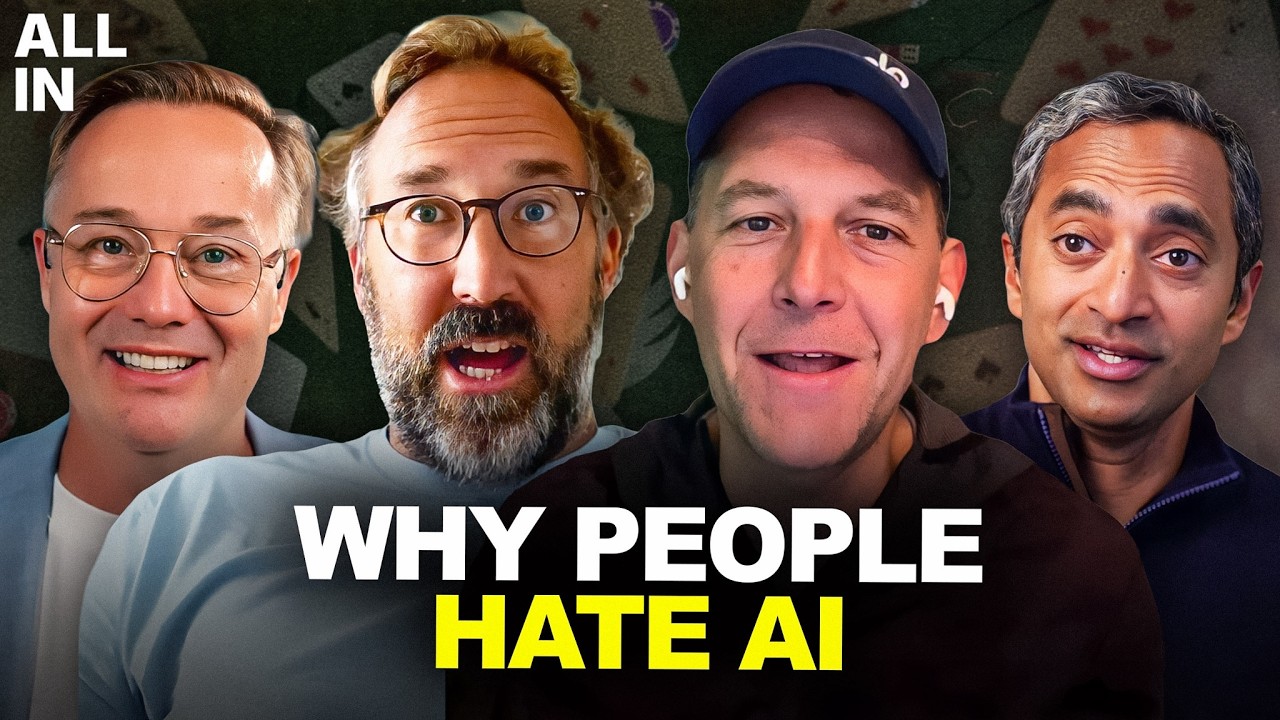
SpaceX's $2T Case, Nvidia's Shock Selloff, America Turns on AI, Trump Pulls AI Order, Bond Crisis?
Sacks is out, Gavin Baker (Atreides Management) sits in. The panel walks through Andrej Karpathy's surprise move to Anthropic, debates why the public mood on AI has flipped, tears apart SpaceX's $2T S-1, and asks why Nvidia's blowout earnings still saw the stock sold. Friedberg and Chamath also flag warning signals from inflation, oil, and bond yields, and close on what — if anything — came out of the US-China summit. ## [00:00] Gavin Baker joins the show! Jason opens episode 274 noting Sacks is out and welcomes Gavin Baker from Atreides Management for the week. They tee up the agenda: SpaceX and OpenAI IPOs, Karpathy to Anthropic, and Nvidia's earnings. > *"Sachs is out today, but we're very lucky to have Gavin Baker from Atreides Management joining us. The spicy takes must flow."* ## [00:30] Andrej Karpathy joins Anthropic; hypergrowth and profitability The Karpathy hire is read as a major strategic win for Anthropic — Chamath frames it as continuity of the Richard Sutton "bitter lesson" school of scaling that Karpathy executed at Tesla FSD and OpenAI. Gavin layers in financial context: Anthropic was EBIT-positive in the last quarter per the WSJ, which combined with hypergrowth makes the recent funding rounds look very different from a capital-burn narrative. Friedberg pushes back on the framing that models will soon "feed themselves" into context windows to self-improve, but flags that papers (one from MIT) suggest large efficiency gains are on the horizon. Chamath uses the moment to argue the podcast itself has to start telling the upside story of AI — the doctors, the scientists, the unlock — because the dominant public narrative has gone negative. > *"He was probably the first person that really commercialized the Richard Sutton bitter lesson essay when he was leading FSD at Tesla."* ## [12:42] Why Americans have turned on AI, anti-human perception Gavin shares a personal story: his daughter has a rare disease, and a Stanford scientist he funded is months away from what he believes is a complete cure, made tractable by AI-accelerated biology. He uses it to argue for an optimistic posture — a future where work is optional and disease is solvable — and warns that the people pushing for AI regulation are also shaping how the public feels about the technology. Friedberg goes deeper into the cultural mechanics: AI is being framed as anti-human in a way that mirrors anti-nuclear and anti-industrial backlashes of the 20th century. He argues the United States can't unilaterally slow down because China and others won't — and tries to separate genuine safety concerns from elite class anxiety. Chamath then makes a pointed observation that none of the survey data on AI job loss actually asks the truck drivers, package sorters, and ICU nurses themselves how they feel about the tools. > *"We're listening too much to the inventors of AI. They're geniuses. They're smart. We need to be listening to the frontline factory workers who are using AI saying, 'Wow, I was able to add a third shift.'"* ## [27:22] Trump pulls AI EO, US-China AI relationship, dystopian AI layoffs A Trump AI executive order was scrubbed at the last minute — the panel walks through what was reportedly in it (review of frontier-model training runs) and whether any pre-release regulatory framework is workable. Jason argues a state-by-state patchwork is the more likely outcome regardless of what Washington does. The conversation pivots to Meta's latest round of layoffs and the way they were communicated. Gavin and Jason agree the messaging — leaning on "AI productivity gains" as the public reason — landed badly even with people who accept the underlying logic, and Jason argues it became a case study in how *not* to message AI-driven workforce changes. > *"Because the reality is that if this is the way that you're going to message something as critical as this, I think you did a horrible job."* ## [45:19] SpaceX S-1 tear down! Breaking down the three major businesses and the case for a $2T valuation SpaceX filed its S-1 on Wednesday. Jason breaks the company into three businesses: launch (which could be hundreds of millions of paying subscribers via Starlink), Elon Web Services / xAI / Colossus compute, and rockets. The AI-cloud line item alone is around $15B and growing roughly 2x year over year, anchored by an Anthropic deal Gavin calls "extraordinary." Gavin then makes the case that Colossus matters because raw gigawatt-class data centers are now the binding constraint, and SpaceX-adjacent build velocity is the moat. He uses Cursor's Composer 2.5 release — Pareto-dominant on three or four weeks of RL training — as evidence that whoever owns the compute owns the next model generation, and walks through why rapid reusability on Starship compresses the unit economics of getting payload to orbit faster than any competitor can model. > *"If you look at who's actually capable of delivering a gigawatt data center, these guys are the closest, like an actual gigawatt."* ## [71:22] Nvidia smashes earnings but stock falls, why people are shorting chips Nvidia blew out earnings again — 20% sequential growth would be a high-growth print for any other company, the dividend was raised 25x, and the CFO committed to returning 50% of free cash flow. Yet the stock sold off, and Leopold Aschenbrenner's reported pivot away from chip exposure is being read as a smart-money signal. Gavin takes the bear case apart: at current PE Nvidia is cheap relative to growth, and the segment breakdown obscures how much the "AI clouds" line is dragging the multiple. He flags that the true useful life of a GPU is closer to two years than five, which means the reported profits of every hyperscaler running these chips are overstated — a real concern, not a stock-killer. He also notes Nvidia's CPU business is on track to do $20B this year, making it overnight one of the largest CPU manufacturers in the world. > *"The true lifespan of a GPU is more like two years and therefore the profits of all these businesses are overstated."* ## [82:25] Market update: Flashing red signals, oil, inflation, yields up The macro snapshot: May inflation expected at 4.2%+, Fed rate-hike odds back on the table, UK yields at the highest since the great financial crisis, oil and gold both moving. Chamath warns that when the currency-debasement mechanism finally breaks, the downside is non-linear. Gavin counters with relative optimism on the US: America is self-sufficient in energy, the AI build-out is structurally good for re-industrialization, and even in an ugly global scenario the US is the least-bad place to be invested. He flags AI fundamentals also have a seasonality that investors are starting to model — the same way e-commerce and subscription businesses do. > *"While it's terrible for everyone, it is relatively the best for America because we are self-sufficient in energy."* ## [92:45] China trip flops, or was progress made behind the scenes? A 48-hour US tech-CEO-plus-president trip to Beijing produced thin public deliverables: some soybeans, some H100/A200 sales to Chinese players. The panel asks whether that's the real story or just the visible surface, and whether the immediate China-Russia bonding moment afterward says more about the trajectory than any handshake photo. Gavin argues the more important read is structural: keeping America ahead in AI requires keeping the trans-Pacific relationship just stable enough to avoid a full decoupling shock, and that's a defensible strategic logic even if the optics are unsatisfying. He also paints a what-if scenario around the Strait of Hormuz to make the point that energy independence is what gives the US the option to act asymmetrically. Jason closes with thanks to Gavin and an invite back to the Summit. > *"There's sound arguments that this is stabilizing for the world and is the best highest probability path for keeping America ahead in AI."* ## Entities - **Jason Calacanis** (Person): Host, LAUNCH founder, MC of this episode. - **Chamath Palihapitiya** (Person): Host, Social Capital CEO; pushed the "listen to frontline AI users" framing. - **David Friedberg** (Person): Host, The Production Board CEO; led the cultural / historical analysis of the AI backlash. - **Gavin Baker** (Person): Guest host, Atreides Management founder/CIO; carried the investing thread across SpaceX, Nvidia, and macro. - **Andrej Karpathy** (Person): Joining Anthropic's new pre-training team; OpenAI co-founder, ex-Tesla FSD lead. - **Anthropic** (Organization): Hired Karpathy; EBIT-positive last quarter per WSJ; $15B AI-cloud deal with SpaceX-adjacent compute. - **SpaceX** (Organization): Filed S-1; three businesses (launch/Starlink, Elon Web Services compute, rockets); $2T valuation case. - **Nvidia** (Organization): Earnings blowout but stock sold off; $20B CPU run-rate; $5.3T market cap. - **Cursor** (Software): Composer 2.5 model release used as proof of fast RL-driven catch-up dynamics. - **Richard Sutton's bitter lesson** (Concept): Scaling beats clever architectures — framing for why Karpathy's move matters. - **GPU useful life** (Concept): Closer to ~2 years than ~5, so hyperscaler reported profits are overstated. - **Strait of Hormuz scenario** (Concept): Energy-independence-as-strategic-option argument for the US in the China game.

トランプ・習会談、ベニオフ「SaaS崩壊は今回が初めてじゃない」、OpenAI対Apple、マルチセンサーAI、エルニーニョ
SalesforceのCEOマーク・ベニオフが、Jason Calacanis、David Friedberg、Chamath Palihapitiya(David Sacksは欠席)とともに、二つのリアルタイムニュースを軸に幅広いテーマを語り合う。トランプ・習会談(2017年以来初)と、企業向けソフトウェアの評価額を急速に侵食するAIだ。サウジ国賓晩餐会、ウィンザー城、今回の代表団にも同席したベニオフは、米中経済外交の最前線を伝える。その後、話題はSalesforce自身の株価再評価の本質へ移り、データインフラとエージェントプラットフォームがAI破壊の恩恵側に立つと主張する。後半はOpenAI対Apple、Thinking Machinesのリアルタイムマルチモーダルデモ、Friedbergが提示する衝撃的なエルニーニョデータ、そしてAnthropicによる多層SPVスキームへの取り締まりを扱う。 ## [00:00] Salesforce CEO マーク・ベニオフ、番組に登場! 今週はSacksが不在で、ベニオフが席を埋める。Jasonがさっそくベニオフの政治的立ち位置を問いただす——かつて民主党の資金提供者だった男が、今やサウジ国賓晩餐会に出席し、現政権にも受け入れられているのはなぜか。ベニオフは党派的な問いをきっぱり退けた。 > *「私は民主党員でも共和党員でもない。アメリカ人だ。」* Chamathは、ベニオフがウィンザー城、チャールズ皇太子の訪米、サウジ国賓晩餐会への招待を立て続けに手にした珍しい存在だと指摘する——どの政権とも摩擦なく動けるテックCEOだ。このくだりは、まさに進行中の会談について発言する資格がベニオフにあることを際立たせる。 ## [01:14] トランプ・習会談、米企業の中国ビジネス、米国民と中間選挙への影響 トランプと習近平の七回目の直接会談——イラン戦争で二ヶ月遅延——は北京で幕を開け、習が台湾の扱い次第では両国関係が「極めて危険な状況に陥る可能性がある」と警告した。Polymarketでは2026年の侵攻確率が2300万ドルの出来高をもとに6%と示された。貿易面では、習が大豆・米国LNG・ボーイング機200機の購入を約束し、商業面での「門戸拡大」を訴えた。米国側代表団は企業役員会の顔ぶれだ——Jensen HuangはチップをPR、Kelly Ortbergは航空機を売り込み、CargillのBrian Sykesは大豆を売り、VisaとMastercardは決済市場へのアクセスを求めた。 Friedbergは「修辞ディレス・トラップ」の視点から会談を読み解いた——台頭する大国と衰退する大国が衝突するのは歴史の定型だが、AIやバイオテクノロジーがもたらす資源膨張という稀有な瞬間に、そのパターンから抜け出す可能性があると主張した。 > *「AIや自動化、バイオテクノロジーによる技術の大転換が目の前に広がり、真の豊かさが見えてきたこの瞬間こそ、世界がより多極的な在り方を選べる絶好のタイミングだと思う。」* ベニオフは、Salesforceが中国本土にオフィスも従業員も持たないことを明かした——中国の収益はすべてデータ所在地法を満たすためのAlibaba独占パートナーシップ経由だという——そして代表団全体に実際の受注が生まれると期待を示した。Chamathは、中国のトップダウン型儒教的ヒエラルキーがCEOレベルの外交を官僚チャンネルより効果的にすると論じ、インフレに苦しむ米国民にとってもこの取引成立が不可欠だと訴えた。 ## [18:46] 台湾、半導体、AIモデル、貿易による平和 ベニオフは、台湾が習にとって最優先事項だという前提に異を唱えた。領土的野心より経済的繁栄と中産階級の成長の方が習にとって重要だというのが彼の立場だ。「もし中国が台湾を封鎖したら米国は守るべきか」という直球の問いに対しては、二者択一を拒みこう述べた。「中国と台湾は和解すると思う。」Chamathは構造論で応じた。米国は国内チップの同等性まであと1〜2ナノメートルという地点にいる。そこに達した時点で、台湾の戦略的価値は存亡に関わるものから経済的なものへと変わると見た。 > *「私たちは、台湾が戦略的に担っている役割を自力で果たせるまで、あと1〜2ナノメートルのところにいる。今は経済的な問題であって、それが解消されれば、台湾に対する態度はまったく変わると思う。」* Chamathの処方箋は明快だ——それでもチップを売れ。HuaweiがKYC管理なしに半導体レースを制するよりも、NvidiaがKYC付きで中国にモデル用途のチップを販売する方がましだ。ベニオフも、チップ規制にもかかわらず中国のAIモデルが米国モデルとほぼ同等の性能に達していると同意し、禁輸の根拠を自ら崩した。Friedbergは、中国が国内ファブと製造装置を整備するにつれ、政治的な結果に関係なく台湾の代替不可能性は自然と低下していくと付け加えた。 ## [31:41] AIがソフトウェアに与える衝撃:生き残るSaaSと死ぬSaaS Jasonは株価再評価を率直に突きつけた。Salesforceが37%、ServiceNowが42%、Workdayが45%下落——AIがマネージドSaaSを不要にするという見立てのもと、合計で約1800億ドルの時価総額が消えた。ベニオフは真っ向から反論した。 > *「正直、SaaS崩壊は今回が初めてじゃない。でもこれが今のSaaS崩壊だ。」* 彼の主張はこうだ——市場の再評価は誤った前提に基づいている。Salesforceが賭けているのはAgentforce、つまり実際の企業データに根ざしたAIエージェントであり、幻覚を起こしやすい汎用モデルではない。80〜90億ドルでのInformatica買収が提供するデータ統合レイヤーこそ、エージェントを信頼できるものにする。「AIは確率論的だから、真実に、一元的な真実の情報源に縛り付けないと、うまく機能しない。」ベニオフはさらに、Salesforceが今年内部コーディングエージェントのためにAnthropicに約3億ドルを使う予定だと述べ、実装サイクルが劇的に短縮されるとした。 Chamathは市場を二つに割った。ローエンドはもう終わりだ——深い顧客関係を持たない汎用のポイントソリューションは死んだ。だが、Salesforceが戦うハイエンドは、公開市場が「AIに浮かれる」のをやめてCapex3兆ドルが何を生んだかを問い始めたとき、ROIの精算から恩恵を受ける側に立つ。生き残るのはCスイートとの関係、ネガティブチャーン、そしてAI機能を測定可能な成果としてパッケージできる企業だ。 ## [47:26] OpenAI、ChatGPT統合失敗をめぐりAppleを提訴か Bloombergによると、OpenAIがAppleを契約違反で提訴する可能性がある。2024年のChatGPT・Siri連携は実態として機能しなかった——Appleはユーザーが明示的に「ChatGPT」と言った場合だけクエリを転送し、統合を積極的に宣伝せず、OpenAIは期待していたサブスクリプション収益を得られなかった。Appleの言い分はOpenAIのデータ管理への懸念だ。 ベニオフはこの話をAIラボ間の戦略的な分岐として捉え直した。Grokはコンパニオンアプリやいわゆるセックスボットを作り、OpenAIはSoraと広告ネットワークを推し進め、GeminiはNanoを出荷した。そしてAnthropicはそのすべてを無視してコーディングエージェントに集中した——それが正解だったと彼は言う。まだ発表されていないSlack内蔵のコーディング機能についても示唆した。 > *「Anthropicはそんなセックスボットは知らない、Nano Bananaも知らない、コーディングエージェントをやる、と言った。結果的にAnthropicが正しかった。突然、ロケットが飛び上がった。」* Chamathはより深い問いを立てた——AI対話レイヤーがデバイスから完全に離れたとき、Appleに何が起きるのか。彼は、予想外のハードウェアメーカーからMacBook Proを不要にするような薄型・常時起動のアンビエントデバイスが「iPhoneモーメント」をもたらすと予測した。FriedbergはAppleの現在の戦略は先見性ではなく空白の穴埋めだと指摘し、G Suiteが静かにAppleの生産性スタックから企業シェアを奪いつつあると述べた。 ## [56:54] Thinking Machinesがリアルタイムモデルを公開、コンシューマーAIの未来、マルチセンサーモデル Mira MuratiのThinking Machinesが、デスクトップを監視し、周囲の音声を聞き取り、ウェブカメラの映像を同時処理するリアルタイムマルチモーダルモデルを公開した。200ミリ秒間隔で二本の並列パイプラインが走る——一方は深い遡及的推論、もう一方はライブ応答用だ。Appleはこれと並行して、AirPods内蔵カメラの特許を出願している。 > *「マルチセンサーモデルはAIの次の大きな波だ。そこに達してもまだAGIではないけれど。」* ベニオフは、言語で訓練されたLLMには根本的な限界があると論じた。人間の認知は目・耳・固有感覚を生体ハードウェア上で並行処理している。マルチセンサーによる根拠付けこそが欠けているレイヤーだ。トークン経済のインパクトは大きい——一日8時間のリアルタイムアンビエント監視は、現在の企業用途の1000倍の消費量になる。ベニオフは「大きいモデル=良いモデル」という軍拡競争に疑問を呈し、アプリやデバイスに組み込まれた分散型インテリジェンスがモデルの生のスケールより重要になると予測した上で、アンビエントセンシングと企業コンテキストを統合する「熱い新興企業」の余地があると示唆した。 ## [62:24] サイエンスコーナー:2026年に記録的規模のエルニーニョが起きたら Friedbergが海面水温の異常データを提示した。1877年以来最大の偏差に向かっており、基準値から約4℃上昇している。蓄積された熱エネルギーは1100万テラワット時——人類の年間エネルギー消費25,000テラワット時と比べると桁が違う。 > *「この海には500年分の人類エネルギーが蓄えられている。今後数ヶ月でそのエネルギーが大気中に放出される——99%の確信を持って言えるが、来年は記録上最も暑い年になり、しかもダントツになる。」* 連鎖反応はこうだ。貿易風の変化がカリフォルニアとメキシコ湾岸に大気の川をもたらし、熱ドームがフェニックスとカナダ内陸部に広がる。インドのモンスーンが高確率で失敗し、1億5000万人の農家と食料を依存する15億人が危機にさらされる。ブラジルのインドネシア・フィリピン向け農作物輸出が崩壊し、小麦価格が世界的に急騰する。フェニックスはすでに5月に摂氏41℃(106°F)を記録した。コモディティ市場はエルニーニョへの露出を積極的に取引している。Friedbergが示す部分的な好材料は、作物の遺伝子改良で干ばつ耐性が向上したことと、シベリアの農地が拡大していることだ——ただしそれらが2026年の収穫期を救うには間に合わない。 ## [71:40] Anthropic、「ダーク SPV」に宣戦布告 Anthropicは、非上場AI企業の未公開株を個人投資家に販売する多層SPVプラットフォームを公式に問題視し、許可を受けていない仕組みを通じて売却された株式を無効にすると表明した。Chamathは全面的に支持した。上場前のすべての企業が同じ姿勢を取り、公開市場への移行を押し進めることで、こうした仕組みを消滅させるべきだと主張した。 > *「SpaceXが上場し、Anthropicが上場し、OpenAIが上場すれば、これらSPVの販売業者を巻き込んだ訴訟の嵐が始まるだろう。こんな仕組みは許されるべきではない。」* Chamathは、主要なAI企業が上場し、個人SPV投資家が計算が合わないと気付いた時点で大量の法的紛争が起きると予測した。最後にベニオフが1-1-1慈善モデル——創業時に株式1%・利益1%・従業員時間1%を拠出し、現在は5万の非営利団体がプラットフォームを無料で使っている——とSusan Wojcickiへの追悼を語り、章は締めくくられる。 ## 登場人物・概念 - **Marc Benioff**(人物): SalesforceのCEO兼会長。本エピソードのゲスト。1-1-1慈善モデルおよびAgentforce AIエージェントプラットフォームの生みの親 - **David Friedberg**(人物): ホスト。The Production BoardのCEO。エルニーニョのサイエンスコーナーを担当 - **Chamath Palihapitiya**(人物): ホスト。Social CapitalのCEO。SaaS高付加価値領域の生き残り論とNvidiaチップ普及論を展開 - **Salesforce / Agentforce**(ソフトウェア): 企業向けCRMおよびエージェントプラットフォーム。データ根拠型AIエージェントがSaaS終焉論の裏返しになるというベニオフの賭け - **Anthropic**(組織): AIセーフティ企業。Benioffが好むコーディングエージェントの提供元(Salesforceで年間約3億ドルの支出を予定)。無許可SPV構造への取り締まりも実施中 - **OpenAI**(組織): ChatGPT・Siri統合の失敗をめぐりAppleを提訴する可能性があると報道。Anthropicの成功を受けてコーディングエージェントに軸足を移しつつある - **Thinking Machines / Mira Murati**(組織): デスクトップ・音声・ウェブカメラを200ミリ秒間隔で同時処理するリアルタイムアンビエントマルチモーダルモデルを公開 - **Thucydides Trap(修辞ディレス・トラップ)**(概念): 台頭する大国と衰退する大国の衝突サイクルを指す政治学の枠組み。Friedbergが米中会談における協調的な豊かさの好機を語る文脈で引用 - **ダーク SPV**(概念): 非上場AI企業の株式を個人投資家に販売する多層の特別目的ビークル。高い手数料と法的根拠の曖昧さが問題視されている

非公開のままKoch Inc.を$150Bに育てた方法:Charles & Chase Koch
Charles KochとChase Kochが、David Friedbergと共に振り返るのは、Koch Inc.が9,000倍の成長を遂げた歩みだ——1961年のオクラホマの300人規模の石油会社から、エネルギー・化学品・森林製品・消費財・ベンチャーキャピタルにまたがる13万人のプライベートコングロマリットへ、一度も上場せずに成長した。対話の中心は原則に基づく経営(PBM):Koch のすべての採用判断・買収・文化変革を動かす41の原則フレームワーク。Charles と Chase は「Koch」という名前につきまとう狭い政治的イメージについても率直に語り、党派的なリバタリアン政治から教育改革と人間の繁栄に焦点を当てるStand Togetherコアリションへの転換を説明する。エピソードはAIと資本主義の議論で締めくくられ、両者はパーミッションレス・イノベーションとボトムアップの権限委譲こそが、これからの経済的圧力を乗り越える唯一の信頼できる道だと主張する。 ## [00:00] David FriedbergがCharles & Chase Kochを迎える David Friedbergは、Forbes主催のイベントでの対話を開幕し、Chase Kochとは農業産業で2013年から知り合いでビジネスパートナーでもあると述べる。Koch Inc.をアメリカのビジネス史における「語られてこなかった物語」と位置づけ、おそらく世界で最も収益性の高いファミリー経営の非公開企業でありながら、上場企業と比べてほとんど知られていないと語る。 また、今夜の目的を明示する——Koch Inc.の会長と次世代の社長の両者との希少な長時間のライブ対談を、All-Inの視聴者に届けること。 > *「Koch Industriesはまさに語られてこなかった物語だと、ずっと感じていました。おそらく世界で最も収益性の高いファミリー経営の非公開企業だと思います。」* > — David Friedberg ## [01:04] Koch Inc.の概要:規模・事業・歴史 Friedbergが統計値を提示する。もしKoch が上場企業であれば、収益規模でFortune 500のトップ25に入る。1940年にFred Kochがウィチタで創業し、現在は60カ国でエネルギー・農業・化学品・建材・消費財・クラウドコンピューティング・マイノリティ投資ポートフォリオにまたがる12万人超の従業員を擁する。Koch は利益の90%を事業に再投資している——四半期収益を最大化しようとする上場企業とは異なる構造的な選択だ。 Charles は、今夜の対話が本当に何について語るかを示唆する。収益の節目の話ではなく、持続的な複利成長を可能にした原則と失敗の話だ。 > *「破壊的イノベーション、利益の90%を新事業と成長に再投資する姿勢、能力主義的な価値観を含む、非常にユニークなオペレーティングモデルです。」* > — David Friedberg ## [02:21] ビジネスの構築:初期の歩みとCharles Koch入社(1961年) Charles Kochは、MITとArthur D. Littleでの経営コンサルタント経験を経て25歳で家業に入社した1961年を振り返る。父Fred Kochの言葉は明快だった。「お前が戻って会社を経営してくれなければ、売却しなければならない。体調が悪く、会社も調子が悪い。もう長くないんだ。」当時は約300人の従業員と、フラクショネーティングトレイ製造とオクラホマの原油集積という二つの主力事業があり、運営は機能不全の状態だった。 初期の経験から一つのKoch 原則が結晶化した——業界にとらわれず、ケイパビリティを軸に成長するということ。フラクショネーティングトレイ事業が失敗した一因は、社長がトップダウン型のコントロール主義で、エンジニアと顧客の双方を疎外したことにあった。Charles はやがて「どの業界にいるか?」という問いではなく「誰よりもうまくできることは何か、バリューチェーンのどこでそれが最も価値を生むか?」と問うようになった。この発想の転換を何十年にもわたって繰り返すことが、Koch がのちに無関係に見える多様な産業に進出していく理由を説明する。 > *「息子よ、戻って会社を経営してくれなければ、売却しなければならない。私は体調が悪く、会社も調子が悪い。もう長くないんだ。」* > — Charles Koch、父Fred Kochの言葉を引用 ## [11:31] 失敗・創造的破壊・ミスからの学び Charles は挑発的な言葉で口を開く。「すべてにおいて失敗していなければ、新しいことは何もしていない証拠だ。」石油コークスから活性炭を製造しようとした失敗など、初期の損失の数々を振り返る。失敗のほぼすべてに共通するのは、Koch の経営原則のどれかを違反していたことだ。 Chase はケイパビリティ・ポートフォリオの視点を加える。原油集積から天然ガス・化学品・肥料・そして最終的には森林製品へと事業を広げたのは、無秩序な多角化ではなく、同じ根本的なケイパビリティを新しい用途に向けたものだ。また自身が設立したKoch Disruptive Technologies(KDT)を「構造的に継続的な収益を上げにくかった」と正直に評価する。撤退・ピボットの判断は一つのテストに尽きる——顧客に対して優れた価値を創出し、そして報われる能力を失っていないか? > *「十分に大損した時——それが「もう十分」のサインだ。顧客に対して優れた価値を創出できないとわかった時だ。」* > — Charles Koch ## [19:22] 文化と原則に基づく経営(PBM) このエピソードの知的な核心部分だ。Charles はPBMの源流を、Koch 最大の失敗——すべてに共通の根本原因、つまり悪い価値観を持つ人間をリーダーに登用したこと——にまで遡って説明する。二つの危機的事例が際立つ——1973年の中東戦争時に会社を倒産寸前に追い込んだ無謀なトレーディング、そして「破壊的な動機」を持つリーダーが失敗を隠し成功を捏造した後年の事件。解決策は、価値観を第一に、才能を第二に採用し、「貢献意欲」——他者の成功を助けることで自分も成功したいという動機——が権力志向を駆逐する文化を構築することだった。 Chase はさらに核心をつく問いを立てる——会社の全員が言われなくても何をすべきかわかるとしたら? それがPBMの目指す状態だ。変革戦略はトップダウンの指令を避ける。原則を試す意欲が最も高いグループを見つけ、成果を実証し、変革への需要が組織の残りの部分を引っ張るようにする。集合的な知識がトップの少数の優秀な人々の判断を置き換える。 > *「大小に関わらず、全員が言われなくても何をすべきかわかるような企業と文化を持てたらどうなるか?」* > — Chase Koch ## [33:53] Georgia-Pacific買収と文化変革 2005年のGeorgia-Pacific買収は当時の最大の賭けだった——Chase が言うように「当時の会社規模からすれば巨大な賭け」だった。Charles は論理をこう辿る。Koch は化学的プロセス産業と木材・パルプの「相互利益の好循環」を発見した。その連鎖はFred KochのMIT学位論文にまで遡る。最初はコモディティ部門のみの買収を提案したが、係争中の訴訟でそれが実現できないとわかり、会社全体を買収することになった。 その後は、トップダウン官僚制が支配していたアトランタ本社51階建てビルで、数年にわたる文化変革が始まった。Koch はリーダーを入れ替え、非効率を発見・解消した従業員を表彰し、それを見つけた組合員と節約分を共有した。Chase は自らが現場で過ごした年月——飼育場のシングルワイドトレーラーでの生活、ガスリキッドプラントでの仕事——が後年の信頼性ある経営の礎になったと語る。文化変革は買収側が想定するよりはるかに長くかかり、ほぼ必ず古いパラダイムを持つリーダー層の交代が必要だ。 > *「文化を変えるのは思っているよりずっと時間がかかる。そしてほぼすべての場合、ボトムアップ権限委譲のパラダイムを持つリーダーへの交代が必要です。」* > — Chase Koch ## [56:17] 教育改革と社会変革 Stand Together——Charles が60年にわたってさまざまな名称で構築してきた非営利ネットワーク——は今や米国最大の慈善団体の一つだ。Chase はoriginationとpartnershipsを担当し、その使命を再定義する。政治的擁護ではなく、同じKoch 原則を社会課題に適用すること、まず教育から。COVID-19は世論を大きく変えた。2020年以前は約20%の家庭が従来の学校教育の代替に開放的だったが、子供たちがZoomの授業よりYouTubeでより多くを学んでいる現実を目の当たりにした後、その数字は急増した。Stand Togetherはその後5,000校超のマイクロスクールの設立を支援してきた。 Joe Limontのアルファスクールのようなパートナープログラムは、ゲーミフィケーションとプロジェクト型学習を使って、失敗していた生徒を3ヶ月でトップクラスに変える。Chase は自身にも比較優位の原則を適用した——Koch Fertilizer社長として比較優位がないと気づき自ら辞任した——そして同じ視点でKoch 13万人の従業員の役割再設計に取り組んでいる。 > *「COVID以前は約20%の家庭が新しい教育モデルを受け入れる意思がありました。COVID中に皆が教育システムの問題を目の当たりにして、子供たちが教室のZoomよりYouTubeでずっと多くを学んでいることに気づいた。」* > — Chase Koch ## [72:37] AI・経済的課題と資本主義の未来 FriedbergはCharles に、Koch の政治的物語——リバタリアン党への長年の関与とStand Togetherの広範なコアリションへの転換——について問う。Charles は率直だ。最初の50年間、あらゆる原則で自分と同意する人たちとだけ仕事をしていたため、影響範囲が限られていた。Viktor Franklの洞察——「今日の問題は、ますます多くの人が生きる手段を持ちながら、生きる意味を持たないことだ」——が、純粋に政治的な解決策ではなく社会的崩壊の動機的根源へと思考を向けなおした。教訓:自由の戦略は全体主義から借りることはできない。コアリション内の純粋性テストはそれを破壊する。 AIについてChase の立場は明確だ。パーミッションレス・イノベーション、オープンシステム、AIツールで人々を力づけること——禁止するのではなく。Koch はPBMをAIネイティブなフレームワークとして運営しており、Chase は読者が原則と直接対話できるAIコンパニオンを本と合わせて作った——Charles が想像していた以上の展開だ。エピソードはCharles の遺産目標で締めくくられる——米国が独立宣言の約束をより完全に実現すること。 > *「今日の問題は、ますます多くの人が生きる手段を持ちながら、生きる意味を持たないことだ。」* > — Charles Koch、Viktor Franklを引用 ## 登場人物 - **David Friedberg** — ホスト、The Production Board共同創業者、農業産業を通じて2013年よりChase Kochとのビジネス上の知人 - **Charles Koch** — 1967年よりKoch Inc.会長兼CEO、MITで工学を学んだエンジニア、原則に基づく経営の本の共著者、Koch の9,000倍の価値成長を牽引 - **Chase Koch** — Koch Inc.社長、Koch Disruptive Technologies設立者、Charles との PBM本共著者、Stand Togetherのoriginationとpartnershipsを担当 - **Koch Inc.** — ウィチタKS本社のプライベートファミリーコングロマリット、1940年Fred Koch設立、エネルギー・化学品・森林製品・消費財・ソフトウェア・ベンチャーキャピタルにまたがる13万人超の従業員 - **原則に基づく経営(PBM)** — Koch の41の原則からなる経営フレームワーク、貢献意欲・価値観優先採用・ボトムアップ権限委譲・各事業を実験室として扱うことを重視 - **Georgia-Pacific** — 2005年にKoch が買収した森林・消費財企業、Koch 最大の買収案件、PBMによる文化変革の主要事例 - **Koch Disruptive Technologies(KDT)** — Chase Kochが創設したベンチャー部門、破壊的テクノロジー企業へのマイノリティ投資、構造的に継続的な収益を上げにくかったと評価 - **Stand Together** — 2003年よりCharles Koch の慈善ネットワーク、教育改革・貧困削減・党派を超えた社会変革に注力、COVID後に5,000校超のマイクロスクールを支援

Elon's Anthropic Deal, The Next AI Monopoly?, "FDA for AI" Panic, Trading the AI Boom
In one of their most consequential episodes, the All-In besties dissect SpaceX's surprise compute lease to Anthropic — the deal that may cement Anthropic as AI's dominant platform — and debate whether David Sacks's "Rockefeller" framing is prophecy or paranoia. The group then wrestles with a White House trial balloon about an "FDA for AI," ultimately concluding it was mostly media spin, before closing with a bullish-but-cautious read on the AI-driven market boom. Brad Gerstner fills in for David Friedberg, bringing investor perspective from both public and private markets across the episode's 82 minutes. ## [00:00] Bestie intros! Thoughts on the LA mayor election Jason Calacanis opens with the full crew: Chamath Palihapitiya, David Sacks, and fifth bestie Brad Gerstner joining in for David Friedberg, who is out sick. The warm-up quickly turns to the LA mayoral race, where Spencer Pratt is mounting a surprisingly effective challenge to incumbent Karen Bass. The group praises Pratt's viral debate performance — evisceration of the city council candidate over homeless policy — and Chamath notes the power of a sharp social-media team in modern politics. Brad flags a California ballot initiative that would constitutionally protect retirement savings and ban a wealth tax, reading it as a potential seismic signal. Jason observes that New York City hedge-fund titan Ken Griffin publicly announced he is pulling investment from New York after NYC councilman Zohran Mamdani targeted his home in a campaign video, underlining the tension between aggressive progressive politics and capital flight. > *"If California effectively passes a constitutional amendment protecting retirement savings and personal assets and banning the wealth tax and [Spencer Pratt] gets elected, the message that would send to the country — that's a very non-consensus view that I'm becoming increasingly optimistic about."* — Brad Gerstner ## [04:38] SpaceX-Anthropic deal, Elon Web Services, SpaceX IPO valuation, Anthropic's insane growth trajectory Jason leads with the blockbuster news: SpaceX has leased all of Colossus 1 — its H100-based Memphis data center — to Anthropic, adding over 220,000 Nvidia GPUs and 300 megawatts to Anthropic's supply-constrained capacity. The deal immediately doubled Claude Code's rate limits and removed peak-usage caps for paid users. Chamath frames Anthropic's explosive growth as purely supply-constrained: if unlimited power existed, revenues would be "even more parabolic." He sees the deal as Elon strategically de-risking SpaceX's valuation story — blunting bear cases around delayed orbital data centers while generating near-term revenue to subsidize Grok training. Brad estimates the arrangement adds $4–5 billion in incremental 2026 revenue for SpaceX, calling EWS (Elon Web Services) a genuine fourth hyperscaler alongside AWS, Azure, and GCP. He also warns that organized activists — not organic local opposition — are using the same playbook that stalled nuclear construction in America to delay data-center permitting. David Sacks notes that Anthropic grew from $10B ARR on January 1 to $44B ARR by April — a trajectory he calls unlike anything Silicon Valley has ever witnessed. > *"Nobody in Silicon Valley has ever seen anything like it. Forget about the rest of the country. I mean, all we do in Silicon Valley is deal with exponentials. And still, people have never seen that kind of growth at that level of scale."* — David Sacks ## [26:48] Is Anthropic the next great monopoly? Early signals or major overreaction? David Sacks draws an extended analogy between Anthropic and John D. Rockefeller's Standard Oil, arguing that safety-first rhetoric can function as regulatory capture — building a moat that locks in the emerging duopoly of Anthropic and OpenAI while blocking competitors. He notes that if Anthropic sustains its 10× annual growth for just 18 more months it could become "the most powerful monopoly ever created in human history," dwarfing the combined Mag-7 revenue. Brad pushes back hard: Anthropic and OpenAI are still fledgling startups on a GAAP basis, Google and Amazon are producing hundreds of billions in free cash flow to fund competing models, and pre-emptive antitrust action at the starting line of AI would be "a disaster." Jason translates Brad's position as "don't mess with my paper," since Altimeter holds positions in several of these companies. Sacks clarifies his northstar is vigorous competition — but he flags Anthropic's banning of OpenClaw from using its API as a concrete anti-competitive act worth scrutiny. > *"Unless something about their current trajectory changes, Anthropic will be the most powerful monopoly ever created in human history — a trillion dollars of ARR growing at some rate. Dario calls it AGI. I call it the biggest monopoly in human history."* — David Sacks ## [35:21] "FDA for AI" freakout, how the White House thinks about AI safety Reports surfaced that the White House was considering an executive order to create an AI working group that could require pre-release safety reviews for new frontier models — triggered, according to the New York Times, by Anthropic's classified "Mythos" model reportedly alarming national-security officials. NEC Director Kevin Hassett appeared on Fox Business drawing an FDA analogy, while Treasury Secretary Scott Bessent spoke more carefully about balancing innovation and safety. Sacks calls much of it "fake news" amplified by Andrew Ross Sorkin's DealBook column, noting that Susie Wiles, the White House Chief of Staff, issued a statement walking back the FDA framing. He reveals he spoke with Hassett directly and confirms no senior official actually supports a pre-approval regime. He points to the White House's March 20 National AI Regulatory Framework as evidence the administration favors specific solutions over broad regulatory capture. The group converges on one concrete measure: KYC (Know Your Customer) requirements before frontier model API access during preview periods, plus rapid deployment of cyber-capable AI to companies like CrowdStrike and Palo Alto Networks. > *"There is a substantial faction of AI ideologues or doomers who are basically employing the classic 'never let a crisis go to waste' strategy. Yes, we do have this cyber issue that is real — everyone needs to harden their systems now. But what they're trying to do is use that issue to try and create a permanent new infrastructure in Washington."* — David Sacks ## [52:01] Flipping AI's negative perception: Giving, healthcare and education innovation Jason shifts from regulatory defense to offense: how should the tech industry proactively counter negative public perception of AI? He proposes that companies going public — Anthropic, OpenAI, SpaceX — could dedicate 1–5% of IPO proceeds to every American via "Invest America" accounts, creating tangible shared upside. He also calls for serious engagement on minimum wage and universal healthcare, arguing that a financially healthier consumer base is structurally good for capitalism itself. Brad endorses the "Invest America" concept, adding that data center host communities should receive direct benefits like free local electricity. David pivots to political salience data: AI ranks 29th out of 39 voter issues — well below cost of living and economic growth, two metrics where AI is actively deflationary and expansionary. The industry's real message should be economic delivery, not safety governance. Chamath gives tech leaders a "D-minus trending to F" for communications and calls for tangible reinvestment in America at scale. > *"I think that there's a pretty profound vibe shift with respect to tech, tech oligarchs, Silicon Valley, and particularly AI. That vibe shift has already happened on Main Street, and I think that's starting to seep into Washington."* — Chamath Palihapitiya ## [60:04] Trading the AI market, state of the economy Brad leads a comprehensive market check: AWS on a $150B run rate (28% growth), Azure at $108B (39%), Google Cloud at $80B (63%). The S&P 500 is at all-time highs, the 10-year sits at 4.3%, and inflation is under control — far better outcomes than the doom scenarios predicted around tariffs and geopolitical conflicts. S&P 500 operating margins improved from 11% in 2023 to 13% in Q1 2026, and the Mag-5's combined headcount grew only 3% over three years while revenues surged. Chamath urges caution: there is still no direct evidence AI is lifting enterprise profit margins in aggregate, and a reckoning arrives in roughly 500 days when the fork between opex reduction and revenue growth will determine whether the AI boom is real or a mirage. Jason counters that for startups the ROI is already "fait accompli" — AI-generated ad creative at Nike and DoorDash, portfolio companies shipping product at half the headcount. David credits Trump administration policies — rescinding Biden's chip-export licensing and AI-approval regime, unleashing energy permits — for creating the conditions that enabled the boom, and notes that the unemployment rate for recent college graduates has actually improved, contradicting the entry-level-job-loss narrative. > *"I think we have kind of call it 500 days where you just got to be net long. But I think it's literally in the hundreds of days from now that you're going to have to have an important reckoning moment. The people that are paying for all these tokens need to see an actual benefit."* — Chamath Palihapitiya ## Entities - **Jason Calacanis** (Person): Host and moderator; angel investor and podcast co-founder - **Chamath Palihapitiya** (Person): General partner, Social Capital; co-host; contrarian macro voice on AI ROI and market cycles - **David Sacks** (Person): Co-host; former White House AI & Crypto Czar; framed Anthropic as a potential historic monopoly using the Rockefeller analogy - **Brad Gerstner** (Person): Founder & CEO, Altimeter Capital; fifth bestie; bullish on compute stocks and AI market structure - **Dario Amodei** (Person): CEO of Anthropic; referenced as "Daario D. Rockefeller" by Sacks; party to the SpaceX compute deal - **Elon Musk** (Person): CEO of SpaceX and xAI; architect of Elon Web Services and the Colossus 1 compute lease strategy - **Anthropic** (Organization): AI lab behind Claude; grew from $10B to $44B ARR in four months; center of monopoly and FDA debates - **SpaceX / xAI** (Organization): Lessor of Colossus 1 data center to Anthropic; emerging fourth hyperscaler under EWS branding - **Elon Web Services (EWS)** (Concept): SpaceX's compute-leasing business positioned as a hyperscaler competitor to AWS, Azure, and GCP - **Mythos** (Software): Anthropic's classified cyber-capable frontier model that reportedly alarmed White House national-security officials - **KYC for AI** (Concept): Proposal to require identity verification before granting API access to frontier models during preview periods - **Invest America** (Concept): Proposal for IPO-stage tech companies to dedicate a share of proceeds to universal investment accounts for US citizens