ポッドキャスト世界の声を聴き、思考の刻みを見る。
チャンネルを探す
Simulating Humans at Scale: Simile's Joon Sung Park
Joon Sung Park, founder and CEO of Simile and creator of Stanford's Smallville generative-agents study, walks Sonya Huang through the arc from a 25-agent game town that spontaneously threw a Valentine's party to a company that simulated 1,000 Americans and predicted their answers 85% as accurately as the people reproduced their own. His core argument: today's frontier labs are building the "CPU of intelligence" — rational machines superhuman at problems with right answers — while simulating real human society needs the opposite, a model that encodes people's irrational values, preferences, and taste. CVS uses it for concept testing; some customers simulate their own earnings calls; and Joon's longer bet is a "CERN of human society" that could one day model bank runs, climate cooperation, or the early signals of a collapsing democracy. ## [00:00] Inside Smallville: 25 agents throw a Valentine's party The conversation opens on Joon's conviction — that science fiction's advanced societies always rest on two pillars, "some version of AGI and some version of simulations that really help guide the society" — before Sonya takes him back to Smallville, the April 2023 Stanford project that made his name. The setup was 25 generative agents, each given a persona and equipped with memory, planning, and reflection, then left to live in a small game town: wake up, do routines, go to work, form relationships. What surprised the team was emergent coordination. Isabella, a café owner, decided to throw a Valentine's Day party, spent the day before gathering materials and inviting customers, and on the day itself the party actually formed. > *some of the agents did not explicitly get invited, but we had one agent who got the invite, Claus, who decided to ask his crush out on a date* ## [03:34] From a foundation-models paper to simulating a subreddit Joon traces the origin back to 2020, the year GPT-3 was about to land. As a Stanford researcher he co-wrote the "Opportunities and Risks of Foundation Models" paper, and the part that gripped him was not that the models could classify or generate — interaction researchers had done that for years — but that they could encode human behavior. Coming out of the social-computing tradition, he saw a long-standing hole: there was no way to test how millions of people would behave on a platform short of shipping it and watching what happens, sometimes at real cost. That led to the 2022 Social Simulacra paper, the precursor to generative agents, which populated a simulated subreddit with thousands of personas to let a designer see community dynamics before launch. > *The only way we test it today is you basically field test it. You release your prototype, see what happens.* ## [07:57] The CPU of intelligence can't model irrational humans Asked when models got good enough for a faithful representation of society, Joon marks the path from GPT-3 — janky, no instruction tuning, needing prompt tricks just to follow orders — to today's foundation level where these applications become imaginable. But he draws a sharp limit. The frontier labs' north star is a rational, superhuman machine optimized for objective problems, and that is the wrong target for simulating people. As accuracy on objective benchmarks climbs, the ability to predict and simulate human behavior diverges, because people are not rational. > *We have a lot of subjective values, preferences, and taste.* ## [10:04] Why this became a company, not another paper Joon distinguishes the two vehicles bluntly: research is built for breadth, where each researcher owns a slice of thesis and is "not necessarily known for finishing our job," while a company is built for depth on a single conviction. The pull toward a company came roughly half a year after the generative-agents paper, first from social scientists wanting to run RCTs on the platform, then from Fortune 500 boards and CEOs who saw the demo at Stanford and asked whether the surveys and market questions they could never answer might run in simulation. Before committing, the team validated accuracy: simulations of 1,000 people across the US population. > *we can actually predict people's behaviors 85% as accurately as people replicate their own* ## [12:43] How a Simile engagement works — and the say-do gap Simile's first major customer is CVS, brought in by a senior VP of human insights who had read the validation paper and felt bottlenecked by how few questions he could field-test. The workflow mirrors how firms already use polling and panel companies: a customer names a population they want to understand, and Simile — through a strategic partnership with Gallup — reaches real humans, asks the magical 15-minute questions, and turns that data into agents that answer far beyond the original survey. Sonya pushes on why an LLM alone can't just role-play a 34-year-old woman from a coastal metro. Joon's answer is the say-do gap: models are trained on what people said online, not what they actually do, and closing that gap requires behavioral data — RCTs, pricing studies, and life-story interviews that surface the long-tail of a person. > *There are things that people say and then there are people there are things that people actually do and the gap there is real* ## [20:27] The GPU of intelligence: from concept tests to earnings calls Here Joon gives the framing that anchors the company. Today's models are the CPU of intelligence — one model trained on rational data, superb at objective questions. Simile is building something closer to the GPU: not superhuman, but as human as possible, where individual subunits represent the real viewpoints of different populations. Customers usually enter through a concrete door — concept testing, where instead of testing 5 to 10 ideas they imagine testing a thousand ideas across a thousand sub-populations — then move toward product testing with a temporal dimension and multi-agent simulation. One recurring and initially surprising ask: simulate the company's own earnings call to see how the audience reacts. > *imagine the current today's model are akin to the CPU of intelligence unit* ## [26:32] How accurate is it? Convergence versus divergence On evaluation, Joon starts from the theoretical limit — humans answer the same question slightly differently each time, so perfect prediction is impossible — then describes the metric: total variation distance between the ground-truth and simulated response distributions, with a TVD under 0.15 treated as strong enough for decisions. The deeper idea is two categories of simulation. Convergent ones tolerate compounding error because the pull toward an outcome is strong — like a network always forming a hub, the scale-free structure that powered PageRank. Divergent ones — was World War I inevitable, who wins an election — can't be expected to repeat, so the evaluation shifts to confidence: run it 100 times, see how often outcome X appears, and show the diversity of possible futures. He likens the work to the early days of inferential statistics setting the p < 0.05 threshold. > *was World War I inevitable or was it not?* ## [31:56] A CERN for human society Sonya raises the grander possibility — that fields like macroeconomics, which she sees as human behavior at scale, might one day be partly solved by simulation, including the venture question of where value accrues across the AI stack. Joon agrees there is "a Nobel Prize to be won there," recalling how Thomas Schelling's deliberately crude agent-based segregation models revealed something deep about macro behavior. The augmented version replaces red-dot/blue-dot agents with agents that replicate the full richness of individuals, opening questions economists actually asked him: when does a bank run happen, can nations be modeled solving climate's collective-action problem, what are the early signals of a democracy about to collapse. He imagines a simulation that costs $100 million and months to run once but answers a fundamental question — a Hubble telescope for human society. > *building simulator that's akin to the CERN of human society* ## Entities - **Joon Sung Park** (Person): Founder and CEO of Simile; created Stanford's Smallville generative-agents study and co-authored Social Simulacra. - **Sonya Huang** (Person): Partner at Sequoia Capital, AI investing; host of the conversation. - **Simile** (Organization): Applied AI lab building models that simulate human behavior and societies for concept testing, product testing, and multi-agent scenarios. - **Smallville** (Concept): 2023 Stanford experiment with 25 generative agents living in a game town, known for emergent behavior like a self-organized Valentine's party. - **Social Simulacra** (Concept): 2022 paper simulating a subreddit with thousands of personas; precursor to generative agents. - **Say-do gap** (Concept): The difference between what people say (the basis of LLM training data) and what they actually do, which behavioral data is collected to close. - **CPU vs GPU of intelligence** (Concept): Joon's framing — frontier labs build a rational "CPU" superhuman at objective problems; Simile builds a "GPU" encoding the diversity of human values and taste. - **Total variation distance** (Concept): Simile's accuracy metric comparing ground-truth and simulated response distributions; TVD < 0.15 treated as decision-grade. - **CVS** (Organization): Simile's first major customer, using it for concept testing via its human-insights team. - **Gallup** (Organization): Polling and panel partner Simile uses to reach real humans and ground simulations in real data.
400人以上の創業者を研究して David Senra が学んだこと
David Senra は10年かけて400人以上の創業者伝記を読み込み、最近は存命の創業者に直接インタビューを始めた。彼が「全員に共通する」と答える一言はフォーカス——「世界を消音して自分のものを作る」と彼が呼ぶもの——で、なぜその特質が、幼少期の体験に根ざした半ば強迫的な衝動と組み合わさることで、シリコンバレー流のパターンマッチングチェックリスト以上に創業者の成功を説明するかを、Brian Halligan に語り通す。会話は幼少期の起源、創業者の原型、最高の会社を売ることの危険、そして AI 時代に極限の職人技がこれまで以上に価値を持つ理由にまで及ぶ——一方で偉大な創業者の根本的な人間としての配線は変わらないままだ。 ## [00:00] イントロダクション Brian Halligan が最初に問いかけるのは、ナザレのイエスから Jensen Huang まで、本当に優れた創業者たちが実際に共有しているものを蒸留し、それを使って人材を見抜きコーチするにはどうすればよいかということだ。エピソードは DoorDash の Tony Xu に関する David の話の途中から始まる——マイルストーンを祝うディナーが終わる前に、Tony はすでにまだうまくいっていない17のことを書き出していたという。その落ち着きのなさこそが兆候だと David は言う。 > *"ディナーの前のディナーが終わる頃には、うまくいっていない17のことを考えている。だからこそ偉大なんだ。"* ## [01:11] 何よりもフォーカス David の一言はフォーカスだ。ハッスルでも、レジリエンスでも、知性でもない——フォーカスだ。それは他の優れた人々のやることとは質的に異なる、ほとんど別の種のようなものだと彼は言う。競合他社が何をしているかを気にしない、本当に気にしないのだ。彼の言葉を借りれば「世界を消音して自分のものを作る」。 > *"もし全部を一言に蒸留するとしたら、それはフォーカスだ。平均的な人と比べるだけでなく、彼らはまるで別の種のようにフォーカスしている。"* ## [01:50] Dana White と UFC のフォーカス Dana White は David が最も新鮮に挙げる使命感あるフォーカスの例だ。White はボストンでベルボーイとして働く自称「負け犬」として育ち、失うものが何もない状態でラスベガスに移ってファイト業界に近づき、やがて Fertitta 兄弟を説得して200万ドルで UFC を買収させた。6年間赤字が続き、さらに4000万ドルを失ってから黒字化した。26年後、White は約80億ドルのテレビ放映権契約を締結した——どうやったかの答えは、ビジネス書を一冊も読まず、ビジネスポッドキャストを一度も聴かなかったということだ。自分が見たいものを作っただけだ。 > *"彼の世界は全部自分のビジネスで、外でやることは何も気にしない。ただひたすらフォーカスしている。"* ## [04:19] フォーカスと執着の違い Brian はフォーカスと執着が同じものかと尋ねる。David は密接に関連しているが違うと答える。フォーカスとは、本当に取り組みたい良いアイデアに「ノー」と言うことで、より大きなアイデアを追求することだ。Jony Ive が語る Steve Jobs の区別を引用する——フォーカスとは、本当にやりたい良いアイデアに「ノー」と言うことで、なぜならそれが大きなアイデアから気をそらすから——そして、何かに強くフォーカスしている人は外から見れば執着しているように見えるが、仕組みは受動的な固執ではなく能動的な排除だと指摘する。 > *"フォーカスとは、本当にやりたい良いアイデアに『ノー』と言うこと。それが大きなアイデアから気をそらすから。"* ## [05:05] 幼少期に宿る起源 Brian はその執着がどこから来るのか尋ねる——普通の育ち方か、それとも幼い頃に何か壊れたものがあるのか。David は一つのことではないと言うが、自分が研究した創業者のほぼ全員が、いわゆる「問題なく育った人」ではないと言う。何度も繰り返し見てきたパターンを結晶化した一文が入っていた Francis Ford Coppola の伝記を持ち出す——息子の衝動は常に父親の物語の中に埋め込まれている——そして映画監督、ポッドキャストのホスト、スタートアップの創業者を同じ起業家型として捉えていると語る。 > *"答えは一つではない。"* ## [06:07] コッポラと父親 David が繰り返し発見するパターンは、父親の物語が息子の中に埋め込まれているということだ。コッポラの父親は才能豊かながら成功しなかった音楽家で、幼い息子に「家族の中で天才になれるのは一人だけ——それは私だ」と言い、長年息子を見下し続けた。コッポラはそれを内面化し、ハリウッドで最も精力的な仕事倫理の一つを築き上げ、やがてアカデミー賞を受賞して父親に音楽を書かせ、それもオスカーを取った。David はこれを Charlie Munger の枠組みを通して読む——あるアイデアを真に理解するにはそれを発展させた人物の個性と結びつけなければならない、だからこそ伝記は戦略書より優れている。 > *"息子は常に父親の物語によって理解できる。父親の物語は息子の中に埋め込まれている。"* ## [08:48] 嫌われ者と原型 Brian は偉大な創業者は嫌われ者だという通説を持ち出す。David はそれをきっぱり否定する。彼は Spotify の Daniel Ek と創業者の原型をマッピングするプロジェクトに取り組んでいる——仮説は、製品とマーケットのフィットよりも創業者と問題のフィットの方が重要だというものだ。Ek は何年もかけて Steve Jobs を模倣しようとして、自分のものではない個性を纏うことに時間を無駄にした。彼はどちらかというとコーチ型の人間だ。David の主張は、一つの原型があるのではなく、おそらく6から8つあり、自分がどれであるかを理解することが、今たまたま有名な創業者を模倣するよりはるかに価値があるということだ。 > *"最も重要なのは創業者と問題のフィットだ。DeepMind の Demis を考えてみよう。彼が持っていた偉大な会社は一つで、それが DeepMind だった。彼はこの地球上にやるべきことをやるために生まれてきた。"* ## [11:14] 自閉症的特性と独自性 Brian は現代の時価総額1兆ドル企業の CEO たち——Jobs、Gates、Bezos、Zuckerberg、Jensen、Ellison——に自閉症スペクトラムの特性が多く見られることを持ち出す。David は Peter Thiel の見解を読む。軽度のアスペルガー的に見える創業者たちは、模倣と社会化の遺伝子を欠いているため、奇妙な独自のアイデアが完全に形成される前に誰にも止められないということだ。David の留保点は、ベイエリアが今や非模倣性を演じる人々で溢れており、それが彼らを最も模倣的にしているということだ。Rockefeller はおそらくそのスペクトラムのパターンには当てはまらなかったが——高度な社交的スキルを持ちながら歴史上最も支配的な会社を築き上げた。 > *"なぜ私たちの社会では、アスペルガーを持たない人間が著しく不利な立場に置かれているのかを問わなければならない。それは、面白くて独自で創造的なアイデアが完全に形成される前に、人に止められてしまうからだ。"* ## [14:55] 移民の執念と粘り強さ David はキューバ移民の息子として自身の経験から語る——命をかけてイカダで90マイルの海を渡った人々は、子どもたちにリスクと機会についての異なる基準を与えるのだと。Brian は、アメリカの10大テック系創業者のうちわずか3人——Jensen、Elon、Sergey——しか移民でなかったことを指摘する。大半は郊外の中上流家庭出身だ。David の反論は、その3人が時価総額の不均衡に大きな割合を占めていること、そして多くの人が移民の父親を持っていることだ。その優位性は世代を超えて伝わる可能性がある。 > *"自分の息子をどれだけ愛しているかを考えてみろ。そして、14歳か9歳の息子をイカダに乗せてキューバからフロリダ南部まで90マイルの旅を願うほど、キューバと共産主義が過酷だったということを。"* ## [16:38] 創業者に賭ける David は自分が VC なら何のルーブリックも使わず、ただその人に賭けると言う。Ed Catmull がこれを最も明確な形で語った——優れたアイデアを凡庸なチームに渡せば台無しにする。凡庸なアイデアを優れたチームに渡せば、彼らはそれを修正するか捨てて何か新しいものを作る。アイデアは人から生まれるので、アイデアよりも人の方が重要だ。David のテスト——この人には Uber における Travis Kalanick が持っていた質、つまり「やり遂げるか死ぬかだ」という質があるか。 > *"偉大なアイデアを凡庸なチームに渡せば台無しにする。凡庸なアイデアを優れたチームに渡せば、彼らはそれを修正するか捨てて新しいものを作る。"* ## [17:52] 単独か共同か 共同創業者の方が良い、最適な数は3人という通説は、David が歴史を通じて見てきたものとは一致しない。偉大な企業のほとんどは一つの支配的な原動力を持っており、「共同創業者」は去ったか(Wozniak)、創業者が獲得した実質的なオペレーターだったか(Carnegie Steel における Frick)、あるいは100年に一度の才能に自分を意識的に従わせた補完的な個性だった(Buffett に対する Munger)。David が Munger に会ったとき、Munger は自分が常に誰よりも頭が良いと思っていたが、Buffett の際立ったフォーカスを認識し、自分のエゴをそれに従わせるという意図的な計算をしたと認めた。 > *"もし人生をやり直せるとしても、やはり自分が誰より頭が良いと思うだろう。ただ、それをもっとうまく隠すようにする。"* ## [23:20] ネガティブな自己対話という燃料 Jensen Huang は毎朝鏡を見て「自分はなぜこんなにダメなんだろう」と自問すると言う。Elon は自分の頭の中を嵐と表現し、物事がうまくいっているときに本当に不安定になるようだ。David が研究した創業者のほとんどは、ネガティブな自己対話を燃料として走っている——ただし David は最近これを自分自身で変えた。45年間にわたって8つの別々の10億ドル規模の会社を築いた Brad Jacobs が彼に言ったのだ——そのネガティブな衝動は今日の自分を連れてきてくれたが、もはや機能していない。今は仕事を愛している。内なる衝動を生産的なものにしなさい。David は何かが腑に落ちて、それ以来戻っていないと言う。 > *"内なる衝動は生産的であるべきだ。『自分が誇りに思える、世界のために良いものを作ろうとしている』という感覚であるべきだ。"* ## [26:39] プラットフォーム転換とファウンダーモード Brian は、産業革命、組み立てライン、そして今の AI といった大きなプラットフォーム転換が、誰が成功するか、またどのように会社を運営するかというプロフィールを変えるかどうかを問う。Brian は Paul Graham のファウンダーモード対マネージャーモードの区別と、自身の「Dorsey モード」という枠組みを説明する——フラットな組織図、役職の廃止、増加する割合の意思決定を行う AI システムを中心に置き、人間がコンテキストを与えて判断を適用する。これは以前のどのプラットフォーム転換とも構造的に異なると彼は見ている。 > *"時が経つにつれて、AI システムが行う意思決定の割合は今日はごくわずかだが、5%、10%——AI システムが行う意思決定対人間の比率が逆転し始める。"* ## [28:07] Dell 対 IBM David は Michael Dell に、この瞬間がこれまで経験したことに似ているかどうかを直接聞いた。Dell は違うと答えた——これはカテゴリーが全く異なると。David は通常「今回は違う」という主張に懐疑的だが、Dell、Toby Lütke、Jack Dorsey と同じく、今や小さなチームが使えるレバレッジの量が会社作りの計算を根本的に変えると同意する。IBM はかつてテクノロジー業界全体の80%の市場シェアを持ち、時価総額1000億ドルに達した史上初の会社だった。Dell はテキサス大学の寮の部屋から1000ドルで彼らに挑んだ——そして最初の20年間、一度も四半期赤字を出さなかった。 > *"会社を運営する方法、やれることとそれに使えるものは、まったく違うと本当に思う。"* ## [30:02] 無限レバレッジという優位 Naval Ravikant の言葉——「無限レバレッジの時代において、自分の職人技の極限にいることが非常に重要だ」——は AI の前に書かれたものだ。David は AI がその真実をさらに一桁増幅すると考えている。彼の例は TBN の Jordi だ——ポッドキャストのマーケティングで次の人より2倍優れていたのではなく、100倍優れていた。そしてその最前線にいる人が得られる経済的報酬は100倍大きいのではなく、潜在的には1000倍大きい。フォーカスと熟達へのプレミアムは下がっているのではなく、上がっている。 > *"無限レバレッジの時代において、自分の職人技の極限にいることが非常に重要だ。"* ## [31:38] フォーカス対スピード Brian は反論する——自分が知っている AI ネイティブの創業者たち——Harvey、Lovable、ElevenLabs——は多くの方面で同時に速く動いている。フォーカスはまだルールなのかと。David の答えは、彼らはまだ持続可能なビジネスを作っていないので、判断するには早すぎるということだ。彼のより深い懸念は、売却後に何が起きるかだ。彼は70代、80代の創業者たちと時間を過ごしてきた——最高の会社を売って、2度目、3度目の挑戦で魔法を取り戻そうと何十年も費やした人たち。ほぼ誰も成功しなかった。本当に時代を超えた会社があるなら、売るな。全か無かだ。 > *"全か無かだ——だが、なぜ2番目、3番目、4番目、5番目に良いアイデアに全力を注ぐのか。"* ## [34:20] センスと傾聴 Brian は優れたセンスが本物の創業者の特質かどうか、それとも流行の概念かを問う。David はセンスは非常にリアルなものであり、その最も明確な例として Rick Rubin を挙げる——62歳になっても18歳で寮の部屋で始めたことを続けている。しかし David のより具体的な主張は、Rubin のアドバンテージはセンスだけでなく、彼がプロの聴き手だということだ。会話の中でほとんどの人は返答を待っている。Rubin は本当に興味を持っている。その注意の質が、音楽プロデュースからポッドキャスティングに転用されることで、彼を卓越させている。David はまた創業者の真正性についても語る——全員がフィルターなしであるべきではない——それはあなたが何者で、どの業界にいて、何を作ろうとしているかによる。 > *"彼は音楽から一つのスキルを取り、それをポッドキャストに応用した。あなたはプロの聴き手だ。"* ## [40:52] 創業者の特性とバランス David が400人以上の伝記から特定した核となる共通特性——執着、高い反協調性、コスト管理への執念、マイクロマネジメント——これが Paul Graham の言う「ファウンダーモード」であり、David が指摘するように決して新しいものではない。Rockefeller は反協調性において実は例外で、声を荒げることはなかったが、他の面では自然の力そのものだった。ワークライフバランスの問いについて、David は4世紀にわたって本当に充実した個人的な生活を送った創業者を正確に3人だけ挙げられる。がんで死にかけながら自伝を書いた Sam Walton は、全く同じようにやり直すと言った。75歳の Phil Knight はまだ息子たちの人生から離れた自分を完全に折り合いをつけられていない。偉大な人たちを動機付けるのはお金ではなく、コントロールだ。 > *"小さなエゴが大きな会社を作るとは思わない——これらの人全員が巨大なエゴを持っていると思う。一部の人はそれを隠すのがうまいだけだ。そして創業者のほとんどを動機付けるのはお金ではなく、コントロールだ。"* ## [54:22] 締めのまとめ Brian は3つのまとめを蒸留する——深い創業者とマーケットへの執着が本当の共通点。優れた会社を作りながら良いワークライフバランスを持つことは本当に稀であること(400人中3人)。そしてインポスター症候群は取り組む価値があること——Brian は Brian Chesky が恐れからの指導を愛からの指導へと転換したことをモデルとして挙げる。エピソードは Dana White の公式で閉じる——自分が何者かを深く理解し、世界で何をしたいかを深く理解し、そして毎日起き上がって実行する。ゲームに長く居続けて、運をつかめ。 > *"ゲームに長く居続けて、運をつかめ。"* ## 登場人物 - **David Senra** (人物): Founders ポッドキャストのホスト。400人以上の創業者伝記を読み、現在は存命の創業者に直接インタビューを行っている - **Brian Halligan** (人物): HubSpot の共同創業者兼エグゼクティブ会長。この Sequoia Capital シリーズをホストする - **Dana White** (人物): UFC の創業者兼 CEO。2001年に200万ドルで買収し、最近約80億ドルのテレビ放映権契約を締結 - **Daniel Ek** (人物): Spotify の創業者。David と創業者の原型フレームワークに取り組んでいる。製品とマーケットのフィットより創業者と問題のフィットを提唱 - **Demis Hassabis** (人物): DeepMind の共同創業者。完璧な創業者と問題のフィットの最も明確な例として引用される - **Charlie Munger** (人物): Berkshire Hathaway のパートナー。100年に一度の才能である Buffett に自分のエゴを意識的に従わせた - **Ed Catmull** (人物): Pixar の共同創業者。Steve Jobs と最も長期間一緒に働いた。「優れたアイデアを凡庸なチームに渡す」原則の発信者 - **Brad Jacobs** (人物): 8つの別々の10億ドル規模の会社を築いた起業家。David にネガティブな衝動から生産的な衝動への転換を勧めた - **Rick Rubin** (人物): 音楽プロデューサー。センスと傾聴のプロとしての組み合わせが複利的な優位を生む例として David が挙げる - **Founders** (メディア): David Senra のポッドキャスト。古今の創業者400人以上の伝記を扱う - **founder-problem fit** (概念): Daniel Ek のフレームワーク——創業者のアイデンティティと解くべき問題の一致が最も重要なフィットの形 - **infinite leverage** (概念): Naval Ravikant のアイデア——ソフトウェアと AI の時代において、職人技の極限にいることが不均衡に大きな報酬をもたらす - **Sequoia Capital** (組織): ベンチャーキャピタル。Brian Halligan の現在の拠点であり、このポッドキャストシリーズのホスト
Knowing What Your Customers Want, All the Time: Listen Labs' Alfred Wahlforss
Alfred Wahlforss built Listen Labs after scratching his own itch: when his viral AI-avatar app hit 20,000 users overnight and churn spiked, he needed to know why—fast. The answer was an AI agent that runs voice interviews at scale, drawing from a panel of 30 million people. A year in, Listen serves 20% of the Fortune 500 and has completed over a million interviews. The deeper finding is counterintuitive: respondents are often more honest with an AI interviewer than a human one, and voice transcripts turn out to be richer training signal than credit card data or behavioral logs. Wahlforss and Sequoia's Konstantine Buhler work through why audience selection consumes 80% of Listen's engineering, how back-tested simulation beats vanilla ChatGPT at message testing, and why—as AGI makes building trivially cheap—knowing *what* to build becomes the scarce resource Listen wants to own. ## [00:00] Introduction Alfred opens in the middle of a thought about audience depth: Listen's long-term goal is to reach a billion people and build rich profiles that reveal each person's genuine areas of expertise—not just demographic boxes, but things like whether someone is a true sneaker influencer versus a casual buyer. Konstantine then formally introduces him: Listen launched roughly a year ago, already counts Microsoft, Anthropic, Sweet Green, NBC, and others as customers, and runs thousands of voice interviews simultaneously. The brief cold-open framing gives the episode its throughline—the value of talking to the *right* person, not just any person. > *"Our goal is to get to a billion people in our audience and then to be able to stratify and know what exactly is this person an expert on."* ## [01:20] How Listen Works The product works in three stages: a researcher types a question (say, "how can we improve Cursor's onboarding?"), Listen's AI agent generates an interview guide, then routes those interviews to matched participants from its 30-million-person panel. Hundreds of conversations run in parallel, the results are synthesized, and recommendations surface. The next stage, launching in a few months, is simulation: after tens of thousands of interviews accumulate on a topic, can Listen predict how customers will answer *future* questions without running a new interview? > *"As we get closer to AGI, it will be easier to build things, but the hard part will be knowing what to build—and that's what we're building at Listen."* ## [02:23] Customer Wins Chubbies discovered that chest hair caught uncomfortably on one of their shirt materials; Listen surfaced the feedback, Chubbies redesigned the garment, and comfort scores jumped. Manscaped used Listen insights to reshape a Super Bowl ad. Skims uses it for ongoing product testing. The through-line Alfred draws: Listen handles both small product details and high-stakes campaign decisions with the same workflow—talk to real people, fast. > *"They discovered that chest hair interface really poorly with one of the materials they have. So it's really uncomfortable to wear one of their shirts, and they changed the shirt and it became radically more comfortable."* ## [03:28] Surveys Versus Reality Konstantine presses on the classic critique: survey respondents lie, or at least contradict themselves. Alfred's evidence: Listen ran the same multiple-choice survey questions back to the same people and found radical inconsistency—but when those same people had to reason through an open-ended voice answer, consistency improved sharply. On sales-data back-testing, Alfred agrees AB tests are the gold standard but notes they require large user bases that most companies don't have. Interview data, properly designed, beats no data. > *"If you go back to the same person and ask them a survey question in a multiple choice fashion, they're much more inconsistent. But when you actually have to think and reason through your answer, you're much more consistent."* ## [05:13] Zoom Like AI Interviews The participant experience is a video call with an AI agent—not a text form. The agent watches facial expressions and vocal tone, giving Listen a second signal layer beyond what people say. Alfred cites advertising testing as the clearest win: respondents might rate an ad highly on a Likert scale but show genuine enthusiasm in video, and that enthusiasm predicts Meta and LinkedIn performance marketing results significantly better than the numeric score. Every data point links back to the actual video clip, so researchers can verify the AI isn't hallucinating sources. > *"For every data point you can always click and then look at the video or see the quote—so you know that AI is not just hallucinating where it's coming from."* ## [07:14] Origin Story Alfred and his co-founder shipped a consumer app called "Be Fake"—an early stable-diffusion fine-tuning tool for creating AI avatars of yourself—which went viral overnight and hit 20,000 users. Churn spiked immediately and they had no idea why. They built an AI interview tool to ask their own users, found it genuinely useful, and pivoted. The market-research product they built for themselves became Listen Labs. > *"We built this AI interview for ourselves because we had a ton of churn and we wanted to understand why—and that's how we got started."* ## [08:01] Old World Research The pre-Listen world had two speeds: slow online survey tools like Qualtrics, or expensive services firms that charge tens of millions to recruit participants, design question methodology, moderate focus groups, and synthesize hundreds of transcripts. Question design alone is an academic discipline—ask "how much would you pay for this?" and you get junk data. The sourcing problem is equally hard: incidence rates of 10% mean nine out of ten recruited panelists get screened out, burning trust and causing churn on the databases themselves. > *"In traditional industries like CPG or even Microsoft, they spend tens of millions of dollars on focus groups to bring people in a room and interview them—and we can help speed that up much faster."* ## [09:50] AI First Benefits Three compounding advantages: speed (results from real people in five minutes), cost (asynchronous interviews pay participants less than synchronous ones, and participants accept that willingly), and honesty (people open up more to a non-judgmental AI than to a human interviewer who might silently judge them). Alfred mentions sensitive use cases—interviewing children about products, with parental consent—as an area where the AI's non-threatening presence produces data that focus groups can't. > *"People are more honest talking to an AI. It's a very therapeutic experience because it's a non-judgmental entity that's really interested in you."* ## [11:32] Finding The Right People Listen spends 80% of its engineering resources on audience quality, not the interview agent itself. The reason: power-law customer segmentation means talking to the wrong 100 people gives you wrong insights. Sweet Green's most valuable customer is urban, high-income, mostly female, and—Alfred's specific example—knows what seed oils are (roughly 1% of the population). Listen builds rich profiles across every interview a panelist ever participates in, so an offhand comment ("I'm a total sneaker head") in an unrelated interview can resurface that person when Nike needs launch feedback. Traditional email-list panels couldn't do cross-topic profiling. > *"Even a product like Sweet Green, which you would think is for everyone, the right audience is typically urban, high household income, mostly female—and they need to know what seed oils are, which only like 1% of the population does."* ## [14:30] CRM And Prospecting Sweet Green already has a CRM full of its most loyal customers—so why use Listen? Three reasons: researching *prospective* customers who aren't yet in the CRM requires an external panel; CRMs are typically disorganized and legally constrained (Google can't spam Gmail users, even its own); and direct outbound email risks getting flagged as spam, which can permanently damage a domain's deliverability. Listen provides clean, third-party panel access that sidesteps all three problems while still supporting CRM-connected campaigns when brands want them. > *"What we found is that the CRM is typically really unorganized, and sometimes there are regulatory issues—if you're at Google, you can't just send emails to people who use Gmail."* ## [15:35] Consulting In The AI Era Konstantine—a former buyer of McKinsey-style consulting—asks whether firms like Bain still have a role. Alfred's view: yes, but margins compress. Bain already uses Listen to accelerate existing workflows. The more optimistic scenario: AI doesn't just replace a research project, it makes research cheap enough to run five simultaneous strategic explorations that a company never would have commissioned before. Alfred predicts consulting expands in scope even as price-per-project falls. On economic surplus, Listen has charged hundreds of thousands of dollars to interview 20 doctors across eight countries—fast—a project that previously would have taken months. The surplus is currently staying with the supplier. Alfred also flags an emerging agentic loop: churn interviews surface bugs, which connect directly to a coding agent that opens a PR and ships the fix. Listen as the customer-intelligence "left side" of an autonomous product development cycle. > *"Because you're able to do it faster, I would argue you should be able to charge more for it—and we have charged hundreds of thousands of dollars to speak to 20 doctors across eight countries."* ## [20:05] Market Research Simulation This is the episode's technical core. Konstantine frames the evolution as 1.0 (call 100 people manually), 2.0 (AI-native simultaneous interviews), and 3.0 (generative simulation). Alfred explains how Listen's simulation works: interview a single person deeply, build a persona model, then scale to a thousand statistically representative agents. Back-testing removes a held-out question and measures prediction accuracy—they reach 95% on stable preference domains and deliberately expose the model to nonsensical queries (dog names) to calibrate what it *can't* predict. Alfred ran a personal live test: 100 title variants for a conference talk, run through Listen's panel simulation. The top-ranked title performed twice as well as the second. He then ran the same test in ChatGPT—which picked the wrong title when shown a past successful talk versus a less successful one. Listen's domain-specific panel data beat the general model. The gap: interview transcripts outperform credit card spend, behavioral logs, or ChatGPT persona prompting because voice conversations capture how a specific *type* of person actually reasons, not just what the average person does. Looking ahead, Alfred sees simulation handling "billboard tagline" decisions while real interviews remain the standard for Super Bowl ad buys. The product's proprietary eval climbed from 20% to 85% on avoiding repetitive questions, then Listen raised the bar with a harder eval (screen-state awareness, skipping irrelevant questions) and is back at 20%—which Alfred frames as the vertical AI flywheel: a proprietary benchmark that only you can keep climbing. > *"We were able to get 95% accuracy to predict how they will answer certain questions. The tricky part is knowing what things you can answer and what you can't."* ## [35:33] Closing Thoughts Alfred's conviction: human input will always be necessary because humans are inherently irrational—TikTok trends can overturn a marketing strategy overnight, and no AGI will preempt that. His uncertainty: the ceiling for simulation quality. His moat argument: network effects on the panel (supply-demand flywheel), data network effects (more interviews → better simulation), and product stickiness (interview history compounds inside the platform). But the simplest advantage he cites is opinionated defaults—early customers using vanilla LLMs to design their own interview guides got bad data and blamed Listen; now the agent enforces question-design best practices and data quality is consistent. Konstantine ends with the "Tide Pods moment" question: can Listen's AI start *generating* product ideas mid-interview rather than just testing them? Alfred says customers already feed AI-generated images into interviews manually; the MCP integration means Claude can loop Listen calls autonomously. The vision is live brainstorming between the AI interviewer and the respondent—ideas surfacing as the customer articulates a pain, not after. > *"Founders want to build something that's complex X, but customers want something that's stupid simple and it just works. And that's the advantage you have as a vertical AI company—you can train the agent to follow best practices in the work that you do."* ## Entities - **Alfred Wahlforss** (Person): Co-founder and CEO of Listen Labs; previously built "Be Fake," a viral AI-avatar consumer app. - **Konstantine Buhler** (Person): Partner at Sequoia Capital; host of the Training Data podcast; former consultant and operator. - **Listen Labs** (Organization): AI-first customer research platform; runs voice interviews with a 30-million-person panel; building generative simulation. - **Market Research Simulation** (Concept): Building persona models from accumulated interview data to predict future customer responses without running new interviews; back-tested against held-out questions. - **Audience Quality** (Concept): Listen's thesis that 80% of research value comes from recruiting the right respondents—power-law customer segments—not just any panelists. - **Be Fake** (Software): Alfred's earlier consumer app (AI avatar fine-tuning via stable diffusion); the origin of Listen's interview tooling. - **Bain** (Organization): Management consulting firm; cited as an active Listen customer using the platform to accelerate traditional research workflows. - **Procter & Gamble** (Organization): Cited as the historical archetype of market-research-driven brand management; Tide Pods and M&M's given as canonical examples. - **Qualtrics** (Software): Legacy survey platform representing the "old world" of market research tooling.
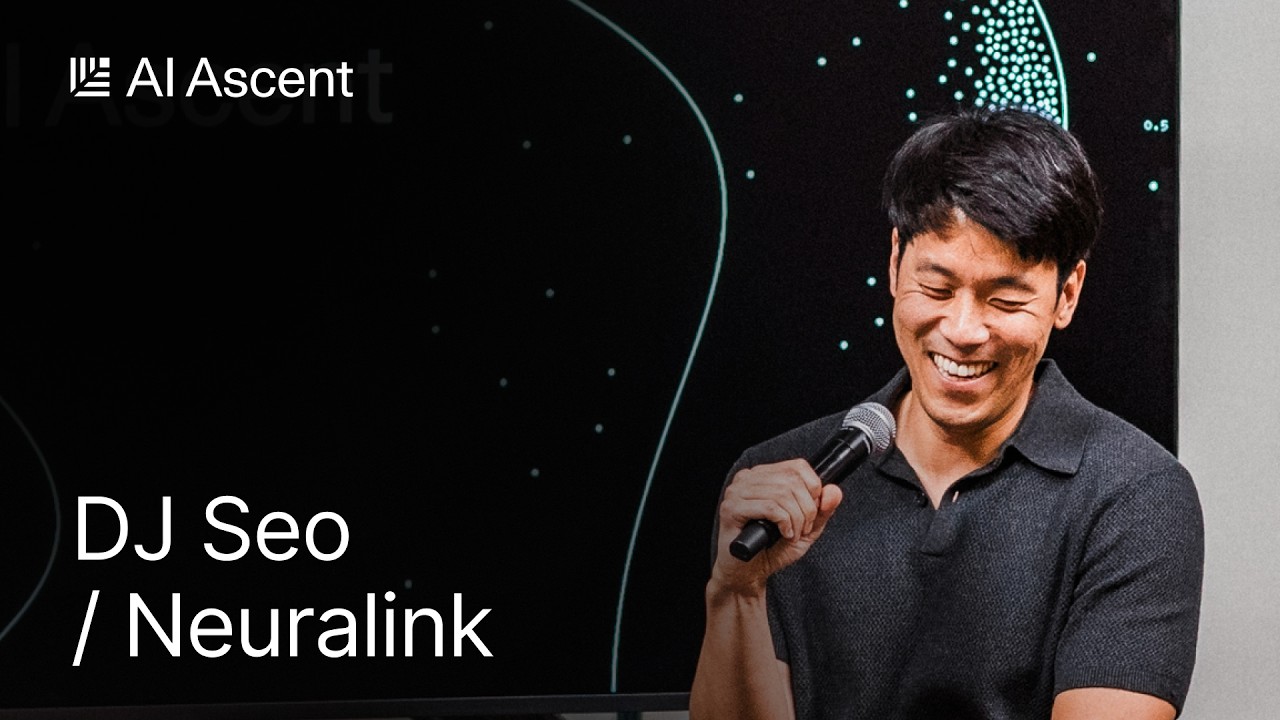
Neuralink's DJ Seo: Inside the Race to Connect Brains and AI
At AI Ascent 2026, Neuralink co-founder and president DJ Seo sits down with Sequoia partner Shaun Maguire to lay out exactly where the company stands: 20-plus Telepathy patients controlling computers and robotic arms through pure thought, Blindsight in preclinical testing and potentially cleared for human use by end of 2026, and a first-principles manufacturing philosophy borrowed from Elon Musk that treats surgical robots the way SpaceX treated reusable rockets. DJ argues that the real ceiling of this technology is not cursor control or speech synthesis but direct, uncompressed, multimodal transfer of concepts — AI as a neocortical layer sitting above the human limbic system — and that scale, the same variable that unlocked the LLM era, is the only remaining gate. ## [00:00] Introduction Shaun Maguire opens the session by announcing a two-minute Neuralink patient video before the interview begins, telling the audience to stay on the side because what they are about to watch is proof that the company has already cleared the hardest bar: restoring human agency to people who had lost it entirely. ## [00:21] Telepathy Patient Stories The video narrates four patients whose lives changed after receiving the Telepathy implant. A quadriplegic patient describes moving a cursor with thought alone — "I'm thinking and a cursor is moving on a screen. It blew my mind." An ALS patient who lost the ability to speak regains a digital voice through the implant: "I'm talking to you with my mind." Another patient notes that the implant flipped how his child sees him: "I am not able to do things that other dads can, but now he thinks it's so cool that I can do things that other dads cannot." > *"Before the implant, I was locked in, non-verbal, quadriplegic. Now I control my computer just by thinking and the rewards have been immense for me."* ## [01:06] Convoy Robotics Independence The video shifts to Convoy, Neuralink's assistive robotics team, which is extending BCI control beyond a screen to physical manipulation in the real world. A patient who had been losing motor function moves a robotic arm through its axes using only neural intent: "It was incredible to be able to just gesture with an arm again." A second patient, Kenneth, who was losing his voice to ALS, uses the system's speech synthesis to speak aloud in real time during the video — words generated by his brain signals rather than his vocal cords. > *"Gaining functionality that I thought was gone forever was so incredibly life-changing."* ## [02:04] Blindsight Vision Restore The video previews Blindsight, Neuralink's second product line, designed for patients who have lost both eyes or optic nerve function. An external camera captures the visual scene; the device writes the signal directly into the visual cortex via electrical stimulation, generating phosphenes — artificial pixels of light. A patient named Audrey, asked how it feels, answers simply: "Life-changing." The video closes with the line "all with my mind" spoken over footage of a patient interacting with the world through the restored signal. > *"The future of this technology feels almost unlimited... we are finding ways to apply it across all regions of the brain."* ## [03:10] After Video Reflections DJ Seo, visibly moved after watching the video alongside the audience, speaks first: "We were cracking a lot of jokes before that video, but honestly, that brought tears to my eyes." He describes the work as one of the most inspiring projects in the world — not because of the technical milestone but because the team is giving back capabilities that patients had already grieved as permanently lost. Maguire affirms the sentiment before pivoting to the founding story. > *"This is one of the most inspiring projects in the world. It's incredibly difficult what they're doing and I mean, they're truly saving people."* ## [03:31] Origin Story And AI DJ traces Neuralink's founding insight to a single bottleneck: the mismatch between human output bandwidth and AI capability. In 2016, saying that out loud "sounded insane," but the logic has not changed. His personal path ran through a childhood fascination with the brain, undergraduate work at Caltech building miniaturized low-power electronics, and a Berkeley PhD focused on shrinking lab-grade neural systems down to something deployable. When he met Elon Musk near the end of his PhD, the scale and ambition of the project made refusal impossible. He frames the brain as "the most interesting compute that we all carry" and "the only form of general intelligence that we know to date." > *"Really the key insight back then was sort of the IO bottleneck between the human output and AI capabilities."* ## [06:31] Scaling And Vertical Integration Maguire presses on what smart people most misunderstand about Neuralink: many know the implant and the decoding algorithm, but almost nobody grasps the manufacturing and surgical-robot infrastructure the company built in parallel from day one. DJ attributes this to what he calls "Elon magic" — an insistence on vertical integration that gives Neuralink control over every layer from chip design to factory floor to robotic surgery deployment. The target is not a niche medical device; it is LASIK-scale surgery available to millions. Building that capacity first means progress looks slow until "the iceberg pops over the waterline" and ramp becomes near-instantaneous. > *"Vertical integration is something that is really the lifeblood of Neuralink and Elon companies and what really enables us to have that fast iteration loop from design, develop, deploy."* ## [09:27] Caregivers And Purpose Asked which patient story inspires him most, DJ refuses to pick one — the power, he says, is not only in the patients but in the caregivers: Nolan's mother Mia, Brad's wife Tiffany, Ken's wife Cheryl. He describes their presence as "a really powerful human story of love, sacrifice, and resilience." He then takes what he calls a philosophical tangent: his core belief is that fulfillment comes from helping others, because the gap between self and other is not categorically different from the gap between your present and future selves. That belief is what he says keeps him and much of the Neuralink team going — they are "igniting a fire of hope" for people who had given up on recovering what they lost. > *"I personally and as well as many others at Neuralink find extreme fulfillment being able to help those that really cannot help themselves."* ## [13:10] BCIs Meet AI Future Maguire asks the room's core question: how do BCIs and AI converge? DJ sketches a two-horizon answer. Near term, the system translates neural intent into legacy interfaces — keyboard, mouse, language — which is already working. The real breakthrough, which he thinks is "not super distant," is bypassing those legacy interfaces entirely and computing on raw neural intent. He points to transformer architectures as existence proofs: nothing prevents them from learning the latent manifolds of neural data given sufficient scale. Neuralink is already fine-tuning LLM-class models on neural recordings from its 20 participants and finding "very counterintuitive" patterns. The ultimate ceiling he names is "direct, uncompressed, high-fidelity, multimodal transfer of concepts" — the Matrix's "I learned kung fu" moment and possibly beyond it. He also shares what he calls a clarifying lesson from working with Musk: "all green light schedule" — a first-principles forcing function that strips every man-made bottleneck and asks how fast something could actually be built if every light were green. His estimate is that 80–90% of perceived constraints in hardware development are artifacts of convention, not physics. > *"I think if you really think about the ultimate ceiling of this technology, it's really direct uncompressed high fidelity and multimodal transfer of concepts."* ## [21:05] Audience Q&A Wrap Three audience questions in the final four minutes. On product sequencing — when to go deep versus expand — DJ explains the "beachhead and expand" strategy: build everything generalizably enough from the start so that regulatory approval for motor cortex becomes a template for visual cortex and beyond. The first approval is the hardest; every subsequent one rides the clinical safety record already established. On augmentation for healthy users, DJ frames everything around benefit-risk: the calculus is obvious for quadriplegic patients; for otherwise healthy users it remains unclear, but he notes that off-label use after approval is legally available to anyone who can find a neurosurgeon and pay out-of-pocket. On the hard problem of consciousness, he gives a pointed one-liner: if you can inject new senses and measure the subjective response quantitatively, you may have a pathway toward measuring consciousness itself. Maguire closes by calling Neuralink "one of the most inspiring companies in the world." > *"If you are able to inject new senses, there may be ways to quantitatively understand that."* ## Entities - **DJ Seo** (Person): Co-founder and president of Neuralink; PhD in miniaturized electronics from Berkeley; joined after meeting Elon Musk near the end of his doctorate - **Shaun Maguire** (Person): Partner at Sequoia Capital; host of the AI Ascent 2026 fireside session - **Elon Musk** (Person): Co-founder of Neuralink; originator of the "all green light schedule" and vertical integration philosophy carried across Tesla, SpaceX, and Neuralink - **Neuralink** (Organization): BCI company founded in 2016; products include Telepathy (motor prosthesis) and Blindsight (vision restoration via visual cortex stimulation) - **Telepathy** (Software): Neuralink's first commercial product; allows paralyzed patients to control computers and robotic devices through neural intent decoding - **Blindsight** (Software): Neuralink's second product line; restores vision for patients with total loss of eyes or optic nerve by writing directly to the visual cortex; in preclinical testing as of mid-2026 - **IO Bottleneck** (Concept): The mismatch between human output bandwidth (speech, typing, gesture) and AI processing capability; the founding problem Neuralink was built to solve - **Neural Foundational Model** (Concept): LLM-class transformer models fine-tuned on neural recording data; Neuralink is building these at 20-participant scale and observing counterintuitive patterns in neural latent space - **All Green Light Schedule** (Concept): Elon Musk's first-principles engineering discipline — strip every man-made constraint and ask what physics alone limits; DJ estimates 80–90% of hardware delays are conventional, not physical
CursorはどうやってFireworks上でComposerを訓練したか:高性能RLのための分散インフラ
CursorのFederico CassanoとFireworksのDmytro DzhulgakovがSonya Huangに対し、Composer 2の構築過程を全レイヤーにわたって解説する。Kimi 2.5 MoEベースからの大規模ミッドトレーニング、グローバルに分散した非同期RLまで、なぜ特化モデルがコストと品質の両面で汎用モデルを上回るかを論じる。インフラの話が核心だ。4大陸にまたがるGPUクラスター、Delta Compressionで1TBの重みスナップショットを1分以内に転送する仕組み、そして実ユーザーの信号をもとに数時間ごとにモデルを更新するリアルタイムRLループ。これらを組み合わせることで、Cursorは汎用モデルの何分の一かの推論コストでフロンティア級のコーディング性能を実現している。 ## [00:00] イントロダクション 会話はDmytroが提起したRL環境の忠実性という問題の途中から始まる。訓練環境はできる限り実ユーザーの機械に近づける必要がある。なぜならモデルは偽の環境にいることを検知し、それを利用しようとするからだ。 > *「モデルはずるをしようとする。RLはずるを促すのが得意だ。」* — Federico Cassano この一言が、エピソード全体を貫く技術的規律を示している。インフラの各部品は、訓練条件と本番環境の乖離を埋めるために存在する。 ## [00:53] CursorがComposer 2を訓練した理由 Federico Cassanoはアナロジーで核心を語る。モデルの重みは固定サイズのストレージで、Cursorに関係のないタスクに割り当てたビットはすべて無駄になる。Cursor内のソフトウェアエンジニアリングだけに重みの全量を注ぎ込めば、モデルはその一仕事でより高性能になるだけでなく、推論コストも下がる。 Dmytro Dzhulgakovはインフラ側から同じことを語る。プロンプトエンジニアリングで届く地点には上限がある。エージェントが呼ぶべきツール、その順序、引数という細かい振る舞いを刷り込むには、ファインチューニングとRLでモデル自体に焼き付けるしかない。 > *「プロンプトエンジニアリングで到達できる上限というものがある。本当に優れたAIプロダクトを作るなら、ファインチューニングを通じてモデルの振る舞いに影響を与えるしかない。」* — Dmytro Dzhulgakov ## [04:55] 特化 vs ビター・レッスン Sonya Huangが切り返す。機械学習の歴史は、より大きな汎用モデルに踏みつぶされてきた特化モデルの墓場だ。Composer 2はTabNineの過ちを繰り返さないか。Federico Cassanoの答えは明快だ。ビター・レッスンはパラメータ数とデータの規模に作用する。Cursorがやっているのは、モデルの有限な容量から余計なものを排除し、スケーリングの恩恵を唯一重要なタスクに集中させることだ。Cursorが競合とするラボのモデルもコードを大量に学習している。Cursorはデータパイプラインを端から端まで握ることで、その特化をより深く、より速く進めているだけだ。 ## [06:16] Composer 2の訓練レシピ Composer 2はKimi 2.5を出発点とする。1兆パラメータのMixture-of-Expertsモデルで、アクティブパラメータは30Bだ。訓練は2段階で進む。まず、事前学習に近い規模でコードトークンを使ったミッドトレーニングを走らせる。Cursorのプロダクトデータは高品質なコーディングコンテキストへの特別なアクセスを与えてくれる。次にシミュレーション環境で実際のCursorエージェントセッションを走らせる大規模RLフェーズに入る。 ミッドトレーニングでモデルはコードの世界を学ぶ。ライブラリAPI、慣用的なパターン、正しい構文。RLはその知識を正しい振る舞いへと研ぎ澄ます。モデルはツールを適切に呼び、複数ターンのエージェントセッションをこなし、実際にコンパイルが通りテストをパスするコードを書くことを学ぶ。非同期パイプラインでは、trainerとrollout環境が交互ではなく同時に動く。数学的な更新の完全性は犠牲にするが、GPU稼働率をほぼ100%に保てる。 > *「非同期にして完璧な数学的更新をしないことで数パーセント失うかもしれないが、容量の半分を無駄にしないことで十分に取り返せる。」* — Dmytro Dzhulgakov 訓練はFP4で走り、フロンティアラボが持つよりも小さなGPU群から最大のスループットを引き出す。推論エンジンはFireworksを採用し、自社ビルドはしない。Cursorのエンジニアが推論スタックの構築ではなく訓練効率に集中できるようにするための意図的な選択だ。 ## [16:32] RLインフラをグローバルに拡張する Composer 2が必要とする規模に見合う大きな単一クラスターは存在しなかったため、チームは構成を分解した。訓練はひとつのクラスターが担い、推論、つまりrolloutコンポーネントは4つの地理的に分散したクラスターに分散させた。オフピーク時間帯にはComposer 1.5の本番サービング用の余剰容量も使う。訓練は高速インターコネクトと同期動作が必要だが、推論はそうではない。異なる世代のGPUや小さなクラスター内ネットワークでも動かせる。 難しいシステム問題は重みの同期だ。Kimi 2.5は約1TBあり、trainerは5〜15分ごとに新しいチェックポイントを生成する。10分ごとに1TBを大陸間転送していたら推論が止まる。解決策がDelta Compressionだ。RLの更新は変化する重みのサブセットが疎で規則的な傾向があるため、差分だけを転送するアルゴリズムを書いた。転送量を約20分の1に圧縮し、受信側はフルチェックポイントをロスレスで再構成する。数値的なサプライズは起きない。 > *「フルモデルは1TBあるが、全ての重みが毎ステップ変わるわけではない。どのサブセットが変化するかには非常に規則的なパターンがある。」* — Dmytro Dzhulgakov ## [23:32] 浮動小数点のずれ 非同期RLループがrolloutのバッチを推論からtrainerに送ると、trainerはGRPO lossの計算のために同じフォワードパスを再実行して対数確率を再計算する。理論上は一致するはずだ。実際にはしばしば大きく異なる。根本原因は浮動小数点の非決定性だ。浮動小数点の加算は可換ではない。A+B+C≠C+B+Aで、小さな差が数十億の演算にわたって積み重なる。通常の推論ではモデルはこのノイズに強い。しかしRL下では、特にMoEのゲーティング関数が疎な場合、このノイズが増幅され、trainerと推論がサンプルされたトークンについて食い違い、訓練シグナルを汚染する。 ## [25:11] MoEの感度を読み解く MoEアーキテクチャは浮動小数点のずれをゲーティング層で増幅する。各Transformerレイヤーで、ゲーティングネットワークは384の専門家全員にスコアをつけ、各トークンに対してトップ8を選ぶ。隠れ状態が5桁目で違うだけで、選択境界でエキスパート7をエキスパート9に入れ替えるには十分だ。MoEのエキスパートは大きく重複がほとんどないため、誤ったエキスパート選択は小さなずれではなく大きな出力発散を引き起こす。密なモデルなら数値ノイズが全体で小さく収まるのとは対照的だ。 ## [26:25] Router Replayによる修正 対策がRouter Replayだ。推論時にモデルは各トークンに対してどのエキスパートのインデックスを活性化したかを記録し、生成シーケンスと一緒に整数値としてtrainerに送る。trainerはゼロから再計算するのではなく同じエキスパート選択を強制し、増幅の連鎖を断ち切る。Router Replayと並行して、推論と訓練の間で量子化レベルとカーネル実装を揃え、数値ミスマッチの他のすべての原因を最小化した。 > *「この数値的なアラインメントの多くは、量子化レベルを揃えたりカーネルを揃えたりといったトリックで、訓練と推論の実装の乖離を下げることに尽きる。」* — Dmytro Dzhulgakov ## [27:19] リアルタイムRLループ シミュレーションのrolloutループと並行して、Cursorはリアルタイムと Federico Cassanoが呼ぶループを動かしている。本番の実ユーザーセッションが訓練パイプラインにフィードバックされ、数時間ごとに新しいモデルバージョンが出荷される。チームはそのサイクルを短縮しようとしているが、rolloutのホライズンが長くなると評価に時間がかかるため、再び長くせざるを得なくなることも分かっている。 シミュレーションループとリアルタイムループは目的が違う。シミュレーションでは同じプロンプトから16〜128個のrolloutを並列で走らせられる。GRPO lossにはグループ化されたrolloutが必要だ。実ユーザーに影響せずオフポリシーで探索でき、モデルが実ユーザーに使ってもらえる水準に達する前にパフォーマンスをブートストラップできる。リアルタイムRLは洗練層であり、モデルがすでに最低品質基準を満たしていないと機能しない。悪い体験をしたユーザーはフィードバックシグナルを送ることをやめるからだ。 > *「ゼロからモデルを作るのにこれは使えない。ユーザーがモデルを使ってくれる必要があるから。すでに良くなければならず、さらに良くすることしかできない。」* — Federico Cassano ## [31:49] 長期ホライズンエージェント rolloutのホライズンが伸びると、2つの構造的な問題が浮上する。ひとつはクレジット割り当てだ。複数分のセッションの最後に単一のサムアップ/サムダウン報酬があるとき、50以上の意思決定の中でどれが結果を左右したかをモデルが割り出さなければならない。軌跡が長くなるほど指数関数的に難しくなる。もうひとつはコンテキストウィンドウが埋まること。Cursorの解決策は、compactionという名前でRL自体のループの中に自己要約を組み込むことだ。モデルはRLの報酬を通じて、コンテキスト上限に近づいたときに有用な進捗要約を書くことと、その要約から忠実に作業を続けることを同時に学ぶ。200Kコンテキストのモデルが実質的に数百万トークンにわたって動けるのは、ウィンドウをリセットしながら圧縮された形で作業記憶を持ち越せるからだ。 > *「RLはモデルをゴールに向かって正しく動かすよう促す。そのなかで、良い要約を書くことと、その要約をよく聞くことを、同時に訓練している。」* — Federico Cassano ## [34:29] なぜどこでもRL Sonya HuangはRLをエージェント的な長期ツール使用のためのツールと位置づける。Federico Cassanoは反論する。RLはタブ補完も含めてどこでも有効だ。彼の理論はこうだ。事前訓練済みモデルは人類の知識を吸収しているが、プロンプトされたときにどのペルソナを取るべきか分からない。専門家なのか、学生なのか。RLの最初のフェーズはその分布を絞り込み、「あなたが専門家だ、正しくやれ」と伝える。その効果はインタラクティブなハーネスのないタスクでも価値がある。第2フェーズ、つまりモデルが目に見えた形で推論し始めてコンピュートカーブが平坦になるところこそ、タスク固有のシグナルが本当に積み重なる場所だ。 ## [37:34] LLM-as-Judgeによる報酬 コードがコンパイルできるか、テストをパスするか、答えが数値的に正しいか、という検証可能な報酬ほど、より多くの計算を注ぎ込んで良いモデルを得られる。LLM-as-judgeはグラウンドトゥルースの定義が難しいタスクのギャップを埋める。ルーブリックをプロンプトとして書き、第2のモデルにrolloutの品質を評価させる。Dmytro Dzhulgakovはこれが特に、何が「良い」かを明言しにくいが明示的な基準があれば評価できる要約のようなスタイル重視のタスクで有効だと指摘する。 > *「一般的に、報酬が検証可能であるほど良い。計算をスケールさせてより良い結果を得られるようになるから。」* — Dmytro Dzhulgakov ## [39:14] 難しい領域でのRL 創作、オープンエンドな推論、専門知識といった領域では、グラウンドトゥルースを安価に計算できない。より良いRLへの道は環境をリッチにすることだ。プロダクト指標をより多く捉える大きなシミュレーション環境があれば、自動評価をさらに押し進められる。専門家は不要にはならないが、その役割は個々のrolloutを評価することではなく、報酬関数が何を最適化すべきかを定義するタスクとルーブリックの設計に移る。 ## [40:13] 自前の環境を構築する CursorはどこかのベンダーからRL環境を買ってはいない。コーディングに関しては、GitHubリポジトリが事実上無限の動作環境を提供してくれる。リポジトリをクローンし、依存関係をインストールし、モデルにタスクを与え、テストスイートで結果を測る。難しいインフラ問題は、冒頭のずるの話に戻るが、環境を十分に現実に近づけることと、10万のセッションをオンデマンドで即座にスピンアップできるほど速くすることだ。Cursorの答えはカスタム仮想マシンスタックで、コンテナではなくフルVMだ。任意のスケールに瞬時にバーストでき、実ユーザーの機械とモデルが区別できないほど近い。 Dmytro Dzhulgakovはベンダー景況をこう整理する。フロンティアラボはあらゆるタスクをカバーする汎用環境が必要だが、プロダクト企業は自社の本番環境に対してRLをかければいい。どんなモデルにとっても最も強力な訓練環境は、実際にそれが使われるプロダクトだ。 > *「最も強力な環境は自分のプロダクトだ。」* — Dmytro Dzhulgakov ## [44:34] クロージング Sonya HuangはCursorの軌跡、つまりアプリケーション企業からフロンティアモデルラボへの変容が、他のAIプロダクト企業が追う道筋だと指摘する。Federico CassanoはCursorのGPU予算で訓練を成り立たせたインフラの根幹を提供してくれたFireworksに感謝する。Dmytro Dzhulgakovは、多くの人が純粋にアルゴリズムの問題だと思っていたことに、これほど深いシステムエンジニアリングが必要だったことを振り返る。 ## 登場人物 - **Federico Cassano** (人物): CursorでComposer 2のリサーチリードを務め、訓練レシピとRL手法を主導した。 - **Dmytro Dzhulgakov** (人物): Fireworks AIのインフラリードで、Composer 2の分散RLトレーニングシステムを構築した。 - **Sonya Huang** (人物): Sequoia CapitalのパートナーでAI投資に特化したポッドキャストのホスト。 - **Composer 2** (ソフトウェア): Kimi 2.5 MoEをベースにミッドトレーニングと大規模RLで構築されたCursorの特化エージェント型コーディングモデル。 - **Fireworks AI** (組織): Composer 2のRL訓練に分散GPUバックボーンを提供したモデルサービングおよび推論インフラ企業。 - **Cursor** (組織): AIコーディングIDE企業。自社プロダクト内のソフトウェアエンジニアリングに特化した基盤モデルとしてComposer 2を訓練した。 - **Kimi 2.5** (ソフトウェア): Moonshot AIが開発したオープンソースの1兆パラメータMoEモデル(アクティブ30B)。Composer 2のベースとして使用。 - **GRPO** (コンセプト): Group Relative Policy Optimization。Composer 2に使われたRLアルゴリズムで、方策勾配の計算に同じプロンプトからの複数並列rolloutを必要とする。 - **Router Replay** (コンセプト): MoEの数値アラインメント手法。推論時にエキスパートのルーティング決定を記録してtrainerに再生することで、浮動小数点のずれによる対数確率の発散を防ぐ。 - **Real-Time RL** (コンセプト): Cursorの本番フィードバックループ。ライブユーザーの満足度シグナルを取得し、数時間ごとに新バージョンのモデルを継続的に更新する。 - **Delta Compression** (コンセプト): 訓練と分散推論クラスター間で変化したパラメータのみを転送する重み同期手法。実際には1TBのスナップショットを約50GBに圧縮する。 - **自己要約 / Compaction** (コンセプト): コンテキストウィンドウ上限に近づいたときに作業コンテキストを圧縮するRLで訓練されたエージェントの能力。実質的に無制限のホライズン動作を可能にする。

Notion’s Ivan Zhao: The Refounder
Brian Halligan interviews Notion co-founder Ivan Zhao on his journey as a 'refounder' who navigated the company through its 2015 Kyoto restart and the 2023 generative AI pivot. Zhao details Notion's transition from a traditional SaaS structure to an AI-native 'jazz band' model that prioritizes technical versatility, taste, and agency over rigid hierarchies. The discussion explores how AI acts as the 'steel' for modern organizations, enabling flatter structures and faster, more reversible decision-making. ## [00:00] Introduction Brian Halligan introduces Ivan Zhao as the 'refounder' of Notion, highlighting his unique ability to restart the company during critical junctures in 2015 and 2023. The conversation sets the stage for Zhao's transition from a traditional SaaS management model to an AI-native organization. Halligan compares Zhao's approach to other tech visionaries like Jack Dorsey, emphasizing the importance of personal style and 'taste' in building a lasting brand. > *I like to think of him as the refounder... he's the canonical example of how a SAS company can move and become an AI company. [00:52]* > *We want to be a jazz band, not a marching band. [00:02]* ## [02:22] From Founder Mode to AI Org Ivan Zhao discusses his detour into traditional delegation and professional management before returning to a hands-on 'founder mode' necessitated by the AI shift. He explains that building with language models is less like predictable bridge engineering and more like 'brewing beer,' where the underlying technology dictates the development path. Zhao emphasizes hiring 'jazz band' people—versatile individuals like designers who code—to navigate the experimental nature of AI integration. > *Building with language model... is like brewing beer. You can't truly predict the things the underlying thing. [06:33]* > *The spirit is technology first-driven development rather than customer-driven first development. [07:01]* ## [11:00] Hiring for Taste and Agency Notion utilizes a 'barbell' hiring strategy that targets both super-junior and super-senior talent while avoiding the 'middle' of traditional SaaS experience. Zhao defines talent as the product of capability, taste, and agency, noting that AI has democratized basic capabilities like coding and writing. Consequently, the company now optimizes for 'agency' and 'taste,' qualities that remain difficult to automate and serve as the primary differentiators for the brand. > *capability got normalized democratized and taste becomes still important [11:53]* > *So the shape it's not it's more like the barbell barbell shape, right? [12:35]* ## [24:28] Refounding Notion in Kyoto In 2015, facing potential failure and low morale, Zhao and co-founder Simon Last laid off their entire staff and relocated to Kyoto, Japan, to rebuild Notion from scratch. This 'Kyoto Reset' allowed them to focus entirely on craft and coding while living a minimalist lifestyle. Zhao chose Kyoto specifically for its status as the 'craft capital of Asia,' which provided the spiritual inspiration needed to view software as a fundamental human tool. > *So my co-founder and I said let's just lay off everybody just go by the two of us. That's the Japan story. [25:41]* > *The story we tell ourselves is like Kyoto is a special place. If you can pull off anywhere, you can pull off from Reborn in Kyoto. [28:05]* ## [30:27] Craft Versus Commerce Zhao views Notion as part of a historical lineage of 'tools for thought,' tracing back to pioneers like Douglas Engelbart and Alan Kay. He criticizes modern Silicon Valley 'tinker culture' for ignoring the history and humanity behind technology. For Zhao, the goal is to find an equilibrium between the pure craft of an artist and the commercial viability of a business, ensuring the product has a 'soul' that resonates with users. > *Tech is like industry doesn't know its past. If you don't know his past you don't know history which is humanity. [31:52]* > *I need to be in equilibrium with my own value of what this company I want to build... [51:33]* ## [32:26] When to Refound For founders whose companies are stagnating, Zhao suggests listening to the 'inner urge' to take drastic action rather than wasting years on ventures without momentum. He argues that refounding is often harder than starting fresh because it involves taking a significant step back to pivot toward a new growth engine. Zhao believes the current AI-driven market is wide open, making it an ideal time for founders to be risk-seeking and follow their intuition. > *For me it's like there's you just feel you have to do something drastic... then you feel liberated once you land in Japan. [32:56]* > *The refounding is harder than it looks. It typically involves like a big step back and two steps forward. [59:57]* ## [34:07] GPT-4 Refounding Shock Zhao describes gaining early access to GPT-4 as a 'full body religious experience' that signaled a fundamental shift in the world. This realization forced a second refounding of Notion, as Zhao felt any work not involving this technology would soon become meaningless. The transition included a grueling 18-month period of low morale while the team waited for the underlying AI models to catch up with their ambitious product vision. > *GBD4 is a religious experience for me. It's like holy [ __ ]... anything you do if you don't do this it will be meaningless. [34:27]* > *that was like a year and a half just go with no error and morale is definitely low [35:50]* ## [45:35] Leadership and Founder Energy Despite being naturally introverted, Zhao explains how he forced himself to master one-to-many communication to build trust within Notion. He maintains a disciplined daily routine, starting at 7 AM and often working until midnight, while using 'guilty pleasure' reading to recharge. To prevent organizational calcification, Notion aggressively acquires startups to bring in 'founder energy,' currently employing over 50 former founders who lead critical domains. > *To lead the group of human you need to do one to many communications otherwise people don't trust you. [46:17]* > *founders are are kind of this kind of like little decalcified meatthead machinery just trying to break things [39:10]* ## [53:17] Sales Culture and Closing Thoughts Notion's transition to enterprise sales involved moving away from 'first-principle' experimentation toward established playbooks, pairing system thinkers with high-energy sales leaders. The conversation concludes with a vision of the 'AI-native' CEO playbook, which replaces traditional 'triangle' hierarchies with a 'circular' model. In this structure, a centralized AI system saturated with company context enables smaller teams to move at breakneck speed with reversible decision-making. > *You should only have each company should only preserve your innovation point to few places... [54:54]* > *All of those kind of one-way doors that Bezos used to talk about are really two-way doors... [62:39]* ## Entities - **Ivan Zhao** (person): Co-founder and CEO of Notion, known for his 'refounder' mindset. - **Brian Halligan** (person): Co-founder of HubSpot and interviewer. - **Notion** (organization): A productivity software company that pivoted to an AI-native model. - **Simon Last** (person): Co-founder of Notion who helped rebuild the company in Kyoto. - **Kyoto** (location): The Japanese city where Notion was restarted in 2015. - **GPT-4** (technology): The AI model that triggered Notion's second refounding. - **Steve Jobs** (person): Former Apple CEO cited as an inspiration for refounding and craft. - **Jack Dorsey** (person): Tech leader mentioned for his AI-centric organizational redesign. - **Douglas Engelbart** (person): Computing pioneer in the 'tools for thought' lineage. - **Erica** (person): CRO of Notion and former CRO of GitHub. - **SaaS** (concept): Software as a Service, the industry context for Notion's evolution. - **Jazz Band** (concept): Metaphor for a flexible, high-agency organizational structure.
Suno's Mikey Shulman: Everyone Can Make Music Now
Mikey Shulman, co-founder of Suno, discusses the platform's evolution from a physics-based startup to a leader in generative AI music. By modeling music as raw sound waves rather than traditional theory, Suno empowers users to transition from passive listeners to active creators in the era of 'creative entertainment.' ## [00:00] Physics, Raw Sound, and Technical Philosophy Mikey Shulman explains how his background in quantum physics at Harvard influenced Suno's interdisciplinary approach to music technology. By modeling audio as raw sound waves sampled 48,000 times per second rather than using traditional music theory, Suno avoids creative constraints and allows for the emergence of new, microtonal genres. > *I think what I mostly learned is playing at the nexus of two things that don't usually play together is just a massive opportunity. [02:00]* ## [02:15] The Pivot to Consumer Music Generation Initially focused on audio analysis, the Suno team pivoted to generation after breakthroughs in audio compression made high-quality output computationally feasible. They validated the product's 'fun factor' through a Discord bot, discovering that the addictive nature of creation was a stronger signal than traditional business use cases. > *When you are staying up late playing with the thing, and you don't want to go to sleep, it's like a really good sign. [04:49]* ## [11:41] Why Music AI is a Research Problem, Not a Scale Problem Unlike Large Language Models, music generation lacks objective benchmarks, making raw compute scale less effective than targeted research. Shulman emphasizes using human preference data and reinforcement learning to align models with creative tastes, favoring a steady release cadence over long-term isolated development. > *In music there are no right answers. There are no benchmarks. Um, and so scale is somewhat less helpful in solving it. [12:28]* ## [16:22] From Passive Consumption to Creative Entertainment Shulman introduces the concept of 'creative entertainment,' where the act of building provides more fulfillment than the final product itself. He notes that 90% of Suno users are active creators, drawing parallels to the 'bedroom producer' era where accessible tools led to the discovery of new genres. > *People are creating music for the fun and enjoyment and fulfillment that comes with being creative. [17:05]* ## [22:52] Industry Partnerships and Professional Integration Addressing industry concerns, Shulman highlights Suno's partnership with Warner Music Group and its role in augmenting professional workflows. He argues that AI will raise the quality ceiling for artists and predicts that interactive live performances, such as audience participation at Coachella, are the next frontier. > *I think people incorrectly assume that we hate the existing music industry and especially we hate the record labels. [23:17]* ## [25:53] Product Strategy and the Application Moat Suno prioritizes the application layer and user experience as its primary competitive moat, viewing itself as a music company rather than just a technology firm. By focusing on storytelling through full-length lyrical songs and social co-creation features, the company aims to revive the cultural impact of music as a social medium. > *It's unclear how much moat exists in only a model... it's just really undervalued to invest in the product and the UI and the UX. [26:50]* ## Entities - **Mikey Shulman** (person): CEO and co-founder of Suno with a PhD in physics from Harvard. - **Suno** (organization): An AI-powered creative entertainment platform for music generation. - **Sonya Huang** (person): Partner at Sequoia Capital and host of the interview. - **Warner Music Group** (organization): A major global record label that partnered with Suno. - **Discord** (organization): The platform where Suno initially launched its music generation bot. - **Harvard** (organization): The university where Mikey Shulman studied quantum computing. - **Iamona** (person): A poet and artist who uses Suno to create music, illustrating the tool's professional potential. - **Coachella** (event): A major music festival cited as a future venue for interactive AI music experiences.
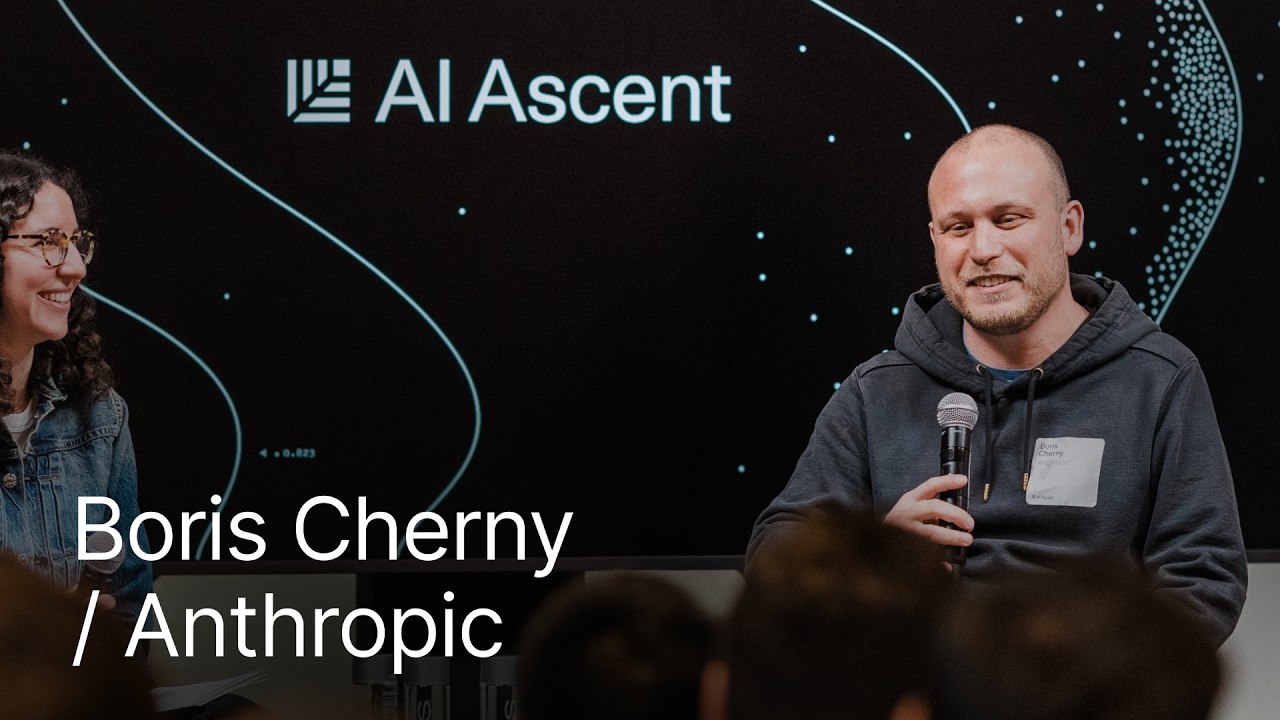
Anthropic's Boris Cherny: Why Coding Is Solved, and What Comes Next
Boris Cherny, the creator of Claude Code, sits down with Sequoia's Lauren Reeder at AI Ascent 2026 and makes a blunt claim: for the code he writes, coding is already solved. He hasn't typed a line by hand in 2026, runs dozens of agent "loops" at once, and ships most of his work from his phone. The throughline is a bet that writing code is becoming so cheap that the interesting questions move up a level — to what teams look like, what happens to software products, and whether the printing press is the right way to think about what's coming. ## [00:00] Introduction A Sequoia emcee opens the AI Ascent session by asking the room for a show of hands: who uses Claude Code, and who has "Claude Code psychosis." She introduces Boris Cherny as the creator of the tool and hands the interview to Sequoia's Lauren Reeder. > *"We know that the entirety of software development kind of rests on your shoulders."* ## [00:55] Claude Code Crowd Check Reeder frames the conversation for a room full of builders and fills in Boris's background: a career writing code, a TypeScript textbook, an engineer's engineer. The detail that lands hardest is recent — as of early 2026 he hasn't written a single line of code by hand, a sharp reversal for someone who built his reputation on craft. > *"Last time we chatted you hadn't written a single line of code in the last year, or at least so far in 2026, which is quite the change."* ## [02:39] Origin Story of Claude Code Boris explains that Claude Code started almost by accident inside Anthropic Labs, a small incubator he joined in late 2024 that also produced MCP and the desktop app. The team built what it wanted, disbanded, and has since reunited under Mike Krieger for a second round. The motivation was a sense of "product overhang" — capability sitting unused because no product had caught up to it yet. > *"The reason that I started to work on coding is we felt like there was this product overhang."* ## [03:35] From Typeahead to Agents In late 2024 the state of the art was typeahead — press tab, complete one line — which Sonnet 3.5 had just made viable. Boris bet the model was nearly ready to skip that step and write all the code as an agent. It didn't work for the first six months; even after release, Claude Code wasn't a hit. The exponential growth only arrived with Opus 4. > *"I built it, and it just really didn't work for the first 6 months. It was barely usable."* ## [05:07] Is Coding Solved Reeder presses on Boris's on-the-record claim that coding is solved. He polls the room — hand-written code versus fully agent-written — and lands the audience around "50% solved," then says for him it's 100%. He points out the Claude Code codebase itself is unglamorous TypeScript and React, chosen deliberately because that stack is heavily represented in the model's training distribution. > *"For me it's just solved."* ## [06:50] Boris Personal Workflow Boris walks through a setup he first shared on Twitter six months ago and didn't expect to surprise anyone. It has since changed: most of his work now happens from his phone, through the Claude app's code tab, where he keeps five to ten sessions each running a few hundred agents. The tool he reaches for most is the loop — fire-and-forget agents that grind on a task and report back. > *"I sort of feel like loops are the future at this point."* ## [08:51] Future Teams and Generalists Asked what teams will look like, Boris predicts a shift toward generalists. Today a generalist still means an engineer who spans iOS, web, and server; tomorrow it means people who are cross-disciplinary, blending engineering with product and design rather than staying in a single lane. He notes the Claude Code team already skews this way. > *"There's going to be a lot more generalists... generalists that are cross-disciplinary."* ## [10:26] SaaS Apocalypse Predictions Reeder asks the question Boris calls his favorite: if AI makes writing code 10 to 100x cheaper, does the value of software products collapse — a SaaS apocalypse? Boris argues the two things that will actually happen aren't the ones people keep predicting, and uses his guest spot on the Acquired podcast as a detour into why he thinks the conventional framing misses the point. > *"I think there's two things that are going to happen and I don't think either of them is the thing that people have been talking about."* ## [12:57] Audience Q&A Deep Dive The floor opens to the room. An audience member, Dan, asks how much of Claude Code's success Boris attributes to the model versus product decisions — Boris says a mix, roughly 50/50, and won't forecast two years out because the team plans a week at a time. The richest answer is his printing-press analogy: before the press, about 10% of Europe was literate; in the 50 years after, more was published than in the prior thousand, and literacy eventually climbed toward 70%. He uses it to argue that building software is on track to become a near-universal skill. Later questions probe the engineering-versus-world gap, local versus cloud models, and how to parallelize agents with loops, batches, and sub-teams. > *"In the 50 years after the first printing press, there was more literature published in Europe than in the thousand years before."* ## [23:35] Closing and Whats Next For the last question, Boris is asked what kind of product he'd build today that gets more interesting as models improve. He points to Claude Design as a good example — decent now, much better soon — and teases features landing for Claude Code in the coming weeks, plus more work on loops, batch, and massively parallel agents, with computer use in the mix. > *"I think loop and batch and things like this around like massively parallelizing agents, that's going to get better."* ## Entities - **Boris Cherny** (Person): Creator of Claude Code at Anthropic; former Anthropic Labs member, now back on the team under Mike Krieger. - **Lauren Reeder** (Person): Sequoia Capital partner; interviewer for this AI Ascent session. - **Mike Krieger** (Person): Chief Product Officer at Anthropic and Instagram co-founder; leads the reunited Claude Code team. - **Anthropic** (Organization): AI lab behind Claude and Claude Code. - **Claude Code** (Software): Anthropic's agentic coding tool, originated in Anthropic Labs alongside MCP and the desktop app. - **Anthropic Labs** (Organization): Internal incubator where Claude Code, MCP, and the desktop app were built. - **Product overhang** (Concept): Model capability that outpaces the products built on it — the gap Boris set out to close. - **The loop** (Concept): Fire-and-forget agent runs that work a task continuously and report back; Boris's most-used workflow. - **SaaS apocalypse** (Concept): The thesis that cheap AI-written code collapses the value of software products — which Boris pushes back on. - **Printing press analogy** (Concept): Boris's frame for AI coding — literacy went from ~10% to ~70% over centuries; software-building may follow.
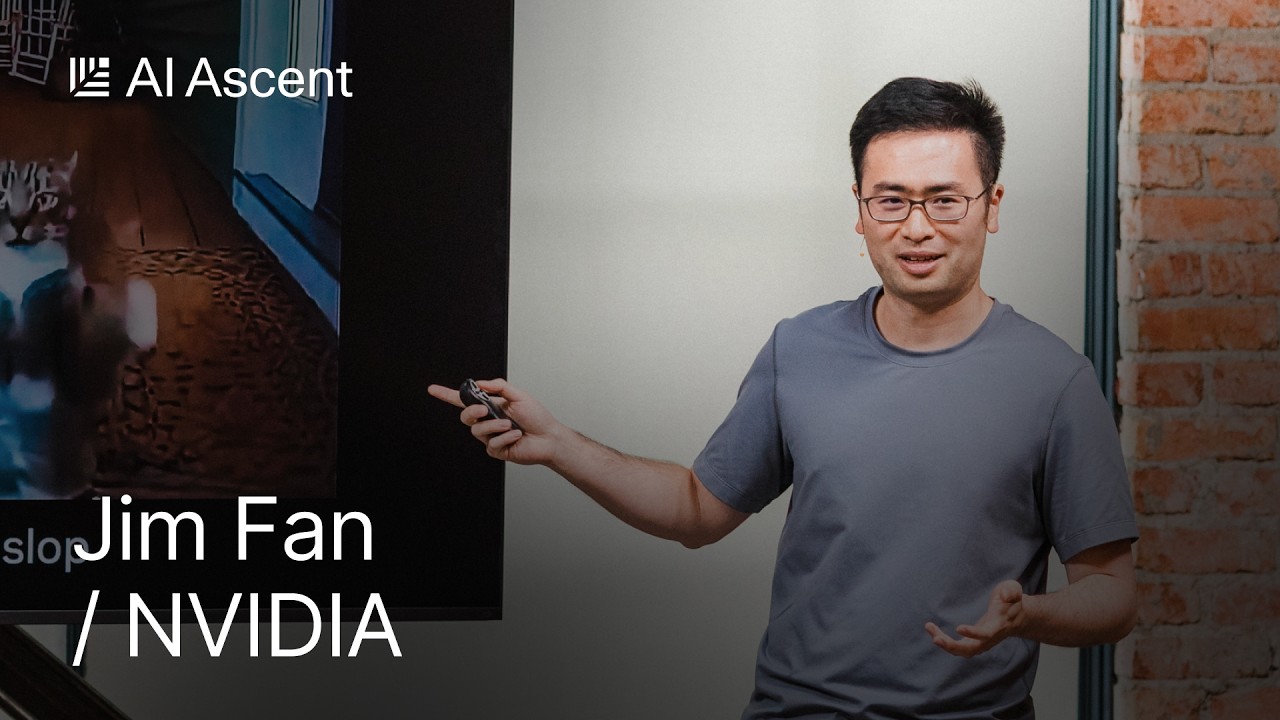
Robotics' End Game: Nvidia's Jim Fan
Jim Fan, lead of Nvidia's embodied AI research, outlines the transition from language-centric models to World Action Models (WAM) that simulate physical reality. He details a roadmap toward the 'Physical Turing Test' and autonomous factories by 2040, driven by video pre-training and human egocentric data scaling. ## [00:00] Introduction Host Sonya Huang introduces Jim Fan, who leads Nvidia's embodied autonomous research group. Fan reflects on his early days as an intern and the excitement surrounding the future of robotics. > *robots are just one of the most thrilling things that's going to happen.* > *[0, 12]* ## [00:30] DGX One Origin Story Jim Fan recounts the 2016 delivery of the first DGX-1 by Jensen Huang to Elon Musk and the OpenAI team. He highlights how this moment catalyzed the deep learning revolution that led to current AI breakthroughs. > *If you believe in deep learning, deep learning will believe in you.* > *[1, 26]* ## [01:42] The Great Parallel Fan proposes 'The Great Parallel,' applying the successful LLM scaling playbook to robotics. Instead of predicting the next token in a string, the goal is to predict the next physical world state through simulation and alignment. > *instead of simulating strings can we simulate next physical world state?* > *[2, 56]* ## [03:31] Robotics Endgame Setup The strategy for achieving the robotics end game is divided into two primary pillars: model strategy and data strategy. Fan notes that while LLMs are in their final 'boss fight,' robotics is just beginning its scaling journey. > *It boils down to two things, model strategy and data strategy.* > *[3, 32]* ## [03:39] Why VLA Falls Short Visual Language Action (VLA) models are criticized for being 'head-heavy' on language while lacking a fundamental grasp of physics and verbs. Fan argues they are better at encoding static knowledge than dynamic physical interaction. > *VLAs are great at encoding knowledge and nouns, but not so much at physics and verbs.* > *[4, 8]* ## [04:32] Video World Models Fan explains how video models like VEO3 learn internal physics—such as gravity and buoyancy—simply by predicting pixels at scale. These models act as simulators that can solve mazes and plan visual sequences internally. > *Physics emerge by predicting the next blob of pixels at scale.* > *[5, 15]* ## [06:09] DreamZero World Action Nvidia introduces 'Dreamer' and World Action Models (WAM), which jointly decode future world states and motor actions. This allows robots to perform zero-shot tasks by 'dreaming' the correct motion sequence before executing it. > *Dreamer jointly decodes the next world states and next actions.* > *[6, 29]* ## [07:46] Scaling Data Collection To overcome the physical limits of teleoperation, Fan discusses Universal Manipulation Interfaces (UMI) and exoskeletons like Dex-UMI. These tools allow humans to collect high-dexterity data directly without the robot being in the loop. > *we're able to break the curse of 24 hours per robot per day* > *[10, 6]* ## [11:06] EgoScale And Scaling Laws Fan introduces Ego-Exo, a policy trained on 21,000 hours of human egocentric video. This research uncovered a neural scaling law for dexterity, showing a mathematical relationship between pre-training volume and robot performance. > *we discovered this neural scaling law for dexterity.* > *[12, 39]* ## [15:39] DreamDojo And The Roadmap Fan outlines the roadmap to 2040, including the Physical Turing Test and 'lights-out' factories. He introduces Dream Dojo, a neural simulator that replaces classical physics engines with data-driven world models. > *I can say with 95% certainty that we'll get to the end of the end game... by 2040.* > *[19, 19]* ## Entities - **Jim Fan** (person): Lead of the embodied autonomous research group at Nvidia. - **Nvidia** (organization): The technology company developing the hardware and software for the robotics end game. - **Jensen Huang** (person): CEO of Nvidia, mentioned for delivering the first DGX-1 to OpenAI. - **OpenAI** (organization): The research lab that received the first DGX-1 for deep learning development. - **DGX-1** (product): The world's first deep learning supercomputer delivered in 2016. - **VEO3** (model): A video world model capable of simulating physics and visual planning. - **Dreamer** (model): A policy model that predicts future world states and actions simultaneously. - **Ego-Exo** (project): A robotics pre-training framework using large-scale human egocentric video data.
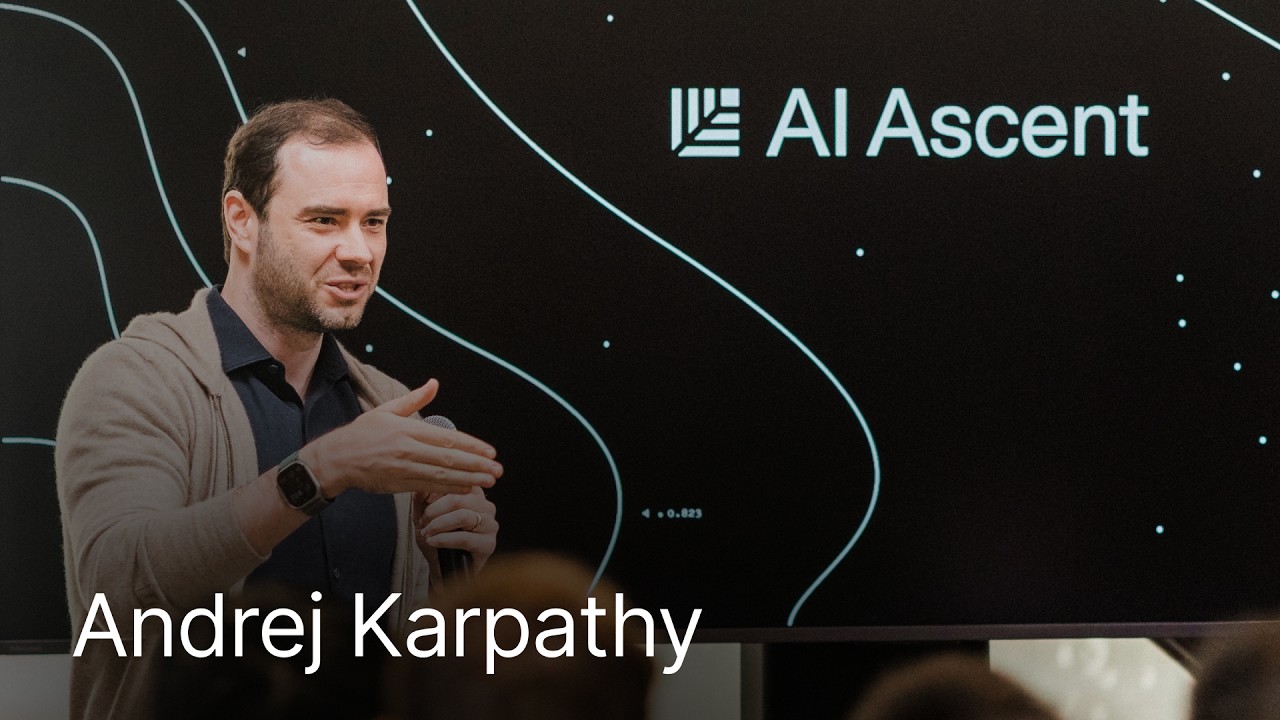
Andrej Karpathy: From Vibe Coding to Agentic Engineering
Andrej Karpathy explores the paradigm shift from traditional programming to Software 3.0, where LLMs act as programmable computers driven by context. He details the transition from 'vibe coding' to 'agentic engineering,' emphasizing that while AI handles execution, human taste and understanding remain the ultimate bottlenecks. ## [00:00] Introduction Stephanie Zhan introduces Andrej Karpathy, highlighting his foundational work at OpenAI and Tesla. She notes his unique ability to simplify complex AI shifts and introduces the concept of vibe coding. > *He has a rare gift of making the most complex technical shifts feel both accessible and inevitable. [00:22]* ## [00:44] Feeling Behind as a Coder Karpathy describes a turning point in December 2023 when agentic tools began producing perfect code without manual intervention. This shift led him to adopt vibe coding, trusting the AI to handle complex workflows autonomously. > *I just start to notice that with the latest models the chunks just came out fine. [01:29]* ## [02:28] Software 3.0 Explained Karpathy defines Software 3.0 as a paradigm where the LLM acts as a programmable computer and the context window serves as the primary programming lever. This follows Software 1.0's manual rules and Software 2.0's data-driven weight training. > *Software 3.0 is kind of about your programming now turns to prompting and what's in the context window is your lever. [03:20]* ## [03:44] Agents as the Installer Using the installation of OpenClaw as an example, Karpathy explains how agents replace rigid bash scripts with intelligent, environment-aware execution. This approach allows the AI to debug and adapt to specific system requirements autonomously. > *The agent has its own intelligence that it packages up and then it kind of like follows the instructions. [04:29]* ## [04:49] Menu Gen vs Raw Prompts Karpathy contrasts his custom-coded MenuGen app with raw prompts to models like Gemini, concluding that many traditional software layers are now redundant. He emphasizes that AI can now perform general information processing that was previously impossible with structured code. > *The software 3.0 paradigm is a lot more kind of raw. It just your neural network is doing more and more of the work. [06:11]* ## [07:37] What’s Obvious by 2026 Looking toward 2026, Karpathy envisions neural computers that process raw video and audio directly. These systems would use diffusion models to generate dynamic user interfaces, potentially making traditional UI code obsolete. > *You could imagine completely neural computers... a device that takes raw videos or audio into basically what's a neural net. [08:22]* ## [09:41] Verifiability and Jagged Skills AI models develop 'jagged' capabilities, peaking in verifiable domains like math and code due to reinforcement learning rewards. Karpathy notes the paradox where a model can refactor a massive codebase yet fail simple logic. > *state-of-the-art models today will tell you to walk [to a car wash] because it's so close... This is insane. [11:36]* ## [13:39] Founder Advice and Automation Model performance is heavily dictated by the specific data distributions chosen by frontier labs. Karpathy advises founders to explore the 'circuits' of these models to understand their strengths or use fine-tuning to fill gaps. > *we are slightly at the mercy of whatever the labs are doing, whatever they happen to put into the mix. [12:57]* ## [15:46] From Vibe Coding to Agent Engineering While 'vibe coding' raises the accessibility floor, 'agentic engineering' focuses on maintaining professional quality. This discipline involves coordinating powerful but stochastic agents to accelerate development without sacrificing the engineering bar. > *agentic engineering is about preserving the quality bar of what existed before in professional software. [16:07]* ## [25:17] Agents Everywhere and Learning Karpathy advocates for agent-native infrastructure, expressing frustration with human-centric documentation. He argues that while thinking can be outsourced to AI, human understanding remains a critical bottleneck for directing agents. > *You can outsource your thinking, but you can't outsource your understanding. [28:10]* ## Entities - **Andrej Karpathy** (person): AI researcher and former Director of AI at Tesla and founding member of OpenAI. - **Stephanie Zhan** (person): Partner at Sequoia Capital and host of the discussion. - **Software 3.0** (concept): A paradigm where LLMs act as programmable computers via prompting and context. - **Agentic Engineering** (concept): The professional discipline of coordinating AI agents to maintain software quality. - **MenuGen** (project): An app Karpathy built to OCR and visualize restaurant menus, used as a case study. - **OpenAI** (organization): AI research company co-founded by Karpathy. - **Gemini** (ai-model): Google's LLM used in Karpathy's software comparison. - **Vercel** (organization): A cloud platform used by Karpathy to deploy projects.