PodcastsHear the voice. See the shape of the thought.
चैनल ब्राउज़ करें
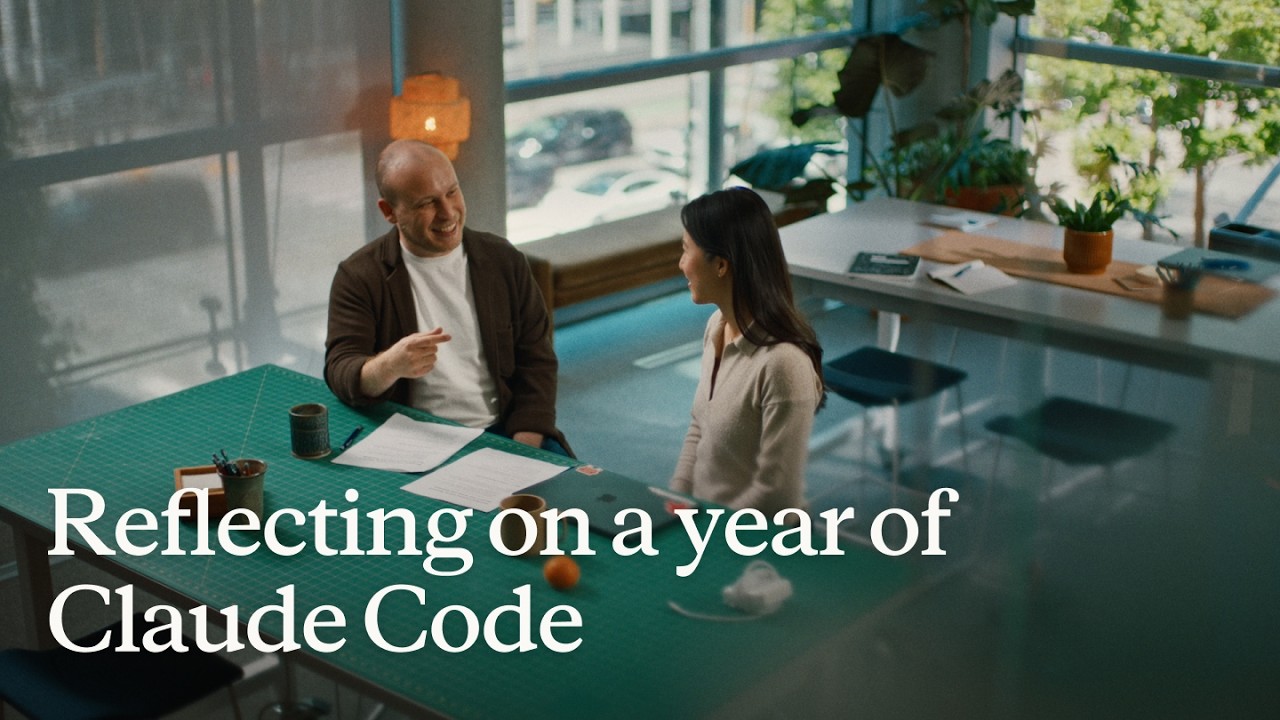
Reflecting on a year of Claude Code
Boris Cherny (creator and Head of Claude Code) and Cat Wu (Head of Product, Claude Code) look back on Claude Code's first year — from a Slack demo that earned two emoji reactions to running thousands of autonomous agents daily. They walk through how they think about verification, why auto mode replaced plan mode, how routines are eliminating entire categories of manual engineering work, and why the shift from "I write code" to "I talk to a loop" represents two major platform leaps in barely 18 months. ## [00:00] The origins and evolution of Claude Code Boris recalls posting the first Claude Code demo to Slack and getting exactly two reactions. A year later, his workflow involves "armies of agents" — a single loop prompting agents that prompt other agents, forming trees of thousands. The meta-principle that carried the tool this far: every time Claude makes a mistake, don't just correct the output — write the fix into a CLAUDE.md file or a skill so Claude can run unsupervised forever. > *"Every single time Claude makes a mistake, I don't tell Claude to do it differently. I tell it to write it to the CLAUDE.md or to make a skill… and if you can do this, then Claude can just run forever."* ## [01:10] How to make Claude good at verification Both Boris and Cat push back on the narrow view that "verification" means lint, type-check, and unit tests — things that were already automated before agents existed. Real agent verification means the agent can actually run the software under test. Boris cites a moment with Opus 4 where he asked Claude to build a feature and test itself by opening its own CLI — "crazy" at the time, table stakes now. Cat's current approach: a desktop development skill that has Claude spin up the local desktop app, use computer use to click through the UI, hit edge cases, and update the skill itself whenever it discovers a new failure mode. > *"I have it read Slack and understand: hey, is staging down right now, or has someone else already hit this? And then when it debugs the whole issue, I tell it to update the desktop development skill."* ## [03:14] Roles merging: Claude Code beyond engineers Boris recounts the moment he first saw a designer opening PRs — his initial alarm giving way to "okay the code looks good, so maybe it's fine." Cat reports that across enterprises, engineers adopt Claude Code first, then adjacent roles lean over their shoulders: designers making prototypes directly in the app, PMs shipping changes, the finance team running projections inside Claude Code, data scientists with it permanently on-screen. > *"It's kind of like all the roles are merging."* ## [04:48] Using routines for CI, code review, and more Cat describes a Claude Code power user on their team who shipped voice mode and then set up a routine monitoring every GitHub issue and bug report on that feature, automatically drafting fixes and pinging PRs. He later extended it to catch any unresponded bug older than five hours. Cat's own experience: she shipped a small feature with an edge case she missed, a bug was filed, and before she got to it that evening, Claude Code told her "another Claude has already fixed this." Boris adds that routines now handle all code review, babysit every PR, rebase, and respond to CI failures. He hasn't done those manually in a long time. > *"He has another routine that just looks for bug reports that haven't been responded to in five hours and puts up a fix, and he merges the ones that are easy to verify."* ## [06:43] Boris' go-to feature: auto mode Boris stopped using plan mode once Claude 4.6 arrived; by 4.7 the explicit planning step was no longer necessary. He now starts an agent in auto mode and moves directly to the next task without watching it. He traces the shift from the early permission-prompt model — where you had to approve every tool call — to auto mode routing suspicious actions to a classifier instead. Human attention degrades when 99% of prompts are harmless: eyes glaze, the one dangerous prompt slips through. Auto mode concentrates attention on genuinely flagged cases only. > *"Auto mode is more safe than reading every single permission prompt, because it means that you're only paying attention to the most important thing and not being spammed a bunch of things that are just 99% yes."* ## [08:10] Securing auto mode: red teaming and evals Shipping auto mode required building trust before it reached users. Cat describes the process: collecting thousands of full agent trajectories alongside permission prompts, having the auto mode classifier label each one, confirming it was "extremely good," then bringing in red teamers to attempt prompt injection attacks against the codebase. Every successful attack became an eval. Internal teams ran their own injection attempts to surface further gaps. The result is a model hardened not just against known attacks but against the most sophisticated adversarial constructions the team could devise. > *"It's not only just protecting you against the vulnerabilities that are out there in the wild today, but the most intelligent attacks that we can construct."* ## [10:24] Why loop is the next leap Boris frames two platform jumps in 18 months. First: stop writing source code directly — talk to an agent and let it write the code. Second, happening now: stop talking to an agent directly — talk to a loop or routine that prompts Claude Code on your behalf. Both felt obvious in hindsight, but neither was easy to see from inside the engineering mindset he brought to the project. > *"I don't talk to an agent anymore. I talk to a loop or I talk to a routine and it prompts Claude for me, and it's just crazy."* ## [11:06] How engineering orgs and responsibilities are changing Boris anchors the current transition to a 1990s Harvard Business Review piece asking why companies weren't seeing productivity gains from personal computers — and answering that computers needed to be at the center of every business process, not a side appliance next to the paper filing cabinet. At Anthropic, new hires don't ask colleagues questions; they ask Claude Code. Companies figuring out AI fastest are the ones putting it at the center of operations. Cat notes that the computer transition took 10–15 years; AI is compressing that because work is already digitized and Claude Code can both write and run code. > *"What you have to do is you throw out the filing cabinet. You have to throw out all your paper and all your pens and then you put a computer in the center and everything has to run through the computer."* ## [13:30] Is the future product or engineering? Boris' answer: both roles are merging into one. The Claude Code product team all writes code, the devrel team all writes code, designers write code, and engineers now ship products end-to-end — scoping the idea, building it, working with legal, marketing, and security to take it to market. The beneficiaries right now are people with high curiosity, strong product taste, and an appetite for end-to-end ownership. > *"AI really benefits people who have a lot of curiosity, have a lot of product taste, who love to have this end-to-end ownership."* ## [14:20] Working with hundreds of agents: using agent view, voice mode, and Remote Control Boris's multi-agent setup a few months ago: six terminal tabs, six git checkouts, manual context-switching. Today: one tab, the new agent view, and the desktop app handling work-tree cloning automatically. The unexpected change: roughly half his engineering now happens on his phone via Remote Control. He starts a task at his desk, walks to get coffee, checks in from his phone, starts new agents on the spot, and dictates to them via voice mode. Cat recalls noticing that Boris's laptop sat untouched on his desk for two consecutive days while he was actively merging PRs — he confirmed he was coding from his couch. > *"I'll like get coffee and then I'll check in on my agents and maybe I'll start another agent. And sometimes I'm talking to someone and we come up with a new idea — I'll just start an agent on the spot."* ## [16:05] From context engineering to context minimalism Boris traces the prompt engineering arc: Sonnet 3.5 required heavy prompt engineering; Opus 4 required careful context engineering; today's models need neither. The prescription now: give the model the minimal system prompt, the minimal tool set, and a way to pull in whatever context it actually needs — then let it work. Cat calls herself a "context minimalist": tell the model only what it needs to know, because too much upfront context is micromanagement, and the model often knows a better path anyway. > *"You give it the minimal possible system prompt, the minimal possible tools, and then you let the model figure it out."* ## [17:17] What's next for Claude Code Boris refuses to predict the specific form factor, only the direction: agents running longer, more autonomously, in parallel batches of dozens to thousands rather than one at a time. The exact interface for coordinating that many agents will be "really different than what came before" and won't come from Boris or Cat — it will come from the team and the broader community building with Claude Code every day. > *"In a year it's going to be a totally new set of things and it's going to be so surprising if it's still these same things."* ## Entities - **Boris Cherny** (Person): Head of Claude Code at Anthropic, creator of the tool; one of two interview subjects. - **Cat Wu** (Person): Head of Product, Claude Code at Anthropic; one of two interview subjects. - **Claude Code** (Software): Agentic coding tool developed at Anthropic, runs in the terminal; primary subject of the episode. - **Auto mode** (Concept): Claude Code permission model that routes tool-call decisions to a classifier instead of prompting the user for every action; replaces the earlier per-prompt approval flow. - **Loop / Routines** (Concept): Automated agents triggered by events (e.g., new GitHub issue, unresponded bug report) that prompt Claude Code without human initiation; described as the second major platform leap. - **Context minimalism** (Concept): Philosophy of providing models only the necessary system prompt and tools, letting the model pull additional context as needed rather than front-loading everything. - **Anthropic** (Organization): AI safety company that develops Claude and Claude Code. - **Remote Control** (Software): Claude Code feature enabling users to manage running agents from a mobile device. - **Agent view** (Software): New Claude Code interface for managing multiple parallel agents from a single pane.
अपना पहला Managed Agent शिप करें
Anthropic की Applied AI इंजीनियर Isabella He 37 मिनट में एक काम करने वाला SRE incident-response agent लाइव बनाती हैं — एक खाली `agent.py` से शुरू होकर एक Streamlit ऐप तक, जो tool calls स्ट्रीम करता है, sessions को बनाए रखता है, और P99 latency spike को डायग्नोज़ करता है। सेशन में पाँच मिनट का आर्किटेक्चर प्राइमर और हैंड्स-ऑन कोड दोनों हैं, ताकि attendees एक चलता हुआ agent और उसे subagents, memory, और vaults तक बढ़ाने का मानसिक मॉडल लेकर जाएं। ## [00:19] स्वागत और एजेंडा Isabella, Anthropic में Applied AI टीम की भूमिका बताती हैं — "प्रोडक्ट्स, रिसर्च और हमारे ग्राहकों का संगम" — और सेशन के तीन हिस्सों की रूपरेखा देती हैं: प्लेटफ़ॉर्म का त्वरित परिचय, हैंड्स-ऑन कोडिंग, और dreaming व subagents जैसे एडवांस्ड फ़ीचर्स की झलक। मुख्य परिदृश्य वह रात 3 बजे का on-call अलर्ट है जिससे हर सॉफ़्टवेयर इंजीनियर डरता है — जिसे Managed Agents पर बना एक SRE agent खुद संभाल लेगा। > *"आज मेरा लक्ष्य है कि आप सभी Managed Agents पर बनाना शुरू करें, समझें कि हार्नेस अंदर से कैसे काम करता है, और अपना पहला incident response agent शिप करने के लिए तैयार हों।"* ## [02:10] Messages API से Managed Agents तक Isabella प्रोडक्ट की विकास-यात्रा बताती हैं: 2023 के Messages API ने raw token access दिया, लेकिन context management, agent loops, और compaction डेवलपर्स को खुद लागू करने पड़ते थे। Agent SDK ने Claude Code की file-system पहुंच जोड़ी, पर होस्टिंग फिर भी डेवलपर की ज़िम्मेदारी थी। Managed Agents तीसरी पीढ़ी है — Anthropic scaling, sandboxing, observability और tool runtime संभालता है, जिससे टीमें "10 से 15 गुना तेज़ प्रोडक्शन तक पहुंचती हैं।" वह एक असल उदाहरण से रखरखाव का बोझ स्पष्ट करती हैं: Sonnet 4.5 में "context anxiety" देखी गई, जिससे task जल्दी बंद हो जाता था। Anthropic ने हार्नेस पैच किया; Opus 4.5 में यह व्यवहार ही खत्म हो गया, वे पैच बेकार हो गए। > *"हार्नेस को agents के साथ विकसित होना चाहिए — इसीलिए Claude Managed Agents के साथ हम चाहते हैं कि Anthropic compaction, caching, context anxiety की सारी जटिलताएं संभाले।"* ## [05:55] मूल अवधारणाएं: Agent, Environment, Session हर Managed Agents एप्लिकेशन तीन ऑब्जेक्ट से बनती है। **Agent** में persona होता है — model का चुनाव, system prompt, MCP servers, skills। **Environment** execution container है, जो agent के "दिमाग" के लिए "हाथ" की तरह है, और पिछले दिन से Anthropic-managed cloud और bring-your-own-compute दोनों को सपोर्ट करता है। **Session** दोनों को जोड़ती है और data files माउंट करती है; events (user messages, tool calls, responses) callers को token की एकमुश्त response की बजाय stream होते हैं। agent loop और tool execution को अलग करने से P95 time-to-first-token में 90% से अधिक की कमी आई, साथ ही sandboxed container boundary से credential exposure भी खत्म हुई। > *"इस decoupling के बाद, हमारी टीमों ने P95 latency metrics पर time to first token में 90% से ज़्यादा की कमी देखी।"* ## [09:15] Workshop सेटअप Attendees workshop repository clone करते हैं, `ship-your-first-managed-agent` में जाते हैं, virtual environment बनाते हैं, requirements install करते हैं, और `streamlit run app.py` चलाने से पहले `.env` में Anthropic API key डालते हैं। Isabella पुष्टि करती हैं कि Streamlit URL एक incident-response chat UI खोलता है — build के लिए तैयार कैनवस। > *"इसे साथ-साथ करें या बाद में अपने समय पर — सब कुछ स्क्रीन पर भी दिखाया जाएगा।"* ## [10:48] Agent को चरण-दर-चरण बनाना `agent.py` (अधूरा) और `agent_complete.py` को साथ खोलकर Isabella एक-एक करके छह code blocks कॉपी करती हैं: 1. **Agent definition** — Claude Opus 4.7 पर `SRE_AGENT`, एक छोटा system prompt जो agent की भूमिका और उपलब्ध tools बताता है (get_metrics, get_recent_deploys, get_diff, fetch_logs)। 2. **Environment** — डेमो के लिए Anthropic cloud environment जिसमें unrestricted networking है; प्रोडक्शन में allowlist या Claude MCP tunnels से route किया जा सकता है। 3. **Log upload** — Files API से log file attach की जाती है ताकि agent उस पर code चला सके; Isabella बताती हैं कि डेवलपर्स सबसे ज़्यादा समय context engineering में लगाते हैं। 4. **Session creation** — सब कुछ जोड़ने के लिए `agent_id`, `environment_id`, और uploaded resource references पास किए जाते हैं। 5. **Event streaming** — session से raw tokens की जगह events मिलते हैं, जिससे real-time display और observability logging संभव होती है। 6. **Local tools + session delete** — `get_metrics`, `get_recent_deploys`, और `get_diff` को locally-executed handlers के रूप में register करके delete-session call जोड़ी जाती है; deleted sessions logs से पूरी तरह हटा दी जाती हैं। > *"बस एक काम बचा है — agent को उसके local tools देना ताकि वह मेरे कंप्यूटर या infrastructure पर action ले सके।"* ## [19:43] Agent चलाना और लाइव डेमो Isabella "debug my incident for me" prompt के साथ नया session शुरू करती हैं। Agent क्रम से `sandbox_bash`, `get_recent_deploys`, और `get_diff` call करता है, हर tool call और response token UI पर stream करता है, फिर एक structured incident report देता है: P99 latency spike (baseline का 10 गुना) Alice के `refactor_order_summary_builder` commit से database pool exhaustion के कारण आई। वह बताती हैं कि प्रोडक्शन वेरिएंट में Claude Code access जोड़कर fix सुझाना, PR खोलना, और बिना किसी इंसान के loop बंद करना संभव है। Browser को पूरी तरह refresh करने पर session persistence की पुष्टि होती है — सारे पुराने sessions cloud state से वापस आ जाते हैं, कोई local database नहीं चाहिए। > *"यहाँ देखें — सारे tool calls scroll करने पर, सब कुछ cloud में logs के रूप में persist है। यह सब observability console में भी log होगा।"* ## [27:18] आर्किटेक्चर रिकैप, एडवांस्ड फ़ीचर्स और Q&A Isabella event-driven आर्किटेक्चर का सारांश देती हैं: sessions request-response pairs की बजाय events में बात करती हैं; event log की वजह से Managed Agents container restart के बाद भी agent loop दोबारा चलाए बिना session resume कर सकता है। फिर वह चार premium capabilities का परिचय देती हैं: - **Subagents** — एक orchestrator अपने context windows के साथ child agents spawn करता है, जिससे parallelism और context budget management होती है। - **Memory / Dreaming** — agent अपने session logs खुद review करके तय करता है क्या रखना है, जिससे sessions में self-improvement और preference recall संभव होती है। - **Outcomes** — डेवलपर्स एक rubric तय करते हैं; agent खुद तय करता है कि कौन से tool calls वांछित result देंगे। - **Vaults** — credentials एक अलग endpoint और agent container के बीच encrypt होते हैं, per-user और per-session, आर्किटेक्चर में built-in brain/hands separation पर निर्भर। वह attendees को "dreaming" के अगले सेशन और Managed Agents console के built-in observability dashboard की ओर इशारा करके समाप्त करती हैं। > *"उम्मीद है हर कोई यहाँ से Managed Agents के काम करने के तरीके की एक झलक लेकर जाएगा — और जिन्होंने site reliability agent शिप किया, उन पर गर्व करें।"* ## संस्थाएं - **Isabella He** (व्यक्ति): Member of Technical Staff, Anthropic Applied AI टीम; presenter और workshop lead - **Claude Managed Agents** (सॉफ़्टवेयर): Anthropic का managed infrastructure harness; scaling, sandboxing, observability और tool runtime संभालता है - **Agent SDK** (सॉफ़्टवेयर): Anthropic का पुराना harness जो Claude Code access देता था; developer-managed hosting ज़रूरी थी - **Claude Opus 4.7** (सॉफ़्टवेयर): workshop डेमो में SRE agent के लिए इस्तेमाल किया गया model - **Sonnet 4.5** (सॉफ़्टवेयर): पुराना model जिसमें "context anxiety" (समय से पहले task खत्म करना) देखी गई; harnesses के विकास की ज़रूरत दर्शाने के लिए उदाहरण - **Files API** (सॉफ़्टवेयर): Anthropic API जो agent के context में files (logs, metrics) upload करने की सुविधा देता है - **Dreaming** (अवधारणा): Managed Agents फ़ीचर जहाँ agent अपनी session history asynchronously review करके long-term memory अपडेट करता है - **Outcomes** (अवधारणा): Managed Agents का rubric-based goal specification; agent explicit steps के बजाय खुद tool calls चुनता है - **Vaults** (अवधारणा): Managed Agents में encrypted credential store; brain/hands separation architecture से agent container से अलग - **MCP tunnels** (अवधारणा): Claude फ़ीचर जो MCP server traffic को public internet की बजाय private network से route करता है - **Context anxiety** (अवधारणा): Sonnet 4.5 का वह व्यवहार जहाँ context budget बचे होने पर भी task जल्दी खत्म हो जाता था; Opus 4.5 में ठीक हुआ - **Anthropic** (संगठन): AI safety कंपनी; Claude और Managed Agents प्लेटफ़ॉर्म की निर्माता - **DataDog** (सॉफ़्टवेयर): Production monitoring platform; डेमो के JSON-backed metrics tool का drop-in replacement - **Streamlit** (सॉफ़्टवेयर): Python UI framework; workshop के incident-response chat interface के लिए उपयोग किया गया
Trading signals that trade themselves
Tushara Fernando, Head of Data and AI at Man Group, explains how the firm integrates AI into systematic trading by codifying decades of institutional knowledge into "skills." She emphasizes that robust governance and shared workflows are essential for moving AI from individual productivity tools to enterprise-scale agentic platforms. ## [00:18] AI in Systematic Trading Man Group manages over $200 billion in assets, making the stakes for AI implementation exceptionally high for their institutional clients. Tushara Fernando describes systematic trading as an algorithmic process that uses historical backtesting to evaluate investment signals, much like managing a fantasy football team. > *A trading signal is really just this with stocks... We want to back the ones that would make money and we want to short the ones that won't.* > *[2, 43]* ## [04:38] The Role of AI-Generated Signals Man Group currently runs trading signals in production that were entirely researched, backtested, and proposed by AI. While humans review the final output for sensibility, AI handles the data acquisition, strategy proposal, and productionization of these investment ideas. > *There are trading signals running right now in production at Mang Group... that were researched, back tested and proposed by AI.* > *[4, 38]* ## [05:52] The Importance of Shared Workflows The success of a trading signal depends on the underlying workflows, such as data cleaning and outlier detection, which Fernando compares to the submerged part of an iceberg. Without shared workflows, different teams produce inconsistent results, making it impossible to compare the effectiveness of various strategies. > *If different teams are running different versions of those workflows, you get different answers.* > *[6, 50]* ## [08:43] Lessons in Skills Governance Early attempts at AI adoption failed because power users, rather than process owners, were building "skills," leading to local optimizations and errors like hardcoded cost centers. To solve this, Man Group created a governed marketplace where skills are owned by workflow owners, tested with evaluations, and tracked for usage. > *Treat those skills like production code because that's what they will become.* > *[17, 21]* ## [16:40] Scaling AI Across the Enterprise Man Group has scaled AI usage to nearly half its workforce by focusing on organizational context as a competitive moat. By treating skills as a library of institutional knowledge, the firm is preparing for a future where swarms of agents leverage these capabilities to find new investment opportunities. > *Skills governance really unlocks AI at that enterprise scale.* > *[19, 21]* ## Entities - **Tushara Fernando** (person): Head of Data and AI at Man Group. - **Man Group** (organization): An alternative investment manager with over $200 billion of assets under management. - **Claude** (product): An AI model used by Man Group for research, backtesting, and workflow automation. - **Anthropic** (organization): The AI company that assisted Man Group with skills workshops and implementation. - **Systematic Trading** (concept): Algorithmic trading capabilities that look across thousands of securities and hundreds of markets. - **Backtesting** (process): The process of running a trading strategy against historical data to evaluate its performance. - **Sharpe Ratio** (metric): A statistical factor that compares the volatility of a strategy versus its returns. - **Skills Marketplace** (product): Man Group's internal library for governed AI skills, plugins, and institutional knowledge.
Build a production-ready agent with Claude Managed Agents
This session introduces Claude Managed Agents, a suite of API endpoints designed to help developers build and deploy production-ready AI agents with built-in tools, security, and observability. The speaker outlines how core primitives like Agents, Environments, and Sessions enable complex workflows such as multi-agent coordination and human-in-the-loop controls. ## [00:00] Introduction to Managed Agent Primitives Anthropic introduces Claude Managed Agents as a suite of API endpoints providing production-ready primitives like tool calling, error recovery, and memory management. The architecture relies on 'Agents' as templates for skills, 'Environments' for sandboxed execution with granular permissions, and 'Sessions' to maintain ongoing conversational context and state transitions. > *Claude Managed Agents at a high level is just a set of API endpoints that we've developed and released... that give you access to scaled ready, production ready agent. [01:35]* ## [07:54] Secure Connectivity and Sandboxing The platform supports self-hosted sandboxes, allowing developers to use private containers and VPCs to keep sensitive data secure while maintaining model access. Additionally, new MCP tunnels facilitate safe connections to internal Model Context Protocol servers, and Credential Vaults protect authentication tokens by keeping them out of the model's context window. > *Claude can directly connect to that safely without those MCP servers ever being exposed on the internet. [09:40]* ## [10:02] Multi-Agent Orchestration and Implementation A demonstration of a multi-agent architecture shows a coordinator agent spawning specialized sub-agents for complex tasks like financial analysis and macro trend research. Developers can implement these workflows using the Anthropic SDK and tools like Claude Code, which is specifically optimized to help developers implement and iterate on managed agent APIs. > *One agent is like in charge of figuring out macro trends... whereas another one is like really good at like financial analysis. [11:36]* ## [19:28] Observability, Memory, and Infrastructure The Claude Console provides robust observability, including agent versioning, session monitoring, and the ability to edit memory stores to correct agent context. By providing integrated state transitions and durable storage out of the box, the service eliminates the need for developers to build complex custom agent loops and sandboxing fleets manually. > *With cloud manage agents, we kind of were able to get all of these things out of the box. [26:54]* ## Entities - **Anthropic** (organization): The AI research and safety company that developed the Claude model family. - **Claude Managed Agents** (software): A suite of API endpoints for building and hosting production-ready AI agents. - **MCP** (protocol): Model Context Protocol used for secure authentication and tool integration. - **Claude Code** (software): A developer tool optimized for implementing and managing Anthropic APIs. - **Bun** (software): A fast JavaScript runtime used for the technical implementation demonstrations. - **Cloudflare** (infrastructure): A cloud provider mentioned as a host for private sandboxes and environments. - **Credential Vaults** (feature): A secure storage system for authentication tokens that prevents exposure to the model. - **Memory Stores** (feature): Persistent storage allowing agents to retain and retrieve information across sessions.
How to get to production faster with Claude Managed Agents
Anthropic engineers Michael and Harrison introduce Claude Managed Agents, a platform designed to simplify the infrastructure, security, and observability required for deploying autonomous AI agents. By handling complex backend tasks like sandboxing and identity management, the system enables developers to transition from simple tool use to long-running, outcome-oriented agentic workflows. ## [01:10] The Evolution of Agentic Infrastructure Michael and Harrison trace the progression of AI from basic function calling to autonomous agents capable of managing full feature development and PRs. They argue that infrastructure, rather than model intelligence, is now the primary bottleneck for achieving productivity where months of work are completed in hours. > *where we think we're seeing things going in the future is entire quarters worth of work being able to be getting accomplished within a couple of hours.* > *[2, 34]* ## [04:22] Core Primitives and Configuration The platform provides composable primitives for context management, observability, and secure sandboxing, allowing developers to define agents via system prompts and MCP tool configurations. Features like the 'Ask Claude' button and event streams provide real-time transparency and optimization suggestions for agent sessions. > *we did all of that platform work so that you don't have to so that you can kind of pick and choose the primitives that we have available.* > *[5, 26]* ## [10:05] Advanced Orchestration and Memory Beyond single-task execution, the platform supports multi-agent orchestration where Claude can spawn sub-agents to delegate work. Advanced features like 'Dreaming' allow agents to reflect across thousands of sessions, improving long-term memory and task performance through autonomous reflection. > *It allows Claude to spawn other agent threads with their own context windows in order to delegate work to them.* > *[10, 55]* ## [11:56] Sandboxing and Secure Connectivity Anthropic offers self-hosted sandboxes and MCP tunnels to give enterprises control over network policies and audit logs while exposing private data securely. Partners like Vercel, Modal, and Cloudflare provide specialized infrastructure, ranging from lightweight isolates for rapid scaling to high-performance GPU clusters. > *MCP tunnels are basically just a way for you to get your private MCPs in your network exposed to cloud manage agents.* > *[13, 25]* ## [20:19] Real-World Automation and Optimization Companies like DoorDash and Modal are using agents for complex technical tasks, such as autonomous account management and inference tuning. By running tools like the Nvidia profiler, agents can autonomously 'hill climb' performance benchmarks to optimize workloads without human intervention. > *Claude can optimize training loops... it'll run like the Nvidia profiler. It'll read the profiles and uh it'll just go ham and and make things better.* > *[20, 39]* ## [25:23] Future Challenges: Identity and Collaboration As agents become primary users of compute, the industry faces new hurdles in identity management, egress filtering, and task resumability. The future of AI involves moving from rigid execution to collaborative 'multiplayer' environments where agents and humans dynamically pivot based on feedback. > *how do we properly assign identity all the way down the chain such that it's only getting access to the right data* > *[25, 55]* ## Entities - **Anthropic** (organization): The AI safety and research company behind the Claude model family. - **Claude Managed Agents** (product): A platform and infrastructure suite for building and deploying autonomous AI agents. - **Michael** (person): Member of Technical Staff at Anthropic working on managed agents. - **Harrison** (person): Member of Technical Staff at Anthropic working on managed agents. - **MCP** (protocol): Model Context Protocol used for tool configuration and secure tunnels. - **Cloudflare** (organization): A cloud services provider focusing on sandboxing technologies like MicroVMs and isolates. - **Modal** (organization): A compute platform specializing in high-scale GPU sandboxes and AI workloads. - **Vercel** (organization): A partner providing fluid compute infrastructure for agent sandboxes.
Building the best agentic analytics harness: Powered by Claude, built with Claude Code
Chris Merrick, CTO of Omni, details the development of 'Blobby,' an agentic analytics harness powered by Anthropic's Claude models. By combining a robust semantic layer with internal dogfooding of Claude Code, Omni enables users to translate natural language into complex data visualizations while maintaining high engineering velocity. ## [00:07] Engineering Velocity with Claude Code Chris Merrick explains how Claude Code has transformed Omni's internal development, allowing a small team of 25 to maintain high commit velocity. Even as CTO, Merrick uses the tool to stay technically involved, leveraging the efficiency of the Claude Opus model to contribute code alongside his team. > *I thank Claude very much for making me uh still able to do some software engineering from time to time. [01:12]* ## [03:14] The Semantic Layer and Business Context To bridge the gap between general LLM knowledge and specific business data, Omni utilizes a semantic layer that provides essential context like fiscal definitions and table relationships. This layer acts as a permissions and curation tool, ensuring the AI agent understands the unique nuances of a company's data environment. > *Claude is incredible at answering questions, but you need to tell it more about your business if you want it to answer questions about your business. [04:03]* ## [11:15] Architectural Evolution and the 'Blabbotomy' The team evolved their AI agent, Blobby, from a simple Q&A tool into a sophisticated harness by upgrading from Claude Haiku to Sonnet for better multi-turn performance. They addressed 'split-brain' errors—where sub-agents and outer agents failed to communicate—by consolidating all tools into a single, unified agentic brain. > *You want to be careful not to have a split brain between any sort of sub agent system and outer agent system. [15:57]* ## [16:23] Leveraging SQL and CTE Proficiency Omni shifted its query strategy from a proprietary JSON format to standard SQL to better leverage Claude’s inherent proficiency with complex Common Table Expressions (CTEs). This transition allowed the agent to handle difficult data questions in a single pass, significantly improving the accuracy of generated reports. > *Claude really likes to write SQL with CTE, common table expressions... and our parser was really good at parsing those [18:27]* ## [19:09] Evals, Observability, and UI Validation Merrick emphasizes that rigorous evaluation systems and raw trace observability are critical for ensuring the predictability required by executive users. Omni follows a 'build with AI, validate with UI' philosophy, where Blobby generates the initial dashboard and users use a workbook interface to refine and troubleshoot the results. > *Our philosophy from a product perspective is AI to build, UI to sort of validate and troubleshoot and refine. [23:21]* ## Entities - **Chris Merrick** (person): CTO and Co-founder of Omni who leads the engineering team and advocates for AI-driven development. - **Omni** (organization): An AI analytics platform that enables users to query data using natural language. - **Claude** (ai-model): The family of LLMs from Anthropic that powers Omni's analytics and internal engineering. - **Claude Code** (software): An AI-powered coding tool that significantly increased Omni's development velocity. - **Blobby** (ai-agent): Omni's AI data analyst agent designed to interpret and answer complex data questions. - **SQL** (technology): The query language that Omni's semantic layer generates to interact with data warehouses. - **Claude Sonnet** (ai-model): The specific Anthropic model used to unlock performance gains in complex agentic conversations. - **GitHub** (platform): The source of pull request (PR) data used in the agent's demonstration.
Stop babysitting your agents
Sid Budhiraja, a founding engineer of Claude Code, gave this keynote at Anthropic's Code with Claude conference to address a specific waste pattern: engineers spending most of their time staring at a screen waiting for Claude to finish, or acting as a "glorified QA tester." The talk lays out three escalating strategies—verification, parallelization, and background loops—that together let Claude run largely unsupervised. No captions existed on YouTube; transcript generated via Gemini Flash transcription (paragraph-level only, no word timestamps). ## [00:02] Opening & prerequisites Sid frames the talk as a "Claude Code 301" class and opens with a quick audience poll. Three things he calls table stakes: a high-quality CLAUDE.md file ("the single highest leverage thing you can do"), connecting external tools like Slack, Linear, and BigQuery to Claude Code so it can stitch together richer context, and setting up Claude Code on the web so that sessions are decoupled from the engineer's laptop and keep running even when the machine is closed or offline. He then lays out the structure for the rest of the talk: verification, multi-Clauding, and background loops—each building on the previous one. > *"A good rule of thumb is that if a tool is useful for you in your day-to-day life, it will also be useful for Claude. So things like Slack, Asana, Linear, Datadog, BigQuery—all of these things help Claude stitch together a much richer context for itself."* ## [05:14] Teaching Claude to verify its own work Sid asks the audience to recall how they personally verified their last feature: write code, build, run, check side effects, check logs, check the database, run unit tests, deploy to staging. That exact playbook, he argues, is also what Claude can run—if given the right tools and instructions. The key mechanism is the **loop**: an autonomous circuit where Claude writes code, hits a failure, debugs, writes more code, and keeps cycling until it reaches a success state. Once in a loop, Claude hill-climbs on a task without the engineer in the hot path. The loop works across front-end (browser-driven smoke tests), back-end (API checks), and full end-to-end flows—the principle is identical in each case. To package and distribute a verification loop, Sid recommends a **skill file**—a markdown document that stores the instructions and tool configuration for a specific verification task. Skills can be made self-improving: if you instruct Claude to update the skill every time it hits a new blocker, the document grows into a self-documenting playbook that benefits the whole team. > *"A loop essentially is an autonomous circuit that you can complete for Claude. And it allows Claude to hill climb on a given task or a given success criteria."* ## [15:46] Demo: building a verification loop live Sid demos against MonkeyType, an open-source TypeScript/Express/MongoDB/Redis typing-test application, chosen because it represents a realistic full-stack production app. Starting from a fresh Claude Code session, he tells Claude to spin up the dev server, then instructs it to use the `/chrome` Chrome MCP tool to navigate to localhost, type some text, and change a settings value—manually walking it through a basic smoke test. Once that hand-held session is complete, he tells Claude to take everything it just learned and write it into a skill file at `.claude/demo-verification`. Claude produces a skill with three sections: bring up the stack, load Chrome MCP tools, run a smoke test. He then asks Claude to build a new feature—a confetti animation on every mistype—and use the newly created verification skill to verify its own work. Claude writes the feature, hits ESLint errors, fixes them, reloads the app, and keeps cycling until the confetti appears. > *"You see the verification loop in action now where it's—it wrote some code, it encountered some issues, it fixed those issues by writing some more code, and it kind of went in a circle doing that until it came to a good state."* ## [26:38] Multi-Clauding without losing your mind Running multiple Claude instances simultaneously taxes attention, Sid's personal limit being four or five sessions before cognitive load becomes unmanageable. He covers four tools for scaling past that ceiling. The **Claude Code Desktop app** provides a unified sidebar showing all sessions across local terminal, cloud, and GitHub—sessions sorted by attention demand, color-coded, renamable. The terminal alternative is **Claude Agents** (`claude agents`), released roughly a week before the talk, which surfaces the same session list inside the terminal and sorts by urgency so the sessions that need a decision bubble to the top. **Claude Code on the Web** (claude.ai/code) runs sessions in Anthropic's cloud, fully decoupled from the engineer's hardware. And **Remote Control** (`/remote-control`) mirrors any running session to the mobile app with push notifications, so the engineer can answer Claude's questions from a car or between meetings without opening a laptop. > *"Remote Control essentially gives you the option to control any session running on any surface with your phone. If Claude needs some help from you or needs your input, your phone will buzz and you could be in your car, doing whatever you want, and you could just give Claude the input that it needs."* ## [32:41] Background loops and routines Even with good multi-session tooling, the engineer still decides when to start each session and what goal to give it. Background loops remove that last manual step. Sid describes the `/loop` command: `/loop 10 minutes "babysit my open PRs"` wakes up a Claude Code session every ten minutes, runs that prompt autonomously, and handles review comments, merge conflicts, and CI failures without the engineer watching. **Routines** are `/loop` running in Anthropic's cloud infrastructure—the same remote containers that power Claude Code on the Web. The Claude Code team itself runs two routines: one that updates docs daily, and one that scans issues and feedback and posts a summary to their Slack channel every six hours. With verification ensuring Claude's output is reliable, multi-Claude tools protecting attention across parallel sessions, and routines handling recurring bookkeeping, the engineer's role shifts from babysitter to delegator. > *"You can kind of spend your attention and your time on the tasks that you care about, and everything else can just be delegated to Claude—with high reliability and a high degree of confidence."* ## Entities - **Sid Budhiraja** (Person): Founding engineer of Claude Code at Anthropic; presenter of this keynote. - **Anthropic** (Organization): Creator of Claude and Claude Code; hosted the Code with Claude conference. - **Claude Code** (Software): Anthropic's agentic coding tool; central subject of the talk. - **Verification loop** (Concept): An autonomous write-check-fix cycle that lets Claude iterate on a task until it reaches a defined success state without human intervention. - **MonkeyType** (Software): Open-source TypeScript typing-test app (Express + MongoDB + Redis) used as the live demo target. - **Chrome MCP** (Software): Model Context Protocol tool (accessed via `/chrome`) that gives Claude programmatic control of a browser for UI verification. - **Routines** (Concept): Cloud-side scheduled Claude Code sessions with time-based or event-based triggers, enabling fully autonomous recurring tasks. - **Remote Control** (Concept): Feature (`/remote-control`) that mirrors Claude Code sessions to the mobile app with push notifications, enabling async oversight from anywhere.
How Lovable vibecodes production software at scale
Fabian Hedin, Cofounder and CTO of Lovable, walked through two production systems his team built to stop non-technical users from getting permanently blocked: Lovable Overflow, a self-maintaining corpus of issue-solution pairs injected into the agent's context at inference time, and a "vent" tool that lets the agent itself flag platform failures and auto-open PRs for engineers to review. Together they cut the platform's stuck rate by 5% — an improvement on par with a full model generation upgrade — and now drive roughly ten merged fixes per day from agent-filed pull requests. ## [00:20] From GPT-Engineer to 600 million monthly visits Lovable's lineage traces back 35 months to GPT-Engineer, a terminal program co-founded by Anton that briefly became the fastest-growing repository on GitHub. The demo — asking for a snake game, watching the model generate and execute the code end-to-end — signaled what LLMs could do for software creation, but the abstraction wasn't ready for a non-developer audience in mid-2023. Fabian marks a turning point around eighteen months ago when the chat-plus-preview model started clicking, and every three months since then a new foundational model has pushed the envelope further. Today the platform hosts 15 million projects. More telling: the sites built on Lovable collectively receive 600 million monthly visits, far more than Lovable's own traffic — evidence that users are shipping things with real reach. > *"We have 15 million projects built on the platform. We have 600 million monthly visits to the sites built on Lovable. And I think this is an interesting statistic because it's significantly more than what Lovable has itself."* ## [04:22] Production software for the 99%: why non-technical users get stuck Lovable targets the 99% of people who can't code — and deliberately holds itself to production-grade quality, not just prototyping. That combination makes the job harder than building for expert developers. When an expert gets stuck they can read the error, switch the library, or escalate to a developer-experience team. A non-technical user working at Lovable's abstraction layer — where the code is mostly out of sight — has none of those escape hatches. Fabian applies the classic software maxim: the first 90% of code takes 90% of the time, and the last 10% takes another 90%. The pattern holds in the AI era: vibe-coding gets you to a first version fast, but finishing, bug-free, takes even longer. Getting "hard stuck" in that final stretch is the worst possible user experience Lovable can deliver. > *"If they get stuck, it's a very bad experience for them. It's kind of the worst thing that can happen to them because it's much harder for them to get unstuck."* ## [09:55] Defining stuck: the is_stuck metric and three failure buckets Lovable's `is_stuck` flag fires when a user asks for the same thing three times in a row, when they explicitly complain about the output, or when they prompt and then abandon the session. A small classification model evaluates each conversation to set this signal. The team maps stuck scenarios into three buckets. The first is promptable — a differently-worded message, or slightly more context, would have solved it; Lovable's goal is to fix these before the user even realizes they need to re-prompt. The second is a platform gap: something the agent should handle but a missing or broken tool prevents it. The third is a large infrastructure investment — for example, Lovable shipped only client-side-rendered SPAs for a long time, which hurt SEO-conscious builders; they shipped server-side rendering the week of this talk. Each bucket demands a different fix, but all three share the same core vision. > *"Really our vision with Lovable on the technical side is that every app that is built on the platform should help improve the next."* ## [13:15] Lovable Overflow: fleet knowledge that routes around errors Named in honor of Stack Overflow, Lovable Overflow is a growing corpus of problem descriptions paired with solutions, harvested from real user sessions. When a user reports laggy scrolling, a lightweight retrieval model searches the corpus for similar descriptions, and if a match is relevant it injects a synthesized fix into the main agent's context — not as raw text but reformatted to fit the current situation. The harder engineering problem is keeping the corpus honest. Knowledge grows stale when a JavaScript package ships a fix, or when a new foundational model already has the fix baked into its weights. Lovable tracks a success ratio for every entry and prunes records that stop working — including entries whose embedded knowledge is now redundant in a newer model. The tension between adding new knowledge and retiring old knowledge turned out to be as important as the retrieval mechanism itself. > *"For every knowledge file we'll track its success ratio and we'll actually just remove it and prune it from the knowledge if it is outdated. So we'll continuously review every piece of knowledge in our system and make sure that it's pruned when it's no longer helpful."* ## [17:45] Venting: letting the agent report its own frustrations The second self-healing mechanism inverts the feedback loop: instead of Lovable engineers watching for failures, the Lovable agent itself files a report when it's blocked. A tool called `vent--send_feedback` is in the agent's toolset with a prompt asking it to call the tool "once per user message when tooling, docs, or platform behavior materially slows or degrades your work." The agent's complaint lands in a Slack channel, a monitor agent de-dupes and investigates, and if the issue is real, it opens a pull request for an engineer to review. About 50% of the auto-generated PRs make sense and get merged. One example: the agent hit a space-in-filename bug in the `code--copy` tool, tried URL encoding and other workarounds, then vented — and a fix was in production ten minutes later. A second example went further: the Lovable agent complained about Framer Motion's TypeScript easing types, implying the open-source library itself could benefit from a PR. Fabian floated the idea of letting the agent contribute fixes upstream to the wider JavaScript ecosystem. The vent channel also became an unexpected early-warning system. Production incidents — inference downtime, missing sandboxes, network-level failures — show up as spikes in vent volume before conventional monitoring alerts fire. In one meta case, the agent vented 43 times in a session, then filed a PR suggesting de-duplication logic to stop spamming its own creators. > *"Several times now this Slack channel with the agent venting has been kind of the first signal for us to identify a production incident. And even if it's not the first signal, it has actually become a very helpful tool for engineers to debug what is going on."* ## [26:12] Results, lessons, and what comes after self-healing Lovable Overflow reduced the stuck rate by 5% and lifted the publish rate by 2% in its first version — before incremental tuning since then. Fabian frames the 5% number in context: that's roughly the improvement Lovable sees when it upgrades to an entirely new model generation. The venting pipeline merges about ten platform fixes per day. Three lessons stood out. First, failure-mode knowledge is model-specific: when a new foundational model ships, existing Lovable Overflow entries need revalidation because some will be redundant and others will need rephrasing for the model's different behavior. Second, knowledge has a half-life — even fixes that were correct become wrong as libraries evolve. Third, an earlier attempt at this system failed not because the idea was bad but because the success signals were too coarse to tune against; 15 million apps and 200,000 new projects per day give Lovable enough signal to make it work now. Beyond these two systems, the team is fine-tuning on fleet data and building out eval coverage to gate every model release. Fabian's closing frame: Lovable users arrive with strong intent to ship real products, and when they leave stuck, that's a failure Lovable owns — the entire self-healing apparatus exists to close that gap. > *"The stuck rate is reduced by 5%. That might not sound like a big number, but in reality that is on the same order of magnitude in what we would see this metric move if we had a new generation of a foundational model in our system."* ## Entities - **Fabian Hedin** (Person): Cofounder and CTO of Lovable; delivered this keynote at Code with Claude 2026 - **Lovable** (Organization): AI software builder for non-technical users; 15M projects, 600M monthly visits to hosted sites - **Claude** (Software): Foundational model powering Lovable's agent at consumer scale - **GPT-Engineer** (Software): Open-source terminal tool co-founded by Anton (Lovable co-founder); became the fastest-growing GitHub repo in 2023 and evolved into Lovable - **Lovable Overflow** (Concept): Fleet-learning knowledge corpus — problem/solution pairs harvested from real sessions, injected into the agent's context, and continuously pruned by success ratio - **Venting / vent--send_feedback** (Concept): Agent-side tool that files platform failure reports to Slack; a monitor agent de-dupes and auto-opens PRs for engineer review - **is_stuck** (Concept): Binary metric that flags when a user has repeated the same request three times, complained about output, or abandoned a session after prompting - **Framer Motion** (Software): TypeScript animation library; cited as an example of an open-source dependency the Lovable agent identified as having a suboptimal type API
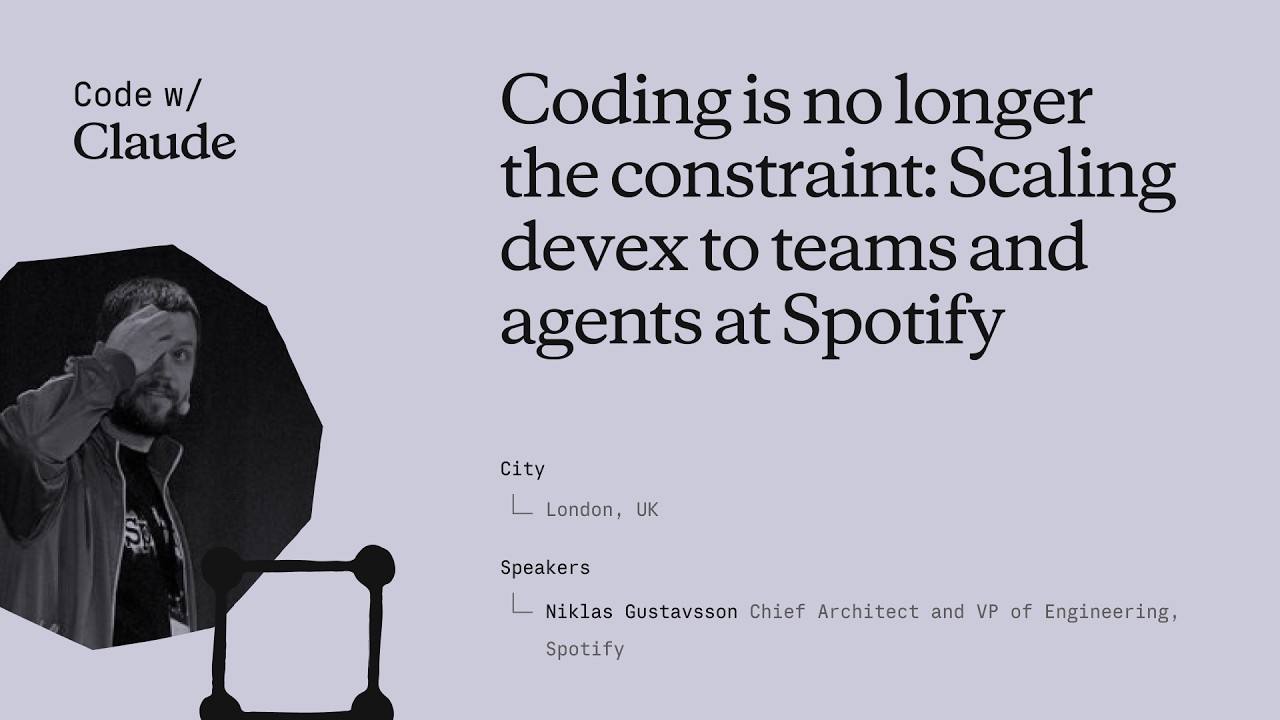
Coding is no longer the constraint: Scaling devex to teams and agents at Spotify
Niklas Gustavsson, Spotify's Chief Architect and VP of Engineering, walks through how a 3,000-person engineering org went from 0 to 99% AI tool adoption in months — and what that does to your product development constraints. The talk covers three concrete systems Spotify built: FleetShift for fleet-wide automated migrations, Honk as a background Claude-powered coding agent, and Backstage as the structured environment that makes agents reliable at scale. The central argument is that the same standardization practices that made human teams fast now make agents fast too. ## [00:18] Spotify's AI adoption surge Spotify's adoption of AI coding tools didn't grow gradually — it inflected sharply around the Claude Opus 3.5 release in November 2024. Within months, 99% of engineers used AI tools weekly, 94% reported meaningful productivity gains in the latest internal survey, and PR frequency jumped 76%. Niklas notes he had to update the PR frequency slide while preparing it because the numbers kept rising. The volume shift is also qualitative: by now, the majority of PRs shipped at Spotify are co-authored by an AI agent together with the developer, not written by a human alone. > *"Today more than 99% of our engineers use AI coding tools every week. And in the latest [survey], 94% of our engineers reports that using AI tooling has helped them become more productive."* ## [03:52] FleetShift: automating fleet-wide maintenance before AI Spotify's pre-AI problem was that its production codebase was growing seven times faster than the engineering headcount. That meant engineers spent progressively more time on maintenance — version bumps, API deprecations, security patches — leaving less capacity for new features. The answer was FleetShift, a fleet management system that treats those changes as coordinated mutations across thousands of repositories rather than per-component manual work. By the time AI entered the picture, FleetShift had already automerged 2.5 million maintenance PRs with no human in the loop: automation creates the PR, validates it in CI, and merges it. That infrastructure became the orchestration layer that Honk would later plug into. > *"Today up until today we've now merged two and a half million of those automated maintenance PRs. Work that our developers did not have to do."* ## [07:38] Building Honk — a background coding agent on Claude's Agent SDK Simple rule-based scripts work fine for config changes and dependency bumps, but fall apart on anything involving actual code modifications. Code has, as Niklas puts it, a very wide API surface — there are many ways to call the same method, and when you run a migration script across millions of lines and thousands of repos, you hit every corner case (a phenomenon with a name: Hyrum's Law). That brittleness was the forcing function for Honk. Honk is today a Claude-based coding agent wrapped inside a Kubernetes pod, scheduled by FleetShift, and equipped with CI tools so it can run builds, catch compile errors, and self-correct before opening a PR. A Java version migration that previously took multiple teams months now takes a single engineer three days. > *"Instead of writing these deterministic scripts to do these code modifications, can we use an LLM for this? [...] Out of this came a tool that we now called Honk."* ## [11:34] Honk V2 and multiplayer agent sessions Developers at Spotify quickly figured out how to invoke Honk over Slack — at-mentioning it mid-conversation and getting a PR back. That grassroots pattern pushed the team toward a more interactive product model. Honk V2, released in alpha during Hack Week the day before this talk, adds two layers on top of the original batch-migration use case. The first is integration with Chirp, Spotify's internal agent orchestration layer, which lets developers run many concurrent Honk sessions and coordinate them. The second is multiplayer: shared sessions where multiple developers can give feedback to the same agent instance simultaneously — described as "Google Docs but for Claude." Projects group those sessions into a shared workspace tracking a longer-horizon goal. > *"Basically imagine, uh, Google Docs or something similar, but for Claude."* ## [14:43] Standardization as agent infrastructure Spotify has operated for more than a decade on the principle that fewer technologies means faster execution. Limiting the stack reduces decision fatigue, makes cross-team collaboration easier, and lets engineers go deep on a smaller surface rather than maintaining breadth. That same principle, Niklas argues, directly improves agent performance. The mechanism is empirical: Spotify sees Claude produce noticeably worse outputs in their more fragmented codebases and better outputs where the stack is uniform. Backstage — their developer portal and software catalog — is the enforcement layer. It exposes component ownership, technology radar recommendations, and a "Golden State" spec for each component type. A Soundcheck UI lets teams self-assess compliance. Critically, all of these are also exposed as MCP servers and CLI tools so agents can query them directly. When Honk makes a code change, lint checks give it immediate feedback if it's using an off-radar pattern, and Niklas watches Claude self-correct against those checks in real time. > *"If Claude has a lot of other code to look at and that code looks roughly consistent, Claude will do better job. That's what we're seeing. And we actually have codebases that are more fragmented, and we can actually see Claude perform worse in those codebases."* ## [22:15] What happens when coding stops being the bottleneck The sprint Niklas closes with is a reframing: the AI transition hasn't removed constraints from product development, it has relocated them. Coding used to be where time went; now that constraint is loosening, the bottlenecks are moving to human decision-making — which ideas to pursue, which PRs actually need a human reviewer, which prototypes are worth fleshing out. On the PR review side, 76% more PRs means developers are drowning in review requests. Spotify's response is to auto-approve the low-risk ones and focus human attention where it matters. On the prototyping side, Spotify now lets anyone — including executives — open Claude in the client monorepo with a set of skills and infrastructure, prompt a feature, and get an installable app back in minutes rather than days. The talk ends with Niklas noting that in six months, Spotify's entire product development process will look fundamentally different from anything they've done before. > *"Claude and agents allows us to allow anyone to prototype in our actual production codebase. [...] This has brought prototyping for something that could take days or weeks to literally taking minutes now."* ## Entities - **Niklas Gustavsson** (Person): Chief Architect and VP of Engineering at Spotify; delivered this keynote at Anthropic's Code with Claude conference - **Honk** (Software): Spotify's internal background coding agent, built on Anthropic's Agent SDK running in Kubernetes pods; integrates with FleetShift for fleet-wide migrations - **FleetShift** (Software): Spotify's fleet management and migration orchestration platform; schedules and tracks automated PRs across thousands of repositories; has automerged 2.5 million PRs - **Backstage** (Software): Spotify's open-source developer portal and software catalog; exposes component ownership, Golden State compliance, and MCP/CLI interfaces consumed by agents - **Chirp** (Software): Spotify's internal agent orchestration layer; allows running many concurrent agent sessions and coordinating multi-developer shared sessions - **Hyrum's Law** (Concept): Principle (named after a Google engineer) that any observable behavior of a system will be depended on by some user — explaining why generic migration scripts break at scale across large codebases - **Golden State** (Concept): Spotify's per-component-type specification of recommended technologies and practices; the standard Soundcheck measures compliance against
आपका पहला Claude Code प्रॉम्प्ट
Anthropic का Claude Code 101 का दूसरा वीडियो पहला प्रॉम्प्ट लिखने के तरीके पर केंद्रित है: अप्रूवल और ऑटो-एक्सेप्ट मोड के बीच कैसे चुनें, shift+tab से प्लान मोड में कब जाएं, और "डार्क मोड जोड़ें" जैसे लाइव टास्क में एक अच्छा प्रॉम्प्ट कैसा दिखता है। ## [00:03] Claude Code से किसी भी AI असिस्टेंट की तरह बात करें शुरुआत का फ्रेमिंग जानबूझकर सरल रखी गई है — Claude Code को प्रॉम्प्ट देना किसी भी अन्य AI असिस्टेंट से पूछने जैसा ही है। मुख्य बात यह है कि Enter दबाने से पहले के निर्णय ही आपको सुरक्षित रखते हैं और टूल को आसान बनाते हैं। > *You talk to Claude Code like you would talk to any AI assistant.* ## [00:15] अप्रूवल मोड बनाम ऑटो-एक्सेप्ट मोड (shift+tab) शुरू से ही दो मोड उपलब्ध हैं। डिफ़ॉल्ट अप्रूवल मोड में, Claude हर फ़ाइल बदलाव से पहले अनुमति मांगता है। ऑटो-एक्सेप्ट मोड में, फ़ाइल एडिट और क्रिएशन स्वतः होती है, लेकिन शेल कमांड चलाने के लिए अभी भी आपकी अनुमति चाहिए। shift+tab से दोनों के बीच स्विच होता है, कोई सेटिंग ढूंढने की जरूरत नहीं। नैरेटर स्पष्ट रूप से किसी एक को "सही" नहीं कहते; अपने नियंत्रण की पसंद के अनुसार चुनें। > *In auto accept mode, it will automatically approve an edit or creation of a file, but ask your permission to run commands.* ## [00:40] प्लान मोड: कोड लिखने से पहले रीड-ओनली रिसर्च उसी shift+tab मेनू में एक तीसरा मोड छुपा है: प्लान मोड। Claude प्रॉम्प्ट लेता है, रीड-ओनली टूल्स से कोडबेस खंगालता है, अस्पष्ट बिंदुओं पर स्पष्टीकरण के प्रश्न पूछता है, और किसी भी फ़ाइल को छूने से पहले एक विस्तृत प्लान देता है। उपयोग के मामले: मल्टी-स्टेप फ़ीचर इम्प्लीमेंटेशन और सुरक्षित कोड रिव्यू — कहीं भी जहां एजेंट के लिखना शुरू करने से पहले दृष्टिकोण को परखना हो। > *Plan mode takes your prompt and uses read-only tools to analyze your code base and do research on your suggested implementation.* ## [01:10] लाइव डेमो: डार्क मोड टॉगल के लिए प्रॉम्प्ट डेमो इस वीडियो का मुख्य हिस्सा है। प्रोजेक्ट रूट से shift+tab कुछ बार दबाकर प्लान मोड में जाएं, फिर एक प्रॉम्प्ट लिखें जो एक साथ तीन काम करे: लक्ष्य बताए ("पूरे ऐप में डार्क मोड"), UI निर्दिष्ट करे ("हेडर पर टॉगल स्विच"), और एक कॉन्स्ट्रेंट जोड़े जिसे Claude को रिसर्च करना हो ("मेरे मौजूदा लाइट थीम के आधार पर एक अच्छा कॉन्ट्रास्ट रंग खोजें")। लक्ष्य + इंटरफेस + कॉन्स्ट्रेंट — एक अच्छे पहले प्रॉम्प्ट का अंतर्निहित टेम्प्लेट। > *Can you create a toggle switch on the header that allows user to toggle between light mode and dark mode?* ## [01:46] Claude ने वास्तव में क्या किया, इसकी समीक्षा Claude के प्लान लौटाने और यूजर की मंजूरी के बाद, मूल्य ऑडिटेबिलिटी में है: आप स्पष्ट रूप से देख सकते हैं कि Claude ने क्या किया और वह किस नतीजे पर कैसे पहुंचा। नैरेटर रेंडर हुए डार्क मोड को देखते हैं और स्वीकृति देते हैं — अंतर्निहित सबक यह है कि कम जोखिम वाले UI काम के लिए "काफी अच्छा दिखता है" एक उचित रिव्यू मानदंड है, बशर्ते आपने सच में देखा हो। > *At the end of all this, we can see explicitly what Claude did and how it came to its conclusion.* ## [02:09] सारांश: विस्तृत रहें, प्लान मोड का उपयोग करें अंतिम नियम: अपने प्रॉम्प्ट में जितना हो सके विस्तृत रहें, और प्लान मोड का उपयोग तब करें जब आप चाहते हों कि Claude निष्पादन से पहले आपके लक्ष्य की बारीकियों में गहराई से जाए। अप्रूवल मोड आपको हर कदम पर लूप में रखता है अगर यही आपकी पसंद हो। > *When using Claude Code, try to be as descriptive as possible with your prompt.* ## Entities - **Anthropic Tutorial Narrator** (Person): Claude Code 101 ट्यूटोरियल सीरीज़ के लिए Anthropic के आधिकारिक वॉयस-ओवर नैरेटर। - **Claude Code** (Software): Anthropic का एजेंटिक टर्मिनल-आधारित कोडिंग असिस्टेंट, इस प्रॉम्प्ट-राइटिंग गाइड का विषय। - **Approval mode** (Concept): डिफ़ॉल्ट मोड जहां Claude Code हर फ़ाइल बदलाव से पहले अनुमति मांगता है। - **Auto-accept mode** (Concept): फ़ाइल एडिट और क्रिएशन को ऑटो-अप्रूव करता है लेकिन शेल कमांड को अभी भी ब्लॉक करता है। - **Plan mode** (Concept): रीड-ओनली रिसर्च मोड जो कोड लिखने से पहले विस्तृत प्लान बनाता है; shift+tab से टॉगल। - **shift+tab** (Shortcut): Claude Code के अप्रूवल, ऑटो-एक्सेप्ट और प्लान मोड के बीच साइकल करने वाला कीबोर्ड शॉर्टकट।
Claude Code कैसे काम करता है
Anthropic के Claude Code 101 का दूसरा एपिसोड हुड खोलता है: एजेंटिक लूप जो संदर्भ इकट्ठा करता है, कार्य करता है और परिणाम सत्यापित करता है; संदर्भ विंडो कैसे ओवरफ्लो होने से पहले खुद को संपीड़ित करती है; सादे टेक्स्ट इनपुट-आउटपुट की तुलना में टूल्स वास्तव में क्या देते हैं; और वे चार अनुमति मोड जो shift+tab से टॉगल होते हैं। ## [00:04] शुरुआती सवाल: यह चैट ऐप से कैसे अलग है वर्णनकर्ता पूरे वीडियो को एक सवाल के रूप में प्रस्तुत करता है: Claude Code एक चैट ऐप नहीं है, तो इसका स्वरूप क्या है? जिस उत्तर को वे खोलने वाले हैं वह है एजेंटिक लूप। > *We know that Claude code is different from usual chat applications, but how does it work?* ## [00:13] एजेंटिक लूप — इकट्ठा करो, कार्य करो, सत्यापित करो, दोहराओ लूप के चार चरण हैं। आप एक प्रॉम्प्ट दर्ज करते हैं। Claude मॉडल से बात करके आवश्यक संदर्भ इकट्ठा करता है, जो टेक्स्ट या टूल कॉल लौटाता है। Claude कार्य निष्पादित करता है — एक फ़ाइल संपादित करना, एक कमांड चलाना। फिर यह सत्यापित करता है कि परिणाम वास्तव में प्रॉम्प्ट को संतुष्ट करता है या नहीं। पास होने पर रुकता है; विफल होने पर तब तक फिर से लूप करता है जब तक काम पूरा और सत्यापनीय न हो जाए। इस दौरान उपयोगकर्ता लॉक आउट नहीं होता: लूप चलते समय आप संदर्भ जोड़ सकते हैं, बाधित कर सकते हैं या मॉडल को अंतिम लक्ष्य की ओर निर्देशित कर सकते हैं। > *And if they don't, Claude goes back and runs the loop again until the results are complete and verifiable.* ## [01:02] संदर्भ विंडो और स्वचालित संपीड़न संदर्भ विंडो Claude की कार्यशील स्मृति है — बातचीत, फ़ाइल सामग्री, कमांड आउटपुट, वह सब कुछ जिसे वह देख सकता है। यह सीमित है। जब सीमा तक पहुंचते हैं तो Claude Code अपने आप बातचीत को संपीड़ित करता है: यह तय करता है कि क्या हटाना है और क्या सारांशित करना है ताकि धागा खोए बिना विंडो वापस कम हो जाए। > *Once you reach that limit, Claude code compacts your conversation, which automatically determines what it can take out of the context window and what it can summarize in order to bring the context window back down.* ## [01:26] टूल्स — फ़ाइलें पढ़ने, कोड चलाने, वेब खोजने के लिए सिमेंटिक डिस्पैच अधिकांश AI असिस्टेंट केवल टेक्स्ट इनपुट और टेक्स्ट आउटपुट हैं, बीच में कुछ नहीं। टूल्स यह बदलते हैं: वे एजेंट को यह तय करने देते हैं कि लक्ष्य के करीब जाने के लिए कब कोड निष्पादित करना है। फ़ाइल पढ़ें, वेब खोजें, शेल कमांड चलाएं। Claude Code उपलब्ध टूल्स पर सिमेंटिक खोज का उपयोग करके चुनता है कि कौन सा कॉल करना है और उसके आउटपुट का उपभोग करना है। > *Tools let Claude code and other agents determine when to execute code to get closer to a task.* ## [01:52] अनुमति मोड और उन्हें छोड़ने की कीमत डिफ़ॉल्ट रूप से, Claude Code किसी फ़ाइल को संपादित करने या शेल कमांड चलाने से पहले पूछता है। Shift+tab विकल्पों के बीच चक्र करता है: **स्वतः-स्वीकृत संपादन** बिना पूछे फ़ाइलें लिखता है लेकिन कमांड से पहले अभी भी पूछता है; **प्लान मोड** Claude को केवल-पठन टूल्स तक सीमित करता है ताकि वह कुछ भी छूने से पहले एक कार्य योजना बना सके। वर्णनकर्ता स्पष्ट समझौते की ओर इशारा करता है: एजेंट को पूरी छूट देने का मतलब है कि गलती होने से पहले उसे पकड़ना कठिन हो जाता है। > *Giving Claude code free reign to run commands means a mistake could be harder to catch before even happens.* ## [02:28] सारांश — यह चैट विंडो क्यों नहीं है एक टर्मिनल में चार प्रिमिटिव: एक एजेंटिक लूप, एक प्रबंधित संदर्भ विंडो, टूल्स और कॉन्फ़िगर करने योग्य अनुमतियां। यह संयोजन — कोडबेस पढ़ना, उस पर कार्य करना, अपने काम को सत्यापित करना — ही Claude Code को एक चैट बॉक्स से अलग करता है। > *It can read your code base, take action, and verify its own work, and that makes it fundamentally different from a chat window.* ## संस्थाएं - **Anthropic Tutorial Narrator** (Person): Claude Code 101 ट्यूटोरियल श्रृंखला के लिए Anthropic का आधिकारिक वॉयस-ओवर वर्णनकर्ता। - **Claude Code** (Software): Anthropic का एजेंटिक टर्मिनल कोडिंग असिस्टेंट, इस एपिसोड में समझाए गए चार प्रिमिटिव के आसपास निर्मित। - **Agentic loop** (Concept): वह संदर्भ-इकट्ठा, कार्य, सत्यापन, दोहराव चक्र जो हर Claude Code सत्र को संचालित करता है। - **Context window** (Concept): Claude की सीमित कार्यशील स्मृति जिसमें बातचीत, फ़ाइल सामग्री और कमांड आउटपुट होते हैं; ओवरफ्लो पर स्वतः संपीड़ित। - **Tools** (Concept): वे साइड-इफेक्ट जिन्हें एजेंट इनवोक कर सकता है — फ़ाइल पढ़ें, वेब खोजें, कमांड चलाएं — टूल कैटलॉग पर सिमेंटिक खोज द्वारा चुने जाते हैं। - **Permission modes** (Concept): डिफ़ॉल्ट (पूछें), स्वतः-स्वीकृत संपादन और प्लान मोड (केवल-पठन) — shift+tab से चक्रित। - **Plan mode** (Feature): एक केवल-पठन अनुमति मोड जो Claude को किसी भी बदलाव से पहले कार्य योजना बनाने देता है।
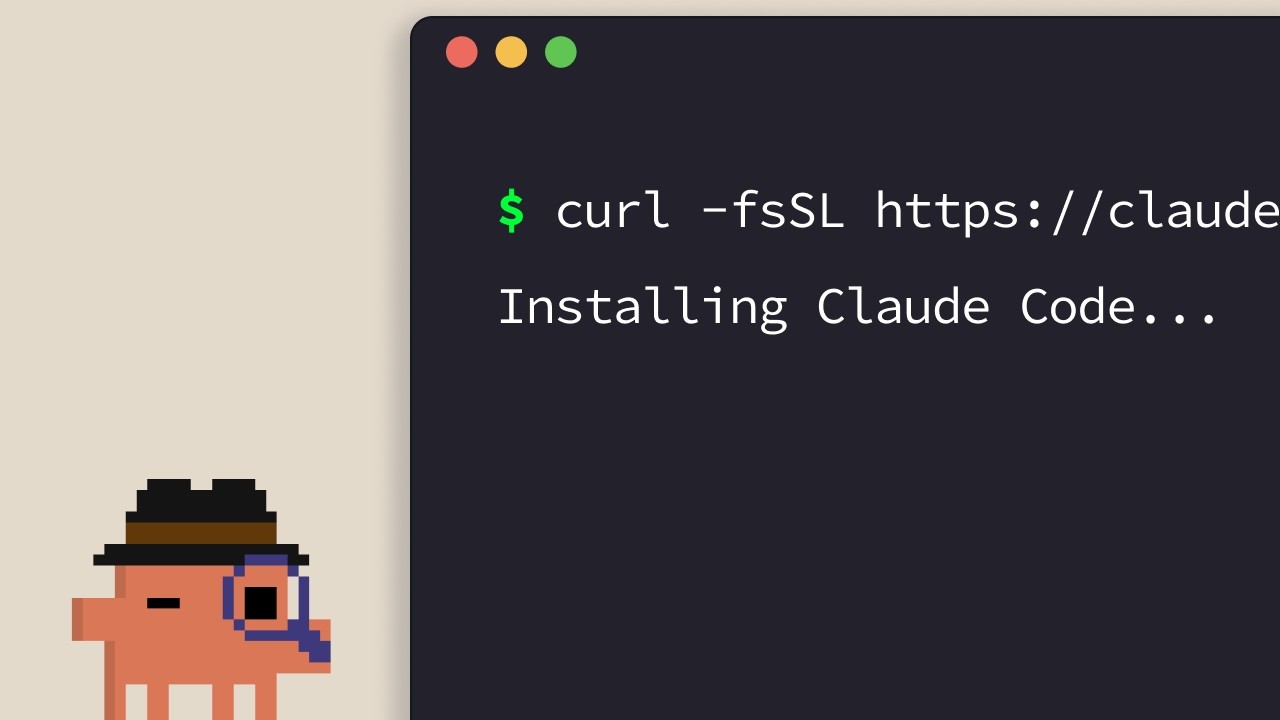
Claude Code इंस्टॉल करना
Claude Code का आधिकारिक इंस्टॉल गाइड। Anthropic के नैरेटर हर समर्थित प्लेटफॉर्म के लिए एक-लाइन इंस्टॉलर की जानकारी देते हैं — टर्मिनल, VS Code, JetBrains, Claude Desktop और वेब — और अंत में सही विकल्प चुनने का सरल नियम बताते हैं। ## [00:04] टर्मिनल के लिए एक-लाइन इंस्टॉलर (macOS, Linux, WSL, Windows) डिफॉल्ट तरीका टर्मिनल है। macOS, Linux और WSL यूज़र्स को एक `curl` कमांड मिलती है; Homebrew भी काम करता है लेकिन ऑटो-अपडेट नहीं करता। Windows पर PowerShell `Invoke-RestMethod` का उपयोग करता है, CMD का अपना `curl` स्निपेट है, और `winget` भी उपलब्ध है लेकिन Homebrew की तरह ऑटो-अपडेट के बिना। > *If you're on macOS, Linux, or WSL, use this curl command to install it in one go. If you prefer to use Homebrew, you can also use brew install to install it, but note that this doesn't have auto-update capabilities.* ## [00:33] अपने प्रोजेक्ट में claude चलाएं और साइन इन करें इंस्टॉल के बाद, अपने प्रोजेक्ट में `cd` करें और `claude` चलाएं। पहली बार लॉन्च पर कलर थीम चुनने और साइन-इन का विकल्प आता है जो Pro, Max, Enterprise या API-key लॉगिन स्वीकार करता है। Enterprise अकाउंट के लिए वह विकल्प स्पष्ट रूप से चुनना जरूरी है। जिस डायरेक्टरी से लॉन्च करते हैं वही एक्सेस सीमा बनती है — Claude Code उस फोल्डर और उसके सभी सबफोल्डर देखता है, ऊपर कुछ नहीं। > *Whatever directory you decide to run cloud in, it will have access to that directory and all of its subfolders.* ## [01:02] VS Code एक्सटेंशन एक्सटेंशन पैनल खोलें, Anthropic का Claude Code एक्सटेंशन सर्च करें और इंस्टॉल से पहले नीले वेरिफाइड चेक की पुष्टि करें। रिस्टार्ट की जरूरत हो सकती है। इंस्टॉल के बाद, कमांड पैलेट (`Ctrl/Cmd+Shift+P`) एक नया Claude Code टैब खोलता है; किसी भी खुली फाइल से लोगो क्लिक कर सकते हैं, या सेटिंग्स में GUI पूरी तरह बंद कर केवल टर्मिनल अनुभव ले सकते हैं। > *You can also opt out of the UI and just use the terminal experience directly in your settings file.* ## [01:32] JetBrains प्लगइन VS Code जैसी ही प्रक्रिया: JetBrains Marketplace से Claude Code प्लगइन इंस्टॉल करें, IDE रिस्टार्ट करें और Claude लोगो दिखने लगेगा। उस पर क्लिक करने से एडिटर के पास एक साइड पेन खुलता है जो टर्मिनल अनुभव देता है। > *For JetBrains IDEs, you can install the Cloud Code plugin from the JetBrains Marketplace. Once you install, restart your IDE.* ## [01:51] Claude Desktop और वेब पर claude.ai/code Claude Desktop में साइन इन के बाद ऐप के ऊपर "code" टॉगल दिखता है जो Claude Code खोलता है — वही चैट-जैसा अनुभव, लेकिन किसी खास फोल्डर तक सीमित, समायोज्य अनुमतियां और क्लाउड एक्ज़ीक्यूशन मोड भी। वेब वर्शन `claude.ai/code` पर है और डेस्कटॉप जैसा ही अनुभव देता है, लेकिन एक कड़ी सीमा के साथ: यह केवल GitHub रिपॉज़िटरी पर काम करता है। > *On the web, you can access Claude code by going to claude.ai/code. This works very similar to the desktop app. However, you're restricted to GitHub repositories only.* ## [02:27] सही विकल्प चुनना नैरेटर का नियम: नई सुविधाएं सबसे पहले चाहिए तो टर्मिनल सबसे बेहतर है। IDE इंटीग्रेशन लगभग समान अनुभव आपके एडिटर के अंदर देता है। Desktop तब चुनें जब Claude बैकग्राउंड में काम करे और आप कुछ और करना चाहते हों। वेब GitHub रिपॉज़िटरी पर रिमोट काम या कई सेशन एक साथ चलाने के लिए है। > *If you want to constantly keep up to date with everything, the terminal is the best bet. Features ship there the fastest.* ## Entities - **Anthropic Tutorial Narrator** (Person): Anthropic के Claude Code 101 कोर्स के वॉयस-ओवर होस्ट। - **Claude Code** (Software): Anthropic का एजेंटिक कोडिंग टूल, जो टर्मिनल, IDEs, डेस्कटॉप और वेब पर इंस्टॉल होता है। - **Homebrew / winget** (Software): आधिकारिक curl/PowerShell इंस्टॉलर के विकल्प पैकेज-मैनेजर मार्ग — दोनों ऑटो-अपडेट नहीं करते। - **VS Code extension** (Software): Anthropic प्रकाशित Claude Code एक्सटेंशन; इंस्टॉल से पहले नीला चेक देखें। - **JetBrains plugin** (Software): JetBrains Marketplace के ज़रिए वितरित Claude Code प्लगइन; IDE रिस्टार्ट के बाद साइड पेन खोलता है। - **Claude Desktop** (Software): "code" टॉगल से Claude Code देने वाला डेस्कटॉप ऐप, फोल्डर स्कोपिंग और क्लाउड एक्ज़ीक्यूशन मोड सहित। - **claude.ai/code** (Service): Claude Code का वेब वर्शन, केवल GitHub-होस्टेड रिपॉज़िटरी तक सीमित।
CLAUDE.md फ़ाइल
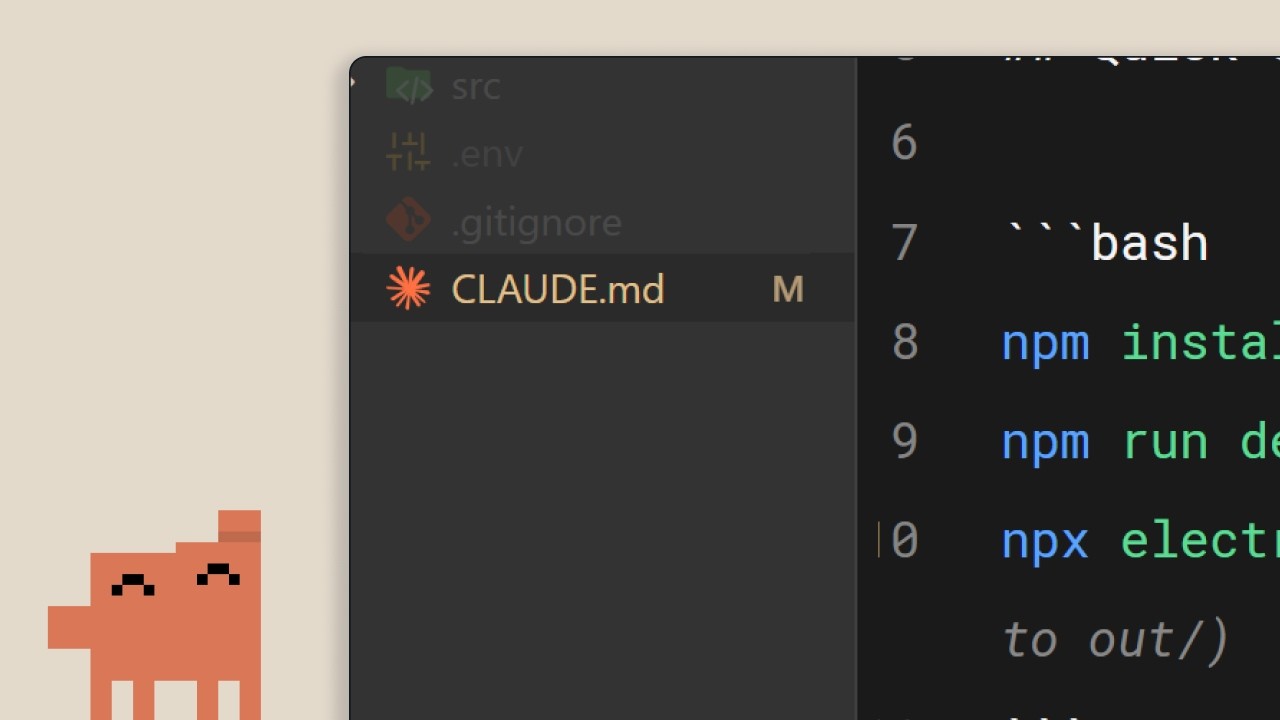
Anthropic का Claude Code 101 का दूसरा एपिसोड उस एकमात्र फ़ाइल को कवर करता है जो Claude Code को अजनबी से टीममेट में बदल देती है: `CLAUDE.md`। इसमें क्या डालें, प्रोजेक्ट/यूज़र हायरार्की कैसे जिम्मेदारियाँ बाँटती है, और तीन आदतें जो फ़ाइल को पुराने नियमों की दीवार बनने से बचाती हैं। ## [00:02] Claude Code को स्थायी मेमोरी की ज़रूरत क्यों है `CLAUDE.md` के बिना हर सेशन शून्य से शुरू होता है। Claude को कोडबेस दोबारा देखनी पड़ती है, dependencies का अनुमान लगाना पड़ता है और जो पहले से implement हो चुका है उसे फिर से खोजना पड़ता है। ये अनुमान ही ऐसी चीज़ हैं जो मार्गदर्शन को कठिन बनाते हैं। यह फ़ाइल हर नए सेशन में उस पुनर्खोज को शॉर्ट-सर्किट करने के लिए मौजूद है। > *When you open up Claude Code without a claude.md file, it's like it has to start fresh every single time.* ## [00:34] CLAUDE.md वास्तव में क्या है और /init कमांड यह प्रोजेक्ट रूट में एक सादा Markdown फ़ाइल है जो हर सेशन शुरू होने पर पढ़ी जाती है और सीधे आपके prompt में जोड़ दी जाती है। यह आपकी कोडबेस के लिए एक "ऑनबोर्डिंग स्क्रिप्ट" है। अगर आप इसे हाथ से नहीं लिखना चाहते, `/init` मौजूदा कोड से पहला ड्राफ्ट बनाता है। ट्यूटोरियल की उदाहरण फ़ाइल में तीन छोटे ब्लॉक हैं: स्टैक (Next.js 15 app router, Tailwind, Drizzle ORM), कमांड (dev server, tests, lint) और कोड स्टाइल नियम (2-स्पेस indent, named exports, `app/api` में API routes, server actions को प्राथमिकता)। इसके लोड होने के बाद React component माँगने पर सुधारों के कई चक्रों के बजाय पहली बार में ही प्रोजेक्ट-स्टाइल कोड मिलता है। > *It's a markdown file that you add to the root of your project and Claude Code reads it automatically every time you start a session.* ## [01:34] मेमोरी हायरार्की: प्रोजेक्ट बनाम यूज़र हाँ, इसे version control में शामिल करें। प्रोजेक्ट-लेवल `CLAUDE.md` पूरी टीम के लिए है। लेकिन एक दूसरा स्तर भी है: आपके config फ़ोल्डर में एक यूज़र-लेवल `CLAUDE.md` जो हर प्रोजेक्ट में आपके साथ चलता है। वहाँ व्यक्तिगत प्राथमिकताएँ रहती हैं जैसे कि आप comments कैसे लिखना पसंद करते हैं, कौन से idioms पसंद करते हैं — साझा फ़ाइल को प्रदूषित किए बिना। > *But there's actually a hierarchy of memory files depending on who it's for.* ## [02:01] CLAUDE.md को उपयोगी बनाए रखने के तीन टिप्स नैरेटर तीन आदतें सुझाता है। पहली, जब आपको Claude को किसी बार-बार आने वाली बात पर सुधारना पड़े ("हमेशा API routes की बजाय server actions इस्तेमाल करो"), तो उसे स्पष्ट रूप से memory में सेव करने को कहें ताकि सुधार सेशनों में बना रहे। दूसरी, मौजूदा docs को फ़ाइल में paste करने के बजाय `@filepath` से reference करें। तीसरी — जो counter-intuitive लगती है — नया प्रोजेक्ट `CLAUDE.md` *के बिना* शुरू करें और देखें कहाँ-कहाँ आपको बार-बार course correct करना पड़ता है। केवल वे friction points ही फ़ाइल में होने चाहिए। इस तरह यह bloated होने के बजाय compact रहती है। > *We recommend you start off a project without a claude.md file so you can see where you have to constantly course correct the model.* ## [02:39] सारांश: संदर्भ ही फ़र्क करता है पूरी बात एक लाइन में: निराशाजनक सेशन और उत्पादक सेशन के बीच का अंतर संदर्भ है, और `CLAUDE.md` उसका delivery mechanism है। छोटे से शुरू करें — स्टैक, प्राथमिकताएँ, कमांड — और असली friction से बढ़ाते जाएँ। > *Start with your stack, your preferences, and then commands, and just build from there as you go.* ## संस्थाएँ - **Anthropic Tutorial Narrator** (Person): Anthropic की आधिकारिक Claude Code 101 सीरीज़ का voice-over host। - **CLAUDE.md** (Concept): प्रोजेक्ट की root में Markdown फ़ाइल जिसे Claude Code हर सेशन में automatically load करता है, user के prompt में persistent context जोड़ता है। - **/init** (Command): Claude Code कमांड जो मौजूदा codebase को scan करके प्रारंभिक `CLAUDE.md` बनाता है। - **प्रोजेक्ट-लेवल बनाम यूज़र-लेवल CLAUDE.md** (Concept): दो-स्तरीय मेमोरी हायरार्की। प्रोजेक्ट फ़ाइल repo root में है और version control से share होती है; यूज़र फ़ाइल config folder में है और सभी projects में personal preferences लेकर चलती है। - **@filepath reference** (Concept): `CLAUDE.md` में मौजूदा documentation files को point करने का syntax जो duplicate content से बचाता है। - **Next.js 15 / Tailwind / Drizzle ORM** (Software): ट्यूटोरियल के उदाहरण `CLAUDE.md` में उपयोग किया गया स्टैक जो real file के दिखावे को दर्शाता है।
Claude Code में MCP
Claude Code में Model Context Protocol पर Anthropic की विस्तृत गाइड: यह किससे जुड़ता है, सर्वर कैसे जोड़ें और स्कोप कैसे सेट करें, और हर इंस्टॉल किए गए सर्वर का कॉन्टेक्स्ट विंडो पर क्या छिपा हुआ असर होता है। उन डेवलपर्स के लिए जो Claude Code को Linear, GitHub या अपने इन-हाउस टूल्स से जोड़ने की तैयारी कर रहे हैं। ## [00:02] MCP क्यों है — कॉन्टेक्स्ट एडिटर के बाहर रहता है शुरुआत में ही बात साफ कर दी जाती है: Claude Code को जिस ज़्यादातर कॉन्टेक्स्ट की ज़रूरत होती है वह रिपो में नहीं होता, बल्कि डेटाबेस, प्रोडक्टिविटी ऐप्स और पब्लिक पैकेज में बिखरा होता है। MCP एक ओपन स्टैंडर्ड है जो Claude को इन बाहरी स्रोतों तक खुद पहुंचने और यह तय करने देता है कि उन्हें कब कॉल करना है, बिना आपके मैन्युअल पेस्ट किए इंतज़ार किए। > *Model Context Protocol एक ओपन स्टैंडर्ड है जो Claude Code को बाहरी टूल्स और डेटा स्रोतों से जोड़ता है।* ## [00:35] टूल्स और MCP सर्वर असल में क्या जोड़ते हैं सर्वर की सूची देने से पहले, नैरेटर *टूल* का मतलब समझाते हैं: Claude Code जैसे एजेंट टूल्स का उपयोग करके कार्रवाई करते हैं, यही उन्हें सिर्फ टेक्स्ट लौटाने वाले चैट से अलग बनाता है। दो ठोस उदाहरण दिए जाते हैं: एक Linear MCP सर्वर जो टीम के इश्यू सेशन में लाता है, और Context7 सर्वर जो उपयोग में आ रही डिपेंडेंसी के अप-टू-डेट डॉक्स स्ट्रीम करता है। सैकड़ों और claude.com/connectors पर मिलते हैं। > *टूल्स Claude Code जैसे एजेंट को कार्रवाई करने की क्षमता देते हैं ताकि वे अपने काम बेहतर तरीके से पूरे कर सकें।* ## [01:14] सर्वर जोड़ना: HTTP बनाम STDIO, और /mcp सर्वर `claude mcp add` से जोड़े जाते हैं और दो तरह के होते हैं: **HTTP** सर्वर, जो प्रोवाइडर द्वारा रिमोटली होस्ट किए जाते हैं और नेटवर्क से एक्सेस होते हैं, और **STDIO** सर्वर, जो आपकी मशीन पर चलने वाले लोकल प्रोसेस हैं। इंस्टॉल होने के बाद, सेशन में `/mcp` कमांड यह बताता है क्या जुड़ा है, स्टेटस दिखाता है और किसी भी सर्वर को डिसेबल करने देता है। > *HTTP सर्वर रिमोट सर्विसेज़ के लिए हैं... STDIO सर्वर आपकी मशीन पर चलने वाले लोकल प्रोसेस के लिए हैं।* ## [01:42] तीन स्कोप: local, user और project (.mcp.json) हर सर्वर तीन में से एक स्कोप में आता है। **Local** इसे सिर्फ मौजूदा प्रोजेक्ट तक और सिर्फ आपके लिए सीमित रखता है। **User** इसे आपके सभी प्रोजेक्ट्स में उपलब्ध कराता है। **Project** एक `.mcp.json` फ़ाइल बनाता है जिसे आप वर्शन कंट्रोल में चेक इन करते हैं, ताकि कोडबेस पर काम करने वाले हर टीम मेंबर को अपने आप वही सर्वर मिल जाएं। > *Project स्कोप एक .mcp.json फ़ाइल का उपयोग करता है जिसे आप वर्शन कंट्रोल में चेक इन करते हैं, ताकि कोडबेस पर काम करने वाले हर व्यक्ति को स्वचालित रूप से बिल्कुल वही सर्वर मिलें।* ## [02:04] टूल डेफिनिशन से कॉन्टेक्स्ट खर्च होता है — CLI या skill कब चुनें जब कोई आपको कनेक्टर लिस्ट देता है तो जो बात कोई नहीं बताता: हर कॉन्फ़िगर किया गया MCP सर्वर अपनी टूल डेफिनिशन कॉन्टेक्स्ट विंडो में डाल देता है, चाहे आप उसे इस्तेमाल कर रहे हों या नहीं। नैरेटर के सुझाए उपाय: `/mcp` चलाएं और बेकार पड़े सर्वर डिसेबल करें; जब `gh` या `aws` जैसी CLI मौजूद हो तो उसे प्राथमिकता दें, क्योंकि CLI में परमानेंट टूल डेफिनिशन नहीं होतीं; या वर्कफ्लो को skill में लपेटें जो Claude के लोड करने तक सिर्फ नाम और विवरण ही कॉन्टेक्स्ट में रखता है। 10% कॉन्टेक्स्ट पार होने पर Claude Code टूल सर्च मोड में चला जाता है, जहाँ ज़रूरत पड़ने पर टूल खोजे जाते हैं — उपयोगी है, लेकिन प्री-लोड से कम भरोसेमंद। > *MCP सर्वर आपकी कॉन्टेक्स्ट विंडो में टूल डेफिनिशन जोड़ देते हैं, भले ही आप उन्हें इस्तेमाल न कर रहे हों। अगर बहुत सारे सर्वर कॉन्फ़िगर हैं, तो यह उपलब्ध कॉन्टेक्स्ट खा जाता है।* ## [03:10] सारांश याद रखने वाली तीन बातें: `claude mcp add` सर्वर इंस्टॉल करता है, `.mcp.json` उन्हें टीम के साथ शेयर करता है, और `/mcp` वह जगह है जहाँ आप जो नहीं चला रहे उसे हटाते हैं। > *Cloud MCP add से सर्वर जोड़ें, .mcp.json से उन्हें अपने प्रोजेक्ट तक सीमित करें ताकि टीम को अपने आप मिलें, और जो सर्वर सक्रिय रूप से उपयोग नहीं कर रहे उन्हें डिसेबल करके कॉन्टेक्स्ट उपयोग पर नज़र रखें।* ## इकाइयाँ - **Anthropic ट्यूटोरियल नैरेटर** (Person): Claude Code 101 सीरीज़ के लिए Anthropic के आधिकारिक वॉइसओवर नैरेटर। - **Model Context Protocol (MCP)** (Standard): ओपन प्रोटोकॉल जो Claude Code को HTTP या STDIO सर्वर के ज़रिए बाहरी टूल्स और डेटा स्रोतों से जोड़ता है। - **Linear MCP server** (Software): टीम के Linear इश्यू Claude Code सेशन में लाने वाला कनेक्टर। - **Context7 MCP server** (Software): उपयोग में आ रही डिपेंडेंसी के अप-टू-डेट डॉक्युमेंटेशन Claude Code को देने वाला कनेक्टर। - **.mcp.json** (Config): वर्शन कंट्रोल में चेक-इन किया जाने वाला प्रोजेक्ट-स्कोप मैनिफेस्ट, जिससे हर टीम मेंबर को वही MCP सर्वर मिलते हैं। - **/mcp** (CLI command): जुड़े MCP सर्वर को लिस्ट करने, इंस्पेक्ट करने और डिसेबल करने का सेशन-इन कमांड। - **Tool search mode** (Feature): वह फ़ॉलबैक मोड जिसमें Claude Code जाता है जब MCP टूल डेफिनिशन कॉन्टेक्स्ट विंडो का 10% पार कर लें — टूल ज़रूरत पड़ने पर खोजे जाते हैं। - **Skill** (Concept): पूरे MCP सर्वर का हल्का विकल्प; Claude द्वारा बॉडी लोड करने तक सिर्फ नाम और विवरण ही कॉन्टेक्स्ट में रहते हैं।
Running an AI-native engineering org
Fiona Fung, who runs engineering and product for Claude Code and Cowie at Anthropic, walks through what broke when agentic coding became the team's default — review, ownership, planning, hiring — and the norms they rewrote to keep shipping. The throughline: when coding stops being the bottleneck, every process built around protecting expensive engineering bandwidth quietly stops working, and the manager's job is to notice and rewrite them fast. ## [00:00] Intro and the five themes Fiona opens with a confession that the room is much fuller than she expected (Boris and Jared's session is still letting out), takes a selfie with the audience, and frames the talk. Background: she grew teams at Meta and Microsoft before Anthropic, and is now responsible for Claude Code and Cowie engineering and product. The deck she's about to walk through has already been rewritten in the past month — routines didn't exist when she first wrote the slides. She previews five threads: bottlenecks have shifted, team norms had to be rewritten, how they rolled them out, what signals say the changes are working, and the open questions she's still sitting with. > *"I did this slide deck maybe like a month ago and already I've had to change some of the content cuz when I started this deck, there were no routines."* ## [02:10] The shift: bottlenecks have moved Fiona's subtitle for the whole talk is *what served you prior may not serve you any longer*. She takes the audience back to shipping Visual Studio 2005 on CD-ROMs — hard deadlines because the manufacturing lab had to print discs — and points out that the move from CDs to online distribution already rewired how teams ship. The new shift is bigger: for years coding throughput and engineering bandwidth were the expensive things, and that's quietly stopped being true on Claude Code. When the bottleneck moves, it doesn't disappear — it relocates to verification, review, cross-functional handoffs, and security. The questions that matter now are "is this code correct?" and "is this safe?", and the old planning and ownership norms quietly stop serving the team. > *"What served you prior may not serve you any longer."* ## [07:40] Rewriting team norms: code review, JIT planning, technical debates Inside Claude Code the team had to rewrite the norms one by one. Code review is the first — human judgment shifts to "who actually needs to look at this." Planning is the second — Fiona calls it JIT planning, like JIT compiling, because prototyping is no longer the expensive step that justifies a six-month roadmap. Technical debates are the third: code wins. Instead of two engineers arguing on a doc, both prototype the API and look at impact on callers, and Fiona made a point of caring about the API's downstream effects as much as the implementation itself. The unifying rule: when building is cheap and arguing is expensive, you don't let the last person who checks in win — you build the routines that get *you* the last word. > *"When building is cheap, arguing expensive, again, how does that shift your team norms a bit?"* ## [13:30] Routines and Claude as a second pair of hands With morning coffee Fiona now reads what a routine produced overnight rather than kicking off the work herself. The team leans on Claude code review heavily — Claude babysits PRs, handles styling, lint, and feedback requests, catches bugs before commit, and adds tests — while humans focus on the calls where trust is still being built. She also stresses product sense in tooling: she themed Claude's terminal output ice blue with snowflakes over the holidays, then pulls back to the bigger point that catching bugs earlier (shift left) and automating the double-click question matter more than any one tool. > *"Where do you trust Claude a lot, but then where do you still want a human?"* ## [16:45] Cross-functional gaps and hiring for the hard parts Fiona walks through a survey-update story: she didn't have a dedicated content designer, so Claude became her partner for terse, terminal-appropriate copy. Meanwhile PMs on the team write code, and engineers lean into PM work. The flip-side conclusion for hiring: non-traditional coders can now do more engineering, so the leader's job is to double down on the hard parts the team is actually missing. When she joined, Claude Code was strong on product generalists and creative folks but thin on distributed-systems expertise — that's where she pushed recruiting. > *"With Claude, you have non-traditional coders now being able to do more engineering, but you also have engineers that we can also now lean in to do other roles."* ## [18:51] Flat org and answering customer feedback yourself Fiona pushed her recruiters into an uncomfortable place: hire managers, but have them start as ICs first. The recruiter thought she was crazy; Fiona's answer is that dogfooding Claude Code is the job, and if a candidate isn't up for it the team is better off finding out early. Flat structure plus Claude as a context-switching aid is what lets her, as a manager, still ship code and answer customer requests directly from her desktop Claude Code — instead of routing every customer question through a triage system, she pulls up the local repository and answers it herself. > *"You want to hire managers and they will start as an IC first. No manager would be interested in that."* ## [25:00] Signals you're trending right and open questions The team's working metric is unglamorous and direct: every commit is cloud-assisted by default, and Fiona hasn't seen a non-Claude commit in roughly four months. But she warns against fetishizing the "X percent of code generated by AI" headline — throughput is one signal, not the goal. The end question is what product you're making more delightful and what problem you're solving, with quality and reliability watched alongside volume. She closes with the section she calls "audit your own effort," opens up the questions she's still asking herself, and hands suggestions back to the audience to take to their own teams. > *"For us, it's by default every commit is cloud-assisted. I don't think I've seen a non-cloud-assisted commit probably in the last 4 months or so."* ## Entities - **Fiona Fung** (Person): Director of Engineering at Anthropic, runs Claude Code and Cowie engineering + product; previously led teams at Meta and Microsoft. - **Boris** (Person): Engineering lead on Claude Code, frequent collaborator referenced throughout. - **Kat (Cat)** (Person): Anthropic colleague who gave a keynote earlier the same day on Claude code review. - **Claude Code** (Software): Anthropic's agentic coding tool that is now the default for the team Fiona runs. - **Cowie** (Software): Sister product Fiona's team also owns engineering + product for. - **Anthropic** (Organization): The company building Claude and Claude Code. - **JIT planning** (Concept): Fiona's term for shifting from a six-month roadmap to just-in-time planning, modeled on JIT compilation. - **Shift left** (Concept): Moving bug-catching and verification earlier — into automation and tooling — instead of relying on review after the fact. - **Routines** (Concept): Repeatable Claude-driven workflows the team relies on so a single human gets the last word on outcomes rather than the last commit timestamp winning.
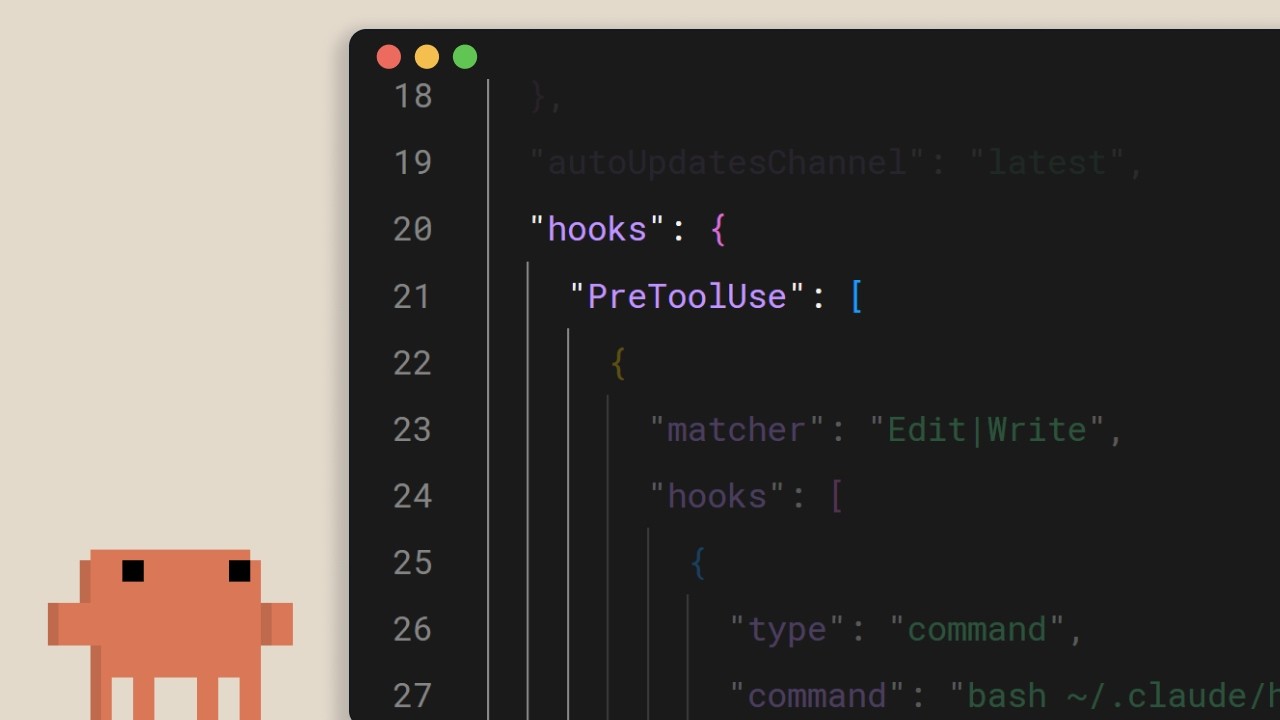
Claude Code में Hooks
Claude Code hooks पर Anthropic का एक संक्षिप्त ट्यूटोरियल: यह उन कार्यों के लिए नियतात्मक रास्ता है जो हर edit, हर tool call और हर commit पर बिना किसी अपवाद के होने चाहिए। मुख्य संदेश: अगर आप claude.md में "हमेशा prettier चलाओ" लिखकर model पर भरोसा करते हैं, तो आप पहले ही हार चुके हैं। इसे एक hook में डालें। ## [00:02] Hooks क्या हैं और वे नियतात्मक क्यों हैं Hooks, Claude Code के lifecycle में निश्चित बिंदुओं पर fire होते हैं, और narrator का मुख्य तर्क यह है कि prompt-level निर्देशों के विपरीत, ये हमेशा चलते हैं। claude.md में model को हर file edit के बाद prettier चलाने के लिए कहना ज़्यादातर समय काम करता है, लेकिन "ज़्यादातर समय" ही वह अंतर है जिसे एक hook भरता है। इरादा वही रहता है, लेकिन LLM को सुझाव देने की बजाय runtime द्वारा लागू किया जाता है। > *You can tell Claude in your claude.md file to run prettier after every file edit and most of the time it will do that, but sometimes it won't. It's not perfect. But a hook makes it happen every single time with no exceptions.* ## [00:37] सामान्य उपयोग के मामले चार प्रतिनिधि उदाहरण दायरा तय करते हैं: file edits के बाद ऑटो-फॉर्मेट, compliance के लिए सभी executed commands का log, production files को modify करने जैसे खतरनाक operations को ब्लॉक करना, और जब Claude एक लंबा task पूरा करे तब खुद को notification भेजना। > *Common use cases could include auto formatting after file edits, logging all executed commands for compliance, blocking dangerous operations like modifying production files, and sending yourself notifications when Claude finishes a task.* ## [00:52] Hooks को कॉन्फ़िगर करना और पाँच lifecycle events कॉन्फ़िगरेशन `settings.json` में होती है: एक event चुनें, वैकल्पिक रूप से matcher से किस tool पर लागू होगा यह सीमित करें, फिर एक shell command दें। पाँच events पूरे loop को cover करते हैं: `UserPromptSubmit` Claude के prompt देखने से पहले, `PreToolUse` और `PostToolUse` हर tool call के आसपास, `Notification` जब Claude user को ping करे, और `Stop` जब Claude response पूरा करे। > *Pre-tool use which runs before a tool call, post-tool use runs after a tool call completes. Notification runs when Claude sends a notification, and stop runs when Claude finishes responding.* ## [01:22] post-tool-use hook से ऑटो-फॉर्मेटिंग मानक उदाहरण: `Edit` या `MultiEdit` matcher वाला `PostToolUse` hook तब fire होता है जब भी Claude किसी file को बदलता है। command extension जाँचती है और सही formatter पर route करती है: TypeScript के लिए prettier, Go के लिए gofmt, Python के लिए ruff, या जो भी project standardize करे। > *You set a post-tool use hook with a matcher of edit or multi-edit, right? So, it fires whenever Claude modifies a file. The command checks the file extension and runs the appropriate formatter.* ## [01:49] pre-tool-use और exit codes से tool calls ब्लॉक करना `PreToolUse` hooks stdin पर JSON के रूप में tool name और input प्राप्त करते हैं और exit code से निर्णय लेते हैं: `0` आगे बढ़ता है, `2` ब्लॉक करता है। जब hook ब्लॉक करता है, तो उसने stderr पर जो लिखा वह Claude को feedback के रूप में वापस भेजा जाता है, ताकि model समझे क्यों और अपनी योजना adjust कर सके। यहाँ hard rules लागू होती हैं: production config directory में writes ब्लॉक करना, `rm -rf` वाले bash commands से इनकार, main पर commits ब्लॉक करना। narrator का दृष्टिकोण: ऐसी चीज़ें जो टीम को गारंटी चाहिए, न कि सुझाव। > *If it exits with code two, the action is blocked and the STD error message gets fed back to Claude's feedback so Claude knows why it was blocked and can adjust.* ## [02:26] प्रोजेक्ट-स्तरीय Hooks और टीम शेयरिंग `.claude/settings.json` में Hooks project-scoped हैं और repo में commit किए जा सकते हैं, जिसका मतलब है कि पूरी टीम clone करने पर इन्हें automatically inherit करती है। `CLAUDE_PROJECT_DIR` env var के ज़रिए scripts को reference करें ताकि commands सही तरह resolve हों, चाहे Claude का cwd कहीं भी हो। अंतिम सिद्धांत: अगर कुछ हर बार बिना fail के होना चाहिए, तो उसे prompt में मत डालें, hook में डालें। > *If something needs to happen every time without fail, don't put it in a prompt. Put it in a hook.* ## Entities - **Anthropic Tutorial Narrator** (Person): Claude Code 101 tutorial series के लिए Anthropic की आधिकारिक आवाज़। - **Claude Code** (Software): Anthropic का agentic terminal coding tool जिसमें hooks lifecycle events पर plug in होते हैं। - **Hooks** (Concept): नियतात्मक commands जो Claude Code loop में निश्चित बिंदुओं पर fire होती हैं: prompt-level निर्देशों का runtime-enforced विकल्प। - **settings.json** (Configuration): जहाँ hooks declare होते हैं; project root पर `.claude/settings.json` repo में commit होती है ताकि टीमें same rules share करें। - **PreToolUse / PostToolUse / UserPromptSubmit / Notification / Stop** (Events): पाँच lifecycle events जिनसे hook जुड़ सकता है। - **CLAUDE_PROJECT_DIR** (Environment variable): Hook commands में project-relative scripts को reference करने के लिए उपयोग होता है, Claude के current working directory से स्वतंत्र।
Claude Code क्या है?
Claude Code का Anthropic का आधिकारिक परिचय — यह क्या है, Claude.ai से कैसे अलग है, और किसी LLM को अपने कोडबेस पर कमांड चलाने देने से पहले आपको तीन चीजें जाननी चाहिए। पहली बार टर्मिनल टूल इंस्टॉल करने वाले डेवलपर्स के लिए। ## [00:04] Claude Code क्या है और यह कहाँ चलता है Claude Code को एक एजेंटिक कोडिंग टूल के रूप में स्थापित किया गया है: यह आपके कोडबेस को समझता है, फाइलें एडिट करता है, कमांड चलाता है और आपके मौजूदा डेवलपर टूल्स के साथ इंटीग्रेट होता है। यह कई जगहों पर उपलब्ध है — टर्मिनल, VS Code, JetBrains IDEs, Claude डेस्कटॉप ऐप और वेब — लेकिन यह गाइड टर्मिनल को मानक अनुभव के रूप में लेती है। > *Claude Code is an agentic coding tool that understands your code base, edits your files, run commands, and integrates with your existing developer tools to help you get things done faster.* ## [00:34] यह Claude.ai से कैसे अलग है मुख्य अंतर मॉडल की क्षमता में नहीं बल्कि एक्सेस में है: Claude Code सीधे आपके टर्मिनल और पूरे कोडबेस तक पहुंचता है, इसलिए चैट में कॉपी-पेस्ट करने का चक्र खत्म हो जाता है — टूल काम उसी जगह करता है। इसे "AI एजेंट" कहना उस सीधी निष्पादन सतह का संक्षिप्त वर्णन है। > *Unlike Claude AI, Claude Code has direct access to your files in your terminal and your entire code base.* ## [00:51] AI एजेंट और Claude Code क्या कर सकता है यहाँ AI एजेंट का अर्थ है वह सॉफ्टवेयर जो अपने वातावरण के साथ इंटरैक्ट करता है और एक निर्धारित लक्ष्य को हासिल करने के लिए कदम उठाता है — अपने सबसे बुनियादी रूप में, टूल्स, बाहरी सेवाओं और अन्य एजेंटों तक पहुंच के साथ रियल-टाइम लूप में चलने वाला एक LLM। Claude Code के लिए यह ठोस क्षमताओं में तब्दील होता है: आपके कोडबेस को पढ़ना और समझाना, फाइलों में बग ट्रेस करना, बिल्ड स्क्रिप्ट और टेस्ट चलाना, पैकेज इंस्टॉल करना, और अगला कदम तय करने के लिए वेब से नवीनतम API दस्तावेज़ लाना। > *An AI agent is a software that can interact with its environment and perform actions to complete a defined goal.* ## [01:45] शुरू करने से पहले जानने योग्य तीन अवधारणाएं नैरेटर तीन विशेषताएं बताते हैं जो रोज़मर्रा के उपयोग को प्रभावित करती हैं। पहली, **कॉन्टेक्स्ट विंडो** Claude की कार्यशील मेमोरी है — बड़ी लेकिन सीमित — इसीलिए एजेंट को पूरा कोडबेस लोड करने के बजाय रणनीतिक तरीके से नेविगेट करना पड़ता है। दूसरी, Claude Code कमांड चलाने या फाइलें बदलने से पहले **अनुमति मांगता है**; आप हर चरण को नियंत्रित करना चाहें या इसे अधिकतर स्वायत्त रूप से चलने दें — नियंत्रण आपके पास ही रहता है। तीसरी, **यह गलत हो सकता है**: इरादे को गलत समझना, बग डालना या किसी समाधान को जरूरत से ज्यादा जटिल बनाना। आउटपुट को किसी भी अन्य टूल की तरह समझें, इसे अंतिम सत्य न मानें। > *By default, Claude Code will ask you before running commands or making changes to your code base.* ## [02:34] सारांश Claude Code एक एजेंटिक कोडिंग टूल है जो आपका कोडबेस पढ़ता है, फाइलें एडिट करता है, कमांड चलाता है और बाहरी टूल्स से कनेक्ट होकर आपको तेज़ी से डिलीवर करने में मदद करता है — आज टर्मिनल, VS Code, JetBrains और Claude डेस्कटॉप ऐप पर उपलब्ध है। > *Claude Code is an agentic coding tool. It reads your code base, edits your files, runs commands, and connects to external tools to help you ship faster.* ## एंटिटीज़ - **Anthropic Tutorial Narrator** (Person): Claude Code 101 ट्यूटोरियल सीरीज़ के लिए Anthropic का आधिकारिक वॉयस-ओवर नैरेटर। - **Claude Code** (Software): Anthropic का एजेंटिक टर्मिनल-आधारित कोडिंग असिस्टेंट जो सीधे आपके कोडबेस पर काम करता है। - **Claude.ai** (Software): चैट-आधारित Claude प्रोडक्ट — Claude Code के इन-एनवायरनमेंट एक्सीक्यूशन के विपरीत। - **AI agent** (Concept): एक LLM जो एक निर्धारित लक्ष्य को हासिल करने के लिए टूल्स, बाहरी सेवाओं और अन्य एजेंटों तक पहुंच के साथ रियल-टाइम लूप में चलता है। - **Context window** (Concept): Claude की कार्यशील मेमोरी — सीमित, इसीलिए एजेंट पूरे कोडबेस को लोड करने के बजाय रणनीतिक तरीके से नेविगेट करता है। - **VS Code / JetBrains IDEs** (Software): एडिटर इंटीग्रेशन जिनमें Claude Code टर्मिनल और Claude डेस्कटॉप ऐप के साथ-साथ उपलब्ध है।
Claude Code में एक्सप्लोर→प्लान→कोड→कमिट वर्कफ़्लो
Anthropic का तीन मिनट का वॉकथ्रू उस लूप का जिसे वे Claude Code के साथ काम करते समय सबसे महत्वपूर्ण आदत मानते हैं: पहले प्लान मोड में रिसर्च करें, किसी भी फ़ाइल को छूने से पहले "पूर्ण" का अर्थ परिभाषित करें, फिर पुश करने से पहले सबएजेंट से diff रिव्यू कराएं। ## [00:03] एक्सप्लोर-प्लान-कोड-कमिट सीधे शुरू करने से बेहतर क्यों है शुरुआत सीधी है — अगर कोर्स से केवल एक आदत अपनानी हो तो यही वर्कफ़्लो चुनें। यह जिस विफलता पैटर्न से लड़ता है वह है Claude में टास्क पेस्ट करके तुरंत कोड जनरेट करवाने का रिफ्लेक्स, जो आगे चलकर सुधार की लागत बढ़ा देता है। > *Without this, most people jump straight to pasting in Claude to write code, which means more course correcting later on.* ## [00:21] प्लान मोड: किसी भी संपादन से पहले रीड-ओनली रिसर्च प्लान मोड एक्सप्लोर और प्लान को एक ही कदम में संकुचित करता है। Claude फ़ाइलें पढ़ और वेब सर्च कर सकता है लेकिन लिखने की अनुमति नहीं है — Shift+Tab से प्रॉम्प्ट पर स्विच करें। नैरेटर एक वास्तविक अनुरोध के साथ डेमो करता है (इमेज अपलोड पाइपलाइन में WebP कन्वर्जन जोड़ें, पता करें यह कहाँ फिट होगी, क्या डिपेंडेंसी चाहिए, कैसे अप्रोच करें)। Claude एक प्लान लौटाता है; आप इसे पढ़ें और अगर कुछ छूट गया हो तो संशोधन मांगें। यह पूरे चक्र में दिशा बदलने का सबसे सस्ता बिंदु है क्योंकि अभी तक कुछ भी नहीं लिखा गया। > *With plan mode, Claude can't edit files. It just reads files to gather research on how to tackle this implementation.* ## [01:11] प्लान स्वीकृत करें, फिर Claude के कोडिंग के दौरान सुधार करें प्लान सही लगने पर Approve Claude को चेकलिस्ट पूरी करने के लिए एक्जीक्यूशन वापस देता है। आप चुन सकते हैं कि फ़ाइल एडिट ऑटो-एक्सेप्ट हों या हर बार पुष्टि मांगें। Claude खुद समस्याएं सुलझाएगा लेकिन दखल देने के लिए तैयार रहें — और यहां प्लान मोड का फायदा यह है कि एजेंट उस रिसर्च संदर्भ को साथ रखता है जिसने प्लान बनाया था, इसलिए बीच उड़ान में किए सुधार सही जगह उतरते हैं, शुरुआत से नहीं। > *This is the benefit of working with plan mode because after the plan is finished, we also have the context of how it got to the results to help it guide its next decision.* ## [01:39] सफलता मानदंड स्पष्ट करें और Claude को असली टूल दें "सही" की परिभाषा के बिना प्लान Claude को अनुमान लगाने पर छोड़ देता है। सफलता का स्वरूप स्पष्ट करें, फिर एजेंट को वास्तव में सत्यापित करने के लिए उपकरण दें: Claude+Chrome एक्सटेंशन इसे ब्राउज़र टैब चलाकर अभी-अभी बनाई गई UI टेस्ट करने देती है; एक टेस्ट सूट हर लूप पर सत्यापन के लिए कुछ देती है, और Claude टेस्ट भी लिख सकता है — लेकिन केवल तभी जब आपने उन्हें ग्राउंड ट्रुथ के रूप में पहले ही सत्यापित किया हो। एक टिकाऊपन टिप: जब Claude बार-बार एक ही समस्या से टकराए तो उसे CLAUDE.md फ़ाइल में समाधान पर्सिस्ट करवाएं ताकि यह बार-बार न सीखे। > *In order for Claude to be confident in its results, it has to be clear on what it deems correct.* ## [02:24] सबएजेंट रिव्यू, कमिट और रिकैप पुश करने से पहले diff पर सबएजेंट कोड रिव्यूअर चालू करें — बिना इम्प्लीमेंटेशन से जुड़ाव के दूसरी नज़र। फिर Claude से अपनी शैली में कमिट संदेश लिखवाएं और शिप करें। रिकैप हर चरण को फिर से परिभाषित करता है: एक्सप्लोर संदर्भ देता है, प्लान सफलता परिभाषित करता है, कोड प्लान की ओर अभिसरण करने वाला आदान-प्रदान है, कमिट रिव्यू करके पुश करता है ताकि आप आगे बढ़ सकें। > *A tip before you commit, run a sub agent code reviewer to look at your code.* ## Entities - **Anthropic Tutorial Narrator** (Person): Claude Code 101 कोर्स के लिए Anthropic की आधिकारिक आवाज। - **Claude Code** (Software): एजेंटिक टर्मिनल कोडिंग टूल जिसकी अनुशंसित दैनिक लूप इस एपिसोड का विषय है। - **Plan mode** (Feature): Shift+Tab से टॉगल होने वाला रीड-ओनली मोड — Claude रिसर्च करके प्लान प्रस्तावित करता है लेकिन फ़ाइलें संपादित नहीं कर सकता। - **Claude + Chrome extension** (Software): Claude Code को टास्क पूर्ण घोषित करने से पहले Chrome टैब चलाकर UI बदलाव सत्यापित करने देती है। - **CLAUDE.md** (File): प्रोजेक्ट मेमोरी फ़ाइल जिसे यहाँ Claude द्वारा बार-बार सीखे जाने वाले सुधारों के पर्सिस्टेंस लक्ष्य के रूप में उपयोग किया गया है। - **Subagent code reviewer** (Pattern): प्री-कमिट Claude सबएजेंट जो मानव के पुश करने से पहले diff रिव्यू करता है।
Claude Code में संदर्भ प्रबंधन
Anthropic के Claude Code 101 ट्यूटोरियल में संदर्भ पर विस्तृत चर्चा — क्या विंडो भरता है, ऑटो-कॉम्पैक्शन कब शुरू होता है, और सत्र को कुशल बनाए रखने के व्यावहारिक उपाय (/compact, /clear, /context, claude.md, MCP टॉगल, स्किल्स, सब-एजेंट)। ## [00:03] संदर्भ सीमित क्यों है और यह क्यों मायने रखता है संदर्भ Claude की कार्यशील स्मृति है: हर प्रॉम्प्ट, हर फाइल रीड, हर टूल कॉल का परिणाम एक ही विंडो में जमा होता है। विंडो बड़ी है लेकिन सीमित है, इसलिए बहु-चरण सत्र शुरू करते ही इनपुट को अनुकूलित करना अनिवार्य हो जाता है। > *Every file it reads, every command it runs, every message you send, it all takes up space in the context window.* ## [00:39] ऑटो-कॉम्पैक्शन और /compact कमांड सीमा के करीब पहुंचने पर Claude Code स्वचालित रूप से कॉम्पैक्ट करता है: महत्वपूर्ण बातों को सारांशित करता है और अनावश्यक टूल कॉल परिणामों को हटाकर जगह बनाता है। आप `/compact` को मैन्युअल रूप से भी चला सकते हैं — तब उपयोगी जब आप जगह चाहते हों लेकिन अब तक के काम की याददाश्त बनाए रखना चाहते हों। समझौता: कॉम्पैक्शन से पुराने टर्न के विवरण खो सकते हैं। > *Compaction will summarize important details and remove the unnecessary tool call results and free up a lot of space in your context window.* ## [01:11] /clear और /context: नए सिरे से शुरुआत और उपयोग देखना यदि पिछले सत्र की कोई याद न रखते हुए पूर्ण रीसेट चाहिए, तो `/clear` सब कुछ मिटा देता है। जगह वास्तव में कहां जा रही है यह देखने के लिए `/context` कुल आकार, सबसे अधिक खपत करने वाली श्रेणियां और एक ग्राफिक दिखाता है — compact और clear के बीच निर्णय लेने से पहले का निदान। > *To check the state of your context, run the /context command.* ## [01:35] व्यावहारिक नियम: फीचर के बीच compact, फीचर बदलते समय clear नैरेटर एक स्पष्ट अनुमान-नियम देता है: अभी भी एक फीचर पर काम कर रहे हैं और सीमा के करीब हैं? Compact करें — संबंधित इतिहास आगे जाना चाहिए। योजना पूरी हो गई और कुछ नया शुरू कर रहे हैं? Clear करें — पुरानी बातचीत नए काम में पक्षपात ला सकती है। > *If you have finished the plan and want to start on a new feature, then clear. You don't want the previous conversation to present bias in anything new that you want to create.* ## [01:57] claude.md, प्रॉम्प्ट की सटीकता और कम लिखकर अधिक पाना Claude को सत्रों में याद रखनी चाहिए वाली हर बात `claude.md` में डालें ताकि उसे हर बार वही तथ्य दोबारा न खोजने पड़ें। और विरोधाभासी रूप से, छोटे प्रॉम्प्ट अधिक संदर्भ खर्च करते हैं: अस्पष्ट सवाल पर Claude कोडबेस में grep करता है और अधिक तर्क करता है — यह सब विंडो भरता है। एक-दो वाक्य की स्पष्टता बाद में बहुत जगह बचाती है। > *The irony behind writing a smaller prompt is that it in the long run, it will take up more context.* ## [02:26] संदर्भ उपकरण के रूप में MCP सर्वर, स्किल्स और सब-एजेंट MCP सर्वर डिफ़ॉल्ट रूप से अपने सभी टूल संदर्भ में लोड करते हैं — प्रासंगिक हों तो ठीक, अन्यथा महंगा, इसलिए प्रोजेक्ट से असंबंधित बंद कर दें। स्किल्स MCP सर्वर की तरह काम करती हैं लेकिन पूरी टूल सतह को संदर्भ में नहीं डालतीं। सब-एजेंट अपनी अलग विंडो के साथ समानांतर चलते हैं, इसलिए "ऑथ एंडपॉइंट कहां हैं?" जैसी जानकारी खोजने की कार्यों में सब-एजेंट को भेजकर केवल उत्तर प्राप्त करें, पूरी यात्रा नहीं। > *Sub agents run in parallel with your main agent but has a complete separate context window.* ## [03:06] सारांश Claude Code में संदर्भ प्रबंधन एक लंबे उत्पादक सत्र और एक अटके हुए सत्र के बीच का अंतर है। `/compact` से लंबे सत्रों को सारांशित करें, `/clear` से नई शुरुआत करें, प्रॉम्प्ट में सटीक रहें, `/context` से देखें क्या विंडो खा रहा है, और केवल-उत्तर वाले काम सब-एजेंट को सौंपें। > *Managing context within cloud code is crucial. Use slash compact to summarize long sessions and slashclear to start fresh.* ## संस्थाएं - **Anthropic Tutorial Narrator** (Person): Claude Code 101 ट्यूटोरियल श्रृंखला के लिए Anthropic की आधिकारिक आवाज। - **Claude Code** (Software): Anthropic का एजेंटिक टर्मिनल कोडिंग असिस्टेंट जिसकी संदर्भ विंडो इस एपिसोड का विषय है। - **Context window** (Concept): Claude की कार्यशील स्मृति — सीमित, प्रॉम्प्ट, फाइल रीड और टूल कॉल परिणामों से भरती है। - **/compact** (Command): स्लैश कमांड (और ऑटो-ट्रिगर) जो इतिहास का सारांश बनाता है और टूल कॉल शोर हटाकर जगह बनाता है। - **/clear** (Command): स्लैश कमांड जो नए काम के लिए पूरा सत्र मिटा देता है। - **/context** (Command): स्लैश कमांड जो कुल संदर्भ आकार और उपभोग करने वाली श्रेणियां बताता है। - **claude.md** (File): प्रोजेक्ट-स्तरीय मेमोरी फाइल जो Claude सत्रों में पढ़ता है ताकि वही तथ्य दोबारा न खोजे। - **MCP servers** (Software): टूल प्रदाता जो डिफ़ॉल्ट रूप से सभी उजागर टूल संदर्भ में लोड करते हैं — असंबंधित होने पर बंद करें। - **Skills** (Feature): MCP सर्वर का हल्का विकल्प जो पूरी टूल सतह संदर्भ में नहीं लोड करता। - **Sub agents** (Feature): अपनी संदर्भ विंडो वाले समानांतर एजेंट जो मुख्य विंडो को प्रदूषित किए बिना सीमित प्रश्नों के उत्तर देते हैं।
सबएजेंट्स का प्रभावी उपयोग
सबएजेंट्स तब शक्तिशाली होते हैं जब बीच का काम आपके मुख्य थ्रेड में नहीं होना चाहिए — लेकिन बिना सोचे-समझे सब कुछ सौंप देना चीज़ें और उलझा देता है। यह ट्यूटोरियल उपयोगी डेलीगेशन (रिसर्च, कोड रिव्यू, डोमेन-विशिष्ट सिस्टम प्रॉम्प्ट) और आम गलतियों (एक्सपर्ट पर्सोना, क्रमिक पाइपलाइन, टेस्ट रनर) के बीच की रेखा खींचता है — जो संदर्भ खा जाती हैं और ज़रूरी जानकारी खो देती हैं। ## [00:03] परिचय: सबएजेंट्स कब मदद करते हैं और कब नुकसान सीरीज़ में अब तक सबएजेंट्स बनाना और डिज़ाइन करना कवर हुआ। यह आखिरी एपिसोड डिप्लॉयमेंट के सवाल पर आता है: कौन से काम वाकई अलग एजेंट से बेहतर होते हैं, और किनमें नुकसान होता है? जवाब एक परीक्षण पर टिका है: क्या बीच का काम आपके मुख्य थ्रेड के लिए मायने रखता है? जब एक्सप्लोरेशन एग्जीक्यूशन से अलग हो, तो सबएजेंट्स फायदेमंद हैं। जब हर कदम पिछले कदम की खोज पर निर्भर हो, तो हैंडऑफ की कीमत में वही ब्योरे चले जाते हैं जिनकी आपको सबसे ज़्यादा ज़रूरत है। > *"सीधे शब्दों में, फर्क इस बात पर निर्भर करता है कि बीच का काम आपके मुख्य थ्रेड के लिए मायने रखता है या नहीं।"* ## [00:32] रिसर्च टास्क: एक्सप्लोरेशन को अलग रखना ऑथेंटिकेशन ट्रेसिंग एक ठोस उदाहरण है। आपके मुख्य थ्रेड को बस यह जानना है कि JWT वैलिडेशन कहाँ होता है — रास्ते में पढ़े गए दर्जनों फ़ाइलें नहीं चाहिए। एक रिसर्च सबएजेंट पूरी कोडबेस स्कैन कर सकता है, फ़ाइलों के पार फ़ंक्शन कॉल्स फॉलो कर सकता है, और एक सटीक जवाब लौटा सकता है: JWT वैलिडेशन middleware/auth.js में लाइन 42 पर होता है, route/api.js से कॉल किया गया। वह सारी एक्सप्लोरेशन सबएजेंट के संदर्भ में ही बंद रहती है। मुख्य थ्रेड को निष्कर्ष मिलता है और वह सर्च हिस्ट्री की भीड़ के बिना आगे बढ़ता है। > *"आपके मुख्य थ्रेड को मिलता है: JWT वैलिडेशन middleware/auth.js में लाइन 42 पर है, Express राउटर और route/api.js से कॉल किया गया — कुछ ऐसा।"* ## [01:15] कोड रिव्यू सबएजेंट्स: ताज़ी नज़र से फीडबैक Claude उस कोड की समीक्षा करते समय पक्षपाती हो जाता है जिसे उसने खुद लिखने में मदद की — वह हर निर्णय में मौजूद था और बाहर से क्या गलत लगता है, यह आसानी से नहीं देख पाता। एक रिव्यूअर सबएजेंट इसे पूरी तरह दरकिनार करता है: वह केवल diff और बदले गए फ़ाइलें देखता है, कोड के विकास का कोई इतिहास नहीं। यह साफ स्लेट एक दूसरा फायदा भी देती है। प्रोजेक्ट-विशिष्ट रिव्यू मानदंड — नामकरण परंपराएँ, सुरक्षा पैटर्न, आर्किटेक्चर नियम — सबएजेंट के सिस्टम प्रॉम्प्ट में एक बार कोड किए जा सकते हैं और लगातार लागू होते हैं, बिना मुख्य थ्रेड पर हर मोड़ पर याद रखने का बोझ डाले। > *"एक रिव्यूअर सबएजेंट बदलावों को अलग संदर्भ में देखता है। वह git diff चलाता है, बदले गए फ़ाइलें पढ़ता है और अपने विशेष रिव्यू मानदंड लागू करता है — कोड कैसे लिखा गया, इसके इतिहास के बिना।"* ## [01:59] कस्टम सिस्टम प्रॉम्प्ट: कॉपीराइटिंग और स्टाइलिंग Claude Code का डिफ़ॉल्ट प्रॉम्प्ट संक्षिप्त, तकनीकी आउटपुट के लिए बना है — लैंडिंग पेज या मार्केटिंग ईमेल के लिए यह बिल्कुल गलत है। एक कॉपीराइटिंग सबएजेंट को टोन, ऑडियंस और संरचना के बारे में पूरी तरह अलग निर्देश मिलते हैं, और वह ऐसा आउटपुट देता है जो मुख्य थ्रेड के डिफ़ॉल्ट से कभी नहीं निकलता। यही तर्क CSS पर भी लागू होता है। एक स्टाइलिंग सबएजेंट जो आपके डिज़ाइन सिस्टम फ़ाइलों का ज़िक्र करता है, एक भी लाइन लिखने से पहले अपने संदर्भ में कलर वेरिएबल्स, स्पेसिंग कन्वेंशन और कंपोनेंट पैटर्न अपने आप लोड कर लेता है — यह सुनिश्चित करता है कि हर स्टाइल निर्णय असली सिस्टम को दर्शाए, न अनुमानों को। > *"Claude Code का डिफ़ॉल्ट प्रॉम्प्ट संक्षिप्त, तकनीकी लेखन की ओर झुकता है, जो लैंडिंग पेज या ईमेल कैंपेन के लिए सही नहीं है — जब तक आप अपने ग्राहकों को बोर नहीं करना चाहते।"* ## [02:57] एंटी-पैटर्न: एक्सपर्ट दावे, पाइपलाइन, टेस्ट रनर तीन पैटर्न लगातार चीज़ें खराब करते हैं। पहला, पर्सोना प्रॉम्प्ट — "आप एक Python एक्सपर्ट हैं" या "आप एक Kubernetes विशेषज्ञ हैं" — कुछ नहीं जोड़ते, क्योंकि Claude के पास पहले से वह ज्ञान है। केवल एक्सपर्ट लेबल लगाने के लिए सबएजेंट शुरू करना अलगाव का ओवरहेड बर्बाद करता है, बिना कुछ ऐसा दिए जो मुख्य थ्रेड नहीं कर सकता। दूसरा, क्रमिक पाइपलाइन जब भी कदम सच में स्वतंत्र नहीं होते, तब टूट जाती हैं। तीन एजेंट का प्रवाह — बग रिप्रोड्यूस करो, डीबग करो, ठीक करो — साफ लगता है लेकिन व्यवहार में विफल होता है: डीबग एजेंट को रिप्रोड्यूस एजेंट का लाइव संदर्भ चाहिए, उसका संकुचित सारांश नहीं। तीसरा, टेस्ट रनर सबएजेंट जानकारी को सक्रिय रूप से छुपाते हैं। जब टेस्ट फेल हों, आपको कच्चा आउटपुट चाहिए। एक सबएजेंट जो केवल "टेस्ट फेल" लौटाता है, वह आपको अतिरिक्त डीबग स्क्रिप्ट लिखने पर मजबूर करता है उन ब्योरों के लिए जो सीधे आउटपुट में दिखते। > *"एक सबएजेंट जो 'टेस्ट फेल' लौटाता है, वह आपको ऐसे ब्योरे पाने के लिए अतिरिक्त डीबग स्क्रिप्ट बनाने पर मजबूर करता है जो सीधे आउटपुट में दिखाई देते।"* ## [04:10] सीरीज़ का सारांश और निर्णय की मुख्य कसौटी पूरी सीरीज़ में: सबएजेंट्स अलग थ्रेड हैं जो सारांश लौटाते हैं, /agents से बनाए जाते हैं, स्ट्रक्चर्ड आउटपुट और विशिष्ट विवरणों के साथ डिज़ाइन किए जाते हैं। रिसर्च, कोड रिव्यू और कस्टम सिस्टम प्रॉम्प्ट वाले कामों के लिए इनका उपयोग करें। एक्सपर्ट-पर्सोना दावों, परस्पर निर्भर मल्टी-स्टेप पाइपलाइन और टेस्ट एग्जीक्यूशन के लिए नहीं। पूरा ढाँचा एक सवाल पर सिमट जाता है: क्या बीच का काम मायने रखता है? अगर जवाब नहीं है, तो सौंप दें। > *"मुख्य सवाल: क्या बीच का काम मायने रखता है? अगर नहीं, तो सौंप दें।"* ## इकाइयाँ - **Anthropic Tutorial Narrator** (व्यक्ति): Claude Code सबएजेंट्स ट्यूटोरियल सीरीज़ के होस्ट, Anthropic - **Claude Code** (सॉफ्टवेयर): Anthropic का AI कोडिंग असिस्टेंट; वह वातावरण जिसमें सबएजेंट्स बनाए और ऑर्केस्ट्रेट किए जाते हैं - **Subagent** (अवधारणा): मुख्य संदर्भ से लॉन्च किया गया Claude का एक अलग थ्रेड, जो पूरे वर्किंग संदर्भ को उजागर करने के बजाय संकुचित सारांश लौटाता है - **JWT (JSON Web Token)** (अवधारणा): कोडबेस में ऑथेंटिकेशन लॉजिक ट्रेस करने वाले रिसर्च सबएजेंट के उदाहरण के रूप में उपयोग किया गया - **System prompt** (अवधारणा): प्रति-सबएजेंट निर्देश सेट जो Claude Code के डिफ़ॉल्ट प्रॉम्प्ट से अलग डोमेन-विशिष्ट व्यवहार सक्षम करता है - **Anthropic** (संगठन): Claude और Claude Code सबएजेंट्स ट्यूटोरियल सीरीज़ के डेवलपर