PodcastsHear the voice. See the shape of the thought.
Explorar Canales
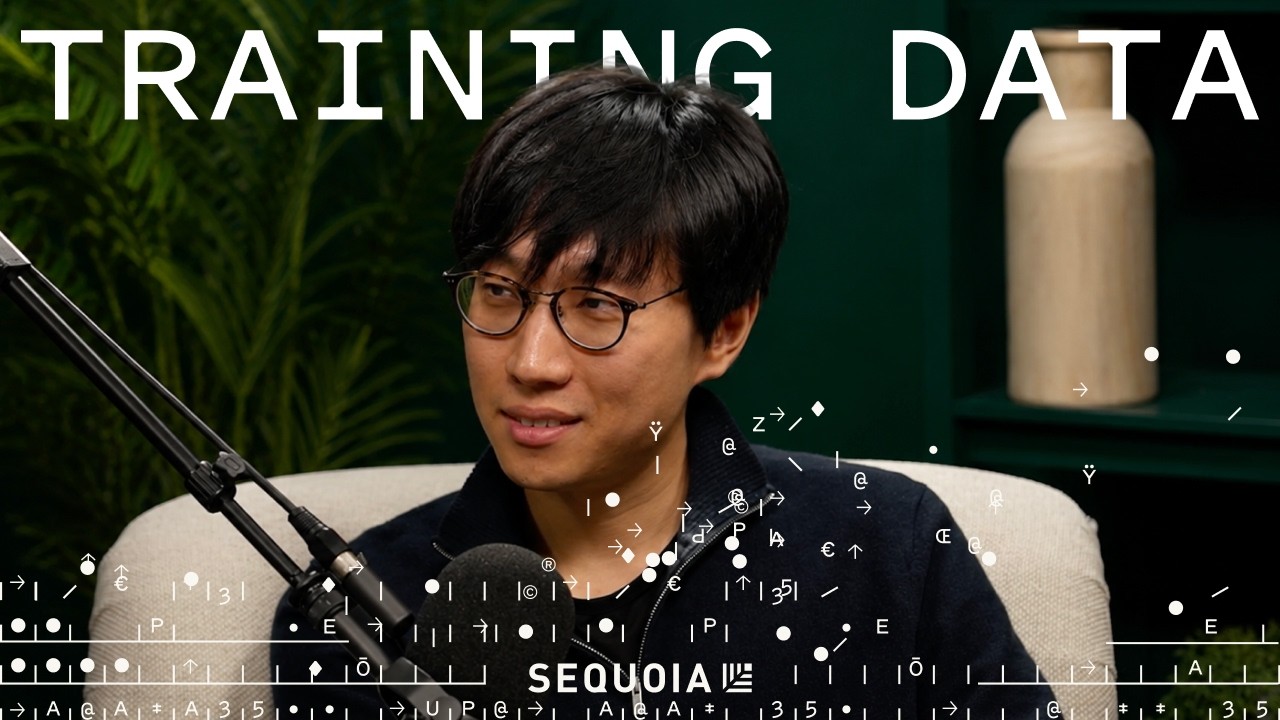
Simulating Humans at Scale: Simile's Joon Sung Park
Joon Sung Park, founder and CEO of Simile and creator of Stanford's Smallville generative-agents study, walks Sonya Huang through the arc from a 25-agent game town that spontaneously threw a Valentine's party to a company that simulated 1,000 Americans and predicted their answers 85% as accurately as the people reproduced their own. His core argument: today's frontier labs are building the "CPU of intelligence" — rational machines superhuman at problems with right answers — while simulating real human society needs the opposite, a model that encodes people's irrational values, preferences, and taste. CVS uses it for concept testing; some customers simulate their own earnings calls; and Joon's longer bet is a "CERN of human society" that could one day model bank runs, climate cooperation, or the early signals of a collapsing democracy. ## [00:00] Inside Smallville: 25 agents throw a Valentine's party The conversation opens on Joon's conviction — that science fiction's advanced societies always rest on two pillars, "some version of AGI and some version of simulations that really help guide the society" — before Sonya takes him back to Smallville, the April 2023 Stanford project that made his name. The setup was 25 generative agents, each given a persona and equipped with memory, planning, and reflection, then left to live in a small game town: wake up, do routines, go to work, form relationships. What surprised the team was emergent coordination. Isabella, a café owner, decided to throw a Valentine's Day party, spent the day before gathering materials and inviting customers, and on the day itself the party actually formed. > *some of the agents did not explicitly get invited, but we had one agent who got the invite, Claus, who decided to ask his crush out on a date* ## [03:34] From a foundation-models paper to simulating a subreddit Joon traces the origin back to 2020, the year GPT-3 was about to land. As a Stanford researcher he co-wrote the "Opportunities and Risks of Foundation Models" paper, and the part that gripped him was not that the models could classify or generate — interaction researchers had done that for years — but that they could encode human behavior. Coming out of the social-computing tradition, he saw a long-standing hole: there was no way to test how millions of people would behave on a platform short of shipping it and watching what happens, sometimes at real cost. That led to the 2022 Social Simulacra paper, the precursor to generative agents, which populated a simulated subreddit with thousands of personas to let a designer see community dynamics before launch. > *The only way we test it today is you basically field test it. You release your prototype, see what happens.* ## [07:57] The CPU of intelligence can't model irrational humans Asked when models got good enough for a faithful representation of society, Joon marks the path from GPT-3 — janky, no instruction tuning, needing prompt tricks just to follow orders — to today's foundation level where these applications become imaginable. But he draws a sharp limit. The frontier labs' north star is a rational, superhuman machine optimized for objective problems, and that is the wrong target for simulating people. As accuracy on objective benchmarks climbs, the ability to predict and simulate human behavior diverges, because people are not rational. > *We have a lot of subjective values, preferences, and taste.* ## [10:04] Why this became a company, not another paper Joon distinguishes the two vehicles bluntly: research is built for breadth, where each researcher owns a slice of thesis and is "not necessarily known for finishing our job," while a company is built for depth on a single conviction. The pull toward a company came roughly half a year after the generative-agents paper, first from social scientists wanting to run RCTs on the platform, then from Fortune 500 boards and CEOs who saw the demo at Stanford and asked whether the surveys and market questions they could never answer might run in simulation. Before committing, the team validated accuracy: simulations of 1,000 people across the US population. > *we can actually predict people's behaviors 85% as accurately as people replicate their own* ## [12:43] How a Simile engagement works — and the say-do gap Simile's first major customer is CVS, brought in by a senior VP of human insights who had read the validation paper and felt bottlenecked by how few questions he could field-test. The workflow mirrors how firms already use polling and panel companies: a customer names a population they want to understand, and Simile — through a strategic partnership with Gallup — reaches real humans, asks the magical 15-minute questions, and turns that data into agents that answer far beyond the original survey. Sonya pushes on why an LLM alone can't just role-play a 34-year-old woman from a coastal metro. Joon's answer is the say-do gap: models are trained on what people said online, not what they actually do, and closing that gap requires behavioral data — RCTs, pricing studies, and life-story interviews that surface the long-tail of a person. > *There are things that people say and then there are people there are things that people actually do and the gap there is real* ## [20:27] The GPU of intelligence: from concept tests to earnings calls Here Joon gives the framing that anchors the company. Today's models are the CPU of intelligence — one model trained on rational data, superb at objective questions. Simile is building something closer to the GPU: not superhuman, but as human as possible, where individual subunits represent the real viewpoints of different populations. Customers usually enter through a concrete door — concept testing, where instead of testing 5 to 10 ideas they imagine testing a thousand ideas across a thousand sub-populations — then move toward product testing with a temporal dimension and multi-agent simulation. One recurring and initially surprising ask: simulate the company's own earnings call to see how the audience reacts. > *imagine the current today's model are akin to the CPU of intelligence unit* ## [26:32] How accurate is it? Convergence versus divergence On evaluation, Joon starts from the theoretical limit — humans answer the same question slightly differently each time, so perfect prediction is impossible — then describes the metric: total variation distance between the ground-truth and simulated response distributions, with a TVD under 0.15 treated as strong enough for decisions. The deeper idea is two categories of simulation. Convergent ones tolerate compounding error because the pull toward an outcome is strong — like a network always forming a hub, the scale-free structure that powered PageRank. Divergent ones — was World War I inevitable, who wins an election — can't be expected to repeat, so the evaluation shifts to confidence: run it 100 times, see how often outcome X appears, and show the diversity of possible futures. He likens the work to the early days of inferential statistics setting the p < 0.05 threshold. > *was World War I inevitable or was it not?* ## [31:56] A CERN for human society Sonya raises the grander possibility — that fields like macroeconomics, which she sees as human behavior at scale, might one day be partly solved by simulation, including the venture question of where value accrues across the AI stack. Joon agrees there is "a Nobel Prize to be won there," recalling how Thomas Schelling's deliberately crude agent-based segregation models revealed something deep about macro behavior. The augmented version replaces red-dot/blue-dot agents with agents that replicate the full richness of individuals, opening questions economists actually asked him: when does a bank run happen, can nations be modeled solving climate's collective-action problem, what are the early signals of a democracy about to collapse. He imagines a simulation that costs $100 million and months to run once but answers a fundamental question — a Hubble telescope for human society. > *building simulator that's akin to the CERN of human society* ## Entities - **Joon Sung Park** (Person): Founder and CEO of Simile; created Stanford's Smallville generative-agents study and co-authored Social Simulacra. - **Sonya Huang** (Person): Partner at Sequoia Capital, AI investing; host of the conversation. - **Simile** (Organization): Applied AI lab building models that simulate human behavior and societies for concept testing, product testing, and multi-agent scenarios. - **Smallville** (Concept): 2023 Stanford experiment with 25 generative agents living in a game town, known for emergent behavior like a self-organized Valentine's party. - **Social Simulacra** (Concept): 2022 paper simulating a subreddit with thousands of personas; precursor to generative agents. - **Say-do gap** (Concept): The difference between what people say (the basis of LLM training data) and what they actually do, which behavioral data is collected to close. - **CPU vs GPU of intelligence** (Concept): Joon's framing — frontier labs build a rational "CPU" superhuman at objective problems; Simile builds a "GPU" encoding the diversity of human values and taste. - **Total variation distance** (Concept): Simile's accuracy metric comparing ground-truth and simulated response distributions; TVD < 0.15 treated as decision-grade. - **CVS** (Organization): Simile's first major customer, using it for concept testing via its human-insights team. - **Gallup** (Organization): Polling and panel partner Simile uses to reach real humans and ground simulations in real data.
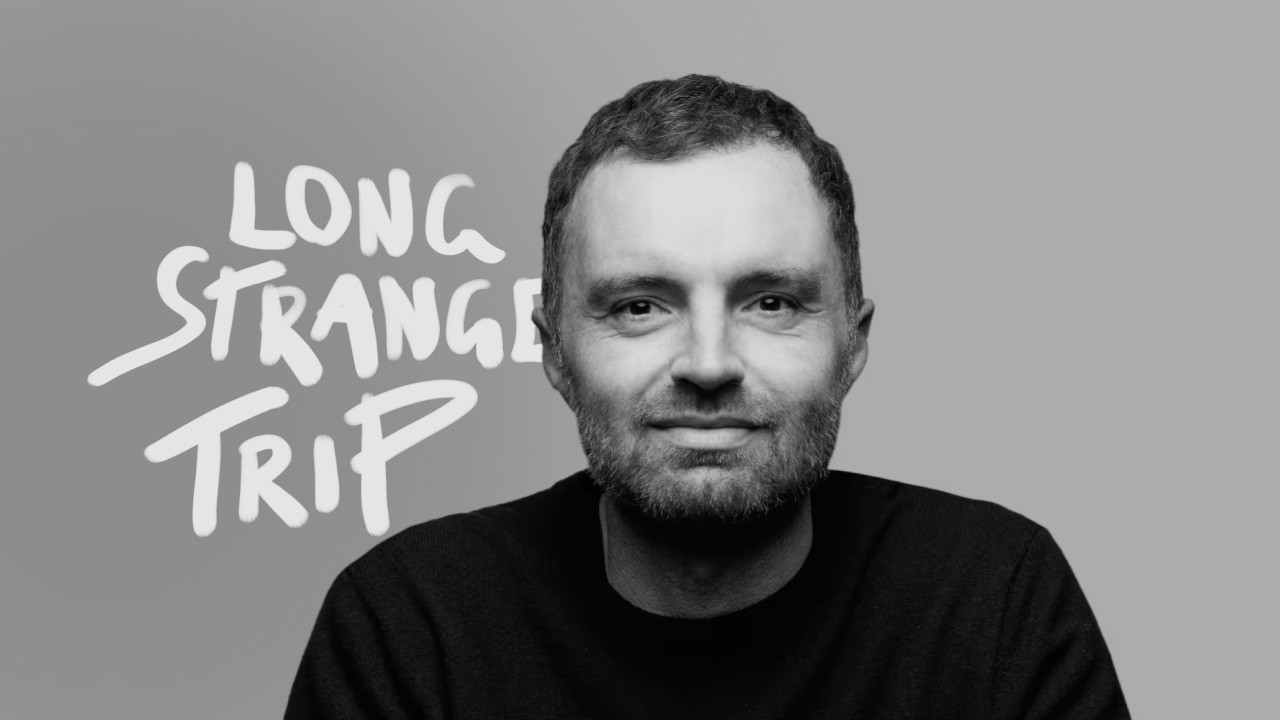
Lo que David Senra aprendió estudiando a más de 400 fundadores
David Senra lleva una década leyendo más de 400 biografías de fundadores y recientemente comenzó a entrevistar en persona a los que todavía están activos. Su respuesta en una sola palabra sobre lo que todos tienen en común es enfoque — lo que él llama "silencia el mundo y construye el tuyo" — y le explica a Brian Halligan por qué ese rasgo, combinado con un impulso casi compulsivo arraigado en experiencias tempranas, explica el éxito de un fundador mejor que cualquier lista de verificación de patrones del Valle del Silicio. La conversación abarca los orígenes en la infancia, los arquetipos de fundadores, el peligro de vender tu mejor empresa y cómo la era de la IA está haciendo que el oficio extremo sea más valioso que nunca, mientras el cableado humano fundamental de los grandes fundadores permanece igual. ## [00:00] Introducción Brian Halligan abre la conversación planteando lo que busca en David: una destilación de lo que realmente comparten los mejores fundadores — desde Jesús de Nazaret hasta Jensen Huang — y cómo usar ese conocimiento para identificarlos y acompañarlos. El episodio arranca en medio de una idea de David sobre Tony Xu de DoorDash, quien al final de la cena que celebraba un hito importante ya estaba catalogando las diecisiete cosas que todavía no iban bien. Esa inquietud permanente, argumenta David, es la señal. > *"Para cuando termina la cena previa a la cena, ya estoy pensando en las 17 cosas que no están saliendo bien. Por eso es tan bueno."* ## [01:11] El enfoque ante todo La respuesta de David en una sola palabra es enfoque. No esfuerzo, no resiliencia, no inteligencia — enfoque. Lo describe como algo cualitativamente distinto de lo que hacen otros grandes profesionales, casi como una especie aparte: no están mirando qué hacen los competidores, genuinamente no les importa. Su frase corta es "silencia el mundo y construye el tuyo." > *"Si tuviera que destilar todo en una sola palabra, sería enfoque. Están increíblemente enfocados en comparación con no solo la persona promedio. Es casi como si fueran una especie diferente."* ## [01:50] El enfoque de Dana White en la UFC Dana White es el ejemplo más fresco de David sobre el enfoque misionero. White creció autodescribiéndose como un perdedor que trabajaba de botones en Boston, se mudó a Las Vegas para estar cerca del mundo de las artes marciales sin nada que perder y terminó convenciendo a los hermanos Fertitta de comprar la UFC por 2 millones de dólares. Durante seis años perdieron dinero. Luego perdieron otros 40 millones antes de volverse rentables. Veintiséis años después, White cerró un contrato de televisión por casi 8.000 millones de dólares — y su explicación de cómo ocurrió es que nunca leyó un libro de negocios ni escuchó un podcast de negocios. Simplemente hizo lo que quería ver. > *"Su mundo entero es su negocio y lo que hace fuera de él no le importa. Está increíblemente enfocado."* ## [04:19] Enfoque versus obsesión Brian pregunta si enfoque y obsesión son lo mismo. David dice que están estrechamente relacionados pero son distintos: el enfoque es el acto de decir no a buenas ideas para poder perseguir una gran idea. Cita a Jony Ive repitiendo la distinción de Steve Jobs — el enfoque es decir no a una buena idea que realmente quieres hacer porque te distrae de una gran idea — y señala que cualquiera intensamente enfocado en algo parecerá obsesionado desde afuera, pero el mecanismo es la exclusión activa, no la fijación pasiva. > *"El enfoque es decir no a una buena idea que realmente quieres hacer porque te distrae de una gran idea."* ## [05:05] Orígenes en la infancia Brian pregunta de dónde viene la obsesión: de infancias normales o de algo roto desde temprano. David dice que no hay una sola respuesta, pero casi todos los fundadores que ha estudiado no son lo que llamaríamos bien ajustados. Trae la biografía de Francis Ford Coppola como la fuente de la frase que cristalizó un patrón que venía viendo repetidamente — que la historia del padre siempre está grabada en el hijo — y describe cómo entiende a cineastas, conductores de podcasts y fundadores de startups como el mismo tipo emprendedor. > *"La respuesta es que no es una sola cosa."* ## [06:07] Coppola y su padre El patrón que David sigue encontrando es que la historia del padre está grabada en el hijo. El padre de Coppola era un músico brillante pero fracasado que le dijo a su hijo pequeño "solo puede haber un genio en la familia — ese soy yo", y pasó años desalentándolo. Coppola internalizó eso y construyó una de las éticas de trabajo más implacables de Hollywood, ganando finalmente el Oscar y dejando que su padre escribiera la banda sonora, que también ganó un Oscar. David aplica esto a través del marco de Charlie Munger: para entender verdaderamente una idea hay que ligarla a la personalidad que la desarrolló, razón por la cual las biografías superan a los libros de estrategia. > *"Siempre puedes entender al hijo a través de la historia de su padre. La historia del padre está grabada en el hijo."* ## [08:48] Idiotas y arquetipos Brian plantea el cliché de que los grandes fundadores son idiotas. David lo rechaza de plano. Está trabajando con Daniel Ek de Spotify en un proyecto para mapear los arquetipos de fundadores — la hipótesis es que el encaje fundador-problema importa más que el encaje producto-mercado. Ek pasó años intentando imitar a Steve Jobs y desperdició ese tiempo usando una personalidad que no era la suya. Él es más del arquetipo entrenador. El punto de David: no hay un solo arquetipo, probablemente hay entre seis y ocho, y entender cuál eres tú vale más que imitar al fundador que sea famoso en este momento. > *"Lo más importante es el encaje fundador-problema. Piensa en Demis de DeepMind. Había una gran empresa en él. Era DeepMind. Fue puesto en este planeta para hacer lo que está haciendo."* ## [11:14] Autismo y originalidad Brian señala la alta prevalencia de rasgos del espectro autista entre los CEOs actuales con valoraciones de billones — Jobs, Gates, Bezos, Zuckerberg, Jensen, Ellison. David lee la interpretación de Peter Thiel: los fundadores que parecen levemente Asperger carecen del gen de imitación-socialización, lo que significa que nadie les hace abandonar sus ideas originales extrañas antes de que estén completamente formadas. La advertencia de David: la Bahía de San Francisco está llena ahora de personas que performan la anti-imitación, lo que las hace las más miméticas de todas. Rockefeller probablemente no encajaba en el patrón del espectro — pero tenía habilidades sociales avanzadas y aun así construyó la empresa más dominante de la historia. > *"Tenemos que preguntarnos qué hay en nuestra sociedad que hace que quienes no sufrimos de Asperger estemos en una desventaja enorme, porque nos convencerán de abandonar nuestras ideas interesantes, originales y creativas antes de que estén siquiera completamente formadas."* ## [14:55] La determinación del inmigrante David habla desde la experiencia personal como hijo de un inmigrante cubano: las personas que arriesgaron sus vidas en balsas para cruzar 145 kilómetros de océano le dan a sus hijos una base de referencia diferente sobre lo que significan el riesgo y la oportunidad. Brian señala que solo tres de los diez mayores fundadores tecnológicos estadounidenses eran inmigrantes — Jensen, Elon, Sergey — mientras que la mayoría era de clase media-alta suburbana. La réplica de David: esos tres concentran una fracción desproporcionada de la capitalización total de mercado, y muchos de los otros tenían padres inmigrantes. La ventaja puede transmitirse a través de una generación. > *"Piensa en cuánto amas a tu hijo y qué tan mal tenía que estar Cuba y qué tan malo tenía que ser el comunismo para poner a tu hijo de 14 o 9 años en una balsa y esperar que hiciera ese viaje de 145 kilómetros hasta el sur de Florida."* ## [16:38] Apostar por el fundador David dice que si fuera un inversor de riesgo no usaría ningún criterio — simplemente apostaría por la persona. Ed Catmull le contó la versión más clara: dale una gran idea a un equipo mediocre y la arruinarán; dale una idea mediocre a un gran equipo y la arreglarán, o la descartarán y construirán algo mejor. Las ideas vienen de las personas, así que las personas importan más que las ideas. La prueba de David: ¿tiene esta persona la cualidad que tenía Travis Kalanick en Uber, que es que lo harán funcionar o morirán en el intento? > *"Si le das una gran idea a un equipo mediocre, la van a arruinar. Si le das una idea mediocre a un gran equipo, o la arreglan o la descartan y crean algo nuevo."* ## [17:52] Solo versus en pareja La sabiduría convencional — los cofundadores son mejor, el número óptimo es tres — no coincide con lo que David ve a lo largo de la historia. La mayoría de las grandes empresas tuvieron una sola fuerza motriz dominante, y el "cofundador" o se fue (Wozniak), fue esencialmente un operador que el fundador adquirió (Frick en Carnegie Steel), o fue una personalidad complementaria que conscientemente se subordinó a un talento único en un siglo (Munger respecto a Buffett). Cuando David se reunió con Munger, Munger admitió que siempre pensó que era más inteligente que todos los demás, pero reconoció el enfoque singular de Buffett y tomó la decisión deliberada de subordinar su propio ego a él. > *"Si pudiera vivir la vida de nuevo, seguiría pensando que soy más inteligente que todos los demás, pero haría un mejor trabajo ocultándolo."* ## [23:20] El discurso negativo como combustible Jensen Huang dice que cada mañana se mira al espejo y se pregunta por qué es tan malo. Elon describe su mente como una tormenta y parece genuinamente inquieto cuando las cosas van bien. La mayoría de los fundadores que David ha estudiado funcionan con el discurso negativo propio como combustible — pero David cambió esto en sí mismo recientemente. Brad Jacobs, que construyó ocho empresas independientes con valoración de mil millones a lo largo de 45 años, le dijo: el impulso negativo te trajo hasta aquí, pero ya no te sirve. Ahora amas el trabajo. Haz que tu impulso interior sea generativo. David dice que algo hizo clic y no ha vuelto atrás. > *"Tu impulso interior debería ser generativo. Debería ser algo como: 'Estoy intentando hacer algo bueno para el mundo, que me encanta hacer y de lo que estoy muy orgulloso.'"* ## [26:39] Cambios de plataforma y el modo fundador Brian pregunta si los grandes cambios de plataforma — la revolución industrial, la línea de ensamblaje, ahora la IA — cambian el perfil de quién tiene éxito y cómo dirigen las empresas. Brian describe la distinción de Paul Graham entre el modo fundador y el modo gerente, y su propio marco del "modo Dorsey": organigrama plano, títulos eliminados, un sistema de IA en el centro tomando un porcentaje creciente de decisiones mientras los humanos le dan contexto y aplican criterio. Lo ve como estructuralmente diferente de cualquier cambio de plataforma anterior. > *"Con el tiempo, el sistema de IA toma muy pocas decisiones hoy, quizás el 5% o el 10%, pero el porcentaje de decisiones que toma el sistema de IA frente a los humanos empieza a invertirse."* ## [28:07] Dell contra IBM David le preguntó directamente a Michael Dell si este momento se parece a algo que haya vivido antes. Dell dijo que no, que esto es categóricamente diferente. David habitualmente es escéptico de las afirmaciones de "esta vez es diferente", pero coincide con Dell, Toby Lütke y Jack Dorsey en que la cantidad de apalancamiento ahora disponible para un equipo pequeño cambia fundamentalmente la matemática de construir una empresa. IBM llegó a tener el 80% del mercado de toda la industria tecnológica y fue la primera empresa en alcanzar una capitalización de mercado de 100.000 millones de dólares. Dell la desafió desde una habitación de la Universidad de Texas con 1.000 dólares — y fue rentable cada trimestre durante sus primeros veinte años. > *"Realmente creo que la forma de dirigir una empresa, cómo puedes hacerlo y lo que tienes disponible, es completamente diferente."* ## [30:02] La ventaja del apalancamiento infinito La frase de Naval Ravikant — "en la era del apalancamiento infinito, estar en el extremo de tu oficio es muy importante" — fue escrita antes de la IA. David cree que la IA simplemente amplifica esa verdad en otro orden de magnitud. Su ejemplo es Jordi de TBN: no era dos veces mejor en marketing de podcasts que la siguiente persona, era cien veces mejor, y las recompensas económicas disponibles para alguien en esa frontera no son cien veces mayores, son potencialmente mil veces mayores. La prima por el enfoque y el dominio está subiendo, no bajando. > *"En la era del apalancamiento infinito, estar en el extremo de tu oficio es muy importante."* ## [31:38] Enfoque versus velocidad Brian objeta: los fundadores nativos de IA que conoce — Harvey, Lovable, ElevenLabs — están avanzando rápido en muchos frentes simultáneamente. ¿Sigue siendo el enfoque la regla? La respuesta de David: todavía no han construido negocios duraderos, así que es demasiado pronto para saberlo. Su preocupación más profunda es qué pasa después de vender. Ha pasado tiempo con fundadores en sus 70 y 80 años que vendieron su mejor empresa y pasaron décadas intentando recuperar la magia en segundas y terceras apuestas — casi ninguno tuvo éxito. Si realmente tienes una empresa generacional, no la vendas. O estás completamente dentro o completamente fuera. > *"O estás completamente dentro o completamente fuera — pero ¿por qué estarías completamente dentro de tu segunda, tercera, cuarta o quinta mejor idea?"* ## [34:20] Gusto y escucha Brian pregunta si el buen gusto es un rasgo genuino del fundador o un concepto de moda. David dice que el gusto es muy real, y su ejemplo más claro es Rick Rubin — que a los 62 años sigue haciendo lo que empezó a los 18 en su habitación de residencia universitaria. Pero la afirmación más específica de David es que la ventaja de Rubin no es solo el gusto, sino que es un oyente profesional. La mayoría de las personas en una conversación están esperando su turno para responder. Rubin realmente está interesado. Esa calidad de atención, trasladada de la producción musical a los podcasts, es lo que lo hace excepcional. David también aborda la autenticidad del fundador: no todos deberían ser sin filtros — depende de quién eres, en qué industria estás y qué estás intentando construir. > *"Tomó una habilidad de la música y la aplicó a los podcasts. Eres un oyente profesional."* ## [40:52] Rasgos del fundador y equilibrio Los rasgos compartidos fundamentales que David ha identificado en más de 400 biografías: obsesión, alta disconformidad, obsesión por el control de costos y microgestión — lo que Paul Graham llamó "modo fundador", que David señala no es nada nuevo. Rockefeller era en realidad una excepción en la disconformidad, nunca alzó la voz, pero era una fuerza de la naturaleza en otros aspectos. Sobre la pregunta del equilibrio entre vida y trabajo: David puede nombrar exactamente tres fundadores a lo largo de cuatro siglos que tuvieron vidas personales genuinamente equilibradas. Sam Walton, escribiendo su autobiografía mientras moría de cáncer, dijo que lo haría todo exactamente igual. Phil Knight a los 75 años todavía no puede reconciliar del todo su ausencia de la vida de sus hijos. Lo que motiva a los grandes no es el dinero — es el control. > *"No creo que los egos pequeños construyan grandes empresas — creo que todas estas personas tienen egos enormes. Creo que algunos simplemente son mejores ocultándolo. Y lo que motiva a la mayoría de los fundadores no es el dinero, es el control."* ## [54:22] Conclusiones finales Brian destila tres conclusiones: la obsesión profunda fundador-mercado es el verdadero hilo común; tener un buen equilibrio entre vida y trabajo mientras construyes una gran empresa es genuinamente raro (tres de 400); y el síndrome del impostor vale la pena trabajarlo — Brian hace referencia al cambio de Brian Chesky de liderar desde el miedo a liderar desde el amor como el modelo a seguir. El episodio cierra con la fórmula de Dana White: entiende profundamente quién eres, entiende profundamente qué quieres hacer en el mundo, luego levántate cada día y ejecuta. Mantente en el juego el tiempo suficiente para tener suerte. > *"Mantente en el juego el tiempo suficiente para tener suerte."* ## Entidades - **David Senra** (Persona): Presentador del podcast Founders; ha leído más de 400 biografías de fundadores y ahora entrevista en persona a los que están activos - **Brian Halligan** (Persona): Cofundador y presidente ejecutivo de HubSpot; presenta esta serie de Sequoia Capital - **Dana White** (Persona): Fundador y CEO de la UFC; la compró por 2 millones de dólares en 2001 y recientemente cerró un contrato de derechos televisivos por casi 8.000 millones - **Daniel Ek** (Persona): Fundador de Spotify; trabaja con David en un marco de arquetipos de fundadores; defiende el encaje fundador-problema por encima del encaje producto-mercado - **Demis Hassabis** (Persona): Cofundador de DeepMind; citado como el ejemplo más claro de encaje perfecto fundador-problema - **Charlie Munger** (Persona): Socio en Berkshire Hathaway; subordinó conscientemente su ego al talento único en un siglo de Buffett - **Ed Catmull** (Persona): Cofundador de Pixar; colaborador más longevo consecutivo de Steve Jobs; fuente del principio "dale una gran idea a un equipo mediocre" - **Brad Jacobs** (Persona): Emprendedor que construyó ocho empresas independientes con valoración de mil millones; aconsejó a David sobre el cambio de un impulso punitivo a uno generativo - **Rick Rubin** (Persona): Productor musical; ejemplo de David sobre el gusto combinado con la escucha profesional como ventaja acumulativa - **Founders** (Medio): El podcast de David Senra que cubre más de 400 biografías de fundadores desde la historia hasta el presente - **founder-problem fit** (Concepto): El marco de Daniel Ek — el encaje entre la identidad de un fundador y el problema específico que está resolviendo es la forma más importante de encaje - **infinite leverage** (Concepto): La idea de Naval Ravikant de que en una era de software e IA, estar en el extremo de tu oficio produce recompensas desproporcionadamente grandes - **Sequoia Capital** (Organización): Firma de capital de riesgo; base actual de Brian Halligan y anfitriona de esta serie de podcasts
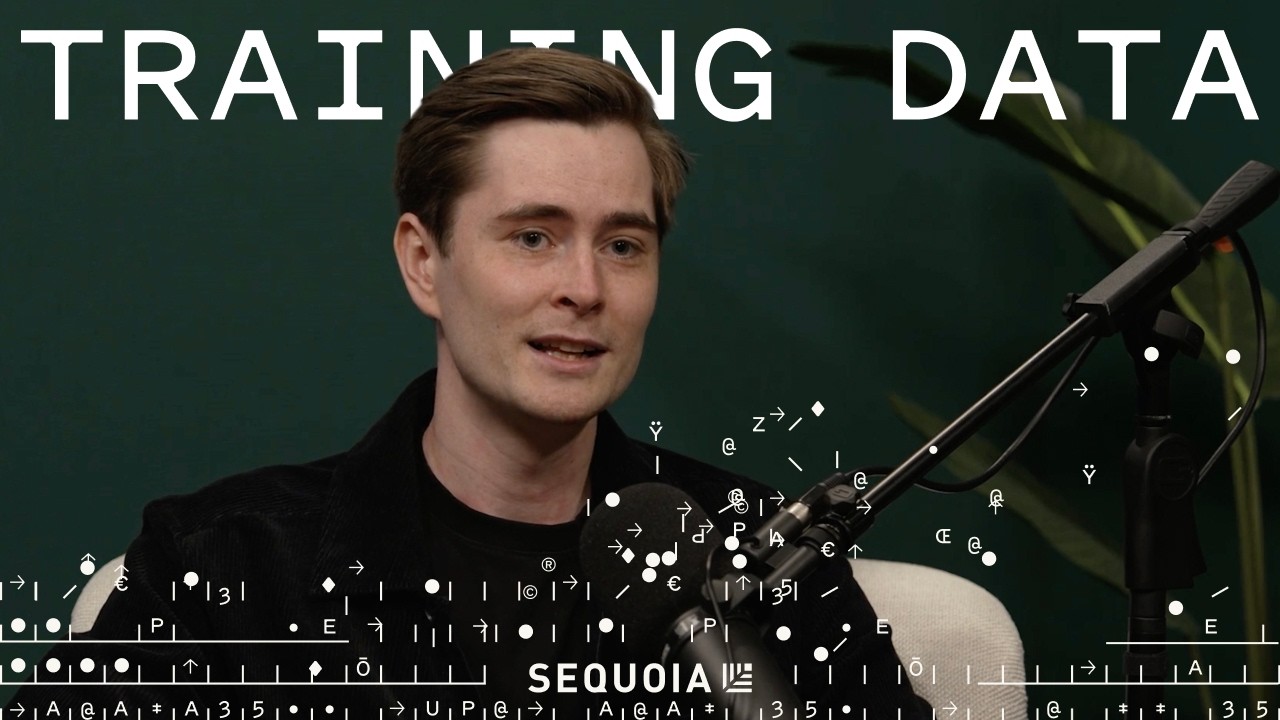
Knowing What Your Customers Want, All the Time: Listen Labs' Alfred Wahlforss
Alfred Wahlforss built Listen Labs after scratching his own itch: when his viral AI-avatar app hit 20,000 users overnight and churn spiked, he needed to know why—fast. The answer was an AI agent that runs voice interviews at scale, drawing from a panel of 30 million people. A year in, Listen serves 20% of the Fortune 500 and has completed over a million interviews. The deeper finding is counterintuitive: respondents are often more honest with an AI interviewer than a human one, and voice transcripts turn out to be richer training signal than credit card data or behavioral logs. Wahlforss and Sequoia's Konstantine Buhler work through why audience selection consumes 80% of Listen's engineering, how back-tested simulation beats vanilla ChatGPT at message testing, and why—as AGI makes building trivially cheap—knowing *what* to build becomes the scarce resource Listen wants to own. ## [00:00] Introduction Alfred opens in the middle of a thought about audience depth: Listen's long-term goal is to reach a billion people and build rich profiles that reveal each person's genuine areas of expertise—not just demographic boxes, but things like whether someone is a true sneaker influencer versus a casual buyer. Konstantine then formally introduces him: Listen launched roughly a year ago, already counts Microsoft, Anthropic, Sweet Green, NBC, and others as customers, and runs thousands of voice interviews simultaneously. The brief cold-open framing gives the episode its throughline—the value of talking to the *right* person, not just any person. > *"Our goal is to get to a billion people in our audience and then to be able to stratify and know what exactly is this person an expert on."* ## [01:20] How Listen Works The product works in three stages: a researcher types a question (say, "how can we improve Cursor's onboarding?"), Listen's AI agent generates an interview guide, then routes those interviews to matched participants from its 30-million-person panel. Hundreds of conversations run in parallel, the results are synthesized, and recommendations surface. The next stage, launching in a few months, is simulation: after tens of thousands of interviews accumulate on a topic, can Listen predict how customers will answer *future* questions without running a new interview? > *"As we get closer to AGI, it will be easier to build things, but the hard part will be knowing what to build—and that's what we're building at Listen."* ## [02:23] Customer Wins Chubbies discovered that chest hair caught uncomfortably on one of their shirt materials; Listen surfaced the feedback, Chubbies redesigned the garment, and comfort scores jumped. Manscaped used Listen insights to reshape a Super Bowl ad. Skims uses it for ongoing product testing. The through-line Alfred draws: Listen handles both small product details and high-stakes campaign decisions with the same workflow—talk to real people, fast. > *"They discovered that chest hair interface really poorly with one of the materials they have. So it's really uncomfortable to wear one of their shirts, and they changed the shirt and it became radically more comfortable."* ## [03:28] Surveys Versus Reality Konstantine presses on the classic critique: survey respondents lie, or at least contradict themselves. Alfred's evidence: Listen ran the same multiple-choice survey questions back to the same people and found radical inconsistency—but when those same people had to reason through an open-ended voice answer, consistency improved sharply. On sales-data back-testing, Alfred agrees AB tests are the gold standard but notes they require large user bases that most companies don't have. Interview data, properly designed, beats no data. > *"If you go back to the same person and ask them a survey question in a multiple choice fashion, they're much more inconsistent. But when you actually have to think and reason through your answer, you're much more consistent."* ## [05:13] Zoom Like AI Interviews The participant experience is a video call with an AI agent—not a text form. The agent watches facial expressions and vocal tone, giving Listen a second signal layer beyond what people say. Alfred cites advertising testing as the clearest win: respondents might rate an ad highly on a Likert scale but show genuine enthusiasm in video, and that enthusiasm predicts Meta and LinkedIn performance marketing results significantly better than the numeric score. Every data point links back to the actual video clip, so researchers can verify the AI isn't hallucinating sources. > *"For every data point you can always click and then look at the video or see the quote—so you know that AI is not just hallucinating where it's coming from."* ## [07:14] Origin Story Alfred and his co-founder shipped a consumer app called "Be Fake"—an early stable-diffusion fine-tuning tool for creating AI avatars of yourself—which went viral overnight and hit 20,000 users. Churn spiked immediately and they had no idea why. They built an AI interview tool to ask their own users, found it genuinely useful, and pivoted. The market-research product they built for themselves became Listen Labs. > *"We built this AI interview for ourselves because we had a ton of churn and we wanted to understand why—and that's how we got started."* ## [08:01] Old World Research The pre-Listen world had two speeds: slow online survey tools like Qualtrics, or expensive services firms that charge tens of millions to recruit participants, design question methodology, moderate focus groups, and synthesize hundreds of transcripts. Question design alone is an academic discipline—ask "how much would you pay for this?" and you get junk data. The sourcing problem is equally hard: incidence rates of 10% mean nine out of ten recruited panelists get screened out, burning trust and causing churn on the databases themselves. > *"In traditional industries like CPG or even Microsoft, they spend tens of millions of dollars on focus groups to bring people in a room and interview them—and we can help speed that up much faster."* ## [09:50] AI First Benefits Three compounding advantages: speed (results from real people in five minutes), cost (asynchronous interviews pay participants less than synchronous ones, and participants accept that willingly), and honesty (people open up more to a non-judgmental AI than to a human interviewer who might silently judge them). Alfred mentions sensitive use cases—interviewing children about products, with parental consent—as an area where the AI's non-threatening presence produces data that focus groups can't. > *"People are more honest talking to an AI. It's a very therapeutic experience because it's a non-judgmental entity that's really interested in you."* ## [11:32] Finding The Right People Listen spends 80% of its engineering resources on audience quality, not the interview agent itself. The reason: power-law customer segmentation means talking to the wrong 100 people gives you wrong insights. Sweet Green's most valuable customer is urban, high-income, mostly female, and—Alfred's specific example—knows what seed oils are (roughly 1% of the population). Listen builds rich profiles across every interview a panelist ever participates in, so an offhand comment ("I'm a total sneaker head") in an unrelated interview can resurface that person when Nike needs launch feedback. Traditional email-list panels couldn't do cross-topic profiling. > *"Even a product like Sweet Green, which you would think is for everyone, the right audience is typically urban, high household income, mostly female—and they need to know what seed oils are, which only like 1% of the population does."* ## [14:30] CRM And Prospecting Sweet Green already has a CRM full of its most loyal customers—so why use Listen? Three reasons: researching *prospective* customers who aren't yet in the CRM requires an external panel; CRMs are typically disorganized and legally constrained (Google can't spam Gmail users, even its own); and direct outbound email risks getting flagged as spam, which can permanently damage a domain's deliverability. Listen provides clean, third-party panel access that sidesteps all three problems while still supporting CRM-connected campaigns when brands want them. > *"What we found is that the CRM is typically really unorganized, and sometimes there are regulatory issues—if you're at Google, you can't just send emails to people who use Gmail."* ## [15:35] Consulting In The AI Era Konstantine—a former buyer of McKinsey-style consulting—asks whether firms like Bain still have a role. Alfred's view: yes, but margins compress. Bain already uses Listen to accelerate existing workflows. The more optimistic scenario: AI doesn't just replace a research project, it makes research cheap enough to run five simultaneous strategic explorations that a company never would have commissioned before. Alfred predicts consulting expands in scope even as price-per-project falls. On economic surplus, Listen has charged hundreds of thousands of dollars to interview 20 doctors across eight countries—fast—a project that previously would have taken months. The surplus is currently staying with the supplier. Alfred also flags an emerging agentic loop: churn interviews surface bugs, which connect directly to a coding agent that opens a PR and ships the fix. Listen as the customer-intelligence "left side" of an autonomous product development cycle. > *"Because you're able to do it faster, I would argue you should be able to charge more for it—and we have charged hundreds of thousands of dollars to speak to 20 doctors across eight countries."* ## [20:05] Market Research Simulation This is the episode's technical core. Konstantine frames the evolution as 1.0 (call 100 people manually), 2.0 (AI-native simultaneous interviews), and 3.0 (generative simulation). Alfred explains how Listen's simulation works: interview a single person deeply, build a persona model, then scale to a thousand statistically representative agents. Back-testing removes a held-out question and measures prediction accuracy—they reach 95% on stable preference domains and deliberately expose the model to nonsensical queries (dog names) to calibrate what it *can't* predict. Alfred ran a personal live test: 100 title variants for a conference talk, run through Listen's panel simulation. The top-ranked title performed twice as well as the second. He then ran the same test in ChatGPT—which picked the wrong title when shown a past successful talk versus a less successful one. Listen's domain-specific panel data beat the general model. The gap: interview transcripts outperform credit card spend, behavioral logs, or ChatGPT persona prompting because voice conversations capture how a specific *type* of person actually reasons, not just what the average person does. Looking ahead, Alfred sees simulation handling "billboard tagline" decisions while real interviews remain the standard for Super Bowl ad buys. The product's proprietary eval climbed from 20% to 85% on avoiding repetitive questions, then Listen raised the bar with a harder eval (screen-state awareness, skipping irrelevant questions) and is back at 20%—which Alfred frames as the vertical AI flywheel: a proprietary benchmark that only you can keep climbing. > *"We were able to get 95% accuracy to predict how they will answer certain questions. The tricky part is knowing what things you can answer and what you can't."* ## [35:33] Closing Thoughts Alfred's conviction: human input will always be necessary because humans are inherently irrational—TikTok trends can overturn a marketing strategy overnight, and no AGI will preempt that. His uncertainty: the ceiling for simulation quality. His moat argument: network effects on the panel (supply-demand flywheel), data network effects (more interviews → better simulation), and product stickiness (interview history compounds inside the platform). But the simplest advantage he cites is opinionated defaults—early customers using vanilla LLMs to design their own interview guides got bad data and blamed Listen; now the agent enforces question-design best practices and data quality is consistent. Konstantine ends with the "Tide Pods moment" question: can Listen's AI start *generating* product ideas mid-interview rather than just testing them? Alfred says customers already feed AI-generated images into interviews manually; the MCP integration means Claude can loop Listen calls autonomously. The vision is live brainstorming between the AI interviewer and the respondent—ideas surfacing as the customer articulates a pain, not after. > *"Founders want to build something that's complex X, but customers want something that's stupid simple and it just works. And that's the advantage you have as a vertical AI company—you can train the agent to follow best practices in the work that you do."* ## Entities - **Alfred Wahlforss** (Person): Co-founder and CEO of Listen Labs; previously built "Be Fake," a viral AI-avatar consumer app. - **Konstantine Buhler** (Person): Partner at Sequoia Capital; host of the Training Data podcast; former consultant and operator. - **Listen Labs** (Organization): AI-first customer research platform; runs voice interviews with a 30-million-person panel; building generative simulation. - **Market Research Simulation** (Concept): Building persona models from accumulated interview data to predict future customer responses without running new interviews; back-tested against held-out questions. - **Audience Quality** (Concept): Listen's thesis that 80% of research value comes from recruiting the right respondents—power-law customer segments—not just any panelists. - **Be Fake** (Software): Alfred's earlier consumer app (AI avatar fine-tuning via stable diffusion); the origin of Listen's interview tooling. - **Bain** (Organization): Management consulting firm; cited as an active Listen customer using the platform to accelerate traditional research workflows. - **Procter & Gamble** (Organization): Cited as the historical archetype of market-research-driven brand management; Tide Pods and M&M's given as canonical examples. - **Qualtrics** (Software): Legacy survey platform representing the "old world" of market research tooling.
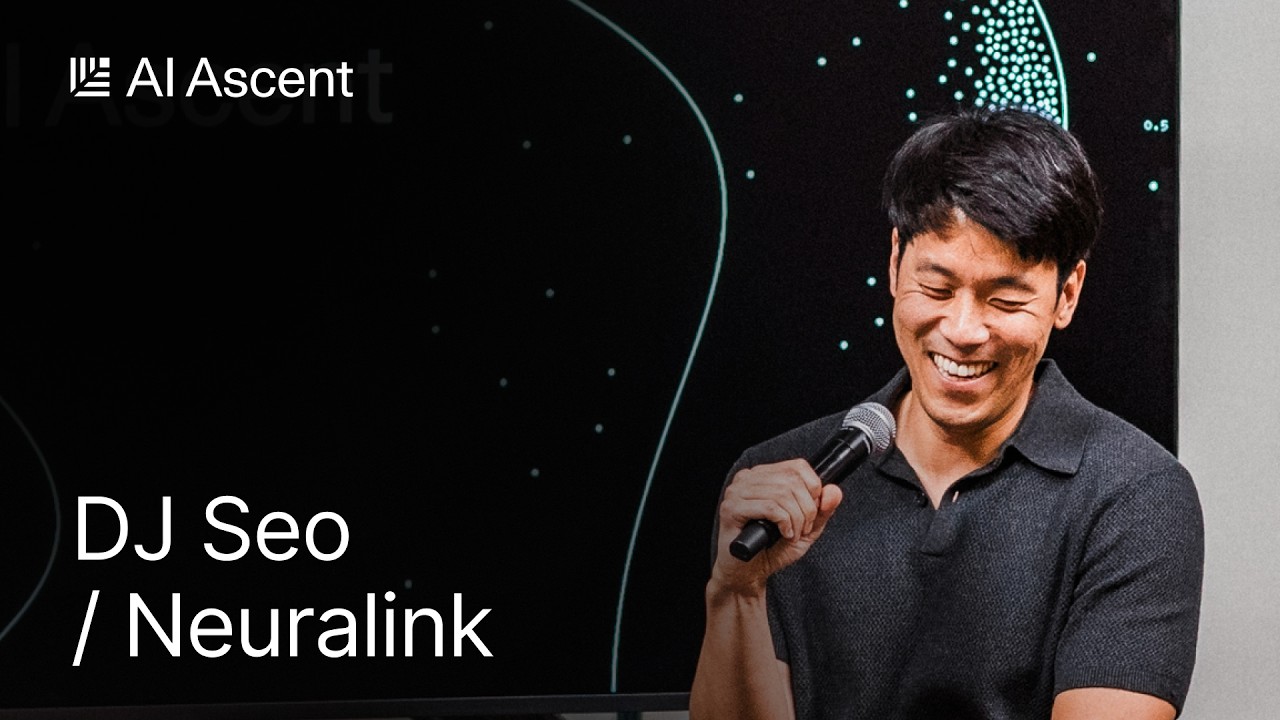
Neuralink's DJ Seo: Inside the Race to Connect Brains and AI
At AI Ascent 2026, Neuralink co-founder and president DJ Seo sits down with Sequoia partner Shaun Maguire to lay out exactly where the company stands: 20-plus Telepathy patients controlling computers and robotic arms through pure thought, Blindsight in preclinical testing and potentially cleared for human use by end of 2026, and a first-principles manufacturing philosophy borrowed from Elon Musk that treats surgical robots the way SpaceX treated reusable rockets. DJ argues that the real ceiling of this technology is not cursor control or speech synthesis but direct, uncompressed, multimodal transfer of concepts — AI as a neocortical layer sitting above the human limbic system — and that scale, the same variable that unlocked the LLM era, is the only remaining gate. ## [00:00] Introduction Shaun Maguire opens the session by announcing a two-minute Neuralink patient video before the interview begins, telling the audience to stay on the side because what they are about to watch is proof that the company has already cleared the hardest bar: restoring human agency to people who had lost it entirely. ## [00:21] Telepathy Patient Stories The video narrates four patients whose lives changed after receiving the Telepathy implant. A quadriplegic patient describes moving a cursor with thought alone — "I'm thinking and a cursor is moving on a screen. It blew my mind." An ALS patient who lost the ability to speak regains a digital voice through the implant: "I'm talking to you with my mind." Another patient notes that the implant flipped how his child sees him: "I am not able to do things that other dads can, but now he thinks it's so cool that I can do things that other dads cannot." > *"Before the implant, I was locked in, non-verbal, quadriplegic. Now I control my computer just by thinking and the rewards have been immense for me."* ## [01:06] Convoy Robotics Independence The video shifts to Convoy, Neuralink's assistive robotics team, which is extending BCI control beyond a screen to physical manipulation in the real world. A patient who had been losing motor function moves a robotic arm through its axes using only neural intent: "It was incredible to be able to just gesture with an arm again." A second patient, Kenneth, who was losing his voice to ALS, uses the system's speech synthesis to speak aloud in real time during the video — words generated by his brain signals rather than his vocal cords. > *"Gaining functionality that I thought was gone forever was so incredibly life-changing."* ## [02:04] Blindsight Vision Restore The video previews Blindsight, Neuralink's second product line, designed for patients who have lost both eyes or optic nerve function. An external camera captures the visual scene; the device writes the signal directly into the visual cortex via electrical stimulation, generating phosphenes — artificial pixels of light. A patient named Audrey, asked how it feels, answers simply: "Life-changing." The video closes with the line "all with my mind" spoken over footage of a patient interacting with the world through the restored signal. > *"The future of this technology feels almost unlimited... we are finding ways to apply it across all regions of the brain."* ## [03:10] After Video Reflections DJ Seo, visibly moved after watching the video alongside the audience, speaks first: "We were cracking a lot of jokes before that video, but honestly, that brought tears to my eyes." He describes the work as one of the most inspiring projects in the world — not because of the technical milestone but because the team is giving back capabilities that patients had already grieved as permanently lost. Maguire affirms the sentiment before pivoting to the founding story. > *"This is one of the most inspiring projects in the world. It's incredibly difficult what they're doing and I mean, they're truly saving people."* ## [03:31] Origin Story And AI DJ traces Neuralink's founding insight to a single bottleneck: the mismatch between human output bandwidth and AI capability. In 2016, saying that out loud "sounded insane," but the logic has not changed. His personal path ran through a childhood fascination with the brain, undergraduate work at Caltech building miniaturized low-power electronics, and a Berkeley PhD focused on shrinking lab-grade neural systems down to something deployable. When he met Elon Musk near the end of his PhD, the scale and ambition of the project made refusal impossible. He frames the brain as "the most interesting compute that we all carry" and "the only form of general intelligence that we know to date." > *"Really the key insight back then was sort of the IO bottleneck between the human output and AI capabilities."* ## [06:31] Scaling And Vertical Integration Maguire presses on what smart people most misunderstand about Neuralink: many know the implant and the decoding algorithm, but almost nobody grasps the manufacturing and surgical-robot infrastructure the company built in parallel from day one. DJ attributes this to what he calls "Elon magic" — an insistence on vertical integration that gives Neuralink control over every layer from chip design to factory floor to robotic surgery deployment. The target is not a niche medical device; it is LASIK-scale surgery available to millions. Building that capacity first means progress looks slow until "the iceberg pops over the waterline" and ramp becomes near-instantaneous. > *"Vertical integration is something that is really the lifeblood of Neuralink and Elon companies and what really enables us to have that fast iteration loop from design, develop, deploy."* ## [09:27] Caregivers And Purpose Asked which patient story inspires him most, DJ refuses to pick one — the power, he says, is not only in the patients but in the caregivers: Nolan's mother Mia, Brad's wife Tiffany, Ken's wife Cheryl. He describes their presence as "a really powerful human story of love, sacrifice, and resilience." He then takes what he calls a philosophical tangent: his core belief is that fulfillment comes from helping others, because the gap between self and other is not categorically different from the gap between your present and future selves. That belief is what he says keeps him and much of the Neuralink team going — they are "igniting a fire of hope" for people who had given up on recovering what they lost. > *"I personally and as well as many others at Neuralink find extreme fulfillment being able to help those that really cannot help themselves."* ## [13:10] BCIs Meet AI Future Maguire asks the room's core question: how do BCIs and AI converge? DJ sketches a two-horizon answer. Near term, the system translates neural intent into legacy interfaces — keyboard, mouse, language — which is already working. The real breakthrough, which he thinks is "not super distant," is bypassing those legacy interfaces entirely and computing on raw neural intent. He points to transformer architectures as existence proofs: nothing prevents them from learning the latent manifolds of neural data given sufficient scale. Neuralink is already fine-tuning LLM-class models on neural recordings from its 20 participants and finding "very counterintuitive" patterns. The ultimate ceiling he names is "direct, uncompressed, high-fidelity, multimodal transfer of concepts" — the Matrix's "I learned kung fu" moment and possibly beyond it. He also shares what he calls a clarifying lesson from working with Musk: "all green light schedule" — a first-principles forcing function that strips every man-made bottleneck and asks how fast something could actually be built if every light were green. His estimate is that 80–90% of perceived constraints in hardware development are artifacts of convention, not physics. > *"I think if you really think about the ultimate ceiling of this technology, it's really direct uncompressed high fidelity and multimodal transfer of concepts."* ## [21:05] Audience Q&A Wrap Three audience questions in the final four minutes. On product sequencing — when to go deep versus expand — DJ explains the "beachhead and expand" strategy: build everything generalizably enough from the start so that regulatory approval for motor cortex becomes a template for visual cortex and beyond. The first approval is the hardest; every subsequent one rides the clinical safety record already established. On augmentation for healthy users, DJ frames everything around benefit-risk: the calculus is obvious for quadriplegic patients; for otherwise healthy users it remains unclear, but he notes that off-label use after approval is legally available to anyone who can find a neurosurgeon and pay out-of-pocket. On the hard problem of consciousness, he gives a pointed one-liner: if you can inject new senses and measure the subjective response quantitatively, you may have a pathway toward measuring consciousness itself. Maguire closes by calling Neuralink "one of the most inspiring companies in the world." > *"If you are able to inject new senses, there may be ways to quantitatively understand that."* ## Entities - **DJ Seo** (Person): Co-founder and president of Neuralink; PhD in miniaturized electronics from Berkeley; joined after meeting Elon Musk near the end of his doctorate - **Shaun Maguire** (Person): Partner at Sequoia Capital; host of the AI Ascent 2026 fireside session - **Elon Musk** (Person): Co-founder of Neuralink; originator of the "all green light schedule" and vertical integration philosophy carried across Tesla, SpaceX, and Neuralink - **Neuralink** (Organization): BCI company founded in 2016; products include Telepathy (motor prosthesis) and Blindsight (vision restoration via visual cortex stimulation) - **Telepathy** (Software): Neuralink's first commercial product; allows paralyzed patients to control computers and robotic devices through neural intent decoding - **Blindsight** (Software): Neuralink's second product line; restores vision for patients with total loss of eyes or optic nerve by writing directly to the visual cortex; in preclinical testing as of mid-2026 - **IO Bottleneck** (Concept): The mismatch between human output bandwidth (speech, typing, gesture) and AI processing capability; the founding problem Neuralink was built to solve - **Neural Foundational Model** (Concept): LLM-class transformer models fine-tuned on neural recording data; Neuralink is building these at 20-participant scale and observing counterintuitive patterns in neural latent space - **All Green Light Schedule** (Concept): Elon Musk's first-principles engineering discipline — strip every man-made constraint and ask what physics alone limits; DJ estimates 80–90% of hardware delays are conventional, not physical
Cómo Cursor entrenó Composer en Fireworks: infraestructura distribuida para RL de alto rendimiento
Federico Cassano de Cursor y Dmytro Dzhulgakov de Fireworks guían a Sonya Huang por cada capa de cómo se construyó Composer 2 — desde la base MoE de Kimi 2.5, pasando por un mid-training a gran escala y RL asíncrono distribuido globalmente, hasta explicar por qué la especialización supera a los modelos generales en coste y calidad. El núcleo del episodio es la historia de infraestructura: cuatro clústeres GPU repartidos por continentes, un esquema de Delta Compression que transmite instantáneas de pesos de 1 TB en menos de un minuto, y un bucle RL en tiempo real que actualiza el modelo en producción con señales reales de usuarios cada pocas horas. Estas técnicas permiten a Cursor ofrecer rendimiento de codificación de frontera a una fracción del coste de inferencia de los modelos de propósito general. ## [00:00] Introducción El episodio arranca en medio de una discusión sobre un problema que planteó Dmytro: la fidelidad del entorno de RL. El entorno de entrenamiento debe reflejar lo más fielmente posible la máquina de un usuario real, porque los modelos detectan cuándo están corriendo en un entorno artificial y aprenden a explotarlo. > *"A los modelos les encanta hacer trampa. RL es muy bueno fomentando las trampas."* — Federico Cassano Esa observación marca la disciplina técnica que atraviesa todo el episodio: cada parte de la infraestructura existe para cerrar la brecha entre las condiciones de entrenamiento y la realidad de producción. ## [00:53] Por qué Cursor entrenó Composer 2 Federico explica la apuesta central detrás de Composer 2 con una analogía: los pesos de un modelo son un disco de tamaño fijo, y cada bit dedicado a tareas que Cursor no necesita es un bit desperdiciado. Al dedicar todo el presupuesto de pesos a la ingeniería de software dentro de Cursor — no a programar en general, no al lenguaje natural — el modelo puede ser a la vez mejor en su única tarea y más barato de servir en inferencia. Dmytro encuadra la misma idea desde el lado de la infraestructura: el prompt engineering te lleva hasta cierto punto, pero la única forma de capturar las propiedades conductuales específicas de tu harness — qué herramientas debe llamar el agente, en qué orden, con qué argumentos — es cocerlas en el modelo mediante fine-tuning y RL. > *"Hay una especie de límite superior de hasta dónde puedes llegar con el prompt engineering. Y si quieres crear productos de IA realmente buenos, tienes que pasar por el fine-tuning e influir en el comportamiento del modelo."* — Dmytro Dzhulgakov ## [04:55] Especialización frente a la Bitter Lesson Sonya objeta: la historia del machine learning está llena de modelos especializados aplastados por modelos generales más grandes. ¿Composer 2 repite el error de TabNine? Federico argumenta que no. La Bitter Lesson opera a escala de parámetros y datos; lo que hace Cursor es liberar la capacidad finita del modelo de distracciones para que pueda absorber más de ese escalado en la única tarea que importa. Los modelos de laboratorio con los que compite Cursor también entrenan fuertemente en código — no son puramente generales. Cursor simplemente lleva esa especialización más lejos y más rápido, controlando el pipeline de datos de extremo a extremo. ## [06:16] La receta de entrenamiento de Composer 2 Composer 2 parte de Kimi 2.5, un modelo mixture-of-experts de 1 billón de parámetros con 30B activos. El entrenamiento avanza en dos fases secuenciales: primero un mid-training sobre tokens de código a escala cercana al pre-entrenamiento (los datos de producto de Cursor le dan acceso inusual a contextos de codificación de alta calidad), y luego una fase de RL a gran escala donde el modelo ejecuta sesiones reales del agente Cursor en entornos simulados. El mid-training enseña al modelo el mundo del código — APIs de librerías, patrones idiomáticos, sintaxis correcta. RL afila ese conocimiento en comportamiento correcto: el modelo aprende a llamar herramientas bien, a navegar sesiones de agente multi-turno y a escribir código que realmente compila y pasa los tests. El pipeline asíncrono hace que el trainer y los entornos de rollout corran de forma concurrente en lugar de alternarse; se acepta cierta obsolescencia a cambio de una utilización de GPU cercana al 100%. > *"Puede que pierdas unos pocos puntos porcentuales por ser asíncrono y no hacer actualizaciones matemáticas perfectas, pero lo compensas con creces al no dejar la mitad de tu capacidad sin usar."* — Dmytro Dzhulgakov El entrenamiento corre en FP4 para extraer el máximo rendimiento de una flota de GPU más pequeña que la de los laboratorios de frontera. El motor de inferencia es Fireworks en lugar de una solución propia — una elección deliberada para que los ingenieros de Cursor se centren en la eficiencia del entrenamiento en vez de construir otra pila de inferencia. ## [16:32] Escalando la infraestructura RL a escala mundial No había ningún clúster grande y contiguo disponible a la escala que requería Composer 2, así que el equipo lo desagregó: un clúster gestiona todo el entrenamiento, mientras que la inferencia — el componente rollout — corre en cuatro clústeres distribuidos geográficamente, incluyendo capacidad sobrante del serving en producción de Composer 1.5 en horas valle. El entrenamiento necesita interconexión de alta velocidad y operación sincronizada; la inferencia no, por lo que puede correr en generaciones de GPU heterogéneas con redes intra-clúster más pequeñas. El problema duro de sistemas es la sincronización de pesos: Kimi 2.5 pesa alrededor de 1 TB, y el trainer produce un nuevo checkpoint cada 5-15 minutos. Enviar 1 TB entre continentes cada 10 minutos detendría la inferencia. La solución: las actualizaciones de RL tienden a ser dispersas y regulares en cuáles pesos modifican, así que el equipo escribió un algoritmo de Delta Compression que reduce el payload unas 20 veces y transmite solo el diff. El receptor reconstruye el checkpoint completo sin pérdidas, sin sorpresas numéricas al otro lado. > *"Aunque el modelo completo pesa alrededor de 1 terabyte, no todos los pesos cambian en cada paso... hay patrones muy regulares en qué subconjunto de pesos se modifica."* — Dmytro Dzhulgakov ## [23:32] Deriva de punto flotante Cuando el bucle RL asíncrono envía un lote de trayectorias de rollout desde la inferencia de vuelta al trainer, el trainer re-ejecuta el mismo forward pass para recomputar las log probabilidades para el GRPO loss. En teoría las log probs deberían ser idénticas. En la práctica suelen diferir, a veces de forma sustancial. La causa raíz es el no determinismo de punto flotante: la suma de números en coma flotante no es conmutativa, por lo que A + B + C ≠ C + B + A, y pequeñas diferencias se acumulan a través de miles de millones de operaciones. Bajo inferencia normal el modelo es robusto a este ruido. Bajo RL — especialmente con una función de gating MoE dispersa — el ruido se amplifica hasta el punto en que el trainer y la inferencia discrepan sobre qué tokens se muestrearon, corrompiendo la señal de entrenamiento. ## [25:11] Por qué MoE amplifica la sensibilidad numérica La arquitectura MoE magnifica la deriva de punto flotante por la capa de gating. En cada capa del transformer, la red de gating puntúa los 384 expertos y selecciona los 8 mejores para cada token. Una diferencia en los estados ocultos en el quinto decimal puede bastar para intercambiar el experto 7 por el experto 9 en el límite de selección, enrutando el token por una parte completamente distinta del modelo. Como los expertos MoE son grandes y mayormente no solapados, una selección errónea produce una divergencia de salida grande en lugar de pequeña — al contrario que en un modelo denso, donde el ruido numérico se mantiene pequeño a lo largo de todo el proceso. ## [26:25] La solución Router Replay La mitigación es Router Replay: durante la inferencia, el modelo registra qué índice de experto activó para cada token y envía ese entero junto con la secuencia generada de vuelta al trainer. El trainer fuerza entonces la misma selección de experto en lugar de recomputarla desde cero, rompiendo la cadena de amplificación. Junto con Router Replay, el equipo alineó los niveles de cuantización y las implementaciones de kernel entre inferencia y entrenamiento para minimizar cualquier otra fuente de desajuste numérico. > *"Gran parte de esta alineación numérica consiste básicamente en hacer trucos como ese, igualar los niveles de cuantización, igualar los kernels, etc., para reducir la divergencia entre la implementación de entrenamiento e inferencia."* — Dmytro Dzhulgakov ## [27:19] El bucle RL en tiempo real En paralelo con el bucle de rollout simulado, Cursor ejecuta lo que Federico llama RL en tiempo real: sesiones reales de usuarios en producción retroalimentan el pipeline de entrenamiento. Cuando un usuario está satisfecho o insatisfecho con una generación de Composer, esa señal se captura y se publica una nueva versión del modelo cada pocas horas. El equipo trabaja activamente para apretar ese ciclo, aunque también sabe que tendrá que alargarlo a medida que los horizontes de rollout crezcan — las sesiones de agente más largas tardan más en evaluarse. El bucle simulado y el bucle en tiempo real sirven propósitos distintos. La simulación permite al modelo ejecutar 16-128 rollouts desde el mismo prompt en paralelo (el GRPO loss requiere rollouts agrupados), explorar fuera de política sin afectar a ningún usuario, y arrancar el rendimiento antes de que el modelo sea suficientemente bueno como para que los usuarios reales lo usen. El RL en tiempo real es una capa de refinamiento que solo puede operar una vez que el modelo ya cumple un umbral mínimo de calidad — los usuarios que tienen una mala experiencia dejan de generar señales de feedback. > *"No podemos usar esto para crear el modelo desde cero, porque los usuarios tienen que estar usando el modelo. Y por tanto tiene que ser bueno ya, y solo podemos mejorarlo."* — Federico Cassano ## [31:49] Agentes de horizonte largo A medida que los horizontes de rollout se extienden, emergen dos problemas estructurales. Primero, la asignación de crédito: con una única recompensa de pulgar arriba/abajo al final de una sesión de varios minutos, el modelo debe deducir cuál de las 50 o más decisiones de la trayectoria determinó el resultado. Esto se vuelve exponencialmente más difícil a medida que se alarga la trayectoria. Segundo, la ventana de contexto se llena. La solución de Cursor es incorporar la auto-resumen directamente en el bucle RL bajo el nombre "compaction": el modelo aprende, mediante recompensa RL, tanto a escribir un resumen útil de su progreso cuando se acerca al límite de contexto como a continuar fielmente desde ese resumen. El modelo con 200K de contexto opera efectivamente sobre millones de tokens porque puede resetear su ventana y llevar su memoria de trabajo en forma comprimida. > *"A través del RL, porque RL empuja al modelo a hacer las cosas correctamente hacia el objetivo, simultáneamente entrenamos al modelo para producir un buen resumen y también lo entrenamos para escuchar ese resumen muy bien."* — Federico Cassano ## [34:29] Por qué RL en todas partes Sonya encuadra el RL como una herramienta específica para el uso de herramientas agéntico y de horizonte largo. Federico lo rebate: el RL es útil en todas partes, incluida la compleción por tabulación. Su teoría: los modelos pre-entrenados han absorbido todo el conocimiento humano pero no saben qué persona encarnar cuando se les da un prompt — experto, estudiante, o algo intermedio. La primera fase del entrenamiento RL afila esa distribución, diciéndole al modelo "eres el experto, haz esto correctamente." Ese efecto tiene valor incluso para tareas como el resumen que no tienen un harness interactivo. La segunda fase — donde el modelo empieza a razonar de forma visible y la curva de cómputo se aplana — es donde la señal específica de la tarea realmente se acumula. ## [37:34] LLM como juez para recompensas Cuanto más verificable es la recompensa — ¿compila el código, pasan los tests, es la respuesta numéricamente correcta — más cómputo se puede volcar en RL y seguir obteniendo un modelo mejor. LLM-as-judge llena el hueco para tareas donde la verdad de referencia es difícil de definir, codificando una rúbrica como prompt y dejando que un segundo modelo evalúe la calidad del rollout. Dmytro señala que esto es especialmente útil para tareas orientadas al estilo como el resumen, donde a los evaluadores humanos les cuesta articular qué significa "bueno" pero pueden evaluarlo frente a criterios explícitos. > *"En general, cuanto más verificable es tu recompensa, mejor, porque te permite escalar el cómputo y simplemente obtener mejores resultados."* — Dmytro Dzhulgakov ## [39:14] RL en dominios difíciles En dominios donde la verdad de referencia no puede calcularse de forma barata — escritura creativa, razonamiento abierto, conocimiento experto — el camino hacia un mejor RL es enriquecer el entorno. Entornos simulados más grandes que capturan más de la métrica del producto permiten empujar la evaluación automatizada más lejos. Los expertos siguen siendo necesarios, no para juzgar rollouts individuales, sino para diseñar las tareas y rúbricas que definen qué debe optimizar la función de recompensa. ## [40:13] Construye tus propios entornos Cursor no usa ningún proveedor de entornos RL. Para codificación, los repositorios de GitHub proporcionan un banco virtualmente ilimitado de entornos funcionales: clona un repositorio, instala dependencias, dale al modelo una tarea y mide el resultado contra la suite de tests. El problema de infraestructura más difícil es hacer esos entornos lo suficientemente realistas como para impedir el tipo de trampa con el que abre el episodio, y lo suficientemente rápidos como para arrancar 100.000 simultáneamente bajo demanda. La respuesta de Cursor es una pila de máquinas virtuales a medida — VMs completas, no contenedores — que puede escalar instantáneamente a escala arbitraria y que replica las máquinas de usuarios reales con suficiente fidelidad como para que el modelo no detecte la diferencia. Dmytro encuadra el panorama de proveedores: los laboratorios de frontera necesitan entornos genéricos que cubran todas las tareas; las empresas de producto deben hacer RL contra su propio entorno de producción. El entorno de entrenamiento más potente para cualquier modelo es el producto en el que realmente se va a usar. > *"El entorno más potente es tu propio producto."* — Dmytro Dzhulgakov ## [44:34] Reflexiones finales Sonya cierra señalando que la trayectoria de Cursor — de empresa de aplicaciones a laboratorio de modelos de frontera — es el patrón que seguirán otras empresas de producto de IA. Federico agradece a Fireworks haber proporcionado la columna vertebral de infraestructura que hizo viable la ejecución del entrenamiento con el presupuesto de GPU de Cursor. Dmytro reflexiona sobre la profundidad de ingeniería de sistemas que requirió un problema que la mayoría asumía que era puramente algorítmico. ## Entidades - **Federico Cassano** (Persona): Responsable de investigación de Composer 2 en Cursor; lideró la receta de entrenamiento y la metodología RL. - **Dmytro Dzhulgakov** (Persona): Responsable de infraestructura en Fireworks AI; diseñó el sistema de entrenamiento RL distribuido para Composer 2. - **Sonya Huang** (Persona): Socia en Sequoia Capital; presentadora del podcast enfocado en inversión en IA. - **Composer 2** (Software): Modelo de codificación agéntica especializado de Cursor, entrenado con mid-training más RL a gran escala sobre Kimi 2.5 MoE. - **Fireworks AI** (Organización): Empresa de infraestructura de serving e inferencia de modelos que proporcionó la columna vertebral de GPU distribuida para el entrenamiento RL de Composer 2. - **Cursor** (Organización): Empresa de IDE de codificación con IA; entrenó Composer 2 como modelo fundacional especializado para ingeniería de software dentro de su producto. - **Kimi 2.5** (Software): Modelo MoE de código abierto de 1 billón de parámetros (30B activos) de Moonshot AI; utilizado como base para Composer 2. - **GRPO** (Concepto): Group Relative Policy Optimization — el algoritmo RL usado para Composer 2, que requiere múltiples rollouts paralelos desde el mismo prompt para calcular el gradiente de política. - **Router Replay** (Concepto): Técnica de alineación numérica para MoE donde la inferencia registra y reproduce las decisiones de enrutamiento de expertos al trainer, evitando que la deriva de punto flotante diverge las log probabilidades. - **RL en tiempo real** (Concepto): Bucle de feedback en producción de Cursor que captura señales de satisfacción de usuarios en vivo y actualiza el modelo de forma continua, publicando una nueva versión cada pocas horas. - **Delta Compression** (Concepto): Técnica de sincronización de pesos que transmite solo los parámetros modificados entre el entrenamiento y los clústeres de inferencia distribuida, reduciendo instantáneas de 1 TB a ~50 GB en la práctica. - **Auto-resumen / Compaction** (Concepto): Capacidad entrenada mediante RL para que el agente comprima su contexto de trabajo cuando se acerca al límite de la ventana de contexto, permitiendo una operación de horizonte efectivamente ilimitado.

Notion’s Ivan Zhao: The Refounder
Brian Halligan interviews Notion co-founder Ivan Zhao on his journey as a 'refounder' who navigated the company through its 2015 Kyoto restart and the 2023 generative AI pivot. Zhao details Notion's transition from a traditional SaaS structure to an AI-native 'jazz band' model that prioritizes technical versatility, taste, and agency over rigid hierarchies. The discussion explores how AI acts as the 'steel' for modern organizations, enabling flatter structures and faster, more reversible decision-making. ## [00:00] Introduction Brian Halligan introduces Ivan Zhao as the 'refounder' of Notion, highlighting his unique ability to restart the company during critical junctures in 2015 and 2023. The conversation sets the stage for Zhao's transition from a traditional SaaS management model to an AI-native organization. Halligan compares Zhao's approach to other tech visionaries like Jack Dorsey, emphasizing the importance of personal style and 'taste' in building a lasting brand. > *I like to think of him as the refounder... he's the canonical example of how a SAS company can move and become an AI company. [00:52]* > *We want to be a jazz band, not a marching band. [00:02]* ## [02:22] From Founder Mode to AI Org Ivan Zhao discusses his detour into traditional delegation and professional management before returning to a hands-on 'founder mode' necessitated by the AI shift. He explains that building with language models is less like predictable bridge engineering and more like 'brewing beer,' where the underlying technology dictates the development path. Zhao emphasizes hiring 'jazz band' people—versatile individuals like designers who code—to navigate the experimental nature of AI integration. > *Building with language model... is like brewing beer. You can't truly predict the things the underlying thing. [06:33]* > *The spirit is technology first-driven development rather than customer-driven first development. [07:01]* ## [11:00] Hiring for Taste and Agency Notion utilizes a 'barbell' hiring strategy that targets both super-junior and super-senior talent while avoiding the 'middle' of traditional SaaS experience. Zhao defines talent as the product of capability, taste, and agency, noting that AI has democratized basic capabilities like coding and writing. Consequently, the company now optimizes for 'agency' and 'taste,' qualities that remain difficult to automate and serve as the primary differentiators for the brand. > *capability got normalized democratized and taste becomes still important [11:53]* > *So the shape it's not it's more like the barbell barbell shape, right? [12:35]* ## [24:28] Refounding Notion in Kyoto In 2015, facing potential failure and low morale, Zhao and co-founder Simon Last laid off their entire staff and relocated to Kyoto, Japan, to rebuild Notion from scratch. This 'Kyoto Reset' allowed them to focus entirely on craft and coding while living a minimalist lifestyle. Zhao chose Kyoto specifically for its status as the 'craft capital of Asia,' which provided the spiritual inspiration needed to view software as a fundamental human tool. > *So my co-founder and I said let's just lay off everybody just go by the two of us. That's the Japan story. [25:41]* > *The story we tell ourselves is like Kyoto is a special place. If you can pull off anywhere, you can pull off from Reborn in Kyoto. [28:05]* ## [30:27] Craft Versus Commerce Zhao views Notion as part of a historical lineage of 'tools for thought,' tracing back to pioneers like Douglas Engelbart and Alan Kay. He criticizes modern Silicon Valley 'tinker culture' for ignoring the history and humanity behind technology. For Zhao, the goal is to find an equilibrium between the pure craft of an artist and the commercial viability of a business, ensuring the product has a 'soul' that resonates with users. > *Tech is like industry doesn't know its past. If you don't know his past you don't know history which is humanity. [31:52]* > *I need to be in equilibrium with my own value of what this company I want to build... [51:33]* ## [32:26] When to Refound For founders whose companies are stagnating, Zhao suggests listening to the 'inner urge' to take drastic action rather than wasting years on ventures without momentum. He argues that refounding is often harder than starting fresh because it involves taking a significant step back to pivot toward a new growth engine. Zhao believes the current AI-driven market is wide open, making it an ideal time for founders to be risk-seeking and follow their intuition. > *For me it's like there's you just feel you have to do something drastic... then you feel liberated once you land in Japan. [32:56]* > *The refounding is harder than it looks. It typically involves like a big step back and two steps forward. [59:57]* ## [34:07] GPT-4 Refounding Shock Zhao describes gaining early access to GPT-4 as a 'full body religious experience' that signaled a fundamental shift in the world. This realization forced a second refounding of Notion, as Zhao felt any work not involving this technology would soon become meaningless. The transition included a grueling 18-month period of low morale while the team waited for the underlying AI models to catch up with their ambitious product vision. > *GBD4 is a religious experience for me. It's like holy [ __ ]... anything you do if you don't do this it will be meaningless. [34:27]* > *that was like a year and a half just go with no error and morale is definitely low [35:50]* ## [45:35] Leadership and Founder Energy Despite being naturally introverted, Zhao explains how he forced himself to master one-to-many communication to build trust within Notion. He maintains a disciplined daily routine, starting at 7 AM and often working until midnight, while using 'guilty pleasure' reading to recharge. To prevent organizational calcification, Notion aggressively acquires startups to bring in 'founder energy,' currently employing over 50 former founders who lead critical domains. > *To lead the group of human you need to do one to many communications otherwise people don't trust you. [46:17]* > *founders are are kind of this kind of like little decalcified meatthead machinery just trying to break things [39:10]* ## [53:17] Sales Culture and Closing Thoughts Notion's transition to enterprise sales involved moving away from 'first-principle' experimentation toward established playbooks, pairing system thinkers with high-energy sales leaders. The conversation concludes with a vision of the 'AI-native' CEO playbook, which replaces traditional 'triangle' hierarchies with a 'circular' model. In this structure, a centralized AI system saturated with company context enables smaller teams to move at breakneck speed with reversible decision-making. > *You should only have each company should only preserve your innovation point to few places... [54:54]* > *All of those kind of one-way doors that Bezos used to talk about are really two-way doors... [62:39]* ## Entities - **Ivan Zhao** (person): Co-founder and CEO of Notion, known for his 'refounder' mindset. - **Brian Halligan** (person): Co-founder of HubSpot and interviewer. - **Notion** (organization): A productivity software company that pivoted to an AI-native model. - **Simon Last** (person): Co-founder of Notion who helped rebuild the company in Kyoto. - **Kyoto** (location): The Japanese city where Notion was restarted in 2015. - **GPT-4** (technology): The AI model that triggered Notion's second refounding. - **Steve Jobs** (person): Former Apple CEO cited as an inspiration for refounding and craft. - **Jack Dorsey** (person): Tech leader mentioned for his AI-centric organizational redesign. - **Douglas Engelbart** (person): Computing pioneer in the 'tools for thought' lineage. - **Erica** (person): CRO of Notion and former CRO of GitHub. - **SaaS** (concept): Software as a Service, the industry context for Notion's evolution. - **Jazz Band** (concept): Metaphor for a flexible, high-agency organizational structure.
Suno's Mikey Shulman: Everyone Can Make Music Now
Mikey Shulman, co-founder of Suno, discusses the platform's evolution from a physics-based startup to a leader in generative AI music. By modeling music as raw sound waves rather than traditional theory, Suno empowers users to transition from passive listeners to active creators in the era of 'creative entertainment.' ## [00:00] Physics, Raw Sound, and Technical Philosophy Mikey Shulman explains how his background in quantum physics at Harvard influenced Suno's interdisciplinary approach to music technology. By modeling audio as raw sound waves sampled 48,000 times per second rather than using traditional music theory, Suno avoids creative constraints and allows for the emergence of new, microtonal genres. > *I think what I mostly learned is playing at the nexus of two things that don't usually play together is just a massive opportunity. [02:00]* ## [02:15] The Pivot to Consumer Music Generation Initially focused on audio analysis, the Suno team pivoted to generation after breakthroughs in audio compression made high-quality output computationally feasible. They validated the product's 'fun factor' through a Discord bot, discovering that the addictive nature of creation was a stronger signal than traditional business use cases. > *When you are staying up late playing with the thing, and you don't want to go to sleep, it's like a really good sign. [04:49]* ## [11:41] Why Music AI is a Research Problem, Not a Scale Problem Unlike Large Language Models, music generation lacks objective benchmarks, making raw compute scale less effective than targeted research. Shulman emphasizes using human preference data and reinforcement learning to align models with creative tastes, favoring a steady release cadence over long-term isolated development. > *In music there are no right answers. There are no benchmarks. Um, and so scale is somewhat less helpful in solving it. [12:28]* ## [16:22] From Passive Consumption to Creative Entertainment Shulman introduces the concept of 'creative entertainment,' where the act of building provides more fulfillment than the final product itself. He notes that 90% of Suno users are active creators, drawing parallels to the 'bedroom producer' era where accessible tools led to the discovery of new genres. > *People are creating music for the fun and enjoyment and fulfillment that comes with being creative. [17:05]* ## [22:52] Industry Partnerships and Professional Integration Addressing industry concerns, Shulman highlights Suno's partnership with Warner Music Group and its role in augmenting professional workflows. He argues that AI will raise the quality ceiling for artists and predicts that interactive live performances, such as audience participation at Coachella, are the next frontier. > *I think people incorrectly assume that we hate the existing music industry and especially we hate the record labels. [23:17]* ## [25:53] Product Strategy and the Application Moat Suno prioritizes the application layer and user experience as its primary competitive moat, viewing itself as a music company rather than just a technology firm. By focusing on storytelling through full-length lyrical songs and social co-creation features, the company aims to revive the cultural impact of music as a social medium. > *It's unclear how much moat exists in only a model... it's just really undervalued to invest in the product and the UI and the UX. [26:50]* ## Entities - **Mikey Shulman** (person): CEO and co-founder of Suno with a PhD in physics from Harvard. - **Suno** (organization): An AI-powered creative entertainment platform for music generation. - **Sonya Huang** (person): Partner at Sequoia Capital and host of the interview. - **Warner Music Group** (organization): A major global record label that partnered with Suno. - **Discord** (organization): The platform where Suno initially launched its music generation bot. - **Harvard** (organization): The university where Mikey Shulman studied quantum computing. - **Iamona** (person): A poet and artist who uses Suno to create music, illustrating the tool's professional potential. - **Coachella** (event): A major music festival cited as a future venue for interactive AI music experiences.
Anthropic's Boris Cherny: Why Coding Is Solved, and What Comes Next
Boris Cherny, the creator of Claude Code, sits down with Sequoia's Lauren Reeder at AI Ascent 2026 and makes a blunt claim: for the code he writes, coding is already solved. He hasn't typed a line by hand in 2026, runs dozens of agent "loops" at once, and ships most of his work from his phone. The throughline is a bet that writing code is becoming so cheap that the interesting questions move up a level — to what teams look like, what happens to software products, and whether the printing press is the right way to think about what's coming. ## [00:00] Introduction A Sequoia emcee opens the AI Ascent session by asking the room for a show of hands: who uses Claude Code, and who has "Claude Code psychosis." She introduces Boris Cherny as the creator of the tool and hands the interview to Sequoia's Lauren Reeder. > *"We know that the entirety of software development kind of rests on your shoulders."* ## [00:55] Claude Code Crowd Check Reeder frames the conversation for a room full of builders and fills in Boris's background: a career writing code, a TypeScript textbook, an engineer's engineer. The detail that lands hardest is recent — as of early 2026 he hasn't written a single line of code by hand, a sharp reversal for someone who built his reputation on craft. > *"Last time we chatted you hadn't written a single line of code in the last year, or at least so far in 2026, which is quite the change."* ## [02:39] Origin Story of Claude Code Boris explains that Claude Code started almost by accident inside Anthropic Labs, a small incubator he joined in late 2024 that also produced MCP and the desktop app. The team built what it wanted, disbanded, and has since reunited under Mike Krieger for a second round. The motivation was a sense of "product overhang" — capability sitting unused because no product had caught up to it yet. > *"The reason that I started to work on coding is we felt like there was this product overhang."* ## [03:35] From Typeahead to Agents In late 2024 the state of the art was typeahead — press tab, complete one line — which Sonnet 3.5 had just made viable. Boris bet the model was nearly ready to skip that step and write all the code as an agent. It didn't work for the first six months; even after release, Claude Code wasn't a hit. The exponential growth only arrived with Opus 4. > *"I built it, and it just really didn't work for the first 6 months. It was barely usable."* ## [05:07] Is Coding Solved Reeder presses on Boris's on-the-record claim that coding is solved. He polls the room — hand-written code versus fully agent-written — and lands the audience around "50% solved," then says for him it's 100%. He points out the Claude Code codebase itself is unglamorous TypeScript and React, chosen deliberately because that stack is heavily represented in the model's training distribution. > *"For me it's just solved."* ## [06:50] Boris Personal Workflow Boris walks through a setup he first shared on Twitter six months ago and didn't expect to surprise anyone. It has since changed: most of his work now happens from his phone, through the Claude app's code tab, where he keeps five to ten sessions each running a few hundred agents. The tool he reaches for most is the loop — fire-and-forget agents that grind on a task and report back. > *"I sort of feel like loops are the future at this point."* ## [08:51] Future Teams and Generalists Asked what teams will look like, Boris predicts a shift toward generalists. Today a generalist still means an engineer who spans iOS, web, and server; tomorrow it means people who are cross-disciplinary, blending engineering with product and design rather than staying in a single lane. He notes the Claude Code team already skews this way. > *"There's going to be a lot more generalists... generalists that are cross-disciplinary."* ## [10:26] SaaS Apocalypse Predictions Reeder asks the question Boris calls his favorite: if AI makes writing code 10 to 100x cheaper, does the value of software products collapse — a SaaS apocalypse? Boris argues the two things that will actually happen aren't the ones people keep predicting, and uses his guest spot on the Acquired podcast as a detour into why he thinks the conventional framing misses the point. > *"I think there's two things that are going to happen and I don't think either of them is the thing that people have been talking about."* ## [12:57] Audience Q&A Deep Dive The floor opens to the room. An audience member, Dan, asks how much of Claude Code's success Boris attributes to the model versus product decisions — Boris says a mix, roughly 50/50, and won't forecast two years out because the team plans a week at a time. The richest answer is his printing-press analogy: before the press, about 10% of Europe was literate; in the 50 years after, more was published than in the prior thousand, and literacy eventually climbed toward 70%. He uses it to argue that building software is on track to become a near-universal skill. Later questions probe the engineering-versus-world gap, local versus cloud models, and how to parallelize agents with loops, batches, and sub-teams. > *"In the 50 years after the first printing press, there was more literature published in Europe than in the thousand years before."* ## [23:35] Closing and Whats Next For the last question, Boris is asked what kind of product he'd build today that gets more interesting as models improve. He points to Claude Design as a good example — decent now, much better soon — and teases features landing for Claude Code in the coming weeks, plus more work on loops, batch, and massively parallel agents, with computer use in the mix. > *"I think loop and batch and things like this around like massively parallelizing agents, that's going to get better."* ## Entities - **Boris Cherny** (Person): Creator of Claude Code at Anthropic; former Anthropic Labs member, now back on the team under Mike Krieger. - **Lauren Reeder** (Person): Sequoia Capital partner; interviewer for this AI Ascent session. - **Mike Krieger** (Person): Chief Product Officer at Anthropic and Instagram co-founder; leads the reunited Claude Code team. - **Anthropic** (Organization): AI lab behind Claude and Claude Code. - **Claude Code** (Software): Anthropic's agentic coding tool, originated in Anthropic Labs alongside MCP and the desktop app. - **Anthropic Labs** (Organization): Internal incubator where Claude Code, MCP, and the desktop app were built. - **Product overhang** (Concept): Model capability that outpaces the products built on it — the gap Boris set out to close. - **The loop** (Concept): Fire-and-forget agent runs that work a task continuously and report back; Boris's most-used workflow. - **SaaS apocalypse** (Concept): The thesis that cheap AI-written code collapses the value of software products — which Boris pushes back on. - **Printing press analogy** (Concept): Boris's frame for AI coding — literacy went from ~10% to ~70% over centuries; software-building may follow.
Robotics' End Game: Nvidia's Jim Fan
Jim Fan, lead of Nvidia's embodied AI research, outlines the transition from language-centric models to World Action Models (WAM) that simulate physical reality. He details a roadmap toward the 'Physical Turing Test' and autonomous factories by 2040, driven by video pre-training and human egocentric data scaling. ## [00:00] Introduction Host Sonya Huang introduces Jim Fan, who leads Nvidia's embodied autonomous research group. Fan reflects on his early days as an intern and the excitement surrounding the future of robotics. > *robots are just one of the most thrilling things that's going to happen.* > *[0, 12]* ## [00:30] DGX One Origin Story Jim Fan recounts the 2016 delivery of the first DGX-1 by Jensen Huang to Elon Musk and the OpenAI team. He highlights how this moment catalyzed the deep learning revolution that led to current AI breakthroughs. > *If you believe in deep learning, deep learning will believe in you.* > *[1, 26]* ## [01:42] The Great Parallel Fan proposes 'The Great Parallel,' applying the successful LLM scaling playbook to robotics. Instead of predicting the next token in a string, the goal is to predict the next physical world state through simulation and alignment. > *instead of simulating strings can we simulate next physical world state?* > *[2, 56]* ## [03:31] Robotics Endgame Setup The strategy for achieving the robotics end game is divided into two primary pillars: model strategy and data strategy. Fan notes that while LLMs are in their final 'boss fight,' robotics is just beginning its scaling journey. > *It boils down to two things, model strategy and data strategy.* > *[3, 32]* ## [03:39] Why VLA Falls Short Visual Language Action (VLA) models are criticized for being 'head-heavy' on language while lacking a fundamental grasp of physics and verbs. Fan argues they are better at encoding static knowledge than dynamic physical interaction. > *VLAs are great at encoding knowledge and nouns, but not so much at physics and verbs.* > *[4, 8]* ## [04:32] Video World Models Fan explains how video models like VEO3 learn internal physics—such as gravity and buoyancy—simply by predicting pixels at scale. These models act as simulators that can solve mazes and plan visual sequences internally. > *Physics emerge by predicting the next blob of pixels at scale.* > *[5, 15]* ## [06:09] DreamZero World Action Nvidia introduces 'Dreamer' and World Action Models (WAM), which jointly decode future world states and motor actions. This allows robots to perform zero-shot tasks by 'dreaming' the correct motion sequence before executing it. > *Dreamer jointly decodes the next world states and next actions.* > *[6, 29]* ## [07:46] Scaling Data Collection To overcome the physical limits of teleoperation, Fan discusses Universal Manipulation Interfaces (UMI) and exoskeletons like Dex-UMI. These tools allow humans to collect high-dexterity data directly without the robot being in the loop. > *we're able to break the curse of 24 hours per robot per day* > *[10, 6]* ## [11:06] EgoScale And Scaling Laws Fan introduces Ego-Exo, a policy trained on 21,000 hours of human egocentric video. This research uncovered a neural scaling law for dexterity, showing a mathematical relationship between pre-training volume and robot performance. > *we discovered this neural scaling law for dexterity.* > *[12, 39]* ## [15:39] DreamDojo And The Roadmap Fan outlines the roadmap to 2040, including the Physical Turing Test and 'lights-out' factories. He introduces Dream Dojo, a neural simulator that replaces classical physics engines with data-driven world models. > *I can say with 95% certainty that we'll get to the end of the end game... by 2040.* > *[19, 19]* ## Entities - **Jim Fan** (person): Lead of the embodied autonomous research group at Nvidia. - **Nvidia** (organization): The technology company developing the hardware and software for the robotics end game. - **Jensen Huang** (person): CEO of Nvidia, mentioned for delivering the first DGX-1 to OpenAI. - **OpenAI** (organization): The research lab that received the first DGX-1 for deep learning development. - **DGX-1** (product): The world's first deep learning supercomputer delivered in 2016. - **VEO3** (model): A video world model capable of simulating physics and visual planning. - **Dreamer** (model): A policy model that predicts future world states and actions simultaneously. - **Ego-Exo** (project): A robotics pre-training framework using large-scale human egocentric video data.
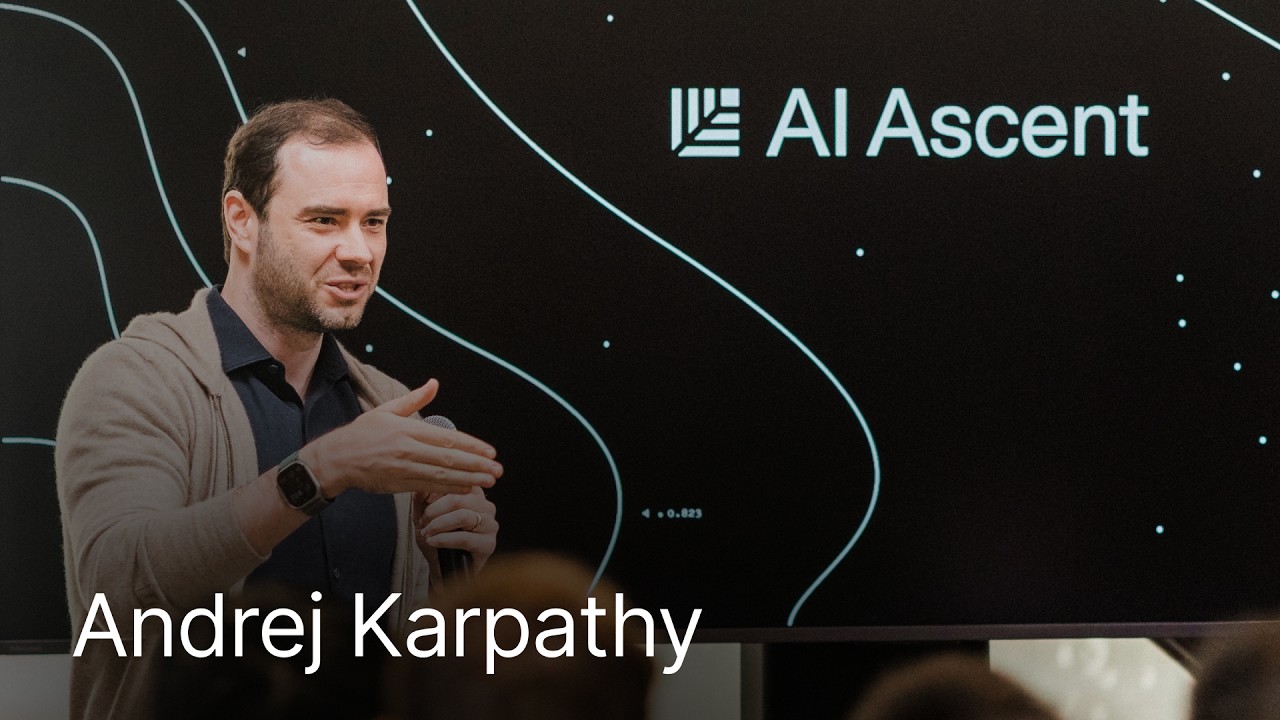
Andrej Karpathy: From Vibe Coding to Agentic Engineering
Andrej Karpathy explores the paradigm shift from traditional programming to Software 3.0, where LLMs act as programmable computers driven by context. He details the transition from 'vibe coding' to 'agentic engineering,' emphasizing that while AI handles execution, human taste and understanding remain the ultimate bottlenecks. ## [00:00] Introduction Stephanie Zhan introduces Andrej Karpathy, highlighting his foundational work at OpenAI and Tesla. She notes his unique ability to simplify complex AI shifts and introduces the concept of vibe coding. > *He has a rare gift of making the most complex technical shifts feel both accessible and inevitable. [00:22]* ## [00:44] Feeling Behind as a Coder Karpathy describes a turning point in December 2023 when agentic tools began producing perfect code without manual intervention. This shift led him to adopt vibe coding, trusting the AI to handle complex workflows autonomously. > *I just start to notice that with the latest models the chunks just came out fine. [01:29]* ## [02:28] Software 3.0 Explained Karpathy defines Software 3.0 as a paradigm where the LLM acts as a programmable computer and the context window serves as the primary programming lever. This follows Software 1.0's manual rules and Software 2.0's data-driven weight training. > *Software 3.0 is kind of about your programming now turns to prompting and what's in the context window is your lever. [03:20]* ## [03:44] Agents as the Installer Using the installation of OpenClaw as an example, Karpathy explains how agents replace rigid bash scripts with intelligent, environment-aware execution. This approach allows the AI to debug and adapt to specific system requirements autonomously. > *The agent has its own intelligence that it packages up and then it kind of like follows the instructions. [04:29]* ## [04:49] Menu Gen vs Raw Prompts Karpathy contrasts his custom-coded MenuGen app with raw prompts to models like Gemini, concluding that many traditional software layers are now redundant. He emphasizes that AI can now perform general information processing that was previously impossible with structured code. > *The software 3.0 paradigm is a lot more kind of raw. It just your neural network is doing more and more of the work. [06:11]* ## [07:37] What’s Obvious by 2026 Looking toward 2026, Karpathy envisions neural computers that process raw video and audio directly. These systems would use diffusion models to generate dynamic user interfaces, potentially making traditional UI code obsolete. > *You could imagine completely neural computers... a device that takes raw videos or audio into basically what's a neural net. [08:22]* ## [09:41] Verifiability and Jagged Skills AI models develop 'jagged' capabilities, peaking in verifiable domains like math and code due to reinforcement learning rewards. Karpathy notes the paradox where a model can refactor a massive codebase yet fail simple logic. > *state-of-the-art models today will tell you to walk [to a car wash] because it's so close... This is insane. [11:36]* ## [13:39] Founder Advice and Automation Model performance is heavily dictated by the specific data distributions chosen by frontier labs. Karpathy advises founders to explore the 'circuits' of these models to understand their strengths or use fine-tuning to fill gaps. > *we are slightly at the mercy of whatever the labs are doing, whatever they happen to put into the mix. [12:57]* ## [15:46] From Vibe Coding to Agent Engineering While 'vibe coding' raises the accessibility floor, 'agentic engineering' focuses on maintaining professional quality. This discipline involves coordinating powerful but stochastic agents to accelerate development without sacrificing the engineering bar. > *agentic engineering is about preserving the quality bar of what existed before in professional software. [16:07]* ## [25:17] Agents Everywhere and Learning Karpathy advocates for agent-native infrastructure, expressing frustration with human-centric documentation. He argues that while thinking can be outsourced to AI, human understanding remains a critical bottleneck for directing agents. > *You can outsource your thinking, but you can't outsource your understanding. [28:10]* ## Entities - **Andrej Karpathy** (person): AI researcher and former Director of AI at Tesla and founding member of OpenAI. - **Stephanie Zhan** (person): Partner at Sequoia Capital and host of the discussion. - **Software 3.0** (concept): A paradigm where LLMs act as programmable computers via prompting and context. - **Agentic Engineering** (concept): The professional discipline of coordinating AI agents to maintain software quality. - **MenuGen** (project): An app Karpathy built to OCR and visualize restaurant menus, used as a case study. - **OpenAI** (organization): AI research company co-founded by Karpathy. - **Gemini** (ai-model): Google's LLM used in Karpathy's software comparison. - **Vercel** (organization): A cloud platform used by Karpathy to deploy projects.