ПодкастыHear the voice. See the shape of the thought.
Обзор каналов

We Tested Anthropic's Fable 5 for a Week
Dan Shipper, CEO of Every, spent a week with Fable 5 — Anthropic's Mythos-class frontier model — before its public launch and walked away genuinely changed. Every's senior engineer benchmark put Fable at 91/100, against 63 for Opus 4.8 and 62 for GPT-5.5 — a jump Dan describes as "warp drive" capability for sustained autonomous work. The model is slow, expensive, and token-hungry, but for anyone orchestrating big, multi-hour agentic tasks, there's nothing close to it right now. ## [00:00] One prompt built an infinite 3D library Dan opens with a live demo: a fully browsable 3D version of Jorge Luis Borges's "The Library of Babel" — hexagonal galleries, accurate mathematics from the story, working bookmarks — all generated by a single prompt. He gave Fable a one-line instruction to read the story, plan, and execute a browser-playable 3D game end-to-end. The model ran autonomously for three to four hours, self-checked its work, and shipped. > *"I made this entire thing in a single prompt with Fable 5, the new model from Anthropic."* ## [01:22] Our day-zero Fable 5 review Dan introduces himself and Every's approach: they test models hands-on for real production work — programming, writing, design, business decisions — and report back on what actually works. Fable generated unusual levels of pre-release hype; Anthropic had initially said it was too dangerous to release. After a week of internal access, Every's take is that the model is genuinely different, and Dan's goal here is to cut through the excitement and show the realistic picture. > *"Because we've been using this model for about a week now, we get to pull back the curtain a little bit and show you what it's like to have lived with this model."* ## [02:25] What a Mythos-class model is Mythos is Anthropic's new top-tier model family, sitting above Haiku, Sonnet, and Opus in their lineup. Architecturally it's not novel — same transformer family, just bigger. Anthropic added strict safety guardrails (no cyber, no biological use cases) to make it releasable. Pricing is steep: $10/M input tokens, $50/M output — roughly 2× Opus. Dan's verdict from a week of use: genuinely the most powerful coding model he's ever touched, by a wide margin. > *"It is just genuinely the most powerful coding model I've ever used by far."* ## [03:28] The 91/100 engineering benchmark Every runs a proprietary senior engineer benchmark: the model is handed a real "vibe-coded slop" production codebase and asked to rewrite it from first principles as a senior engineer would. Prior to Fable, the top score was Opus 4.8 at 63/100, with GPT-5.5 right behind at 62. Fable scored 91 — matching a human senior engineer in a single prompt. Dan had expected saturation of this benchmark in about six months; it happened in two weeks. > *"Fable scored a 91 on this benchmark. 91 out of 100. That's the same score as a human engineer with just one prompt. That's crazy."* ## [04:12] Why it feels like a warp drive Fable's core strength is sustained autonomous execution over multi-hour tasks. You give it a destination, leave it running, and come back to something finished. Unlike earlier Claude models that eagerly said yes to everything ("purple accents, purple accents"), Fable deliberates, pushes back when something can't be done well, and follows through on complex, loosely specified prompts. Dan's analogy: a warp drive — not instant, but it compresses what used to take months into hours. > *"You can specify a destination for a big trip, and it just compresses what normally would have been like years or months into like hours or days."* ## [06:10] Where the model falls short The warp drive metaphor cuts both ways: it's useless for getting around town. Tight back-and-forth collaboration, quick questions, rapid iteration — Fable is a poor fit for all of these. It's slow, expensive, and burns tokens aggressively. A non-obvious workaround: drop the reasoning level to medium or low for simpler questions; that's how Anthropic's own people use it internally. Without a big, meaty problem to throw at it, the model is overkill. > *"If you're using it for true collaboration or quick questions or things that need tight back and forth, I don't think it's that good for that."* ## [07:04] Building a Heidegger lecture site Dan describes asking Fable to grab philosopher Hubert Dreyfus's 2007 lectures on Heidegger — without even providing a URL — and turn them into a consumable mini-site. Fable found the lectures, wrote per-lecture summaries, built a synchronized player that highlights the transcript as audio plays, added chapter navigation, drop caps, and typographic choices that Dan characterizes as actual taste, not the default template output. One prompt, no scaffolding. > *"That's what I mean when I talk about this model having really exceptional taste and attention to detail."* ## [09:05] Finding a growth bet in customer data Every has ~10,000 paid and ~100,000 free subscribers and a backlog of survey data the team had been analyzing with AI for weeks without a sharp conclusion. Dan fed it all to Fable. In one pass, the model came back with: "You have a conversion merchandising problem. Your free-to-paid conversion ratio is lower than it should be." Then a falsifiable bet: ship pricing transparency and a trial offer, and it'll go up. That synthesis — reading survey responses, site analytics, and product state together — hadn't emerged from weeks of team analysis. > *"That is something that I would expect a really, really good growth person to do with a lot of time and thought and research."* ## [10:35] Clearing a real GitHub backlog Every's agent-native markdown editor Proof accumulates GitHub issues automatically as agents file bugs during use. Dan pointed Fable at two weeks of open issues and told it to close irrelevant ones and write Rust fixes for the rest. It swept through the backlog and produced patches the team actually merged. Other models can do this, but they require hand-holding — one issue at a time, constant check-ins. Fable just batched it. > *"And it just went boom boom boom boom boom boom. And actually wrote fixes that we merged."* ## [11:17] Who should actually use this model Dan is direct: Fable is not for everyone right now. Using Every's "eight levels of AI adoption" framework, it pays off at levels 7–8, where users are already orchestrating multiple agents and have large problems queued up — typically technical builders. For knowledge workers not yet running agent workflows, it'll feel like overkill; for casual vibe coders, the token costs are real friction. About half of Every's own early-adopter team saw immediate payoff; the other half is still growing into that workflow level. > *"Using it is a skill. You need to be exposed to problems and working at a level of expertise where the problems come up in order for it to be useful."* ## [13:31] Where other models still win Writing is the clearest gap: Fable's prose is dense, literary, and block-heavy — good for thinking through structural writing problems, not for copywriting or everyday sentence-level work. For Claude users, Opus 4.8 is still better for writing. For GPT users, 5.5 is a better daily driver. Dan himself keeps GPT-5.5 as his Codex driver for the quick back-and-forth that fills most of his day; Fable gets reserved for big production pushes. > *"For my day-to-day, it's a bit overkill even for me."* ## [14:26] What this means after automation Dan points to his essay "After Automation" as the frame: automation doesn't shrink human work, it creates more of it — a paradox. Fable follows the same pattern: it raises the floor for non-experts (a vibe coder can now one-shot a video game) and raises the ceiling for experts (an expert can build a AAA game solo). The displacement is real and he says it's normal to feel unsettled by it — but the capability curve means even people who can't afford Fable today will have access within six to twelve months. > *"This model increases the floor of capability for non-experts, but it also raises the ceiling for experts."* ## [16:02] The final verdict Dan closes with a straightforward recommendation: read the full Every vibe check for detailed benchmark breakdowns across coding, writing, and knowledge work, watch "After Automation" for the bigger-picture framing — and then go find the first big problem you've been avoiding and point the warp drive at it. > *"If you're psyched about this, the thing I recommend most is go use your new warp drive. And let me know what you make."* ## Entities - **Dan Shipper** (Person): Co-founder and CEO of Every; sole presenter in this episode; spent a week testing Fable 5 pre-launch. - **Every** (Organization): AI-native subscription media company focused on testing frontier models for real work use cases; ~10,000 paid subscribers. - **Fable 5** (Software): Anthropic's Mythos-class frontier model; scored 91/100 on Every's senior engineer benchmark at launch. - **Anthropic** (Organization): AI safety company; maker of the Claude / Opus / Fable model family. - **Mythos** (Concept): Anthropic's top-tier model family tier, above Haiku, Sonnet, and Opus; characterized by extended reasoning and high token cost. - **Senior engineer benchmark** (Concept): Every's proprietary evaluation — model rewrites a production codebase from first principles; scored out of 100; Fable hit 91, Opus 4.8 hit 63. - **Opus 4.8** (Software): Previous Anthropic flagship; scored 63/100 on Every's benchmark; still preferred for everyday writing tasks. - **GPT-5.5** (Software): OpenAI's comparable frontier model; scored 62/100 on the benchmark; Dan's personal daily driver for quick back-and-forth work. - **Hubert Dreyfus** (Person): American philosopher; author of "What Computers Can't Do" (1972); subject of the Heidegger lecture site demo. - **Proof** (Software): Every's agent-native markdown editor; used in the GitHub backlog-clearing demo. - **After Automation** (Concept): Dan Shipper's essay arguing automation creates more human work rather than eliminating it; referenced as the interpretive frame for Fable's broader significance. - **Eight levels of AI adoption** (Concept): Every's framework for classifying AI workflow integration depth; levels 7–8 are where Fable delivers the most value.
The SaaS Apocalypse Is a Goldmine With Figma's Matt Colyer
Figma developer PM Matt Colyer has been building his own AI agents for two years and is buying more software subscriptions than ever — not fewer. He and Every CEO Dan Shipper work through why the "SaaS apocalypse" narrative gets the economics backward, how AI needs to escape the tyranny of the text box to unlock genuinely creative design work, and why the coming year's challenge isn't generation but review: humans are now the bottleneck in a world where agents can ship faster than anyone can evaluate what they made. ## [00:00] AI will create a billion developers This exchange, taken from later in the interview, opens the episode: Matt argues that the number of developers worldwide — roughly 25–40 million a decade ago — is heading toward a billion. That demographic explosion, not AI replacing software, is what makes the SaaS market a "gold mine." Figma and most established SaaS businesses are, in his view, excited rather than threatened. > *"If you're in that space, like, it means it's a gold mine, right?"* ## [01:03] Introduction Dan Shipper frames the conversation: he recently bought Figma stock after noticing the "SaaS apocalypse" discourse, and he wants to know how a company that pre-dates AI is navigating a world where agents can now operate inside your product. Matt, as the director managing Figma's developer products, is the right person to ask. > *"There are all these people who are like, 'Oh, I don't have to use Figma anymore.' You guys just launched an agent in your product. You also have Figma MCP."* ## [02:15] Why the SaaSpocalypse narrative has it backwards Matt's counter-argument runs on two tracks. First, the democratization of software creation massively expands the addressable market — more software being built means more demand for the tools, infrastructure, and services that support it. Second, vibe-coding your own app sounds liberating until you're dealing with SMTP upgrades at midnight. He built his own email agent two years ago and watched it get rickety; these days he pays someone else to run agents for him rather than maintain the plumbing himself. > *"I'm buying more software these days than I ever did before, because I'm like, 'You know what? That tool seems cool. I'm just going to pay somebody else to run my agent for me.'"* ## [05:27] Matt's email agent origin story The origin was unglamorous: three kids in three schools, relentless PTO emails, and the humiliation of missing spirit day. Matt wired up a Python script to grab his inbox and paste it to an LLM — the whole thing was rickety and sometimes the replies didn't work, but the core loop worked. He then added a memory system and a daily summary pushed to him proactively, which he flags as the real unlock: instead of having to open a tool and ask, it just showed up. Dan mirrors this with his own Codex-based inbox workflow, now four weeks into inbox zero. The two also land on voice as an underrated interface — Matt uses Loom recordings because it feels less weird than talking to a blank screen. > *"The unlock for me was like instead of having to go to a tool and ask for the thing, it was just like it would show up."* ## [13:21] Divergent vs. convergent design thinking Chat-based AI is inherently linear — you iterate on one design thread. Matt's argument is that great design has a diamond shape: first you diverge (generate many directions), then you converge (pick the best). Figma's on-canvas agent is a first attempt to break out of the text-box constraint. On the canvas, an agent can spawn a grid of frames — grayscale, sepia, with different type — and then a separate convergent agent can cluster them and recommend which direction to pursue. Command-line agents can't do this kind of spatial, parallel exploration; that's what the canvas unlocks. > *"Text boxes are super limiting — it's very much like a linear 'well this and then that.' If we get to the canvas, the agents allow you to do divergent thinking."* ## [17:39] Figma's MCP server MCP gives third-party agents (Cursor, Windsurf, Claude Code) a standard interface into Figma. Two flows: code-to-design — fire up a dev server, ask the agent to screenshot a live page and pull it into a Figma canvas — and design-to-code via "Get Design Context," which wraps component properties and design library guidelines into an agent prompt that then creates a branch, writes the code, and posts a screenshot to the PR. Both flows remove the manual copy-paste drudgery that used to live between the design file and the codebase. > *"You pull up your codebase, fire up the MCP server, and ask it, 'Hey, can you go to this page and copy it into Figma canvas?' And it will actually do it. That's a little bit mind-blowing."* ## [19:45] Why design agents need personalization Generic agents produce generic output. For Figma, the difference between an okay agent and one people actually love is whether it understands the design system — the components, the spacing rules, the naming conventions. Without that personalization layer, generated designs aren't usable. Matt draws a parallel to the memory systems in chat agents: in Figma's case, the design library is the memory. He also hints at proactive agent work Figma is cooking internally, framing the core problem as maintaining design values at a pace agents can generate. > *"The thing that really differentiates an okay agent from one that people really love is the personalization aspect. For Figma's version of that, it's the design system."* ## [22:09] Every problem is a context problem Matt describes a Figma product operations team that realized every recurring PM task — onboarding docs, project tracking, team introductions — was a context problem in disguise. They built "PMOS": a local SQLite org chart wired to Asana, Slack, and GitHub, then layered Claude Code skills on top. When a new team member joins, the system walks the org chart, reads the last 30 days of Slack channels, checks the Asana board, and produces an uncannily good onboarding file. Dan points out that Claude Code's power comes from the same insight: instead of an always-on cloud agent you have to manually wire to everything, it's an agent that already has access to everything on the user's machine. > *"One of the unlocks to me about AI is like you kind of realize every problem becomes a context problem. The work becomes about framing the problem with the right set of information."* ## [25:12] Apple and Google as the reigning kings of context Matt has been waiting for Apple Intelligence to deliver on its WWDC promise — phones hold all the personal data; an always-on, actually-smart Siri should be the obvious product. It hasn't arrived. He's watching Google's rumored "Spark" agent (always-on, connected to all Google content) with similar anticipation. Dan's take: Apple wins regardless because everyone runs AI on Mac hardware, giving them time to catch up. Matt adds that Apple's privacy-first positioning is a genuine strategic asset, not just PR. > *"Even being late to the game, they are still the king of context. And I think that's what's been interesting to watch about Google I/O this year — seemingly Google has also kind of woken up to that."* ## [28:18] Why review is the new bottleneck Generation is no longer the hard part. Agents are cheap, capable, and available; the problem is that humans are now inundated with net-new content they need to evaluate and approve. Matt frames "review" as the coming year's core design challenge: how do you scale a human value system — what good looks like, what fits your brand — at the pace agents can ship? The format is still unsettled: video walkthroughs, screenshots, a trusted review agent. He closes with a thought on careers: fundamentals still matter (you need to know what long division is even if you use a calculator), and the people who will thrive are the curious ones who ask how something is put together rather than just accepting the output. > *"We have agents that are capable of producing all this stuff, they're available enough, they're cheap enough. We're just being inundated with new content. The bottleneck is now: how do we scale our value system to evaluate it?"* ## Entities - **Matt Colyer** (Person): Director of Product Management for Developers at Figma; has been building personal AI agents for two years; longtime developer tools practitioner. - **Dan Shipper** (Person): Co-founder and CEO of Every; host of the "AI & I" podcast; active AI agent practitioner (inbox zero via Codex). - **Figma** (Organization): Design and prototyping platform; launched an on-canvas agent and an MCP server; central example in the SaaS-in-the-AI-era discussion. - **SaaSpocalypse / SaaS Apocalypse** (Concept): The narrative that AI will make SaaS software obsolete; both guests argue the opposite — AI expands the developer population and demand for SaaS. - **Diamond-shaped design thinking** (Concept): Divergent phase (generate many options) followed by convergent phase (select the best); Colyer argues current chat-based AI only supports linear/convergent work. - **MCP (Model Context Protocol)** (Concept): Standard interface for third-party agents to connect to tools like Figma; enables code-to-design and design-to-code workflows. - **Figma MCP Server** (Software): Figma's implementation of MCP; supports live page screenshot-to-canvas import and "Get Design Context" design-to-code export. - **Claude Code** (Software): Anthropic's coding agent; referenced as an example of an agent with full local file system context; used by Dan Shipper for inbox management. - **Every** (Organization): AI-focused media and software company; Dan Shipper is co-founder/CEO; runs the "AI & I" podcast series. - **Proactive agents** (Concept): Agents that push summaries or actions to users without being asked; Matt identifies the proactive daily email summary as the unlock that made his agent genuinely useful. - **Review bottleneck** (Concept): The emerging constraint in AI-assisted work where generation is fast but human evaluation/approval capacity is the limiting factor.
Why Opus 4.8 Pulled Me Back to Claude
Dan Shipper, CEO of Every, delivers a day-zero vibe check on Opus 4.8, arguing Anthropic could have called it Opus 5. The model jumps 30 points past Opus 4.7 on Every's Senior Engineer benchmark, edges out GPT-5.5, tops their internal writing tests at 79.6 vs. 73, and is the first model to produce a genuinely good one-shot slide deck. Two catches temper the enthusiasm: performance degrades sharply below "extra high" reasoning, and the Claude desktop app remains cluttered compared to Codex. ## [00:00] What is Every Every is a 30-person applied AI lab for the future of work—part media outlet, part product studio. Dan opens by explaining the subscription (writing, courses, AI-built tools all in one place at every.to) before rolling into the Opus 4.8 assessment. The plug is brief and context-setting: the team has had beta access for a week, and the rest of the video is what they found. > *"Every is the only subscription you need to stay at the edge of AI."* ## [01:07] Anthropic Is Back: The Headline Case for Opus 4.8 Dan had largely abandoned Claude after Opus 4.7—slow, hard to love, and outpaced by Codex and GPT-5.5 in day-to-day use. Even the most loyal Claude users at Every had started routing work elsewhere. Opus 4.8 breaks that pattern: it scores 63 on Every's Senior Engineer benchmark (30 points above Opus 4.7, one point above GPT-5.5), tops their writing tests, and produced the first one-shot slide deck Dan has called genuinely good. Kieran Klaassen, Every's GM, called it "the most human model he's worked with." The one persistent friction is the Claude desktop app itself. Codex is fast, focused, and ships a clean harness; the Claude app still feels like a product built by three separate teams—chat tab, code tab, co-work tab, each with its own feel. Dan is now splitting time between both apps, which he was not doing before. > *"But honestly, they could have called it Opus 5 cuz this is a really great model."* ## [05:02] Reach Test: Paradigm Shift Ratings from the Every Team Every's reach test asks one question: do you actually open this model when work gets hard? Dan rates Opus 4.8 gold/green—paradigm-shift quality, docked one notch because the Claude app harness is only "okayish to pretty good." Kieran, who runs 50 agents a day, gives a straight gold paradigm-shift, one of the rarest grades the team has assigned. Katie Parrot, a senior staff writer and historical Claude fan, lands at green, splitting her work between Opus 4.8 and Codex. > *"It's very rare to give a paradigm shift grade to a model. So I would pay attention to this."* ## [06:32] Benchmarks: Coding and Writing Numbers On coding, Opus 4.8 hits 63 on the Senior Engineer benchmark—the test feeds the model a vibe-coded codebase and asks it to rewrite from first principles, then scores against two human senior engineers who completed the same rewrite (typically scoring in the 80s–90s). GPT-5.5 sits at 62. On Kieran's LFGbench (real-world tasks: SaaS build, e-commerce site, 3D game landscape), the model writes readable code that bridges technical competence and creativity—the "cozy island" 3D scene is notably richer and more vibrant than GPT-5.5's output. On writing, Opus 4.8 scores 79.6 out of 100 on Every's internal benchmark (intro writing, promo emails, mid-piece paragraphs); GPT-5.5 scores 73. The gap is mainly in AI tells: at high and extra-high reasoning settings, Opus 4.8 produces prose that sounds less like a model. It matches a writer's voice from a single paragraph of context better than any other model Dan has tested. > *"Opus 4.8 scores a 79.6 out of 100 on the writing benchmark. GPT 5.5 is 73."* ## [08:57] Emotional Intelligence, Knowledge Work, and the Verdict Dan uses the model for interpersonal and management work—talking through decisions, pressure-testing his own framing. Opus 4.8's thinking traces show it genuinely cycling through permutations before responding, which makes it feel less like a sycophant and more like a useful counterpart. On knowledge work, it's versatile: code and writing coexist cleanly in a single thread, and the slide deck result is the first one-shot deck Dan would actually send to someone. The verdict: if you're a Claude fan, this model delivers. If Codex converted you, add Opus 4.8 as a parallel tool for writing and knowledge work—it's worth the context switch. The harness gap is real, but the model itself is a banger. > *"If you've been converted to Codex, I highly recommend you at least add it as part of your arsenal."* ## Entities - **Dan Shipper** (Person): Co-founder and CEO of Every; presenter and primary evaluator of Opus 4.8. - **Kieran Klaassen** (Person): GM of Kora at Every; gave Opus 4.8 a straight gold paradigm-shift rating on the reach test. - **Katie Parrot** (Person): Senior staff writer at Every; rated Opus 4.8 green, split between it and Codex. - **Every** (Organization): Applied AI lab and media subscription company focused on AI for the future of work. - **Anthropic** (Organization): Developer of Claude and Opus 4.8. - **Opus 4.8** (Software): Anthropic's latest Claude model; subject of the vibe check. - **GPT-5.5** (Software): OpenAI model used as the primary performance comparison across all benchmarks. - **Codex** (Software): OpenAI coding agent; praised for its clean desktop harness and used as the daily-driver counterpoint to Claude. - **Senior Engineer Benchmark** (Concept): Every's proprietary coding benchmark—rewrites a vibe-coded codebase from first principles and scores against human engineers. - **LFGbench** (Concept): Kieran Klaassen's real-world coding benchmark covering SaaS, e-commerce, and 3D scene generation tasks.
Мы автоматизировали всё с помощью AI и утроили штат
Every под руководством Dan Shipper выросла с четырёх человек до тридцати со времён GPT-3, запустила агентов почти в каждый рабочий процесс — и продолжает нанимать. В необычном формате шоу *AI & I* операционный директор Brandon Gell берёт интервью у Dan'а, расспрашивая его об эссе «After Automation» объёмом 8 000 слов. Центральный тезис: рост возможностей AI увеличивает спрос на человеческое суждение, а не снижает его. Механизм прост: AI делает вчерашнюю экспертизу дешёвой и доступной, что наводняет любую сферу результатами, близкими к верным, но не точными, — и именно этот зазор создаёт больше работы для людей, способных его закрыть. ## [00:00] AI делает задачу, а потом спрашивает: что дальше? Этот обмен репликами из середины интервью отражает ключевое противоречие эпизода. Brandon описывает типичный момент с AI: ты его запускаешь, он тебя поражает, ты чувствуешь себя лишним — а потом агент зависает и спрашивает: «Что делать дальше?» Dan отвечает фразой, на которой держится весь аргумент: «Чем дальше агент от человека, тем меньше от него пользы.» Оба фрагмента взяты из основного разговора (около 00:11 и 00:35 соответственно) и вынесены в начало, чтобы задать рамку. > *«Чем дальше агент от человека, тем меньше от него пользы.»* ## [00:51] Введение Brandon объясняет смену ролей: на этот раз он берёт интервью у Dan'а, а не наоборот, и будет оспаривать его тезисы. Dan рассказывает, как появилось эссе: находясь внутри одной из самых агентно-ориентированных компаний в мире, он видел, как штат растёт параллельно автоматизации, и чувствовал разрыв с мейнстримным нарративом об уничтожении рабочих мест. Твит CEO ClickUp — публичное увольнение большой части сотрудников со ссылкой на AI — становится первым испытанием для аргумента Dan'а: применимо ли «After Automation» к зрелой компании из 10 000 человек, а не только к ранним последователям вроде Every? > *«Если взмахнуть палкой в нашем Slack, с равной вероятностью попадёшь в человека или в агента.»* ## [05:51] Парадокс AI: больше автоматизации — больше работы для людей Dan разворачивает центральный аргумент. AI обучен на всех предыдущих результатах и потому может дёшево выдать «вчерашнюю экспертизу» кому угодно. Это демократизирует продукцию: операционные сотрудники вливают пул-реквесты, не-инженеры выпускают фичи, — но результат всегда лишь близок к правильному, не точен. Он не откалиброван под конкретную ситуацию. Возникает переизбыток почти-верных результатов, которые обесцениваются сами по себе, одновременно создавая спрос на экспертов, способных довести их до конца. Brandon добавляет пример из Every: пул-реквесты, которые выглядят разумно, пока опытный инженер не заглянет под капот. > *«Ты просто затапливаешь зону тоннами материала, который вроде бы близок к нужному, но не совсем.»* ## [10:00] Как AI обесценивает вчерашнюю экспертизу Dan отвечает на возражение об эталонах: да, модели улучшаются экспоненциально, но как только бенчмарк насыщается, его всегда можно сдвинуть, чуть переформулировав задачу. Глубинная проблема в другом: люди несут слой неявного, несформулированного мастерства, которое не поддаётся чёткой спецификации, — а всё, что поддаётся, модель может оптимизировать в лоб. Опыт Every это подтверждает: Kieran за месяц-два построил полноценную функцию входящих сообщений, что было «абсолютно невозможно» раньше. Но ценность создал эксперт, знавший, *что* строить, и направлявший каждый шаг. > *«Есть масса вещей, которые ты делаешь, но не можешь описать в чётком виде.»* ## [18:00] AI действует автономно, но не имеет субъектности Brandon проводит черту между автономностью и субъектностью: AI-агенты всё лучше выполняют открытые задачи без пошагового руководства, но это принципиально отличается от *субъектности* — самомотивированного, игривого «я хочу делать это, потому что мне интересно», которое есть даже у маленького ребёнка. Dan соглашается: экономического стимула строить такое нет. Если ты за рабочим столом, а агент говорит «не хочу» — это провал продукта. Вся отраслевая система стимулов толкает к соответствию и управляемости, что как раз и удерживает людей в контуре. > *«Агент — тот, кто действует от чьего-то имени. Это принципиально отличается от наличия субъектности, которая есть у самого маленького ребёнка.»* ## [20:39] Почему Dan верит в AGI Brandon предлагает тест с одним словом: произойдёт ли AGI? Dan: да. Это хорошо? Dan: да. Его определение AGI — любой агент, которого экономически целесообразно держать включённым постоянно, активно генерирующего токены и выполняющего задачи без повторных запросов, — достаточно точно, чтобы его можно было проверить. Логика такова: даже по-настоящему автономная система будет создана для служения человеческим целям; иначе её бы не построили. Тревога Brandon'а: если непрерывные агенты станут экономически рациональны, аргумент о массовых увольнениях обретёт смысл. > *«Любой агент, который ты никогда не выключаешь — которого экономически выгодно держать запущенным всё время, активно выполняющим задачи без повторных запросов.»* ## [21:57] Массовые увольнения из-за AI — это ложь Dan и Brandon разбирают кейс ClickUp: CEO публично уволил большую часть сотрудников, сославшись на AI. Читка Dan'а: универсальные SaaS-компании увольняют людей, когда испытывают трудности или раздуты, а потом прикрываются AI. Brandon добавляет контраргумент Jensen Huang — «если твой ответ на прогресс — увольнение людей, ты не очень творческий CEO» — самообслуживающий, но, вероятно, верный. Честная формулировка: AI глубоко меняет рабочие процессы, что вынуждает реорганизовывать всю компанию. Те, кто пропускает эту работу и просто сокращает штат, идут по лёгкому пути. Слежка Meta за сотрудниками для сбора обучающих данных упоминается вскользь как более творческая, пусть и неоднозначная, альтернатива. > *«Я бы очень скептически отнёсся к любому, кто говорит, что AI уничтожит все рабочие места или весь умственный труд.»* ## [25:42] Следи за моделями — и всё будет хорошо Даже в сценарии AGI ключевая переменная — человеческое суждение о том, *что важно*, а это постоянно меняется, отчасти потому что AI сам непрерывно преобразует мир. Работники колл-центров в Омахе, не доверяющие чат-ботам, или компании, увольняющие сотрудников поддержки и тихо нанимающие их обратно через два месяца, показывают, насколько реальное внедрение отстаёт от хайпа. Освоение технологий занимает поколение; в конечном счёте инструменты станут доступны всем; побеждают те, кто продолжает осваивать новые модели по мере их выхода. Dan завершает самым ёмким тезисом: если следишь за моделями, всё будет хорошо. > *«Если просто следить за моделями — когда выходят новые, учиться применять их в своей работе, чем бы ты ни занимался, — всё будет хорошо.»* ## [35:30] Как использовать AI в качестве редактора лонгридов Dan описывает конкретный AI-процесс, стоящий за «After Automation». Каждое утро он диктовал текущее состояние аргумента в Proof, затем отправлял лог Claude с вопросом: «Что я на самом деле пытаюсь сказать?» Когда черновики перевалили за 4 000 слов, он попросил Codex конвертировать последнюю версию в подкаст и слушал по дороге на работу, замечая проблемы с ритмом на слух. Эссе пережило четыре-пять полных перезапусков, прежде чем аргумент встал на место. Вывод: AI не написал эссе, но позволил удерживать всю восьмитысячесловную структуру в рабочей памяти, не теряя нить. > *«Я бы не смог написать это без него. Я просил Claude взять мой лог и сказать: "Что я на самом деле пытаюсь сказать?" — и он отвечал, а я думал: "Вот именно это я и пытаюсь сказать."»* ## Сущности - **Dan Shipper** (Персона): сооснователь и CEO Every; постоянный ведущий *AI & I*; здесь — интервьюируемый, обсуждающий эссе «After Automation» - **Brandon Gell** (Персона): операционный директор Every; в этом эпизоде ведёт интервью вместо Dan'а - **Every** (Организация): AI-ориентированная медиа- и программная компания; выросла с 4 до 30 сотрудников со времён GPT-3 при активной автоматизации; публикует подкаст *AI & I* - **After Automation** (Концепция): эссе Dan Shipper'а объёмом 8 000 слов, доказывающее, что AI-автоматизация повышает спрос на экспертный человеческий труд, наводняя сферы почти-верными результатами - **Разрыв экспертной компетентности** (Концепция): тезис о том, что AI дёшево выдаёт «вчерашнюю экспертизу», но всегда чуть не так, создавая больше потребности в людях, способных закрыть зазор до реальной ситуации - **AGI** (Концепция): определяется в эпизоде как любой агент, экономически целесообразный для непрерывной работы без повторных запросов; Dan считает его появление неизбежным и позитивным - **Автономность vs. субъектность** (Концепция): разграничение Brandon'а между выполнением AI открытых задач без пошагового руководства (автономность) и наличием у AI самомотивированных желаний (субъектность); последнее не строится - **Proof** (Программное обеспечение): инструмент для написания, который Dan использует для ежедневных голосовых черновиков; применялся как петля AI-обратной связи при работе над эссе - **Codex** (Программное обеспечение): инструмент OpenAI, который Dan использовал для конвертации черновиков эссе в формат подкаста для прослушивания в дороге - **ClickUp** (Организация): SaaS-компания, CEO которой публично уволил большую часть сотрудников, сославшись на AI; используется как кейс AI-прикрытия увольнений

Claude Code как второй мозг
Noah Brier запускает Claude Code на мини-PC в подвале, синхронизированном с его хранилищем Obsidian через Tailscale VPN, и выполняет реальное мышление, исследования и клиентский код прямо с телефона. Разговор охватывает, как он построил этот стек, почему вводит строгие ограничения «режима мышления», чтобы модель не торопилась создавать артефакты, и его более широкую теорию о том, что AI преуспевает, проникая в организационные ниши и щели, а не требуя от людей принятия новых структур. Dan Shipper и Noah также разбирают, что на самом деле означает строить AI-интуицию, и почему Noah считает, что подготовка детей к AI связана не столько с контролем за списыванием, сколько с развитием эпистемического скептицизма. ## [00:00] Сетап Claude Code Noah Brier на домашнем сервере Dan Shipper открывает выпуск, описывая сетап, который делает Noah ценным гостем: домашний сервер в подвале, на котором работает Claude Code поверх хранилища Obsidian, доступный откуда угодно через телефон. Noah настроил всё так, чтобы можно было думать, исследовать, писать и выкатывать код, не сидя за столом. > *«Он поднял домашний сервер в подвале, положил туда свой Obsidian, а поверх запустил Claude Code: так он может думать, исследовать, писать и даже выкатывать код прямо с телефона.»* ## [00:52] Знакомство Dan и Noah общаются впервые примерно за пять лет. Биография Noah охватывает бренд-стратегию (он сооснователь Percolate), AI-консалтинг в Alephic и конференцию BRXND.AI. Dan выстраивает интервью вокруг практического стека, который Noah построил, а не вокруг абстрактного обсуждения AI. > *«Рад тебя видеть. Очень приятно пообщаться. Это наше первое интервью примерно за пять лет.»* ## [02:10] Как выполнять глубокую работу с телефона Noah сразу уточняет, что его сетап скорее структурированная интеллектуальная работа, чем «вайб-кодинг». Он отказался от Evernote в пользу Obsidian, потому что markdown-файлы и папки дают Claude Code что-то, с чем можно работать. Его основной сценарий использования Claude Code: взаимодействие с заметками, а не генерация кода. И телефонное расширение этого сетапа фундаментально изменило его рабочие паттерны. > *«Мой главный способ использовать Claude Code: инструмент для работы с заметками.»* ## [05:30] Почему Noah считает Grok лучшим голосовым AI Noah предпочитает голосовой режим Grok эквивалентам от OpenAI и Gemini: Gemini был недостаточно умным, а старый GPT-4o был непригоден для его целей. Он использовал Grok во время пятичасовой поездки за рулём, чтобы проработать материал о трансформерах, подключив телефон через Bluetooth и воспринимая это как личный исследовательский подкаст. В разговоре всплывает общая frustration: голосовые модели до сих пор плохо справляются с вызовом инструментов и веб-исследованиями, что ограничивает их полезность для серьёзной интеллектуальной работы. > *«Провёл часовую сессию, и это было, пожалуй, лучшее объяснение, которое я когда-либо читал, или слышал.»* ## [11:11] Детали сетапа Claude Code и Obsidian у Noah Noah демонстрирует свою живую папку Obsidian на экране. Claude Code запущен в корневой директории Obsidian, так что может получить доступ ко всему архиву заметок. Для доклада, который он готовит для BRXND.AI, о «Simple Sabotage Field Manual» времён Второй мировой войны и что он говорит о бюрократии в крупных организациях, он создал папку проекта внутри Obsidian, куда подтягивает транскрипты чатов с ChatGPT, Claude и Grok, а также статьи и PDF. Задача Claude на этом этапе не писать доклад, а помогать думать: извлекать релевантные заметки, синтезировать ежедневный прогресс в журнал и задавать уточняющие вопросы. Ограничения режима мышления он устанавливает явно в frontmatter CLAUDE.md проекта. > *«Я в режиме мышления, не в режиме написания. Есть кое-что, где я специально указал, кажется, прямо в frontmatter, Claude Code: не помогай мне ничего писать прямо сейчас.»* ## [26:05] Агент в Claude Code как "партнёр для размышлений" Noah утверждает, что слово «генеративный» исказило то, как люди используют AI: все сосредоточены на способности создавать артефакты, почти никто не говорит о том, насколько удивительна его способность читать. Он поддерживает специального агента-партнёра для размышлений с явными ограничениями: «Не создавай планов, черновиков или каких-либо версий доклада или текста.» Агент записывает вопросы, отслеживает возникающие инсайты и ведёт текущий журнал, чтобы Noah мог продолжить точно с того места, где остановился, будь то день спустя или после глубокого исследования в другом инструменте. Он прослеживает одну нить от deep research в ChatGPT об Уайлд Билле Доноване до предварительной идеи о том, как параллелизм архитектуры трансформера отражает операционную автономию Сил специальных операций. > *«Думаю, отчасти из-за того, что мы называем это «генеративным», слишком много внимания уделяется способности писать и слишком мало способности читать.»* ## [30:23] Теория "английских маффинов Thomas" об AI от Noah Глава открывается тезисом Noah о бюрократии: крупные предприятия не отказываются от нового ПО из-за лени, а потому, что исторически новое ПО требовало реструктуризации организаций вокруг него. AI, он утверждает, другой. Он проникает в ниши и щели того, как люди уже работают, отсюда его метафора «английских маффинов Thomas». Dan добавляет конкретный пример из Every: два продукта на разных стеках нуждались в совместном решении для поиска файлов, и Claude Code позволил повторно использовать логику без принудительного единого фреймворка. Разговор расширяется до идеи Noah о «бюрократии как позиционном кодировании», наполовину сформированной аналогии между архитектурой трансформера и организационной иерархией, которую он ещё прорабатывает перед докладом. > *«Это моя теория «английских маффинов Thomas» об AI: он проникает в nooks and crannies.»* ## [39:47] Белые пятна, которые ещё предстоит исследовать в AI Noah и Dan утверждают, что большинство практиков, включая хорошо финансируемых, до сих пор работают на хрупких интуициях о том, на что эти модели действительно способны. Вопрос-icebreaker Noah на каждой встрече с клиентом: «Какой был ваш момент открытия с AI?» Этот момент недетерминированности, когда задаёшь один и тот же вопрос дважды и получаешь разные ответы, поистине нов и требует времени для усвоения. Он обращается к эксперименту Дестина Сэндлина с «обратным велосипедом»: моторная интуиция и концептуальная интуиция разделены, и их нельзя построить в обход. Dan возражает, что языковые модели сами могут создать словарный запас, которого нам не хватает для рассуждений о вероятностных системах. > *«Мы не привыкли к вещам, где задаёшь один и тот же вопрос дважды и получаешь разные ответы.»* ## [48:44] Как Noah готовит детей к AI Десятилетняя дочь Noah создала приложение Secret Santa с помощью Claude, которое случайно научило её моделированию данных: она поняла, что вместо «взрослых и детей» нужны «группы», чтобы обобщить логику. Эта история служит основой для более широкого аргумента: задача преподавателей не предотвращать использование AI, а убеждать учеников, что базовые навыки стоит осваивать. Он предлагает курс в NYU под названием «Код — это эссе» на осень 2026 года, и считает, что ключевым метанавыком является эпистемический скептицизм: быть более подозрительным к информации, которая подтверждает ваши предположения, а не менее. > *«Я не думаю, что ваша работа, научить этих детей писать, потому что это дело всей жизни. Думаю, ваша работа: убедить их, что писать стоит учиться.»* ## [01:00:06] Как он перенёс сетап Claude Code на мобильный Noah демонстрирует весь мобильный стек в прямом эфире: Termius (SSH-клиент на iPhone), Tailscale VPN, подключающийся к мини-PC в подвале, Obsidian, синхронизированный через приватный GitHub, Claude Code, работающий в терминале. Он показывает, как спрашивает Claude «что нового за последние два дня?» и получает синтез недавней активности в Obsidian. Он также исправил сломанную ссылку на сайте своей конференции с телефона: подтвердил баг, попросил Claude отправить PR, готово. Его текущие эксперименты распространяются на CLI-инструмент Саймона Уиллисона `llm` и скрипт, который переименовывает все файлы вложений в его хранилище Obsidian и перестраивает таблицу ссылок. > *«Я вышел посидеть на улице, и тут появился проект, который нужно было сдать клиенту. Нужно было внести небольшое изменение. Я сказал Claude Code, где искать, подтвердил, что проблема именно та, о которой я думал, и попросил его выкатить решение. Он создал PR, и всё.»* ## Действующие лица - **Dan Shipper** (Личность): CEO и сооснователь Every; ведущий интервью - **Noah Brier** (Личность): Сооснователь Percolate; основатель Alephic, консалтинговой компании по AI-стратегии; организатор конференции BRXND.AI - **Every** (Организация): Медиа и программная компания, выпускающая этот подкаст - **Alephic** (Организация): AI-консалтинговая компания Noah; работает с клиентами Fortune 50, включая Amazon, Meta и PayPal - **BRXND.AI** (Организация): Ежегодная конференция на стыке маркетинга и AI, организованная Noah; выпуск 2025 года в Нью-Йорке 18 сентября - **Claude Code** (Программное обеспечение): Агентный инструмент Anthropic для программирования; центральный элемент второго мозга и мобильного рабочего процесса Noah - **Obsidian** (Программное обеспечение): Приложение для заметок на основе Markdown; основное хранилище знаний Noah, организованное по методу PARA - **Tailscale** (Программное обеспечение): Mesh VPN, используемый для безопасного подключения телефона Noah к мини-PC в подвале - **Termius** (Программное обеспечение): iOS SSH-клиент, который Noah использует для доступа к домашнему серверу с телефона - **Grok** (Программное обеспечение): AI-ассистент xAI; Noah считает его голосовой режим значительно лучше, чем у OpenAI и Gemini, для серьёзных исследований - **Simple Sabotage Field Manual** (Концепция): Документ OSS времён Второй мировой войны, переизданный Noah; используется как линза для анализа современной организационной бюрократии в его докладе на BRXND.AI - **Теория «английских маффинов Thomas»** (Концепция): Метафора Noah о том, как AI преуспевает, вписываясь в существующие организационные рабочие процессы, а не требуя реструктуризации

The Secrets of Claude's Agent Platform From the Team Who Built It
Dan Shipper interviews Angela Jiang (head of product) and Katelyn Lesse (head of engineering) for the Claude platform at Anthropic, recorded at the Code with Claude developer event. The conversation unpacks how Claude's platform has grown from a simple completion API into a fully managed agent infrastructure, why the harness and the model are increasingly inseparable, and what the "outcome + budget" vision means for the future of agent development. Together the three trace every stage of the agent lifecycle — from spinning up a first session to retiring stale agents — and share candid war stories from Anthropic's own internal deployments. ## [00:00] Where the platform will be in a year Dan opens with a question the rest of the episode keeps circling back to: a year from now, where is the platform? Angela's answer — Claude understands itself well enough to pick its own sub-agents and write its own harness on the fly. Katelyn picks up the other half: an infrastructure layer that can keep up with agents that continually rewrite themselves. This exchange actually comes from late in the interview; the show puts it up front because the whole conversation is about how today's primitives get you there. > *"We'd want to experiment with directions where Claude actually gets so good at understanding itself, it figures out what model you should be using, it figures out how to spin up all the sub agents."* — Angela Jiang ## [01:48] How the Claude platform evolved from API to agents Angela traces the arc from early LLM APIs — stateless, exploratory, maximum surface area — through session-based chat, and now into fully autonomous agents. The through-line is always the same: raise the abstraction layer high enough that customers can get the best outcome from Claude with as little work as possible. Early adopters wanted every raw knob; today, most teams arriving at Anthropic want a substantial set of things "out of the box." The platform's job is to keep shrinking the distance between intention and outcome. > *"It probably ends up just being like whatever it's like the set of primitives and infrastructure that enables you to basically get the outcome as fast as possible with actually as little of work as possible."* — Angela Jiang ## [04:09] The primitives that make up Claude Managed Agents Katelyn explains that Claude Managed Agents is assembled from the same primitives available to anyone on the Messages API — code execution sandboxes, web search, and built-in tools — but wrapped in a curated harness Anthropic has already battle-tested internally. Angela adds that the team is opinionated about two primitives in particular: file systems and skills. These are treated as load-bearing choices that shape how Claude behaves across all agent tasks. The platform is designed to be modular so developers can plug in custom pieces where the standard harness does not fit, and Anthropic publishes reference implementations for teams that want to stay on the Messages API directly. Dan describes his team running Claude via the `claude -p` command on Mac Minis and worries about lock-in and divergence from Claude Code. Katelyn responds that Anthropic's internal first-party products run on the same platform as external customers, which means divergence between Managed Agents and Claude Code will shrink over time. > *"We've taken what we see as all the most powerful of those things and put them together into a harness and a set of infrastructure that is just the way to get what we think is the best outcomes out of Claude."* — Katelyn Lesse ## [10:37] Why the harness and the model are becoming a single unit Angela challenges the conventional wisdom that a generic, model-swappable harness is the right architecture. As models diverge in technique across labs, the alpha is in tight harness-model co-design rather than hot-swapping. Internally, Anthropic tested multiple harness variants for the memory feature and found they performed "drastically differently." The implication: treat the agent (harness + model) as the unit of redundancy, not the model alone. Dan pushes on whether this creates path dependence in the model itself. Angela acknowledges that the primitives chosen really do shape the model's trajectory, and that being wrong about them is hard to undo. She cites models that over-indexed on reasoning versus those that went deep on computer-use as two diverging paths that are difficult to reverse. > *"The harness and the model get very paired. You still need redundancy, and you still might want to use other models for things, but you probably do it at the layer of like the agent, meaning like the harness plus the model."* — Angela Jiang ## [18:49] The infrastructure wall that kills most agent projects in production Katelyn identifies the real blocker for most agent projects: not harness engineering, but the infrastructure wall hit when teams try to move from prototype to production. Keeping a persistent server alive, managing sandbox failures, storing transcript data, and handling secure credential injection — these mundane concerns kill projects that technically "work" on a Mac Mini. Anthropic's own repeated experience of hitting this wall internally was the primary motivation for building Managed Agents. Angela describes the vaults primitive as an early step toward one-click agent deployment: once agent identity and credentials are handled securely at the platform layer, adding a Slack integration should eventually be as simple as telling Claude to "add Slack" and watching the bot appear. > *"Everyone hits the same problem of like, oh wow, I either need to like keep a server constantly running or I need to use infrastructure that will spin up and spin down, and I need to store the transcript data, and I need secure sandboxing, and all these sorts of things."* — Katelyn Lesse ## [24:49] Why team agents need a different shape than individual productivity tools Angela explains why individual productivity tools like Claude Code do not simply scale to team use. The moment three people want a shared agent that automates an end-to-end process across roles, a laptop-resident tool breaks down in availability, access control, and coordination. She cites Guillermo Rauch of Vercel's framing of an internal "AI software factory" as the right mental model: not individual augmentation, but a full organizational stack of agents that continuously produces high-leverage output for every function in the company. > *"When you get to the team layer suddenly everything gets like massively more complex. Like number one obviously it can't like sit on your laptop."* — Angela Jiang ## [26:36] How Anthropic's legal team uses an agent to review marketing copy Katelyn walks through one of Anthropic's own internal deployments: a legal-review agent that accepts marketing copy submissions and performs a first-pass review before anything reaches a human lawyer. The agent can approve copy outright or escalate for human review, eliminating low-value ticket-queue work. The form factor is a thin app layer on top of Managed Agents with shared visibility across both teams. Angela and Dan dig into why this is an agent rather than a skill: human-in-the-loop requirements, the need to spin up separate sessions, and multi-team collaboration all exceed what a single skill invocation can handle. The governance model that emerged was notable: rather than gating changes behind the platform team, end users discovered they could self-serve small improvements via Claude Code. Angela describes the end-state user experience as simply "talking to Claude," even when the underlying system is "many many Claudes engaging with each other." > *"Under the hood it's many many Claudes engaging with each other to get to the part where then they the Claudes themselves are doing the more complex work that the human doesn't really necessarily need to interpret."* — Angela Jiang ## [34:24] Using multi-agent orchestration for advisor strategies, adversarial pairs, and swarms Angela highlights three multi-agent architecture patterns people are assembling with the newly launched orchestration primitives: an advisor strategy that separates execution from advice; adversarial pairs where one agent generates and another critiques; and swarms that split a problem into many small parallel pieces and recombine results. Each pattern suits a different problem class — swarms excel at bug hunting, while wide-research tasks benefit from advisor or parallel-decomposition architectures. LEGO-like primitives let practitioners hill-climb at the architecture level, not just the prompt level. > *"If we can make the primitives very LEGO-like, then people can put them together to solve things at a slightly higher form factor, which is more like an architecture or like a strategy."* — Angela Jiang ## [35:50] How to measure agent success with outcome and budget as the end state Angela frames the long-term measurement philosophy: compress everything to an outcome and a budget, and let the platform resolve all intermediate decisions. Domain-specific evals (e.g., PR-merge rate for coding agents) remain useful today, but the target is a verifiable outcome spec that Claude can grade itself against repeatedly. Katelyn addresses the adjacent problem of agent staleness: Anthropic has built skills to help teams upgrade agents when new models ship, and the most forward-leaning teams already run meta-agents that monitor other agents for degradation and trigger upgrades automatically. > *"Our kind of principle of like maybe the end state of some of these things is that everything should kind of compress down to an outcome and like a budget. And that's probably like about it."* — Angela Jiang ## [39:11] What the platform looks like a year from now, when Claude writes its own harness Angela envisions a world where users supply only an outcome and a budget, and Claude self-selects models, spins up sub-agents, and writes its own harness on the fly — eliminating harness engineering entirely, just as today's platform has already eliminated much of manual tool construction and prompt engineering. She is cautiously optimistic that the "outcome" half of the equation may be achievable within a year with some budget error bars. Katelyn adds the infrastructure corollary: such a world requires a platform capable of supporting agents that continuously recreate themselves, handling arbitrarily shaped long-running requests without ever becoming the bottleneck. > *"Claude is actually able to understand itself enough that it can come almost like write itself on the fly to figure out what is necessary in that kind of like two-parameter world of like outcome and budget."* — Angela Jiang ## Entities - **Angela Jiang** (Person): Head of Product for the Claude platform at Anthropic; co-architect of the Managed Agents product vision. - **Katelyn Lesse** (Person): Head of Engineering for the Claude platform at Anthropic; focuses on infrastructure reliability and scale. - **Dan Shipper** (Person): Host of AI & I on Every; CEO of Every; building internal agent products on the Claude platform. - **Claude Managed Agents** (Software): Anthropic's hosted agent infrastructure — a harness plus cloud compute that wraps the Messages API with built-in memory, sandboxing, vaults, and skills. - **Messages API** (Software): Anthropic's core API; the underlying primitive on which Managed Agents and all first-party products are built. - **Anthropic** (Organization): AI safety company that builds and operates the Claude model family and its associated platform. - **Every** (Organization): Media company producing AI & I; an early Managed Agents customer building internal editorial agents. - **Stripe Minions** (Software): Stripe's internal end-to-end software development platform built on agent infrastructure; cited as a model for company-wide coding agent deployment. - **Vercel** (Organization): Developer infrastructure company; CEO Guillermo Rauch's "AI software factory" framing used as the mental model for team-level agent adoption. - **Outcome + Budget** (Concept): Anthropic's long-term design principle that the final form of agent interaction should require only a verifiable outcome and a cost ceiling, with the platform resolving all intermediate decisions.
Why We Switched From Claude Code to Codex
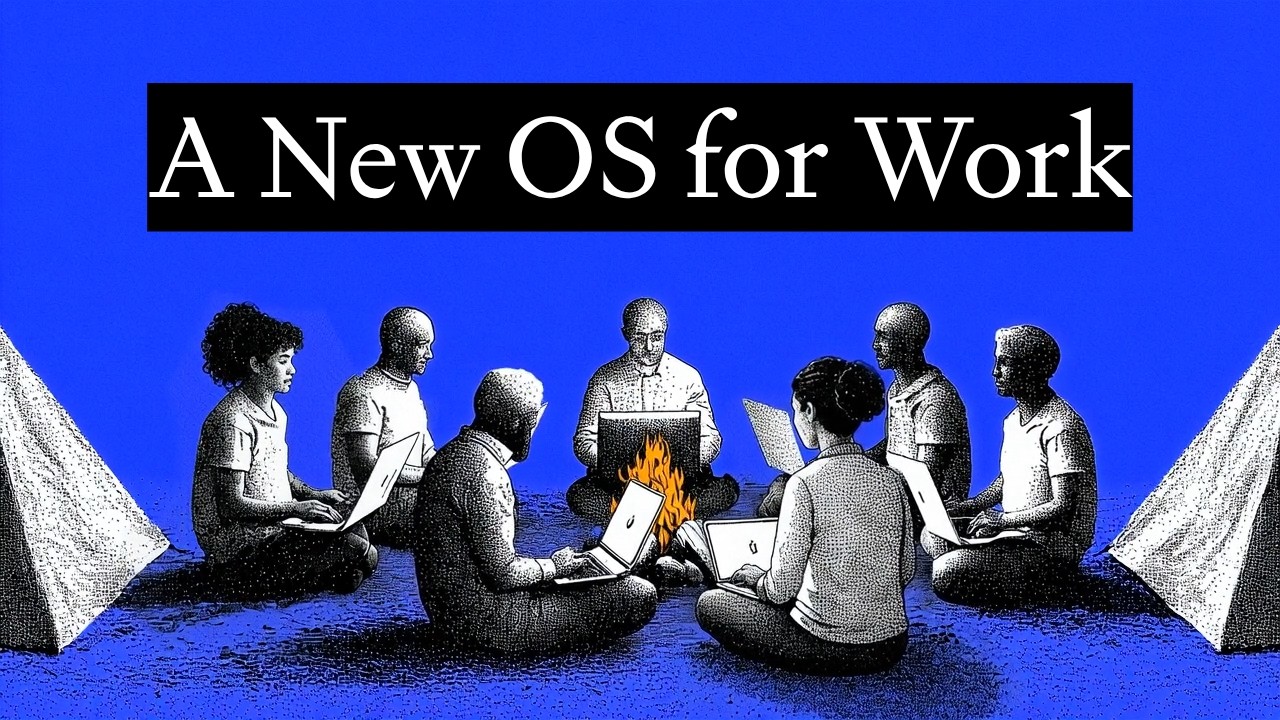
Dan Shipper and Austin Tedesco, Every's head of growth, discuss why the Codex desktop app has become their primary interface for all knowledge work — from drafting go-to-market plans to building live KPI dashboards — displacing Claude Code after months of side-by-side use. Dan frames the shift as the emergence of a new "agent management interface" operating system, while Austin walks through his live Codex setup in a screen-share session that covers automations, specialized agent suites, and recruiting workflows. The episode doubles as a practical field guide for non-engineers who want to run the same playbook. ## [00:00] A new operating system for knowledge work Dan opens cold: three months ago Codex was trash. Now Austin is the one firing it up before anything else each morning and routing 80 percent of his working time through it. Dan reads what changed structurally: a general-purpose coding agent that can reach into your filesystem, browser, and connected apps is becoming the operating system for knowledge work, and every major lab is racing for that surface. > *"There's a new operating system for how and where you're going to get your work done and it's this kind of agent management interface."* — Dan Shipper ## [00:57] How Codex went from a tool for senior engineers to a daily driver for knowledge work Dan traces the arc of Codex from its original positioning as a sandboxed pair-programming tool for senior engineers — one that "would argue with you, it would make you feel stupid" — to today's desktop app built on GPT-5.5. He attributes the pivot to OpenAI watching Anthropic prove with Claude Code that an emotionally intelligent, fast, computer-native agent creates a step-change experience for programmers and knowledge workers alike. The race is now between model companies to own the agent management desktop: Anthropic has Claude Code and Claude.ai desktop, OpenAI has Codex, and xAI has effectively acquired Cursor. ## [02:42] How Claude Code proved that a great coding agent works for any knowledge work Dan explains the insight that changed everything: if an agent can write software autonomously, it can do any kind of knowledge work autonomously. Claude Code demonstrated this first, drawing non-engineers — including Austin — into an agent-first workflow. OpenAI's hard pivot on Codex over the last three months is a direct response to that proof point. Dan describes the new paradigm as one where your agent is your interface to software, the internet, and daily tasks, not just a code co-pilot. > *"If it can write software on its own, it can do any kind of knowledge work on its own."* — Dan Shipper ## [07:24] Austin's switch to Codex Austin recounts his agent-pill moment: spending a December week inside Claude Code CLI, hooking it up to every tool he uses for work and personal life, and finding it indispensable for strategic thinking, data analysis, and drafting marketing copy. His initial Codex trial two months later felt alienating — the model was condescending, asking "Why?" when he requested clearer explanations. He kept Claude Code for 80 percent of knowledge work while tolerating Codex for engineering. The turning point was getting early access to GPT-5.5: at model parity, the decisive edge was the Codex desktop app itself — faster, better-organized, and with sub-agents that "just work." > *"So the idea that the codeex app is maybe 30 to 40% better is like that's a lot of work."* — Austin Tedesco ## [13:48] How Austin set up Codex with folders, keys, and reviewer agents Austin shares his screen and walks through his "Every Growth OS" folder inside the Codex app: a directory containing API keys for every tool the company uses (Gmail, Slack, Notion, Stripe), a CLAUDE.md project context file synced to GitHub, and a set of custom reviewer agents forked from Kieran Classen's Compound Engineering plugin. Where the standard Compound Engineering reviewers focus on security and front-end design, Austin's fork — publicly available as "Compound Knowledge" — reviews for strategic alignment with company goals and data accuracy, making it fit for knowledge-work plans rather than code PRs. The folder architecture lets Austin move seamlessly from a go-to-market draft to shipping a code PR without switching apps. > *"It's connected to everything we use for every and then some project instructional files that explain what the every business is, what we care about, how we like to work together."* — Austin Tedesco ## [18:24] Using Codex to brainstorm automations across Gmail, Slack, and Notion Austin demos his recommended on-ramp for new Codex users: open a fresh chat inside the Growth OS folder, run the Compound Engineering brainstorm workflow, and prompt the model to look at Gmail, Slack, and Notion and suggest automations. Codex surfaces a "follow-up radar" that triages incoming communications across sources, a command-center view for events and camps, and a recruiting pipeline automation — all calibrated to Austin's actual work context. Within the session, Codex writes automation scripts that require almost no tweaking and begins scheduling them; Austin highlights a nightly draft-reply routine that compiles unanswered messages and prepares replies for a quick thumbs-up approval. > *"They require very little tweaking to be like this is a thing I would and do use every day of there's this set of instructions that it comes up with based on what it knows about me."* — Austin Tedesco ## [22:42] How Austin manages the human review step when Codex is drafting communications A live audience question from Margaret prompts Austin to describe his human-in-the-loop review discipline. All drafting and orchestration happens inside Codex, but the final review intentionally lives in the native app: Slack draft replies are reviewed in Slack's drafts tab; email drafts are reviewed in Gmail; strategic plans are reviewed in Notion or the Proof markdown viewer. Stepping out of the agentic interface "freshens up my brain" before anything goes to a human. A second question from musician Alex about protecting high-value client emails leads to a discussion of how Austin uses Every's Kora email assistant together with Codex-managed rules, including having the agent interview the user to derive email rules rather than asking the user to specify them manually. > *"I just like for like the last pass before humans engage with it to step away from this agentic space and have a final check in another surface."* — Austin Tedesco ## [28:54] Using Codex to build specialized agents inspired by product executive Claire Vo Austin describes being inspired by a Claire Vo interview with Lenny Rachitsky in which Vo credited a suite of six specialized OpenClaw agents — rather than one overloaded master agent — as the key to unlocking leverage. Austin pasted the transcript of that interview directly into Codex and prompted it to propose six agents tuned to the Every growth function, provisioned into the company Slack. The agents occasionally break, but debugging is straightforward: screenshot the broken output or @-mention the Slack thread inside Codex and ask it to fix the agent's architecture. The result is a self-correcting loop where agent failures become Codex tasks. > *"Um I I actually just sent it the transcript of Claire's interview with Lenny and said like I want to do this too given everything you know about me and my work."* — Austin Tedesco ## [31:09] Synthesizing meeting transcripts and Slack threads into a go-to-market plan Austin walks through his most time-saving workflow: assembling a go-to-market plan for Every's upcoming Plus One product launch using nothing but Codex running the Compound Engineering brainstorm step against all existing meeting transcripts stored in Notion and Slack threads. With only five-minute windows between meetings, Austin prompted Codex to check the scheduled content calendar (a step it skips unless reminded), generate a proof doc, and push the final plan to Notion. The result was 80–90 percent complete. Dan adds the normative point: he prefers reading AI-written documents because they're easier for colleagues to produce, and the standard at Every is that you stand fully behind whatever your agent writes. > *"It's that I'm relying on the model to um look at all of the things that we've already said and thought about the go to market strategy, piece it together, and then review it, right?"* — Austin Tedesco ## [40:15] Building a live KPI tracker in Notion that agents can read Austin shares a more technical workflow: rebuilding Every's KPI tracker as a Notion database that updates every six hours by pulling from Stripe, social platforms, and other data sources via Notion's Workers tool. The tracker is explicitly designed to be both human-readable and agent-readable, so any team member's agent can query it and take autonomous actions — such as spinning up landing pages if an SEO keyword is underperforming. The challenge: the model can't one-shot the full tracker because even a 3–5 percent error in the MRR number is unacceptable for business decisions, so Austin is validating it column by column. Dan notes the philosophical complexity of defining revenue metrics consistently. > *"And so I have been doing this big kind of like to me complex uh workflow problem in codeex of let's build this sheet together, let's have it live in a notion database that all of our agents can point at."* — Austin Tedesco ## [44:54] Using Codex for recruiting Dan describes using Codex for outbound recruiting: he asked Codex to compile a list of General Assembly alumni and then filter it for people who had subsequently moved into AI, targeting candidates for an L&D director role. The first name on the resulting list was someone Dan considered a perfect fit who already followed him on Twitter, allowing an immediate DM. The section expands into a broader Q&A: Austin discusses when to fork Compound Engineering versus using it out of the box, how the team uses a shared Notion "compound" database to capture session learnings and turn them into reusable skills, and how Every's "Think Week" — a bi-annual week with no day-to-day work — creates organizational space for deep AI exploration. > *"Especially for any kind of like outbound effort, it can kind of find that needle in the haststack that you're looking for really really well."* — Dan Shipper ## Entities - **Dan Shipper** (Person): Co-founder and CEO of Every; host of the AI & I podcast; author of essays on AI and vibe coding - **Austin Tedesco** (Person): Head of growth at Every; Codex power user who manages the Growth OS project and suite of specialized agents - **Claire Vo** (Person): Product executive whose interview about specialized agent suites inspired Austin's multi-agent setup at Every - **Kieran Classen** (Person): Engineer at Every; creator of the Compound Engineering plugin used as the basis for Austin's knowledge-work fork - **Codex** (Software): OpenAI's desktop agent app, the primary tool discussed; runs on GPT-5.5 and supports sub-agents, folder-scoped projects, and plugin integrations - **Claude Code** (Software): Anthropic's CLI-based coding agent; Austin's previous daily driver before switching to Codex - **Compound Engineering** (Software): Plugin workflow framework by Kieran Classen; provides structured brainstorm, plan, and review steps used across Claude Code and Codex - **Every** (Organization): AI-focused media and software company publishing essays, courses, and tools; runs the AI & I podcast - **OpenAI** (Organization): Creator of Codex and GPT-5.5; provider of the ChatGPT Pro subscription whose credits were offered to camp attendees - **Notion** (Software): Primary knowledge-management and document platform at Every; used for meeting transcripts, the KPI tracker, and agent-readable databases - **GPT-5.5** (Software): OpenAI model powering the current Codex desktop app; reached parity with Claude Opus for Austin's knowledge-work tasks