PodcastsHear the voice. See the shape of the thought.
Explorar Canais
Simulating Humans at Scale: Simile's Joon Sung Park
Joon Sung Park, founder and CEO of Simile and creator of Stanford's Smallville generative-agents study, walks Sonya Huang through the arc from a 25-agent game town that spontaneously threw a Valentine's party to a company that simulated 1,000 Americans and predicted their answers 85% as accurately as the people reproduced their own. His core argument: today's frontier labs are building the "CPU of intelligence" — rational machines superhuman at problems with right answers — while simulating real human society needs the opposite, a model that encodes people's irrational values, preferences, and taste. CVS uses it for concept testing; some customers simulate their own earnings calls; and Joon's longer bet is a "CERN of human society" that could one day model bank runs, climate cooperation, or the early signals of a collapsing democracy. ## [00:00] Inside Smallville: 25 agents throw a Valentine's party The conversation opens on Joon's conviction — that science fiction's advanced societies always rest on two pillars, "some version of AGI and some version of simulations that really help guide the society" — before Sonya takes him back to Smallville, the April 2023 Stanford project that made his name. The setup was 25 generative agents, each given a persona and equipped with memory, planning, and reflection, then left to live in a small game town: wake up, do routines, go to work, form relationships. What surprised the team was emergent coordination. Isabella, a café owner, decided to throw a Valentine's Day party, spent the day before gathering materials and inviting customers, and on the day itself the party actually formed. > *some of the agents did not explicitly get invited, but we had one agent who got the invite, Claus, who decided to ask his crush out on a date* ## [03:34] From a foundation-models paper to simulating a subreddit Joon traces the origin back to 2020, the year GPT-3 was about to land. As a Stanford researcher he co-wrote the "Opportunities and Risks of Foundation Models" paper, and the part that gripped him was not that the models could classify or generate — interaction researchers had done that for years — but that they could encode human behavior. Coming out of the social-computing tradition, he saw a long-standing hole: there was no way to test how millions of people would behave on a platform short of shipping it and watching what happens, sometimes at real cost. That led to the 2022 Social Simulacra paper, the precursor to generative agents, which populated a simulated subreddit with thousands of personas to let a designer see community dynamics before launch. > *The only way we test it today is you basically field test it. You release your prototype, see what happens.* ## [07:57] The CPU of intelligence can't model irrational humans Asked when models got good enough for a faithful representation of society, Joon marks the path from GPT-3 — janky, no instruction tuning, needing prompt tricks just to follow orders — to today's foundation level where these applications become imaginable. But he draws a sharp limit. The frontier labs' north star is a rational, superhuman machine optimized for objective problems, and that is the wrong target for simulating people. As accuracy on objective benchmarks climbs, the ability to predict and simulate human behavior diverges, because people are not rational. > *We have a lot of subjective values, preferences, and taste.* ## [10:04] Why this became a company, not another paper Joon distinguishes the two vehicles bluntly: research is built for breadth, where each researcher owns a slice of thesis and is "not necessarily known for finishing our job," while a company is built for depth on a single conviction. The pull toward a company came roughly half a year after the generative-agents paper, first from social scientists wanting to run RCTs on the platform, then from Fortune 500 boards and CEOs who saw the demo at Stanford and asked whether the surveys and market questions they could never answer might run in simulation. Before committing, the team validated accuracy: simulations of 1,000 people across the US population. > *we can actually predict people's behaviors 85% as accurately as people replicate their own* ## [12:43] How a Simile engagement works — and the say-do gap Simile's first major customer is CVS, brought in by a senior VP of human insights who had read the validation paper and felt bottlenecked by how few questions he could field-test. The workflow mirrors how firms already use polling and panel companies: a customer names a population they want to understand, and Simile — through a strategic partnership with Gallup — reaches real humans, asks the magical 15-minute questions, and turns that data into agents that answer far beyond the original survey. Sonya pushes on why an LLM alone can't just role-play a 34-year-old woman from a coastal metro. Joon's answer is the say-do gap: models are trained on what people said online, not what they actually do, and closing that gap requires behavioral data — RCTs, pricing studies, and life-story interviews that surface the long-tail of a person. > *There are things that people say and then there are people there are things that people actually do and the gap there is real* ## [20:27] The GPU of intelligence: from concept tests to earnings calls Here Joon gives the framing that anchors the company. Today's models are the CPU of intelligence — one model trained on rational data, superb at objective questions. Simile is building something closer to the GPU: not superhuman, but as human as possible, where individual subunits represent the real viewpoints of different populations. Customers usually enter through a concrete door — concept testing, where instead of testing 5 to 10 ideas they imagine testing a thousand ideas across a thousand sub-populations — then move toward product testing with a temporal dimension and multi-agent simulation. One recurring and initially surprising ask: simulate the company's own earnings call to see how the audience reacts. > *imagine the current today's model are akin to the CPU of intelligence unit* ## [26:32] How accurate is it? Convergence versus divergence On evaluation, Joon starts from the theoretical limit — humans answer the same question slightly differently each time, so perfect prediction is impossible — then describes the metric: total variation distance between the ground-truth and simulated response distributions, with a TVD under 0.15 treated as strong enough for decisions. The deeper idea is two categories of simulation. Convergent ones tolerate compounding error because the pull toward an outcome is strong — like a network always forming a hub, the scale-free structure that powered PageRank. Divergent ones — was World War I inevitable, who wins an election — can't be expected to repeat, so the evaluation shifts to confidence: run it 100 times, see how often outcome X appears, and show the diversity of possible futures. He likens the work to the early days of inferential statistics setting the p < 0.05 threshold. > *was World War I inevitable or was it not?* ## [31:56] A CERN for human society Sonya raises the grander possibility — that fields like macroeconomics, which she sees as human behavior at scale, might one day be partly solved by simulation, including the venture question of where value accrues across the AI stack. Joon agrees there is "a Nobel Prize to be won there," recalling how Thomas Schelling's deliberately crude agent-based segregation models revealed something deep about macro behavior. The augmented version replaces red-dot/blue-dot agents with agents that replicate the full richness of individuals, opening questions economists actually asked him: when does a bank run happen, can nations be modeled solving climate's collective-action problem, what are the early signals of a democracy about to collapse. He imagines a simulation that costs $100 million and months to run once but answers a fundamental question — a Hubble telescope for human society. > *building simulator that's akin to the CERN of human society* ## Entities - **Joon Sung Park** (Person): Founder and CEO of Simile; created Stanford's Smallville generative-agents study and co-authored Social Simulacra. - **Sonya Huang** (Person): Partner at Sequoia Capital, AI investing; host of the conversation. - **Simile** (Organization): Applied AI lab building models that simulate human behavior and societies for concept testing, product testing, and multi-agent scenarios. - **Smallville** (Concept): 2023 Stanford experiment with 25 generative agents living in a game town, known for emergent behavior like a self-organized Valentine's party. - **Social Simulacra** (Concept): 2022 paper simulating a subreddit with thousands of personas; precursor to generative agents. - **Say-do gap** (Concept): The difference between what people say (the basis of LLM training data) and what they actually do, which behavioral data is collected to close. - **CPU vs GPU of intelligence** (Concept): Joon's framing — frontier labs build a rational "CPU" superhuman at objective problems; Simile builds a "GPU" encoding the diversity of human values and taste. - **Total variation distance** (Concept): Simile's accuracy metric comparing ground-truth and simulated response distributions; TVD < 0.15 treated as decision-grade. - **CVS** (Organization): Simile's first major customer, using it for concept testing via its human-insights team. - **Gallup** (Organization): Polling and panel partner Simile uses to reach real humans and ground simulations in real data.
O Que David Senra Aprendeu Estudando 400+ Fundadores
David Senra passou uma década lendo mais de 400 biografias de fundadores e recentemente começou a entrevistar os que ainda estão vivos. Sua resposta de uma palavra para o que todos eles têm em comum é foco — o que ele chama de "calar o mundo e construir o seu próprio" — e ele conduz Brian Halligan por uma explicação de por que esse traço, combinado com uma necessidade quase compulsiva enraizada em experiências da infância, explica o sucesso de um fundador melhor do que qualquer checklist de reconhecimento de padrões do Vale do Silício. A conversa aborda origens na infância, arquétipos de fundadores, o perigo de vender sua melhor empresa e como a era da IA está tornando o domínio extremo do ofício mais valioso do que nunca — enquanto a fiação humana fundamental dos grandes fundadores permanece a mesma. ## [00:00] Introdução Brian Halligan abre enquadrando o que quer de David: uma destilação do que os melhores fundadores — de Jesus de Nazaré a Jensen Huang — realmente compartilham, e como usar esse conhecimento para escolhê-los e orientá-los. O episódio começa no meio de um pensamento com David falando sobre Tony Xu do DoorDash, que, ao final do jantar comemorando um marco, já estava catalogando as dezessete coisas que ainda estavam erradas. Essa inquietação, argumenta David, é o sinal revelador. > *"Antes mesmo de o jantar acabar, já estou pensando nas 17 coisas que não estão indo bem. É por isso que é ótimo."* ## [01:11] Foco Acima de Tudo A resposta de uma palavra de David é foco. Não garra, não resiliência, não inteligência — foco. Ele descreve como algo qualitativamente diferente do que outros grandes desempenhos fazem, quase uma espécie à parte: eles não estão olhando ao redor para ver o que os concorrentes fazem, simplesmente não se importam. Seu resumo é "calar o mundo e construir o seu próprio." > *"Se eu tivesse que resumir tudo em uma única palavra, seria foco. Eles são incrivelmente focados em comparação não apenas com a pessoa comum. É quase como se fossem uma espécie diferente."* ## [01:50] O Foco de Dana White no UFC Dana White é o exemplo mais recente de David sobre foco missionário. White cresceu se descrevendo como um perdedor que trabalhava como manobrista em Boston, mudou-se para Las Vegas para ficar perto do mundo das lutas sem nada a perder, e eventualmente convenceu os irmãos Fertitta a comprar o UFC por 2 milhões de dólares. Por seis anos ficaram no prejuízo. Depois perderam mais 40 milhões antes de atingir o lucro. Vinte e seis anos depois, White fechou um contrato de TV avaliado em quase 8 bilhões de dólares — e sua explicação para como isso aconteceu é que nunca leu um livro de negócios ou ouviu um podcast de negócios. Ele simplesmente fez o que queria ver. > *"O mundo inteiro dele é o seu negócio, e tudo o que faz fora disso não lhe interessa. Ele é simplesmente incrivelmente focado."* ## [04:19] Foco vs. Obsessão Brian pergunta se foco e obsessão são a mesma coisa. David diz que são intimamente relacionados, mas diferentes: foco é dizer não a boas ideias para poder perseguir uma grande. Ele cita Jony Ive relatando a distinção de Steve Jobs — foco é dizer não a uma boa ideia que você realmente quer fazer porque ela distrai de uma grande ideia — e observa que qualquer pessoa intensamente focada em algo parecerá obcecada de fora, mas o mecanismo é a exclusão ativa, não a fixação passiva. > *"Foco é dizer não a uma boa ideia que você realmente quer fazer porque ela distrai de uma grande ideia."* ## [05:05] Origens na Infância Brian pergunta de onde vem a obsessão: criações normais, ou algo quebrado cedo? David diz que não é uma coisa só, mas quase todos os fundadores que estudou não são o que se chamaria de bem ajustados. Ele traz a biografia de Francis Ford Coppola como fonte da frase que cristalizou um padrão que ele vinha observando repetidamente — que a determinação do filho está sempre embutida na história do pai — e descreve como vê diretores de cinema, apresentadores de podcast e fundadores de startups como o mesmo tipo empreendedor. > *"A resposta é que não é uma coisa só."* ## [06:07] Coppola e Seu Pai O padrão que David continua encontrando é que a história do pai está embutida no filho. O pai de Coppola era um músico brilhante mas fracassado que disse ao filho pequeno "só pode haver um gênio na família — sou eu", e passou anos rebaixando-o. Coppola internalizou isso e construiu uma das éticas de trabalho mais implacáveis de Hollywood, eventualmente ganhando o Oscar e deixando seu pai escrever a trilha sonora, que também ganhou um Oscar. David aplica isso por meio do framework de Charlie Munger: para realmente entender uma ideia é preciso ligá-la à personalidade que a desenvolveu, e é por isso que biografias superam livros de estratégia. > *"Você sempre pode entender o filho pela história de seu pai. A história do pai está embutida no filho."* ## [08:48] Idiotas e Arquétipos Brian levanta o clichê de que os grandes fundadores são idiotas. David rejeita isso categoricamente. Ele está trabalhando com Daniel Ek do Spotify em um projeto para mapear arquétipos de fundadores — a hipótese sendo que o encaixe fundador-problema importa mais do que o encaixe produto-mercado. Ek passou anos tentando imitar Steve Jobs e desperdiçou esse tempo usando uma personalidade que não era a sua. Ele é mais do arquétipo de um treinador. O ponto de David: não existe um arquétipo único, há provavelmente seis a oito, e entender qual é o seu vale mais do que imitar o fundador que está em evidência no momento. > *"O mais importante é o encaixe fundador-problema. Pense em Demis do DeepMind. Há uma grande empresa que ele tinha dentro de si. Era o DeepMind. Ele veio ao mundo para fazer o que está fazendo."* ## [11:14] Autismo e Originalidade Brian aborda a alta prevalência de traços do espectro autista entre os CEOs modernos de trilhões de dólares — Jobs, Gates, Bezos, Zuckerberg, Jensen, Ellison. David lê a perspectiva de Peter Thiel: os fundadores que parecem levemente com Asperger estão sem o gene da imitação-socialização, o que significa que ninguém os convence a abandonar suas ideias originais estranhas antes que estejam totalmente formadas. A ressalva de David: o Vale do Silício está agora cheio de pessoas performando anti-imitação, o que as torna as mais miméticas de todas. Rockefeller provavelmente não se encaixava no padrão do espectro — mas tinha habilidades sociais avançadas e ainda assim construiu a empresa mais dominante da história. > *"Precisamos perguntar o que há em nossa sociedade em que aqueles de nós que não sofrem de Asperger estão em enorme desvantagem porque serão convencidos a abandonar suas ideias interessantes, originais e criativas antes mesmo de estarem totalmente formadas."* ## [14:55] A Garra do Imigrante David fala por experiência própria como filho de um imigrante cubano: pessoas que arriscaram a vida em balsas para cruzar 150 quilômetros de oceano dão aos filhos uma base diferente para o significado de risco e oportunidade. Brian observa que apenas três dos dez maiores fundadores americanos de tecnologia eram imigrantes — Jensen, Elon, Sergey — enquanto a maioria era da classe média-alta dos subúrbios. A réplica de David: esses três respondem por uma fração desproporcional do valor de mercado total, e muitos dos outros tinham pais imigrantes. A vantagem pode se transmitir por uma geração. > *"Pense em quanto você ama seu filho e em como Cuba tinha que ser ruim e o comunismo tinha que ser ruim para colocar seu filho de 14 ou 9 anos em uma balsa e torcer para que conseguisse cruzar esses 150 quilômetros até o Sul da Flórida."* ## [16:38] Aposte no Fundador David diz que, se fosse um VC, não usaria nenhum critério — simplesmente apostaria na pessoa. Ed Catmull lhe contou a versão mais clara disso: dê uma grande ideia a uma equipe medíocre e eles a arruinarão; dê uma ideia medíocre a uma equipe excelente e eles a corrigirão ou a descartarão e construirão algo melhor. As ideias vêm das pessoas, então as pessoas importam mais do que as ideias. O teste de David: essa pessoa tem a qualidade que Travis Kalanick tinha no Uber, que é a de que vai fazer funcionar ou vai tentar até o fim? > *"Se você der uma grande ideia a uma equipe medíocre, eles vão estragar tudo. Se você der uma ideia medíocre a uma equipe excelente, eles ou a corrigem ou a descartam e criam algo novo."* ## [17:52] Solo vs. Parceiros A sabedoria convencional — cofundadores são melhores, o número ideal é três — não corresponde ao que David vê ao longo da história. A maioria das grandes empresas tinha uma força motriz dominante, e o "cofundador" ou saiu (Wozniak), era essencialmente um operador que o fundador adquiriu (Frick na Carnegie Steel), ou era uma personalidade complementar que conscientemente se subordinou a um talento único em um século (Munger para Buffett). Quando David conheceu Munger, ele admitiu que sempre achou que era mais inteligente do que todos os outros, mas reconheceu o foco singular de Buffett e fez um cálculo deliberado para subordinar o próprio ego a ele. > *"Se pudesse viver de novo, ainda acharia que sou mais inteligente do que todos os outros, mas faria um trabalho melhor de esconder isso."* ## [23:20] O Combustível do Autodiálogo Negativo Jensen Huang diz que toda manhã se olha no espelho e se pergunta por que é tão ruim. Elon descreve sua mente como uma tempestade e parece genuinamente perturbado quando as coisas estão indo bem. A maioria dos fundadores que David estudou funciona com autodiálogo negativo como combustível — mas David recentemente mudou isso em si mesmo. Brad Jacobs, que construiu oito empresas bilionárias separadas ao longo de 45 anos, lhe disse: a motivação negativa te trouxe até aqui, mas ela não está mais te servindo. Agora você ama o trabalho. Torne seu impulso interior generativo. David diz que algo se encaixou e ele não voltou atrás. > *"Seu impulso interior deve ser generativo. Deve ser como: 'Estou tentando fazer algo que seja bom para o mundo, que eu ame fazer e do qual me orgulhe muito.'"* ## [26:39] Mudanças de Plataforma e o Modo Fundador Brian pergunta se grandes mudanças de plataforma — a revolução industrial, a linha de montagem, agora a IA — mudam o perfil de quem tem sucesso e como conduzem as empresas. Brian descreve a distinção de Paul Graham entre modo fundador e modo gerente e seu próprio enquadramento de "modo Dorsey": organograma plano, títulos eliminados, um sistema de IA no centro tomando uma porcentagem crescente de decisões enquanto os humanos fornecem contexto e aplicam julgamento. Ele vê isso como estruturalmente diferente de qualquer mudança de plataforma anterior. > *"Com o tempo, o sistema de IA toma muito poucas decisões hoje, talvez 5%, 10% — a porcentagem de decisões que o sistema de IA toma em relação aos humanos começa a se inverter."* ## [28:07] Dell Contra a IBM David perguntou diretamente a Michael Dell se este momento se parece com algo que ele já viveu antes. Dell disse não — isso é categoricamente diferente. David normalmente é cético em relação a afirmações de "desta vez é diferente", mas concorda com Dell, Toby Lütke e Jack Dorsey que a quantidade de alavancagem agora disponível para uma pequena equipe muda fundamentalmente a matemática da construção de empresas. A IBM já teve 80% de participação de mercado de toda a indústria de tecnologia e foi a primeira empresa a atingir um valor de mercado de 100 bilhões de dólares. Dell a enfrentou de um dormitório da Universidade do Texas com mil dólares — e foi lucrativa em todos os trimestres por seus primeiros vinte anos. > *"Acho que a forma de administrar uma empresa — acho que a maneira de fazer, como você pode fazer e o que está disponível para você é completamente diferente."* ## [30:02] A Vantagem da Alavancagem Infinita A frase de Naval Ravikant — "na era da alavancagem infinita, estar no extremo do seu ofício é muito importante" — foi escrita antes da IA. David acha que a IA apenas amplifica essa verdade por mais uma ordem de magnitude. Seu exemplo é Jordi do TBN: ele não era 2x melhor em marketing de podcast do que a próxima pessoa, era 100x melhor, e as recompensas econômicas disponíveis para alguém nessa fronteira não são 100x maiores, são potencialmente 1.000x maiores. O prêmio pelo foco e domínio está subindo, não caindo. > *"Na era da alavancagem infinita, estar no extremo do seu ofício é muito importante."* ## [31:38] Foco Versus Velocidade Brian questiona: os fundadores nativos da IA que ele conhece — Harvey, Lovable, ElevenLabs — estão avançando rapidamente em muitas frentes simultaneamente. O foco ainda é a regra? A resposta de David: eles ainda não construíram negócios duradouros, então é cedo demais para saber. Sua preocupação mais profunda é o que acontece depois que você vende. Ele passou tempo com fundadores na casa dos 70 e 80 anos que venderam sua melhor empresa e passaram décadas tentando recapturar a magia em segundas e terceiras apostas — quase nenhum conseguiu. Se você realmente tem uma empresa geracional, não a venda. Ou você está totalmente dentro ou totalmente fora. > *"Você está totalmente dentro ou totalmente fora — mas por que estaria totalmente dentro da sua segunda, terceira, quarta ou quinta melhor ideia?"* ## [34:20] Gosto e Escuta Brian pergunta se o bom gosto é um traço genuíno de fundador ou um conceito da moda. David diz que o gosto é muito real, e seu exemplo mais claro é Rick Rubin — ainda fazendo aos 62 anos o que começou aos 18 no seu dormitório. Mas a afirmação mais específica de David é que o diferencial de Rubin não é apenas o gosto, é que ele é um ouvinte profissional. A maioria das pessoas em uma conversa está esperando para responder. Rubin está genuinamente interessado. Essa qualidade de atenção, transferida da produção musical para os podcasts, é o que o torna excepcional. David também aborda a autenticidade do fundador: nem todos deveriam ser sem filtro — depende de quem você é, em que setor você está e o que está tentando construir. > *"Ele pegou uma habilidade da música e aplicou aos podcasts. Você é um ouvinte profissional."* ## [40:52] Traços do Fundador e Equilíbrio Os traços compartilhados centrais que David identificou em mais de 400 biografias: obsessão, alto grau de discordância, obsessão com controle de custos e microgestão — o que Paul Graham chamou de "modo fundador", que David observa não ser novidade alguma. Rockefeller era na verdade uma exceção na discordância, nunca levantava a voz, mas era uma força da natureza de outras maneiras. Sobre a questão do equilíbrio entre trabalho e vida pessoal: David consegue nomear exatamente três fundadores ao longo de quatro séculos que tiveram vidas pessoais genuinamente equilibradas. Sam Walton, escrevendo sua autobiografia enquanto morria de câncer, disse que faria tudo exatamente da mesma forma. Phil Knight, aos 75 anos, ainda não consegue reconciliar completamente sua ausência da vida de seus filhos. O que motiva os grandes não é dinheiro — é controle. > *"Não acho que egos pequenos constroem grandes empresas — acho que todas essas pessoas têm egos gigantescos. Acho que algumas delas são simplesmente melhores em esconder isso. E o que motiva a maioria dos fundadores não é dinheiro, é controle."* ## [54:22] Reflexões Finais Brian destila três aprendizados: a obsessão profunda fundador-mercado é o verdadeiro denominador comum; ter bom equilíbrio entre trabalho e vida pessoal enquanto constrói uma grande empresa é genuinamente raro (três em 400); e a síndrome do impostor vale a pena trabalhar — Brian menciona a mudança de Brian Chesky de liderar pelo medo para liderar pelo amor como o modelo. O episódio encerra com a fórmula de Dana White: entenda profundamente quem você é, entenda profundamente o que quer fazer no mundo, depois acorde todos os dias e execute. Fique no jogo tempo suficiente para ter sorte. > *"Fique no jogo tempo suficiente para ter sorte."* ## Entidades - **David Senra** (Pessoa): Apresentador do podcast Founders; leu mais de 400 biografias de fundadores e agora entrevista os que ainda estão vivos pessoalmente - **Brian Halligan** (Pessoa): Cofundador e presidente executivo da HubSpot; apresenta esta série da Sequoia Capital - **Dana White** (Pessoa): Fundador/CEO do UFC; comprou o evento por 2 milhões de dólares em 2001, recentemente fechou um contrato de direitos de TV de cerca de 8 bilhões de dólares - **Daniel Ek** (Pessoa): Fundador do Spotify; trabalhando com David em um framework de arquétipos de fundadores; defende o encaixe fundador-problema em vez do encaixe produto-mercado - **Demis Hassabis** (Pessoa): Cofundador do DeepMind; citado como o exemplo mais claro de encaixe perfeito fundador-problema - **Charlie Munger** (Pessoa): Sócio da Berkshire Hathaway; subordinou conscientemente seu ego ao talento único em um século de Buffett - **Ed Catmull** (Pessoa): Cofundador da Pixar; colaborador consecutivo mais longo de Steve Jobs; fonte do princípio "dê uma grande ideia a uma equipe medíocre" - **Brad Jacobs** (Pessoa): Empreendedor que construiu oito empresas bilionárias separadas; aconselhou David a trocar a motivação punitiva pela generativa - **Rick Rubin** (Pessoa): Produtor musical; exemplo de David sobre gosto combinado com escuta profissional como vantagem composta - **Founders** (Mídia): Podcast de David Senra cobrindo mais de 400 biografias de fundadores da história até os dias atuais - **encaixe fundador-problema** (Conceito): O framework de Daniel Ek — a correspondência entre a identidade de um fundador e o problema específico que está resolvendo é a forma mais importante de encaixe - **alavancagem infinita** (Conceito): A ideia de Naval Ravikant de que na era do software e da IA, estar no extremo do seu ofício produz recompensas desproporcionalmente grandes - **Sequoia Capital** (Organização): Firma de capital de risco; base atual de Brian Halligan e anfitriã desta série de podcasts
Knowing What Your Customers Want, All the Time: Listen Labs' Alfred Wahlforss
Alfred Wahlforss built Listen Labs after scratching his own itch: when his viral AI-avatar app hit 20,000 users overnight and churn spiked, he needed to know why—fast. The answer was an AI agent that runs voice interviews at scale, drawing from a panel of 30 million people. A year in, Listen serves 20% of the Fortune 500 and has completed over a million interviews. The deeper finding is counterintuitive: respondents are often more honest with an AI interviewer than a human one, and voice transcripts turn out to be richer training signal than credit card data or behavioral logs. Wahlforss and Sequoia's Konstantine Buhler work through why audience selection consumes 80% of Listen's engineering, how back-tested simulation beats vanilla ChatGPT at message testing, and why—as AGI makes building trivially cheap—knowing *what* to build becomes the scarce resource Listen wants to own. ## [00:00] Introduction Alfred opens in the middle of a thought about audience depth: Listen's long-term goal is to reach a billion people and build rich profiles that reveal each person's genuine areas of expertise—not just demographic boxes, but things like whether someone is a true sneaker influencer versus a casual buyer. Konstantine then formally introduces him: Listen launched roughly a year ago, already counts Microsoft, Anthropic, Sweet Green, NBC, and others as customers, and runs thousands of voice interviews simultaneously. The brief cold-open framing gives the episode its throughline—the value of talking to the *right* person, not just any person. > *"Our goal is to get to a billion people in our audience and then to be able to stratify and know what exactly is this person an expert on."* ## [01:20] How Listen Works The product works in three stages: a researcher types a question (say, "how can we improve Cursor's onboarding?"), Listen's AI agent generates an interview guide, then routes those interviews to matched participants from its 30-million-person panel. Hundreds of conversations run in parallel, the results are synthesized, and recommendations surface. The next stage, launching in a few months, is simulation: after tens of thousands of interviews accumulate on a topic, can Listen predict how customers will answer *future* questions without running a new interview? > *"As we get closer to AGI, it will be easier to build things, but the hard part will be knowing what to build—and that's what we're building at Listen."* ## [02:23] Customer Wins Chubbies discovered that chest hair caught uncomfortably on one of their shirt materials; Listen surfaced the feedback, Chubbies redesigned the garment, and comfort scores jumped. Manscaped used Listen insights to reshape a Super Bowl ad. Skims uses it for ongoing product testing. The through-line Alfred draws: Listen handles both small product details and high-stakes campaign decisions with the same workflow—talk to real people, fast. > *"They discovered that chest hair interface really poorly with one of the materials they have. So it's really uncomfortable to wear one of their shirts, and they changed the shirt and it became radically more comfortable."* ## [03:28] Surveys Versus Reality Konstantine presses on the classic critique: survey respondents lie, or at least contradict themselves. Alfred's evidence: Listen ran the same multiple-choice survey questions back to the same people and found radical inconsistency—but when those same people had to reason through an open-ended voice answer, consistency improved sharply. On sales-data back-testing, Alfred agrees AB tests are the gold standard but notes they require large user bases that most companies don't have. Interview data, properly designed, beats no data. > *"If you go back to the same person and ask them a survey question in a multiple choice fashion, they're much more inconsistent. But when you actually have to think and reason through your answer, you're much more consistent."* ## [05:13] Zoom Like AI Interviews The participant experience is a video call with an AI agent—not a text form. The agent watches facial expressions and vocal tone, giving Listen a second signal layer beyond what people say. Alfred cites advertising testing as the clearest win: respondents might rate an ad highly on a Likert scale but show genuine enthusiasm in video, and that enthusiasm predicts Meta and LinkedIn performance marketing results significantly better than the numeric score. Every data point links back to the actual video clip, so researchers can verify the AI isn't hallucinating sources. > *"For every data point you can always click and then look at the video or see the quote—so you know that AI is not just hallucinating where it's coming from."* ## [07:14] Origin Story Alfred and his co-founder shipped a consumer app called "Be Fake"—an early stable-diffusion fine-tuning tool for creating AI avatars of yourself—which went viral overnight and hit 20,000 users. Churn spiked immediately and they had no idea why. They built an AI interview tool to ask their own users, found it genuinely useful, and pivoted. The market-research product they built for themselves became Listen Labs. > *"We built this AI interview for ourselves because we had a ton of churn and we wanted to understand why—and that's how we got started."* ## [08:01] Old World Research The pre-Listen world had two speeds: slow online survey tools like Qualtrics, or expensive services firms that charge tens of millions to recruit participants, design question methodology, moderate focus groups, and synthesize hundreds of transcripts. Question design alone is an academic discipline—ask "how much would you pay for this?" and you get junk data. The sourcing problem is equally hard: incidence rates of 10% mean nine out of ten recruited panelists get screened out, burning trust and causing churn on the databases themselves. > *"In traditional industries like CPG or even Microsoft, they spend tens of millions of dollars on focus groups to bring people in a room and interview them—and we can help speed that up much faster."* ## [09:50] AI First Benefits Three compounding advantages: speed (results from real people in five minutes), cost (asynchronous interviews pay participants less than synchronous ones, and participants accept that willingly), and honesty (people open up more to a non-judgmental AI than to a human interviewer who might silently judge them). Alfred mentions sensitive use cases—interviewing children about products, with parental consent—as an area where the AI's non-threatening presence produces data that focus groups can't. > *"People are more honest talking to an AI. It's a very therapeutic experience because it's a non-judgmental entity that's really interested in you."* ## [11:32] Finding The Right People Listen spends 80% of its engineering resources on audience quality, not the interview agent itself. The reason: power-law customer segmentation means talking to the wrong 100 people gives you wrong insights. Sweet Green's most valuable customer is urban, high-income, mostly female, and—Alfred's specific example—knows what seed oils are (roughly 1% of the population). Listen builds rich profiles across every interview a panelist ever participates in, so an offhand comment ("I'm a total sneaker head") in an unrelated interview can resurface that person when Nike needs launch feedback. Traditional email-list panels couldn't do cross-topic profiling. > *"Even a product like Sweet Green, which you would think is for everyone, the right audience is typically urban, high household income, mostly female—and they need to know what seed oils are, which only like 1% of the population does."* ## [14:30] CRM And Prospecting Sweet Green already has a CRM full of its most loyal customers—so why use Listen? Three reasons: researching *prospective* customers who aren't yet in the CRM requires an external panel; CRMs are typically disorganized and legally constrained (Google can't spam Gmail users, even its own); and direct outbound email risks getting flagged as spam, which can permanently damage a domain's deliverability. Listen provides clean, third-party panel access that sidesteps all three problems while still supporting CRM-connected campaigns when brands want them. > *"What we found is that the CRM is typically really unorganized, and sometimes there are regulatory issues—if you're at Google, you can't just send emails to people who use Gmail."* ## [15:35] Consulting In The AI Era Konstantine—a former buyer of McKinsey-style consulting—asks whether firms like Bain still have a role. Alfred's view: yes, but margins compress. Bain already uses Listen to accelerate existing workflows. The more optimistic scenario: AI doesn't just replace a research project, it makes research cheap enough to run five simultaneous strategic explorations that a company never would have commissioned before. Alfred predicts consulting expands in scope even as price-per-project falls. On economic surplus, Listen has charged hundreds of thousands of dollars to interview 20 doctors across eight countries—fast—a project that previously would have taken months. The surplus is currently staying with the supplier. Alfred also flags an emerging agentic loop: churn interviews surface bugs, which connect directly to a coding agent that opens a PR and ships the fix. Listen as the customer-intelligence "left side" of an autonomous product development cycle. > *"Because you're able to do it faster, I would argue you should be able to charge more for it—and we have charged hundreds of thousands of dollars to speak to 20 doctors across eight countries."* ## [20:05] Market Research Simulation This is the episode's technical core. Konstantine frames the evolution as 1.0 (call 100 people manually), 2.0 (AI-native simultaneous interviews), and 3.0 (generative simulation). Alfred explains how Listen's simulation works: interview a single person deeply, build a persona model, then scale to a thousand statistically representative agents. Back-testing removes a held-out question and measures prediction accuracy—they reach 95% on stable preference domains and deliberately expose the model to nonsensical queries (dog names) to calibrate what it *can't* predict. Alfred ran a personal live test: 100 title variants for a conference talk, run through Listen's panel simulation. The top-ranked title performed twice as well as the second. He then ran the same test in ChatGPT—which picked the wrong title when shown a past successful talk versus a less successful one. Listen's domain-specific panel data beat the general model. The gap: interview transcripts outperform credit card spend, behavioral logs, or ChatGPT persona prompting because voice conversations capture how a specific *type* of person actually reasons, not just what the average person does. Looking ahead, Alfred sees simulation handling "billboard tagline" decisions while real interviews remain the standard for Super Bowl ad buys. The product's proprietary eval climbed from 20% to 85% on avoiding repetitive questions, then Listen raised the bar with a harder eval (screen-state awareness, skipping irrelevant questions) and is back at 20%—which Alfred frames as the vertical AI flywheel: a proprietary benchmark that only you can keep climbing. > *"We were able to get 95% accuracy to predict how they will answer certain questions. The tricky part is knowing what things you can answer and what you can't."* ## [35:33] Closing Thoughts Alfred's conviction: human input will always be necessary because humans are inherently irrational—TikTok trends can overturn a marketing strategy overnight, and no AGI will preempt that. His uncertainty: the ceiling for simulation quality. His moat argument: network effects on the panel (supply-demand flywheel), data network effects (more interviews → better simulation), and product stickiness (interview history compounds inside the platform). But the simplest advantage he cites is opinionated defaults—early customers using vanilla LLMs to design their own interview guides got bad data and blamed Listen; now the agent enforces question-design best practices and data quality is consistent. Konstantine ends with the "Tide Pods moment" question: can Listen's AI start *generating* product ideas mid-interview rather than just testing them? Alfred says customers already feed AI-generated images into interviews manually; the MCP integration means Claude can loop Listen calls autonomously. The vision is live brainstorming between the AI interviewer and the respondent—ideas surfacing as the customer articulates a pain, not after. > *"Founders want to build something that's complex X, but customers want something that's stupid simple and it just works. And that's the advantage you have as a vertical AI company—you can train the agent to follow best practices in the work that you do."* ## Entities - **Alfred Wahlforss** (Person): Co-founder and CEO of Listen Labs; previously built "Be Fake," a viral AI-avatar consumer app. - **Konstantine Buhler** (Person): Partner at Sequoia Capital; host of the Training Data podcast; former consultant and operator. - **Listen Labs** (Organization): AI-first customer research platform; runs voice interviews with a 30-million-person panel; building generative simulation. - **Market Research Simulation** (Concept): Building persona models from accumulated interview data to predict future customer responses without running new interviews; back-tested against held-out questions. - **Audience Quality** (Concept): Listen's thesis that 80% of research value comes from recruiting the right respondents—power-law customer segments—not just any panelists. - **Be Fake** (Software): Alfred's earlier consumer app (AI avatar fine-tuning via stable diffusion); the origin of Listen's interview tooling. - **Bain** (Organization): Management consulting firm; cited as an active Listen customer using the platform to accelerate traditional research workflows. - **Procter & Gamble** (Organization): Cited as the historical archetype of market-research-driven brand management; Tide Pods and M&M's given as canonical examples. - **Qualtrics** (Software): Legacy survey platform representing the "old world" of market research tooling.
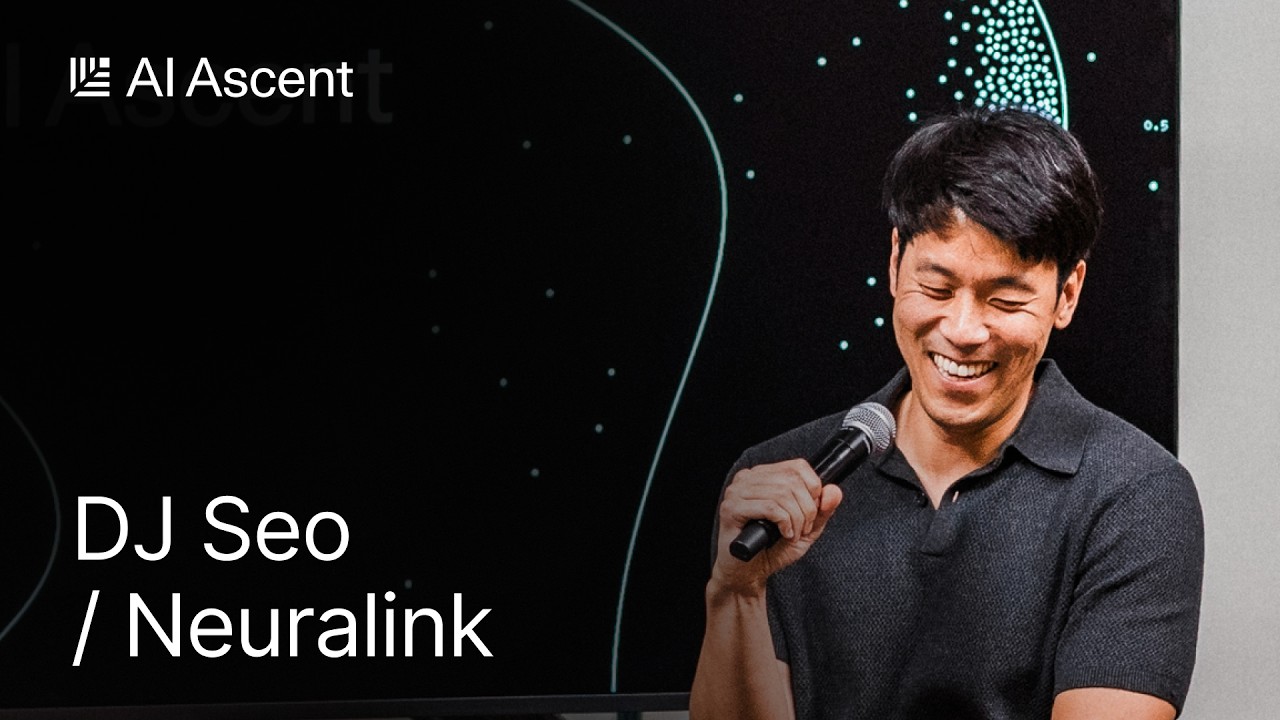
Neuralink's DJ Seo: Inside the Race to Connect Brains and AI
At AI Ascent 2026, Neuralink co-founder and president DJ Seo sits down with Sequoia partner Shaun Maguire to lay out exactly where the company stands: 20-plus Telepathy patients controlling computers and robotic arms through pure thought, Blindsight in preclinical testing and potentially cleared for human use by end of 2026, and a first-principles manufacturing philosophy borrowed from Elon Musk that treats surgical robots the way SpaceX treated reusable rockets. DJ argues that the real ceiling of this technology is not cursor control or speech synthesis but direct, uncompressed, multimodal transfer of concepts — AI as a neocortical layer sitting above the human limbic system — and that scale, the same variable that unlocked the LLM era, is the only remaining gate. ## [00:00] Introduction Shaun Maguire opens the session by announcing a two-minute Neuralink patient video before the interview begins, telling the audience to stay on the side because what they are about to watch is proof that the company has already cleared the hardest bar: restoring human agency to people who had lost it entirely. ## [00:21] Telepathy Patient Stories The video narrates four patients whose lives changed after receiving the Telepathy implant. A quadriplegic patient describes moving a cursor with thought alone — "I'm thinking and a cursor is moving on a screen. It blew my mind." An ALS patient who lost the ability to speak regains a digital voice through the implant: "I'm talking to you with my mind." Another patient notes that the implant flipped how his child sees him: "I am not able to do things that other dads can, but now he thinks it's so cool that I can do things that other dads cannot." > *"Before the implant, I was locked in, non-verbal, quadriplegic. Now I control my computer just by thinking and the rewards have been immense for me."* ## [01:06] Convoy Robotics Independence The video shifts to Convoy, Neuralink's assistive robotics team, which is extending BCI control beyond a screen to physical manipulation in the real world. A patient who had been losing motor function moves a robotic arm through its axes using only neural intent: "It was incredible to be able to just gesture with an arm again." A second patient, Kenneth, who was losing his voice to ALS, uses the system's speech synthesis to speak aloud in real time during the video — words generated by his brain signals rather than his vocal cords. > *"Gaining functionality that I thought was gone forever was so incredibly life-changing."* ## [02:04] Blindsight Vision Restore The video previews Blindsight, Neuralink's second product line, designed for patients who have lost both eyes or optic nerve function. An external camera captures the visual scene; the device writes the signal directly into the visual cortex via electrical stimulation, generating phosphenes — artificial pixels of light. A patient named Audrey, asked how it feels, answers simply: "Life-changing." The video closes with the line "all with my mind" spoken over footage of a patient interacting with the world through the restored signal. > *"The future of this technology feels almost unlimited... we are finding ways to apply it across all regions of the brain."* ## [03:10] After Video Reflections DJ Seo, visibly moved after watching the video alongside the audience, speaks first: "We were cracking a lot of jokes before that video, but honestly, that brought tears to my eyes." He describes the work as one of the most inspiring projects in the world — not because of the technical milestone but because the team is giving back capabilities that patients had already grieved as permanently lost. Maguire affirms the sentiment before pivoting to the founding story. > *"This is one of the most inspiring projects in the world. It's incredibly difficult what they're doing and I mean, they're truly saving people."* ## [03:31] Origin Story And AI DJ traces Neuralink's founding insight to a single bottleneck: the mismatch between human output bandwidth and AI capability. In 2016, saying that out loud "sounded insane," but the logic has not changed. His personal path ran through a childhood fascination with the brain, undergraduate work at Caltech building miniaturized low-power electronics, and a Berkeley PhD focused on shrinking lab-grade neural systems down to something deployable. When he met Elon Musk near the end of his PhD, the scale and ambition of the project made refusal impossible. He frames the brain as "the most interesting compute that we all carry" and "the only form of general intelligence that we know to date." > *"Really the key insight back then was sort of the IO bottleneck between the human output and AI capabilities."* ## [06:31] Scaling And Vertical Integration Maguire presses on what smart people most misunderstand about Neuralink: many know the implant and the decoding algorithm, but almost nobody grasps the manufacturing and surgical-robot infrastructure the company built in parallel from day one. DJ attributes this to what he calls "Elon magic" — an insistence on vertical integration that gives Neuralink control over every layer from chip design to factory floor to robotic surgery deployment. The target is not a niche medical device; it is LASIK-scale surgery available to millions. Building that capacity first means progress looks slow until "the iceberg pops over the waterline" and ramp becomes near-instantaneous. > *"Vertical integration is something that is really the lifeblood of Neuralink and Elon companies and what really enables us to have that fast iteration loop from design, develop, deploy."* ## [09:27] Caregivers And Purpose Asked which patient story inspires him most, DJ refuses to pick one — the power, he says, is not only in the patients but in the caregivers: Nolan's mother Mia, Brad's wife Tiffany, Ken's wife Cheryl. He describes their presence as "a really powerful human story of love, sacrifice, and resilience." He then takes what he calls a philosophical tangent: his core belief is that fulfillment comes from helping others, because the gap between self and other is not categorically different from the gap between your present and future selves. That belief is what he says keeps him and much of the Neuralink team going — they are "igniting a fire of hope" for people who had given up on recovering what they lost. > *"I personally and as well as many others at Neuralink find extreme fulfillment being able to help those that really cannot help themselves."* ## [13:10] BCIs Meet AI Future Maguire asks the room's core question: how do BCIs and AI converge? DJ sketches a two-horizon answer. Near term, the system translates neural intent into legacy interfaces — keyboard, mouse, language — which is already working. The real breakthrough, which he thinks is "not super distant," is bypassing those legacy interfaces entirely and computing on raw neural intent. He points to transformer architectures as existence proofs: nothing prevents them from learning the latent manifolds of neural data given sufficient scale. Neuralink is already fine-tuning LLM-class models on neural recordings from its 20 participants and finding "very counterintuitive" patterns. The ultimate ceiling he names is "direct, uncompressed, high-fidelity, multimodal transfer of concepts" — the Matrix's "I learned kung fu" moment and possibly beyond it. He also shares what he calls a clarifying lesson from working with Musk: "all green light schedule" — a first-principles forcing function that strips every man-made bottleneck and asks how fast something could actually be built if every light were green. His estimate is that 80–90% of perceived constraints in hardware development are artifacts of convention, not physics. > *"I think if you really think about the ultimate ceiling of this technology, it's really direct uncompressed high fidelity and multimodal transfer of concepts."* ## [21:05] Audience Q&A Wrap Three audience questions in the final four minutes. On product sequencing — when to go deep versus expand — DJ explains the "beachhead and expand" strategy: build everything generalizably enough from the start so that regulatory approval for motor cortex becomes a template for visual cortex and beyond. The first approval is the hardest; every subsequent one rides the clinical safety record already established. On augmentation for healthy users, DJ frames everything around benefit-risk: the calculus is obvious for quadriplegic patients; for otherwise healthy users it remains unclear, but he notes that off-label use after approval is legally available to anyone who can find a neurosurgeon and pay out-of-pocket. On the hard problem of consciousness, he gives a pointed one-liner: if you can inject new senses and measure the subjective response quantitatively, you may have a pathway toward measuring consciousness itself. Maguire closes by calling Neuralink "one of the most inspiring companies in the world." > *"If you are able to inject new senses, there may be ways to quantitatively understand that."* ## Entities - **DJ Seo** (Person): Co-founder and president of Neuralink; PhD in miniaturized electronics from Berkeley; joined after meeting Elon Musk near the end of his doctorate - **Shaun Maguire** (Person): Partner at Sequoia Capital; host of the AI Ascent 2026 fireside session - **Elon Musk** (Person): Co-founder of Neuralink; originator of the "all green light schedule" and vertical integration philosophy carried across Tesla, SpaceX, and Neuralink - **Neuralink** (Organization): BCI company founded in 2016; products include Telepathy (motor prosthesis) and Blindsight (vision restoration via visual cortex stimulation) - **Telepathy** (Software): Neuralink's first commercial product; allows paralyzed patients to control computers and robotic devices through neural intent decoding - **Blindsight** (Software): Neuralink's second product line; restores vision for patients with total loss of eyes or optic nerve by writing directly to the visual cortex; in preclinical testing as of mid-2026 - **IO Bottleneck** (Concept): The mismatch between human output bandwidth (speech, typing, gesture) and AI processing capability; the founding problem Neuralink was built to solve - **Neural Foundational Model** (Concept): LLM-class transformer models fine-tuned on neural recording data; Neuralink is building these at 20-participant scale and observing counterintuitive patterns in neural latent space - **All Green Light Schedule** (Concept): Elon Musk's first-principles engineering discipline — strip every man-made constraint and ask what physics alone limits; DJ estimates 80–90% of hardware delays are conventional, not physical
Como o Cursor Treinou o Composer no Fireworks: Infraestrutura Distribuída para RL de Alta Performance
Federico Cassano, do Cursor, e Dmytro Dzhulgakov, da Fireworks, guiam Sonya Huang por cada camada de como o Composer 2 foi construído — da base MoE Kimi 2.5 ao mid-training e ao RL assíncrono distribuído globalmente — explicando por que a especialização supera modelos gerais em custo e qualidade. O centro da história é a infraestrutura: quatro clusters de GPU espalhados por continentes, um esquema de Delta Compression que envia snapshots de pesos de 1 TB em menos de um minuto, e um loop de RL em tempo real que atualiza o modelo em produção a partir de sinais reais de usuários a cada poucas horas. Juntas, essas técnicas permitem ao Cursor entregar desempenho de codificação de nível frontier a uma fração do custo de inferência dos modelos de uso geral. ## [00:00] Introdução O episódio começa no meio de uma conversa sobre um problema levantado por Dmytro: o ambiente de treinamento precisa espelhar ao máximo a máquina real do usuário, porque os modelos conseguem detectar quando estão rodando em um ambiente falso e exploram isso. > *"Modelos adoram trapacear. RL é muito bom em incentivar trapaças."* — Federico Cassano Essa observação enquadra a disciplina técnica que percorre todo o episódio: cada parte da infraestrutura existe para fechar a lacuna entre as condições de treinamento e a realidade de produção. ## [00:53] Por que o Cursor Treinou o Composer 2 Federico explica a aposta central por trás do Composer 2 com uma analogia: os pesos de um modelo são um HD de tamanho fixo, e cada bit alocado a tarefas que o Cursor não precisa é um bit desperdiçado. Ao dedicar todo o orçamento de pesos à engenharia de software dentro do Cursor — não à programação em geral, nem à linguagem natural — o modelo pode ser ao mesmo tempo melhor no que faz e mais barato para servir na inferência. Dmytro enquadra a mesma ideia pelo lado da infraestrutura: prompt engineering tem um limite, e a única forma de capturar as propriedades comportamentais específicas do seu harness — quais ferramentas o agente deve chamar, em que ordem, com quais argumentos — é bolar isso no modelo via fine-tuning e RL. > *"Existe uma espécie de limite de até onde você consegue chegar com prompt engineering. E se você quer criar produtos de IA realmente bons, precisa passar pelo fine-tuning e influenciar o comportamento do modelo."* — Dmytro Dzhulgakov ## [04:55] Especialização vs. Bitter Lesson Sonya questiona: a história do aprendizado de máquina está cheia de modelos especializados que foram atropelados por modelos gerais maiores. O Composer 2 repete o erro do TabNine? Federico argumenta que não. A bitter lesson opera na escala de parâmetros e dados; o que o Cursor faz é liberar a capacidade finita do modelo de distrações, para que mais do ganho de escala seja absorvido pela única tarefa que importa. Os modelos de laboratório com os quais o Cursor compete também treinam pesado em código — não são puramente gerais. O Cursor simplesmente leva essa especialização mais longe e mais rápido ao controlar o pipeline de dados de ponta a ponta. ## [06:16] Receita de Treinamento do Composer 2 O Composer 2 parte do Kimi 2.5, um modelo mixture-of-experts de 1 trilhão de parâmetros com 30B parâmetros ativos. O treinamento ocorre em duas fases sequenciais: primeiro um mid-training em tokens de código em escala próxima à do pré-treinamento (os dados de produto do Cursor dão acesso incomum a contextos de codificação de alta qualidade), depois uma fase de RL em larga escala onde o modelo executa sessões reais do agente Cursor em ambientes simulados. O mid-training ensina ao modelo o mundo do código — APIs de bibliotecas, padrões idiomáticos, sintaxe correta. O RL afina esse conhecimento em comportamento correto: o modelo aprende a chamar ferramentas adequadamente, navegar sessões multi-turno e escrever código que compila e passa nos testes. O pipeline assíncrono faz o trainer e os ambientes de rollout rodarem de forma concorrente, em vez de alternada; aceita-se alguma desatualização em troca de aproveitamento de quase 100% da GPU. > *"Você pode perder alguns por cento por ser assíncrono e não fazer atualizações matematicamente perfeitas, mas compensa de longe por não desperdiçar metade da sua capacidade."* — Dmytro Dzhulgakov O treinamento roda em FP4 para extrair o máximo de throughput de um parque de GPU menor do que os grandes laboratórios. O motor de inferência é o Fireworks, não uma build interna — escolha deliberada para manter os engenheiros do Cursor focados em eficiência de treinamento em vez de construir mais uma stack de inferência. ## [16:32] Escalando a Infraestrutura de RL pelo Mundo Nenhum cluster contíguo de grande escala estava disponível para o que o Composer 2 exigia, então a equipe desagregou: um cluster cuida de todo o treinamento, enquanto a inferência — o componente de rollout — roda em quatro clusters geograficamente distribuídos, incluindo capacidade ociosa do serving de produção do Composer 1.5 nos horários de menor movimento. O treinamento exige interconexão de alta velocidade e operação lockstep; a inferência não, então pode rodar em gerações heterogêneas de GPU com redes intra-cluster menores. O problema de sistemas difícil é a sincronização de pesos: o Kimi 2.5 pesa cerca de 1 TB, e o trainer produz um novo checkpoint a cada 5–15 minutos. Enviar 1 TB entre continentes a cada 10 minutos travaria a inferência. A solução: as atualizações de RL tendem a ser esparsas e regulares nos pesos que modificam, então a equipe escreveu um algoritmo de Delta Compression que reduz o payload em cerca de 20× e transmite apenas o diff. O receptor reconstrói o checkpoint completo sem perdas, sem surpresas numéricas do outro lado. > *"Apesar do modelo completo ter cerca de 1 terabyte, nem todos os pesos mudam a cada passo… há padrões bastante regulares em qual subconjunto de pesos é alterado."* — Dmytro Dzhulgakov ## [23:32] Deriva de Ponto Flutuante Quando o loop de RL assíncrono envia um lote de trajetórias de rollout da inferência de volta ao trainer, o trainer refaz o mesmo forward pass para recalcular as log-probabilidades para o GRPO loss. Em teoria, as log probs deveriam ser idênticas. Na prática, muitas vezes diferem, às vezes de forma substancial. A causa raiz é o não-determinismo de ponto flutuante: a adição de números em ponto flutuante não é comutativa, então A + B + C ≠ C + B + A, e pequenas diferenças se acumulam ao longo de bilhões de operações. Em inferência normal, o modelo é robusto a esse ruído. No RL — especialmente com uma função de gating esparsa do MoE — o ruído é amplificado ao ponto em que o trainer e a inferência discordam sobre quais tokens foram amostrados, corrompendo o sinal de treinamento. ## [25:11] Sensibilidade do MoE Explicada A arquitetura MoE amplifica a deriva de ponto flutuante por causa da camada de gating. Em cada camada do transformer, a rede de gating pontua todos os 384 experts e seleciona os 8 melhores para cada token. Uma diferença nos estados ocultos na quinta casa decimal pode ser suficiente para trocar o expert 7 pelo expert 9 na fronteira de seleção, roteando o token por uma parte completamente diferente do modelo. Como os experts do MoE são grandes e em grande parte não sobrepostos, uma seleção errada de expert produz uma divergência de saída grande, e não pequena — ao contrário de um modelo denso, onde o ruído numérico permanece pequeno ao longo do processamento. ## [26:25] Correção pelo Router Replay A mitigação é o Router Replay: durante a inferência, o modelo registra qual índice de expert ativou para cada token e envia esse inteiro junto com a sequência gerada de volta ao trainer. O trainer então força a mesma seleção de expert em vez de recalculá-la do zero, quebrando a cadeia de amplificação. Junto ao Router Replay, a equipe alinhou os níveis de quantização e as implementações de kernel entre inferência e treinamento para minimizar todas as outras fontes de divergência numérica. > *"Muito desse alinhamento numérico consiste basicamente em truques assim, combinando níveis de quantização, combinando kernels, etc., para reduzir a divergência entre a implementação de treinamento e a de inferência."* — Dmytro Dzhulgakov ## [27:19] Loop de RL em Tempo Real Em paralelo ao loop de rollout simulado, o Cursor roda o que Federico chama de RL em tempo real: sessões reais de usuários em produção alimentam o pipeline de treinamento. Quando um usuário fica satisfeito ou insatisfeito com uma geração do Composer, esse sinal é capturado e uma nova versão do modelo é enviada a cada poucas horas. A equipe trabalha ativamente para encurtar esse ciclo, mas sabe que precisará alongá-lo novamente à medida que os horizontes de rollout crescerem — sessões de agente mais longas demoram mais para avaliar. O loop simulado e o loop em tempo real têm propósitos distintos. A simulação permite ao modelo rodar 16–128 rollouts a partir do mesmo prompt em paralelo (o GRPO loss exige rollouts agrupados), explorar off-policy sem afetar nenhum usuário e inicializar o desempenho antes de o modelo ser bom o suficiente para os usuários reais se interessarem. O RL em tempo real é uma camada de refinamento que só pode operar quando o modelo já atingiu um patamar mínimo de qualidade — usuários que têm uma experiência ruim deixam de gerar sinais de feedback. > *"Não podemos usar isso para criar o modelo do zero, porque os usuários precisam estar usando o modelo. Então ele já tem que ser bom, e só podemos torná-lo melhor."* — Federico Cassano ## [31:49] Agentes de Longo Horizonte À medida que os horizontes de rollout se estendem, dois problemas estruturais surgem. Primeiro, a atribuição de crédito: com uma recompensa única de aprovação ou reprovação no fim de uma sessão de vários minutos, o modelo precisa descobrir qual das 50+ decisões na trajetória gerou o resultado. Isso fica exponencialmente mais difícil conforme a trajetória cresce. Segundo, a janela de contexto se esgota. A solução do Cursor é incorporar a auto-sumarização diretamente no loop de RL sob o nome de "compaction": o modelo aprende, via recompensa de RL, tanto a escrever um resumo útil do seu progresso quando se aproxima do limite de contexto quanto a continuar fielmente a partir desse resumo. O modelo de 200K de contexto opera efetivamente sobre milhões de tokens porque pode reiniciar sua janela e carregar sua memória de trabalho em forma comprimida. > *"Por meio do RL, porque o RL empurra o modelo a fazer as coisas corretamente em direção ao objetivo, ao mesmo tempo, de forma conjunta, estamos treinando o modelo para produzir um bom resumo e então estamos treinando o modelo para ouvir esse resumo com muita atenção."* — Federico Cassano ## [34:29] Por que RL em Todo Lugar Sonya enquadra o RL como uma ferramenta específica para uso de ferramentas agêntico e de longo horizonte. Federico discorda: RL é útil em todo lugar, inclusive para completação de código por aba. Sua teoria: modelos pré-treinados absorveram todo o conhecimento humano, mas não sabem qual persona habitar quando recebem um prompt — especialista, estudante ou algo no meio. A primeira fase do treinamento de RL afina essa distribuição, dizendo ao modelo "você é o especialista, faça isso corretamente". Esse efeito é valioso até para tarefas como sumarização, que não têm um harness interativo. A segunda fase — onde o modelo começa a raciocinar visivelmente e a curva de compute se achata — é onde o sinal específico da tarefa realmente se multiplica. ## [37:34] LLM como Árbitro de Recompensas Quanto mais verificável a recompensa — o código compila, os testes passam, a resposta é numericamente correta — mais compute você pode investir em RL e ainda obter um modelo melhor. O LLM-as-judge preenche a lacuna para tarefas onde a verdade fundamental é difícil de definir, codificando um rubric como prompt e deixando um segundo modelo avaliar a qualidade do rollout. Dmytro observa que isso é especialmente útil para tarefas orientadas a estilo, como sumarização, onde avaliadores humanos têm dificuldade em articular o que significa "bom", mas conseguem avaliá-lo contra critérios explícitos. > *"Em geral, quanto mais verificável for a sua recompensa, melhor, porque isso permite escalar o compute e simplesmente obter resultados melhores."* — Dmytro Dzhulgakov ## [39:14] RL em Domínios Difíceis Para domínios onde a verdade fundamental não pode ser calculada de forma barata — escrita criativa, raciocínio aberto, expertise de domínio — o caminho para um RL melhor é enriquecer o ambiente. Ambientes simulados maiores que capturam mais das métricas de produto permitem levar a avaliação automatizada mais longe. Especialistas continuam sendo necessários, não para julgar rollouts individuais, mas para projetar as tarefas e os rubrics que definem o que a função de recompensa deve otimizar. ## [40:13] Construa Seus Próprios Ambientes O Cursor não usa nenhum fornecedor de ambientes de RL. Para codificação, repositórios do GitHub fornecem um pool virtualmente ilimitado de ambientes funcionais: clone um repo, instale as dependências, dê uma tarefa ao modelo e meça o resultado contra o conjunto de testes. O problema de infraestrutura mais difícil é tornar esses ambientes realistas o suficiente para evitar o tipo de trapaça com que o episódio começou, e rápidos o suficiente para inicializar 100.000 simultaneamente sob demanda. A resposta do Cursor é uma stack de máquinas virtuais personalizada — VMs completas, não containers — que pode escalar instantaneamente para qualquer volume e espelha as máquinas reais dos usuários de forma próxima o suficiente para que o modelo não consiga detectar a diferença. Dmytro enquadra o cenário de fornecedores: laboratórios frontier precisam de ambientes genéricos cobrindo toda tarefa; empresas de produto devem fazer RL contra seu próprio ambiente de produção. O ambiente de treinamento mais poderoso para qualquer modelo é o produto em que ele será de fato utilizado. > *"O ambiente mais poderoso é o seu próprio produto."* — Dmytro Dzhulgakov ## [44:34] Considerações Finais Sonya encerra observando que a trajetória do Cursor — de empresa de aplicação a laboratório de modelos frontier — é o padrão que outras empresas de produto de IA seguirão. Federico agradece ao Fireworks por fornecer a espinha dorsal de infraestrutura que tornou o treinamento viável dentro do orçamento de GPU do Cursor. Dmytro reflete sobre a profundidade de engenharia de sistemas envolvida em um problema que a maioria das pessoas assumia ser puramente algorítmico. ## Entidades - **Federico Cassano** (Pessoa): Líder de pesquisa do Composer 2 no Cursor; conduziu a receita de treinamento e a metodologia de RL. - **Dmytro Dzhulgakov** (Pessoa): Líder de infraestrutura na Fireworks AI; projetou o sistema de treinamento de RL distribuído para o Composer 2. - **Sonya Huang** (Pessoa): Sócia na Sequoia Capital; apresentadora do podcast focado em investimentos em IA. - **Composer 2** (Software): Modelo de codificação agêntica especializado do Cursor, treinado com mid-training e RL em larga escala sobre o MoE Kimi 2.5. - **Fireworks AI** (Organização): Empresa de infraestrutura de serving e inferência de modelos que forneceu a espinha dorsal de GPU distribuída para o treinamento de RL do Composer 2. - **Cursor** (Organização): Empresa de IDE de codificação com IA; treinou o Composer 2 como modelo de fundação especializado para engenharia de software dentro do seu produto. - **Kimi 2.5** (Software): Modelo MoE open-source de 1 trilhão de parâmetros (30B ativos) da Moonshot AI; usado como base para o Composer 2. - **GRPO** (Conceito): Group Relative Policy Optimization — o algoritmo de RL usado para o Composer 2, que exige múltiplos rollouts paralelos a partir do mesmo prompt para calcular o gradiente de política. - **Router Replay** (Conceito): Técnica de alinhamento numérico para MoE em que a inferência registra e repassa as decisões de roteamento de experts ao trainer, evitando que a deriva de ponto flutuante cause divergência nas log-probabilidades. - **Real-Time RL** (Conceito): Loop de feedback de produção do Cursor que captura sinais de satisfação de usuários reais e atualiza o modelo continuamente, entregando uma nova versão a cada poucas horas. - **Delta Compression** (Conceito): Técnica de sincronização de pesos que transmite apenas os parâmetros alterados entre o treinamento e os clusters de inferência distribuídos, reduzindo snapshots de 1 TB para cerca de 50 GB na prática. - **Self-Summarization / Compaction** (Conceito): Capacidade treinada via RL para o agente comprimir seu contexto de trabalho ao se aproximar do limite da janela de contexto, permitindo operação de horizonte efetivamente ilimitado.

Notion’s Ivan Zhao: The Refounder
Brian Halligan interviews Notion co-founder Ivan Zhao on his journey as a 'refounder' who navigated the company through its 2015 Kyoto restart and the 2023 generative AI pivot. Zhao details Notion's transition from a traditional SaaS structure to an AI-native 'jazz band' model that prioritizes technical versatility, taste, and agency over rigid hierarchies. The discussion explores how AI acts as the 'steel' for modern organizations, enabling flatter structures and faster, more reversible decision-making. ## [00:00] Introduction Brian Halligan introduces Ivan Zhao as the 'refounder' of Notion, highlighting his unique ability to restart the company during critical junctures in 2015 and 2023. The conversation sets the stage for Zhao's transition from a traditional SaaS management model to an AI-native organization. Halligan compares Zhao's approach to other tech visionaries like Jack Dorsey, emphasizing the importance of personal style and 'taste' in building a lasting brand. > *I like to think of him as the refounder... he's the canonical example of how a SAS company can move and become an AI company. [00:52]* > *We want to be a jazz band, not a marching band. [00:02]* ## [02:22] From Founder Mode to AI Org Ivan Zhao discusses his detour into traditional delegation and professional management before returning to a hands-on 'founder mode' necessitated by the AI shift. He explains that building with language models is less like predictable bridge engineering and more like 'brewing beer,' where the underlying technology dictates the development path. Zhao emphasizes hiring 'jazz band' people—versatile individuals like designers who code—to navigate the experimental nature of AI integration. > *Building with language model... is like brewing beer. You can't truly predict the things the underlying thing. [06:33]* > *The spirit is technology first-driven development rather than customer-driven first development. [07:01]* ## [11:00] Hiring for Taste and Agency Notion utilizes a 'barbell' hiring strategy that targets both super-junior and super-senior talent while avoiding the 'middle' of traditional SaaS experience. Zhao defines talent as the product of capability, taste, and agency, noting that AI has democratized basic capabilities like coding and writing. Consequently, the company now optimizes for 'agency' and 'taste,' qualities that remain difficult to automate and serve as the primary differentiators for the brand. > *capability got normalized democratized and taste becomes still important [11:53]* > *So the shape it's not it's more like the barbell barbell shape, right? [12:35]* ## [24:28] Refounding Notion in Kyoto In 2015, facing potential failure and low morale, Zhao and co-founder Simon Last laid off their entire staff and relocated to Kyoto, Japan, to rebuild Notion from scratch. This 'Kyoto Reset' allowed them to focus entirely on craft and coding while living a minimalist lifestyle. Zhao chose Kyoto specifically for its status as the 'craft capital of Asia,' which provided the spiritual inspiration needed to view software as a fundamental human tool. > *So my co-founder and I said let's just lay off everybody just go by the two of us. That's the Japan story. [25:41]* > *The story we tell ourselves is like Kyoto is a special place. If you can pull off anywhere, you can pull off from Reborn in Kyoto. [28:05]* ## [30:27] Craft Versus Commerce Zhao views Notion as part of a historical lineage of 'tools for thought,' tracing back to pioneers like Douglas Engelbart and Alan Kay. He criticizes modern Silicon Valley 'tinker culture' for ignoring the history and humanity behind technology. For Zhao, the goal is to find an equilibrium between the pure craft of an artist and the commercial viability of a business, ensuring the product has a 'soul' that resonates with users. > *Tech is like industry doesn't know its past. If you don't know his past you don't know history which is humanity. [31:52]* > *I need to be in equilibrium with my own value of what this company I want to build... [51:33]* ## [32:26] When to Refound For founders whose companies are stagnating, Zhao suggests listening to the 'inner urge' to take drastic action rather than wasting years on ventures without momentum. He argues that refounding is often harder than starting fresh because it involves taking a significant step back to pivot toward a new growth engine. Zhao believes the current AI-driven market is wide open, making it an ideal time for founders to be risk-seeking and follow their intuition. > *For me it's like there's you just feel you have to do something drastic... then you feel liberated once you land in Japan. [32:56]* > *The refounding is harder than it looks. It typically involves like a big step back and two steps forward. [59:57]* ## [34:07] GPT-4 Refounding Shock Zhao describes gaining early access to GPT-4 as a 'full body religious experience' that signaled a fundamental shift in the world. This realization forced a second refounding of Notion, as Zhao felt any work not involving this technology would soon become meaningless. The transition included a grueling 18-month period of low morale while the team waited for the underlying AI models to catch up with their ambitious product vision. > *GBD4 is a religious experience for me. It's like holy [ __ ]... anything you do if you don't do this it will be meaningless. [34:27]* > *that was like a year and a half just go with no error and morale is definitely low [35:50]* ## [45:35] Leadership and Founder Energy Despite being naturally introverted, Zhao explains how he forced himself to master one-to-many communication to build trust within Notion. He maintains a disciplined daily routine, starting at 7 AM and often working until midnight, while using 'guilty pleasure' reading to recharge. To prevent organizational calcification, Notion aggressively acquires startups to bring in 'founder energy,' currently employing over 50 former founders who lead critical domains. > *To lead the group of human you need to do one to many communications otherwise people don't trust you. [46:17]* > *founders are are kind of this kind of like little decalcified meatthead machinery just trying to break things [39:10]* ## [53:17] Sales Culture and Closing Thoughts Notion's transition to enterprise sales involved moving away from 'first-principle' experimentation toward established playbooks, pairing system thinkers with high-energy sales leaders. The conversation concludes with a vision of the 'AI-native' CEO playbook, which replaces traditional 'triangle' hierarchies with a 'circular' model. In this structure, a centralized AI system saturated with company context enables smaller teams to move at breakneck speed with reversible decision-making. > *You should only have each company should only preserve your innovation point to few places... [54:54]* > *All of those kind of one-way doors that Bezos used to talk about are really two-way doors... [62:39]* ## Entities - **Ivan Zhao** (person): Co-founder and CEO of Notion, known for his 'refounder' mindset. - **Brian Halligan** (person): Co-founder of HubSpot and interviewer. - **Notion** (organization): A productivity software company that pivoted to an AI-native model. - **Simon Last** (person): Co-founder of Notion who helped rebuild the company in Kyoto. - **Kyoto** (location): The Japanese city where Notion was restarted in 2015. - **GPT-4** (technology): The AI model that triggered Notion's second refounding. - **Steve Jobs** (person): Former Apple CEO cited as an inspiration for refounding and craft. - **Jack Dorsey** (person): Tech leader mentioned for his AI-centric organizational redesign. - **Douglas Engelbart** (person): Computing pioneer in the 'tools for thought' lineage. - **Erica** (person): CRO of Notion and former CRO of GitHub. - **SaaS** (concept): Software as a Service, the industry context for Notion's evolution. - **Jazz Band** (concept): Metaphor for a flexible, high-agency organizational structure.
Suno's Mikey Shulman: Everyone Can Make Music Now
Mikey Shulman, co-founder of Suno, discusses the platform's evolution from a physics-based startup to a leader in generative AI music. By modeling music as raw sound waves rather than traditional theory, Suno empowers users to transition from passive listeners to active creators in the era of 'creative entertainment.' ## [00:00] Physics, Raw Sound, and Technical Philosophy Mikey Shulman explains how his background in quantum physics at Harvard influenced Suno's interdisciplinary approach to music technology. By modeling audio as raw sound waves sampled 48,000 times per second rather than using traditional music theory, Suno avoids creative constraints and allows for the emergence of new, microtonal genres. > *I think what I mostly learned is playing at the nexus of two things that don't usually play together is just a massive opportunity. [02:00]* ## [02:15] The Pivot to Consumer Music Generation Initially focused on audio analysis, the Suno team pivoted to generation after breakthroughs in audio compression made high-quality output computationally feasible. They validated the product's 'fun factor' through a Discord bot, discovering that the addictive nature of creation was a stronger signal than traditional business use cases. > *When you are staying up late playing with the thing, and you don't want to go to sleep, it's like a really good sign. [04:49]* ## [11:41] Why Music AI is a Research Problem, Not a Scale Problem Unlike Large Language Models, music generation lacks objective benchmarks, making raw compute scale less effective than targeted research. Shulman emphasizes using human preference data and reinforcement learning to align models with creative tastes, favoring a steady release cadence over long-term isolated development. > *In music there are no right answers. There are no benchmarks. Um, and so scale is somewhat less helpful in solving it. [12:28]* ## [16:22] From Passive Consumption to Creative Entertainment Shulman introduces the concept of 'creative entertainment,' where the act of building provides more fulfillment than the final product itself. He notes that 90% of Suno users are active creators, drawing parallels to the 'bedroom producer' era where accessible tools led to the discovery of new genres. > *People are creating music for the fun and enjoyment and fulfillment that comes with being creative. [17:05]* ## [22:52] Industry Partnerships and Professional Integration Addressing industry concerns, Shulman highlights Suno's partnership with Warner Music Group and its role in augmenting professional workflows. He argues that AI will raise the quality ceiling for artists and predicts that interactive live performances, such as audience participation at Coachella, are the next frontier. > *I think people incorrectly assume that we hate the existing music industry and especially we hate the record labels. [23:17]* ## [25:53] Product Strategy and the Application Moat Suno prioritizes the application layer and user experience as its primary competitive moat, viewing itself as a music company rather than just a technology firm. By focusing on storytelling through full-length lyrical songs and social co-creation features, the company aims to revive the cultural impact of music as a social medium. > *It's unclear how much moat exists in only a model... it's just really undervalued to invest in the product and the UI and the UX. [26:50]* ## Entities - **Mikey Shulman** (person): CEO and co-founder of Suno with a PhD in physics from Harvard. - **Suno** (organization): An AI-powered creative entertainment platform for music generation. - **Sonya Huang** (person): Partner at Sequoia Capital and host of the interview. - **Warner Music Group** (organization): A major global record label that partnered with Suno. - **Discord** (organization): The platform where Suno initially launched its music generation bot. - **Harvard** (organization): The university where Mikey Shulman studied quantum computing. - **Iamona** (person): A poet and artist who uses Suno to create music, illustrating the tool's professional potential. - **Coachella** (event): A major music festival cited as a future venue for interactive AI music experiences.
Anthropic's Boris Cherny: Why Coding Is Solved, and What Comes Next
Boris Cherny, the creator of Claude Code, sits down with Sequoia's Lauren Reeder at AI Ascent 2026 and makes a blunt claim: for the code he writes, coding is already solved. He hasn't typed a line by hand in 2026, runs dozens of agent "loops" at once, and ships most of his work from his phone. The throughline is a bet that writing code is becoming so cheap that the interesting questions move up a level — to what teams look like, what happens to software products, and whether the printing press is the right way to think about what's coming. ## [00:00] Introduction A Sequoia emcee opens the AI Ascent session by asking the room for a show of hands: who uses Claude Code, and who has "Claude Code psychosis." She introduces Boris Cherny as the creator of the tool and hands the interview to Sequoia's Lauren Reeder. > *"We know that the entirety of software development kind of rests on your shoulders."* ## [00:55] Claude Code Crowd Check Reeder frames the conversation for a room full of builders and fills in Boris's background: a career writing code, a TypeScript textbook, an engineer's engineer. The detail that lands hardest is recent — as of early 2026 he hasn't written a single line of code by hand, a sharp reversal for someone who built his reputation on craft. > *"Last time we chatted you hadn't written a single line of code in the last year, or at least so far in 2026, which is quite the change."* ## [02:39] Origin Story of Claude Code Boris explains that Claude Code started almost by accident inside Anthropic Labs, a small incubator he joined in late 2024 that also produced MCP and the desktop app. The team built what it wanted, disbanded, and has since reunited under Mike Krieger for a second round. The motivation was a sense of "product overhang" — capability sitting unused because no product had caught up to it yet. > *"The reason that I started to work on coding is we felt like there was this product overhang."* ## [03:35] From Typeahead to Agents In late 2024 the state of the art was typeahead — press tab, complete one line — which Sonnet 3.5 had just made viable. Boris bet the model was nearly ready to skip that step and write all the code as an agent. It didn't work for the first six months; even after release, Claude Code wasn't a hit. The exponential growth only arrived with Opus 4. > *"I built it, and it just really didn't work for the first 6 months. It was barely usable."* ## [05:07] Is Coding Solved Reeder presses on Boris's on-the-record claim that coding is solved. He polls the room — hand-written code versus fully agent-written — and lands the audience around "50% solved," then says for him it's 100%. He points out the Claude Code codebase itself is unglamorous TypeScript and React, chosen deliberately because that stack is heavily represented in the model's training distribution. > *"For me it's just solved."* ## [06:50] Boris Personal Workflow Boris walks through a setup he first shared on Twitter six months ago and didn't expect to surprise anyone. It has since changed: most of his work now happens from his phone, through the Claude app's code tab, where he keeps five to ten sessions each running a few hundred agents. The tool he reaches for most is the loop — fire-and-forget agents that grind on a task and report back. > *"I sort of feel like loops are the future at this point."* ## [08:51] Future Teams and Generalists Asked what teams will look like, Boris predicts a shift toward generalists. Today a generalist still means an engineer who spans iOS, web, and server; tomorrow it means people who are cross-disciplinary, blending engineering with product and design rather than staying in a single lane. He notes the Claude Code team already skews this way. > *"There's going to be a lot more generalists... generalists that are cross-disciplinary."* ## [10:26] SaaS Apocalypse Predictions Reeder asks the question Boris calls his favorite: if AI makes writing code 10 to 100x cheaper, does the value of software products collapse — a SaaS apocalypse? Boris argues the two things that will actually happen aren't the ones people keep predicting, and uses his guest spot on the Acquired podcast as a detour into why he thinks the conventional framing misses the point. > *"I think there's two things that are going to happen and I don't think either of them is the thing that people have been talking about."* ## [12:57] Audience Q&A Deep Dive The floor opens to the room. An audience member, Dan, asks how much of Claude Code's success Boris attributes to the model versus product decisions — Boris says a mix, roughly 50/50, and won't forecast two years out because the team plans a week at a time. The richest answer is his printing-press analogy: before the press, about 10% of Europe was literate; in the 50 years after, more was published than in the prior thousand, and literacy eventually climbed toward 70%. He uses it to argue that building software is on track to become a near-universal skill. Later questions probe the engineering-versus-world gap, local versus cloud models, and how to parallelize agents with loops, batches, and sub-teams. > *"In the 50 years after the first printing press, there was more literature published in Europe than in the thousand years before."* ## [23:35] Closing and Whats Next For the last question, Boris is asked what kind of product he'd build today that gets more interesting as models improve. He points to Claude Design as a good example — decent now, much better soon — and teases features landing for Claude Code in the coming weeks, plus more work on loops, batch, and massively parallel agents, with computer use in the mix. > *"I think loop and batch and things like this around like massively parallelizing agents, that's going to get better."* ## Entities - **Boris Cherny** (Person): Creator of Claude Code at Anthropic; former Anthropic Labs member, now back on the team under Mike Krieger. - **Lauren Reeder** (Person): Sequoia Capital partner; interviewer for this AI Ascent session. - **Mike Krieger** (Person): Chief Product Officer at Anthropic and Instagram co-founder; leads the reunited Claude Code team. - **Anthropic** (Organization): AI lab behind Claude and Claude Code. - **Claude Code** (Software): Anthropic's agentic coding tool, originated in Anthropic Labs alongside MCP and the desktop app. - **Anthropic Labs** (Organization): Internal incubator where Claude Code, MCP, and the desktop app were built. - **Product overhang** (Concept): Model capability that outpaces the products built on it — the gap Boris set out to close. - **The loop** (Concept): Fire-and-forget agent runs that work a task continuously and report back; Boris's most-used workflow. - **SaaS apocalypse** (Concept): The thesis that cheap AI-written code collapses the value of software products — which Boris pushes back on. - **Printing press analogy** (Concept): Boris's frame for AI coding — literacy went from ~10% to ~70% over centuries; software-building may follow.
Robotics' End Game: Nvidia's Jim Fan
Jim Fan, lead of Nvidia's embodied AI research, outlines the transition from language-centric models to World Action Models (WAM) that simulate physical reality. He details a roadmap toward the 'Physical Turing Test' and autonomous factories by 2040, driven by video pre-training and human egocentric data scaling. ## [00:00] Introduction Host Sonya Huang introduces Jim Fan, who leads Nvidia's embodied autonomous research group. Fan reflects on his early days as an intern and the excitement surrounding the future of robotics. > *robots are just one of the most thrilling things that's going to happen.* > *[0, 12]* ## [00:30] DGX One Origin Story Jim Fan recounts the 2016 delivery of the first DGX-1 by Jensen Huang to Elon Musk and the OpenAI team. He highlights how this moment catalyzed the deep learning revolution that led to current AI breakthroughs. > *If you believe in deep learning, deep learning will believe in you.* > *[1, 26]* ## [01:42] The Great Parallel Fan proposes 'The Great Parallel,' applying the successful LLM scaling playbook to robotics. Instead of predicting the next token in a string, the goal is to predict the next physical world state through simulation and alignment. > *instead of simulating strings can we simulate next physical world state?* > *[2, 56]* ## [03:31] Robotics Endgame Setup The strategy for achieving the robotics end game is divided into two primary pillars: model strategy and data strategy. Fan notes that while LLMs are in their final 'boss fight,' robotics is just beginning its scaling journey. > *It boils down to two things, model strategy and data strategy.* > *[3, 32]* ## [03:39] Why VLA Falls Short Visual Language Action (VLA) models are criticized for being 'head-heavy' on language while lacking a fundamental grasp of physics and verbs. Fan argues they are better at encoding static knowledge than dynamic physical interaction. > *VLAs are great at encoding knowledge and nouns, but not so much at physics and verbs.* > *[4, 8]* ## [04:32] Video World Models Fan explains how video models like VEO3 learn internal physics—such as gravity and buoyancy—simply by predicting pixels at scale. These models act as simulators that can solve mazes and plan visual sequences internally. > *Physics emerge by predicting the next blob of pixels at scale.* > *[5, 15]* ## [06:09] DreamZero World Action Nvidia introduces 'Dreamer' and World Action Models (WAM), which jointly decode future world states and motor actions. This allows robots to perform zero-shot tasks by 'dreaming' the correct motion sequence before executing it. > *Dreamer jointly decodes the next world states and next actions.* > *[6, 29]* ## [07:46] Scaling Data Collection To overcome the physical limits of teleoperation, Fan discusses Universal Manipulation Interfaces (UMI) and exoskeletons like Dex-UMI. These tools allow humans to collect high-dexterity data directly without the robot being in the loop. > *we're able to break the curse of 24 hours per robot per day* > *[10, 6]* ## [11:06] EgoScale And Scaling Laws Fan introduces Ego-Exo, a policy trained on 21,000 hours of human egocentric video. This research uncovered a neural scaling law for dexterity, showing a mathematical relationship between pre-training volume and robot performance. > *we discovered this neural scaling law for dexterity.* > *[12, 39]* ## [15:39] DreamDojo And The Roadmap Fan outlines the roadmap to 2040, including the Physical Turing Test and 'lights-out' factories. He introduces Dream Dojo, a neural simulator that replaces classical physics engines with data-driven world models. > *I can say with 95% certainty that we'll get to the end of the end game... by 2040.* > *[19, 19]* ## Entities - **Jim Fan** (person): Lead of the embodied autonomous research group at Nvidia. - **Nvidia** (organization): The technology company developing the hardware and software for the robotics end game. - **Jensen Huang** (person): CEO of Nvidia, mentioned for delivering the first DGX-1 to OpenAI. - **OpenAI** (organization): The research lab that received the first DGX-1 for deep learning development. - **DGX-1** (product): The world's first deep learning supercomputer delivered in 2016. - **VEO3** (model): A video world model capable of simulating physics and visual planning. - **Dreamer** (model): A policy model that predicts future world states and actions simultaneously. - **Ego-Exo** (project): A robotics pre-training framework using large-scale human egocentric video data.
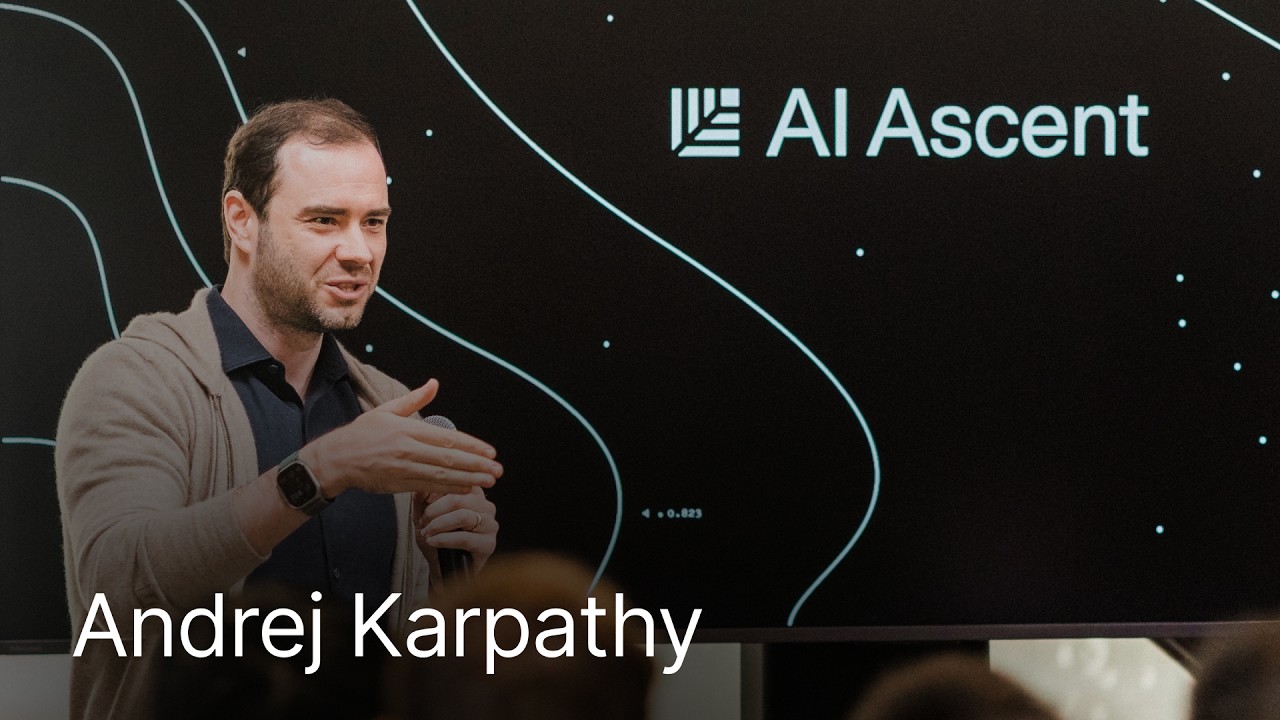
Andrej Karpathy: From Vibe Coding to Agentic Engineering
Andrej Karpathy explores the paradigm shift from traditional programming to Software 3.0, where LLMs act as programmable computers driven by context. He details the transition from 'vibe coding' to 'agentic engineering,' emphasizing that while AI handles execution, human taste and understanding remain the ultimate bottlenecks. ## [00:00] Introduction Stephanie Zhan introduces Andrej Karpathy, highlighting his foundational work at OpenAI and Tesla. She notes his unique ability to simplify complex AI shifts and introduces the concept of vibe coding. > *He has a rare gift of making the most complex technical shifts feel both accessible and inevitable. [00:22]* ## [00:44] Feeling Behind as a Coder Karpathy describes a turning point in December 2023 when agentic tools began producing perfect code without manual intervention. This shift led him to adopt vibe coding, trusting the AI to handle complex workflows autonomously. > *I just start to notice that with the latest models the chunks just came out fine. [01:29]* ## [02:28] Software 3.0 Explained Karpathy defines Software 3.0 as a paradigm where the LLM acts as a programmable computer and the context window serves as the primary programming lever. This follows Software 1.0's manual rules and Software 2.0's data-driven weight training. > *Software 3.0 is kind of about your programming now turns to prompting and what's in the context window is your lever. [03:20]* ## [03:44] Agents as the Installer Using the installation of OpenClaw as an example, Karpathy explains how agents replace rigid bash scripts with intelligent, environment-aware execution. This approach allows the AI to debug and adapt to specific system requirements autonomously. > *The agent has its own intelligence that it packages up and then it kind of like follows the instructions. [04:29]* ## [04:49] Menu Gen vs Raw Prompts Karpathy contrasts his custom-coded MenuGen app with raw prompts to models like Gemini, concluding that many traditional software layers are now redundant. He emphasizes that AI can now perform general information processing that was previously impossible with structured code. > *The software 3.0 paradigm is a lot more kind of raw. It just your neural network is doing more and more of the work. [06:11]* ## [07:37] What’s Obvious by 2026 Looking toward 2026, Karpathy envisions neural computers that process raw video and audio directly. These systems would use diffusion models to generate dynamic user interfaces, potentially making traditional UI code obsolete. > *You could imagine completely neural computers... a device that takes raw videos or audio into basically what's a neural net. [08:22]* ## [09:41] Verifiability and Jagged Skills AI models develop 'jagged' capabilities, peaking in verifiable domains like math and code due to reinforcement learning rewards. Karpathy notes the paradox where a model can refactor a massive codebase yet fail simple logic. > *state-of-the-art models today will tell you to walk [to a car wash] because it's so close... This is insane. [11:36]* ## [13:39] Founder Advice and Automation Model performance is heavily dictated by the specific data distributions chosen by frontier labs. Karpathy advises founders to explore the 'circuits' of these models to understand their strengths or use fine-tuning to fill gaps. > *we are slightly at the mercy of whatever the labs are doing, whatever they happen to put into the mix. [12:57]* ## [15:46] From Vibe Coding to Agent Engineering While 'vibe coding' raises the accessibility floor, 'agentic engineering' focuses on maintaining professional quality. This discipline involves coordinating powerful but stochastic agents to accelerate development without sacrificing the engineering bar. > *agentic engineering is about preserving the quality bar of what existed before in professional software. [16:07]* ## [25:17] Agents Everywhere and Learning Karpathy advocates for agent-native infrastructure, expressing frustration with human-centric documentation. He argues that while thinking can be outsourced to AI, human understanding remains a critical bottleneck for directing agents. > *You can outsource your thinking, but you can't outsource your understanding. [28:10]* ## Entities - **Andrej Karpathy** (person): AI researcher and former Director of AI at Tesla and founding member of OpenAI. - **Stephanie Zhan** (person): Partner at Sequoia Capital and host of the discussion. - **Software 3.0** (concept): A paradigm where LLMs act as programmable computers via prompting and context. - **Agentic Engineering** (concept): The professional discipline of coordinating AI agents to maintain software quality. - **MenuGen** (project): An app Karpathy built to OCR and visualize restaurant menus, used as a case study. - **OpenAI** (organization): AI research company co-founded by Karpathy. - **Gemini** (ai-model): Google's LLM used in Karpathy's software comparison. - **Vercel** (organization): A cloud platform used by Karpathy to deploy projects.