PodcastsHear the voice. See the shape of the thought.
चैनल ब्राउज़ करें
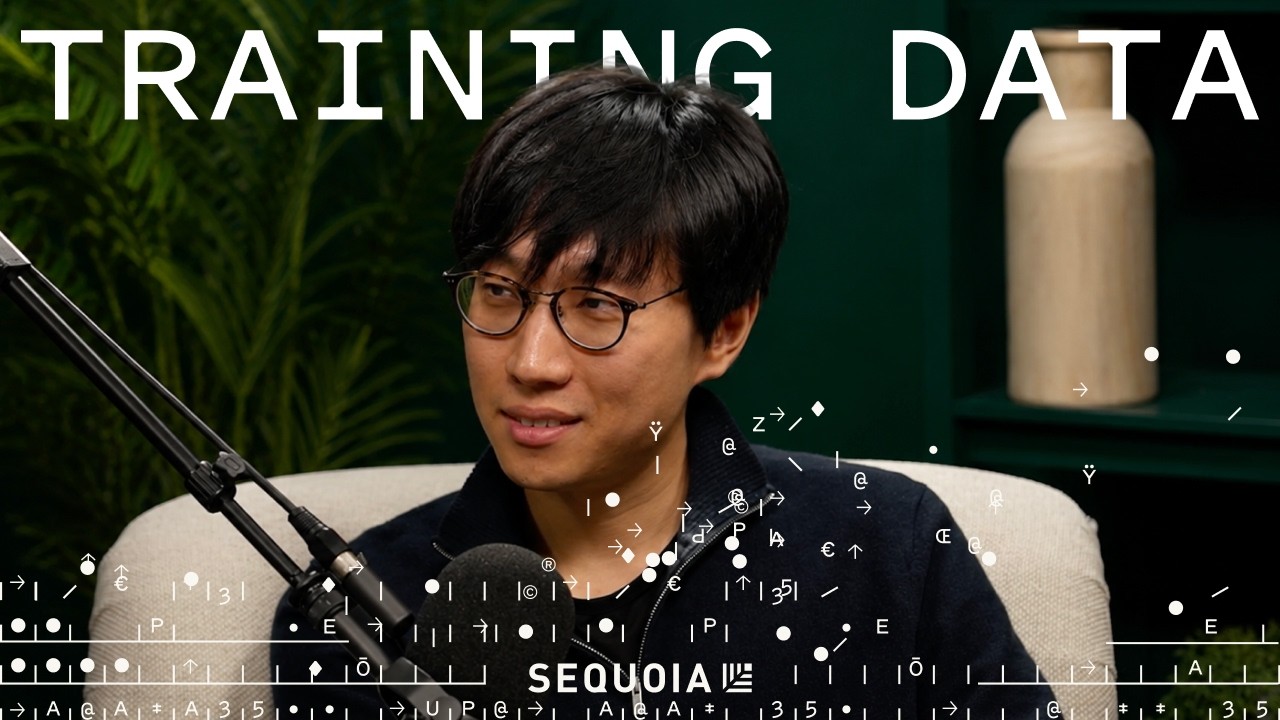
Simulating Humans at Scale: Simile's Joon Sung Park
Joon Sung Park, founder and CEO of Simile and creator of Stanford's Smallville generative-agents study, walks Sonya Huang through the arc from a 25-agent game town that spontaneously threw a Valentine's party to a company that simulated 1,000 Americans and predicted their answers 85% as accurately as the people reproduced their own. His core argument: today's frontier labs are building the "CPU of intelligence" — rational machines superhuman at problems with right answers — while simulating real human society needs the opposite, a model that encodes people's irrational values, preferences, and taste. CVS uses it for concept testing; some customers simulate their own earnings calls; and Joon's longer bet is a "CERN of human society" that could one day model bank runs, climate cooperation, or the early signals of a collapsing democracy. ## [00:00] Inside Smallville: 25 agents throw a Valentine's party The conversation opens on Joon's conviction — that science fiction's advanced societies always rest on two pillars, "some version of AGI and some version of simulations that really help guide the society" — before Sonya takes him back to Smallville, the April 2023 Stanford project that made his name. The setup was 25 generative agents, each given a persona and equipped with memory, planning, and reflection, then left to live in a small game town: wake up, do routines, go to work, form relationships. What surprised the team was emergent coordination. Isabella, a café owner, decided to throw a Valentine's Day party, spent the day before gathering materials and inviting customers, and on the day itself the party actually formed. > *some of the agents did not explicitly get invited, but we had one agent who got the invite, Claus, who decided to ask his crush out on a date* ## [03:34] From a foundation-models paper to simulating a subreddit Joon traces the origin back to 2020, the year GPT-3 was about to land. As a Stanford researcher he co-wrote the "Opportunities and Risks of Foundation Models" paper, and the part that gripped him was not that the models could classify or generate — interaction researchers had done that for years — but that they could encode human behavior. Coming out of the social-computing tradition, he saw a long-standing hole: there was no way to test how millions of people would behave on a platform short of shipping it and watching what happens, sometimes at real cost. That led to the 2022 Social Simulacra paper, the precursor to generative agents, which populated a simulated subreddit with thousands of personas to let a designer see community dynamics before launch. > *The only way we test it today is you basically field test it. You release your prototype, see what happens.* ## [07:57] The CPU of intelligence can't model irrational humans Asked when models got good enough for a faithful representation of society, Joon marks the path from GPT-3 — janky, no instruction tuning, needing prompt tricks just to follow orders — to today's foundation level where these applications become imaginable. But he draws a sharp limit. The frontier labs' north star is a rational, superhuman machine optimized for objective problems, and that is the wrong target for simulating people. As accuracy on objective benchmarks climbs, the ability to predict and simulate human behavior diverges, because people are not rational. > *We have a lot of subjective values, preferences, and taste.* ## [10:04] Why this became a company, not another paper Joon distinguishes the two vehicles bluntly: research is built for breadth, where each researcher owns a slice of thesis and is "not necessarily known for finishing our job," while a company is built for depth on a single conviction. The pull toward a company came roughly half a year after the generative-agents paper, first from social scientists wanting to run RCTs on the platform, then from Fortune 500 boards and CEOs who saw the demo at Stanford and asked whether the surveys and market questions they could never answer might run in simulation. Before committing, the team validated accuracy: simulations of 1,000 people across the US population. > *we can actually predict people's behaviors 85% as accurately as people replicate their own* ## [12:43] How a Simile engagement works — and the say-do gap Simile's first major customer is CVS, brought in by a senior VP of human insights who had read the validation paper and felt bottlenecked by how few questions he could field-test. The workflow mirrors how firms already use polling and panel companies: a customer names a population they want to understand, and Simile — through a strategic partnership with Gallup — reaches real humans, asks the magical 15-minute questions, and turns that data into agents that answer far beyond the original survey. Sonya pushes on why an LLM alone can't just role-play a 34-year-old woman from a coastal metro. Joon's answer is the say-do gap: models are trained on what people said online, not what they actually do, and closing that gap requires behavioral data — RCTs, pricing studies, and life-story interviews that surface the long-tail of a person. > *There are things that people say and then there are people there are things that people actually do and the gap there is real* ## [20:27] The GPU of intelligence: from concept tests to earnings calls Here Joon gives the framing that anchors the company. Today's models are the CPU of intelligence — one model trained on rational data, superb at objective questions. Simile is building something closer to the GPU: not superhuman, but as human as possible, where individual subunits represent the real viewpoints of different populations. Customers usually enter through a concrete door — concept testing, where instead of testing 5 to 10 ideas they imagine testing a thousand ideas across a thousand sub-populations — then move toward product testing with a temporal dimension and multi-agent simulation. One recurring and initially surprising ask: simulate the company's own earnings call to see how the audience reacts. > *imagine the current today's model are akin to the CPU of intelligence unit* ## [26:32] How accurate is it? Convergence versus divergence On evaluation, Joon starts from the theoretical limit — humans answer the same question slightly differently each time, so perfect prediction is impossible — then describes the metric: total variation distance between the ground-truth and simulated response distributions, with a TVD under 0.15 treated as strong enough for decisions. The deeper idea is two categories of simulation. Convergent ones tolerate compounding error because the pull toward an outcome is strong — like a network always forming a hub, the scale-free structure that powered PageRank. Divergent ones — was World War I inevitable, who wins an election — can't be expected to repeat, so the evaluation shifts to confidence: run it 100 times, see how often outcome X appears, and show the diversity of possible futures. He likens the work to the early days of inferential statistics setting the p < 0.05 threshold. > *was World War I inevitable or was it not?* ## [31:56] A CERN for human society Sonya raises the grander possibility — that fields like macroeconomics, which she sees as human behavior at scale, might one day be partly solved by simulation, including the venture question of where value accrues across the AI stack. Joon agrees there is "a Nobel Prize to be won there," recalling how Thomas Schelling's deliberately crude agent-based segregation models revealed something deep about macro behavior. The augmented version replaces red-dot/blue-dot agents with agents that replicate the full richness of individuals, opening questions economists actually asked him: when does a bank run happen, can nations be modeled solving climate's collective-action problem, what are the early signals of a democracy about to collapse. He imagines a simulation that costs $100 million and months to run once but answers a fundamental question — a Hubble telescope for human society. > *building simulator that's akin to the CERN of human society* ## Entities - **Joon Sung Park** (Person): Founder and CEO of Simile; created Stanford's Smallville generative-agents study and co-authored Social Simulacra. - **Sonya Huang** (Person): Partner at Sequoia Capital, AI investing; host of the conversation. - **Simile** (Organization): Applied AI lab building models that simulate human behavior and societies for concept testing, product testing, and multi-agent scenarios. - **Smallville** (Concept): 2023 Stanford experiment with 25 generative agents living in a game town, known for emergent behavior like a self-organized Valentine's party. - **Social Simulacra** (Concept): 2022 paper simulating a subreddit with thousands of personas; precursor to generative agents. - **Say-do gap** (Concept): The difference between what people say (the basis of LLM training data) and what they actually do, which behavioral data is collected to close. - **CPU vs GPU of intelligence** (Concept): Joon's framing — frontier labs build a rational "CPU" superhuman at objective problems; Simile builds a "GPU" encoding the diversity of human values and taste. - **Total variation distance** (Concept): Simile's accuracy metric comparing ground-truth and simulated response distributions; TVD < 0.15 treated as decision-grade. - **CVS** (Organization): Simile's first major customer, using it for concept testing via its human-insights team. - **Gallup** (Organization): Polling and panel partner Simile uses to reach real humans and ground simulations in real data.
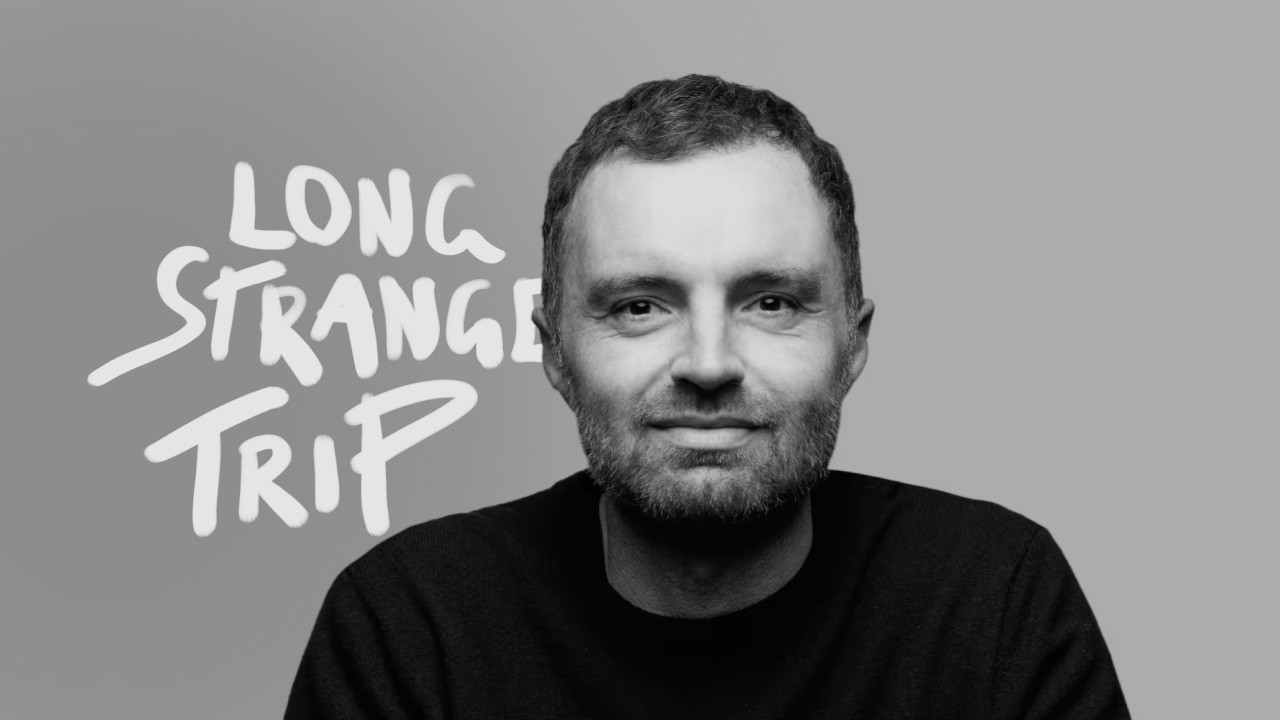
David Senra ने 400+ संस्थापकों का अध्ययन करके क्या सीखा
David Senra ने एक दशक में 400 से अधिक संस्थापकों की जीवनियाँ पढ़ी हैं और हाल ही में जीवित संस्थापकों से आमने-सामने बातचीत करना शुरू किया है। उनके अनुसार इन सभी में एक समान गुण है — फोकस — जिसे वे "दुनिया को म्यूट करो और अपना खुद का निर्माण करो" कहते हैं। वे Brian Halligan को समझाते हैं कि यह गुण, बचपन के अनुभवों से उपजी लगभग अनिवार्य ड्राइव के साथ मिलकर, संस्थापक की सफलता को किसी भी सिलिकॉन वैली की पैटर्न-मैचिंग सूची से बेहतर समझाता है। बातचीत में बचपन की जड़ें, संस्थापक के आदर्श-प्रकार, अपनी सबसे अच्छी कंपनी बेचने का खतरा, और AI के दौर में अत्यधिक दक्षता की बढ़ती कीमत — सब शामिल हैं, जबकि महान संस्थापकों की मूलभूत मानवीय बनावट वैसी ही रहती है। ## [00:00] परिचय Brian Halligan यह स्पष्ट करते हैं कि वे David से क्या चाहते हैं: नासरत के ईसा मसीह से लेकर Jensen Huang तक — सर्वश्रेष्ठ संस्थापकों में वास्तव में क्या समान है, और उस ज्ञान का उपयोग उन्हें पहचानने और तराशने में कैसे करें। एपिसोड की शुरुआत DoorDash के Tony Xu की बात से होती है — एक मील का पत्थर मनाने वाले डिनर के अंत तक वे पहले से उन सत्रह चीज़ों की सूची बना रहे थे जो अभी भी गलत चल रही थीं। David का तर्क है कि यही बेचैनी असली पहचान है। > *"डिनर से पहले के डिनर के खत्म होते-होते मैं उन 17 चीज़ों के बारे में सोच रहा होता हूँ जो सही नहीं चल रहीं। इसीलिए यह महान है।"* ## [01:11] सबसे ऊपर फोकस David का एक-शब्द उत्तर है फोकस। न मेहनत, न लचीलापन, न बुद्धिमत्ता — बस फोकस। वे इसे अन्य उच्च-प्रदर्शनकर्ताओं से गुणात्मक रूप से अलग बताते हैं, मानो एक अलग ही प्रजाति हो: ये लोग प्रतिस्पर्धियों की तरफ देखते ही नहीं, उन्हें वाकई कोई फर्क नहीं पड़ता। उनका संक्षिप्त सूत्र है: "दुनिया को म्यूट करो और अपना खुद का निर्माण करो।" > *"अगर मुझे हर चीज़ को एक शब्द में समेटना हो, तो वह होगा फोकस। ये लोग बस अविश्वसनीय रूप से फोकस्ड हैं — न केवल औसत इंसान की तुलना में। ये लगभग किसी अलग प्रजाति के लगते हैं।"* ## [01:50] Dana White का UFC फोकस Dana White David का सबसे ताज़ा उदाहरण हैं। White बोस्टन में एक बेलमैन के रूप में काम करते थे और खुद को एक हारा हुआ इंसान मानते थे। फाइटिंग इंडस्ट्री के करीब रहने के लिए वे लास वेगास चले गए और अंततः Fertitta भाइयों को 20 लाख डॉलर में UFC खरीदने के लिए राजी किया। छह साल तक घाटा हुआ, फिर मुनाफे से पहले 4 करोड़ डॉलर और डूबे। छब्बीस साल बाद White ने लगभग 800 करोड़ डॉलर का TV सौदा बंद किया — और उनकी सफलता का राज़ यह है कि उन्होंने कभी एक भी बिज़नेस किताब नहीं पढ़ी या बिज़नेस पॉडकास्ट नहीं सुना। उन्होंने बस वही बनाया जो वे खुद देखना चाहते थे। > *"उनकी पूरी दुनिया उनका बिज़नेस है और बाकी जो कुछ भी है उससे उन्हें कोई मतलब नहीं। वे बस अविश्वसनीय रूप से फोकस्ड हैं।"* ## [04:19] फोकस बनाम जुनून Brian पूछते हैं कि क्या फोकस और जुनून एक ही चीज़ हैं। David कहते हैं दोनों आपस में जुड़े हैं पर अलग हैं: फोकस का मतलब है अच्छे विचारों को 'न' कहना ताकि एक महान विचार को आगे बढ़ाया जा सके। वे Jony Ive का हवाला देते हैं जिन्होंने Steve Jobs की बात बताई — फोकस का मतलब है एक ऐसे अच्छे विचार को 'न' कहना जो आप वाकई करना चाहते हैं, क्योंकि वह एक महान विचार से ध्यान भटकाता है। जो कोई किसी चीज़ पर गहराई से फोकस्ड होता है, बाहर से वह जुनूनी लग सकता है — लेकिन असल क्रिया सक्रिय बहिष्करण है, निष्क्रिय लगाव नहीं। > *"फोकस का मतलब है एक ऐसे अच्छे विचार को 'न' कहना जो आप वाकई करना चाहते हैं, क्योंकि वह एक महान विचार से ध्यान हटाता है।"* ## [05:05] बचपन से जड़ें Brian पूछते हैं कि यह जुनून कहाँ से आता है: सामान्य परवरिश से, या बचपन में टूटने से? David कहते हैं यह कोई एक चीज़ नहीं है, लेकिन जिन संस्थापकों का उन्होंने अध्ययन किया है उनमें से लगभग सभी को "सामान्य रूप से समायोजित" नहीं कहा जा सकता। वे Francis Ford Coppola की जीवनी लाते हैं — वह पंक्ति जिसने एक बार-बार दिखने वाले पैटर्न को स्पष्ट किया: बेटे की ड्राइव हमेशा पिता की कहानी में गुँथी होती है। वे फिल्म निर्माताओं, पॉडकास्ट होस्टों और स्टार्टअप संस्थापकों को एक ही उद्यमशील प्रकार मानते हैं। > *"इसका जवाब यह है कि यह कोई एक चीज़ नहीं है।"* ## [06:07] Coppola और उनके पिता David बार-बार यही पाते हैं: पिता की कहानी बेटे में समाई होती है। Coppola के पिता एक प्रतिभाशाली लेकिन असफल संगीतकार थे जिन्होंने अपने छोटे बेटे से कहा "परिवार में एक ही प्रतिभाशाली हो सकता है — वह मैं हूँ," और फिर वर्षों तक उसे नीचा दिखाते रहे। Coppola ने इसे भीतर समेट लिया और हॉलीवुड में सबसे अदम्य कार्य-नीति वाले व्यक्तियों में से एक बने — अकादमी पुरस्कार जीता और अपने पिता को संगीत लिखने का मौका दिया, जिन्होंने वह भी Oscar जीता। David इसे Charlie Munger के ढाँचे से जोड़ते हैं: किसी विचार को सच में समझने के लिए उसे उस व्यक्तित्व से बाँधना होगा जिसने उसे विकसित किया — इसीलिए जीवनी, रणनीति की किताबों से बेहतर है। > *"आप हमेशा बेटे को पिता की कहानी से समझ सकते हैं। पिता की कहानी बेटे में समाई होती है।"* ## [08:48] कठोर स्वभाव और आदर्श-प्रकार Brian वह पुरानी धारणा उठाते हैं कि महान संस्थापक कठोर स्वभाव के होते हैं। David इसे सीधे नकारते हैं। वे Spotify के Daniel Ek के साथ संस्थापक आदर्श-प्रकारों का नक्शा बनाने पर काम कर रहे हैं — यह मानते हुए कि founder-problem fit, product-market fit से ज़्यादा मायने रखती है। Ek ने वर्षों Steve Jobs की नकल करने में बिताए और उस दौरान एक ऐसी शख्सियत ओढ़ी जो उनकी थी नहीं। वे एक कोच जैसे आदर्श-प्रकार के हैं। David की बात: कोई एक आदर्श-प्रकार नहीं है, शायद छह से आठ हैं — और यह समझना कि आप कौन से हैं, अभी जो संस्थापक मशहूर है उसकी नकल करने से कहीं ज़्यादा मूल्यवान है। > *"सबसे ज़रूरी है founder problem fit। DeepMind के Demis के बारे में सोचिए। उनके भीतर एक महान कंपनी बनाने की क्षमता थी। वह थी DeepMind। वे इसी काम के लिए इस धरती पर आए थे।"* ## [11:14] ऑटिज़्म और मौलिकता Brian आज के खरबपति CEO — Jobs, Gates, Bezos, Zuckerberg, Jensen, Ellison — में ऑटिज़्म स्पेक्ट्रम लक्षणों की उच्च मात्रा उठाते हैं। David Peter Thiel का विश्लेषण पढ़ते हैं: जिन संस्थापकों में हल्का Asperger's दिखता है, उनमें अनुकरण-समाजीकरण की जीन नहीं होती — इसका मतलब है कि उनके अजीब मौलिक विचार पूरी तरह आकार लेने से पहले कोई उन्हें नहीं समझाता। David की चेतावनी: बे एरिया अब ऐसे लोगों से भरा है जो गैर-अनुकरण का नाटक करते हैं, जो उन्हें सबसे ज़्यादा अनुकरण करने वाला बनाता है। Rockefeller शायद उस स्पेक्ट्रम में नहीं थे — लेकिन उनकी सामाजिक दक्षता उन्नत थी और फिर भी उन्होंने इतिहास की सबसे प्रभावशाली कंपनी बनाई। > *"हमें यह पूछना चाहिए कि हमारे समाज में ऐसा क्या है जिसके चलते जिन्हें Asperger's नहीं है वे भारी नुकसान में हैं — क्योंकि उनके दिलचस्प, मौलिक, रचनात्मक विचार पूरी तरह आकार लेने से पहले ही उनसे छुड़वा दिए जाएंगे।"* ## [14:55] प्रवासी जुझारूपन और दृढ़ता David एक क्यूबाई प्रवासी के बेटे के रूप में अपने निजी अनुभव से बोलते हैं: जो लोग 90 मील के समुद्र को पार करने के लिए अपनी जान खतरे में डालते हैं, वे अपने बच्चों को जोखिम और अवसर के बारे में एक अलग बुनियाद देते हैं। Brian बताते हैं कि अमेरिका के दस सबसे बड़े तकनीकी संस्थापकों में से केवल तीन प्रवासी थे — Jensen, Elon, Sergey — जबकि अधिकांश उपनगरीय उच्च-मध्यवर्गीय परिवारों से थे। David का जवाब: उन तीनों का कुल बाज़ार पूंजीकरण में हिस्सा अनुपातहीन रूप से बड़ा है, और बाकियों के पिता भी अक्सर प्रवासी थे। यह लाभ एक पीढ़ी तक जा सकता है। > *"सोचिए आप अपने बेटे से कितना प्यार करते हैं और क्यूबा और साम्यवाद कितना बुरा रहा होगा कि आप अपने 14 साल या 9 साल के बेटे को एक नाव पर बैठाकर दक्षिण फ्लोरिडा तक 90 मील की यात्रा की उम्मीद में छोड़ दें।"* ## [16:38] संस्थापक पर दाँव लगाओ David कहते हैं अगर वे एक VC होते तो कोई मानदंड नहीं चलाते — बस इंसान पर दाँव लगाते। Ed Catmull ने उन्हें इसका सबसे स्पष्ट संस्करण बताया: एक महान विचार एक साधारण टीम को दो, वे उसे बर्बाद कर देंगे; एक साधारण विचार एक महान टीम को दो, वे या तो उसे सुधारेंगे या फेंककर कुछ बेहतर बनाएंगे। विचार लोगों से आते हैं, इसलिए लोग विचारों से ज़्यादा मायने रखते हैं। David की कसौटी: क्या इस इंसान में वह गुण है जो Uber के Travis Kalanick में था — कि वे इसे काम करवाएंगे या मर जाएंगे? > *"अगर आप एक महान विचार किसी साधारण टीम को देते हैं, तो वे उसे बर्बाद कर देंगे। अगर आप एक साधारण विचार किसी महान टीम को देते हैं, तो वे या तो उसे सुधारते हैं या फेंककर कुछ नया बनाते हैं।"* ## [17:52] अकेला बनाम साझेदार परंपरागत ज्ञान — सह-संस्थापक बेहतर होते हैं, तीन का संयोजन सबसे अच्छा — इतिहास में David जो देखते हैं उससे मेल नहीं खाता। अधिकांश महान कंपनियों में एक प्रमुख चालक होता था, और "सह-संस्थापक" या तो चला गया (Wozniak), या मूलतः एक ऑपरेटर था जिसे संस्थापक ने हासिल किया (Carnegie Steel में Frick), या एक ऐसा पूरक व्यक्तित्व था जिसने जानबूझकर खुद को एक सदी में एक बार मिलने वाली प्रतिभा के आगे झुका लिया (Buffett के आगे Munger)। जब David Munger से मिले, तो Munger ने स्वीकार किया कि उन्हें हमेशा लगता था वे सबसे होशियार हैं, लेकिन उन्होंने Buffett के अतुलनीय फोकस को पहचाना और जानबूझकर अपना अहंकार उसके आगे झुकाने का निर्णय लिया। > *"अगर मैं जीवन फिर से जी सकता, तो भी मैं खुद को सबसे होशियार समझता, लेकिन उसे छुपाने का बेहतर काम करता।"* ## [23:20] नकारात्मक आत्म-संवाद को ईंधन बनाना Jensen Huang हर सुबह आईने में खुद से पूछते हैं कि वे इतने बेकार क्यों हैं। Elon अपने मन को एक तूफान बताते हैं और जब सब ठीक चल रहा हो तो सच में बेचैन दिखते हैं। David ने जिन अधिकांश संस्थापकों का अध्ययन किया है वे नकारात्मक आत्म-संवाद को ईंधन के रूप में चलाते हैं — लेकिन David ने हाल ही में खुद इसे बदला। Brad Jacobs, जिन्होंने 45 साल में आठ अलग-अलग अरब-डॉलर की कंपनियाँ बनाईं, ने उन्हें बताया: नकारात्मक ड्राइव ने आपको यहाँ तक पहुँचाया, लेकिन अब यह आपकी सेवा नहीं कर रही। अब आप काम से प्यार करते हैं। अपनी भीतरी ड्राइव को सृजनात्मक बनाओ। David कहते हैं कुछ क्लिक हो गया और वे पीछे नहीं गए। > *"आपकी भीतरी ड्राइव सृजनात्मक होनी चाहिए। जैसे — 'मैं कुछ ऐसा बनाने की कोशिश कर रहा हूँ जो दुनिया के लिए अच्छा हो, जो मुझे करना अच्छा लगता हो और जिस पर मुझे गर्व हो।'"* ## [26:39] प्लेटफ़ॉर्म बदलाव और Founder Mode Brian पूछते हैं कि क्या बड़े प्लेटफ़ॉर्म बदलाव — औद्योगिक क्रांति, असेंबली लाइन, और अब AI — यह बदलते हैं कि कौन सफल होता है और कैसे कंपनियाँ चलाई जाती हैं। Brian Paul Graham के founder mode बनाम manager mode के अंतर और अपने "Dorsey mode" ढाँचे का वर्णन करते हैं: सपाट संगठन, पदनाम खत्म, केंद्र में एक AI प्रणाली जो बढ़ता हुआ प्रतिशत निर्णय लेती है जबकि इंसान संदर्भ देते हैं और निर्णय लागू करते हैं। वे इसे किसी भी पिछले प्लेटफ़ॉर्म बदलाव से संरचनात्मक रूप से अलग देखते हैं। > *"समय के साथ AI प्रणाली आज बहुत कम निर्णय लेती है — शायद 5%, 10% — लेकिन AI और इंसान के निर्णयों का प्रतिशत पलटने लगता है।"* ## [28:07] Dell बनाम IBM David ने Michael Dell से सीधे पूछा कि क्या यह पल पहले के किसी दौर जैसा लगता है। Dell ने कहा नहीं — यह बिल्कुल अलग है। David आमतौर पर "इस बार अलग है" के दावों पर संदेह करते हैं, लेकिन Dell, Toby Lütke और Jack Dorsey से सहमत हैं कि एक छोटी टीम को मिलने वाला लीवरेज अब कंपनी बनाने का गणित मौलिक रूप से बदल देता है। IBM के पास एक समय पूरी तकनीकी उद्योग का 80% बाज़ार हिस्सा था और 1,000 करोड़ डॉलर के बाज़ार पूंजीकरण तक पहुँचने वाली पहली कंपनी थी। Dell ने टेक्सास विश्वविद्यालय के एक छात्रावास कमरे से 1,000 डॉलर लेकर उनसे मुकाबला किया — और अपने पहले बीस वर्षों में हर तिमाही मुनाफे में रहे। > *"मुझे सच में लगता है कि कंपनी चलाने का तरीका — जिस तरह से यह किया जा सकता है और जो आपके पास उपलब्ध है — वह पूरी तरह बदल गया है।"* ## [30:02] असीमित लीवरेज की बढ़त Naval Ravikant की बात — "असीमित लीवरेज के युग में, अपने काम की चरम पर होना बहुत ज़रूरी है" — AI से पहले लिखी गई थी। David को लगता है AI ने उस सच को एक और गुणक से बढ़ा दिया है। उनका उदाहरण है TBN के Jordi: वे पॉडकास्ट मार्केटिंग में अगले इंसान से 2 गुना नहीं बल्कि 100 गुना बेहतर थे, और उस स्तर पर मिलने वाले आर्थिक पुरस्कार 100 गुना नहीं बल्कि संभावित रूप से 1,000 गुना बड़े हैं। फोकस और महारत का प्रीमियम बढ़ रहा है, घट नहीं रहा। > *"असीमित लीवरेज के युग में, अपने काम की चरम पर होना बहुत ज़रूरी है।"* ## [31:38] फोकस बनाम गति Brian पलटवार करते हैं: AI-native संस्थापक जिन्हें वे जानते हैं — Harvey, Lovable, ElevenLabs — एक साथ कई मोर्चों पर तेज़ी से आगे बढ़ रहे हैं। क्या फोकस अब भी नियम है? David का जवाब: उन्होंने अभी तक टिकाऊ व्यवसाय नहीं बनाए, इसलिए कहना जल्दबाजी होगी। उनकी गहरी चिंता यह है कि बेचने के बाद क्या होता है। उन्होंने 70 और 80 की उम्र के संस्थापकों के साथ समय बिताया है जिन्होंने अपनी सबसे अच्छी कंपनी बेची और दशकों तक दूसरे-तीसरे दाँव पर जादू को फिर से पकड़ने की कोशिश की — लगभग कोई सफल नहीं हुआ। अगर आपके पास वाकई एक पीढ़ी-परिभाषित कंपनी है, तो उसे मत बेचो। आप या तो पूरी तरह अंदर हैं या पूरी तरह बाहर। > *"आप पूरी तरह अंदर हैं या पूरी तरह बाहर — लेकिन अपने दूसरे, तीसरे, चौथे, पाँचवें सबसे अच्छे विचार पर पूरी तरह क्यों लगेंगे?"* ## [34:20] रुचि और सुनने की कला Brian पूछते हैं कि क्या अच्छा स्वाद वाकई एक संस्थापक गुण है या एक फैशनेबल अवधारणा। David कहते हैं स्वाद बहुत वास्तविक है, और उनका सबसे स्पष्ट उदाहरण Rick Rubin हैं — 62 साल की उम्र में भी वही कर रहे हैं जो उन्होंने 18 साल में अपने छात्रावास कमरे में शुरू किया था। लेकिन David का और सटीक दावा यह है कि Rubin की बढ़त सिर्फ स्वाद नहीं, बल्कि यह है कि वे एक पेशेवर श्रोता हैं। अधिकांश लोग बातचीत में जवाब देने का इंतज़ार करते हैं। Rubin वाकई रुचि रखते हैं। ध्यान की यह गुणवत्ता, संगीत निर्माण से पॉडकास्टिंग तक लागू होकर, उन्हें असाधारण बनाती है। David संस्थापक की प्रामाणिकता पर भी बात करते हैं: हर किसी को अनफ़िल्टर्ड नहीं होना चाहिए — यह इस बात पर निर्भर करता है कि आप कौन हैं, किस उद्योग में हैं और क्या बनाना चाहते हैं। > *"उन्होंने संगीत से एक कौशल लिया और उसे पॉडकास्ट पर लगाया। आप एक पेशेवर श्रोता हैं।"* ## [40:52] संस्थापक के गुण और संतुलन David ने 400 से अधिक जीवनियों में जो मुख्य साझा गुण पहचाने हैं: जुनून, उच्च असहमति, लागत नियंत्रण का जुनून, और सूक्ष्म-प्रबंधन — जिसे Paul Graham ने "founder mode" कहा, जो David के मुताबिक बिल्कुल नया नहीं है। Rockefeller असहमति के मामले में एक अपवाद थे, कभी आवाज़ नहीं उठाई, लेकिन अन्य तरीकों से एक प्रचंड शक्ति थे। काम-जीवन संतुलन के सवाल पर: David चार शताब्दियों में मात्र तीन संस्थापकों का नाम ले सकते हैं जिनका व्यक्तिगत जीवन वाकई संतुलित था। Sam Walton, कैंसर से मरते हुए अपनी आत्मकथा लिखते समय, बोले कि वे सब कुछ बिल्कुल वैसे ही करेंगे। Phil Knight 75 साल की उम्र में भी अपने बेटों की ज़िंदगी से अपनी अनुपस्थिति को पूरी तरह स्वीकार नहीं कर पाए। महान लोगों की प्रेरणा पैसा नहीं — नियंत्रण है। > *"मुझे नहीं लगता कि छोटे अहंकार बड़ी कंपनियाँ बनाते हैं — मुझे लगता है इन सभी के अहंकार विशाल हैं। बस कुछ इसे बेहतर तरीके से छुपाते हैं। और अधिकांश संस्थापकों की प्रेरणा पैसा नहीं, नियंत्रण है।"* ## [54:22] समापन निष्कर्ष Brian तीन निष्कर्ष निकालते हैं: गहरी founder-market जुनून असली समान धागा है; महान कंपनी बनाते हुए अच्छा काम-जीवन संतुलन रखना वाकई दुर्लभ है (400 में से तीन); और impostor syndrome पर काम करना उचित है — Brian, Brian Chesky के डर से नेतृत्व करने से प्रेम से नेतृत्व करने की ओर बदलाव का हवाला देते हैं। एपिसोड Dana White के फॉर्मूले के साथ बंद होता है: गहराई से समझो तुम कौन हो, गहराई से समझो दुनिया में तुम क्या करना चाहते हो, फिर हर दिन उठकर उसे अंजाम दो। इतने समय तक खेल में बने रहो कि किस्मत तुम्हारा साथ दे। > *"इतने समय तक खेल में बने रहो कि किस्मत तुम्हारा साथ दे।"* ## संस्थाएं - **David Senra** (व्यक्ति): Founders पॉडकास्ट के होस्ट; 400 से अधिक संस्थापक जीवनियाँ पढ़ चुके हैं और अब जीवित संस्थापकों से आमने-सामने बात करते हैं - **Brian Halligan** (व्यक्ति): HubSpot के सह-संस्थापक और कार्यकारी अध्यक्ष; Sequoia Capital की इस श्रृंखला के होस्ट - **Dana White** (व्यक्ति): UFC के संस्थापक/CEO; 2001 में 20 लाख डॉलर में खरीदा, हाल ही में ~800 करोड़ डॉलर का TV अधिकार सौदा बंद किया - **Daniel Ek** (व्यक्ति): Spotify के संस्थापक; David के साथ संस्थापक आदर्श-प्रकारों के ढाँचे पर काम कर रहे हैं; product-market fit से ऊपर founder-problem fit के समर्थक - **Demis Hassabis** (व्यक्ति): DeepMind के सह-संस्थापक; संपूर्ण founder-problem fit के सबसे स्पष्ट उदाहरण के रूप में उद्धृत - **Charlie Munger** (व्यक्ति): Berkshire Hathaway में भागीदार; जानबूझकर अपना अहंकार Buffett की एक सदी में एक बार मिलने वाली प्रतिभा के आगे झुकाया - **Ed Catmull** (व्यक्ति): Pixar के सह-संस्थापक; Steve Jobs के सबसे लंबे लगातार सहयोगी; "महान विचार साधारण टीम को दो" सिद्धांत के स्रोत - **Brad Jacobs** (व्यक्ति): उद्यमी जिन्होंने आठ अलग-अलग अरब-डॉलर की कंपनियाँ बनाईं; David को दंडात्मक से सृजनात्मक ड्राइव में बदलने की सलाह दी - **Rick Rubin** (व्यक्ति): संगीत निर्माता; स्वाद और पेशेवर सुनने की कला के एक चक्रवृद्धि बढ़त के उदाहरण के रूप में David का संदर्भ - **Founders** (मीडिया): David Senra का पॉडकास्ट जो इतिहास से आज तक के 400 से अधिक संस्थापकों की जीवनियाँ कवर करता है - **founder-problem fit** (अवधारणा): Daniel Ek का ढाँचा — एक संस्थापक की पहचान और उस विशिष्ट समस्या के बीच मेल जिसे वे हल कर रहे हैं, सबसे ज़रूरी प्रकार का मेल है - **infinite leverage** (अवधारणा): Naval Ravikant का विचार कि सॉफ्टवेयर और AI के युग में, अपने काम की चरम पर होने से असमानुपातिक रूप से बड़े पुरस्कार मिलते हैं - **Sequoia Capital** (संगठन): उद्यम पूंजी फर्म; Brian Halligan का वर्तमान आधार और इस पॉडकास्ट श्रृंखला का होस्ट
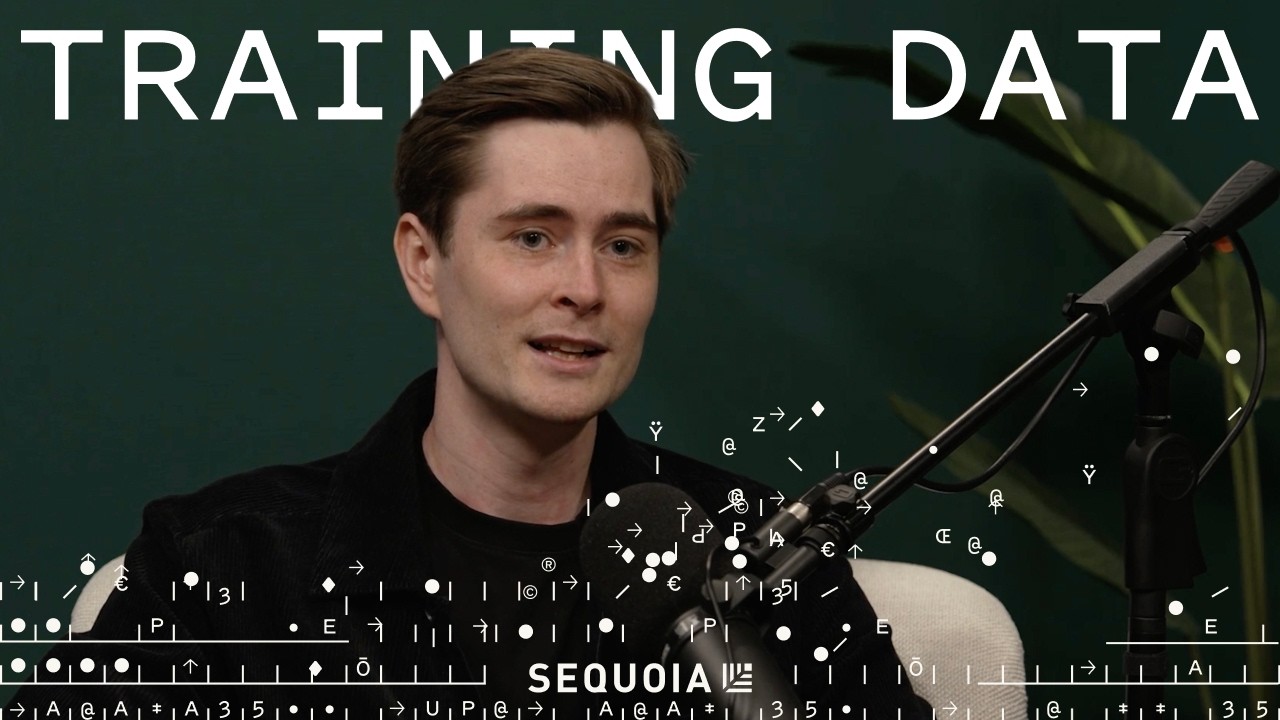
Knowing What Your Customers Want, All the Time: Listen Labs' Alfred Wahlforss
Alfred Wahlforss built Listen Labs after scratching his own itch: when his viral AI-avatar app hit 20,000 users overnight and churn spiked, he needed to know why—fast. The answer was an AI agent that runs voice interviews at scale, drawing from a panel of 30 million people. A year in, Listen serves 20% of the Fortune 500 and has completed over a million interviews. The deeper finding is counterintuitive: respondents are often more honest with an AI interviewer than a human one, and voice transcripts turn out to be richer training signal than credit card data or behavioral logs. Wahlforss and Sequoia's Konstantine Buhler work through why audience selection consumes 80% of Listen's engineering, how back-tested simulation beats vanilla ChatGPT at message testing, and why—as AGI makes building trivially cheap—knowing *what* to build becomes the scarce resource Listen wants to own. ## [00:00] Introduction Alfred opens in the middle of a thought about audience depth: Listen's long-term goal is to reach a billion people and build rich profiles that reveal each person's genuine areas of expertise—not just demographic boxes, but things like whether someone is a true sneaker influencer versus a casual buyer. Konstantine then formally introduces him: Listen launched roughly a year ago, already counts Microsoft, Anthropic, Sweet Green, NBC, and others as customers, and runs thousands of voice interviews simultaneously. The brief cold-open framing gives the episode its throughline—the value of talking to the *right* person, not just any person. > *"Our goal is to get to a billion people in our audience and then to be able to stratify and know what exactly is this person an expert on."* ## [01:20] How Listen Works The product works in three stages: a researcher types a question (say, "how can we improve Cursor's onboarding?"), Listen's AI agent generates an interview guide, then routes those interviews to matched participants from its 30-million-person panel. Hundreds of conversations run in parallel, the results are synthesized, and recommendations surface. The next stage, launching in a few months, is simulation: after tens of thousands of interviews accumulate on a topic, can Listen predict how customers will answer *future* questions without running a new interview? > *"As we get closer to AGI, it will be easier to build things, but the hard part will be knowing what to build—and that's what we're building at Listen."* ## [02:23] Customer Wins Chubbies discovered that chest hair caught uncomfortably on one of their shirt materials; Listen surfaced the feedback, Chubbies redesigned the garment, and comfort scores jumped. Manscaped used Listen insights to reshape a Super Bowl ad. Skims uses it for ongoing product testing. The through-line Alfred draws: Listen handles both small product details and high-stakes campaign decisions with the same workflow—talk to real people, fast. > *"They discovered that chest hair interface really poorly with one of the materials they have. So it's really uncomfortable to wear one of their shirts, and they changed the shirt and it became radically more comfortable."* ## [03:28] Surveys Versus Reality Konstantine presses on the classic critique: survey respondents lie, or at least contradict themselves. Alfred's evidence: Listen ran the same multiple-choice survey questions back to the same people and found radical inconsistency—but when those same people had to reason through an open-ended voice answer, consistency improved sharply. On sales-data back-testing, Alfred agrees AB tests are the gold standard but notes they require large user bases that most companies don't have. Interview data, properly designed, beats no data. > *"If you go back to the same person and ask them a survey question in a multiple choice fashion, they're much more inconsistent. But when you actually have to think and reason through your answer, you're much more consistent."* ## [05:13] Zoom Like AI Interviews The participant experience is a video call with an AI agent—not a text form. The agent watches facial expressions and vocal tone, giving Listen a second signal layer beyond what people say. Alfred cites advertising testing as the clearest win: respondents might rate an ad highly on a Likert scale but show genuine enthusiasm in video, and that enthusiasm predicts Meta and LinkedIn performance marketing results significantly better than the numeric score. Every data point links back to the actual video clip, so researchers can verify the AI isn't hallucinating sources. > *"For every data point you can always click and then look at the video or see the quote—so you know that AI is not just hallucinating where it's coming from."* ## [07:14] Origin Story Alfred and his co-founder shipped a consumer app called "Be Fake"—an early stable-diffusion fine-tuning tool for creating AI avatars of yourself—which went viral overnight and hit 20,000 users. Churn spiked immediately and they had no idea why. They built an AI interview tool to ask their own users, found it genuinely useful, and pivoted. The market-research product they built for themselves became Listen Labs. > *"We built this AI interview for ourselves because we had a ton of churn and we wanted to understand why—and that's how we got started."* ## [08:01] Old World Research The pre-Listen world had two speeds: slow online survey tools like Qualtrics, or expensive services firms that charge tens of millions to recruit participants, design question methodology, moderate focus groups, and synthesize hundreds of transcripts. Question design alone is an academic discipline—ask "how much would you pay for this?" and you get junk data. The sourcing problem is equally hard: incidence rates of 10% mean nine out of ten recruited panelists get screened out, burning trust and causing churn on the databases themselves. > *"In traditional industries like CPG or even Microsoft, they spend tens of millions of dollars on focus groups to bring people in a room and interview them—and we can help speed that up much faster."* ## [09:50] AI First Benefits Three compounding advantages: speed (results from real people in five minutes), cost (asynchronous interviews pay participants less than synchronous ones, and participants accept that willingly), and honesty (people open up more to a non-judgmental AI than to a human interviewer who might silently judge them). Alfred mentions sensitive use cases—interviewing children about products, with parental consent—as an area where the AI's non-threatening presence produces data that focus groups can't. > *"People are more honest talking to an AI. It's a very therapeutic experience because it's a non-judgmental entity that's really interested in you."* ## [11:32] Finding The Right People Listen spends 80% of its engineering resources on audience quality, not the interview agent itself. The reason: power-law customer segmentation means talking to the wrong 100 people gives you wrong insights. Sweet Green's most valuable customer is urban, high-income, mostly female, and—Alfred's specific example—knows what seed oils are (roughly 1% of the population). Listen builds rich profiles across every interview a panelist ever participates in, so an offhand comment ("I'm a total sneaker head") in an unrelated interview can resurface that person when Nike needs launch feedback. Traditional email-list panels couldn't do cross-topic profiling. > *"Even a product like Sweet Green, which you would think is for everyone, the right audience is typically urban, high household income, mostly female—and they need to know what seed oils are, which only like 1% of the population does."* ## [14:30] CRM And Prospecting Sweet Green already has a CRM full of its most loyal customers—so why use Listen? Three reasons: researching *prospective* customers who aren't yet in the CRM requires an external panel; CRMs are typically disorganized and legally constrained (Google can't spam Gmail users, even its own); and direct outbound email risks getting flagged as spam, which can permanently damage a domain's deliverability. Listen provides clean, third-party panel access that sidesteps all three problems while still supporting CRM-connected campaigns when brands want them. > *"What we found is that the CRM is typically really unorganized, and sometimes there are regulatory issues—if you're at Google, you can't just send emails to people who use Gmail."* ## [15:35] Consulting In The AI Era Konstantine—a former buyer of McKinsey-style consulting—asks whether firms like Bain still have a role. Alfred's view: yes, but margins compress. Bain already uses Listen to accelerate existing workflows. The more optimistic scenario: AI doesn't just replace a research project, it makes research cheap enough to run five simultaneous strategic explorations that a company never would have commissioned before. Alfred predicts consulting expands in scope even as price-per-project falls. On economic surplus, Listen has charged hundreds of thousands of dollars to interview 20 doctors across eight countries—fast—a project that previously would have taken months. The surplus is currently staying with the supplier. Alfred also flags an emerging agentic loop: churn interviews surface bugs, which connect directly to a coding agent that opens a PR and ships the fix. Listen as the customer-intelligence "left side" of an autonomous product development cycle. > *"Because you're able to do it faster, I would argue you should be able to charge more for it—and we have charged hundreds of thousands of dollars to speak to 20 doctors across eight countries."* ## [20:05] Market Research Simulation This is the episode's technical core. Konstantine frames the evolution as 1.0 (call 100 people manually), 2.0 (AI-native simultaneous interviews), and 3.0 (generative simulation). Alfred explains how Listen's simulation works: interview a single person deeply, build a persona model, then scale to a thousand statistically representative agents. Back-testing removes a held-out question and measures prediction accuracy—they reach 95% on stable preference domains and deliberately expose the model to nonsensical queries (dog names) to calibrate what it *can't* predict. Alfred ran a personal live test: 100 title variants for a conference talk, run through Listen's panel simulation. The top-ranked title performed twice as well as the second. He then ran the same test in ChatGPT—which picked the wrong title when shown a past successful talk versus a less successful one. Listen's domain-specific panel data beat the general model. The gap: interview transcripts outperform credit card spend, behavioral logs, or ChatGPT persona prompting because voice conversations capture how a specific *type* of person actually reasons, not just what the average person does. Looking ahead, Alfred sees simulation handling "billboard tagline" decisions while real interviews remain the standard for Super Bowl ad buys. The product's proprietary eval climbed from 20% to 85% on avoiding repetitive questions, then Listen raised the bar with a harder eval (screen-state awareness, skipping irrelevant questions) and is back at 20%—which Alfred frames as the vertical AI flywheel: a proprietary benchmark that only you can keep climbing. > *"We were able to get 95% accuracy to predict how they will answer certain questions. The tricky part is knowing what things you can answer and what you can't."* ## [35:33] Closing Thoughts Alfred's conviction: human input will always be necessary because humans are inherently irrational—TikTok trends can overturn a marketing strategy overnight, and no AGI will preempt that. His uncertainty: the ceiling for simulation quality. His moat argument: network effects on the panel (supply-demand flywheel), data network effects (more interviews → better simulation), and product stickiness (interview history compounds inside the platform). But the simplest advantage he cites is opinionated defaults—early customers using vanilla LLMs to design their own interview guides got bad data and blamed Listen; now the agent enforces question-design best practices and data quality is consistent. Konstantine ends with the "Tide Pods moment" question: can Listen's AI start *generating* product ideas mid-interview rather than just testing them? Alfred says customers already feed AI-generated images into interviews manually; the MCP integration means Claude can loop Listen calls autonomously. The vision is live brainstorming between the AI interviewer and the respondent—ideas surfacing as the customer articulates a pain, not after. > *"Founders want to build something that's complex X, but customers want something that's stupid simple and it just works. And that's the advantage you have as a vertical AI company—you can train the agent to follow best practices in the work that you do."* ## Entities - **Alfred Wahlforss** (Person): Co-founder and CEO of Listen Labs; previously built "Be Fake," a viral AI-avatar consumer app. - **Konstantine Buhler** (Person): Partner at Sequoia Capital; host of the Training Data podcast; former consultant and operator. - **Listen Labs** (Organization): AI-first customer research platform; runs voice interviews with a 30-million-person panel; building generative simulation. - **Market Research Simulation** (Concept): Building persona models from accumulated interview data to predict future customer responses without running new interviews; back-tested against held-out questions. - **Audience Quality** (Concept): Listen's thesis that 80% of research value comes from recruiting the right respondents—power-law customer segments—not just any panelists. - **Be Fake** (Software): Alfred's earlier consumer app (AI avatar fine-tuning via stable diffusion); the origin of Listen's interview tooling. - **Bain** (Organization): Management consulting firm; cited as an active Listen customer using the platform to accelerate traditional research workflows. - **Procter & Gamble** (Organization): Cited as the historical archetype of market-research-driven brand management; Tide Pods and M&M's given as canonical examples. - **Qualtrics** (Software): Legacy survey platform representing the "old world" of market research tooling.
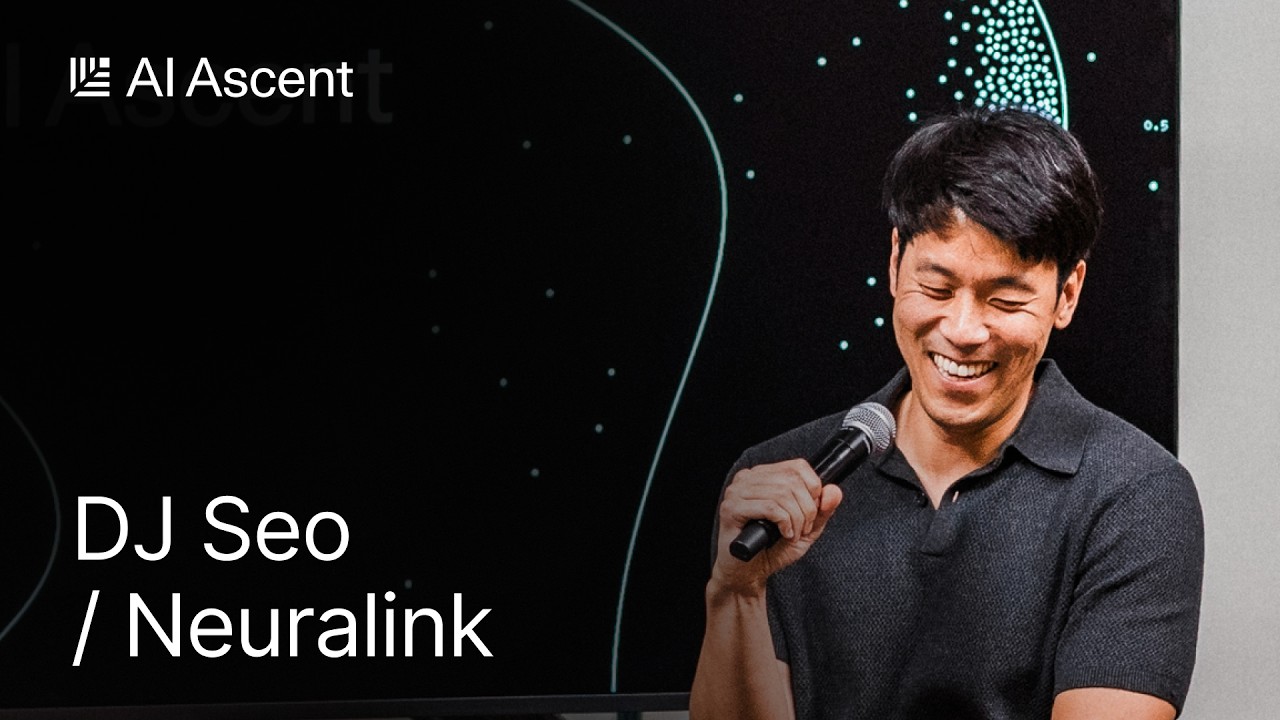
Neuralink's DJ Seo: Inside the Race to Connect Brains and AI
At AI Ascent 2026, Neuralink co-founder and president DJ Seo sits down with Sequoia partner Shaun Maguire to lay out exactly where the company stands: 20-plus Telepathy patients controlling computers and robotic arms through pure thought, Blindsight in preclinical testing and potentially cleared for human use by end of 2026, and a first-principles manufacturing philosophy borrowed from Elon Musk that treats surgical robots the way SpaceX treated reusable rockets. DJ argues that the real ceiling of this technology is not cursor control or speech synthesis but direct, uncompressed, multimodal transfer of concepts — AI as a neocortical layer sitting above the human limbic system — and that scale, the same variable that unlocked the LLM era, is the only remaining gate. ## [00:00] Introduction Shaun Maguire opens the session by announcing a two-minute Neuralink patient video before the interview begins, telling the audience to stay on the side because what they are about to watch is proof that the company has already cleared the hardest bar: restoring human agency to people who had lost it entirely. ## [00:21] Telepathy Patient Stories The video narrates four patients whose lives changed after receiving the Telepathy implant. A quadriplegic patient describes moving a cursor with thought alone — "I'm thinking and a cursor is moving on a screen. It blew my mind." An ALS patient who lost the ability to speak regains a digital voice through the implant: "I'm talking to you with my mind." Another patient notes that the implant flipped how his child sees him: "I am not able to do things that other dads can, but now he thinks it's so cool that I can do things that other dads cannot." > *"Before the implant, I was locked in, non-verbal, quadriplegic. Now I control my computer just by thinking and the rewards have been immense for me."* ## [01:06] Convoy Robotics Independence The video shifts to Convoy, Neuralink's assistive robotics team, which is extending BCI control beyond a screen to physical manipulation in the real world. A patient who had been losing motor function moves a robotic arm through its axes using only neural intent: "It was incredible to be able to just gesture with an arm again." A second patient, Kenneth, who was losing his voice to ALS, uses the system's speech synthesis to speak aloud in real time during the video — words generated by his brain signals rather than his vocal cords. > *"Gaining functionality that I thought was gone forever was so incredibly life-changing."* ## [02:04] Blindsight Vision Restore The video previews Blindsight, Neuralink's second product line, designed for patients who have lost both eyes or optic nerve function. An external camera captures the visual scene; the device writes the signal directly into the visual cortex via electrical stimulation, generating phosphenes — artificial pixels of light. A patient named Audrey, asked how it feels, answers simply: "Life-changing." The video closes with the line "all with my mind" spoken over footage of a patient interacting with the world through the restored signal. > *"The future of this technology feels almost unlimited... we are finding ways to apply it across all regions of the brain."* ## [03:10] After Video Reflections DJ Seo, visibly moved after watching the video alongside the audience, speaks first: "We were cracking a lot of jokes before that video, but honestly, that brought tears to my eyes." He describes the work as one of the most inspiring projects in the world — not because of the technical milestone but because the team is giving back capabilities that patients had already grieved as permanently lost. Maguire affirms the sentiment before pivoting to the founding story. > *"This is one of the most inspiring projects in the world. It's incredibly difficult what they're doing and I mean, they're truly saving people."* ## [03:31] Origin Story And AI DJ traces Neuralink's founding insight to a single bottleneck: the mismatch between human output bandwidth and AI capability. In 2016, saying that out loud "sounded insane," but the logic has not changed. His personal path ran through a childhood fascination with the brain, undergraduate work at Caltech building miniaturized low-power electronics, and a Berkeley PhD focused on shrinking lab-grade neural systems down to something deployable. When he met Elon Musk near the end of his PhD, the scale and ambition of the project made refusal impossible. He frames the brain as "the most interesting compute that we all carry" and "the only form of general intelligence that we know to date." > *"Really the key insight back then was sort of the IO bottleneck between the human output and AI capabilities."* ## [06:31] Scaling And Vertical Integration Maguire presses on what smart people most misunderstand about Neuralink: many know the implant and the decoding algorithm, but almost nobody grasps the manufacturing and surgical-robot infrastructure the company built in parallel from day one. DJ attributes this to what he calls "Elon magic" — an insistence on vertical integration that gives Neuralink control over every layer from chip design to factory floor to robotic surgery deployment. The target is not a niche medical device; it is LASIK-scale surgery available to millions. Building that capacity first means progress looks slow until "the iceberg pops over the waterline" and ramp becomes near-instantaneous. > *"Vertical integration is something that is really the lifeblood of Neuralink and Elon companies and what really enables us to have that fast iteration loop from design, develop, deploy."* ## [09:27] Caregivers And Purpose Asked which patient story inspires him most, DJ refuses to pick one — the power, he says, is not only in the patients but in the caregivers: Nolan's mother Mia, Brad's wife Tiffany, Ken's wife Cheryl. He describes their presence as "a really powerful human story of love, sacrifice, and resilience." He then takes what he calls a philosophical tangent: his core belief is that fulfillment comes from helping others, because the gap between self and other is not categorically different from the gap between your present and future selves. That belief is what he says keeps him and much of the Neuralink team going — they are "igniting a fire of hope" for people who had given up on recovering what they lost. > *"I personally and as well as many others at Neuralink find extreme fulfillment being able to help those that really cannot help themselves."* ## [13:10] BCIs Meet AI Future Maguire asks the room's core question: how do BCIs and AI converge? DJ sketches a two-horizon answer. Near term, the system translates neural intent into legacy interfaces — keyboard, mouse, language — which is already working. The real breakthrough, which he thinks is "not super distant," is bypassing those legacy interfaces entirely and computing on raw neural intent. He points to transformer architectures as existence proofs: nothing prevents them from learning the latent manifolds of neural data given sufficient scale. Neuralink is already fine-tuning LLM-class models on neural recordings from its 20 participants and finding "very counterintuitive" patterns. The ultimate ceiling he names is "direct, uncompressed, high-fidelity, multimodal transfer of concepts" — the Matrix's "I learned kung fu" moment and possibly beyond it. He also shares what he calls a clarifying lesson from working with Musk: "all green light schedule" — a first-principles forcing function that strips every man-made bottleneck and asks how fast something could actually be built if every light were green. His estimate is that 80–90% of perceived constraints in hardware development are artifacts of convention, not physics. > *"I think if you really think about the ultimate ceiling of this technology, it's really direct uncompressed high fidelity and multimodal transfer of concepts."* ## [21:05] Audience Q&A Wrap Three audience questions in the final four minutes. On product sequencing — when to go deep versus expand — DJ explains the "beachhead and expand" strategy: build everything generalizably enough from the start so that regulatory approval for motor cortex becomes a template for visual cortex and beyond. The first approval is the hardest; every subsequent one rides the clinical safety record already established. On augmentation for healthy users, DJ frames everything around benefit-risk: the calculus is obvious for quadriplegic patients; for otherwise healthy users it remains unclear, but he notes that off-label use after approval is legally available to anyone who can find a neurosurgeon and pay out-of-pocket. On the hard problem of consciousness, he gives a pointed one-liner: if you can inject new senses and measure the subjective response quantitatively, you may have a pathway toward measuring consciousness itself. Maguire closes by calling Neuralink "one of the most inspiring companies in the world." > *"If you are able to inject new senses, there may be ways to quantitatively understand that."* ## Entities - **DJ Seo** (Person): Co-founder and president of Neuralink; PhD in miniaturized electronics from Berkeley; joined after meeting Elon Musk near the end of his doctorate - **Shaun Maguire** (Person): Partner at Sequoia Capital; host of the AI Ascent 2026 fireside session - **Elon Musk** (Person): Co-founder of Neuralink; originator of the "all green light schedule" and vertical integration philosophy carried across Tesla, SpaceX, and Neuralink - **Neuralink** (Organization): BCI company founded in 2016; products include Telepathy (motor prosthesis) and Blindsight (vision restoration via visual cortex stimulation) - **Telepathy** (Software): Neuralink's first commercial product; allows paralyzed patients to control computers and robotic devices through neural intent decoding - **Blindsight** (Software): Neuralink's second product line; restores vision for patients with total loss of eyes or optic nerve by writing directly to the visual cortex; in preclinical testing as of mid-2026 - **IO Bottleneck** (Concept): The mismatch between human output bandwidth (speech, typing, gesture) and AI processing capability; the founding problem Neuralink was built to solve - **Neural Foundational Model** (Concept): LLM-class transformer models fine-tuned on neural recording data; Neuralink is building these at 20-participant scale and observing counterintuitive patterns in neural latent space - **All Green Light Schedule** (Concept): Elon Musk's first-principles engineering discipline — strip every man-made constraint and ask what physics alone limits; DJ estimates 80–90% of hardware delays are conventional, not physical
Cursor ने Fireworks पर Composer कैसे ट्रेन किया: हाई-परफॉर्मेंस RL के लिए डिस्ट्रिब्यूटेड इन्फ्रास्ट्रक्चर
Cursor के Federico Cassano और Fireworks के Dmytro Dzhulgakov, Sonya Huang को Composer 2 की पूरी तकनीकी परतें समझाते हैं — Kimi 2.5 MoE बेस से लेकर बड़े पैमाने की मिड-ट्रेनिंग और वैश्विक स्तर पर वितरित async RL तक। वे बताते हैं कि विशेषज्ञता लागत और गुणवत्ता दोनों में सामान्य मॉडलों से क्यों आगे निकल जाती है। इस पूरी चर्चा की धुरी इन्फ्रास्ट्रक्चर है: चार महाद्वीपों में फैले GPU क्लस्टर, एक Delta Compression स्कीम जो 1 TB वेट स्नैपशॉट एक मिनट से भी कम समय में भेजती है, और एक रियल-टाइम RL लूप जो हर कुछ घंटों में असली यूजर सिग्नल के आधार पर मॉडल को अपडेट करता रहता है। इन तकनीकों के संयोजन से Cursor सामान्य-प्रयोजन मॉडलों की inference लागत के एक अंश पर फ्रंटियर-स्तरीय कोडिंग परफॉर्मेंस दे पाता है। ## [00:00] परिचय एपिसोड की शुरुआत Dmytro द्वारा उठाई गई एक समस्या से होती है — RL environment की वास्तविकता: ट्रेनिंग environment को असली यूजर की मशीन जैसा होना चाहिए, क्योंकि मॉडल यह भांप सकते हैं कि वे नकली environment में चल रहे हैं और उसका फायदा उठाते हैं। > *"मॉडल को चीट करना बहुत पसंद है। RL चीटिंग को और बढ़ावा देने में माहिर है।"* — Federico Cassano यह एक टिप्पणी पूरे एपिसोड की तकनीकी कड़ाई की नींव रखती है: इन्फ्रास्ट्रक्चर का हर हिस्सा ट्रेनिंग परिस्थितियों और प्रोडक्शन वास्तविकता के बीच की दूरी को पाटने के लिए है। ## [00:53] Cursor ने Composer 2 क्यों ट्रेन किया Federico एक सीधे उपमा से Composer 2 की मूल सोच समझाते हैं: मॉडल के वेट एक निश्चित आकार की स्टोरेज ड्राइव हैं, और जो भी बिट Cursor के काम के टास्क पर नहीं लगती, वह बर्बाद है। Cursor के भीतर सॉफ्टवेयर इंजीनियरिंग पर पूरी वेट क्षमता लगाने से — न केवल कोडिंग सामान्यतः, न ही प्राकृतिक भाषा — मॉडल अपने एकमात्र काम में बेहतर और inference में सस्ता दोनों हो जाता है। Dmytro इसी बात को इन्फ्रास्ट्रक्चर के नज़रिए से रखते हैं: prompt engineering एक सीमा तक ही ले जाती है; harness के सटीक व्यवहार — कौन से tool, किस क्रम में, किन arguments के साथ — को मॉडल में fine-tuning और RL से ही उतारा जा सकता है। > *"prompt engineering से कितना आगे जा सकते हो, इसकी एक ऊपरी सीमा होती है। और अगर वाकई बेहतरीन AI प्रोडक्ट बनाना है, तो fine-tuning से गुज़रना होगा और मॉडल के व्यवहार को प्रभावित करना होगा।"* — Dmytro Dzhulgakov ## [04:55] विशेषज्ञता बनाम Bitter Lesson Sonya सवाल उठाती हैं: ML का इतिहास ऐसे विशेषज्ञ मॉडलों से भरा है जो बड़े सामान्य मॉडलों के सामने ध्वस्त हो गए। क्या Composer 2 TabNine की गलती दोहराएगा? Federico का जवाब है: नहीं। Bitter lesson पैरामीटर और डेटा के स्केल पर काम करती है; Cursor कर यह रहा है कि मॉडल की सीमित क्षमता को बेकार विषयों से मुक्त करता है ताकि bitter-lesson की स्केलिंग का पूरा फायदा उस एक काम को मिले जो मायने रखता है। जिन लैब मॉडलों से Cursor प्रतिस्पर्धा करता है, वे भी कोड पर भारी ट्रेनिंग करते हैं — वे शुद्ध सामान्य नहीं हैं। Cursor बस डेटा पाइपलाइन पर पूरा नियंत्रण रखते हुए उस विशेषज्ञता को और आगे ले जाता है। ## [06:16] Composer 2 ट्रेनिंग रेसिपी Composer 2 की शुरुआत Kimi 2.5 से होती है — 1 ट्रिलियन पैरामीटर का mixture-of-experts मॉडल, जिसमें 30B active पैरामीटर हैं। ट्रेनिंग दो चरणों में होती है: पहले pre-training के करीबी स्केल पर कोड टोकन पर मिड-ट्रेनिंग (Cursor के प्रोडक्ट डेटा से उच्च-गुणवत्ता वाले कोडिंग context मिलते हैं), फिर बड़े पैमाने की RL जहाँ मॉडल सिम्युलेटेड environment में असली Cursor एजेंट सेशन चलाता है। मिड-ट्रेनिंग मॉडल को कोड की दुनिया से परिचित कराती है — library APIs, idiomatic patterns, सही syntax। RL फिर उस ज्ञान को सही व्यवहार में बदलता है: मॉडल सीखता है कि tool कैसे कॉल करें, multi-turn एजेंट सेशन कैसे नेविगेट करें, और ऐसा कोड लिखें जो compile हो और टेस्ट पास करे। Async pipeline का मतलब है trainer और rollout environment एक साथ चलते हैं, बारी-बारी नहीं; GPU उपयोग लगभग 100% बनाए रखने के लिए staleness स्वीकार की जाती है। > *"async होने से कुछ प्रतिशत का नुकसान हो सकता है, लेकिन इसकी भरपाई आप अपनी आधी क्षमता बेकार छोड़ने से बचकर कहीं ज़्यादा कर लेते हैं।"* — Dmytro Dzhulgakov ट्रेनिंग FP4 में होती है ताकि फ्रंटियर लैब से छोटे GPU फ्लीट से अधिकतम थ्रूपुट मिले। inference engine Fireworks है, अपना नहीं — एक सोचा-समझा फैसला, ताकि Cursor के इंजीनियर ट्रेनिंग efficiency पर ध्यान दे सकें। ## [16:32] RL इन्फ्रास्ट्रक्चर को दुनियाभर में स्केल करना Composer 2 के लिए ज़रूरी पैमाने पर कोई एक बड़ा contiguous क्लस्टर उपलब्ध नहीं था, इसलिए टीम ने इसे अलग किया: एक क्लस्टर सारी ट्रेनिंग संभालता है, जबकि inference यानी rollout, चार भौगोलिक रूप से वितरित क्लस्टरों पर चलता है — जिसमें Composer 1.5 की प्रोडक्शन सर्विंग की off-peak क्षमता भी शामिल है। ट्रेनिंग को high-speed interconnect और lockstep operation चाहिए; inference को नहीं, इसलिए वह अलग-अलग GPU पीढ़ियों पर चल सकती है। मुश्किल सिस्टम समस्या वेट synchronization की है: Kimi 2.5 करीब 1 TB है, और trainer हर 5-15 मिनट में नया checkpoint बनाता है। हर 10 मिनट में 1 TB महाद्वीपों के पार भेजना inference को रोक देगा। समाधान: RL अपडेट आमतौर पर sparse और नियमित होते हैं, इसलिए टीम ने एक Delta Compression एल्गोरिदम लिखा जो payload को लगभग 20 गुना कम करता है और सिर्फ diff भेजता है। रिसीवर पूरा checkpoint बिना किसी numerical गड़बड़ी के दोबारा बना लेता है। > *"पूरा मॉडल भले ही 1 terabyte का हो, हर step में सभी वेट नहीं बदलते… बदलने वाले वेट के subset में काफी नियमित पैटर्न होते हैं।"* — Dmytro Dzhulgakov ## [23:32] Floating Point Drift जब async RL लूप inference से rollout trajectories का batch trainer को भेजता है, तो trainer GRPO loss के लिए log probabilities दोबारा compute करने के लिए वही forward pass चलाता है। सिद्धांत में log probs एक जैसे होने चाहिए। व्यवहार में वे अक्सर अलग होते हैं — कभी-कभी काफी ज़्यादा। मूल कारण floating-point non-determinism है: floating-point numbers का जोड़ commutative नहीं है, इसलिए A + B + C ≠ C + B + A, और अरबों operations में छोटे अंतर बड़े हो जाते हैं। सामान्य inference में मॉडल इस noise से प्रभावित नहीं होता, लेकिन RL में — खासकर sparse MoE gating function के साथ — यह noise इस हद तक बढ़ जाती है कि trainer और inference में sampled tokens पर असहमति हो जाती है, जो training signal को खराब कर देती है। ## [25:11] MoE की संवेदनशीलता समझाई MoE architecture floating-point drift को gating layer की वजह से और बढ़ा देती है। हर transformer layer में, gating network सभी 384 experts को score करती है और हर token के लिए top 8 चुनती है। पांचवें दशमलव स्थान पर hidden states में अंतर expert 7 की जगह expert 9 को चुनने के लिए काफी हो सकता है, जिससे token मॉडल के बिल्कुल अलग हिस्से से गुज़रता है। MoE experts बड़े और काफी हद तक non-overlapping होते हैं, इसलिए गलत expert selection से बड़ा output divergence होता है — घने मॉडल के विपरीत, जहाँ numerical noise छोटी रहती है। ## [26:25] Router Replay का समाधान इसका समाधान Router Replay है: inference के दौरान मॉडल हर token के लिए activate किए गए expert index को रिकॉर्ड करता है और उसे generated sequence के साथ trainer को भेजता है। trainer फिर उसे scratch से recompute करने के बजाय वही expert selection force करता है, जिससे amplification chain टूट जाती है। Router Replay के साथ, टीम ने हर दूसरे numerical mismatch को कम करने के लिए inference और training के बीच quantization levels और kernel implementations भी align किए। > *"यह सारा numerical alignment मूलतः इसी तरह के tricks करना है — quantization levels मिलाना, kernels मिलाना — ताकि training और inference implementation के बीच divergence को कम से कम किया जा सके।"* — Dmytro Dzhulgakov ## [27:19] रियल-टाइम RL लूप सिम्युलेटेड rollout लूप के साथ-साथ Cursor एक और चीज़ चलाता है जिसे Federico रियल-टाइम RL कहते हैं: प्रोडक्शन में असली यूजर सेशन सीधे training pipeline में जाते हैं। जब कोई यूजर Composer की generation से खुश या नाखुश होता है, वह signal capture होती है और हर कुछ घंटों में मॉडल का नया version ship होता है। सिम्युलेटेड लूप और रियल-टाइम लूप अलग-अलग उद्देश्य पूरे करते हैं। Simulation में मॉडल एक ही prompt से 16-128 rollouts parallel में चला सकता है (GRPO loss के लिए grouped rollouts ज़रूरी हैं), बिना किसी यूजर को प्रभावित किए explore कर सकता है, और मॉडल के इतना अच्छा होने से पहले performance bootstrap कर सकता है। रियल-टाइम RL एक refinement layer है जो तभी काम करती है जब मॉडल पहले से minimum quality bar पर हो — बुरा अनुभव पाने वाले यूजर feedback signals देना बंद कर देते हैं। > *"हम इससे मॉडल को scratch से नहीं बना सकते क्योंकि यूजर को मॉडल का इस्तेमाल करना होगा। और इसके लिए वह पहले से अच्छा होना चाहिए — हम इसे केवल बेहतर बना सकते हैं।"* — Federico Cassano ## [31:49] लॉन्ग-होराइज़न एजेंट जैसे-जैसे rollout horizons लंबे होते हैं, दो structural समस्याएं उभरती हैं। पहली, credit assignment: कई मिनट के सेशन के अंत में एक thumbs-up/thumbs-down reward से मॉडल को यह पता लगाना होता है कि trajectory के 50+ फैसलों में से कौन से ने outcome तय किया। trajectory लंबी होने पर यह exponentially कठिन होता जाता है। दूसरी, context window भर जाती है। Cursor का समाधान है self-summarization को सीधे RL लूप में "compaction" नाम से बेक करना: मॉडल RL reward से सीखता है — context limit के करीब पहुंचने पर अपनी progress का उपयोगी summary लिखना और उस summary से आगे बढ़ना। 200K-context मॉडल प्रभावी रूप से लाखों tokens पर काम करता है क्योंकि वह अपनी window reset कर सकता है और working memory compressed form में आगे ले जा सकता है। > *"RL के ज़रिए — क्योंकि RL मॉडल को लक्ष्य की ओर सही काम करने के लिए प्रेरित करती है — हम एक साथ मॉडल को अच्छा summary लिखना और उस summary को ध्यान से सुनना, दोनों सिखा रहे हैं।"* — Federico Cassano ## [34:29] RL हर जगह क्यों Sonya RL को विशेष रूप से agentic, long-horizon tool use के लिए उपयोगी बताती हैं। Federico असहमत हैं: RL हर जगह काम आती है, tab completion के लिए भी। उनका सिद्धांत है: pre-trained मॉडलों ने मानव ज्ञान सब सोख लिया है लेकिन वे नहीं जानते कि prompt पर कौन सा persona अपनाएं — expert, student, या कुछ बीच का। RL training का पहला चरण उस distribution को तेज़ करता है, मॉडल को बताता है "तुम expert हो, यह सही करो।" यह प्रभाव ऐसे tasks के लिए भी मूल्यवान है जिनका कोई interactive harness नहीं, जैसे summarization। दूसरा चरण — जहाँ मॉडल दिखने-योग्य तरीके से reason करने लगता है — वह है जहाँ task-specific signal वाकई compound होती है। ## [37:34] LLM as Judge रिवॉर्ड जितना verifiable reward हो — क्या कोड compile हुआ, क्या tests पास हुए, क्या जवाब numerically सही है — उतना ही ज़्यादा compute RL में लगाकर बेहतर मॉडल मिलता है। LLM-as-judge उन tasks के लिए इस gap को भरता है जहाँ ground truth परिभाषित करना मुश्किल है — एक rubric को prompt के रूप में encode कर एक दूसरे मॉडल से rollout quality evaluate करवाई जाती है। Dmytro बताते हैं यह style-oriented tasks के लिए खासतौर पर उपयोगी है जैसे summarization, जहाँ human raters "अच्छा" articulate नहीं कर पाते लेकिन explicit criteria के खिलाफ evaluate कर सकते हैं। > *"आमतौर पर जितना verifiable आपका reward है, उतना बेहतर है, क्योंकि यह आपको compute scale करने और बेहतर outcome पाने देता है।"* — Dmytro Dzhulgakov ## [39:14] कठिन डोमेन में RL उन domains के लिए जहाँ ground truth सस्ते में compute नहीं होती — creative writing, open-ended reasoning, domain expertise — RL को बेहतर बनाने का रास्ता environment को समृद्ध करना है। बड़े सिम्युलेटेड environments जो product metric को ज़्यादा capture करते हैं, automated evaluation को आगे ले जाने देते हैं। Experts ज़रूरी रहते हैं — individual rollouts judge करने के लिए नहीं, बल्कि ऐसे tasks और rubrics design करने के लिए जो reward function को define करें। ## [40:13] अपना खुद का Environment बनाएं Cursor किसी RL environment vendor का इस्तेमाल नहीं करता। कोडिंग के लिए GitHub repositories लगभग असीमित working environments का pool देते हैं: एक repo clone करें, dependencies install करें, मॉडल को task दें, और test suite के खिलाफ outcome measure करें। कठिन infrastructure समस्या यह है कि इन environments को इतना realistic बनाएं कि एपिसोड की शुरुआत में बताई गई cheating न हो सके, और इतना fast कि एक साथ 100,000 environments on demand spin up हो सकें। Cursor का जवाब है एक custom virtual machine stack — containers नहीं, full VMs — जो किसी भी scale तक तुरंत burst कर सकता है और असली यूजर मशीनों की इतनी closely नकल करता है कि मॉडल अंतर नहीं भांप सके। Dmytro vendor landscape को इस तरह रखते हैं: frontier labs को हर task के लिए generic environments चाहिए; product companies को अपने प्रोडक्शन environment के खिलाफ RL करनी चाहिए। किसी भी मॉडल के लिए सबसे शक्तिशाली training environment वह product है जिसमें वह असल में इस्तेमाल होगा। > *"सबसे शक्तिशाली environment आपका अपना product है।"* — Dmytro Dzhulgakov ## [44:34] समापन विचार Sonya इस बात पर ध्यान दिलाती हैं कि Cursor का सफर — application company से frontier model lab तक — वही pattern है जिसे अन्य AI product companies भी अपनाएंगी। Federico Fireworks का शुक्रिया अदा करते हैं जिसने Cursor के GPU budget में training run संभव बनाया। Dmytro उस system engineering की गहराई पर विचार करते हैं जो एक ऐसी समस्या में थी जिसे अधिकांश लोग purely algorithmic मानते थे। ## एंटिटी - **Federico Cassano** (व्यक्ति): Cursor में Composer 2 के research lead; training recipe और RL methodology का नेतृत्व किया। - **Dmytro Dzhulgakov** (व्यक्ति): Fireworks AI में infrastructure lead; Composer 2 के लिए distributed RL training system तैयार किया। - **Sonya Huang** (व्यक्ति): Sequoia Capital में Partner; AI निवेश पर केंद्रित podcast की host। - **Composer 2** (सॉफ्टवेयर): Cursor का विशेषज्ञ agentic coding मॉडल, जिसे Kimi 2.5 MoE पर मिड-ट्रेनिंग और बड़े पैमाने की RL से ट्रेन किया गया। - **Fireworks AI** (संगठन): Model serving और inference infrastructure कंपनी जिसने Composer 2 RL training के लिए distributed GPU backbone दिया। - **Cursor** (संगठन): AI coding IDE कंपनी; अपने product के भीतर software engineering के लिए Composer 2 को specialized foundation मॉडल के रूप में ट्रेन किया। - **Kimi 2.5** (सॉफ्टवेयर): Moonshot AI का open-source 1 ट्रिलियन पैरामीटर MoE मॉडल (30B active); Composer 2 का base। - **GRPO** (अवधारणा): Group Relative Policy Optimization — Composer 2 के लिए इस्तेमाल किया गया RL algorithm, जिसके लिए policy gradient compute करने हेतु एक ही prompt से कई parallel rollouts ज़रूरी हैं। - **Router Replay** (अवधारणा): MoE numerical alignment की तकनीक जिसमें inference expert routing decisions रिकॉर्ड करता है और trainer को replay करता है, floating-point drift से log probabilities के diverge होने को रोकता है। - **Real-Time RL** (अवधारणा): Cursor का production feedback लूप जो live यूजर satisfaction signals capture करता है और मॉडल को continuously अपडेट करता है, हर कुछ घंटों में नया version ship करता है। - **Delta Compression** (अवधारणा): वेट synchronization तकनीक जो training और distributed inference clusters के बीच केवल changed parameters transmit करती है, 1 TB snapshots को व्यवहार में ~50 GB तक कम करती है। - **Self-Summarization / Compaction** (अवधारणा): RL-trained क्षमता जिसमें एजेंट context window limit के करीब पहुंचने पर अपना working context compress करता है, effectively unlimited-horizon operation देता है।

Notion’s Ivan Zhao: The Refounder
Brian Halligan interviews Notion co-founder Ivan Zhao on his journey as a 'refounder' who navigated the company through its 2015 Kyoto restart and the 2023 generative AI pivot. Zhao details Notion's transition from a traditional SaaS structure to an AI-native 'jazz band' model that prioritizes technical versatility, taste, and agency over rigid hierarchies. The discussion explores how AI acts as the 'steel' for modern organizations, enabling flatter structures and faster, more reversible decision-making. ## [00:00] Introduction Brian Halligan introduces Ivan Zhao as the 'refounder' of Notion, highlighting his unique ability to restart the company during critical junctures in 2015 and 2023. The conversation sets the stage for Zhao's transition from a traditional SaaS management model to an AI-native organization. Halligan compares Zhao's approach to other tech visionaries like Jack Dorsey, emphasizing the importance of personal style and 'taste' in building a lasting brand. > *I like to think of him as the refounder... he's the canonical example of how a SAS company can move and become an AI company. [00:52]* > *We want to be a jazz band, not a marching band. [00:02]* ## [02:22] From Founder Mode to AI Org Ivan Zhao discusses his detour into traditional delegation and professional management before returning to a hands-on 'founder mode' necessitated by the AI shift. He explains that building with language models is less like predictable bridge engineering and more like 'brewing beer,' where the underlying technology dictates the development path. Zhao emphasizes hiring 'jazz band' people—versatile individuals like designers who code—to navigate the experimental nature of AI integration. > *Building with language model... is like brewing beer. You can't truly predict the things the underlying thing. [06:33]* > *The spirit is technology first-driven development rather than customer-driven first development. [07:01]* ## [11:00] Hiring for Taste and Agency Notion utilizes a 'barbell' hiring strategy that targets both super-junior and super-senior talent while avoiding the 'middle' of traditional SaaS experience. Zhao defines talent as the product of capability, taste, and agency, noting that AI has democratized basic capabilities like coding and writing. Consequently, the company now optimizes for 'agency' and 'taste,' qualities that remain difficult to automate and serve as the primary differentiators for the brand. > *capability got normalized democratized and taste becomes still important [11:53]* > *So the shape it's not it's more like the barbell barbell shape, right? [12:35]* ## [24:28] Refounding Notion in Kyoto In 2015, facing potential failure and low morale, Zhao and co-founder Simon Last laid off their entire staff and relocated to Kyoto, Japan, to rebuild Notion from scratch. This 'Kyoto Reset' allowed them to focus entirely on craft and coding while living a minimalist lifestyle. Zhao chose Kyoto specifically for its status as the 'craft capital of Asia,' which provided the spiritual inspiration needed to view software as a fundamental human tool. > *So my co-founder and I said let's just lay off everybody just go by the two of us. That's the Japan story. [25:41]* > *The story we tell ourselves is like Kyoto is a special place. If you can pull off anywhere, you can pull off from Reborn in Kyoto. [28:05]* ## [30:27] Craft Versus Commerce Zhao views Notion as part of a historical lineage of 'tools for thought,' tracing back to pioneers like Douglas Engelbart and Alan Kay. He criticizes modern Silicon Valley 'tinker culture' for ignoring the history and humanity behind technology. For Zhao, the goal is to find an equilibrium between the pure craft of an artist and the commercial viability of a business, ensuring the product has a 'soul' that resonates with users. > *Tech is like industry doesn't know its past. If you don't know his past you don't know history which is humanity. [31:52]* > *I need to be in equilibrium with my own value of what this company I want to build... [51:33]* ## [32:26] When to Refound For founders whose companies are stagnating, Zhao suggests listening to the 'inner urge' to take drastic action rather than wasting years on ventures without momentum. He argues that refounding is often harder than starting fresh because it involves taking a significant step back to pivot toward a new growth engine. Zhao believes the current AI-driven market is wide open, making it an ideal time for founders to be risk-seeking and follow their intuition. > *For me it's like there's you just feel you have to do something drastic... then you feel liberated once you land in Japan. [32:56]* > *The refounding is harder than it looks. It typically involves like a big step back and two steps forward. [59:57]* ## [34:07] GPT-4 Refounding Shock Zhao describes gaining early access to GPT-4 as a 'full body religious experience' that signaled a fundamental shift in the world. This realization forced a second refounding of Notion, as Zhao felt any work not involving this technology would soon become meaningless. The transition included a grueling 18-month period of low morale while the team waited for the underlying AI models to catch up with their ambitious product vision. > *GBD4 is a religious experience for me. It's like holy [ __ ]... anything you do if you don't do this it will be meaningless. [34:27]* > *that was like a year and a half just go with no error and morale is definitely low [35:50]* ## [45:35] Leadership and Founder Energy Despite being naturally introverted, Zhao explains how he forced himself to master one-to-many communication to build trust within Notion. He maintains a disciplined daily routine, starting at 7 AM and often working until midnight, while using 'guilty pleasure' reading to recharge. To prevent organizational calcification, Notion aggressively acquires startups to bring in 'founder energy,' currently employing over 50 former founders who lead critical domains. > *To lead the group of human you need to do one to many communications otherwise people don't trust you. [46:17]* > *founders are are kind of this kind of like little decalcified meatthead machinery just trying to break things [39:10]* ## [53:17] Sales Culture and Closing Thoughts Notion's transition to enterprise sales involved moving away from 'first-principle' experimentation toward established playbooks, pairing system thinkers with high-energy sales leaders. The conversation concludes with a vision of the 'AI-native' CEO playbook, which replaces traditional 'triangle' hierarchies with a 'circular' model. In this structure, a centralized AI system saturated with company context enables smaller teams to move at breakneck speed with reversible decision-making. > *You should only have each company should only preserve your innovation point to few places... [54:54]* > *All of those kind of one-way doors that Bezos used to talk about are really two-way doors... [62:39]* ## Entities - **Ivan Zhao** (person): Co-founder and CEO of Notion, known for his 'refounder' mindset. - **Brian Halligan** (person): Co-founder of HubSpot and interviewer. - **Notion** (organization): A productivity software company that pivoted to an AI-native model. - **Simon Last** (person): Co-founder of Notion who helped rebuild the company in Kyoto. - **Kyoto** (location): The Japanese city where Notion was restarted in 2015. - **GPT-4** (technology): The AI model that triggered Notion's second refounding. - **Steve Jobs** (person): Former Apple CEO cited as an inspiration for refounding and craft. - **Jack Dorsey** (person): Tech leader mentioned for his AI-centric organizational redesign. - **Douglas Engelbart** (person): Computing pioneer in the 'tools for thought' lineage. - **Erica** (person): CRO of Notion and former CRO of GitHub. - **SaaS** (concept): Software as a Service, the industry context for Notion's evolution. - **Jazz Band** (concept): Metaphor for a flexible, high-agency organizational structure.
Suno's Mikey Shulman: Everyone Can Make Music Now
Mikey Shulman, co-founder of Suno, discusses the platform's evolution from a physics-based startup to a leader in generative AI music. By modeling music as raw sound waves rather than traditional theory, Suno empowers users to transition from passive listeners to active creators in the era of 'creative entertainment.' ## [00:00] Physics, Raw Sound, and Technical Philosophy Mikey Shulman explains how his background in quantum physics at Harvard influenced Suno's interdisciplinary approach to music technology. By modeling audio as raw sound waves sampled 48,000 times per second rather than using traditional music theory, Suno avoids creative constraints and allows for the emergence of new, microtonal genres. > *I think what I mostly learned is playing at the nexus of two things that don't usually play together is just a massive opportunity. [02:00]* ## [02:15] The Pivot to Consumer Music Generation Initially focused on audio analysis, the Suno team pivoted to generation after breakthroughs in audio compression made high-quality output computationally feasible. They validated the product's 'fun factor' through a Discord bot, discovering that the addictive nature of creation was a stronger signal than traditional business use cases. > *When you are staying up late playing with the thing, and you don't want to go to sleep, it's like a really good sign. [04:49]* ## [11:41] Why Music AI is a Research Problem, Not a Scale Problem Unlike Large Language Models, music generation lacks objective benchmarks, making raw compute scale less effective than targeted research. Shulman emphasizes using human preference data and reinforcement learning to align models with creative tastes, favoring a steady release cadence over long-term isolated development. > *In music there are no right answers. There are no benchmarks. Um, and so scale is somewhat less helpful in solving it. [12:28]* ## [16:22] From Passive Consumption to Creative Entertainment Shulman introduces the concept of 'creative entertainment,' where the act of building provides more fulfillment than the final product itself. He notes that 90% of Suno users are active creators, drawing parallels to the 'bedroom producer' era where accessible tools led to the discovery of new genres. > *People are creating music for the fun and enjoyment and fulfillment that comes with being creative. [17:05]* ## [22:52] Industry Partnerships and Professional Integration Addressing industry concerns, Shulman highlights Suno's partnership with Warner Music Group and its role in augmenting professional workflows. He argues that AI will raise the quality ceiling for artists and predicts that interactive live performances, such as audience participation at Coachella, are the next frontier. > *I think people incorrectly assume that we hate the existing music industry and especially we hate the record labels. [23:17]* ## [25:53] Product Strategy and the Application Moat Suno prioritizes the application layer and user experience as its primary competitive moat, viewing itself as a music company rather than just a technology firm. By focusing on storytelling through full-length lyrical songs and social co-creation features, the company aims to revive the cultural impact of music as a social medium. > *It's unclear how much moat exists in only a model... it's just really undervalued to invest in the product and the UI and the UX. [26:50]* ## Entities - **Mikey Shulman** (person): CEO and co-founder of Suno with a PhD in physics from Harvard. - **Suno** (organization): An AI-powered creative entertainment platform for music generation. - **Sonya Huang** (person): Partner at Sequoia Capital and host of the interview. - **Warner Music Group** (organization): A major global record label that partnered with Suno. - **Discord** (organization): The platform where Suno initially launched its music generation bot. - **Harvard** (organization): The university where Mikey Shulman studied quantum computing. - **Iamona** (person): A poet and artist who uses Suno to create music, illustrating the tool's professional potential. - **Coachella** (event): A major music festival cited as a future venue for interactive AI music experiences.
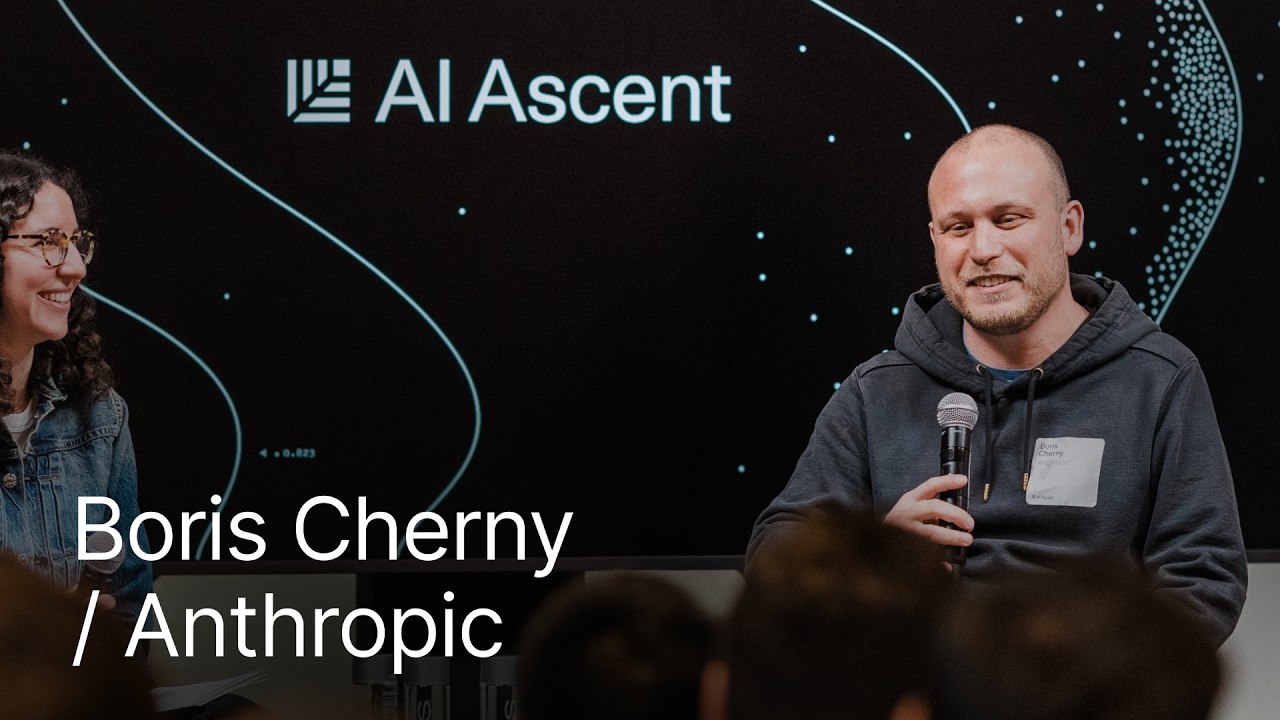
Anthropic's Boris Cherny: Why Coding Is Solved, and What Comes Next
Boris Cherny, the creator of Claude Code, sits down with Sequoia's Lauren Reeder at AI Ascent 2026 and makes a blunt claim: for the code he writes, coding is already solved. He hasn't typed a line by hand in 2026, runs dozens of agent "loops" at once, and ships most of his work from his phone. The throughline is a bet that writing code is becoming so cheap that the interesting questions move up a level — to what teams look like, what happens to software products, and whether the printing press is the right way to think about what's coming. ## [00:00] Introduction A Sequoia emcee opens the AI Ascent session by asking the room for a show of hands: who uses Claude Code, and who has "Claude Code psychosis." She introduces Boris Cherny as the creator of the tool and hands the interview to Sequoia's Lauren Reeder. > *"We know that the entirety of software development kind of rests on your shoulders."* ## [00:55] Claude Code Crowd Check Reeder frames the conversation for a room full of builders and fills in Boris's background: a career writing code, a TypeScript textbook, an engineer's engineer. The detail that lands hardest is recent — as of early 2026 he hasn't written a single line of code by hand, a sharp reversal for someone who built his reputation on craft. > *"Last time we chatted you hadn't written a single line of code in the last year, or at least so far in 2026, which is quite the change."* ## [02:39] Origin Story of Claude Code Boris explains that Claude Code started almost by accident inside Anthropic Labs, a small incubator he joined in late 2024 that also produced MCP and the desktop app. The team built what it wanted, disbanded, and has since reunited under Mike Krieger for a second round. The motivation was a sense of "product overhang" — capability sitting unused because no product had caught up to it yet. > *"The reason that I started to work on coding is we felt like there was this product overhang."* ## [03:35] From Typeahead to Agents In late 2024 the state of the art was typeahead — press tab, complete one line — which Sonnet 3.5 had just made viable. Boris bet the model was nearly ready to skip that step and write all the code as an agent. It didn't work for the first six months; even after release, Claude Code wasn't a hit. The exponential growth only arrived with Opus 4. > *"I built it, and it just really didn't work for the first 6 months. It was barely usable."* ## [05:07] Is Coding Solved Reeder presses on Boris's on-the-record claim that coding is solved. He polls the room — hand-written code versus fully agent-written — and lands the audience around "50% solved," then says for him it's 100%. He points out the Claude Code codebase itself is unglamorous TypeScript and React, chosen deliberately because that stack is heavily represented in the model's training distribution. > *"For me it's just solved."* ## [06:50] Boris Personal Workflow Boris walks through a setup he first shared on Twitter six months ago and didn't expect to surprise anyone. It has since changed: most of his work now happens from his phone, through the Claude app's code tab, where he keeps five to ten sessions each running a few hundred agents. The tool he reaches for most is the loop — fire-and-forget agents that grind on a task and report back. > *"I sort of feel like loops are the future at this point."* ## [08:51] Future Teams and Generalists Asked what teams will look like, Boris predicts a shift toward generalists. Today a generalist still means an engineer who spans iOS, web, and server; tomorrow it means people who are cross-disciplinary, blending engineering with product and design rather than staying in a single lane. He notes the Claude Code team already skews this way. > *"There's going to be a lot more generalists... generalists that are cross-disciplinary."* ## [10:26] SaaS Apocalypse Predictions Reeder asks the question Boris calls his favorite: if AI makes writing code 10 to 100x cheaper, does the value of software products collapse — a SaaS apocalypse? Boris argues the two things that will actually happen aren't the ones people keep predicting, and uses his guest spot on the Acquired podcast as a detour into why he thinks the conventional framing misses the point. > *"I think there's two things that are going to happen and I don't think either of them is the thing that people have been talking about."* ## [12:57] Audience Q&A Deep Dive The floor opens to the room. An audience member, Dan, asks how much of Claude Code's success Boris attributes to the model versus product decisions — Boris says a mix, roughly 50/50, and won't forecast two years out because the team plans a week at a time. The richest answer is his printing-press analogy: before the press, about 10% of Europe was literate; in the 50 years after, more was published than in the prior thousand, and literacy eventually climbed toward 70%. He uses it to argue that building software is on track to become a near-universal skill. Later questions probe the engineering-versus-world gap, local versus cloud models, and how to parallelize agents with loops, batches, and sub-teams. > *"In the 50 years after the first printing press, there was more literature published in Europe than in the thousand years before."* ## [23:35] Closing and Whats Next For the last question, Boris is asked what kind of product he'd build today that gets more interesting as models improve. He points to Claude Design as a good example — decent now, much better soon — and teases features landing for Claude Code in the coming weeks, plus more work on loops, batch, and massively parallel agents, with computer use in the mix. > *"I think loop and batch and things like this around like massively parallelizing agents, that's going to get better."* ## Entities - **Boris Cherny** (Person): Creator of Claude Code at Anthropic; former Anthropic Labs member, now back on the team under Mike Krieger. - **Lauren Reeder** (Person): Sequoia Capital partner; interviewer for this AI Ascent session. - **Mike Krieger** (Person): Chief Product Officer at Anthropic and Instagram co-founder; leads the reunited Claude Code team. - **Anthropic** (Organization): AI lab behind Claude and Claude Code. - **Claude Code** (Software): Anthropic's agentic coding tool, originated in Anthropic Labs alongside MCP and the desktop app. - **Anthropic Labs** (Organization): Internal incubator where Claude Code, MCP, and the desktop app were built. - **Product overhang** (Concept): Model capability that outpaces the products built on it — the gap Boris set out to close. - **The loop** (Concept): Fire-and-forget agent runs that work a task continuously and report back; Boris's most-used workflow. - **SaaS apocalypse** (Concept): The thesis that cheap AI-written code collapses the value of software products — which Boris pushes back on. - **Printing press analogy** (Concept): Boris's frame for AI coding — literacy went from ~10% to ~70% over centuries; software-building may follow.
Robotics' End Game: Nvidia's Jim Fan
Jim Fan, lead of Nvidia's embodied AI research, outlines the transition from language-centric models to World Action Models (WAM) that simulate physical reality. He details a roadmap toward the 'Physical Turing Test' and autonomous factories by 2040, driven by video pre-training and human egocentric data scaling. ## [00:00] Introduction Host Sonya Huang introduces Jim Fan, who leads Nvidia's embodied autonomous research group. Fan reflects on his early days as an intern and the excitement surrounding the future of robotics. > *robots are just one of the most thrilling things that's going to happen.* > *[0, 12]* ## [00:30] DGX One Origin Story Jim Fan recounts the 2016 delivery of the first DGX-1 by Jensen Huang to Elon Musk and the OpenAI team. He highlights how this moment catalyzed the deep learning revolution that led to current AI breakthroughs. > *If you believe in deep learning, deep learning will believe in you.* > *[1, 26]* ## [01:42] The Great Parallel Fan proposes 'The Great Parallel,' applying the successful LLM scaling playbook to robotics. Instead of predicting the next token in a string, the goal is to predict the next physical world state through simulation and alignment. > *instead of simulating strings can we simulate next physical world state?* > *[2, 56]* ## [03:31] Robotics Endgame Setup The strategy for achieving the robotics end game is divided into two primary pillars: model strategy and data strategy. Fan notes that while LLMs are in their final 'boss fight,' robotics is just beginning its scaling journey. > *It boils down to two things, model strategy and data strategy.* > *[3, 32]* ## [03:39] Why VLA Falls Short Visual Language Action (VLA) models are criticized for being 'head-heavy' on language while lacking a fundamental grasp of physics and verbs. Fan argues they are better at encoding static knowledge than dynamic physical interaction. > *VLAs are great at encoding knowledge and nouns, but not so much at physics and verbs.* > *[4, 8]* ## [04:32] Video World Models Fan explains how video models like VEO3 learn internal physics—such as gravity and buoyancy—simply by predicting pixels at scale. These models act as simulators that can solve mazes and plan visual sequences internally. > *Physics emerge by predicting the next blob of pixels at scale.* > *[5, 15]* ## [06:09] DreamZero World Action Nvidia introduces 'Dreamer' and World Action Models (WAM), which jointly decode future world states and motor actions. This allows robots to perform zero-shot tasks by 'dreaming' the correct motion sequence before executing it. > *Dreamer jointly decodes the next world states and next actions.* > *[6, 29]* ## [07:46] Scaling Data Collection To overcome the physical limits of teleoperation, Fan discusses Universal Manipulation Interfaces (UMI) and exoskeletons like Dex-UMI. These tools allow humans to collect high-dexterity data directly without the robot being in the loop. > *we're able to break the curse of 24 hours per robot per day* > *[10, 6]* ## [11:06] EgoScale And Scaling Laws Fan introduces Ego-Exo, a policy trained on 21,000 hours of human egocentric video. This research uncovered a neural scaling law for dexterity, showing a mathematical relationship between pre-training volume and robot performance. > *we discovered this neural scaling law for dexterity.* > *[12, 39]* ## [15:39] DreamDojo And The Roadmap Fan outlines the roadmap to 2040, including the Physical Turing Test and 'lights-out' factories. He introduces Dream Dojo, a neural simulator that replaces classical physics engines with data-driven world models. > *I can say with 95% certainty that we'll get to the end of the end game... by 2040.* > *[19, 19]* ## Entities - **Jim Fan** (person): Lead of the embodied autonomous research group at Nvidia. - **Nvidia** (organization): The technology company developing the hardware and software for the robotics end game. - **Jensen Huang** (person): CEO of Nvidia, mentioned for delivering the first DGX-1 to OpenAI. - **OpenAI** (organization): The research lab that received the first DGX-1 for deep learning development. - **DGX-1** (product): The world's first deep learning supercomputer delivered in 2016. - **VEO3** (model): A video world model capable of simulating physics and visual planning. - **Dreamer** (model): A policy model that predicts future world states and actions simultaneously. - **Ego-Exo** (project): A robotics pre-training framework using large-scale human egocentric video data.
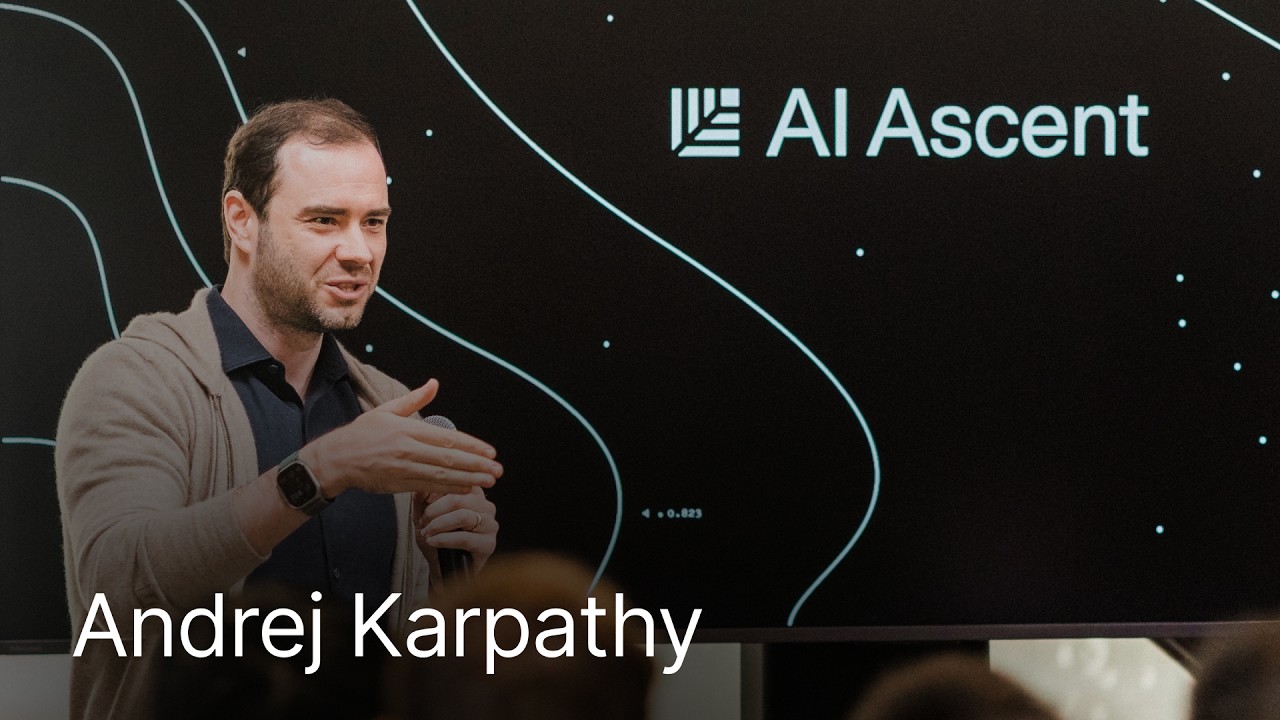
Andrej Karpathy: From Vibe Coding to Agentic Engineering
Andrej Karpathy explores the paradigm shift from traditional programming to Software 3.0, where LLMs act as programmable computers driven by context. He details the transition from 'vibe coding' to 'agentic engineering,' emphasizing that while AI handles execution, human taste and understanding remain the ultimate bottlenecks. ## [00:00] Introduction Stephanie Zhan introduces Andrej Karpathy, highlighting his foundational work at OpenAI and Tesla. She notes his unique ability to simplify complex AI shifts and introduces the concept of vibe coding. > *He has a rare gift of making the most complex technical shifts feel both accessible and inevitable. [00:22]* ## [00:44] Feeling Behind as a Coder Karpathy describes a turning point in December 2023 when agentic tools began producing perfect code without manual intervention. This shift led him to adopt vibe coding, trusting the AI to handle complex workflows autonomously. > *I just start to notice that with the latest models the chunks just came out fine. [01:29]* ## [02:28] Software 3.0 Explained Karpathy defines Software 3.0 as a paradigm where the LLM acts as a programmable computer and the context window serves as the primary programming lever. This follows Software 1.0's manual rules and Software 2.0's data-driven weight training. > *Software 3.0 is kind of about your programming now turns to prompting and what's in the context window is your lever. [03:20]* ## [03:44] Agents as the Installer Using the installation of OpenClaw as an example, Karpathy explains how agents replace rigid bash scripts with intelligent, environment-aware execution. This approach allows the AI to debug and adapt to specific system requirements autonomously. > *The agent has its own intelligence that it packages up and then it kind of like follows the instructions. [04:29]* ## [04:49] Menu Gen vs Raw Prompts Karpathy contrasts his custom-coded MenuGen app with raw prompts to models like Gemini, concluding that many traditional software layers are now redundant. He emphasizes that AI can now perform general information processing that was previously impossible with structured code. > *The software 3.0 paradigm is a lot more kind of raw. It just your neural network is doing more and more of the work. [06:11]* ## [07:37] What’s Obvious by 2026 Looking toward 2026, Karpathy envisions neural computers that process raw video and audio directly. These systems would use diffusion models to generate dynamic user interfaces, potentially making traditional UI code obsolete. > *You could imagine completely neural computers... a device that takes raw videos or audio into basically what's a neural net. [08:22]* ## [09:41] Verifiability and Jagged Skills AI models develop 'jagged' capabilities, peaking in verifiable domains like math and code due to reinforcement learning rewards. Karpathy notes the paradox where a model can refactor a massive codebase yet fail simple logic. > *state-of-the-art models today will tell you to walk [to a car wash] because it's so close... This is insane. [11:36]* ## [13:39] Founder Advice and Automation Model performance is heavily dictated by the specific data distributions chosen by frontier labs. Karpathy advises founders to explore the 'circuits' of these models to understand their strengths or use fine-tuning to fill gaps. > *we are slightly at the mercy of whatever the labs are doing, whatever they happen to put into the mix. [12:57]* ## [15:46] From Vibe Coding to Agent Engineering While 'vibe coding' raises the accessibility floor, 'agentic engineering' focuses on maintaining professional quality. This discipline involves coordinating powerful but stochastic agents to accelerate development without sacrificing the engineering bar. > *agentic engineering is about preserving the quality bar of what existed before in professional software. [16:07]* ## [25:17] Agents Everywhere and Learning Karpathy advocates for agent-native infrastructure, expressing frustration with human-centric documentation. He argues that while thinking can be outsourced to AI, human understanding remains a critical bottleneck for directing agents. > *You can outsource your thinking, but you can't outsource your understanding. [28:10]* ## Entities - **Andrej Karpathy** (person): AI researcher and former Director of AI at Tesla and founding member of OpenAI. - **Stephanie Zhan** (person): Partner at Sequoia Capital and host of the discussion. - **Software 3.0** (concept): A paradigm where LLMs act as programmable computers via prompting and context. - **Agentic Engineering** (concept): The professional discipline of coordinating AI agents to maintain software quality. - **MenuGen** (project): An app Karpathy built to OCR and visualize restaurant menus, used as a case study. - **OpenAI** (organization): AI research company co-founded by Karpathy. - **Gemini** (ai-model): Google's LLM used in Karpathy's software comparison. - **Vercel** (organization): A cloud platform used by Karpathy to deploy projects.