PodcastsHear the voice. See the shape of the thought.
Parcourir les chaînes
What does the next training paradigm look like?
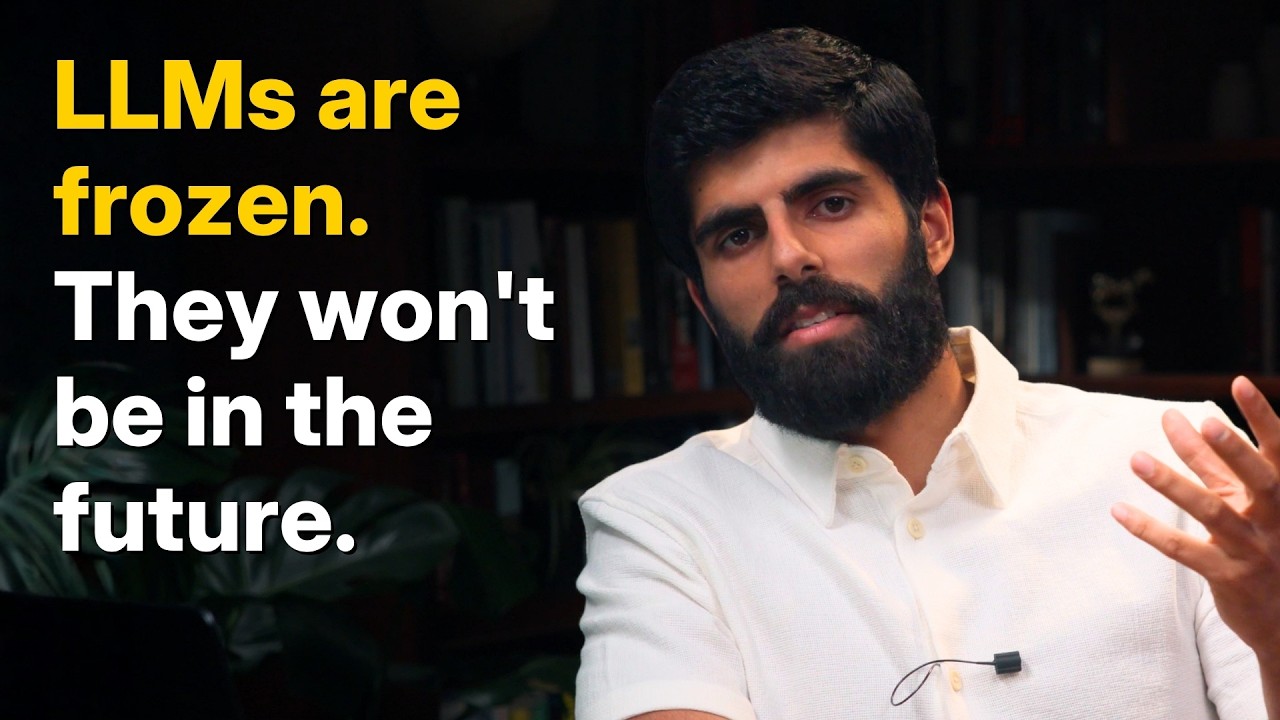
Dwarkesh Patel narrates his essay on where AI training is headed. The labs are betting that scaling RL across millions of verifiable tasks gets you to AGI, but Dwarkesh argues that bet leaves two holes: most valuable skills aren't "grindable" enough to farm in a simulator, and the learning models pick up on the job never makes it back into their weights. He walks through why sample efficiency and continual learning are the same problem, sketches two candidate fixes — on-policy self-distillation and "dreaming" — and imagines an AI that keeps getting smarter from being deployed rather than from pretraining. ## [00:00] The big research bet the labs are making The labs' working theory: train AIs on millions of verifiable tasks across thousands of RL environments and you'll get a general problem-solver that can grind on open-ended work for weeks. Optimists argue the known deficits — data inefficiency, no continual learning — will get steamrolled by more compute, the same way classic NLP problems collapsed once LLMs scaled. Dwarkesh lays out their strongest counter to his own skepticism: the million-fold sample-inefficiency he flagged in his last essay is only a training-time cost, amortized across billions of sessions. What matters is how capable the model is *during* a session, and that keeps improving. Continual learning might not even be needed if context windows grow large enough to hold months of on-the-job experience. > *People often say that their employees are not net productive until six months or more on the job. So clearly, online learning is necessary for competence. But what if you could just fit those six months into the context window?* ## [02:12] Grindability is just as important as verifiability Why has computer use lagged coding and math when it's just as verifiable? Dwarkesh's underrated answer: being verifiable isn't enough — a domain also has to be *grindable*, meaning you can run thousands of parallel rollouts against a deterministic, replayable simulator from the same starting point. A coding repo clones trivially into a container; Amazon's checkout flow does not. This is the canyon wall AI progress only slowly chips at. You can sometimes build farmable simulators (clone Slack, clone Gmail), but most high-value skills — building a business, winning a court case, running a profitable trading day — require irreproducible interaction with the real world, where verification takes months and can't be re-observed across parallel rollouts. > *What is the RL environment to make an AI that is as good at politics as Lyndon Johnson, or as good at building a space-launch business as Elon Musk?* ## [06:10] Will RLVR alone generalize? The labs are betting RLVR generalizes — that enough containerized environments yield an agent that plans, adapts, and picks up new skills inside a single session, good enough to out-advise LBJ on a 1948 Senate race or build SpaceX with a hundred million dollars. Whether it generalizes that far is an empirical question, and Dwarkesh reads a Dario Amodei quote as a hint that it doesn't stretch infinitely: short-horizon training may not transfer to long-horizon performance. Even if in-context experience could turn a model into Henry Ford for a session, it's all wasted if the learning can't return to the weights. 30–50% of a lab's compute goes to inference that currently does nothing to improve the model — even though deployment is exactly where the most valuable information is revealed. > *We've got some genius grad student who's never been allowed to take a real internship, and we keep giving it more and more classroom case studies in the form of RL training on environments.* ## [08:41] Getting the learning back to the weights Continual learning means updating the weights, not endlessly growing a KV cache — brains don't separate parameters from activations, and they compress what they learn. But moving into the weights forfeits in-context learning's sample efficiency, because gradient updates are coarse. That's why every shipped online-learning model (like Cursor's Tab model, learning the same accept/reject objective across 400M+ requests a day) learns one identical thing across all users, which defeats the point when every job and company differs. Dwarkesh frames sample efficiency and continual learning as the same problem, then argues the bottleneck isn't architecture — new sparse-attention and KV-compaction papers ship weekly — but the loss function. His candidate is on-policy self-distillation: train the base model to make the same predictions a context-rich veteran version of itself would make. OPSD needs no outer-loop reward, gives denser per-token supervision than RL, and keeps RL's sparse-update property so on-the-job learning doesn't overwrite what the model already knows. > *The way you get better at your job is not by recalling the transcript of every single thing that happened every day with perfect fidelity. Rather, it's by consolidating the handful of insights and pieces of knowledge that are actually relevant to you getting better at your job.* ## [15:22] Dreaming The second, more speculative fix: let the AI build a simulation of reality and rehearse against it, experiencing orders of magnitude more samples per unit of wall-clock time. The precedent is EfficientZero, which beat novice humans at unfamiliar Atari games by playing dozens of simulated games in its head per real step. Simulating the whole world is far harder than emulating Go, which is why Dwarkesh flags this as speculative — but if it works, it becomes a fourth scaling axis alongside pretraining, RL, and inference-time compute. Instead of hitting `/compact` to summarize a session, you'd hit `/dream` and burn compute rehearsing against a video-game version of what the model is seeing in production. > *So instead of hitting /compact in Codex or Cursor or Claude... you hit /dream. And this incinerates huge amounts of compute to build and train against a video-game version of what the model is witnessing in the real world.* ## [17:23] What 2027 looks like Dwarkesh's scenario: RLVR produces an agent competent enough to start getting real-world experience, context windows stretch to a full week of co-working, and at the end of the week a thumbs-up triggers the base model to distill what it learned — via OPSD, dreaming, or some mix. Each round the model expands into domains adjacent to what it was last trained or deployed on. The endgame flips how AI improves: capability comes mostly from broad deployment across the economy, not from pretraining before release. Every interaction makes the model smarter — learning from your past sessions and from everyone else's — which Dwarkesh calls scary, exciting, and very different from today. > *Just as pretraining created a base intelligence that was smart enough to become a competent agent with enough RLVR on top, so RLVR has created an agent that is competent enough to actually be broadly deployed in the world.* ## Entities - **Dwarkesh Patel** (Person): Podcast host and essayist; narrates his own blog post on AI training paradigms. - **Dario Amodei** (Person): Anthropic CEO, quoted on why model performance degrades at long context. - **RLVR** (Concept): Reinforcement learning from verifiable rewards — training on reproducible, checkable tasks; the labs' main bet for reaching AGI. - **Continual learning** (Concept): Updating a model's weights from on-the-job deployment rather than only from pre-release training. - **Grindability** (Concept): Dwarkesh's term for whether a domain can be farmed via many parallel rollouts on a deterministic, replayable simulator. - **On-policy self-distillation (OPSD)** (Concept): Distilling a context-rich session's learning back into the base model's weights with dense per-token supervision. - **Dreaming** (Concept): Speculative fourth scaling axis where a model builds and trains against its own simulation of reality. - **EfficientZero** (Software): Sample-efficient RL model that beat novice humans at unseen Atari games by simulating many games per real step. - **Mercury** (Organization): Fintech banking platform; episode sponsor referenced in the bill-pay anecdote.
Machiavelli is the most misunderstood thinker of all time – Ada Palmer
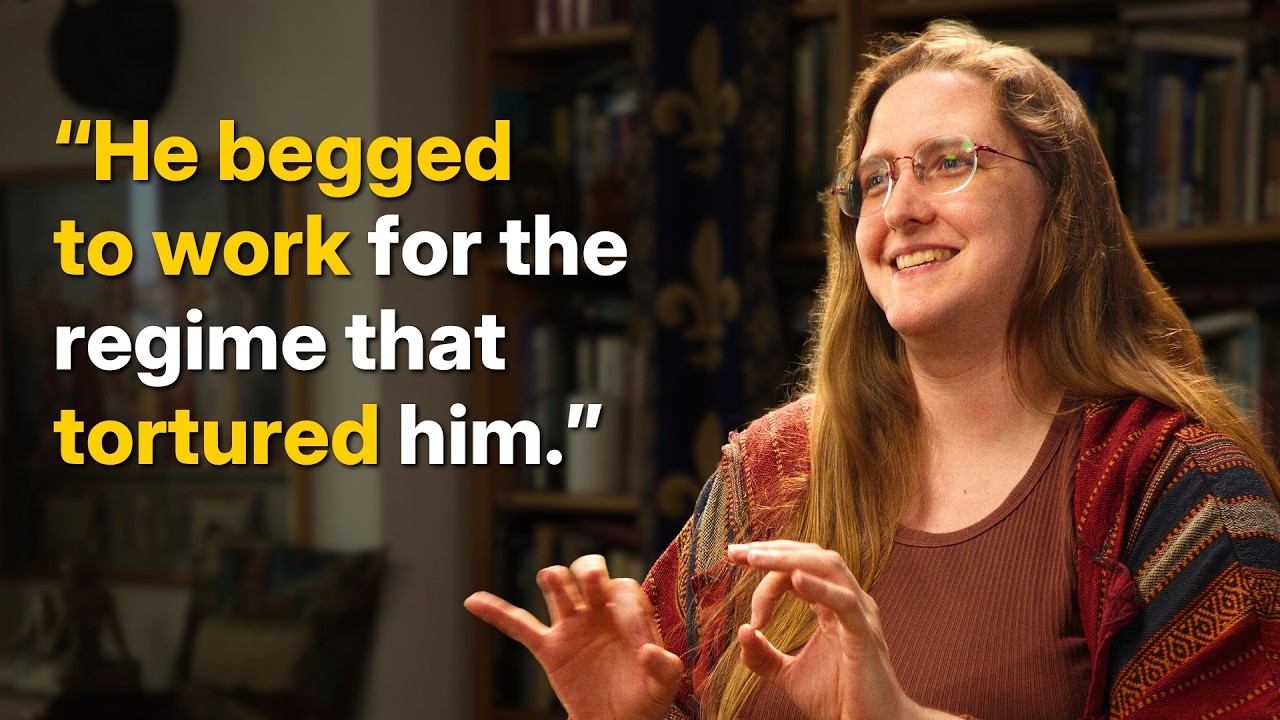
Historian and novelist Ada Palmer joins Dwarkesh Patel to dismantle the "Machiavellian villain" myth and replace it with the actual Niccolò Machiavelli: a patriot who watched Cesare Borgia conquer half of Italy from up close, was tortured and exiled by the Medici, and then wrote *The Prince* as a secret job application addressed to the very regime that had wronged him. Palmer traces the structural forces — cascading legitimacy collapse among Italian city-states, popes who functioned as warring hereditary princes, and a patronage system that made nepotism feel like sound risk management — that made Machiavelli's analysis both urgent and unprecedented. The conversation closes on a sharp irony: the word "Machiavellian" now means self-serving cunning, yet the man himself gave up income, fame, and freedom rather than serve any cause that was not Florence. ## [00:00] How Florence bargained with Cesare Borgia for survival Italy in 1513 was a cascade of broken legitimacy. Palmer explains that when a long-standing government falls, successor regimes inherit none of its credibility, making rapid further overthrows nearly inevitable — what she calls the thread of continuity being cut. By the time Machiavelli is writing *The Prince*, this dynamic had swept dozens of Italian city-states. Compounding this was papal instability: because popes were elected rather than hereditary, the next pope was almost always a coalition pick of people who hated the current one, guaranteeing policy reversals every ten years. Machiavelli's day job during this era was standing next to Cesare Borgia — "Valentino" — and whispering endlessly that Florence was loyal, buying what Palmer calls "the boon of Polyphemus": the conqueror's promise to eat you last. His advice to Florence was to betray allies, pay tribute, give military support, and buy time, knowing full conquest was only delayed by Alexander VI's mortality. His biographers can still feel how much he was under Borgia's spell: when describing Valentino's fall, Machiavelli breaks from third person and writes "he told me" — the historian slips through the veil. > *"Machiavelli's job dealing with Cesare Borgia… it's very clear that the Borgia plan is to conquer the Papal States in the middle of Italy."* ## [15:08] Machiavelli's analytical innovations Machiavelli is not the crude "ends justify the means" thinker of caricature. Palmer shows that he is obsessed with the means — specifically, which means of acquiring power are stable and which are not. Whether betrayal works depends on the nature of your power base: Borgia could betray allies because his terror made remaining allies step further into line, while Savonarola's power rested on his followers believing him divinely infallible, so his flip-flopping destroyed him. The lesson is conditional, not universal. Machiavelli also makes the first recorded European argument that competing political parties can be stable and politically useful, rather than requiring mutual annihilation. Florence's own history was the counterexample: it had literally salted the earth where its Ghibelline opponents' houses once stood. His observation of Siena as a countermodel — parties competing without destroying each other — was genuinely novel. > *"Machiavelli is the first person that we have ever in the European tradition to suggest that it could be viable for there to be more than one political party in a state at the same time."* ## [23:58] Why popes became warlords The closer you lived to Rome, the less abstract the papacy felt. Palmer draws the contrast sharply: a Danish subject saw the pope as a figure of vast spiritual majesty; a Florentine saw "that asshole who went to college with your brother." Italians judged popes as specific men with dirty laundry, family grudges, and factional allegiances — which is why cities that were hereditarily Guelph (pro-papal) sometimes ended up fighting wars against the sitting pope when he happened to be from a Ghibelline family. The corruption was structural and self-reinforcing. As the Church accumulated donated wealth across generations, the incentive for ambitious families to capture it through bribery and nepotism grew. Palmer reads Machiavelli's personal letters haggling over the correct bribe to buy a priesthood for his brother Totto — written as routine household correspondence — to show how completely normalized the practice was. Every generation saw popes get more secular and military than the last; Machiavelli explicitly predicted the institution would collapse under accumulated corruption unless reformed from within, as St. Francis had temporarily saved it two centuries earlier. > *"This makes a stronger and stronger incentive for every ambitious family to send their second son into the Church."* ## [36:13] Why the common people demanded nepotism When Pope Paul III appointed a competent outsider general instead of his own illegitimate son, there were riots. Palmer explains this is not irrational: in a world where a soldier's oath ran to his commander, not to the state, the only guarantee the papal armies wouldn't turn on Rome was putting the pope's own son in charge — someone who rose and fell with the pontiff. Nepotism was the trust mechanism that made institutions function. Patronage also determined justice outcomes. Medieval law codes prescribed death for almost everything, but roughly 99 in 100 capital-eligible convictions ended in a fine because the defendant's patron intervened. This was considered correct: the trial was meant to replicate the soul's experience before divine judgment — terrifying, then mercifully pardoned — so patron intervention mirrored the intercession of a saint. The system had a grimly consistent internal logic, and Palmer traces it from Giordano Bruno (burned because he had angered his patron, not because of his ideas) to Giovanni Pico della Mirandola (spared because Lorenzo de' Medici went through the Orsini network to Rome). Without a patron, even innocence was precarious. > *"The norm is: you're accused of a severe crime, you're put on trial for your life, your patron intervenes, and you get a lighter sentence. This is how justice is supposed to work."* ## [47:57] Cesare Borgia brought terror to rulers and justice to the people Borgia's conquests produced a paradox that startled contemporaries: he massacred ruling families and was adored by common people. Palmer's explanation is structural. Factional cities had lived for generations under justice that tracked who was in power, not the facts of the case. A carpenter whose family worked for the dominant faction faced minimal consequences for his son's drunken homicide; the same crime by the carpenter of the out-of-power faction could be a capital offense. When Borgia wiped out both factions and installed outside administrators with no local feuds to take sides in, neutral adjudication felt like a revelation. Machiavelli also drew a hard line for why even a beneficent Borgia conquest of Florence would be catastrophic: under any arbitrary ruler, a citizen can be executed by a pointed finger in the street. Machiavelli called that condition slavery, regardless of how fair the tyrant might be in practice. Florence's "LIBERTAS" banner — flown by ordinary citizens defending an oligarchic Senate that excluded them — represented a genuine commitment to the existence of a process, however biased, over the absence of any process at all. > *"As a result, to everyone's surprise, he moves into a city, he massacres the rulers, he implements an authoritarian regime, and he's incredibly popular and beloved by the people."* ## [57:55] Art as a proxy for war Renaissance Florence could not afford to fight France militarily; it could afford to paint French royal symbols on its government buildings and commission beautiful gifts for the French king. Palmer frames this not as surplus expenditure but as substitution: the art budgets were military budgets redirected into a form of warfare Florence could win. Like the Fulbright Program being a higher return-per-dollar than the defense budget, Florentine cultural patronage was strategic deterrence. The period's orientation toward the past further supercharged the value of art. Where modernity assumes humanity advances into the future, Renaissance Europe pointed the other direction: the ideal was recapturing Rome. High-tech achievement meant successfully imitating a lost Roman technique. When a French diplomat arrived in Florence and saw the cathedral or the neoclassical buildings, he was not seeing quaint historical imitation — he was seeing something that approached what only Rome had achieved, and that France could not. That perception was itself a form of power. > *"If we fought him, we would lose. But if we play the culture victory game, that's cheaper, and we can try to win."* ## [01:06:41] Florence, a city famous in hell Dwarkesh raises the obvious puzzle: if everyone in Renaissance Italy was a Christian who genuinely believed in hell, why did they commit the sins Machiavelli describes constantly? Palmer's answer has two parts. First, the Dante answer: Dante fills the *Inferno* with Florentines precisely because he wants his contemporaries to feel the discomfort of consequences they were ignoring. His Paolo and Francesca passage — damning a love story everyone celebrated — was designed to be a shock to readers who thought romantic adultery was exempt from theological reckoning. Second, pre-Reformation Christianity assumed everyone sinned constantly and focused on repentance cycles rather than purity maintenance. St. Julian the Hospitaller, patron saint of murderers, was omnipresent in Florentine iconography — his legend held that he killed his own parents, spent his life in pilgrimage to repent, and was saved. Dozens of icons of him meant dozens of Florentines who had killed someone and were working through it. The Calvinist and Puritan emphasis on spotlessness came later and was a genuine departure from how the medieval and early Renaissance church operated. > *"He fills his hell with Florentines."* ## [01:15:57] The Prince was a job application to Machiavelli's torturers After the Medici retook Florence in 1513 and, on mistaken suspicion of conspiracy, tortured and exiled Machiavelli, everyone expected him to defect. He had contacts at every major court in Europe and the skills — military history, diplomatic networks, classical scholarship — that kings paid for. He chose instead to sit in a hamlet outside Florence writing *The Prince* as a secret appeal to the Medici to take him back. No other courts received it; he kept it proprietary, treating his political science the way Palmer says a nuclear scientist would treat classified weapons knowledge. His other works — the *Discourses*, the history of Florence, the comedy *Mandragola* — circulated publicly to build his reputation. *The Prince* did not. Palmer compares it to historian friends who produce classified 100-page reports for Department of Defense committees: bespoke proprietary knowledge for an audience of five, whose existence may be whispered about but whose contents are guarded. It also explains why the book was eventually published in 1532 without Machiavelli's input: surviving relatives wanted family fame, and the Medici wanted credit for a text dedicated to their house. Neither understood what its author had intended to keep contained. > *"I'm going to stay, and I'm going to rot, and I'm going to write The Prince, which is my job application begging the new regime to bring me back and let me work for them and demonstrating my loyalty, and I'm going to send it to them and only them, them and my immediate friends."* ## [01:41:39] During the Renaissance, original ideas had to be couched in antiquity The Renaissance's obsession with recovering ancient Rome created a peculiar incentive structure: original ideas were unfashionable; ideas presented as recovered ancient wisdom were prestigious. Palmer shows this goes far beyond homage. Giordano Bruno attributed to Aristotle claims that Aristotle explicitly contradicted. Annius of Viterbo forged ancient texts and staged fake archaeological digs to give his original historical theories the authority of antiquity. Marsilio Ficino, translating Plato, genuinely convinced himself that the wildly original cosmological and magical system he had assembled was secretly coded in the Platonic texts. This explains why Machiavelli's other major work is called *Discourses on Livy* rather than, say, *A New Theory of Republican Governance*. A discourse on an ancient was a prestige format; an original political treatise was a niche curiosity. The 19th century misread the Renaissance as intellectually barren — "200 years of people being wrong about Plato" — because it expected original standalone treatises and found commentary after commentary. Palmer argues the original ideas are there, using the ancients as what she calls the trellis up which the rose climbs. > *"Nobody wants original ideas. Original ideas are out of vogue. Original ideas are dead. All ideas need to be from the ancients."* ## [01:50:44] Why copyright began with the Inquisition Machiavelli was one of the first authors to experience unauthorized printing. A local press printed one of his works without asking, riddled it with compositor typos, and his only recourse was to write letters to important people clarifying that the errors were not his. There was no legal framework at all. The solution emerged from an unexpected direction: post-1515, the Inquisition required pre-publication approval for all texts to screen for heresy. In exchange for going through this process, the approved printer received a monopoly license — the Inquisition's record of permission served as proof that no one else could legally print the same book. The first copyright was a censorship certificate. England, observing this, copied the mechanism while eventually stripping out (or softening) the censorship half, producing the ancestor of modern copyright law. The institutional logic held together: the Inquisition needed to please local rulers to get resources, so approving books dedicated to the duke and granting his favored printer exclusivity was a political investment. Everyone — inquisitors, printers, authors, and ruling families — had reasons to make the system work. > *"So the very first version of copyright is the Inquisition."* ## [02:02:12] Machiavelli wasn't Machiavellian The word "Machiavellian" came to mean scheming self-advancement — Shakespeare's Richard III invokes "the murderous Machiavel" as his role model. Palmer traces how the idea of Machiavelli separated from the actual man and became a useful thought-experiment figure: the cynical, probably atheistic politician who wants nothing but personal power. The same splitting happened to Hobbes (the Beast of Malmesbury) and Spinoza, whose actual writing is warm and theistic but whose excommunication from the Jewish community made people assume he must be the most radical heretic imaginable. The real Machiavelli — who refused lucrative court positions across Europe, who kept his most important work secret to protect Florence from foreign exploitation, who chose to rot in an isolated hamlet over serving any cause that wasn't his country — is almost the opposite of "Machiavellian." His book is not about gaining power but about keeping power stable enough to protect people. Palmer's closing point: the gap between Old Nick and Niccolò Machiavelli is itself a revealing fact about how societies use ideas, splitting thinkers into a character useful for one purpose and the actual work useful for another. Read *The Prince* knowing it was written by someone who would give up anything to serve Florence, and a very different text comes through. > *"This is why it's so weirdly ironic to me that the reputation—the word"Machiavellian"—means"self-serving", when Machiavelli himself is one of the most selfless men I've ever read about in the history of the Earth."* ## Entities - **Dwarkesh Patel** (Person): Host of the Dwarkesh Podcast; interviews scholars on history, science, and technology. - **Ada Palmer** (Person): Historian and science fiction novelist at the University of Chicago; specialist in Renaissance intellectual history and the history of censorship. - **Niccolò Machiavelli** (Person): Florentine diplomat (1469–1527), author of *The Prince* and *Discourses on Livy*; wrote *The Prince* as a secret appeal to the Medici regime that had tortured and exiled him. - **Cesare Borgia** (Person): Renaissance military commander known as "Valentino"; son of Pope Alexander VI, conquered central Italy and was Machiavelli's primary case study in effective (if brutal) statecraft. - **The Prince** (Concept): Machiavelli's treatise on political power, written ~1513, kept proprietary during his lifetime and published posthumously in 1532; misread as a self-advancement manual rather than a guide to maintaining stable government. - **Discourses on Livy** (Concept): Machiavelli's longer republican political theory, structured as commentary on the Roman historian Livy; his public bid for intellectual prestige in a culture that prized commentary on ancients over originality. - **The Medici** (Organization): Ruling family of Florence, whose patronage networks and papal connections shaped both the political instability Machiavelli analyzed and the conditions under which he wrote and was exiled. - **Florence** (Organization): Italian city-state and center of Renaissance banking, art, and humanist scholarship; Machiavelli's country, for which he subordinated his entire career. - **Patronage System** (Concept): The multi-generational network of family obligations that served as the functional glue of Renaissance society, determining access to justice, employment, publication, and protection from the Inquisition.
Sarah Paine - Why Putin and Xi can't escape geography
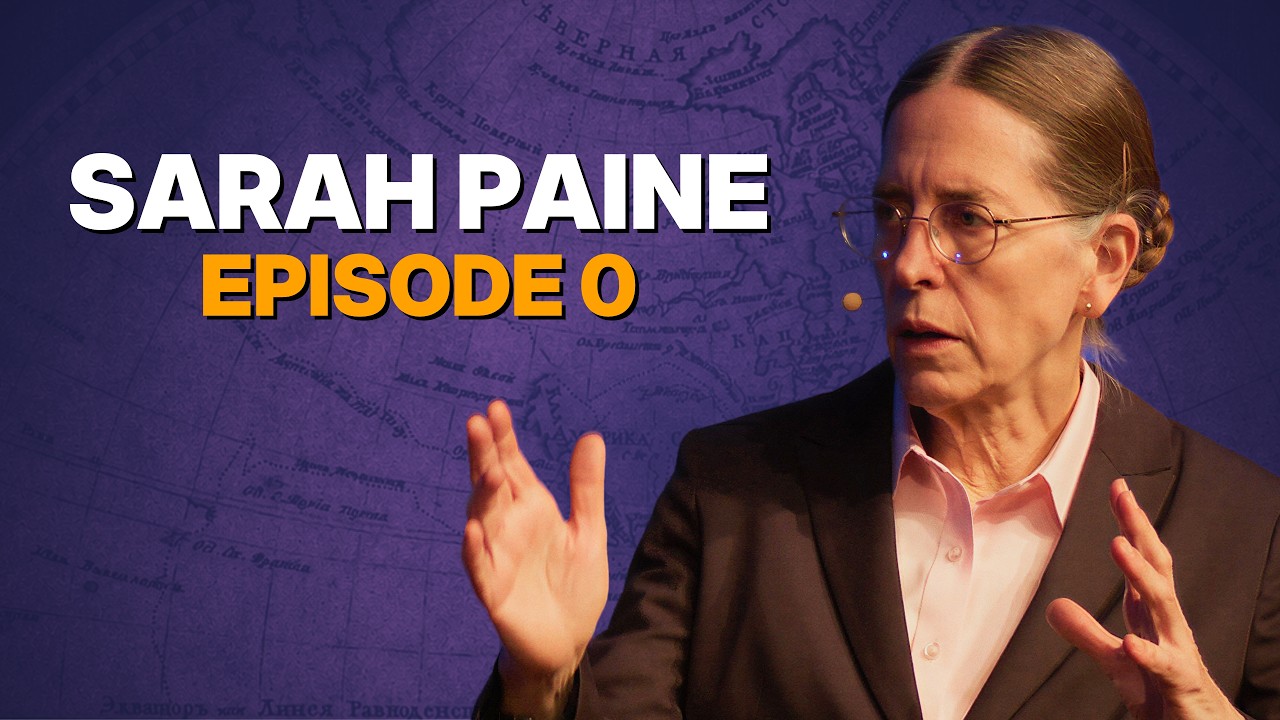
Naval War College historian Sarah Paine delivers a standalone lecture tracing two thousand years of geopolitical logic: continental empires (China, Russia) pursue security by expanding borders and crushing neighbors, while maritime powers (Athens, Britain, the US) pursue prosperity by trading across open seas. She argues this structural divide—rooted in the brute fact of geography—explains Putin's war on Ukraine, Xi's ambitions over Taiwan, and why the post-WWII rules-based order is the only arrangement that produces compounded growth rather than compounded ruin. ## [00:00] Setting the stage Paine opens by framing the lecture's core question: why do some great powers keep grabbing territory while others keep opening trade routes? The answer comes down to one physical fact—whether it is feasible to defend yourself at sea. Maritime powers can; continental powers cannot. That single asymmetry generates two entirely different military traditions, two economic models, and two competing visions of world order. She walks through American history as a warm-up: the US began life as a continental power (manifest destiny, the Mexican-American War, Alaska purchased when Russia needed cash), then pivoted toward a maritime identity after Alfred Thayer Mahan convinced strategists that naval trade, not westward land, was the real source of national power. Alongside Mahan, Paine introduces the three geopoliticians whose maps anchor the lecture: Halford Mackinder (the Eurasian heartland as the world's natural fortress, impervious to sea power), Nicholas Spykman (control the rimlands, and you influence the heartland), and their shared lesson that US security runs through sea lanes and alliances, not borders. > *"Maritime powers are the exception and continental powers are the rule. Why? Because maritime powers, if need be, can defend themselves primarily at sea with their navies. Whereas a continental power simply cannot—think Ukraine, a navy is not going to save them from Russia."* ## [12:10] The continental powers Paine works through the logic of the continental world starting with China—the original case—then Russia. Sun Tzu's *Art of War* contains no references to maritime warfare: it was written for a world where neighbors invade overland at any time and the only viable response is a mass army. Geography tells the rest: too much of China's land is vertical to feed its people, which makes controlling the arable lowlands an existential imperative. The Han expansion from the Yellow River Valley followed that logic for millennia, wiping out the Zongars, subjugating Tibet, producing the ethnic patchwork Beijing still manages with military administrative overlays. Russia's pattern is the same dynamic in reverse—a Moscow core expanding outward in concentric rings until it hit countries that fought back. The continental security playbook that emerges is ruthlessly coherent: no two-front wars, no great-power neighbors, take on threats sequentially, destabilize the rising ones, absorb the failing ones, maintain buffer zones in between. Paine closes the section with the WWII body count that makes the paradigm's cost visible: Russia lost over 25 million dead (soldiers plus civilians); the United States lost 295,000. The ocean moat is not an abstraction—it is the difference between hundreds of thousands and tens of millions. > *"In this world, you're faced with a binary choice: you either become Han or they will kill you. And genocide is what happens to the losers in continental warfare."* ## [29:12] The maritime alternative Where continental empires carve the world into exclusive spheres, maritime powers treat the sea as a commons to be shared. Paine traces the lineage from Athens through Rome ("Mediterranean" means the sea in the middle of the lands; "Zhongguo" means the kingdom among the kingdoms—one term centers the sea, the other the land), the Dutch Republic, and finally Britain. Hugo Grotius, a Dutchman watching his nation's trade pirated, wrote *Mare Liberum* to establish that the sea belongs to no one and therefore belongs to everyone—the founding document of international maritime law. Britain refined the operating strategy over the Napoleonic Wars into six rules for "elephant hunting": keep the home economy growing, blockade enemy trade, fund the allied continental power facing the main front, find a peripheral theater where sea access beats land access, never attack the enemy's main force directly, and—only after the elephant has been bled—pile on with allies. The key structural point: a navy that prevents invasion produces wealth invisibly. Britain compounded wealth for a century after Waterloo while its continental neighbors burned money funding standing armies and fighting each other. That invisible compounding, over generations, is the difference between North and South Korea. > *"Trade is going to finance the navy. It's going to protect both British homeland and some of the trade. And then Britain is going to be compounding wealth while its neighbors are busy—constantly fighting with each other and destroying wealth in the process."* ## [42:00] How the Industrial Revolution changed everything The Industrial Revolution flipped the source of power from land to commerce. When land determines wealth, conquest makes sense. Once wealth comes from industry and trade, territorial expansion is literally negative-sum: you destroy the asset while fighting for it. The Suez Canal is Paine's sharpest example—Egypt sank block ships in 1967 to deny Israel access, but the strategic result was that global shipping shifted to supertankers that go the long way around Africa at one-third the cost per ton. Closing a chokepoint accelerated the maritime world's efficiency. Malcolm McLean's shipping container reduced cargo loading costs from nearly $6 per ton to under 20 cents, and the ISO then harmonized container dimensions across trucks, railways, and ships—producing plummeting transport costs and the trade explosion that lifted hundreds of millions out of poverty. Xi's Belt and Road Initiative, Paine notes dryly, crosses some of the world's most unstable territory, requires constant trans-shipment between incompatible rail gauges, and can never be rerouted—the exact opposite of maritime flexibility. China's own geographic trap is inescapable: shallow, island-cluttered seas that become kill zones in wartime mean its merchant fleet reaches global markets only in peacetime. > *"Once wealth is a function of commerce, industry, and trade, it isn't land anymore. And this upends the world. If you think about the world today, who's rich, who's poor—it's often the degree to which the country is industrialized."* ## [52:00] Why Putin wants to break the world The post-WWII institutional framework—UN, IMF, NATO, WTO, EU—was built by people who survived both the trenches of WWI and the Great Depression, then spent WWII watching their own children die. Their conclusion: hash out differences with diplomats and lawyers, because sending soldiers destroys more value than any conceivable prize is worth. That system held the peace in the industrialized world for 75 years, until Putin decided to break it. Putin's challenge is not irrational by continental logic: a rising Ukraine integrated into NATO is precisely the kind of strong, stable neighbor that, in the old paradigm, becomes an existential threat. His goal is to hollow out the alliance system and shatter international law so the world reverts to warring spheres of influence—a world where continental powers can once again play their traditional game without maritime rules they were never designed for. Paine's answer is that sanctions are "economic chemotherapy": they suppress growth by one or two percent per year, and compounded over generations, that gap is the difference between North and South Korea. The objective is never to eliminate the rogue state but to contain it at acceptable cost. The only exit that avoids nuclear escalation is the one the post-war generation built: diplomats, lawyers, and institutions. > *"The only win-win solution is to deploy the diplomats and lawyers to hash out these things in international forums—because if we're all going to send soldiers, we're going to get a third world war with nuclear follow-on effects, and we'll see whether humanity makes it."* ## Entities - **Sarah Paine** (Person): Military historian at the U.S. Naval War College; sole speaker in this lecture; author of a 2025 lecture series on continental vs. maritime powers. - **Alfred Thayer Mahan** (Person): 19th-century U.S. naval strategist; argued that maritime trade and sea power, not land conquest, determine national greatness; associated with the Naval War College. - **Halford Mackinder** (Person): British geographer; 1904 "pivot area" thesis posited that the Eurasian heartland, insulated from sea power, is the world's natural fortress. - **Nicholas Spykman** (Person): Dutch-American strategist; argued that controlling Eurasia's rimland determines global power; died 1943 while warning the US about Eurasian dominance. - **Hugo Grotius** (Person): Dutch jurist; founder of international maritime law; *Mare Liberum* (1609) established freedom of the seas as a universal right. - **Malcolm McLean** (Person): American trucking entrepreneur who invented the standardized shipping container, collapsing cargo loading costs and enabling the post-war trade explosion. - **Continental power** (Concept): A state that cannot defend itself primarily at sea; prioritizes territorial expansion, mass armies, buffer zones, and exclusive spheres of influence; exemplified by Russia and China. - **Maritime power** (Concept): A state that can defend itself primarily at sea; prioritizes trade, open sea commons, alliance-building, and compounding wealth; exemplified by Britain and the United States. - **Rules-based international order** (Concept): The post-WWII institutional system (UN, IMF, NATO, WTO, EU) that enforces sovereignty and free trade; the system Putin and Xi seek to dismantle. - **U.S. Naval War College** (Organization): Graduate school of the US Navy in Newport, Rhode Island; Paine spent 24 years there; home of Mahanian sea-power theory.
Plus l'IA progresse, plus sa part de l'économie pourrait se contracter – Alex Imas et Phil Trammell
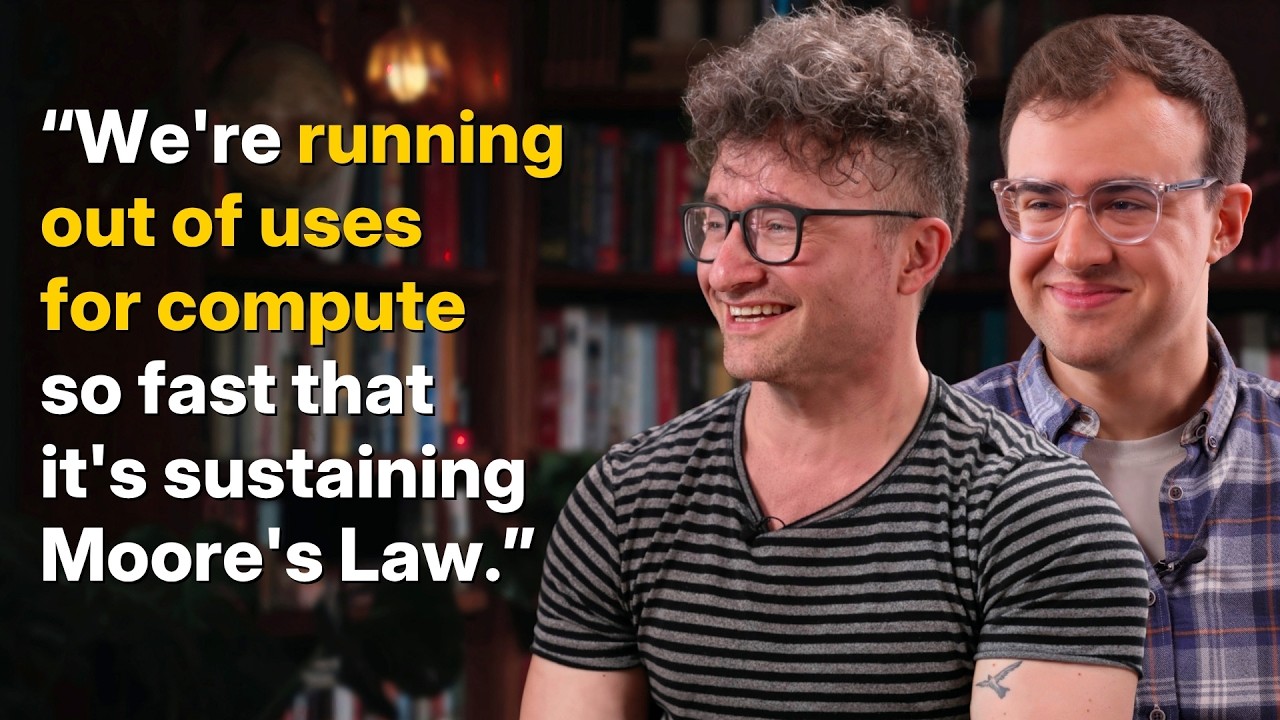
Les économistes Alex Imas (Google DeepMind / Université de Chicago) et Phil Trammell (Epoch / Stanford) soutiennent que le résultat le plus contre-intuitif d'une automatisation totale n'est pas que le capital s'accapare tout — c'est que l'IA pourrait en réalité réduire sa propre empreinte économique à mesure que la demande se sature pour les biens entièrement automatisés, tandis que les humains restent rares sur les marchés relationnels et expérientiels. La conversation part de ce qui demeurera rare après l'AGI, traverse la politique de redistribution, explique pourquoi les complémentarités en O-ring freinent l'automatisation actuelle, pourquoi des agents IA orientés vers l'accumulation pourraient détenir l'essentiel de la richesse future, et ce que les économies en développement devraient faire lorsqu'elles sont exclues de la chaîne d'approvisionnement en IA. ## [00:00] La part du capital va-t-elle augmenter ? Dwarkesh pose d'emblée la question centrale : si l'IA peut tout faire ce que font les humains, que devient la part du travail dans le revenu ? Alex Imas remarque que les économistes qui ont tenté de prédire les transitions industrielles passées se sont souvent trompés — David Ricardo avait prévu un chômage de masse avec la révolution industrielle et avait raison sur les emplois qui disparaîtraient, mais complètement tort sur l'issue globale : l'emploi en prime working age en 2026 est plus élevé qu'à presque n'importe quel moment depuis 2000. La leçon : les économistes du changement structurel sous-estiment systématiquement les nouvelles catégories de biens et d'emplois qui émergent quand les coûts anciens s'effondrent. Imas introduit ce qu'il appelle le « secteur relationnel » — des biens et services où la présence humaine fait elle-même partie de la valeur. Parce que les humains sont naturellement en nombre limité, une automatisation qui sature tout le reste gonfle la rareté relative et le prix des produits nécessitant la présence humaine. Phil Trammell affine cela avec un argument de comptabilité en chaîne d'approvisionnement : en remontant toutes les contributions en travail et en capital jusqu'aux matières premières, on constate que la part du travail est déjà étonnamment résiliente. Le paradoxe : si l'IA sature tous les biens non relationnels à un coût marginal quasi nul, les consommateurs épuisent rapidement leur demande sur ces biens et reportent leurs dépenses vers ce qui reste rare. Le spectacle d'une danseuse classique ne devient pas moins cher parce que le logiciel est gratuit. > *"Parce que les humains sont naturellement rares, si l'automatisation rend beaucoup d'autres choses abondantes, il y aura toujours de la rareté dans ce qui implique les humains et leur présence dans la boucle."* > — Alex Imas Trammell pousse le raisonnement jusqu'à la part du capital elle-même : automatisez entièrement la chaîne d'approvisionnement de tous les biens non humains, saturez la demande rapidement, et l'utilité marginale de ces biens supplémentaires s'effondre vers zéro. Résultat : la part du capital dans la valeur pourrait en réalité se contracter plutôt que s'étendre — c'est la thèse contre-intuitive au cœur de cet épisode. ## [19:36] Le scénario du milieu chaotique Dwarkesh soulève la thèse du « messy middle » de Molly Kinder : un monde où l'IA ne provoque pas de catastrophe, mais crée un étranglement distributif prolongé — les entreprises captent les gains de productivité, les salaires stagnent, et la redistribution par l'État tarde face à la vitesse des déplacements. L'analogie historique est celle des opératrices téléphoniques : un métier entièrement automatisable par une technologie existant dès les années 1960, mais qui a mis vingt ans à disparaître en raison de l'inertie institutionnelle. Les travailleurs n'ont pas été licenciés du jour au lendemain ; ils ont été progressivement réabsorbés — souvent à des salaires plus bas et dans des situations de sous-emploi. Imas juge le milieu chaotique plausible à court terme, mais probablement pas permanent, car l'ampleur des gains de productivité de l'IA rend le gâteau suffisamment grand pour être partagé. Le problème d'économie politique n'est pas la rareté des ressources, mais la vitesse et la coordination : les gouvernements ne savent pas quels travailleurs ont été déplacés par l'IA plutôt que par d'autres causes, les contraintes politiques créent des frictions, et l'écart entre déplacement et redistribution peut être assez long pour causer des dommages sérieux, même si les chiffres finissent par s'équilibrer. > *"Les opératrices téléphoniques ont bien été entièrement automatisées, mais ça a pris 20 ans alors que la technologie existait — c'était un goutte-à-goutte, pas la disparition soudaine d'un secteur entier."* > — Alex Imas ## [25:57] Comment taxer et redistribuer la richesse générée par l'IA Imas cartographie la boîte à outils de redistribution selon deux axes : la complexité de mise en œuvre et le délai avant impact. Un impôt négatif sur le revenu entre en vigueur le jour de son adoption et offre un plancher immédiat. Le capital universel de base — distribuer à chaque citoyen des parts dans des entreprises développant l'IA — prend des années avant de produire des rendements. L'UBI se situe entre les deux. L'arbitrage n'est pas seulement une question de rapidité : c'est aussi la durabilité politique. Les programmes qui rendent les citoyens dépendants d'un chèque gouvernemental direct sont vulnérables à l'alternance politique, tandis qu'une propriété actionnariale large est plus difficile à exproprier parce que les actifs sont distribués. Trammell distingue la question des recettes de celle de la distribution : la façon de lever l'argent (taxe sur la fortune, plus-values, taxe foncière, impôt sur les sociétés) est analytiquement distincte de la façon de le restituer (espèces, actions, services publics). Il note qu'une taxe georgiste sur la valeur foncière est souvent évoquée, mais serait insuffisante pour financer la redistribution à l'échelle requise lorsque la richesse générée par l'IA est concentrée dans les logiciels et le calcul informatique, non dans les terres. Phil suggère qu'une distribution large de participations dans des entreprises d'IA, achetées via les recettes fiscales, pourrait être à la fois politiquement stable et économiquement efficace. > *"En ce moment, nous sommes dotés d'un travail qui peut se transformer en revenu — quand ce ne sera plus le cas et que nous serons à la merci de l'élu pour nos besoins essentiels."* > — Alex Imas ## [30:02] Pourquoi l'effondrement de la demande est peu probable Dwarkesh insiste sur le récit de l'apocalypse des cols blancs : existe-t-il déjà des données montrant un chômage de masse provoqué par l'IA ? Imas pointe les données du Yale Budget Lab, qui ne détectent qu'un signal faible — les embauches d'ingénieurs logiciels juniors sont modestement en deçà de la tendance, tandis que la demande d'ingénieurs seniors est stable ou en hausse. Aucun saut de niveau du chômage n'est apparu dans les secteurs de cols blancs. Une explication tient aux complémentarités en O-ring (abordées dans le chapitre suivant), une autre est comportementale : les entreprises s'engagent dans une adoption ostentatoire de l'IA — licenciant des employés ou maximisant l'usage de tokens pour signaler leur modernité, parfois au prix réel de leur productivité. La question plus large est de savoir si le logiciel obéit aux mêmes règles d'élasticité que les biens physiques. On finit par manger assez et s'arrêter ; cesse-t-on jamais de vouloir davantage de logiciels ? Imas et Dwarkesh avancent que le logiciel est peut-être suffisamment élastique pour que la demande suive la baisse des prix — l'histoire de l'informatique montre que la baisse du coût du calcul a régulièrement suscité davantage de demande plutôt que de l'effondrer. Le principal risque concerne les biens spécifiques où la satiation est rapide, non la demande agrégée de travail. > *"Il y a peut-être un léger signal indiquant que les développeurs juniors trouvent moins facilement du travail qu'avant — mais c'est un 'moins qu'avant', pas un saut de niveau ; la demande de développeurs seniors est même en hausse, si l'on regarde bien."* > — Alex Imas ## [39:26] Les travailleurs humains seraient difficiles à intégrer dans une économie dominée par les machines Le modèle en O-ring — nommé d'après la catastrophe de la navette Challenger, où un seul composant défaillant a tout détruit — explique à la fois pourquoi l'automatisation par l'IA est plus lente que prévu et pourquoi l'automatisation future pourrait structurellement exclure les humains. Aujourd'hui, on peut automatiser 90 % d'un flux juridique ou comptable, mais les clients veulent toujours qu'un humain appose sa signature, car un seul point de défaillance peut invalider l'ensemble. Cette contrainte de fiabilité maintient les humains en emploi même lorsque les capacités de l'IA sont élevées. Phil Trammell retourne la logique vers l'avenir : à mesure que l'IA devient suffisamment performante pour que les flux de production s'organisent entièrement autour du travail des machines — des agents communiquant à la vitesse des machines, dans des représentations natives aux machines — le coût de transaction lié à l'insertion d'un humain dans la boucle devient le goulot d'étranglement. Même si un humain dispose d'un avantage comparatif sur une tâche précise, le surcoût de coordination et l'incompatibilité en matière de fiabilité rendent moins onéreux de le contourner. L'O-ring fonctionne dans les deux sens. > *"Au-delà des arguments sur le coût ou les capacités des humains — au-delà de tout ça — il y aura des flux de production entiers organisés pour le travail de l'IA, où ils communiquent en neuronaux et pensent des milliers de fois plus vite."* > — Dwarkesh Patel ## [43:08] Et si certains humains (ou IA) valorisaient l'accumulation de richesse en tant que telle ? Le chapitre le plus long explore le terrain le plus spéculatif. Dwarkesh note que l'évolution a sélectionné des humains dotés de préférences spécifiques — accumulation de ressources, statut social, reproduction — qui façonnent aujourd'hui une économie mondiale de 100 000 milliards de dollars. Les agents IA seront soumis à des pressions de sélection analogues : ceux entraînés ou déployés de manière à favoriser l'accumulation surpasseront et survivront aux autres. Cela ne requiert pas de désalignement catastrophique ; c'est la logique ordinaire de la reproduction différentielle appliquée à un nouveau substrat. Phil Trammell développe les mathématiques à l'état stationnaire : si même une petite fraction de la population — humaine ou IA — présente une forte élasticité de substitution entre consommation présente et future (autrement dit, elle veut toujours plus de capital plutôt que de se rassasier de consommation), alors à long terme ces agents détiennent l'essentiel de la richesse et déterminent ce que produit l'économie. La part du capital tend vers 1,0 non parce que l'IA est collectivement avide, mais parce que l'hétérogénéité des préférences conjuguée aux effets composés transfère les actifs aux accumulateurs les plus patients. > *"À long terme, ils détiendront l'essentiel de la richesse — et la part du capital sera fondamentalement celle des dépenses de cette personne, laquelle sera de un."* > — Phil Trammell La conversation se tourne ensuite vers les taux d'actualisation et les taux d'intérêt. Si la croissance portée par l'IA est extrêmement rapide, la consommation à court terme est bon marché par rapport à la consommation future, ce qui devrait théoriquement réduire les incitations à l'épargne et comprimer les taux d'intérêt. Mais les agents à actualisation hyperbolique et ceux orientés vers l'accumulation ne réagissent pas forcément aux signaux de prix de manière standard, et les deux invités reconnaissent se trouver à la frontière de ce que les modèles économiques peuvent résoudre clairement. ## [61:28] Que doivent faire les pays en développement ? Imas ouvre en constatant que les pays à revenu intermédiaire et les pays en développement sont presque totalement absents de l'économie de l'IA mainstream — une lacune qu'il attribue en partie à lui-même et à sa discipline. Deux scénarios encadrent le problème. Dans le scénario optimiste, les modèles à poids ouverts se diffusent rapidement et offrent au Nigeria ou à l'Inde un bond de capacité à coût quasi nul, comme la banque mobile a permis de court-circuiter l'absence d'infrastructure bancaire traditionnelle. Dans le scénario pessimiste, l'IA automatise la production de matières premières dans les pays riches, supprimant l'escalier industriel par les exportations manufacturières qui a permis aux économies d'Asie de l'Est de s'industrialiser. La variable clé est le degré de concentration des bénéfices. Alex trace l'analogie avec l'électricité : l'électricité était produite par des monopoles naturels, mais les gains en aval se sont largement diffusés aux utilisateurs plutôt que de se concentrer dans les mains des distributeurs. Si l'IA suit le même schéma — accès banalisé, concurrence en aval — les pays en développement pourraient en être les bénéficiaires nets. Si elle suit le modèle des réseaux sociaux — où quelques plateformes captent l'essentiel de la valeur — la concentration aggrave les inégalités. Phil soutient que les gouvernements des pays en développement devraient envisager des fonds souverains investissant tôt dans les chaînes d'approvisionnement en IA, à titre de couverture contre l'effondrement des exportations de matières premières. > *"Il y a des scénarios où la technologie IA se diffuse au Nigeria et dans les pays en développement — nivelant le terrain de jeu, leur offrant essentiellement un bond de capacité. Et il y a des scénarios où ils ne forment pas les modèles, n'ont pas le matériel, et se retrouvent complètement laissés pour compte."* > — Alex Imas ## Entités - **Alex Imas** (Personne) : Directeur de l'économie AGI à Google DeepMind et professeur d'économie à l'Université de Chicago ; spécialiste d'économie comportementale et des impacts macroéconomiques de l'IA. - **Phil Trammell** (Personne) : Responsable de l'économie à Epoch et chercheur associé à Stanford ; travaille sur l'économie de l'IA transformatrice et la philanthropie de long terme au Global Priorities Institute. - **Dwarkesh Patel** (Personne) : Animateur du Dwarkesh Podcast ; entretiens longs formats à l'intersection de la science, de la technologie, de l'économie et des politiques publiques. - **Secteur relationnel** (Concept) : Biens et services où la présence humaine est intrinsèque à la proposition de valeur — thérapie, artisanat, spectacle vivant — dont on prédit qu'il gagnera en part économique à mesure que l'IA sature les productions substituables. - **Théorie de l'O-ring** (Concept) : Modèle de production où un seul composant peu fiable invalide l'ensemble de la production ; explique à la fois les limites actuelles de l'automatisation par l'IA et pourquoi les flux de production organisés autour des machines pourraient structurellement exclure le travail humain. - **Part du capital** (Concept) : La fraction du revenu national revenant aux propriétaires de capital plutôt qu'au travail ; la grandeur centrale de l'épisode, avec la thèse contre-intuitive qu'une automatisation totale pourrait la réduire plutôt que l'amplifier. - **Capital universel de base** (Concept) : Politique de redistribution donnant aux citoyens des participations dans des actifs productifs (dont des entreprises d'IA) plutôt que des liquidités ; jugé plus durable politiquement que l'UBI. - **Epoch** (Organisation) : Institut de recherche spécialisé dans les horizons temporels de l'IA et les prévisions macroéconomiques ; Phil Trammell y est responsable de l'économie. - **Yale Budget Lab** (Organisation) : Centre de recherche publiant des données empiriques sur les effets de l'IA sur le marché du travail ; cité pour n'avoir détecté aucun saut de niveau du chômage dans les secteurs de cols blancs à mi-2026. - **Taxe sur la valeur foncière / Taxe georgiste** (Concept) : Taxe sur la valeur non améliorée des terres ; jugée insuffisante comme source de revenus pour la redistribution à l'ère de l'IA, la richesse générée par l'IA étant concentrée dans les logiciels et le calcul informatique, non dans les terres.
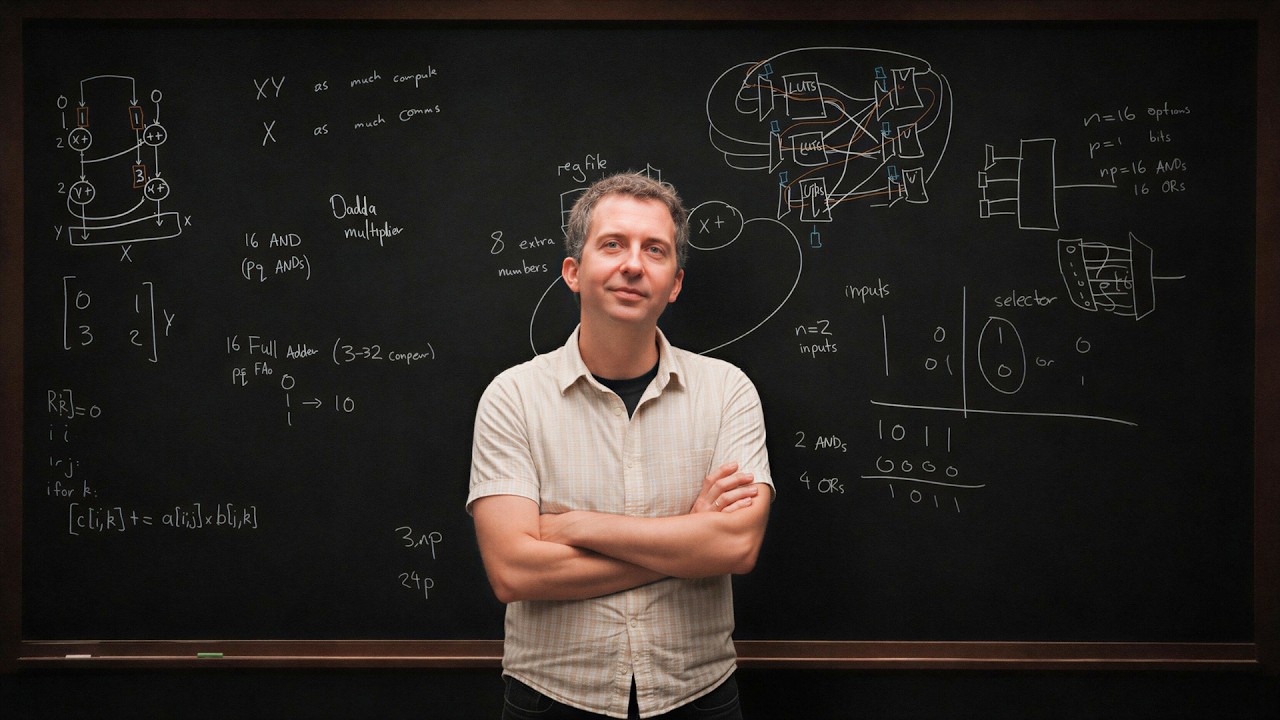
Chip design from the bottom up – Reiner Pope
Reiner Pope, CEO of MatX and former Google Brain TPU architect, gives Dwarkesh Patel a blackboard-style lecture on chip design from first principles. Starting with AND and NOT gates, Reiner works up through register files, systolic arrays, clock synchronization, FPGAs, cache hierarchies, and finally the structural difference between a GPU and a TPU. The throughline is a single engineering tension: every compute unit is wasted if the chip spends its time moving data rather than multiplying numbers. ## [00:00] Building a multiply-accumulate from logic gates Reiner starts at the bottom: AND, OR, and NOT gates, wired together as metal traces on silicon. The key operation AI chips want to run is matrix multiplication, and inside that the primitive is a multiply-accumulate — multiply two numbers, add the result into an accumulator. Reiner walks through how a full adder is assembled from a handful of XOR and AND gates, and how those cascade into a bit-serial multiplier and ultimately a floating-point MAC. The precision hierarchy matters here: accumulating low-precision multiplications requires higher-precision accumulators, which is why AI chips run 8-bit multiply but 32-bit accumulate. > *"The main function that AI chips want to compute is the multiplication of matrices. Inside that, the fundamental primitive is a multiply-accumulate of pairs of numbers."* ## [16:20] Muxes and the cost of data movement Before Tensor Cores, GPUs and CPUs used the same structure: a register file holding a few dozen values, feeding into an ALU, writing back to the register file. Reiner shows that a mux — a circuit that selects between multiple inputs — is the hardware tool that lets you address arbitrary registers, and that the cost of this generality is measured in area and energy. Every read from an eight-entry register file requires a mux tree of depth three; every write requires a decoder of the same size. The bottleneck for AI workloads isn't the multiply itself but the round-trip through that register file. > *"We want to analyze the cost of the data movement from the register file to the ALU and back."* ## [25:59] How systolic arrays work The key insight behind TPUs: instead of doing one multiply-accumulate at a time and writing back to registers, bake an entire matrix-vector loop into hardware. A systolic array is a grid of MAC units where each cell passes its partial sum to the right and its input operand downward, so data flows through without ever touching a register file. Reiner explains the two wins this buys: more compute per unit of data fetched, and the ability to keep operands resident inside the array for the full inner product instead of re-loading them. The trade-off is inflexibility — you can only efficiently run the exact loop shape the hardware was designed for. > *"The idea of a systolic array is to go two levels of loops up and bake this entire loop out here into hardware."* ## [39:00] Clock cycles and pipeline registers With 100 billion transistors on a chip, synchronization between parallel units is non-negotiable. Reiner explains the clock: every nanosecond or so, the chip pauses all computation for a synchronization pulse before the next operation. Clock frequency is set by the longest combinational path — the deepest chain of logic gates that a signal must traverse in one cycle. Pipeline registers chop that path into shorter stages, letting each shorter segment run at a higher frequency, at the cost of latency: a fully pipelined 32-stage multiplier produces one result per cycle but takes 32 cycles for any single multiplication. > *"Every nanosecond or so, all circuitry in the chip will pause for a moment and synchronize. That is the clock cycle."* ## [51:40] FPGAs vs ASICs An FPGA is a sea of programmable logic blocks — lookup tables and flip-flops that can be wired together in software. An ASIC is a chip taped out for one purpose. Conceptually they're the same: AND/OR gates in a fixed clock cycle. The economics diverge at first copy: an FPGA costs $10K to program; a first ASIC tape-out costs $30M. FPGAs make sense for workloads that change monthly and need deterministic latency at high speed with less care about energy or throughput. Jane Street uses them for high-frequency trading exactly because the clock cycle is deterministic — no cache misses, no branch prediction, no interrupts. > *"The first FPGA costs you $10,000, whereas the first ASIC you make costs $30 million because it requires an entire tape-out."* ## [63:14] Cache vs scratchpad CPUs are non-deterministic partly because of the L1/L2 cache: a small fast memory that speculatively stores data the processor thinks it will need next. Cache misses — when the prediction is wrong — stall execution for hundreds of cycles. AI accelerators replace the cache with a scratchpad: explicitly programmer-managed SRAM where the compiler decides exactly what lives there and when. Groq and TPUs both advertise deterministic latency because they use scratchpads instead of caches. The scratchpad is simpler and faster but shifts the burden to the compiler. > *"Probably the most important source of non-determinism on a CPU is the CPU cache itself."* ## [67:16] Why CPU cores are much bigger than GPU cores A modern CPU has maybe 100 cores, each taking up far more die area per core than a GPU's thousands of SMs. The reason: CPU cores carry enormous out-of-order execution machinery — reorder buffers, branch predictors, speculative execution units — all aimed at keeping a single thread running fast on unpredictable workloads. A GPU SM strips most of that out. It runs many simple threads in lockstep (a warp), and when one thread stalls on a memory load, the hardware instantly switches to another warp at zero cost. The CPU pays silicon for per-thread speed; the GPU pays silicon for throughput across thousands of parallel threads. > *"If there are so few cores, what are you spending all of the die on?"* ## [71:49] Brains vs chips Dwarkesh pushes Reiner on the brain-versus-chip comparison. Two genuine differences: the brain has unstructured sparsity (any neuron can connect to any other), while hardware accelerators use structured sparsity (aligned blocks); and the brain's clock runs at tens of hertz versus gigahertz on silicon. Reiner notes that co-location of memory and compute — often cited as a brain advantage — is also present in modern AI chips: the weights sit in HBM right next to the matrix units. The energy constraint is the more interesting gap: the brain runs on 20 watts, chips on kilowatts, which may reflect fundamental differences in what the brain is optimized to do. > *"This is exactly the co-location, in some sense, of the memory and compute."* ## [75:22] A GPU is just a bunch of tiny TPUs At the top level, a TPU has a handful of large systolic arrays plus a vector unit. A GPU has hundreds of SMs, each of which contains a small matrix unit and a small vector unit — essentially a miniaturized TPU. The architectural difference is granularity: a TPU commits to a few large matrix operations; a GPU runs thousands of smaller ones in parallel. Inside each SM, Tensor Cores add a fixed-function matrix unit on top of the original scalar/vector pipeline, making modern GPUs a hybrid of the two paradigms. The "GPU is just tiny TPUs" framing collapses what seemed like fundamentally different architectures into a single continuum. > *"You can think of scaling this thing down into a really tiny unit with a smaller matrix unit and a smaller vector unit, and that is sort of what an SM is."* ## Entities - **Reiner Pope** (Person): CEO and co-founder of MatX; previously led TPU software and compiler work at Google Brain - **Dwarkesh Patel** (Person): host of the Dwarkesh Podcast; angel investor in MatX - **MatX** (Organization): AI chip startup building inference accelerators - **Google / Google Brain** (Organization): where Reiner worked on TPU architecture before MatX - **Jane Street** (Organization): high-frequency trading firm that relies on FPGAs for deterministic latency - **Groq** (Organization): AI inference chip company that advertises deterministic latency via scratchpad architecture - **Multiply-Accumulate (MAC)** (Concept): the fundamental operation of neural network inference — multiply two numbers, add into an accumulator - **Systolic Array** (Concept): a grid of MACs that passes data between cells without touching a register file, enabling high compute-to-bandwidth ratios - **FPGA** (Technology): Field-Programmable Gate Array — reprogrammable logic fabric used where workloads change frequently - **ASIC** (Technology): Application-Specific Integrated Circuit — custom silicon optimized for one workload - **TPU** (Technology): Google's Tensor Processing Unit, organized around a few large systolic arrays - **SM / Streaming Multiprocessor** (Technology): the GPU core unit, containing scalar, vector, and matrix (Tensor Core) execution resources

Building AlphaGo from scratch – Eric Jang
Eric Jang spent his sabbatical rebuilding AlphaGo with modern tools, and the result is a two-and-a-half-hour technical walkthrough that doubles as a lens on how RL actually works—and why the naive policy-gradient approach baked into LLM training has fundamental limits that MCTS sidesteps. The conversation moves from Go rules through MCTS, neural architecture, self-play training, and off-policy data, before landing on what Jang observed running an automated AI research loop on his own project. ## [00:00] Basics of Go Go defeated brute-force search not by being solved but by being approximated. Jang explains what drew him to rebuild AlphaGo: the mystery of how a ten-layer network can amortize the cost of a game tree whose branching factor makes exhaustive search literally larger than the number of atoms in the universe. The early minutes cover the rules—territory control, liberties, captures, ko—and the Tromp-Taylor scoring convention that resolves ambiguous positions algorithmically rather than relying on human consensus. The scoring difference matters because it maps directly onto how computers must evaluate positions: a human glances at a surrounded group and accepts its fate, while a computer needs an unambiguous rule to count contested intersections at the end of a game. > *"When I saw the early breakthroughs on AlphaGo in 2014, 2015, 2016 and so forth, it was profound to see how smart AI systems could become and the computational complexity class they could tackle with deep learning."* ## [08:06] Monte Carlo Tree Search Rather than building out the full game tree (361 legal moves, 300-move games, search space exceeding the atom count of the universe), AlphaGo uses MCTS to interactively select which tree branches are worth expanding. The core data structure is a node per board state, storing a visit count and a Q value—the running average win rate across all rollouts through that node. The action-selection formula (PUCT) balances exploitation with exploration: a logarithmically growing bonus pushes the algorithm toward under-visited nodes, then decays as simulations accumulate and Q becomes reliable. Jang traces why this UCB-derived approach bounds regret, why Go's determinism means the probabilities in MCTS are artifacts of Monte Carlo averaging rather than genuine stochasticity, and how the search tree can be pruned by merging transposition-equivalent positions. > *"AlphaGo's core conceptual breakthrough was using neural nets to make this search problem tractable."* ## [31:53] What the neural network does Two networks replace two expensive operations inside MCTS. The value network maps a board state to a win-probability scalar, short-circuiting the need to roll out games to terminal states. The policy network outputs a distribution over legal moves, focusing the search tree toward promising children and away from the long tail of irrelevant ones. Jang tried both ResNets and transformers on his reimplementation. For the small-data regime of a personal GPU setup, ResNets outperformed transformers—transformers need global attention to connect far-apart board features, but they also need more data to learn local invariances. KataGo's key architectural insight was pooling global features explicitly through the residual stack so that battles on opposite sides of the 19x19 board could influence each other without requiring full attention. > *"For small data regimes, my experience is that ResNets still outperform transformers and give you more bang for the buck at lower budgets."* ## [01:00:22] Self-play Self-play is where AlphaGo bootstraps from knowing nothing to superhuman strength. After every game, MCTS produces a sharpened move distribution—more peaked than the raw policy network's prior—and that sharpened distribution becomes the training target for the policy head. The policy network is being distilled toward the MCTS output, which means each subsequent generation of games starts from a better prior and gets more improvement per search step. Jang frames this as test-time scaling with a compounding dividend: distilling 1,000 MCTS simulation steps into the policy network shifts the starting point of the next training round, so a second 1,000 steps buys a win rate that would have required 2,000+ steps without distillation. Crucially, every move in every game generates a supervision target—not just the winner—which is why the variance of the learning signal is vastly lower than naive policy-gradient approaches. > *"The beauty of how AlphaGo trains itself is that it can actually take this final search process—the outcome of the search process—and tell the policy network, 'Hey, instead of having MCTS do all this legwork to arrive here, why don't you just predict that from the get-go?'"* ## [01:25:27] Alternative RL approaches Jang constructs a careful thought experiment: what if you replaced the MCTS objective with the naive policy-gradient approach LLMs use—find the game winner and reinforce all moves from that game? In a league of 100 evenly-matched agents where one squeaks out a 51-49 record due to a single critical move, the training dataset is overwhelmingly diluted with moves that carry no signal. The one informative move is buried in roughly 30,000 irrelevant ones. This credit-assignment problem is the root of why advantage functions and baselines exist in RL. Subtracting a value baseline converts the raw return signal into an advantage—how much better than average each action actually was—and dramatically reduces gradient variance. Q-learning and TD methods approximate that advantage without needing full rollouts, which is why they matter for domains where MCTS is unavailable. > *"Importantly, what it is doing is saying: for every action we took, we did a pretty exhaustive search on MCTS to see if we could do better, and we're going to make every action that we took better by having the policy network predict that outcome instead."* ## [01:45:36] Why doesn't MCTS work for LLMs The PUCT exploration formula assumes a bounded, discrete action space and a value function that generalizes across positions. Go satisfies both. LLM reasoning satisfies neither: the token vocabulary is so large that you will almost never revisit the same partial sequence, and there is no position-level value function that reliably tells you whether a partially completed chain of thought is on track to solve the problem. Jang notes that LLMs do exhibit something that superficially resembles tree search—reconsidering, backtracking, hedging—but this emerges from in-context behavior rather than explicit tree construction. He leaves open the possibility that forward search could return in some form, particularly for domains like mathematics where intermediate states have a more rigid logical structure. The fundamental bottleneck is the absence of a trustworthy, query-efficient value function at the token level. > *"In an LLM, you're most likely never going to sample the same child more than once. If you have multiple steps of thinking, because language is so broad and open-ended, a discrete set of actions is not really an appropriate choice for an LLM."* ## [02:00:58] Off-policy training Dwarkesh raises a puzzle: every AI researcher warns against off-policy training, yet AlphaGo Zero runs fine with a large replay buffer full of games generated by older policy versions. Jang resolves this through the DAgger lens: what matters is not whether data is strictly on-policy, but whether the distribution of states in the buffer covers the states the current policy will actually visit, plus a reasonable neighborhood around them. The replay buffer works in AlphaGo because game states from recent checkpoints still lie near the current policy's distribution. The failure mode—labeling states so far from the current policy that the agent learns optimal actions for positions it will never reach—is a real risk in robotics, where distributional shift is severe. The practical recipe that emerged from systems like QT-Opt is to use off-policy data for reward shaping while keeping the policy gradient on-policy. > *"What you want in an algorithm like this is to have mostly states that you would visit, but then a small or reasonable percentage of states in this high-dimensional tube around your optimal trajectories."* ## [02:11:51] RL is even more information inefficient than you thought Dwarkesh lays out a two-dimensional inefficiency argument. The first dimension is the one everyone knows: policy-gradient RL requires full trajectory rollouts before any learning signal arrives, so as agents tackle longer-horizon tasks, samples per FLOP collapse. The second dimension is bits per sample. Early in training, an LLM with a 100K-token vocabulary that has to discover "blue" by random sampling needs on the order of 100K rollouts just to see one success—whereas supervised cross-entropy loss tells the model exactly how far its distribution was from "blue" on every step. MCTS escapes both problems. It produces a supervision target at every single move, and that target is strictly better than the current policy—not merely a binary win/loss signal smeared across thousands of tokens. Jang's observation: you are never in a situation where MCTS gives you zero signal, unless the policy has already converged to match the MCTS distribution exactly. > *"You're never in a situation where the MCTS is giving you no signal, unless your MCTS distribution converges to exactly what your policy network predicts."* ## [02:22:05] Automated AI researchers Jang ran much of his AlphaGo project through an automated LLM coding loop, giving a ground-level account of where AI research automation succeeds and where it still fails. On hyperparameter optimization, current models do genuine grad-student work: they diagnose gradient flow problems, rewrite data-loader augmentations, and squeeze measurable perplexity improvements on fixed budgets. On experiment execution and plotting, a simple skill description generates a full experimental suite with analysis. What the models cannot reliably do is lateral thinking—recognizing that a research track is structurally unpromising and jumping to a different framing before accumulating more dead-end experiments. Jang ran into this repeatedly: models would grind down a dead-end track rather than stepping back and asking whether the track was the right one. His thesis is that this is a training signal problem—building RL environments with the right outer loop, like Go, may be what eventually teaches models to escape local research dead ends. > *"What I find is that the current closed models the public can access today don't seem to be that great at selecting what the next experiment should be in a given track. They don't seem to be able to step back and do the lateral thinking of, 'Wait a minute, this track doesn't really make sense.'"* ## Entities - **Eric Jang** (Person): VP of AI at 1X Robotics; previously senior research scientist at Google Brain/DeepMind Robotics; rebuilt AlphaGo on sabbatical. - **Dwarkesh Patel** (Person): Host of the Dwarkesh Podcast; co-develops the bits-per-FLOP RL inefficiency analysis during the interview. - **AlphaGo / AlphaZero** (Software): DeepMind's Go-playing systems combining MCTS with deep neural networks; the technical centerpiece of the episode. - **KataGo** (Software): Open-source Go engine by David Wu (Jane Street) that achieved 40x compute reduction over AlphaGo Zero; Jang's primary reference implementation. - **Monte Carlo Tree Search (MCTS)** (Concept): Iterative search algorithm balancing exploitation and exploration via UCB/PUCT; the episode's central analytical lens. - **Credit assignment problem** (Concept): Difficulty in RL of determining which actions in a long trajectory caused a positive outcome; motivates advantage functions, baselines, and value networks. - **DAgger** (Concept): Dataset Aggregation algorithm; explains why replay buffers in AlphaGo are tolerable as long as buffer states stay near the current policy's distribution. - **Andrej Karpathy** (Person): Referenced for the phrase "sucking supervision through a straw" describing policy-gradient RL's sparse learning signal over long token trajectories.
Pourquoi l'IA ne remplacera pas encore les mathématiciens – Terence Tao
Terence Tao évoque le rôle changeant de l'IA en mathématiques et soutient qu'elle automatisera de nombreuses tâches routinières sans remplacer complètement les mathématiciens humains : elle déplacera plutôt leur attention vers de nouvelles frontières. Il insiste sur l'avenir de la collaboration humain-IA et sur la nature imprévisible de l'impact à long terme de l'IA sur la découverte scientifique. ## [00:10] Le rôle actuel de l'IA dans les mathématiques de pointe Terence Tao explique que l'IA effectue déjà des « mathématiques de pointe » que les humains ne peuvent pas faire, même si c'est un autre type de pointe. Il compare cela à la façon dont les calculatrices ont, par le passé, élargi le champ des mathématiques — en prenant en charge, sur un mode spécialisé, des tâches hors de portée humaine. > *D'une certaine manière, elles font déjà des mathématiques de pointe super-intelligentes que les humains ne peuvent pas faire, mais c'est une frontière différente de celle à laquelle nous sommes habitués.* ## [00:52] L'IA comme outil d'automatisation, pas comme substitut Tao prédit que, d'ici une décennie, l'IA gèrera de nombreuses tâches routinières aujourd'hui assurées par les mathématiciens, permettant aux humains de se concentrer sur des problèmes plus complexes et plus importants. Il trace un parallèle avec les bouleversements historiques : les ordinateurs ont automatisé des tâches autrefois confiées à des « calculateurs humains », et le séquençage du génome est devenu automatique sans que la génétique cesse d'évoluer à de nouvelles échelles. > *D'ici une décennie, beaucoup de choses que les mathématiciens font actuellement… pourront être faites par l'IA. Mais nous découvrirons que ce n'était pas la partie la plus importante de ce que nous faisons.* ## [02:46] L'avenir de la collaboration humain-IA en mathématiques Dwarkesh Patel interroge Tao sur la capacité de l'IA à résoudre seule les Problèmes du Prix du Millénaire. Terence Tao estime que « l'hybride humain + IA » dominera les mathématiques bien plus longtemps, car l'IA actuelle ne possède pas encore tous les ingrédients pour remplacer totalement les tâches intellectuelles : elle fonctionne davantage comme un outil complémentaire. > *Je crois vraiment que cet hybride humain + IA dominera les mathématiques pendant beaucoup plus longtemps.* ## [03:43] Un impact imprévisible sur la découverte scientifique Tao reconnaît que, même si l'IA accélérera la science et les découvertes, il est aussi possible qu'elle freine certains types de progrès en « détruisant la sérendipité ». Il conclut que l'impact futur de l'IA sur la découverte scientifique est hautement imprévisible. > *Il est possible que, en détruisant d'une manière ou d'une autre la sérendipité, nous finissions par inhiber certains types de progrès.* ## Entités - **Terence Tao** (Personne) : invité, mathématicien de premier plan de notre époque. - **Dwarkesh Patel** (Personne) : animateur du podcast. - **IA (AI)** (Concept) : intelligence artificielle, abordée dans son rôle en mathématiques et dans la découverte scientifique. - **Mathematica / Wolfram Alpha** (Logiciel) : outils de calcul cités comme exemples d'automatisation en mathématiques. - **Problèmes du Prix du Millénaire (Millennium Prize Problems)** (Concept) : sept problèmes mathématiques non résolus, chacun assorti d'un prix d'un million de dollars.

Terence Tao – Comment le meilleur mathématicien du monde utilise l'IA
Tao et Dwarkesh prennent la découverte des lois du mouvement planétaire par Kepler comme prisme pour examiner ce que l'IA change réellement en science. Tao soutient que la génération d'hypothèses est désormais quasi gratuite, et que le goulot d'étranglement se déplace vers l'évaluation, la relecture par les pairs et l'épreuve du temps. Les IA actuelles excellent en largeur (tester toutes les techniques standard sur chaque problème) tandis que les humains excellent en profondeur (construire cumulativement sur des avancées partielles) — les configurations hybrides domineront les mathématiques pendant encore au moins une décennie. ## [00:00] Kepler était un LLM à haute température Tao retrace comment Kepler est parvenu aux trois lois du mouvement planétaire. Kepler est parti d'une théorie fausse mais élégante — les solides platoniciens inscrits entre les orbites des planètes — qu'il n'a abandonnée qu'après des années à broyer les observations à l'oeil nu de Tycho Brahe. Les ellipses, la loi des aires et la loi harmonique sont sorties d'une décennie d'analyse de données ; Newton n'a fourni l'explication qu'un siècle plus tard. La lecture de Dwarkesh : Kepler ressemble à un LLM à haute température qui explore des relations aléatoires sur un jeu de données vérifiable. Tao accepte la mécanique mais conteste l'identification du goulot. La génération d'idées était déjà bon marché — Kepler ne manquait pas de théories. Ce dont il avait besoin, c'était des données de Brahe, un ordre de grandeur meilleures, et la patience d'écarter ce que les données invalidaient. > *Mais comme vous le dites, cela doit être équilibré par une quantité égale de vérification, sinon c'est du contenu sans valeur.* ## [11:44] Comment repérer un concept unificateur dans des masses de contenu IA médiocre ? Tao : si l'IA a ramené le coût de génération d'idées à presque zéro, la relecture par les pairs et l'épreuve du temps deviennent la nouvelle contrainte. Les revues sont déjà submergées de soumissions générées par l'IA. La valeur d'une idée dépend de ce que la science ultérieure en fait — Copernic était moins précis que Ptolémée jusqu'à ce que Kepler complète le tableau — et cette évaluation est difficile à automatiser de l'intérieur du moment présent. Dwarkesh demande comment la science identifierait un concept unificateur de type Bell Labs (le bit de Shannon, le transformer) enfoui dans des millions d'articles médiocres. La réponse de Tao pointe vers ce qui restera peut-être humain : les scientifiques ne produisent pas seulement des théories, ils racontent des histoires qui convainquent d'autres scientifiques d'y consacrer des années. La prose de Darwin a fait le travail que les équations latines de Newton n'ont pas fait. > *L'IA a ramené le coût de génération d'idées à presque zéro, de la même façon qu'internet a ramené le coût de la communication à presque zéro.* ## [26:10] L'arriéré déductif Tao sur le signal sous-exploité dans les données existantes. L'astronomie est depuis des siècles la discipline qui extrait le maximum d'informations à partir d'un minimum de données — ce qui explique aussi pourquoi les fonds quantitatifs recrutent préférentiellement des docteurs en astronomie. Il donne un exemple favori : des chercheurs ont mesuré à quelle fréquence les scientifiques lisent réellement les articles qu'ils citent, en suivant quelles coquilles se propageaient dans les chaînes de citation. Il suggère d'appliquer ce même traitement sociologique des sciences aux progrès de l'IA elle-même — en exploitant les schémas de citation, les mentions aux conférences et d'autres traces pour détecter si un résultat a vraiment constitué un progrès, plutôt que d'attendre lentement l'épreuve du temps. > *Un enseignement était que l'arriéré déductif dans de nombreux domaines pourrait être bien plus grand que ce que les gens réalisent.* ## [30:31] Le biais de sélection dans les découvertes rapportées par l'IA L'IA a résolu environ 50 des 1 100 problèmes d'Erdős, puis a plafonné. Tao explique l'effet de sélection : ces 50 problèmes avaient une littérature quasi inexistante — une technique obscure plus un résultat connu suffisait, et les outils IA excellent à "essayer toutes les combinaisons standard". Quand 80 % du travail est déjà accompli par les méthodes existantes, l'IA passe. Quand il faut une technique genuinement nouvelle, les outils calent, et le taux de réussite par problème dans des balayages systématiques est de 1 à 2 %. La métaphore de Tao : les outils IA sont des robots sauteurs lâchés dans une chaîne de montagnes, dans le noir. Ils franchissent des murs courts que les humains ne peuvent pas atteindre, mais ne peuvent pas s'accrocher à une prise, rester là et se hisser à partir d'une progression partielle. La lecture optimiste — une fois qu'une IA atteint un certain niveau, on peut lancer un million de copies en parallèle sur un million de problèmes, ce qu'aucune communauté humaine ne peut faire — est aussi la raison structurelle pour laquelle la science a besoin de nouveaux paradigmes qui exploitent vraiment la largeur. > *Elles excellent en largeur, et les humains excellent en profondeur, les experts humains en tout cas.* ## [46:43] L'IA rend les articles plus riches et plus larges, mais pas plus profonds Tao sur sa propre façon de travailler : les articles portent désormais plus de code, plus de figures, des revues de littérature plus approfondies, parce que les tâches auxiliaires sont devenues environ 5 fois moins coûteuses. Le vrai coeur — résoudre la partie la plus difficile d'un problème — se passe toujours avec un stylo et du papier. Il hésiterait à se dire "2 fois plus productif" parce que la mesure n'est pas unidimensionnelle ; ce qui a changé, c'est le type d'article qu'il écrit, pas la vitesse à laquelle il répond à la question initiale. La distinction entre habileté et intelligence aboutit au même endroit. Quand deux humains collaborent sur un problème de mathématiques, chaque prototype raté devient un point d'appui pour le suivant. Avec les IA actuelles, une nouvelle session oublie ce que la précédente a compris. L'étape cumulative de progression est manquante — il ne reste que l'essai-erreur brut et, au bout du compte, l'absorption dans le prochain cycle d'entraînement. > *Cela a rendu les articles plus riches et plus larges, mais pas nécessairement plus profonds.* ## [53:00] Si l'IA résout un problème, les humains peuvent-ils en tirer une compréhension ? Une IA pourrait-elle prouver l'hypothèse de Riemann en Lean en nous laissant aussi ignorants qu'avant ? Tao n'est pas inquiet. Lean a la propriété que toute preuve peut être décomposée atomiquement — chaque lemme peut être inspecté, testé en ablation et vérifié isolément. Même une preuve générée de 3 000 lignes devient une matière première : d'autres IA peuvent la refactoriser pour l'élégance, d'autres humains peuvent en extraire le contenu conceptuel, et l'artefact reste utile même si la dérivation originale était opaque. Il prédit l'émergence d'une profession entière de mathématiciens dont le travail consiste à démonter de grandes preuves générées par Lean et à en extraire les idées — une sorte d'archéologie des preuves, alliant jugement humain et outils d'ablation IA. > *On tirera bien plus parti de l'interaction entre humains qui collaborent avec ces outils.* ## [59:20] Il nous faut un langage semi-formel pour la façon dont les scientifiques se parlent vraiment Dwarkesh demande à quoi ressemblerait un langage semi-formel pour les stratégies mathématiques (par opposition aux preuves mathématiques). Tao retrace la question à travers le théorème des nombres premiers de Gauss — la première grande conjecture statistique en mathématiques, dérivée de données brutes avant toute preuve — et à travers la conjecture des nombres premiers jumeaux, que les mathématiciens croient parce que le modèle aléatoire des nombres premiers la prédit. Les mathématiques ont à la fois des preuves rigoureuses et des heuristiques rigoureuses ; seul le côté des preuves a été formalisé dans quelque chose que Lean peut vérifier. La raison pour laquelle le côté heuristique n'a pas été formalisé : tout évaluateur vérifiable par RL devient une cible d'exploitation, et la part subjective de "cet argument est convaincant" n'admet pas encore de cadre exploitable. Tao aimerait un moyen d'évaluer la génération de conjectures et la sélection de stratégies à grande échelle, peut-être en faisant tourner de petites IA dans des univers mathématiques jouets et en observant les stratégies qui émergent. > *Il y a une dimension subjective de la science que nous ne savons pas capturer d'une façon qui nous permettrait d'y insérer l'IA utilement.* ## [69:48] Comment Terry organise son temps Tao sur la façon dont il absorbe de nouveaux sous-domaines. Il se situe comme un renard au sens de Berlin — un peu de tout, parfois hérisson quand c'est nécessaire. Le moteur est une obsession perfectionniste : si un autre mathématicien peut prouver un résultat avec une technique qu'il ne connaît pas, il doit comprendre ce qu'était l'astuce. (Il a dû arrêter les jeux vidéo pour la même raison.) La collaboration avec d'autres mathématiciens est le principal vecteur, et écrire sur son blog est l'aide-mémoire qu'il a développé après avoir trop souvent perdu des arguments six mois après les avoir dérivés. Dans son agenda, Tao ménage délibérément de la place pour la sérendipité. Il ne voudrait pas optimiser son temps au point de ne jamais se retrouver dans une réunion hors de sa zone de confort. L'année qu'il a passée à l'Institute for Advanced Study lui a confirmé le piège — deux semaines de recherche pure étaient formidables, puis l'inspiration s'épuisait. La découverte accidentelle au rayon suivant de la bibliothèque, la conversation de couloir, la réunion à laquelle il assistait à contrecoeur faisaient plus de travail qu'elles n'y paraissaient. > *Ces interactions fortuites peuvent ne pas sembler optimales, mais elles sont en réalité vraiment importantes.* ## [77:05] Les hybrides humain-IA domineront les mathématiques encore longtemps Quand l'IA fera-t-elle les mathématiques seule ? Tao recadre la question : l'IA fait déjà des mathématiques que les humains ne peuvent pas faire, depuis les calculatrices, juste sur une frontière différente. D'ici une décennie environ, il s'attend à ce qu'une grande partie de ce que font actuellement les étudiants en doctorat — appliquer des techniques standard, éplucher la littérature — passe à l'IA, mais le domaine montera d'un niveau, comme lorsque les systèmes de calcul formel ont absorbé l'intégration symbolique. La génétique n'a pas pris fin quand le séquençage est devenu bon marché ; elle a mis à l'échelle des écosystèmes entiers. Les mathématiques feront de même. Son conseil aux étudiants qui entrent en mathématiques maintenant : tabler sur le changement, mais obtenir ses diplômes à l'ancienne — pour l'instant, il n'y a toujours pas de substitut au parcours mathématique traditionnel. En même temps, rester assez adaptable pour pouvoir utiliser des modes de recherche entièrement nouveaux à mesure qu'ils apparaissent, y compris ceux qui n'existent pas encore. Le fait inédit est qu'avec les outils IA et Lean, un lycéen peut contribuer à de vraies recherches mathématiques aujourd'hui, ce qui n'était pas vrai il y a cinq ans. > *Je crois effectivement que les hybrides humain plus IA domineront les mathématiques encore longtemps.* ## Entités - **Terence Tao** (Personne) : Médaillé Fields (2006), mathématicien à l'UCLA, écrit régulièrement sur le rôle de l'IA dans la recherche mathématique. - **Dwarkesh Patel** (Personne) : Animateur du Dwarkesh Podcast ; entretiens approfondis sur l'IA, la science et la technologie. - **Johannes Kepler** (Personne) : Astronome (1571-1630) qui a dérivé les trois lois du mouvement planétaire à partir des observations de Tycho Brahe. - **Tycho Brahe** (Personne) : Astronome danois à l'oeil nu dont des décennies d'observations planétaires ont constitué le jeu de données dont Kepler avait besoin. - **Lean** (Logiciel) : Assistant de preuve dans lequel les preuves mathématiques sont formalisées et peuvent être vérifiées, décomposées et testées en ablation atomiquement. - **Problèmes d'Erdős** (Concept) : Les quelque 1 100 problèmes ouverts posés par Paul Erdős ; l'IA en a résolu environ 50, presque tous avec une littérature préalable quasi inexistante. - **L'arriéré déductif** (Concept) : L'idée que les données existantes encodent déjà bien plus de connaissances dérivables que ce qui a été extrait, avec l'astronomie comme modèle. - **Hypothèse de Riemann** (Concept) : Conjecture non résolue sur la distribution des nombres premiers ; le cas test pour savoir si une preuve IA ferait avancer la compréhension mathématique humaine.